Texas
Is Texas losing its edge in the economic development incentives game?


Aerospace manufacturer Bell Textron Inc. revealed last month that it’s ready to invest $429 million in Fort Worth on the condition it wins tax breaks through Texas’ new Jobs, Energy, Technology and Innovation Act.
The acronymic program, pronounced in the incentives business like a Star Wars jedi, kicked in at the start of the year as a replacement for the contentious Chapter 313 tax abatement program.
With the JETI Act, companies can get up to 50% to 75% of property value abated for 10 years if a jobs-bolstering project is located within an opportunity zone. That’s compared to Chapter 313′s 100% abated on school district taxes. The new program also excludes green energy projects.
“The JETI Act is incredibly important in terms of attractiveness for capital-intensive projects moving forward since Texas has a higher property tax burden than a lot of other states,” said Kelley Rendziperis, principal and leader of the economic incentive division of Dallas-based Site Selection Group.
“A lot remains to be seen about how competitive that program will be though,” she said.
Bell, the Fort Worth-based subsidiary of Textron Inc., made it clear in its JETI application to the Texas Comptroller’s office that it is shopping the large-scale advanced manufacturing project in multiple states and that tax abatements are a key component to making it work in Denton County.
Construction could get underway as soon as July on the facility that would be used to produce component parts for aircraft.
It’s the tension between Texas’ high property taxes and the state’s much-discussed business friendliness that becomes a balancing act for those in the economic development game. They consider programs like the JETI Act and the Texas Enterprise Fund vital to compete for major projects bringing jobs and prestigious corporate names to the state.
While the state won Site Selection magazine’s Governor’s Cup distinction for the 12th consecutive year, Texas is facing stiffer competition across the country as other states get more aggressive with incentives. The inter-state rivalry deepened further with the passage of the CHIPS Act, which enticed companies to onshore semiconductor-making operations with tens of billions of dollars in direct subsidies and tax breaks. Contenders have sprung up in the southeast and the Midwest in recent years.
Of the top 94 projects in the U.S. ranked by value of economic incentives tracked by Site Selection Group in its January and February monthly market reports, only two were in Texas. Illinois, Indiana, Iowa, Ohio and Tennessee made frequent appearances.
Site Selection Group, which isn’t affiliated with the magazine, works with companies across the U.S. to identify and secure incentives. It also assists with compliance after incentives are granted.
Rendziperis, along with the company’s CEO and founder King White, watch what companies consider when evaluating where to place an operation and what other states are doing to streamline the incentive process at a national level.
A lot of the office, headquarters and software-development operations that attracted incentives pre-COVID have dissipated significantly post-COVID, White said.
“We’re having to go back in and restructure a lot of those programs we’ve done for clients in Texas, and that’s been a big challenge,” he said.
A report released by Dallas-based commercial real estate services and investment company CBRE Group Inc. showed corporate relocations cooled to 18 through October 2023. That’s compared to the high of 137 in 2021.
Lately, the incentives world has been focused on manufacturing and industrial projects, which is right in line with the hope Texas’ JETI Act will help it tread water alongside its traditional Sunbelt competitors and emerging threats in the Midwest.
Dallas-Fort Worth has an abundance of talent in the manufacturing and industrial space, which is a double-edged sword.
“Now that the metro is so large, it’s become a bit saturated, and it’s about finding those other tertiary markets where you can find specific skill sets,” Rendziperis said.
“There are more cities outside of Texas within the southwest starting to generate their own talent pool,” she said. “That’s more attractive from a site selection perspective because you’re not competing as heavily for jobs.”
Other states also are investing more heavily in establishing mega-sites and even smaller sites ready for development of industrial operations, including data centers, White said.
“In Texas, we don’t have strategies as it relates to that because everything is more developer-controlled, whereas these other states are finding where the companies can buy them,” he said, noting a company wants to own a site with heavy industrial due to the investment.
There are states, such as Kentucky and the Carolinas, that have partnered with utility companies on site readiness, meaning a utility company is actively participating in preemptively preparing attractive sites with adequate infrastructure.
That’s typically a setup you’d find in a state with a more centralized approach to incentives.
Autonomy at a local level in Texas makes sense given the majority of a community’s revenue comes from property and sales taxes. It also means cities have more independence in offering incentives.
States such as Indiana, Ohio and Kentucky have started extending incentives that equate to payroll rebates. While it’s a lucrative benefit, Rendziperis said Texas doesn’t have a state income tax on individuals.
“This is kind of my motto: It’s so important to accurately calculate the cost of doing business in the state before you ever even fold in the value of incentives,” she said.
“So often we’re focused on the value of the incentive package and that’s all we’re looking at, but you have to be looking at the overall picture.”




A federal judge in Texas blocked a Biden administration rule on Monday that allowed immigration judges to indefinitely close a deportation case against immigrants on the same day Texas sued to stop the rule.
The rule, which was adopted in 2024, allowed immigration judges to close a deportation case after hearing arguments from the federal government and the immigrant in deportation proceedings, especially if the person could qualify for a benefit that allows them to stay in the country legally.
But on Monday, Texas Attorney General Ken Paxton filed a lawsuit in the Northern District of Texas in Wichita Falls to block the rule with U.S. Judge Reed O’Connor, who was appointed by former President George W. Bush.
The lawsuit against the U.S. Department of Justice was also co-filed by America First Legal Foundation, an organization founded by Stephen Miller, a senior adviser to President Trump who has focused on ways to limit both legal and illegal immigration to the country. America First Legal Foundation also previously filed various lawsuits representing Paxton against the Biden administration’s immigration policies, which helped derail President Biden’s immigration agenda in his lone term.
In this latest complaint, Paxton’s office said in the 43-page lawsuit that the Biden-era rule “effectively grant(s) indefinite amnesty to aliens illegally present in this country.”
Lawsuits usually take several months to years to settle, but in this case O’Connor ruled late on Monday in favor of Texas after the Department of Justice filed its response saying it agreed with Paxton’s office.
Paxton’s office and the DOJ did not respond to immediate requests for comment.
President Trump, in keeping with his campaign promise, has cracked down on immigrants, using many of the federal government’s resources to limit immigration and fast-track deportations, including undocumented people and others who were allowed to be in the U.S. by previous administrations.
O’Connor has been known as conservative leaders’ favorite judge because he has routinely ruled in favor of Paxton, who has strategically filed lawsuits against the Obama and Biden administration.
The fast-paced end to the rule echoes a similar maneuver conducted by the DOJ and Paxton’s office last year, when the federal agency sued Texas over a law allowing undocumented students to qualify for lower tuition rates at public universities. Hours after the suit was filed, Texas also asked Judge O’Connor to find the law unconstitutional, which he did.
After the law was overturned, legal experts said a state working with the federal government so closely for the swift overturning of a state law was unusual and raised questions about collusion.
The quick resolution to the case late on Monday was heavily criticized by immigration law experts.
“This is madness! Deliberate collusion with a federal judge to rapidly erase regulations without any input from affected parties,” said Aaron Reichlin-Melnick, a senior fellow with American Immigration Council, a group in Washington, D.C., that advocates for immigrants. “It’s clearly an unlawful act by all, and now litigants will have to seek to intervene in the already-completed lawsuit to overturn his actions.”
Source link

Texas
How a Tiny Texas River Agency Plans to Build the Largest Desalination Plant in the Country – Inside Climate News

This story was produced in partnership with the Texas Newsroom, the state’s network of public radio stations.
Something moved John Byrum. He believed he could succeed where others had not.
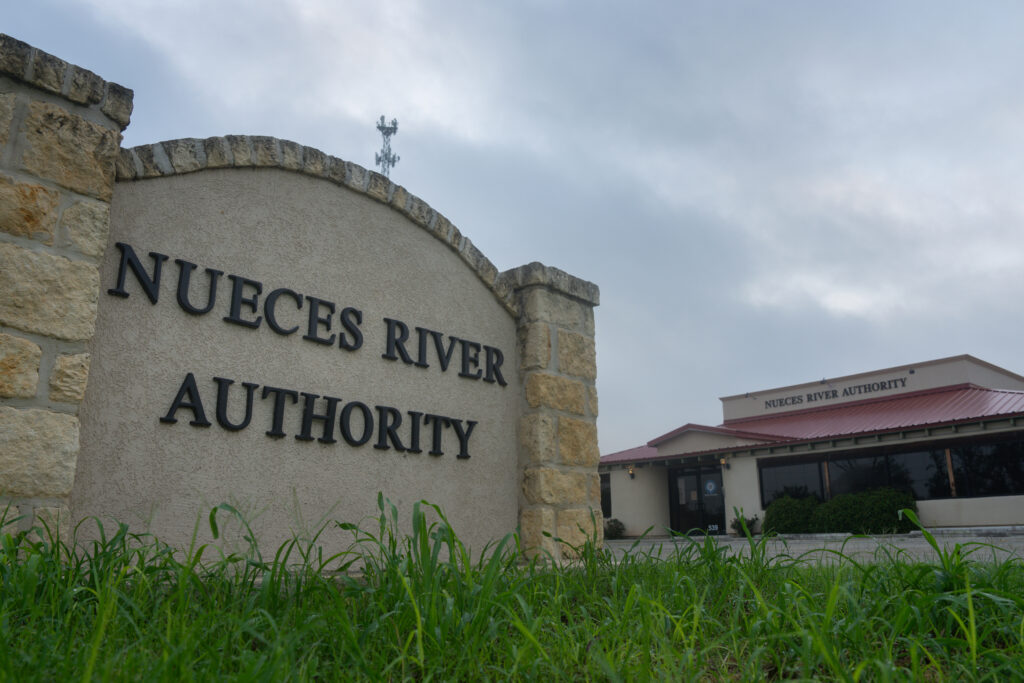
The executive director of the Nueces River Authority (NRA)—a small, rural agency based 200 miles from the coast—decided to take up the banner, in 2024, of a desalination plant on Corpus Christi Bay.
Plans to build seawater desalination plants had floundered for years near Corpus Christi, which provides water to a major complex of chemical plants and refineries, and the likelihood of water shortages was growing.
“Texas needed a sustainable supply of water in that area to protect the industry,” said Byrum, a veteran water manager with silver hair and a charming drawl. “This was the way to do it.”
The Port of Corpus Christi never secured financing for the multi-billion-dollar project, so Byrum would fund it one piece at a time. He took up collection, not from the region’s large industrial water users like ExxonMobil, OxyChemical and Valero, but from small towns and rural utilities in the hinterlands of San Antonio, 150 miles from the coast, that could theoretically be connected by pipeline to the desalination plant, according to records obtained by Inside Climate News.
The agency collected $6.4 million from 18 cities, towns and utilities since March of last year, records show, while it doled out lobbying and engineering contracts for the Harbor Island desalination project near Corpus Christi.
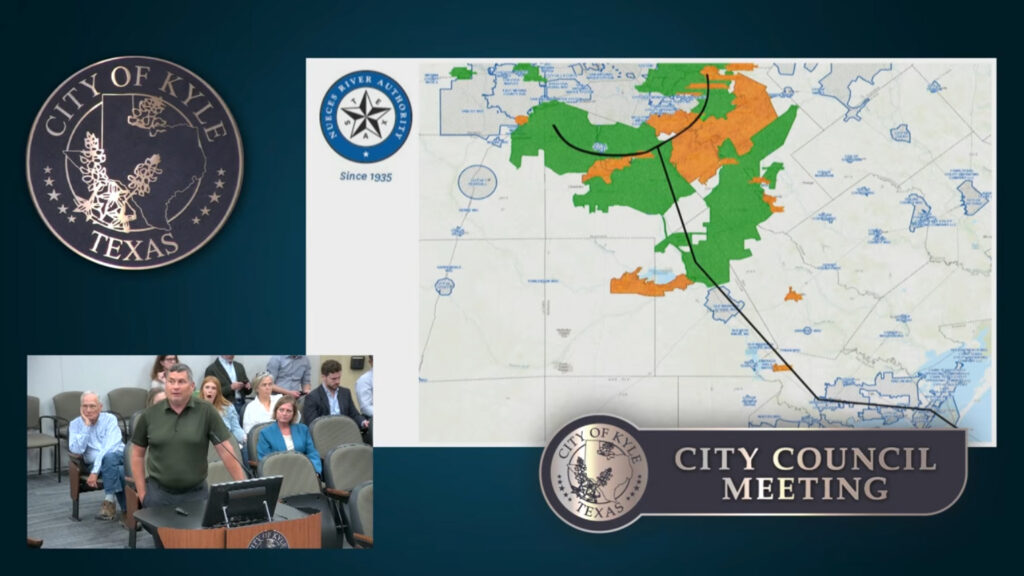
Executives collected money from as far away as the city of Kyle, south of Austin, where NRA’s chief operating officer at the time presented the City Council in October with plans to build the enormous pipeline from the coast by 2032, and an opportunity to reserve some of its water.
“We’re actually 90 percent sold out now,” Travis Pruski, the official, told the City Council. “You would buy the last 10 percent of the water.”

However, records show, Kyle bought the water, but Pruski didn’t stop selling. The agency continued to sell reservations for five months after Kyle paid its $500,000 deposit. In fact, the water was never sold out, records show.
Pruski resigned from the NRA in May, after alleging that Byrum misrepresented financial figures to Corpus Christi’s City Council and the agency’s board members. Byrum denies that and continues his work to build the desalination plant.
Pruski, a career fundraising professional and former mayor of the small town of Poth, declined to comment on the specifics of his time with the NRA or the allegations in his resignation letter.
“I’m not really wanting to talk about that right now,” he said. “I’ve kind of moved on with my life.”
In May, Byrum’s NRA announced a partnership with Israeli desalination giant IDE Technologies, which described the Harbor Island plant as the largest seawater desalination project in the Western Hemisphere.
First outlined in 2017 by the Port of Corpus Christi, plans for Harbor Island stalled amid feuding with the city government and its competing desalination project.
Later, the little NRA faced steep skepticism over its wherewithal to take on such an enormous endeavor.
Now, the partnership with IDE, a global leader in seawater desalination, marks the strongest sign yet that the landmark project could become a reality. It also means future Texans might pay a foreign company for water.
IDE would own and operate the facility, selling water manufactured through high-tech and energy-intensive processes to the NRA through a public-private partnership.
“They need authority to sell water in Texas and we are that authority,” Byrum said in an interview. “We’re going to make sure there is some downward pricing pressure.”
The plant design will come first, he said, then the design of local pipelines to Corpus Christi and the region’s industrial complex. After that they’ll design the 200-mile pipeline to the 15 other small cities and districts that have paid to reserve Harbor Island water.
“It’ll happen,” he said.
Byrum acknowledged he’s faced plenty of doubt about the NRA’s ability to pull this off. Some skepticism comes from the NRA’s seemingly out-of-the-blue decision to take on such a challenge, and some stems from its reputation as an authority that does river clean ups, not $6 billion development projects.
When the Corpus Christi City Council voted to put a $2.7 million deposit on the NRA project last year, Mayor Paulette Guajardo opposed it.
After Pruski’s resignation raised questions about the project, Guajardo said the NRA should refund Corpus Christi’s deposit.
“There were serious concerns,” she wrote on Facebook in April. “I did not see a clear, logical plan, funding mechanism, or sufficient information.”
None of the cities that paid deposits have publicly alleged wrongdoing by the NRA, and an internal review by the NRA last month cleared the executive director of malfeasance.
Corpus Christi city manager Peter Zanoni supported paying the reservation fee in October and described it as a gamble that the city, critically short on water, needed to take. The deposit, he said in an interview, was “seed money to see if they can advance this project.”
“There is risk in that. We know that,” he said. “The money is really being used to help develop potential for a project with an agency that has no money.”
Seawater Desalination in Texas
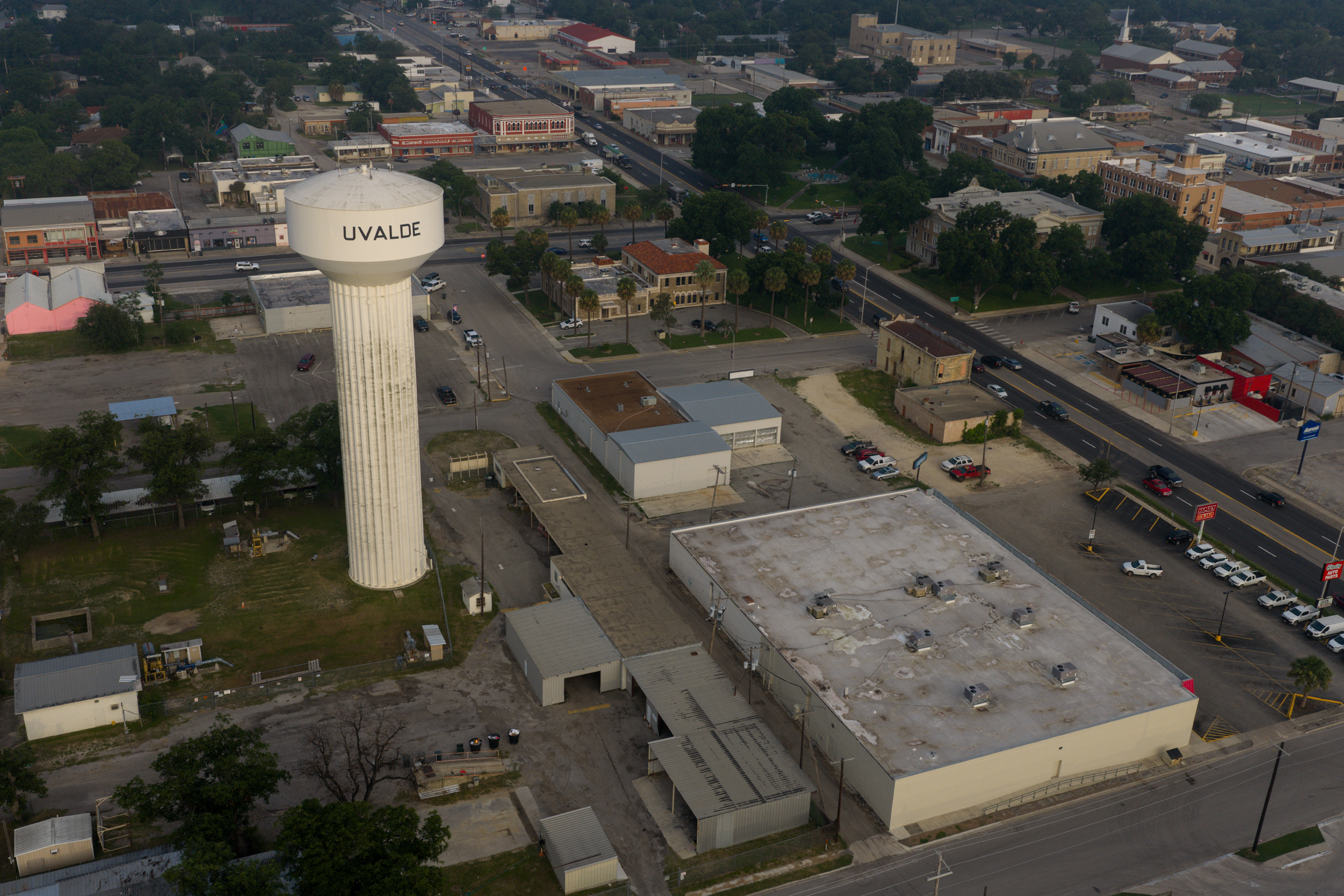
Headquartered in the town of Uvalde, 80 miles west of San Antonio, the NRA doesn’t manage any reservoirs. The agency’s largest assets are a small wastewater treatment plant and land it owns. Its annual budget of a few million dollars has primarily funded outreach and education programs.
In terms of developing infrastructure, the NRA contributed to the construction of the Choke Canyon reservoir, one of two western water supplies the city of Corpus Christi relies on. It also worked alongside the Port of Corpus Christi Authority and the city of Corpus Christi to construct the Mary Rhodes Pipeline, which carries water into the city from Lake Texana 100 miles away.
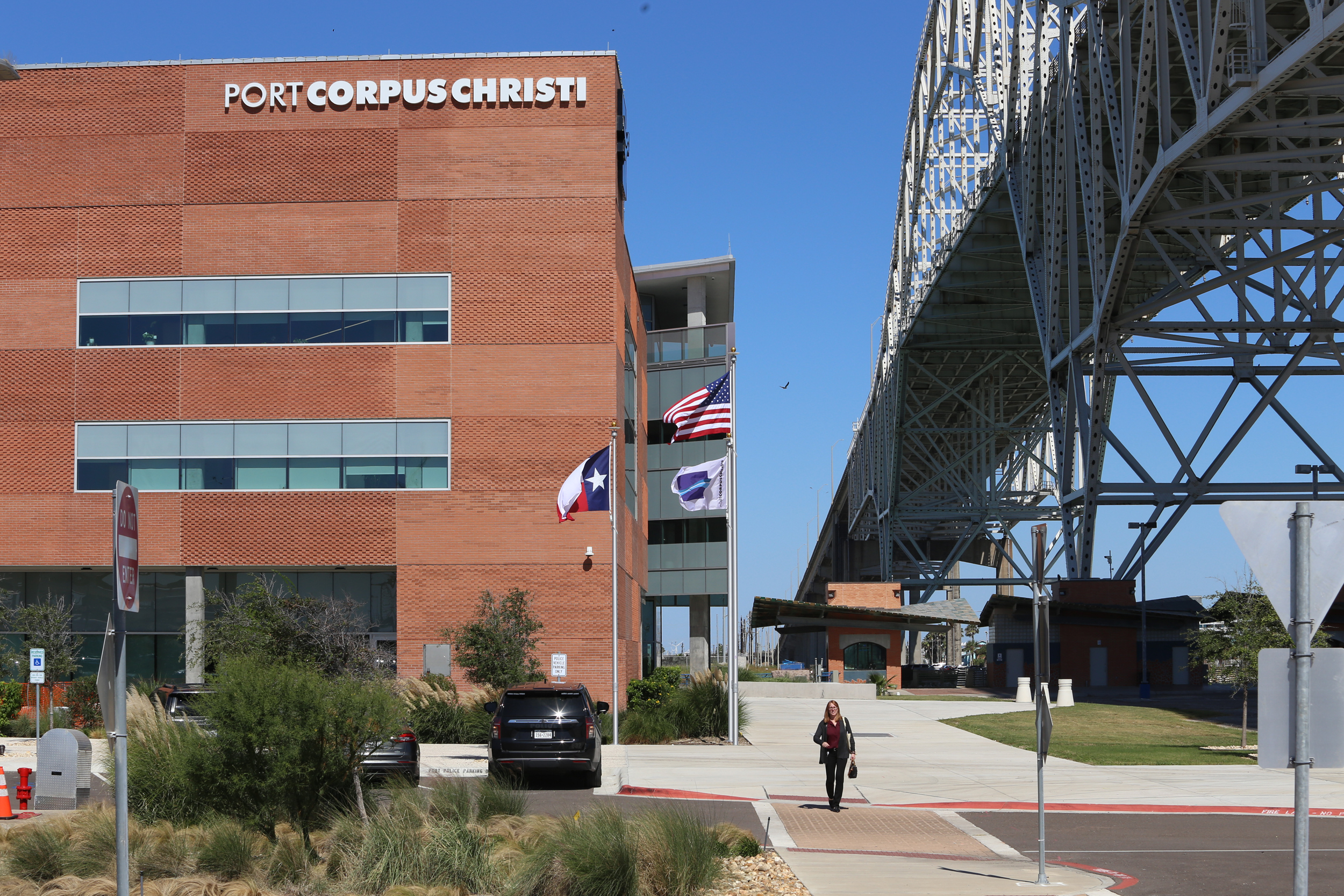
The agency’s small budget didn’t stop Byrum from sending a proposal to the Port of Corpus Christi Authority in 2024, offering to orchestrate the development of its multi-billion-dollar seawater desalination plant on Harbor Island.


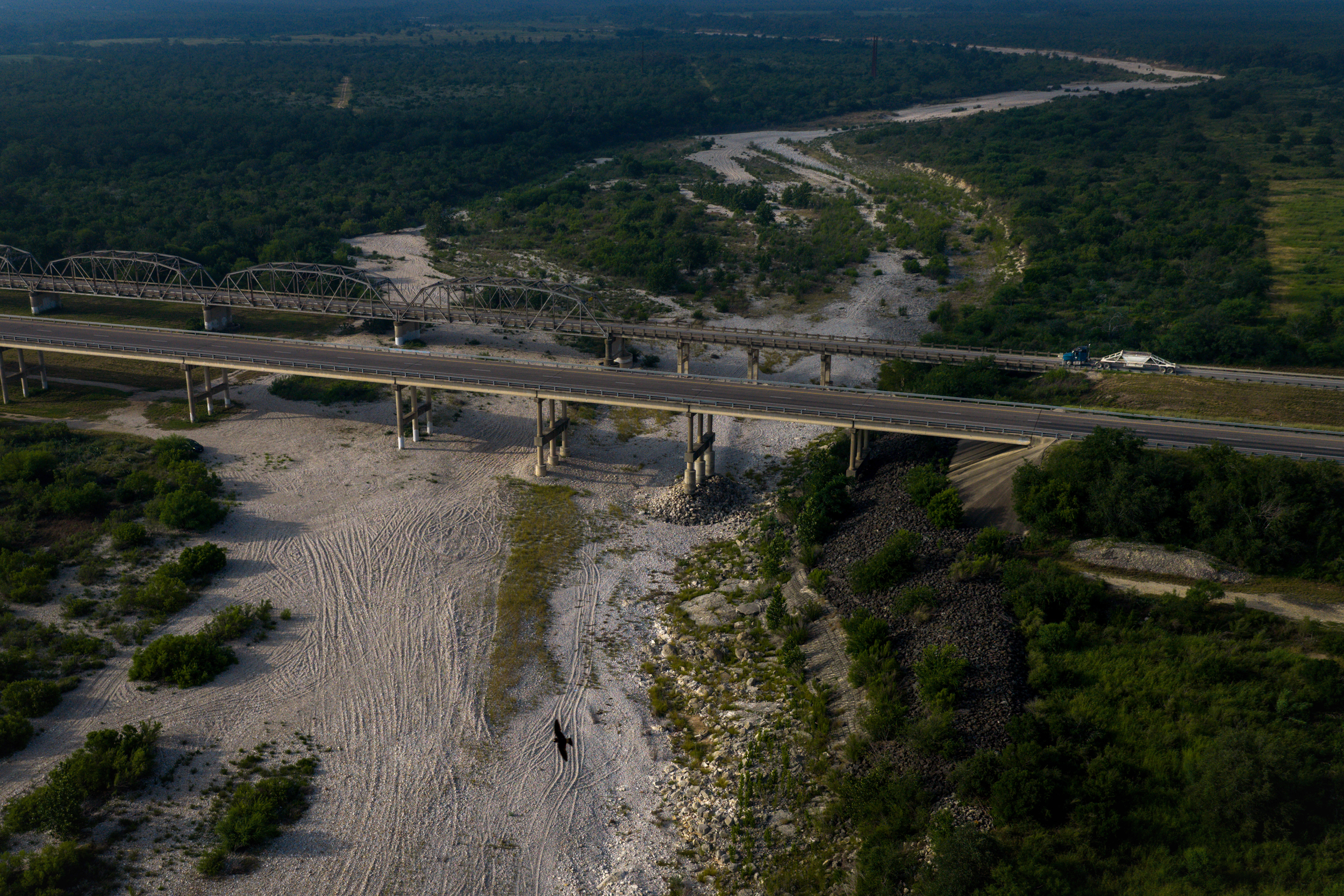
The proposed facility would produce 100 million gallons of potable water per day, twice as much as the largest desalination plant in the nation currently, in San Diego, and enough to supply some 400,000 Texas households.
The project plans call for two gargantuan tunnels, 60 feet underground, running 1.8 and 3.1 miles into the Gulf of Mexico to take in seawater and discharge brine in enormous quantities.
These types of facilities are complicated to develop and expensive to build, said Don Roach, former assistant general manager of the San Patricio Municipal Water District near Corpus Christi, who previously worked on a seawater desalination plant in Saudi Arabia with the engineering firm Bechtel.
“I don’t think it’ll ever happen,” he said.
What came as a surprise to Roach was that the NRA’s board of directors, appointed by the governor, would allow the agency to take on a project of this scale.
“You can be well-educated and smart, but that desire for power—and I don’t know why you even consider that if you’re with a state agency—it just overwhelms everything,” Roach said.
Even though Roach has no faith in this project, Corpus Christi has found itself in a position where it’s going to have to do a desalination plant, he said.
So the NRA took on a lease for Harbor Island in 2024 while Byrum set out to gather funds.
The NRA said it collected $700,000 in water reservation fees and had paid roughly $930,000 in preconstruction costs for the Harbor Island plant as of Aug. 31, 2025.
Local officials have raised concerns about the NRA’s financing methods. But experts in water infrastructure see nothing unusual in collecting reservation fees. That’s how river authorities in Texas built the state’s reservoirs in previous generations, said Todd Votteler, a former executive manager of the Guadalupe-Blanco River Authority.
“There are frequent complaints from local water customers about paying for the water before they need it, but there wasn’t much of an alternative,” he said. “The customer would be taking a big risk if they did not purchase a portion of the supply in advance when it is available.”
For the most part, Texas river authorities stopped building major reservoirs 40 years ago. None has ever built a seawater desalination plant.
Votteler, editor-in-chief of the Texas Water Journal, wondered how the NRA planned to transport its water over hundreds of miles to the customers who paid reservation fees.
Kyle Frazier, a water lobbyist and executive director of the Texas Desalination Association, told a state Senate hearing in May that the pipeline infrastructure required for large-scale distribution of desalinated seawater to outlying communities currently makes the water too expensive to sell.
“That kind of blows the financial model because getting those products to the people who need them is expensive,” Frazier told the Senate Committee on Water, Agriculture and Rural Affairs. “They just haven’t gotten it to the point where it is financially viable.”
Customers will need to pay more for water, said Sen. Charles Perry, R-Lubbock, the committee chair, who has promoted his vision for a vast pipeline network linking giant seawater desalination plants with inland cities of Texas.
“We have run out of the cheap water,” Perry said. “We are moving towards the desal model for sure.”
Texas has fallen behind on its water supply, Perry said, and desalination is its best chance to catch up.
IDE, the Israeli desalination developer, announced plans in April to build the first seawater desalination plant in Texas at the Port of Brownsville.
“Once you build one, there’s gonna be seven others,” IDE Water Assets CEO Lihy Teuerstein told the Senate water committee.
Weeks later, IDE announced its second project in Texas, at Harbor Island.
The Harbor Island Plant
IDE opened its office in Texas in 2015, the same year state lawmakers created a regulatory framework for seawater desalination and directed the state’s power authority to study its electrical demands.
In 2016, Gov. Greg Abbott toured an IDE facility in Israel, one of the largest desalination plants in the world, according to a press release from Abbott’s office.
“The governor expressed his intention to partner with Israeli technology companies such as IDE to develop and deploy water solutions for Texas,” said a 2016 press release from IDE.
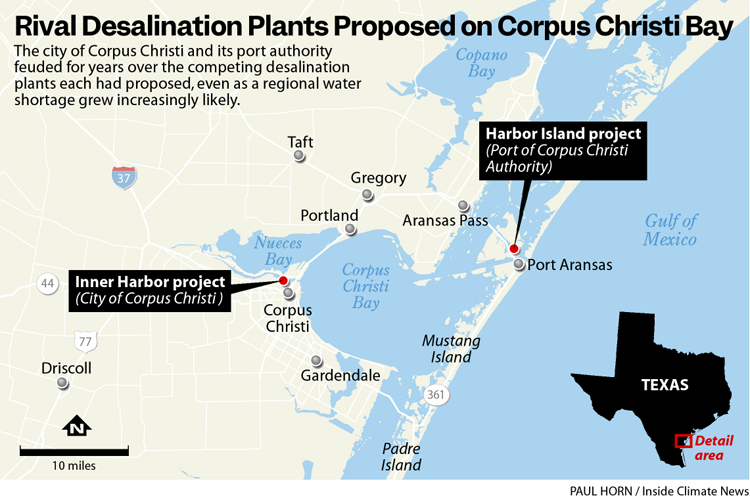
When it was first proposed in 2017, the Harbor Island plant would have been the first of its kind in Texas. The Port of Corpus Christi Authority filed a permit application for the project in March 2018.
At that time, the city of Corpus Christi was also developing plans for its own desalination plant. Leaders there envisioned a facility that wasn’t operated by a private company, like others around the world, but by the city itself—the first municipally owned and operated seawater desalination plant.

“I don’t think the public is understanding the significance,” said then-Mayor Joe McComb when the City Council voted to advance the plans at a meeting in August 2019. “We’re setting this train on track. It’s just a pretty exciting day for me.”
In January 2020 the city requested a permit for a project at its Inner Harbor, about 20 miles from the port’s Harbor Island site.
Regional water demands couldn’t justify two large plants, officials knew. Whichever project reached completion first would capture most of the market.
That’s why leaders in Corpus Christi protested vigorously in April 2022 when they learned that the port had quietly applied for a half-billion-dollar state loan to finance its Harbor Island project. A City Council resolution demanded the port withdraw its loan application and “end any and all attempts to become a water producer.”
“The city is the water distributor that will own and operate any desal plant,” Corpus Christi City Councilmember Mike Pusley said at a City Council meeting that April when port commissioners came for questioning. “I hope that message gets through.”
Port commissioner Rajan Ahuja said the port was no longer pursuing the loan. Only a preliminary application had ever been filed, he said, and the port’s CEO, Sean Strawbridge, hadn’t notified him.
“I find that behavior completely disingenuous,” said Councilmember Roland Barrera, describing a history of frustrations with Strawbridge.
“I agree with that. It doesn’t matter how smart Sean might be, we all have to play by the rules,” Ahuja replied. “He’s heard an earful from us in the last few weeks.”
In a statement to Inside Climate News, Strawbridge said his loan application was “a pre-application with no financial commitment” submitted to confirm the project was eligible for state funds. Because it involved no contractual obligations for the port, Strawbridge said, he wasn’t required to notify the port commissioners. The chairman of the Port Commission, Charlie Zahn, approved the submission, Strawbridge said.
“The port keeps rewarding the behavior of its executive team when they do these things that they know are going to perpetuate this disgruntlement between the city and the port,” Pusley said. “We can’t do this anymore.”
This story is funded by readers like you.
Our nonprofit newsroom provides award-winning climate coverage free of charge and advertising. We rely on donations from readers like you to keep going. Please donate now to support our work.
Donate Now
Strawbridge still pushed for the Harbor Island project. Later that year he took a contingent of state and local officials, including the Senate water committee chairman, Perry, to Israel to visit an IDE facility and learn about its public-private partnership method of operation.
The port offered to work in partnership with the city, but the city declined.
In 2023, Strawbridge resigned. He founded a company called US Desalination and this year announced a partnership with IDE to build a seawater desalination plant in Texas, 150 miles south of Corpus Christi at the Port of Brownsville.
Resurrecting Harbor Island
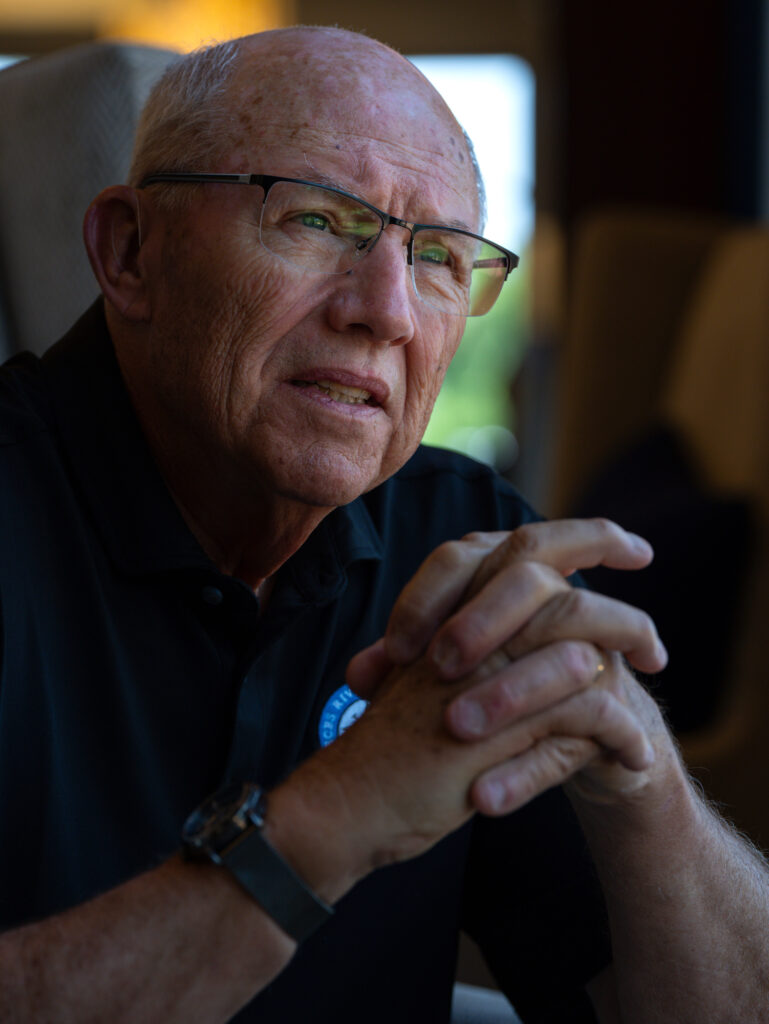
Byrum spent most of his career leading municipal water utilities in cities of San Angelo, Victoria, San Antonio and Corpus Christi, where he was working as assistant director of wastewater in 2019 when he took his present job with the NRA.
Port officials said they were surprised in 2024 when Byrum sent a three-page letter to them proposing to take up the flag of the Harbor Island Project.
“Current water supplies are an issue for industries,” the letter said.

So Byrum suggested a nine-step plan. The first step was for the NRA to sign a lease for Harbor Island.
“The Port of Corpus Christi is in receipt of an unsolicited offer,” a spokesperson told KRIS 6 News at the time. “The port will evaluate the offer as it would any other.”
Without a lease agreement, the NRA board authorized Byrum in November 2024 to begin negotiating a contract with the firm Black and Veatch to serve as “Advisor for Seawater Desalination Project Development.” In March 2025 the board approved the contract for $990,000.
Three weeks later, on April 9, 2025, the NRA secured its first reservation fee. The East Central Special Utility District, a small, rural water supplier outside San Antonio, 120 miles from Corpus Christi Bay, paid $196,000 to reserve 7 million gallons per day (MGD) of water from the Harbor Island plant.
Later that month, the nearby Green Valley SUD paid $147,000 to reserve about 5 MGD, and Springs Hill SUD signed over $98,000 to reserve 4 MGD in May. Between June and July, the NRA collected another $200,000 in deposits from seven other towns and utilities near San Antonio.
In July, the Port of Corpus Christi agreed to Byrum’s proposal, granting NRA a 50-year lease for Harbor Island.
The 137-page lease sets out a strict timeline for the NRA. It obliges the agency to have a design engineer with at least 10 years experience of large-scale seawater desalination treatment facilities 10 months into the NRA’s development period. By the fourteenth month, the NRA has to have contracted commitments for at least 25 MGD of produced water. Two years into the development period, the NRA should have its private partner picked out for the project.
The NRA would pay the port $32,000 per month, Byrum said in August 2025 when he presented his project to the Corpus Christi City Council, seeking a reservation fee.
Taking Up a Collection
Byrum told the Corpus Christi City Council that he planned to build the Harbor Island plant and local pipeline system to begin producing 100 MGD in 2029. He said 38 MGD had already been reserved and another 30 MGD was in negotiations.
“It’s first come, first pay,” Byrum said. “Once the capacity is sold, it’s sold.”
Byrum charged $24.44 per acre-foot of water for localities to reserve the right to purchase water at a later date. But the NRA hadn’t yet determined how much that water would cost, Byrum said.
“I’m just fascinated that people are signing reservations without knowing the cost,” said Councilmember Mark Scott, the president of a local title company.
“It’s wet and it’s good quality,” Byrum replied. “They need water.”
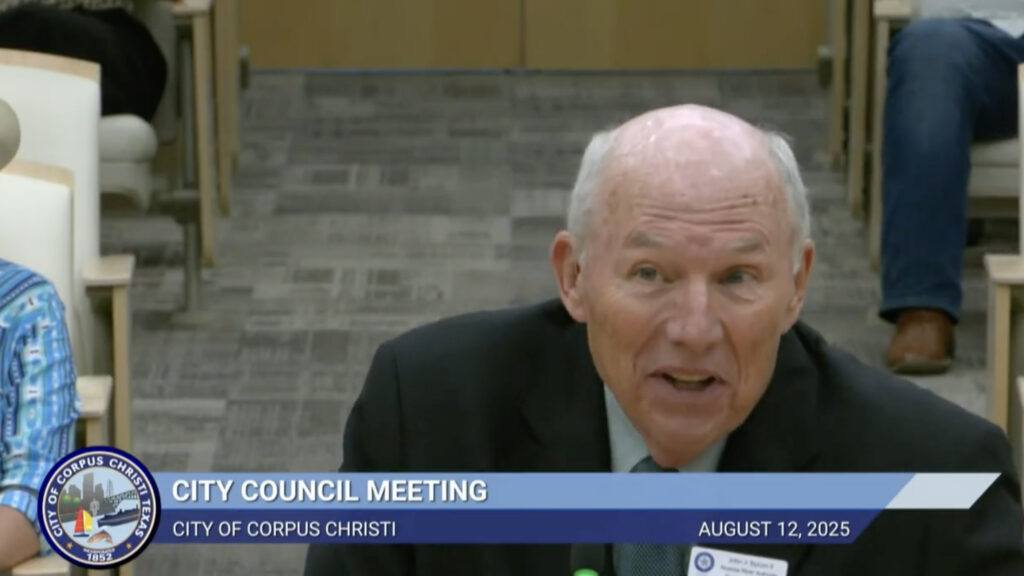

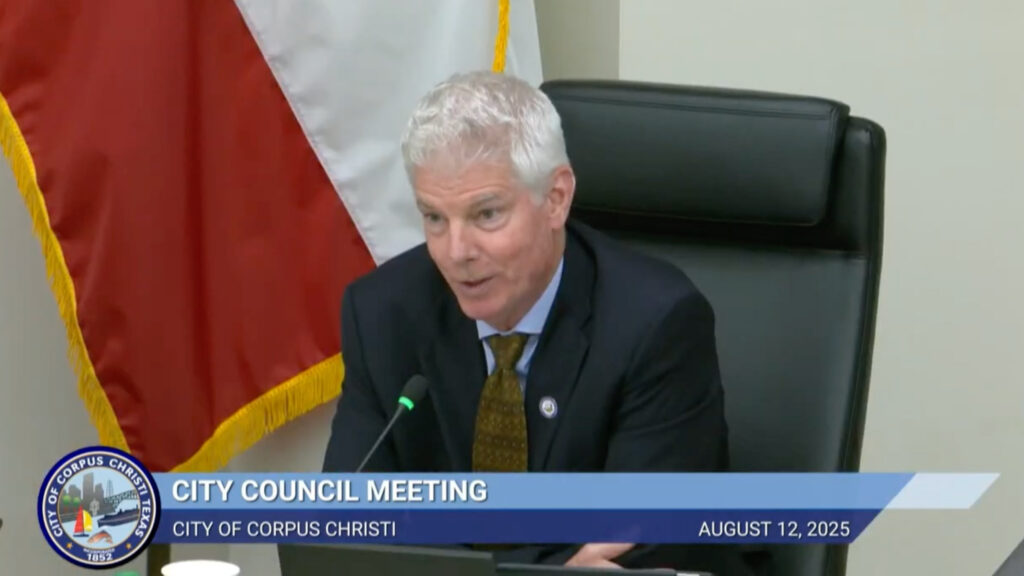

Most reservation fees were paid by cities and utilities near San Antonio, Byrum said. The NRA planned to build a pipeline there by 2032, he said.
“What’s the transmission estimate to move water from Corpus to San Antonio?” Scott asked.
“Whole lotta money,” Byrum said. “Three billion bucks?”
“More,” Scott said.
He asked how the project would be funded. Byrum said it would seek state funding. For now the NRA used reservation fees to hire Black and Veatch for preliminary services, Byrum said.
“So you have to book enough money in your reservation fees to hire them to go to the next step?” Scott asked.
“Yes,” Byrum replied.
One month later, in September 2025, the Corpus Christi City Council voted to cancel its own $1.2 billion design contract for its 30 MGD Inner Harbor desalination project. In October the council approved a $2.7 million deposit to reserve 50 MGD from Harbor Island.
That was the largest deposit the project collected. The second largest deposit came from the small city of Kyle, south of Austin. One of the fastest-growing cities in the nation, Kyle struggled for years to keep up with growing local water demand before Pruski addressed the city council.
“I’ve Never Seen It This Way”
In a slideshow presentation on Oct. 21 to the council, Pruski displayed a map of a 7-foot-wide pipeline running from Corpus Christi to San Antonio, then splitting into a west fork and “an east one that’s going to come up this direction towards you guys.”
“We haven’t designed it completely,” Pruski said. “You want to get early in on this process as we’re going through this pipeline design.”
The NRA believed it could build the massive pipeline in existing state highway right-of-way, Pruski said, avoiding the painstaking and expensive process of acquiring rights from every landowner over 200 miles.
The pipeline would serve many communities of the region that have already paid deposits, Pruski said.

That was the meeting when he told Kyle officials that the project was nearly sold out: “Y’all are taking the last 10 percent, so congratulations.”
Kyle bought the water, but Pruski didn’t stop selling. That month, he delivered the same message in presentations to other small cities near Corpus Christi.
The city manager of Portland exceeded his office’s spending limit to pay a nearly $70,000 deposit on Oct. 31.
“It became an emergency for us to go ahead and reserve that fee so that someone else didn’t jump in,” City Manager Randy Wright explained to the City Council.
In nearby Ingleside, Pruski also told the City Council that it was reserving the last available water from Harbor Island.
“All the water has been spoken for,” Pruski said.


After paying a deposit, Pruski explained, the next step would be to start making take-or-pay contracts in the coming months.
That seemed unusual, said David Pruitt, then an Ingleside councilman. He asked why the NRA didn’t just build the plant, then sell its product.
“I’ve never seen it this way,” Pruitt said. “All these entities are paying you to put all this in, and then water time comes, we still got to buy some water?”
Pruski explained that the NRA couldn’t plan its pipeline system unless it had committed customers, so Ingleside signed a $110,000 contract on Nov. 4.
At its Nov. 14 board meeting, the NRA authorized a slew of new contracts.
That included contracts for “identifying and establishing long-term funding relationships” with Hugo Berlanga, a lobbyist who also works for the Port of Corpus Christi and Hicks Pate Strategies, a consulting firm founded in 2024 by Abbott’s former chief of staff.

The board authorized the creation of a nonprofit organization “intended to strengthen the NRA’s capacity to obtain external funding,” and it approved an agreement with Clean Energy Capital, a boutique finance firm in San Francisco, for help selecting a private partner in the Harbor Island project.
The NRA also approved an agreement with Houston-based Civitas Engineering Group to develop a request for proposals, rescinded a contract offer with Black and Veatch and authorized Byrum to conduct negotiations with five other engineering firms.
Despite claims that all its water was reserved, the NRA continued to collect deposits into 2026. In fact the water was never fully reserved, records show.
The city of Three Rivers agreed to pay more than $82,000 to reserve 1.5 MGD in March. One week later, County Line Special Utility District committed to pay the NRA more than $270,000 to reserve 5 MGD. Crystal Clear Special Utility District agreed to pay more than $164,000 for 3 MGD in April.
Pruski Resigns
While Pruski traveled to these cities across South and Central Texas slinging reservation fees for water from a distant desalination plant, he said in a letter to the board of directors in March that he was nervous about the numbers Byrum was using.
Pruski said he had noticed inconsistencies in the desalination plant’s budget, as well as in how much money Byrum was saying had actually been deposited from the reservation fees.
Pruski alleged in the letter that Byrum told the board at an August 2025 meeting that 36 MGD of capacity had been sold and that the corresponding revenue was in the bank. Pruski said that number wasn’t right, only 21 MGD had been committed and paid for at that time.

The board then used that erroneous information to make financial decisions, Pruski wrote.
It happened again, Pruski alleged, in September and October, as Corpus Christi weighed whether to pay a $2.7 million reservation fee.
Pruski said that these initial concerns were dismissed without explanation. He was also effectively shut out of further financial deliberations and wasn’t provided documents for a budget he was responsible for, Pruski wrote.
Byrum later said in an interview that the NRA needed to make sure it didn’t commit water capacity twice. He also wanted to ensure that water was going to be available a month or two after Corpus Christi reserved half of the desalination plant’s future capacity.
“It wasn’t an exaggeration,” Byrum said. “That was caution on my part.”
Pruski sent his letter to the board two weeks after Abbott threatened to take over Corpus Christi if it couldn’t get a handle on its water crisis.
In writing the letter, Pruski acknowledged that it could carry serious professional liability. “I would rather face consequences for speaking the truth than remain silent,” he wrote.
When the results of an internal NRA investigation into Pruski’s allegations were announced at the most recent board meeting in May and found no wrongdoing by the executive director, Pruski resigned.
“I can’t participate in this culture any longer, while you have people with good principles who are sacrificed to sit by, be quiet,” Pruski said to the board. “I just can no longer be part of this organization anymore.”
“Where Are They Getting Their Money?”
Also in May, McComb, the former Corpus Christi mayor, sent an 11-page letter to Byrum alleging the river authority not only lacked the financial sophistication to develop what would be the largest desalination plant in the country, but also the transparency legally required of a state agency.
McComb sought to have the NRA release the list of cities that had paid reservation fees to the agency, explain how it planned to use the collected money and share minutes from executive committee meetings in which decisions about Harbor Island were made.
The authority’s total program revenues in 2025 were $4.2 million, $1.4 million more than in 2024. However, the NRA has repeatedly spent more money than it earned throughout the past six years.
In its 2025 financial statement and independent auditor’s report, the river authority also said that construction of the desalination plant is estimated to cost approximately $6.4 million and will be financed through water reservation fees as well as through bonds. Byrum has widely said the project will cost $6.4 billion—not million.
For McComb, it’s a suspect slip-up, not a typo, as Byrum has consistently said in public testimony that the project would cost billions of dollars. To McComb, it was odd that when the audit was returned to Byrum to review and approve, neither Byrum nor any of the NRA’s board members corrected the figure to billions.
McComb spent 27 years as an elected official, both at the city and county level, working with financial advisors and bond counsel. After looking at the NRA’s financial reports, he said he thinks nobody in their right mind would be willing to invest in a project of this scale from an organization that small, despite its partnership with Israel’s largest desalination company.
“If I were anybody signing big contracts with the Nueces River Authority, I’d be sending them an invoice at the end of every day,” McComb said in an interview with Inside Climate News. “Where are they getting their money?”
Byrum responded in a statement, saying he’s “not sure where McComb is coming from.”
“We are currently in contract negotiations with IDE who has developed over 400 water treatment plants,” he said. “I believe their willingness to work with the NRA speaks to our ability to get the project built.”
The 18 cities and water supply companies that paid reservation fees will be asked, at the appropriate time, Byrum wrote in a letter responding to McComb in June, to work out contracts to buy the drinking water they each reserved, as well as how the produced water will be delivered from the desalination plant. The NRA’s water agreements with cities will then be used to prove to investors that the agency will have money coming in, and will be able to repay the bonds it plans to issue.
Most of the municipalities and water supply corporations that have paid a reservation fee are 100 or 150 miles away. As a result, McComb said, the transportation rates will be astronomical.
“It’s obvious to me they’re not interested in getting the water at the lowest price to the consumer,” McComb said.
About This Story
Perhaps you noticed: This story, like all the news we publish, is free to read. That’s because Inside Climate News is a 501c3 nonprofit organization. We do not charge a subscription fee, lock our news behind a paywall, or clutter our website with ads. We make our news on climate and the environment freely available to you and anyone who wants it.
That’s not all. We also share our news for free with scores of other media organizations around the country. Many of them can’t afford to do environmental journalism of their own. We’ve built bureaus from coast to coast to report local stories, collaborate with local newsrooms and co-publish articles so that this vital work is shared as widely as possible.
Two of us launched ICN in 2007. Six years later we earned a Pulitzer Prize for National Reporting, and now we run the oldest and largest dedicated climate newsroom in the nation. We tell the story in all its complexity. We hold polluters accountable. We expose environmental injustice. We debunk misinformation. We scrutinize solutions and inspire action.
Donations from readers like you fund every aspect of what we do. If you don’t already, will you support our ongoing work, our reporting on the biggest crisis facing our planet, and help us reach even more readers in more places?
Please take a moment to make a tax-deductible donation. Every one of them makes a difference.
Thank you,


Arcelia Martin
Reporter, Texas Renewables
Arcelia Martin is an award-winning journalist at Inside Climate News. She covers renewable energy in Texas from her base in Dallas. Before joining ICN in 2025, Arcelia was a staff writer at The Dallas Morning News and at The Tennessean. Originally from San Diego, California, she’s a graduate of Gonzaga University and Columbia University Graduate School of Journalism.


Dylan Baddour
Reporter, Austin
Dylan Baddour covers the energy sector and environmental justice in Texas. Born in Houston, he’s worked the business desk at the Houston Chronicle, covered the U.S.-Mexico border for international outlets and reported for several years from Colombia for media like The Washington Post, BBC News and The Atlantic. He also spent two years investigating armed groups in Latin America for the global security department at Facebook before returning to Texas journalism. Baddour holds bachelor’s degrees in journalism and Latin American studies from the University of Texas at Austin. He has lived in Argentina, Kazakhstan and Colombia and speaks fluent Spanish.
-
 News23 minutes ago
Five years after the Surfside condo collapse, killing 98, what’s changed?
-

 Los Angeles, Ca2 hours ago
School Superintendent Alberto Carvalho steps down. Now what for LAUSD?
-

 Detroit, MI2 hours ago
Police investigation at Monica and Clarita streets in Detroit
-

 San Francisco, CA2 hours ago
Where to watch Athletics vs San Francisco Giants: TV channel, start time, streaming for June 23
-

 Dallas, TX2 hours ago
Dallas Man Convicted of Distributing Fentanyl
-

 Miami, FL3 hours ago
Fiery, fatal crash shuts down southbound lanes of Don Shula Expressway in southwest Miami-Dade
-

 Boston, MA3 hours ago
Editorial: With Boston’s World Cup win, could we host Olympics?
-
 Denver, CO3 hours ago
When falling housing prices are good news — and when they’re not

