COPENHAGEN — He’s the two-Michelin-starred chef at the helm of what one U.K. newspaper called “the world’s weirdest restaurant,” dishing up freeze-dried butterflies, deer blood ice cream and caged chicken claws every night as part of a 50-course gastro-marathon.
Washington
In the search for sustainable food, a top chef homes in on waste


Spora grew out of Alchemist’s Copenhagen test kitchen, where chefs still shape and puff and buff dishes during the first part of each night’s meal. But that bright white test kitchen is now simply a kitchen, with Munk’s ideas finding a second home at a lab mere blocks away in Refshaleøen, a former industrial site.
The goal he is forever working toward, he tells me earnestly, is: “Can you make something that has such a big impact that you change the world?” Alchemist has been his first pass at making political statements about the way we eat (the ice cream comes with a QR code for blood donation), but seats just 55 diners in its one nightly service, which typically runs to six hours. Spora, then, is his chance to make “the products of tomorrow” — primarily by “upcycling” materials discarded in other food processes.
Spora is nothing like the grandeur of Alchemist, the 24,000-square-foot space where the 50 courses (or as Munk calls them, “impressions”) take place in five locations, including a planetarium-style dome on which graphics swirl overhead and a ball pit. Like Munk himself, dressed all in black when we meet, the lab is surprisingly understated.
A chef is checking over his latest batch of cocoa-less chocolate in an otherwise unremarkable kitchen; upstairs is the diminutive lab that looks like a meeting room. There, Mette Johnsen, Spora’s CEO, opens a cupboard door to reveal a colony of leaf cutter ants in a glass case, cultivating fungus — and in the process, teaching Spora’s 20 staff members about the “effective transformation of plant materials into nutrients.” The ants also “release a pheromone with an incredible lemony/ginger/umami flavor, which make them very interesting to explore gastronomically,” she says.
The experiment encapsulates what Spora can offer the world when it comes to sustainable food, Johnsen says — a matter more urgent now than ever, with 40 percent of the food grown in the United States uneaten or unsold. (ReFED, a food waste research organization, says that food waste has the same climate footprint as the whole U.S. aviation industry — the military included — equivalent to 1.8 percent of the U.S. GDP.) To make what we eat more planet-friendly, “you need to bring together science and gastronomy, [as] individually, they’re not going to find these answers,” Johnsen says. Spora “is the intersection or transaction of the disciplines coming together, and asking different questions, and finding different answers.”
The lab has two development streams: repurposing existing waste foods and fermentation. Foods in development include rapeseed (a.k.a. canola) cakes, the solid byproduct formed when oil is extracted from the crop, of which 36.8 million tons are produced each year. I eat it as a taco filling (earlier in the week, they tried it as a meat replacement in spaghetti Bolognese); it tastes earthy, tempeh-like in texture. Their protein bar version, which blends rapeseed cakes with dried fruits and nuts, could be sold tomorrow.
Further behind is the chocolate, which, considering the high land farming required and child labor issues in the cultivation process, they want to make minus cocoa. It is no simple task to re-create “the same properties that we love about chocolate, so snap, smell, mouthfeel; the smoothness and how it melts in your mouth,” Johnsen says. We chomp through variations including honey, raspberry and coffee ganache (made from waste coffee grounds), though Johnsen admits that on deliciousness, “we’re not quite there yet.” (I would agree.)
There are “probably five projects, six projects at least” on the go, Munk says, including partnerships with a San Francisco start-up developing cell-grown salmon (Spora’s role is to replicate the fishy taste), and a major drinks company. Munk doesn’t see Spora’s name ending up on any of the products that will be sold, though two of its creations are now on Alchemist’s menu: a fungi gel developed as part of a study with the University of California at Berkeley; and the cocoa-less chocolate, made from spent grain otherwise discarded during beer production, now used in the restaurant’s petits fours.
The lab may seem an unusual move for someone like Munk, who inhabits a world where his peers are more likely to lend their name to pasta sauces or cookbooks or celebrity collaborations. But he sees it as the logical next step for melding the personal with the political — his animus since the first Alchemist opened. At the restaurant, where tables sell out in minutes and there is a waiting list of 10,000, there have been five walkouts from perturbed diners over the years, and endless arguments as parties fall out over the caged claw (his attempt to highlight the ills of battery farming), or an “impression” addressing garbage in the ocean, which features plaice shrouded in edible “plastic,” made from algae and fish skin collagen.
Running Alchemist (which doesn’t open unless Munk is there), a February pop-up with Ferran Adria of El Bulli (the father of molecular gastronomy, whose restaurant was voted best in the world before its 2011 closure), a string of Super Bowl events in Las Vegas and opening Spora have resulted in a “crazy” period for the millennial provocateur.
All the same, he is pressing on with his sustainability crusade, of which he is an unlikely leader. Munk grew up on a farm in Randers, Jutland, 3½ hours outside Copenhagen, where the food highlight of his youth was a weekly visit to McDonald’s. He had never heard of organic fare until his late teens, when he began culinary training. But with the knowledge and status he has now, he believes it is on him — as well as others in the industry — to change our outlook.
“I think a lot of chefs have voices out there, and some use it on telling stories about childhood memories” through their dishes, he says. “But I also think you can take it further” — to use it as a medium through which “to discuss, and sometimes to create a debate” about the meaning of what we eat. While musicians or painters convey a deeper message through their art, “it seems like when you use food as a medium for that, we’re still maybe a little bit conservative.”
Still, he is not the only Michelin-starred chef looking to the future. Noma, ranked the world’s best restaurant multiple times (and just a mile away from Alchemist) is closing down this year to restart life as “Noma 3.0” come 2025, when chef-patron René Redzepi will herald its transformation “into a giant lab — a pioneering test kitchen dedicated to the work of food innovation and the development of new flavors,” as he wrote on the restaurant’s website. (El Bulli also has a lab running research programs and various culinary projects, with the goal being “to share knowledge in various formats,” according to the El Bulli Foundation.) Meanwhile at Eleven Madison Park, crowned the world’s best in 2017, new flavors have been on the menu since Daniel Humm in 2021 pivoted its famed duck, lobster and caviar dishes to all vegan fare, because, as he told Wallpaper magazine, “We’re just running out of resources.”
Munk acknowledges the hypocrisy in his own mission. It would be far better for the planet to shut Alchemist down, he knows: to turn off the projectors that adorn the dome, stop people flying in from around the world to visit, to end the nightly regimen of putting tiny circles of food on diners’ plates and doing away with the rest.
With the oil still burning at Alchemist, for Munk, Spora is his own personal offsetting scheme — even if he worries that the goals he started out with as a young chef hopeful of earning a Michelin star are “so much bigger now, and maybe also sometimes too big.” Still, he is pressing on, optimistic that greater change is coming — and inside of six months. “It’s very important that Spora’s [work] is not just in small, romantic little bakeries” in Copenhagen; “it needs to have a broader perspective,” Munk says, ideas for our future that are “possible to scale up for millions of lives.”


The Washington Commanders are looking for a bounce back performance from their offense, and they’ll need their wide receivers to take a step up to do so.
Terry McLaurin is the clear No. 1 option at the position, but after him, there are several questions about how the rest of the room will shake out. The No. 2 spot is wide open, and there are several players who could fit the role and others in David Blough’s new scheme. Analysts Santana Moss, Logan Paulsen and Fred Smoot broke down the position on one of the most recent “Command Center” podcast episodes, and as one of the franchise’s all-time best receivers, Moss had a few thoughts on the group. Here’s his assessment on three wideouts and how they could fit into the offense.
“Knowing that he can play both outside and inside, I would think with some of the guys and their size and their experience, I would mainly probably see Antonio attack that middle. I think his route running ability is already to the level of some of these guys who have already played at this level. And just showing me that you don’t look like that this is new to you … He ain’t scared to go out and compete against these guys. To me — and we don’t know anything; we’re just sitting here speculating and assuming — I’d say he’s a slot guy out the gate.”
“I think if I had to just say if I look at that paper, and I asked any coach in this building by name how they think this guy played…if you tell me that Burks played well this offseason, he would be my No. 2 out the gate. He would be my No. 2 wide receiver because one: he brings size, he brings speed, he brings a gear at that size that a lot of people ain’t comfortable checking … You got a guy with size, leaping ability, the catch radius and can run.”
“They talk about how he was one of those guys from Day 1 that could play every position, and that’s stemming from him being a quarterback. Quarterbacks learn the game a little different from just a regular skill position guy. Luke came in here, and he knew X, he knew Z, he knew Gator. When you have those intangibles and you have that kind of mindset when it comes to playing that position, they can use him where they want to use him. That’s why I said he’s a great committee guy. He’s a guy that I know I’m gonna have on special teams as a returner, and guess what? If he’s not the starter, I’m okay with that because I know I’m going to ask more of him if somebody needs to take a breather.

WASHINGTON — The Great American State Fair in Washington, D.C., is featuring Georgia among its participating states. The fair had to close for several hours Friday because of the heat, but reopened to visitors.
Georgia’s booth showcases the state’s No. 1 industry: agriculture. The display focuses on peaches, peanuts, Vidalia onions and poultry.
One fairgoer said Georgia’s agricultural offerings were a surprise.
“I was not aware that you did eggs in Georgia. I should have figured that out since Waffle House is pretty much in every town, but that was a learning, and then, of course going along with eggs is chickens,” the attendee said.
All states are represented at the fair, though not all are participating directly.
Copyright 2026 WRDW/WAGT. All rights reserved.

Storm Team4 is tracking severe thunderstorms, flood watches and flash flood warnings. See all weather alerts here.
4 things to know about the weather:
- Strong storms and downpours taper off as a cooler pattern settles into the DMV
- Temperatures fall back below normal for early July with highs mainly in the 80s
- Periods of clouds and scattered showers/storms remain possible through midweek
- Humidity stays up there, but the dangerous heat is taking a break (thank goodness)
After a heat wave and some strong thunderstorms, the weather pattern across Washington and the DMV turns noticeably less hot this week.
A frontal boundary settling south of the region will bring cooler temperatures, more clouds, and periodic chances for showers through midweek. While it won’t be a washout, keep the umbrella nearby as unsettled conditions linger. Temperatures remain much more comfortable compared to the recent heat wave.
Download the NBC Washington app on iOS and Android to check the weather radar on the go.
QuickCast
MONDAY
Mostly cloudy with scattered showers and storms possible
A few pockets of heavier rain cannot be ruled out
Humid, but significantly cooler. Heat Index and low 90s
Wind: East to northeast 5–10 mph
Chance of rain: 50%
Highs: 85° to 89°
MONDAY NIGHT
Mostly cloudy with a few lingering showers
Mild and humid
Wind: Light
Lows: 71°–74°
TUESDAY
Mostly cloudy and cooler
Showers still possible
Less intense humidity compared to previous days
Highs: 82°–86°
WEDNESDAY
Mostly cloudy with a few breaks of sun; highs in the lower 80s
A few showers possible
THURSDAY
Warmer and more humid as sunshine returns
Scattered afternoon storms possible
Stay with Storm Team4 for the latest forecast. Download the NBC Washington app on iOS and Android to get severe weather alerts on your phone.
-

 World2 minutes ago
Cuba plunges into third major blackout this year as power crisis worsens
-

 Politics5 minutes ago
Top Platner ally turns on him after bombshell rape allegation rocks campaign: ‘Red line’
-

 Health10 minutes ago
Experimental vaccine shows promise against dangerous intestinal illness
-

 Sports17 minutes ago
England’s Jordan Henderson officially ruled out after freak fall causes fracture, opts for surgery
-

 Technology20 minutes ago
Starship delivery robots leave campuses for cities
-
 Business25 minutes ago
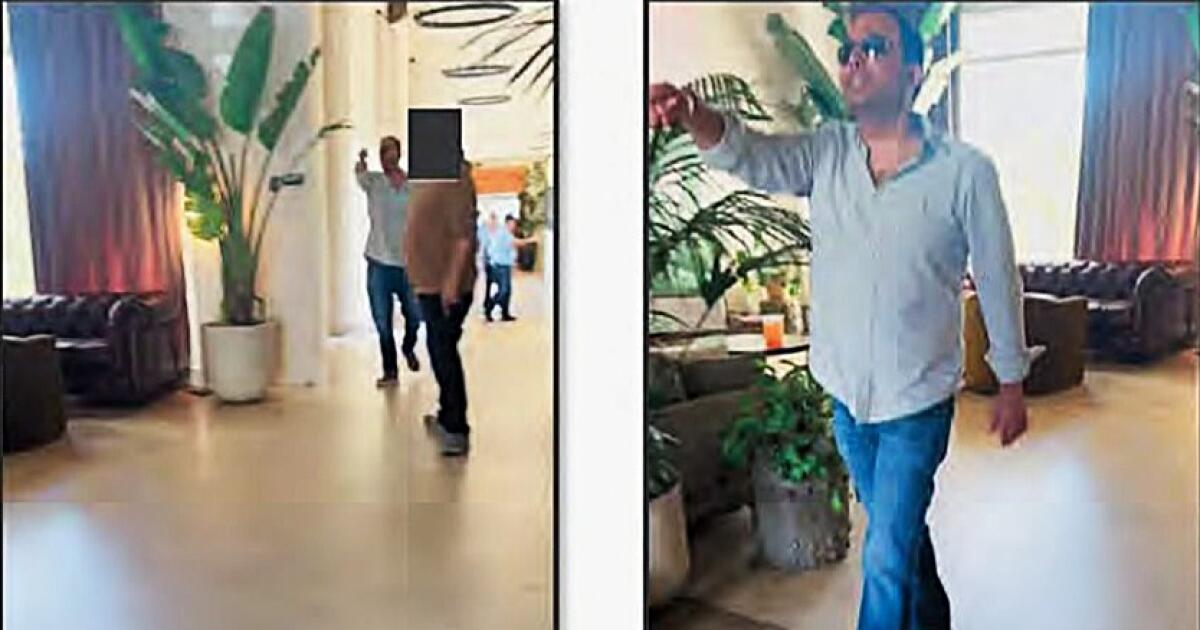
Orange County real estate investor pleads not guilty in $100 million bank fraud case
-
 Entertainment32 minutes ago
Tom Sandoval’s ex Victoria Robinson accuses him of abuse; her restraining order is denied
-
 Politics40 minutes ago
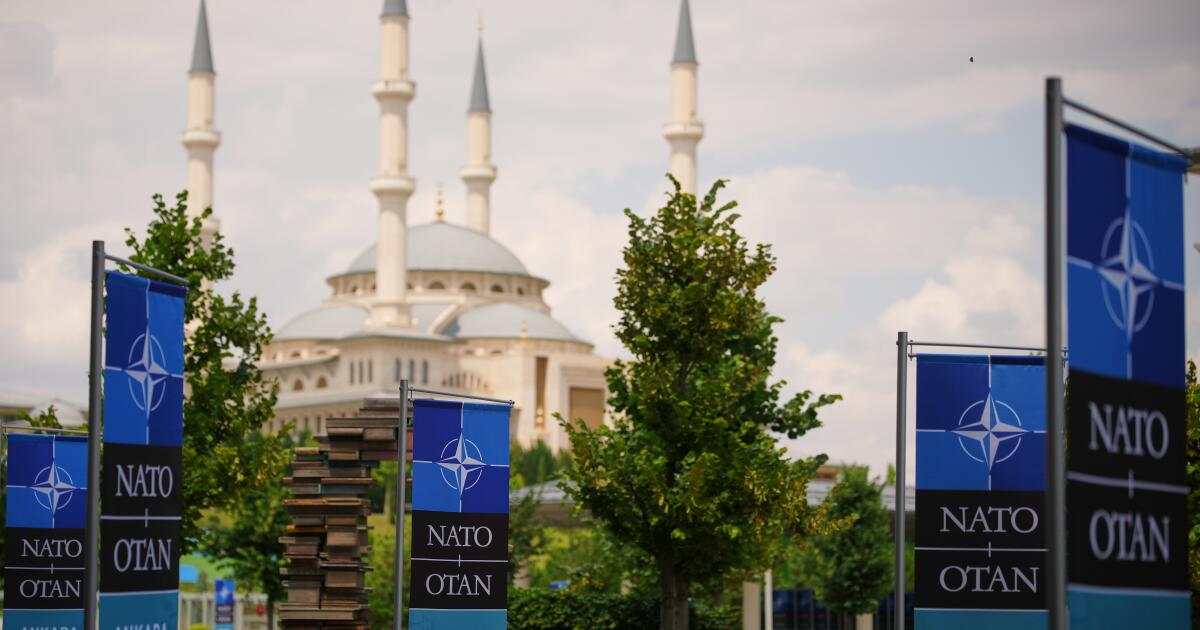
Trump heads to NATO as tensions simmer with Europe

