West
Illegal immigrant accused of killing Washington state trooper was previously accused of domestic violence

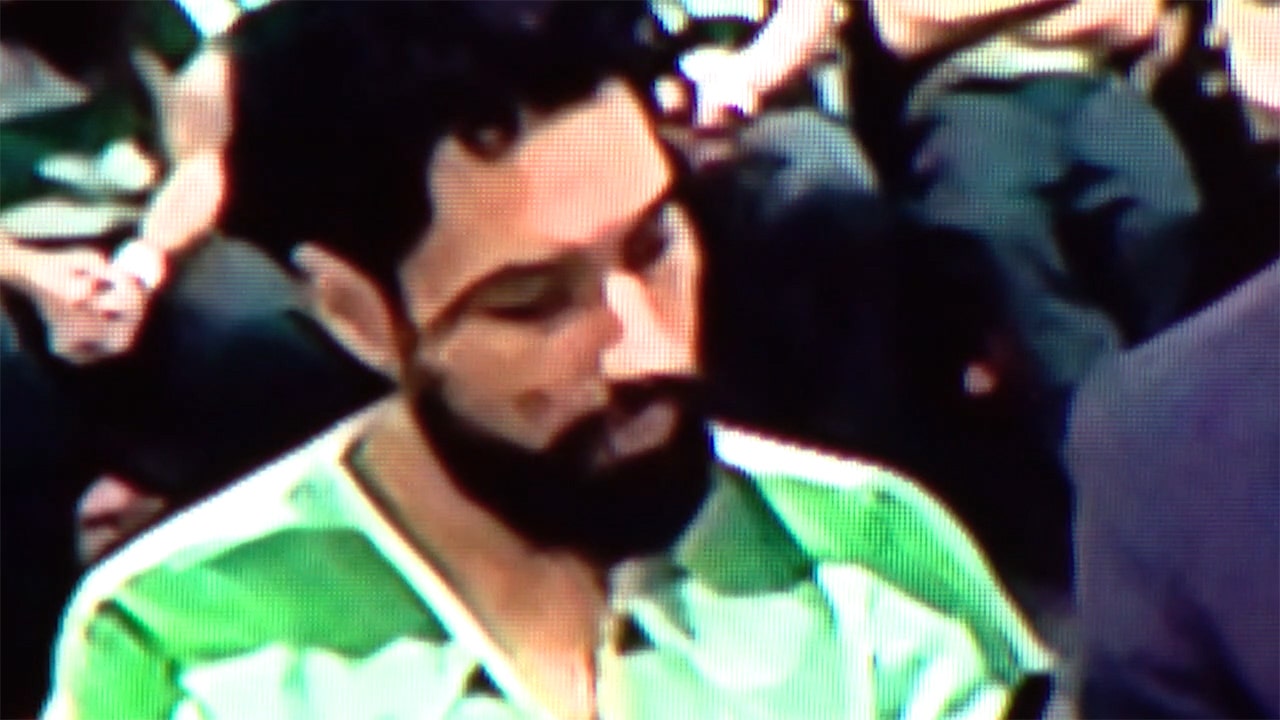
The illegal migrant who crashed into a Washington State Patrol car and killed the officer inside was previously arrested on charges of domestic abuse, officials claim.
Raul Benitez Santana, 32, was arrested last Saturday after the fatal incident, which took the life of 27-year-old Trooper Christopher Gadd.
King County court documents obtained by the “Jason Rantz Show” on KTTH show that Santana was previously arrested for assaulting his girlfriend — identified by the initials “M.C.” — who was also the mother of his then-five-month-old child.
MAN WHO CRASHED INTO WASHINGTON STATE PATROL TROOPER, KILLING HIM, IN US ILLEGALLY: ICE
Raul Benitez Santana is accused of killing a Washington State Patrol officer after crashing his car into a patrol vehicle. (FOX 13 Seattle)
M.C. reported to police that the confrontation began when she got into an argument with Santana over text messages he was receiving from another woman, according to the documents.
M.C. reported throwing Santana’s phone, after which he began punching her repeatedly. She suffered significant damage to her face, including a broken nose and swollen left eye. A non-felony plea deal from Santana was accepted in May 2019.
Following the arrest, officers noticed irregularities in Santana’s personal identification records.
WASHINGTON STATE TROOPER KILLED IN THREE-VEHICLE CRASH WHILE SEARCHING FOR DUI DRIVERS
King County became a sanctuary county in 2013, and Washington became a sanctuary state in 2019 to push back against effort by then-President Donald Trump to tighten restrictions on illegal immigrants in the U.S.
“The search incident to his arrest yielded multiple identification documents for him bearing a variety of names and other changed identifying information such as social security numbers,” documents surrounding the case read.
Santana was arrested last week following the fatal car accident and is being held on $1 million bail after allegedly crashing his vehicle into a Washington State Patrol trooper and killing him.
CAR LAUNCHES FROM ROAD, LANDS 200 FEET BELOW DUE TO ‘DISTRACTED DRIVING’: VIDEO
Washington State Patrol Trooper Christopher M. Gadd, 27, served the agency for two and a half years. He is survived by his wife and daughter, his parents, sister and other family members. (Washington State Patrol)
Gadd was watching for speeding and DUI drivers, when he was struck and killed in a three-vehicle crash on Interstate 5 around 3 a.m. Saturday.
An investigation into the crash found an SUV being driven by Santana was heading southbound on the interstate when the vehicle veered onto the shoulder and struck the trooper’s patrol car.
The Snohomish County Sheriff’s Office reportedly found the SUV was traveling at a high rate of speed when it crashed into the police vehicle.
On Tuesday, FOX 13 in Seattle reported it had obtained court documents alleging Santana had bloodshot eyes and admitted to police he had been drinking alcohol and smoking marijuana before getting behind the wheel of the vehicle and driving.
Santana was booked into the Snohomish County Jail, where U.S. Immigration and Customs Enforcement’s (ICE) Seattle Enforcement and Removal Operations (ERO) division placed an immigration detainer on the Mexican citizen.
He was first encountered by Seattle ERO on Oct. 28, 2013, at the South Correctional Entity in Burien, Washington, after being arrested for failing to appear in court for driving on a suspended license.
CLICK TO GET THE FOX NEWS APP
He was also sentenced to 90 days behind bars, with 87 of the days suspended, in May 2013, after being convicted of possessing less than 40 grams of marijuana.
On Oct. 6, 2014, Santana was sentenced to 90 days behind bars for driving on a suspended license, and in May 2019, was arrested again for domestic violence assault.
Fox News Digital’s Griff Jenkins contributed to this report.
Read the full article from Here


PORTLAND Ore. (KPTV) – Fireworks are on sale in Oregon until July 6, but state and local rules limit where they can be used and what types are allowed.
In Portland, fireworks use and sales are banned year-round.
Fireworks are also banned on beaches and in state and national parks.
Statewide, fireworks that fly into the air, explode, act unpredictably or move more than 12 feet horizontally are illegal. Banned fireworks include sky lanterns, missiles, rockets, Roman candles, firecrackers, cherry bombs and M-80s.
Fountains, sparklers, ground spinners and smoke devices are among the fireworks allowed under state rules.
Officials said people should not call 911 to report illegal fireworks. They said reports should go to the non-emergency line for the area.
First responders said there were 263 fires across Portland during last year’s fireworks season, and 27 were caused by fireworks.
For more details about fireworks regulation in Oregon, click here.
In Washington, fireworks sales legally begin Sunday and run through July 4.
Copyright 2026 KPTV-KPDX. All rights reserved.

The Utah Jazz are just hours away from the 2026 NBA Draft to determine who will be their franchise’s next cornerstone piece to add into their exciting core with their second-overall pick on the board.
And in the lead-up to the Jazz’s selection, there’s been tons of buzz surrounding who will be the one landing at that No. 2 slot. Between AJ Dybantsa, Darryn Peterson, and Cameron Boozer, each has seen various connections to Utah as being the guy they’ll end up with.
However, as we continue to get closer to when the Jazz are on the clock, we’re starting to get some clearer intel on who their selection ultimately might be. And in reality, it might just be a two-man race, rather than three.
Darryn Peterson Remains in the Driver’s Seat at No. 2
ESPN‘s Jeremy Woo recently released his final 2026 mock sorting out how each of the draft’s 60 picks are going to go. When it came to the Jazz, the pick would be none other than Kansas guard Darryn Peterson; someone that Utah has reportedly shown “strong interest” in leading up to the draft.
If Peterson ends up going first to the Washington Wizards, though, AJ Dybantsa seems like the most likely outcome for the Jazz at two.
“Sources say the Jazz have shown strong interest in Peterson throughout the process, and the expectation from rival teams has been that Utah will pick whichever of Peterson or Dybantsa falls to them,” Woo wrote.
“Peterson’s initial decision to only visit Washington was more reflective of his confidence in his security as a top pick and desire to hear his name called first.”
Despite the noise that had surrounding Peterson, his canceled workout, and any possible disinterest in landing with Utah, that buzz has since been shut down in the days leading up to Tuesday night’s first round.
Not only did Peterson confirm he has met with the Jazz before coming to New York following his canceled draft workout, but he also made it clear at Monday’s media day that he’s not dodging any team that’s willing to select him.
That, of course, would include the Jazz. So no worries on that front.
But even if Peterson does end up going ahead of the Jazz’s slot in what would be a surprise pickup for the Wizards at the first pick, Utah’s decision looks like it could be a relatively simple one. BYU’s AJ Dybantsa would be sitting up for grabs, and would be an ideal fit on the wing to Utah’s two-guard spot for the future.
So if Woo’s intel is a sign of anything, it seems like, even with the appeal that might be had in Duke’s Cameron Boozer as a potential option at number two, he’s looking more and more like the odd man out when it comes to being the guy for Utah.
Both Peterson and Dybantsa have a projected ceiling that tops what Boozer brings to the table, and fits better with this current Jazz core as their future two-guard. In a draft where all three prospects are seen as franchise-changing talents, those factors might just be what’s narrowly separated the top two as the targets to watch for Utah.
All of the chatter that’s ensued before the draft surrounding who the Jazz are going to take with their highest pick on the board in over 40 years will officially come to an end Tuesday night. But with the time quickly approaching before that decision becomes final, the writing might be on the wall for who they’ll be landing on.
Be sure to follow Utah Jazz On SI on X for daily Utah Jazz news, rumors and analysis!
 Add us as a preferred source on Google
Follow

ASHBURN, Va. – The Washington Commanders have released their 2026 Training Camp schedule, with eleven open practices between August 1 and August 19, including five open to all fans and six reserved for season ticket members.
For the fifth straight year, training camp will take place at the team’s football operations headquarters in Ashburn, Virginia.
Open practices for all fans are scheduled for August 1, August 7, August 8, August 18 and August 19.
Season ticket member practices will be held August 3, 4, 5, 10, 11 and 12.
All sessions begin at 8:30 a.m., with gates opening at 7:30 a.m.
Fans can claim free tickets beginning June 23 at 10 a.m. General admission fans may request up to six tickets and one parking pass for a single day of camp. Season ticket members can claim tickets for two member‑exclusive days in addition to one general admission day. All parking will be on site at the BigBear.ai Performance Center and requires a parking pass.
The team plans several themed events throughout camp, including Back Together Weekend on August 1, Military Appreciation Day on August 7 and Kids Day on August 8. Local youth football and community groups will also be hosted throughout the summer.
For more information visit the Washington Commanders online.
The Source: Information in this article comes from the Washington Commanders.
-

 Ohio2 minutes ago
GALLERY: Photos of former Ohio State football coach Jim Tressel
-

 Oklahoma9 minutes ago
OHP remembers K-9 for protecting countless lives during career
-

 Oregon12 minutes ago
Fireworks on sale in Oregon until July 6
-

 Pennsylvania16 minutes ago
Pennsylvania company builds goals for US Soccer, FIFA World Cup matches
-

 Rhode Island24 minutes ago
Ethics Commission denies Shekarchi’s motion to dismiss high court bid ethics complaint
-

 South-Carolina26 minutes ago
Inside TCMU’s new SC 250 exhibit
-

 South Dakota32 minutes ago
“This Is Our Event” – Local news, weather and sports from Pierre, South Dakota
-

 Tennessee39 minutes ago
Tennessee Aquarium, Chattanooga Lookouts team up to teach fans about waterway trash

