
Milwaukee, WI
Milwaukee-based WillBridge wants to help organizations leverage their data for greater social impact


Video circulating this week shows masked federal agents in Milwaukee arresting people. City leaders say the face coverings violate a city ordinance — but whether federal agents are required to follow local ordinances is a legal question that may ultimately be decided by a federal judge.
RELATED | Father with no criminal record detained by ICE on Milwaukee’s south side, family says
Local attorney Russell Jones said the answer depends on the specific ordinance and what federal authorities are doing.
“The issue becomes whether or not the local ordinances interfere with the operations of the federal officers acting under federal law. If it does, federal law will supersede it. Right, it’s the supremacy clause of the Constitution. If it doesn’t interfere with their operations, then typically they will follow those ordinances. So that’s really the question: do the ordinances interfere with the legitimate operations of the federal agency?” Jones explained.
For the past week, masked federal agents have been seen in Wisconsin arresting people they say are in the country illegally.
Watch: Do federal agents have to follow Milwaukee’s face covering and park ordinances?
Do federal agents have to follow Milwaukee’s face covering and park ordinances?
Galo Suarez described one encounter.
“They broke our side window, and they told us that if we didn’t comply, we would face several heavy consequences,” Suarez said.
Images have also surfaced of what appear to be federal agents in Milwaukee County parks.
Federal agents wearing masks and being in county parks, according to city and county leaders, are against local ordinances.
Milwaukee’s city ordinance prohibits law enforcement officers from wearing face coverings. A Milwaukee County ordinance prohibits any law enforcement agency from using a park as a staging area without a permit.
When asked whether a resolution to the legal question was possible now, Jones said it likely falls to the courts.
“That’s a question that eventually probably some federal judge will answer,” Jones said.
Before the city’s face covering ordinance was passed, City Attorney Evan Goyke wrote in a memo that “it is legal and enforceable.”
Enforcement of the ordinance would fall to Milwaukee Police, who earlier this week said they have “requested a formal written legal opinion from the city attorney’s office regarding the ordinance’s applicability and enforceability.” TMJ4 News reached out to Goyke on this and is waiting to hear back.
ICE has already stated it “will not abide by unconstitutional bans,” noting that “ICE officers wear face coverings for one reason: to protect themselves and their families from real-world threats including agitators.”
Jones said the practical challenge of enforcing a local ordinance against federal officers adds another layer of complexity.
“Enforcing a local ordinance right is typically done with an arrest or issuing a ticket, and certainly arresting ICE officers would interfere with their operations,” Jones added. “Ultimately, a federal judge will decide if these ordinances interfere with federal operations, and if they do, they will be superseded by federal law, and if they don’t, then ICE would likely have to follow them.”
This story was reported on-air by Jenna Rae and has been converted to this platform with the assistance of AI. Our editorial team verifies all reporting on all platforms for fairness and accuracy.
Let’s talk:
Hey there! At TMJ4 News, we’re all about listening to our audience and tackling the stuff that really matters to you. Got a story idea, tip, or just want to chat about this piece? Hit us up using the form below. For more ways to get in touch, head over to tmj4.com/tips.
It’s about time to watch on your time. Stream local news and weather 24/7 by searching for “TMJ4” on your device.
Available for download on Roku, Apple TV, Amazon Fire TV, and more.
Report a typo or error // Submit a news tip

A hospital bed. That was the only thing that could stop Dominique Paul Noth from doing a review.
An ice storm tried a couple of years ago, coming to Milwaukee the same night as a dance recital. It failed. When he could no longer drive and gave up his license, one of his children would take him, or he’d Uber to a performance. That was his level of dedication.
Then, one month before his passing, Noth, stuck in a hospital bed and hooked up to an oxygen tank, acquiesced, calling his editor to inform him he would not be able to review Agatha Christie’s “And Then There Were None.” For the first time in his 60 years as an arts critic in Milwaukee, the show would go on without him.
“He was not happy about it,” his son Vincent said.
“It’s something I don’t think I’ve ever seen him do before,” added Paul, the third oldest Noth’s nine children.
Noth, who influenced Milwaukee’s discussion of culture and the arts for close to six decades, died on June 26 at 84 years old. He had advanced chronic obstructive pulmonary disease complicated by heart failure.
Conceived while his parents were escaping the Nazis in France, Noth was born in New York in 1942. He moved to Milwaukee as a teenager and went to Marquette University, where he fell in love with the arts.
Noth graduated in 1963, and worked in New York for three years before being hired by the Milwaukee Journal, where he worked in a variety of positions for three decades. Starting as a copy editor, he soon made a switch to news writing before becoming a film and drama critic.
He kept rising, becoming an arts and senior features editor, working on the publication’s beloved Green Sheet in the 1970’s. Noth stayed at the newspaper long enough to serve as the first online news producer for the merged Milwaukee Journal Sentinel.
In the 1970’s and 80’s, he also taught a film course at the University of Wisconsin-Milwaukee. After leaving the Journal Sentinel, he served as editor-in-chief of The Milwaukee Labor Press for a decade before becoming a contributing theater and culture critic for Urban Milwaukee.
Noth’s writing earned numerous honors, including nine gold medals from The Milwaukee Press Club for Best Critic. Never afraid to ruffle feathers with searing reviews, Noth said “the force fizzled” in “Star Wars: Return of the Jedi.” He even briefly got himself banned from reviewing a Skylight Theater show in 1974 because of past rhetoric.
“He approached Milwaukee as if it was New York, L.A., Chicago,” said Jeannie Gaffigan, Noth’s oldest daughter. “He really always believed in Milwaukee, and always believed in the arts in Milwaukee.”
His access to subjects often set him apart. Once, when Cary Grant was getting into a taxi to go to the airport, Noth followed the actor into the cab to secure an exclusive interview. He also got a one-on-one with Steven Spielberg by talking his way past security after the filmmaker spurned other media.
Noth juggled working tirelessly with raising a family, and often involved them in his jobs. He would take his children to exclusive, private screenings and even more exclusive interviews. His kids attended his UWM classes, and sat in the Milwaukee Journal offices while he typed his reviews.
He also loved to cook and bake, making everything from scratch.
“I have no idea how he did as much as he did,” son Paul said. “He was able to accomplish a lot.”
Even though his body was not fit to leave the hospital, Noth was able to give his family one final gift before he died. Surrounded by all his kids and many grandkids, Noth went around the room and gave a personalized goodbye to everybody.
“It’s a great blessing,” Paul said, “but it’s also a very emotional, devastating time.”
Noth told them even though he could no longer continue to make the world a better place, he trusted each and every one of them to carry on that legacy.
In that vein, his family established the Dominique Paul Noth Memorial Fund, which is now accepting donations. The fund, according to its website, will be used to support charitable causes that enrich the greater Milwaukee community, foster creativity and education, and strengthen civic life.
A celebration of life for Noth will begin at 2 p.m. on August 2 at Turner Hall, followed by a memorial tribute at 4 p.m.
Jack Albright can be reached at JAlbright@usatodayco.com.
Milwaukee, WI
Hundreds rally on Milwaukee’s South Side against ICE arrests and in solidarity with immigrants

Hundreds of people gathered at Kosciuszko Park on Milwaukee’s South Side, marching through the neighborhood and raising signs in protest of recent ICE arrests across Wisconsin.
READ ALSO | Father with no criminal record detained by ICE on Milwaukee’s south side, family says
Community members, organizations, and city leaders joined together in the march, which organizers said is meant to be peaceful and to raise awareness about human rights.
“We are standing in solidarity; we don’t believe what’s happening out here in the streets is valid. We think this administration is messed up and we see the politics trickling down now to Milwaukee,” Christina Lopez-Prado said.
The protest comes after federal agents conducted a series of arrests across Wisconsin in the last couple of days. The Department of Homeland Security said in a statement Tuesday that they have arrested 39 people and that many of them have criminal histories.
Watch: Hundreds rally on Milwaukee’s South Side against ICE arrests and in solidarity with immigrants
Protest held over ICE activity in Milwaukee
TMJ4 has been covering the recent ICE arrests, getting video and finding multiple people without any criminal record who have been detained by ICE.
“As an immigrant myself from Guatemala, I sympathize so much with the people of my community. Especially those who live in fear for what ICE is doing to our communities,” Julia said. “I have hope because the only thing stronger than fear is hope.”
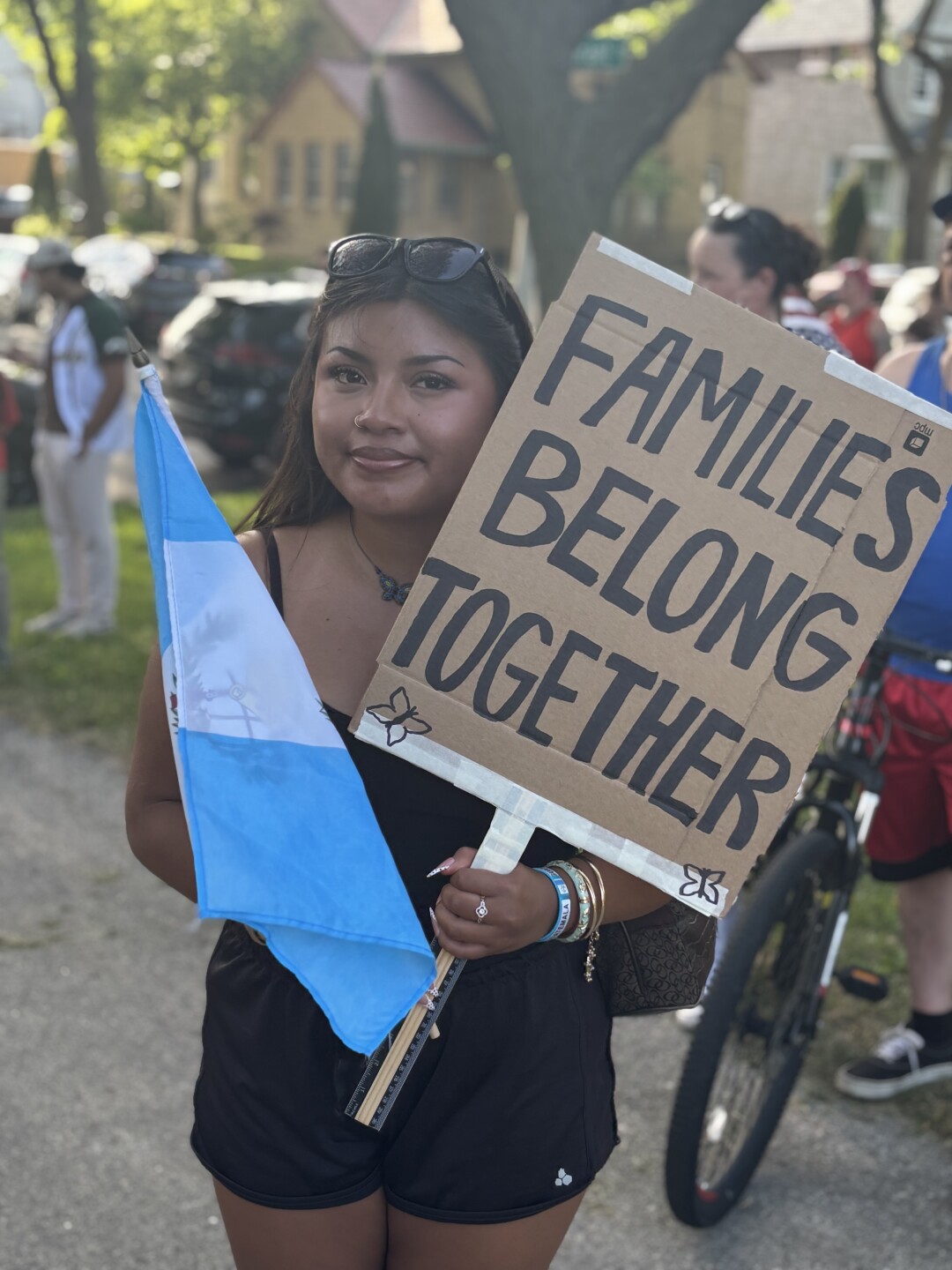
Emilio De Torre of Milwaukee Turners said the nature of the arrests has shaken the community.
“It’s disruptive. People are afraid to go outside, afraid of being racially profiled,” De Torre said.
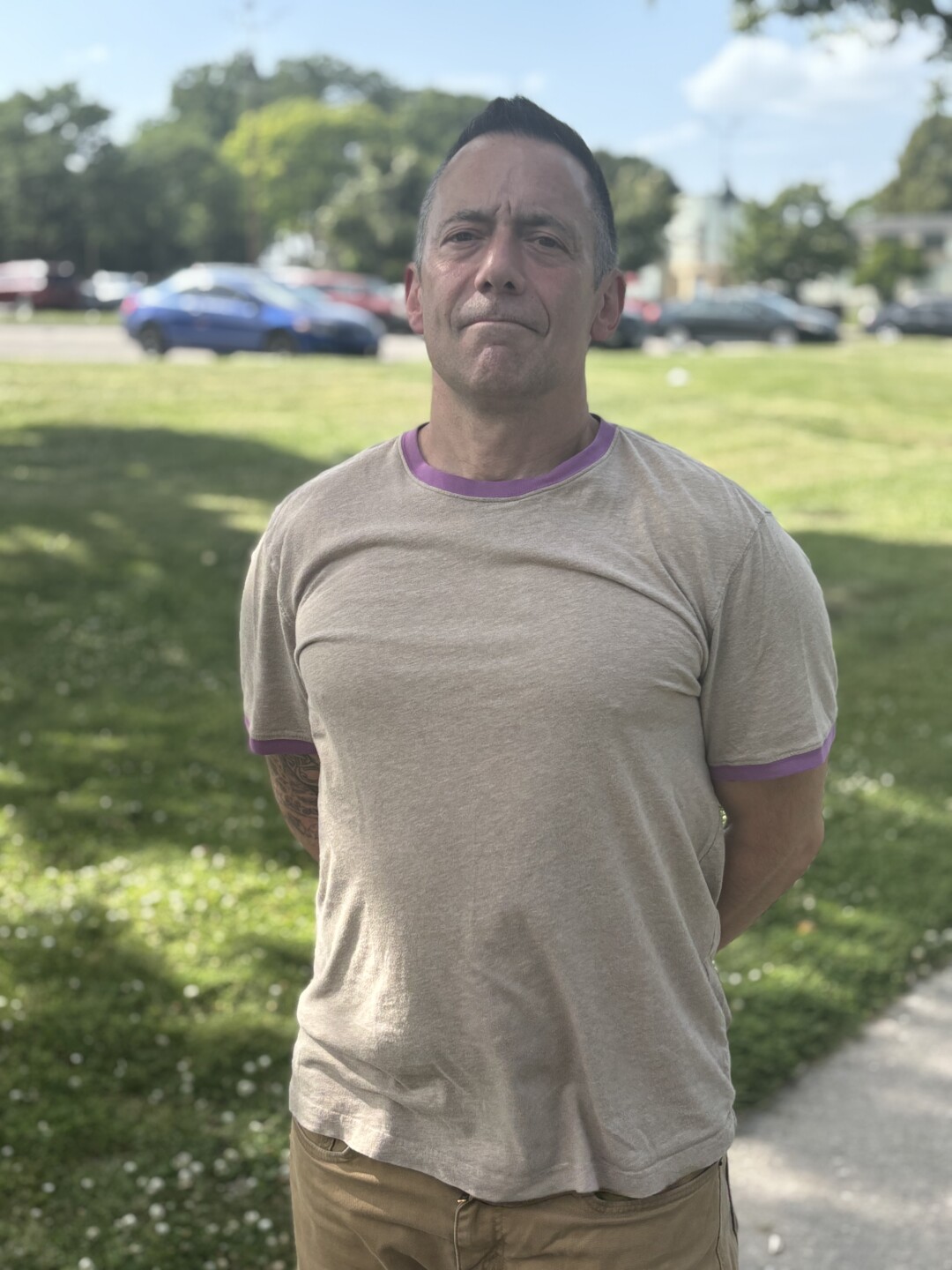
De Torre also addressed what demonstrators want from the federal government.
“Milwaukee does not want the kind of chaos that has been reigned down in Minneapolis, in Chicago, in LA. We want our federal government to follow the Constitution, to follow due process, and to make sure their reactions meet the thing that necessitated it,” De Torre said.
DHS said in its statement that all people arrested have or will receive full due process and will remain in ICE custody pending their removal or removal proceedings.
TMJ4 reached out to DHS for an updated number on arrests made in Wisconsin. They did not provide any new information.
Let’s talk:
Hey there! At TMJ4 News, we’re all about listening to our audience and tackling the stuff that really matters to you. Got a story idea, tip, or just want to chat about this piece? Hit us up using the form below. For more ways to get in touch, head over to tmj4.com/tips.
It’s about time to watch on your time. Stream local news and weather 24/7 by searching for “TMJ4” on your device.
Available for download on Roku, Apple TV, Amazon Fire TV, and more.
Report a typo or error // Submit a news tip
-

 Delaware4 minutes ago
Delaware Man Killed by Falling Camel
-

 Florida11 minutes ago
Florida Supreme Court reverses rule on knock-and-announce evidence
-

 Georgia14 minutes ago
FBI assigns 260 staffers to Georgia election investigation
-

 Idaho14 minutes ago
Trump OKs disaster declaration for northern Idaho counties
-

 Hawaii17 minutes ago
Hawaii commemoration of America’s birthday funded on a shoestring – The Garden Island
-

 Illinois26 minutes ago
Fireworks Near Me: July 4th Events Around Chicago Heights For 2026
-

 Indiana29 minutes ago
Retro Indy: These cities could have been Indiana’s capital
-

 Iowa34 minutes ago
11 beaches on Iowa DNR’s swimming not recommended list for July 4

