Entertainment
Scandoval put Ariana Madix center stage. Can she stay there?


At the end of the musical “Chicago,” Roxie Hart, a chorus girl who has been charged with murdering her lover, is declared not guilty. It should be a victorious moment for the aspiring vaudeville star, but just as the verdict is announced, the press gets wind of another bloody crime unfolding down the courthouse hall. The media scrambles out of the room to cover the juicy new story, leaving a dejected Roxie behind.
“Wait! I’m Roxie Hart! Don’t you want my picture?” she yells after them, alone with just her lawyer. “Where are all the reporters? Photographers? The publicity?”
Watching Ariana Madix deliver these lines on a Broadway stage feels particularly poignant, given the tabloid scandal she’s lived through.
Who are the people shaping our culture? In her column, Amy Kaufman examines the lives of icons, underdogs and rising stars to find out — “For Real.”
It has now been one year since Madix learned that her longtime boyfriend was cheating on her with a close friend. The revelation — like much of her nine-year relationship with her ex, Tom Sandoval — played out on the reality show “Vanderpump Rules,” where the two began dating while working as bartenders at a West Hollywood restaurant.
Madix has been one of the less sensational members of the cast, a go-along-to-get-along type without the pick-me energy that dominated the group. Cameras followed her castmates as they got arrested, were booted from work for public intoxication, tried to become pop stars and got engaged to much older movie producers. In contrast, she and Sandoval appeared to be fairly stable, the Valley Village home they purchased together in 2019 serving as a gathering spot for their oft-troubled friends.
But when “Scandoval” — the name Bravo fans assigned the cheating affair — became public knowledge in March 2023, Madix went from an average Jane on a decently popular reality show to the people’s heroine.
Season 10 of the series, which had wrapped filming months prior, was already airing, but production made the unprecedented decision to pick up cameras to capture the drama. As the episodes unfurled, “Vanderpump” fans eagerly dissected every scene shot during the seven-month period when Sandoval and his lover, Rachel Leviss, were having clandestine relations. The audience rallied behind Madix when she verbally annihilated the pair on the reunion show. Even people who’d never seen the program tuned in, with Season 10 reaching its largest audience ever — 11.4 million viewers on average — and earning its first Emmy nominations.
Madix, who moved to Hollywood in 2010 to become an actor, capitalized on the opportunity to secure the career — and the paycheck — she’d always wanted. She set up partnerships with 17 brands she’d never worked with before. Trading on her single-girl empowerment, she has promoted everything from Glad trash bags (“There’s something about STRENGTH”) to Bic razors (“Unclog your life”) and T-Mobile phones (“We’ve officially entered my upgrade era”).
She got a book deal to release “Single AF Cocktails: Drinks for Bad B*tches”; her second mixology book, but her first without Sandoval as a co-writer, became a New York Times bestseller. The WeHo sandwich shop she will soon launch with a “Vanderpump” co-star sold $200,000 in merchandise before it had even opened its doors.
She was invited to the White House Correspondents’ dinner, was cast in a Lifetime movie, served as a guest host on the dating series “Love Island” and finished in third place on “Dancing With the Stars.”
And for the past month, the 38-year-old has been playing Roxie Hart in “Chicago.” The role in the Broadway musical for decades has been used to draw in new theatergoers — something derisively called stunt casting; Roxie has been portrayed by Pamela Anderson, “Real Housewives of Beverly Hills” star Erika Jayne, Rumer Willis and Brandy.
But Madix’s run has been particularly successful. The production had its highest-grossing non-holiday performance week in its 27-year history when she joined the company in late January. And she recently was asked to stay on for an additional two weeks , concluding April 7.
Madix doesn’t give stereotypical musical theater girl vibes; she’s not boisterous or especially extroverted. But it makes sense that she’d feel comfortable playing Roxie — a straight shooter who won’t be underestimated, the kind of woman who knows how to turn a difficult hand in her favor.
“Aside from cheating on her husband and murdering someone, I find I can really relate to Roxie a lot,” Madix says, laughing. “She’s somebody who wanted to be a performer. She got kicked around a lot. The reason it seems like she’s grasping for fame is because without fame, she doesn’t really have any other way.”
Madix insists she isn’t desperate for the spotlight in the way her character is, that “working is the goal and working was always the goal.” But there’s no denying that until paparazzi began staking out her San Fernando Valley home last year, documenting any evidence of cardboard boxes or moving vans, she didn’t have the job opportunities she has now.
Even if, as she says, she doesn’t care about being famous, her career prospects are very much tied to her pop-culture relevance.
And it’s unclear how much longer “Vanderpump Rules,” let alone Scandoval, will remain relevant. Season 11, which debuted Jan. 30, was filmed just a few months after the cheating was unveiled, so much of the on-screen drama revolves around the affair fallout. The program has continued to attract respectable ratings, but viewers who not long ago clamored for any morsel of gossip relating to the liaison are already declaring it old news.
“They say that all the time — ‘I’m over it,’” Madix says, assuming the voice of an irritated fan. “But them saying that feels a little bit like, ‘Oh, you own my life? You’ve decided that you’ve consumed enough content?’”
Style Director: Emily Men; Blouse and Pants: AKNVAS; Jewelry: Simon G.; Shoes: Jimmy Choo; Makeup: Taylor Fitzgerald, Celebrity Makeup Artist / Mane Addicts; Hair: Alison Farfan, Celebrity Hair Stylist / Mane Addicts
It’s late January, three days before Madix will have her premiere at the Ambassador Theatre, and she’s dashed across the street for dinner after a day of rehearsals. There aren’t many restaurants in Times Square that aren’t swarming with tourists, but she chose this chain Italian spot because it is close, and she can order meatballs.
She walks in wearing fuzzy earmuffs, a turtleneck and a puffer vest. Even without her SoCal wardrobe — crop tops, cutout dresses, wide-brimmed hats — she is recognized by three young women, who approach her table before her wine has even arrived. One girl apologizes profusely for interrupting, shares that she was rooting for Madix on “DWTS,” and then continues to say “sorry” before backing away timidly. She is soon replaced by two friends who announce themselves as members of “Team Ariana” and ask for a picture. “We love you. You can sit. We’ll stand behind you like psychos,” they say, crouching beside her chair.
After they leave, she picks up our conversation as if the fans never came by. I stop her to ask if this kind of interaction has become more commonplace in her life over the past year. “Yeah. Yeah, it happens,” she says, shrugging it off. “I want people to know it’s cool to come up to me and say hi. Like those girls saying they were sorry? It’s not like, ‘I’m on the show, and you’re not,’ and there’s a line between us.”
But it’s no longer just “the show” that Madix is known for.
Even before Scandoval erupted last March, Madix had informed her team that she was interested in pursuing non-”Vanderpump” opportunities. In addition to her portion of the mortgage on the $2-million Valley Village home, she was investing heavily in the sandwich shop, Something About Her, with castmate Katie Maloney.
“I was like, ‘I’m not OK,’” she recalls telling her representatives. When she and Sandoval broke up, she was petrified about her financial situation. “There’s no one here about to bail me out. I don’t have rich parents. I don’t have an inheritance from anybody who’s passed.”
Mere days after TMZ broke the news about the cheating scandal, Madix’s friends were receiving DMs from companies looking to get in touch with her. (Madix temporarily deactivated her social media accounts in the wake of the split.) “They were pinging us like, ‘Hey, we want to give her this thing,’” says Meredith Brace Sloss, who has been friends with Madix since college. “Airbnb was like, ‘Oh, we’ll give her a house,’ and someone wanted to send her a grocery gift card.”
Sloss referred any outreach to Madix’s manager, Kasra Ajir, who had been working with the aspiring actor since 2011, two years before she first appeared on “Vanderpump Rules.”
“Ariana has always been somebody fans loved and saw themselves in, so I was not surprised that brands wanted to work with her. I was surprised by the number of brands that showed up — almost on, like, day two,” Ajir says. “It was a pressure cooker, but it was so exciting. Every day you woke up and didn’t know what was going to come.”
Madix was thrilled by the offers but admits she also felt almost obligated to accept the majority of them given due to her bank statements.
“My team would be like, ‘This is a really great offer from Bic, look at it.’ And I’d say, ‘It is a fantastic offer, but even if it wasn’t, I’m not in a position to say no right now, because I have to make myself financially stable from now until kingdom come.’”
It’s been an incredible hustle, with Madix turning a personal tragedy into a reported $1-million payday. (Asked to comment on the accuracy of this figure, she says she is in the midst of filing her tax returns and hasn’t yet calculated her 2023 income.) But while most fans have commended her savvy in cashing in on Scandoval, others have criticized what they see as Madix’s transition into a “walking billboard.”
“Those people don’t want women to work,” Madix says, growing frustrated. “I think those people are confused about what it is that I do for a living. Those are acting jobs. I’m doing the same job I have done for many years; I’m just working more. And that’s why I signed up for ‘Vanderpump Rules’ in the first place — to work more.”
Gown: FWRD & Retrofete; Jewelry: Simon G.; Shoes: Jimmy Choo. Makeup: Taylor Fitzgerald, Celebrity Makeup Artist / Mane Addicts; Hair: Alison Farfan, Celebrity Hair Stylist / Mane Addicts
Madix has never known anything other than work. Her great-grandmother was an employee at a bank until she was 90; her grandmother stayed at her own real estate agency until that age too. Her mother, 71, still has a job at a technology company; in Madix’s family, the topic of retirement does not come up.
She was raised in a middle-class home on Florida’s Space Coast, not far from Cape Canaveral. Her area code was 321, and as a result of her mother’s job at a technology company she got to watch occasional satellite launches. Her father, who died of a heart attack in 2013, was a commercial roofing contractor whose projects included building pavilions outside the rides at Universal Studios.
Madix wanted to be an actor and pleaded with her parents to attend a conservatory theater program after high school. They insisted she get a liberal arts degree, so she enrolled at Flagler College, a private institution about two hours north of her home. She studied theater and broadcast journalism but never landed major roles in the program’s productions, according to Sloss.
“Our department was — I mean, folks were a little bit homely, so they were all really intimidated by Ariana because she came in looking like a leading lady,” Sloss says. “She was kind of ostracized.”
The two became friends freshman year while auditioning to be characters at Disney World. Because you “have to be fur before you do face,” Madix explains, she initially played both Chip and Dale before working the princess circuit as Ariel, Cinderella and Sleeping Beauty.
After graduation, she moved to New York and then L.A. to pursue acting. In between auditions, she worked as a bartender at Villa Blanca, the now-defunct Beverly Hills restaurant owned by Lisa Vanderpump, then starring in “The Real Housewives of Beverly Hills.” In 2013, Bravo decided to give Vanderpump a spinoff centered on a different establishment she owned, the WeHo lounge Sur. Madix, blond and feisty but with the heart of a peacemaker, was transferred from Villa Blanca to Sur so she could join the show.
She had qualms about how being on reality television could affect her career. But her acting teacher, Lesly Kahn, urged her to jump on the opportunity.
“She was like, ‘Is this like a Honey Boo Boo situation where they’re trying to exploit you and make you look stupid?’” Madix says her instructor asked. “She was like, ‘As long as you’re you, I think you’ll be OK. Think about it this way: Martin Scorsese is not knocking on your door. You don’t have those kinds of opportunities at the moment. Take this, and make of it what you make of it.’”
Still, her friends worried. Sloss expressed concern that “maybe her being associated with a reality show could be considered frivolous or surface-level.”
Plenty of established actors have gone on to appear on reality television shows, but the pipeline doesn’t flow as strongly in the other direction. And Madix did not end up doing many outside acting gigs during her decade-long stint on “Vanderpump.” She appeared in rapper Yung Gravy’s music video, did an episode of the Charlie Sheen sitcom “Anger Management” and had a supporting role in a Michael Madsen movie called “Dirty Dealing 3-D” that was never released in theaters.
“My hat has been in the ring since the dawn of time if anybody ever wanted to express interest,” Madix says of her approach to acting while on “Vanderpump.” “I remember being 26 and moving to L.A. and meeting with agencies who told me I was too old to be a developmental client for them. So after a while I thought, ‘OK, well, I’ll focus more on opportunities that are in front of me.’ Maybe my path is different than the one I initially wanted, but it’s still great.”
It was only when she got “Dancing With the Stars” post-Scandoval that she started to feel like her luck might be changing. She’d internalized the Hollywood idioms about there being no roles for women in their 30s, but while competing in bedazzled leotards on a prime-time network television show, she felt that “maybe everything hasn’t passed by. Maybe I still have room to grow.”
Her performance caught the attention of the “Chicago” producers, who brought her in for a work session last fall to test her ability to sing, act and pick up choreography.
David Bushman, the production’s dance captain, says he was looking to see if Madix was able to understand the musicality of the steps. “Right away, I could tell, ‘Oh, she doesn’t want anything dumbed down,’” says Bushman, who has been with the New York version of “Chicago” for a decade. “She really wanted the real deal, and she was willing to work for it.”
Ariana Madix as Roxie Hart and Max Von Essen as Billy Flynn in “Chicago” on Broadway.
(Jeremy Daniel)
Onstage at the Ambassador a few days before opening night, Madix is running through a few of her solos. She has slicked her bob back into a short ponytail and is outfitted in black spandex and character shoes. After practicing her signature number, “Roxie,” Madix receives notes from Gary Chryst, the dance supervisor.
“You don’t have to make anything bigger. We have to be careful not to give it all away at the beginning,” Chryst cautions, mentioning the moments in the song where she accentuates her body parts: “My hair! My teeth! My boobs! My nose!”
“I know, I get really excited,” Madix replies, taking in his observations with gentle laughter and polite “mm-hmms.”
“We don’t want to see the work,” Chryst says, “because you’re organically fun.”
That’s what Madix’s manager, Ajir, wants industry folk to pick up on when they see her in “Chicago.” His strategy has been to invite as many casting executives from networks and studios to the show as he can in the hopes that the performance can serve as her calling card.
“I think when they see what she’s capable of, it’ll open a lot of doors for her in the scripted space,” Ajir says. “What an opportunity for them to see her in a different light. And to see how many fans she has from ‘Vanderpump.’”
At Madix’s debut performance Jan. 29, Bravo fans appeared to fill much of the sold-out theater. Lala Kent and Scheana Shay, two of Madix’s “Vanderpump” castmates, had flown from L.A. to attend the first performance, and clumps of selfie seekers amassed in the aisles by their seats.
Even Madix’s friends who aren’t on the show but frequently appear on her Instagram page were attracting attention.
“I took a two-hour train to see her,” one young woman told Madix’s off-screen best friend, Brad Kearns, as if he might later convey the message. “I wish I could wait after to get a signature, but there’s no 10 o’clock train back to my hometown.”
But the Bravo fan base can be as fickle as it is loyal. After one season as America’s Sweetheart, Madix has already fallen from grace in the eyes of some who feel her newfound fame has gone to her head.
“I have never experienced someone who gets cheated on and suddenly she becomes God,” hisses Kent in the Season 11 trailer.
“It gives me tall poppy syndrome a bit,” Madix says. “The tallest poppy has to get cut down. There’s a lot of eyes on me, so it’s like, ‘Let’s cut this girl down to size.’
“I feel like I’m working, living and being pretty f— quiet about everything,” she adds, a touch defensively, “while also putting my life back together and trying to find a way to set myself up for a decent life as a middle-aged woman who now has to take everything on herself.”
Over the course of our three hours of conversation, money comes up repeatedly. Specifically her fear about not having it.
There was a time, during her first year in L.A., when she lived out of her car; she still feels like it was “f— yesterday,” a phrase she utters with such intensity you start to visualize the fogged-up windows, a sleeping bag rolled up in the back seat.
She doesn’t ever want to be back there, and has a real desire to create generational wealth for her family. She would like to be able to move her mother out to California to be closer to her and her brother.
And much as she wants to believe she is taking the next step in her career, Madix hasn’t allowed herself to even visualize life after “Vanderpump Rules.”
“The only way I could ever see myself moving away from the show is if I had another job,” she says.
A few weeks later, when I call to catch up with her, I mention the reaction to the new season of the reality show — how some fans feel as if it might be reaching its natural conclusion.
“I always feel like the show thrives when it’s at its most authentic, and if it feels like everyone’s stories have been told, I certainly don’t think it would be wise to just try to drum things up to keep it going,” she says.
Raquel Leviss, left, was the center of the “Scandoval” on Season 10 of “Vanderpump Rules,” which ended Tom Sandoval and Ariana Madix’s nine-year relationship.
(Nicole Weingart / Bravo via Getty Images)
But she can’t imagine Bravo pulling the plug when the show‘s ratings are strong. And even while 3,000 miles away from the cameras and her ex-boyfriend, Madix still finds herself attached to the drama of it all, including Sandoval’s travails.
The 40-year-old has been largely unable to find an effective way to market his villain era. He appeared on “Special Forces: World’s Toughest Test,” a Fox show where celebrities endure grueling military-grade training, but did not make it to the final. He started a podcast that has not found an audience. And earlier this month, he issued an apology after saying in a New York Times Magazine cover story that “the O.J. Simpson thing and George Floyd” were “a little bit the same” as Scandoval.
“I was just blown away by how anybody could say something so awful,” Madix says. She also was disturbed by the article’s claim that after he made those remarks in his initial interview, Bravo intervened to restrict further access to him.
“It was interesting how much Bravo was trying to cover for him,” she says. When I respond that it seemed like standard practice for a network publicity department, she disagrees. “Are they doing that right now with me and you?” she asks rhetorically, alluding to the fact that no one has stepped in mid-story to monitor our interviews or text message exchanges.
When Madix returns to L.A. in April, she is likely to move back into the home she and Sandoval still co-own. The property has become its own source of tabloid drama: Neither party wants to leave, so both have continued to live there while ignoring each other, communicating exclusively via third parties such as friends and assistants.
They each put $250,000 down to buy the home, and post-split, Sandoval has stated his desire to buy Madix out. She says he sent her a letter of intent stating he would give her $600,000 for her portion, based on a valuation of $3.1 million. “No formal offer was made. He didn’t get an appraisal,” she says.
In January, she filed a suit asking the L.A. County Superior Court to approve a partition by sale, which would force the couple to sell the five-bedroom property and split the proceeds. Sandoval responded to the request this month, claiming Madix needs to repay a $90,000-loan before they move forward.
Remaining attached to her ex in this way — and to the entire Scandoval — is difficult for Madix, especially during the months she’s been in “Chicago,” trying to ignore so many other negative narratives — stunt casting, being a leading lady at 38, the clock ticking on her 15 minutes. She’s grappled with her identity as a reality star for a long time, unwittingly absorbing the notion that if you were in the profession, you “hadn’t done anything with your life. … You were beneath everything.”
It was only recently, when a friend pointed out that she’d amassed 10 years of on-camera experience — more than most actors get in their entire career — that her perspective started to shift. So she has no time for those who say she’s being “rewarded” for Scandoval. She won’t be reduced to a “passive participant in my own life.”
“I’ve had eyeballs on me that were not on me before. That gave me an inch, and I said, ‘OK, let me prove to you that I can do the mile. I can run this marathon because it’s what I’ve been preparing for this whole time.’”

Movie Reviews
1986 Movie Reviews – About Last Night, Big Trouble in Little China, The Great Mouse Detective, Howling II, Psycho III, Under the Cherry Moon | The Nerdy

Welcome to an exciting year-long project here at The Nerdy. 1986 was an exciting year for films giving us a lot of films that would go on to be beloved favorites and cult classics. It was also the start to a major shift in cultural and societal norms, and some of those still reverberate to this day.
We’re going to pick and choose which movies we hit, but right now the list stands at nearly four dozen.
Yes, we’re insane, but 1986 was that great of a year for film.
The articles will come out – in most cases – on the same day the films hit theaters in 1986 so that it is their true 40th anniversary. All films are also watched again for the purposes of these reviews and are not being done from memory. In some cases, it truly will be the first time we’ve seen them.
This time around, it’s July 4, 1986, and we’re off to seeAbout Last Night, Big Trouble in Little China, The Great Mouse Detective, Howling II, Psycho III, and Under the Cherry Moon.
About Last Night
St. Elmo’s Fire was awful. This feels like a make-good for two of the actors.
Danny Martin (Rob Lowe) meets Debbie Sullivan (Demi Moore) and their chemistry is electric and immediate. They waste no time becoming serious, and moving in together, despite neither of them having ever had a serious relationship. They quickly discover it’s not quite as easy as just sharing an apartment like you do with a roommate.
I didn’t love the movie (mainly due to Jim Belushi’s Bernie character), but I did enjoy it far more than I anticipated.Moore and Lowe’s on-screen chemistry really clicked far more than most on-screen couples.
It’s a good character study, and keeps you engaged. Is it essential viewing? That’s up to you.
Where to watch: Available to stream.
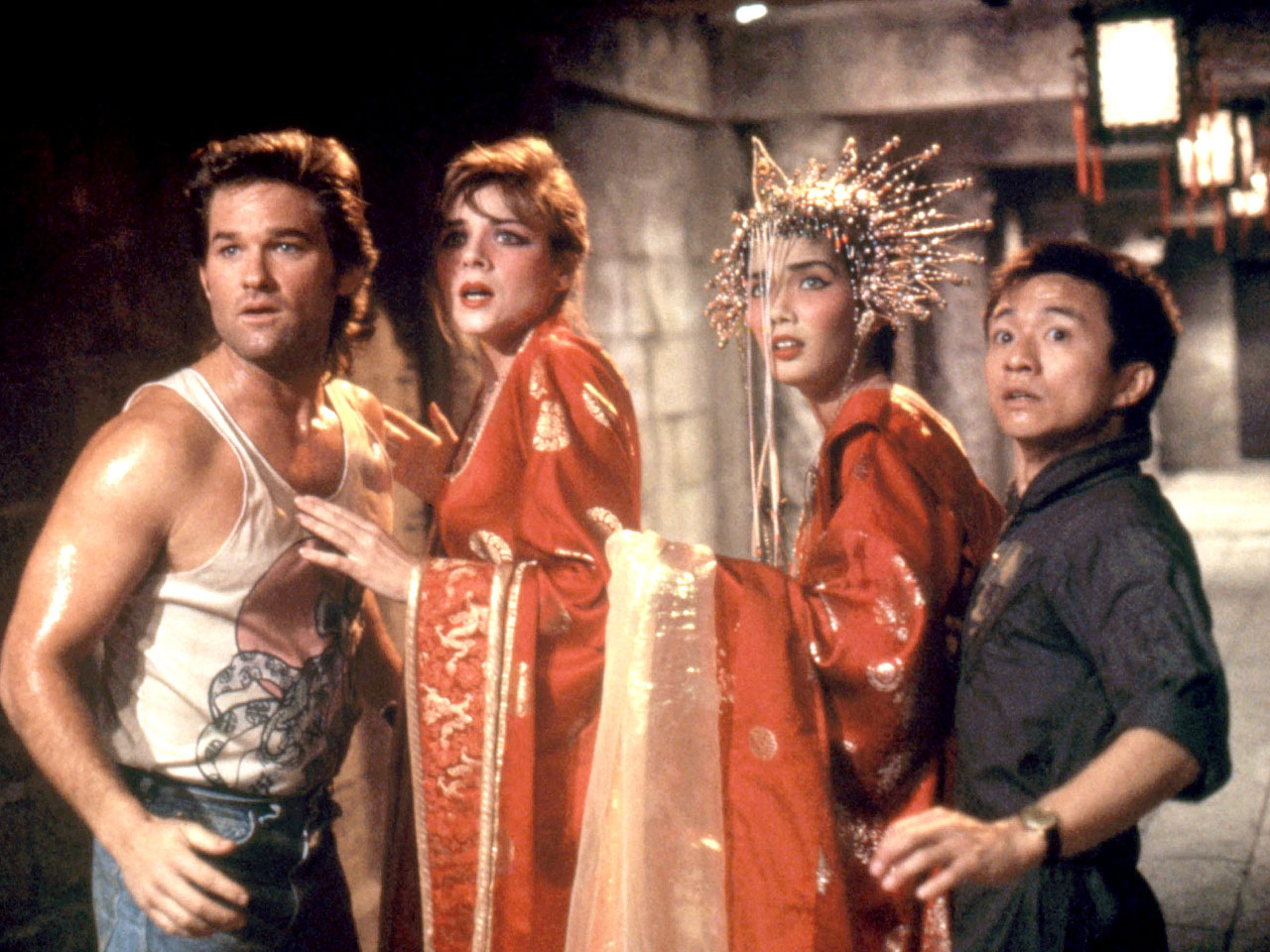
Big Trouble in Little China
If there was ever a poster child for a movie that found a second life in rentals and on cable, this is it.
Jack Burton (Kurt Russell) is a over-the-road trucker with a lot of thoughts on life and how important reflexes are. While making a delivery in Chinatown, he gets sucked into a situation with an ancient Chinese evil trying to regain its humanity, and all Jack really wants is to get his truck back.
John Carpenter wasn’t quite a household name, but with films such as Halloween, The Thing and Escape From New York to his name, people were taking notice. Teaming with Russell for another outing seemed like it would be another win, but this one proved just a little too odd for mainstream audiences. Once it got into our homes, however, everyone fell in love with it.
As Jack Burton always says, it’s a must-see for any 80s journey.
Where to watch: Available to stream.

The Great Mouse Detective
I had never seen it, and as Disney films go, I would have been fine keeping it that way.
Set in Longon in 1897, a young mouse named Olivia Flaversham witnesses her toymaker father get kidnapped. She seeks out Basil of Baket Street, also known as the Great Mouse Detective. Along with David Q. Dawson, recently returned from serving in the military in Afghanistan, the three of them try to stop Professor Ratigan from replacing the Queen.
It’s just a Sherlock Holmes story, but with mice. I didn’t find anything that compelling about it. It was pretty enough to look at, but the story just left me fairly empty.
Where to watch: Available to stream.

Howling II
I… have a lot of thoughts.
Following up on the end of the The Howling, Ben White (Reb Brown) buries his sister Karen White, and quickly learns she was a werewolf. He teams up with werewolf hunter Stedan Crosscoe (Christopher Lee) to take down Stirba (Sybil Danning), the queen of the werewolves who is about to celebrate her 1,000th birthday, and stop the spread of the werewolf curse.
On paper it sounds fine, in execution it is just… horrible. Poorly lit, horrible acting, low-grade effects, and costuming that leaves you more confused than anything else.
Avoid at all costs.
Where to watch: Available to stream.

Psycho III
I have to admit, so far these sequels haven’t been horrible.
Following up shortly after the vents of Psycho II, Norman (Anthony Perkins) is still hiding the body of Emma Spool, and having issues again with seeing “Mother.” He hires drifter Duane Duke (Jeff Fahey) to run the motel. He also meets Maureen (Diana Scarwid), a nun on the run after she accidentally kills one of her sisters. With a new woman in his life, Mother has some thoughts on what Norman should be doing.
In general I actually enjoyed this new outing in the franchise, although it feels it missed some opportunities at the end of the story of Norman and Maureen working together. What if Maureen had actually been the one manipulating Norman this time? There was another movie lurking in the background that sadly never gets broached.
What we did end up with, however, was entertaining.
Where to watch: Available to stream.

Under the Cherry Moon
This film was unfairly maligned.
Christopher Tracy (Prince) and Tricky (Jerome Benton) as wooing women in France in hopes of getting enough money to head back to Miami one day. When Christopher hears about Mary Sharon (Kristin Scott Thomas) inherting a trust fund of $50 million for her 21st birthday, she becomes his next mark, but little does he know how it will end for him.
Following Purple Rain, Prince could do no wrong in Hollywood and was given a blank check for his next film. Audiences and critics did not warm to this film as it wasn’t Purple Rain 2 and it lived with a bad reputation for years.
I hadn’t seen it in 35 years or more when I watched it for this report, and… I really enjoyed it. It’s over-the-top, but in the right way. Prince was clearly paying homage to the silent movie romance films, and it works for what it is. Is he a great actor? No. Does it work for this film? Yes.
Honestly, this may be one of the most enjoyable films I’ve had in this project in several weeks. It’s worth a reassessment.
Where to watch: Available to stream.
1986 Movie Reviews will continue on July 11, 2026, with Club Paradise.
Entertainment
Taylor Swift and Travis Kelce: Revisit the roots of their love story ahead of MSG wedding bash

Taylor Swift and Travis Kelce’s love story will reach new heights this week with a totally low-key two-day wedding bash at New York’s Madison Square Garden.
The billionaire pop titan and the NFL star, both 36, kicked off their wedding festivities Thursday afternoon with a rehearsal dinner at the famed sports arena. They have all but confirmed that they will then exchange their vows Friday in a grand MSG celebration with around 1,000 guests (including Swift’s celebrity friends and Kelce’s fellow sports stars) in attendance, at least according to numerous reports. The celebrity wedding will also reportedly feature heightened security around Madison Square Garden, performances by Stevie Nicks and Tim McGraw, and a red carpet outside the arena.
Representatives for Madison Square Garden, Swift and Kelce have not responded to The Times’ requests for comment.
Swift and Kelce’s relationship began nearly three years ago during the singer’s blockbuster Eras tour with a simple request and a friendship bracelet. Read on to revisit the roots of Swift and Kelce’s whirlwind romance turned generational love story, from the Kelce brothers’ “New Heights” podcast to a romantic garden engagement.
July 2023: Travis Kelce shoots his shot
Swift and Kelce’s romance can be traced back to summer 2023, when the Kansas City Chiefs tight end attended an Eras tour concert at Arrowhead Stadium, the Chiefs’ house. Kelce — a self-proclaimed Swiftie — told brother Jason Kelce in an episode of their “New Heights” podcast that he had a friendship bracelet with his phone number on it but didn’t get it to the singer. “I was a little … hurt I didn’t get to hand her one of the bracelets I made for her,” he said at the time. Eventually, the two got in touch.
September 2023: Taylor Swift shows up for her guy
Taylor Swift watches the Chiefs take on the Chicago Bears at Arrowhead Stadium in Kansas City, Mo., on Sept. 24, 2023.
(David Eulitt / Getty Images)
The then-rumored romance quickly became commentary fodder for NFL broadcasts (sometimes to sports fans’ chagrin) but took a turn when Swift seemingly accepted Kelce’s personal invitation to a home game. She was seen cheering for him in a private box alongside his mother, Donna Kelce. Soon enough, Swift became a staple in the Chiefs audience. In the following months, Swift and Kelce further solidified their relationship, making it paparazzi-official during an after-party for “Saturday Night Live” and on her Eras tour in November when the singer changed her “Karma” lyrics to reference her budding romance.
February 2024: Super Bowl LVIII (Taylor’s Version)

Chiefs tight end Travis Kelce and Taylor Swift smooch after Kansas City Chiefs defeated the San Francisco 49ers at the Super Bowl in Las Vegas in February 2024.
(John Locher / Associated Press)
Swift and Kelce’s love notably played out at Super Bowl LVIII, where the Chiefs faced the San Francisco 49ers. When the Chiefs won, the Grammy winner joined Kelce on the field, kissing and hugging him. A week before the big game, Swift announced her album, “Tortured Poets Department,” at the Grammy Awards. The album seemingly refers to Kelce in songs “The Alchemy” and “So High School.”
The pair continued going strong throughout 2024. As Swift‘s tour continued, Kelce joined his superstar girlfriend on stage in London. She also returned regularly to Arrowhead Stadium for Chiefs home games during the 2024-25 NFL season. Swift ended her Eras tour in December 2024 and hosted a private wrap party to celebrate her musical marathon. Of course, beau Kelce was in attendance.
August 2025: Baby, just say ‘yes!’
The following year was a relatively quieter one for the couple. Kelce and his Chiefs failed to beat the Philadelphia Eagles at Super Bowl LIX and Swift was in the midst of recovering from her tour and preparing for her newest album. But just when there seemed to be a lull in all things Taylor-Travis, the couple hit some major milestones.
First, Swift finally appeared on the Kelce brothers’ “New Heights” podcast. Remember, that’s where all of this started. The couple, of course, spoke about their whirlwind romance, but the main headline was that Swift would release her album “The Life of a Showgirl” later that fall. With songs “Redwood” and “Wish List,” it was pretty clear Kelce inspired Swift during the songwriting process.
Second, and more importantly, “Love Story” singer Swift announced on Instagram that she and Kelce were engaged. She shared photos from their dreamy garden proposal with the caption: “Your English teacher and your gym teacher are getting married.” Kelce popped the question with an elongated old mine cut cushion set within an engraved gold band. Speculation on the details of their nuptials, including date and location, were almost immediately underway.
Since their engagement, Kelce and Swift have appeared together at a handful of high-profile events including the iHeartRadio Music Awards in March, courtside at Rocket Arena in Cleveland during the 2026 NBA playoffs and the Songwriters Hall of Fame induction ceremony in June, which honored Swift.
For now, welcome to New York, soon-to-be Mr. and Mrs.
Movie Reviews
Movie Review: ‘Minions & Monsters’ is a very yellow mash note to Hollywood – Sentinel Colorado

-

This image released by Universal Pictures shows a scene from Illumination’s “Minions & Monsters.” (Universal Pictures via AP) -

This image released by Universal Pictures shows minions with the alien character Goomi, voiced by Trey Parker, right, in a scene from Illumination’s “Minions & Monsters.” (Universal Pictures via AP) -

This image released by Universal Pictures shows minion Henry, voiced by Pierre Coffin, left, and Goomi, voiced by Trey Parker, in a scene from Illumination’s “Minions & Monsters.” (Universal Pictures via AP) -

This image released by Universal Pictures shows a scene from Illumination’s “Minions & Monsters.” (Universal Pictures via AP)
Every once in a while, Hollywood gets high on its own supply and makes a love letter to moviemaking. It happened recently with Steven Spielberg’s “The Fabelmans” and George Clooney’s “Jay Kelly.” Now it’s time for the unlikeliest of love-letter writers: canary-yellow, gibberish-speaking, overall-wearing mini-monsters.
“Minions & Monsters” — the third chapter in the ongoing standalone adventures of the “Despicable Me” pint-sized enablers — is about the sheer greatness of moviemaking, and it’s a navel-gazing misfire. Few industries — maybe journalism, sure — is as enamored at making its profession seem heroic.
The Minions this time find themselves at the dawn of both the movie business in Hollywood and the last push by suffragists to get the vote. It’s a weird confluence that writers Brian Lynch and Pierre Coffin fumble.
The movie has playful references to old screen gods — Harold Lloyd dangling from the hands of a clock and Charlie Chaplin swallowed by the gears of a mechanical system — along Hollywood nods to “Casablanca” and the punny title “The Good, the Bad and the Stupid” — but the kids in the audience won’t get them and their parents are just too tired. Harold Lloyd jokes don’t hit as hard in 2026.
Two of the legion of faceless Minions step forward this time — best friends James and Henry, creative misfits amid a smear of yellow drones — to unite and make a movie. (Who knew there was a Minion counterculture?)
Things go very well at first — turns out adding a Minion or two to a cowboy or a heist movie makes them instant kings of the box office — and they soon move into a Beverly Hills mansion and become insufferable. James dreams of winning an Oscar, which in this case is a statuette of a gold banana, a Minion obsession.
But they hit a wall when silent movies turn to talkies. And since they spout nothing but nonsense — “Fantastico” “miso soup” and “vamos” — can’t make the transition. They’re dumped out of the studio system.
That’s when James and Henry finally get the plot going: Make their own killer monster movie by conjuring up real monsters. The first one they try turns out a little weird: The gigantic, fearsome octopus-dragon they request turns out to be a cute green Funko Pop-like critter called Goomi, voiced by Trey Parker. Goomi promises to find them some real monsters. But should we trust him?
Coffin, making his first solo directing effort after co-helming all three “Despicable Me” films and the first “Minions,” voices all the Minions — he must be fun to have at parties — and is an assured hand. The violence levels are a little high for PG, including a beheading and various impalings, plus the usual senseless mayhem.
The screenwriters have included a romantic subplot involving a suffragette voiced by Zoey Deutch who falls for a robot-alien (standout work by Jesse Eisenberg) in a storyline that makes less and less sense. And the framing device — a museum tour guide explaining how Minions shaped Hollywood — sags awkwardly.
Adults can keep awake looking for the Easter eggs Coffin has left for serious cinephiles: “20,000 Leagues Under the Sea,” “Steamboat Bill, Jr.,” “A Trip to the Moon,” “Metropolis,” “Citizen Kane” and “The Blob.” Maybe the best moment in the movie is almost a throwaway: Director George Lucas, appearing as himself.
“Hooray for Hollywood” is on the soundtrack and that might have been the subtitle for the movie itself. There are some people whose eyes get moist thinking about picking up a film camera and following their muse, having their work play in a dark theater to cheers. And then there are others who just want to get on with it already. “Vamos!”
“Minions & Monsters,” a Universal Pictures release that opens in theaters July 1, is rated PG by the Motion Picture Association for “violence/action, language, and rude/macabre humor.” Running time: 90 minutes. One and a half stars out of four.
Related
-

 Ohio6 minutes ago
The U.S. Bicentennial in 1976 reignited patriotism damaged by Watergate, Vietnam War
-

 Oklahoma9 minutes ago
Four Fireworks Oklahoma Hopes to See in 2026
-

 Oregon14 minutes ago
Polymarket promo code “OREGON”: $50 Independence Day sports bonus upgraded
-

 South-Carolina19 minutes ago
New course offers low-profile distinction in South Carolina Lowcountry
-

 Pennsylvania21 minutes ago
They Gathered to See ‘Big Boy,’ Were Felled by the Heat
-

 Rhode Island24 minutes ago
84-Year-Old Man Found Unresponsive In Water Off Warwick Pronounced Dead At Hospital: Cops
-

 South Dakota36 minutes ago
Suspicious package prompts brief evacuation in Keystone; bomb squad clears scene
-

 Tennessee39 minutes ago
2027 Georgia safety, Tennessee target announces commitment date

