World
Haley’s campaign a giant step for GOP women, but bigger still for Trump


With polls showing Nikki Haley trailing Donald Trump by a wide margin heading into this weekend’s South Carolina Republican primary, many political analysts characterise the vote as Haley’s last stand in her quixotic bid to win the party’s 2024 presidential nomination.
Regardless of the result, however, scholars have said that Haley’s campaign is a historic one. By outdistancing a field dominated by men to effectively challenge the immensely popular Trump, she has moved women one step closer to political parity in electoral politics.
Polls indicate that Trump is leading Haley by as many as 36 percentage points heading into Saturday’s South Carolina primary, even though Haley is a native and former governor of the Palmetto State. And while winning the South Carolina primary would open the door for Trump to capture the party’s nomination outright when 15 states hold their primaries simultaneously next month, Haley’s campaign has, at least in theory, charted a path to remain in the race until Super Tuesday, which could give the former United Nations ambassador an advantage in the 2028 presidential ballot.
Haley, for her part, has pledged to remain in the race despite the odds. Speaking at her alma mater, Clemson University, on Tuesday, she said, “Some of you — perhaps a few of you in the media — came here today to see if I’m dropping out of the race,” she said. “Well, I’m not. Far from it.”
Haley’s emergence as the last woman standing in what was a crowded race stands in stark contrast to candidates like former New Jersey Governor Chris Christie and ex-Arkansas Governor Asa Hutchinson, who styled themselves as “anti-Trump” candidates. Conversely, Florida Governor Ron DeSantis hewed close to Trump in both style and substance before dropping out in January, after failing to distinguish himself from the frontrunner and presumptive nominee.
Haley, on the other hand, has staked out a middle ground, portraying herself as a would-be “accountant” in the White House, and consequently a calming alternative to Trump’s four years of “chaos”.
Initially circumspect in her criticism, Haley has turned up the heat as the GOP field has narrowed, attacking Trump’s efforts to insert loyalists in the Republican National Convention, highlighting his rising stack of legal troubles, and taking more direct aim at Trump’s “insecurity” and temper tantrums.
Her policy proposals, however, are not substantively different from her former boss, and as recently as this month, Haley told reporters in South Carolina that her campaign is not an “anti-Trump movement”, according to the Washington Post.
Part of Haley’s strategy is to walk a tightrope when it comes to addressing her gender and Indian ancestry in a modern Republican party that is slow to change, Kelly Dittmar, director of research at the Center for American Women and Politics at Rutgers University, told Al Jazeera.
For instance, Dittmar said that Haley has, in many ways, leaned into her role as the rare woman in a Republican presidential race, but she has not necessarily portrayed gender as a “point of merit”, underscoring the conservative “idea that somehow hearing about gender and racial identity is anti-meritocratic … and [Republicans] don’t play into identity politics.”
“If you go back to Hillary Clinton in 2016, she used to say, ‘I’m not asking you to vote for me because I’m a woman, I’m asking you to vote for me on the merits. But one of those merits is I’m a woman,’” Dittmar said.
In contrast, Haley has used gendered imagery to boost “masculine credentials” and an image of male toughness that still resonates in the party, repeatedly referring to her high-heeled shoes as “ammunition”. In the advertisement launching her campaign, she proclaimed, “When you kick back, it hurts them more if you’re wearing heels.”
Moreover, on the issue of race, Haley has tacked to the right, consistent with Trump’s own views, sparking controversy by failing to cite slavery as a reason for the US Civil War. And she has repeated a regular Republican line, most recently in an interview in late January. “I don’t think America’s racist,” she said. “I think we have racism in America.”
A historical benchmark
In turn, Trump’s attacks on Haley suggest that there remains a tolerance – if not appetite – for racism and sexism among his supporters, Dittmar said. In January, Trump referred to Haley as “birdbrained” and “not presidential timber”.
Trump has amplified the conspiracy that Haley, who is of Indian descent, was not born in the US, redolent of a tactic known as “birtherism” which he championed during Barack Obama’s 2008 presidential campaign, falsely alleging that the nation’s first African American president was born in Kenya, and was therefore ineligible to run for president.
The former president has also referred to Haley as “Nimbra”, an apparent debasement of her first name, Nimarata (Nikki, the name she uses, is her middle name).
Many have said that Trump’s remarks are hardly surprising for a candidate who had previously bragged about sexually assaulting women, derided his 2016 Democratic opponent Hillary Clinton as a “nasty woman” who did not look presidential and suggested in 2015 that a female debate moderator had “blood coming out of her whatever”.
While such attacks have come to be seen as part and parcel of a Trump campaign, Dittmar noted that studies have regularly indicated high measures of “hostile sexism” and “racial resentment” among his supporters.
“It is not surprising that Trump would use sexist or racist language or strategies, because that’s actually been beneficial for him to mobilise a lot of these voters,” Dittmar told Al Jazeera. “[Nikki Haley] brings that out, but perhaps to his advantage, at least among his base”.
Haley has fought back, launching the National Women for Nikki Coalition, a 50-state effort that many see as a last-ditch effort to energise the voting bloc.
And while it may ultimately be a matter of too little, too late, Haley’s staying power in the race represents a historical benchmark for a political party that has traditionally been dominated by white men. And both voters, donors and the media appear to hold her in much higher regard than Sarah Palin, the former Alaska governor and self-proclaimed “hockey mom” who was often ridiculed by stand-up comedians and late-night talk show hosts.
“It is notable to recognise and to give Haley credit for pushing the envelope on the Republican side for at least more seriously taking a woman candidate as a potential nominee,” Dittmar said.
“In the modern context, she will have gotten farther than any other Republican woman, and I do think that that’s something worth pointing out, regardless of what happens.”
Electoral vulnerabilities
While a resounding defeat in South Carolina seems likely, Haley’s race has, if nothing else, taken the temperature of the modern Republican Party and the existential crisis represented by Trump’s enduring hold, according to politics watchers.
Perhaps most illuminating during Haley’s run has been just how difficult it has been for Haley – or any of the now departed Republican candidates – to find any purchase in attacks on Trump, a heterodox politician who has continued to polarise members of the party.
In 2020, a movement against Trump largely coalesced under the “Never Trump” banner. While that effort has been less vocal this election cycle, there is a “minority, but a significant kind of disaffected Republican voter still looking for an alternative to Trump,” according to Aaron Kall, an elections expert at the University of Michigan.
“That shows that if Trump is the nominee, which is still likely, that he does have some general election vulnerabilities,” he said.
He pointed to several prominent donors who have continued to provide the funds Haley needs to stay in the race, many hailing from the more traditional conservative old guard of the Republican Party. Haley’s campaign said she raised $16.5m in January – nearly a third of the $42m in campaign cash raised by Trump last month – which Haley described as her largest monthly haul since entering the race.
Before the South Carolina primary, Haley also attended a Texas fundraiser co-hosted by real estate magnate Harlan Crow and oil tycoon Ray Lee Hunt, among others, according to Fortune magazine.
Enduring hold
Some have viewed Haley’s persistence as an effort to position herself as the natural successor to Trump in the event that he is unable to be the party’s nominee.
Trump is the first candidate in US history to face one criminal indictment – let alone four – during his campaign, creating an unprecedented situation that could potentially find the former president behind bars come November, raising the question of electability.
“We have empirical evidence to show that MAGA [Trump’s “Make America Great Again” movement] has been dwindling in size, not growing in influence in the party,” Rina Shah, a political strategist, told Al Jazeera.
She pointed to the 2022 midterm elections in which Trump-endorsed candidates underperformed, resulting in a predicted red wave turning into a ripple.
Shah said she believes Haley’s losses in Iowa and New Hampshire, and recent polls, have not reflected the extent to which Trump has turned off some segments of the Republican Party, particularly suburban women.
“The general election of 2024 is going to be determined by independently minded voters in swing states,” Shah told Al Al Jazeera. “That is who I believe Trump cannot bring in in this election because he lost them in 2020 in a big way.”
Still, the former president has demonstrated an ability to mobilise his enthusiastic base, something that his Democratic opponent, President Joe Biden, has not been able to do so far this election season. The irony, Shah said, is that while Haley’s campaign has raised the bar for women running for high political office, it has paradoxically shown that Trump is a political juggernaut.
Even when Trump is “hardly campaigning, when he’s under all these legal challenges”, Shah pointed out that “his base’s loyalty to him is just so much deeper than we have seen with other candidates”.
In sum, Haley’s run has shown the Republican Party “is still a cult of personality” – for Trump.



NEWYou can now listen to Fox News articles!
The Trump administration is rolling out what experts describe as the most significant expansion of U.S. sanctions on Cuba in decades.
The administration is attempting what supporters say is the first broad application of Cuba-related secondary sanctions against foreign firms, aiming not only at Havana itself but also at foreign companies and banks that continue doing business with the island’s military-linked economic empire.
The new framework, established under an executive order signed by President Donald Trump May 1, applies pressure beyond U.S. companies for the first time, threatening foreign firms with sanctions exposure if they continue operating in key sectors of the Cuban economy linked to Grupo de Administración Empresarial S.A., or GAESA.
TRUMP ADMINISTRATION PRESSED TO CLOSE CUBA EMBARGO LOOPHOLE AS OIL SET TO RUN OUT WITHIN DAYS
Supporters say the move closes a loophole that allowed foreign investors to sustain Cuba’s communist regime while the longstanding U.S. embargo largely restricted Americans.
Critics argue the measures risk worsening an already severe humanitarian crisis on the island without meaningfully weakening the government.
Demonstrators attempt to burn the Communist Party headquarters in Morón, Cuba, after authorities allegedly opened fire on protesters without warning. (Obtained by Fox News Digital)
“At the top of the month, what the Trump administration did was for the first time extend the application of U.S. sanctions from just prohibiting trade between U.S. firms and U.S. persons and the Cuban island to third-party countries and enablers,” Max Meizlish, a former Treasury Department official now serving as a research fellow at the Foundation for Defense of Democracies, told Fox News Digital in an interview.
“For the first time ever in a truly unprecedented fashion, that’s the same logic that the administration is now applying to Cuba,” he said.
The sanctions focus heavily on GAESA, a sprawling military-linked conglomerate that analysts estimate controls between 40% and 70% of Cuba’s economy, including tourism, mining, retail, ports and financial services.
A recent Foundation for Defense of Democracies report authored by Meizlish and Connor Pfeiffer argued that foreign companies doing business in Cuba are effectively helping sustain the regime’s military and political leadership.
TRUMP DECLARES NATIONAL EMERGENCY OVER CUBA, THREATENS TARIFFS ON NATIONS THAT SUPPLY OIL TO COMMUNIST REGIME
An image of Fidel and Raul Castro and Miguel Diaz-Canel, Cuba’s president and first secretary of the Communist Party, is displayed in a billboard in Havana, April 12, 2023. (Alexandre Meneghini/Reuters)
The State Department sanctioned GAESA and several affiliated entities in May under the new authorities, opening the door for potential penalties against foreign companies and financial institutions that continue dealings with them after a June 5 wind-down deadline.
Meizlish argued previous sanctions regimes failed because they isolated American companies while allowing foreign actors to continue financing the Cuban state.
“There’s a lot of Spanish firms, for instance, that have invested millions of dollars in luxury hotel properties, villa properties in Cuba that partner with GAESA, all funding this military enterprise at the expense of the Cuban people,” he said.
He also pointed to Canadian involvement in Cuba’s nickel and cobalt sectors, saying foreign investment has generated “huge amounts of money for the regime.”
“A lot of people think about the U.S. embargo over the years is actually being responsible for a lot of the problems on the Cuban island, but they don’t give consideration to the fact that GAESA, this newly sanctioned entity, has been sitting on an estimated $20 billion in assets and cash over the year while depriving the people of Cuba,” Meizlish told Fox News Digital.
But critics of the policy warn the economic fallout could land the hardest on ordinary Cubans.
William LeoGrande, a longtime Cuba expert at American University, said the May 1 measures represent a major escalation because they specifically target foreign businesses rather than just Americans and aim to deter foreign companies from doing business with GAESA by threatening sanctions exposure.
LeoGrande acknowledged the measures could deprive the Cuban government of revenue but argued the broader population is likely to suffer most.
CUBA’S ENTIRE ELECTRICAL GRID COLLAPSES, LEAVING WHOLE ISLAND WITHOUT POWER
A woman with her son signals a car on a dark street during a blackout in Bauta municipality, Artemisa province, Cuba, on March 18, 2024. (Yamil Lage/AFP via Getty Images)
“This would potentially deprive the Cuban government of funds, but the impact will fall mainly on ordinary citizens because it means the government has fewer resources to import food, medicine and fuel,” he said.
The debate comes as Cuba faces its deepest economic and humanitarian crisis in years.
The World Food Programme says food insecurity is worsening amid fuel shortages, inflation and declining access to imported goods, while U.N. officials have warned that electricity shortages and blackouts are disrupting hospitals, vaccination programs and food distribution networks across the island.
LeoGrande also warned tougher sanctions could contribute to another migration crisis.
NICARAGUA BLOCKS PATHWAY USED BY CUBAN MIGRANTS TO REACH THE US
Protesters take to the streets in Cuba over food and electricity shortages. (Reuters)
“Another unintended effect is that by making living conditions in Cuba even more desperate, tougher sanctions could trigger a mass migration like we saw in 1980 or 1994,” LeoGrande said.
On background, a U.S. official rejected arguments that American sanctions are responsible for Cuba’s humanitarian crisis.
“The suffering of the Cuban people is not caused by the U.S. embargo but by the Cuban dictatorship’s failed Communist policies and human rights violations,” the official told Fox News Digital. “The embargo does not prohibit Cuba’s access to world markets or trade with third countries.”
The official added that U.S. law explicitly permits exports of food, medicine and medical equipment to Cuba and accused the regime of hiding “billions in overseas bank accounts instead of investing in electricity, infrastructure and the daily needs of its people.”
The debate mirrors long-standing arguments surrounding U.S. sanctions on countries like Iran and Venezuela, where supporters view economic pressure as a tool to weaken authoritarian governments while critics argue regimes often survive and civilians absorb the economic damage.
CLICK HERE TO DOWNLOAD THE FOX NEWS APP
Meizlish argued sanctions should not be judged simply by whether they immediately topple governments.
“The problem isn’t that the embargo went too far,” he said. “It’s that it didn’t go far enough.”
Fox News Digital reached out to the Cuban Embassy in Washington for comment but did not receive a response by the time of publication.

The United States House of Representatives has passed a resolution to rein in President Donald Trump’s powers to attack Iran without congressional authorisation.
Four Republicans joined Democrats to pass the bill in a vote of 215 to 208 on Wednesday in Washington, DC.
list of 3 itemsend of listRecommended Stories
While the resolution is unlikely to become law, it represents a stark rebuke against Trump’s decision to join Israel in attacking Iran on February 28, launching an ongoing conflict that will reach its 100th day on Saturday.
Trump did not seek congressional approval for the war, which he has attempted to label as a “skirmish” or a “short-term excursion”.
The Republican leader’s repeated use of military force abroad has frustrated some leaders in Congress, a body which the Constitution solely imbued with the power to declare war.
Wednesday’s vote marked the fourth time this year that the House has voted on a war powers resolution to force Trump to seek congressional backing for his military actions against Iran.
It is the first time, however, that the resolution has been successful in the House. Its passage comes after a political manoeuvre that some interpreted as a Republican effort to scuttle the bill.
A divide among Republicans
A vote on the war powers resolution was expected on May 21, the eve of Congress’s Memorial Day recess.
But the vote was cancelled, despite indications that the resolution would succeed with Republican support. House Speaker Mike Johnson, a Republican and close Trump ally, chose to adjourn the chamber early.
The resolution, however, was picked up again after the recess. In Wednesday’s vote, Tom Barrett of Michigan, Warren Davidson of Ohio, Brian Fitzpatrick of Pennsylvania and Thomas Massie of Kentucky splintered away from the Republican establishment to pass the bill.
Massie, whose re-election bid Trump actively campaigned against, marked the occasion with a message on social media.
“The Iran War Powers Resolution that I cosponsored (opposing the war) just passed the House of Representatives,” Massie wrote. “The People’s House is sending a message: end this war.”
Massie will not be returning to Congress next year. He was defeated last month in his local Republican Party primary by a Trump-backed opponent, Ed Gallrein.
Barrett, whose House seat is vulnerable to a Democratic takeover in November’s midterms, explained his vote by arguing that Trump had exceeded his mandate.
“Congress has the exclusive authority under the Constitution to declare war and authorize the use of force. The War Powers Act of 1973 delegates some of that authority to the president for a limited period of time,” Barrett, an army veteran, wrote.
“That authority has expired, and my support of this resolution tonight is consistent with my belief that it is time for Congress to decide the scope of the mission and the appropriate limits on the use of force in Iran.”
Democrats call on Senate to act
While Trump’s war on Iran has divided House Republicans, the chamber’s Democrats were unanimous in their backing of the war powers resolution. After the vote, several urged their colleagues in the Senate to swiftly pass the measure.
“We passed an Iran War Powers Resolution in the House to rein in Trump and end his unauthorized, reckless war,” Representative Ayanna Pressley, a progressive from Massachusetts, wrote on social media. “The Senate must immediately follow suit and act to end this war.”
Representative Shontel Brown of Ohio, meanwhile, underscored the constitutional issues raised by Trump’s war, as well as its cost.
“Congress holds the power to declare war—not the executive branch,” she said in a post. “After months of chaos, higher costs, and wasted resources, it is time to end Trump’s costly war in Iran NOW.”
The war on Iran has been costly for the US, with the Pentagon estimating in May that $29bn had been spent so far.
Some analysts consider this an undercount, though. In April, a public finance expert at Harvard University projected that the price tag could soar to more than $1 trillion.
There are also concerns that the war has cost the US in terms of military preparedness.
The Center for Strategic and International Studies, a US-based research institute, issued a report in April warning that certain critical munitions have run low, with the number used outstripping the number of anticipated replacements.
They include Tomahawk missiles, Terminal High Altitude Area Defense systems (THAADs) and Precision Strike missiles (PrSMs).
Public backlash growing
US voters broadly disapprove of the US-Israel war against Iran. A poll last month from the Marist Institute for Public Opinion found that 60 percent of US citizens disapprove of Trump’s approach to the war, a jump from 54 percent in March.
The increase was even seen among Republicans. While 15 percent disapproved of Trump’s handling of the war in March, the number has since increased to 22 percent.
Among US citizens overall, 61 percent found that the war had done “more harm than good”.
The growing disapproval reflects, in part, the economic backlash to the war, which has sent prices for fuel and other products like agricultural fertiliser skyrocketing.
The Trump administration has also faced criticism for the unprovoked nature of the February 28 attack, though the president and his allies have argued the war was necessary to prevent Iran from obtaining a nuclear weapon.
More than 3,400 people have died in Iran during the war. At least 13 US soldiers have also been killed in the conflict, which spilled into nearby countries, with deaths reported across the region.
Wednesday’s House war powers resolution now proceeds to the Senate, which passed a similar bill in May.
But it faces an uphill battle overall, as Trump is likely to veto any attempt to curtail his military powers.
Only a bill passed with a two-thirds majority in both the House and Senate can overcome a presidential veto. So far, neither the Senate’s version, nor the House’s, has breached that threshold.

new video loaded: A Death at the Epicenter of Ebola
By Declan Walsh, Estelle Caswell, Thomas Vollkommer and Arlette Bashizi
June 3, 2026
-

 Technology4 seconds ago
Microsoft Is Pulling the Plug on Publisher This Fall. These 8 Alternatives Prove You Don't Need It
-

 World7 minutes ago
Trump expands Cuba sanctions beyond US companies in major crackdown on foreign enablers
-

 Politics10 minutes ago
Bessent flips script on Dem senator with reminder about his son’s past ties to Epstein
-

 Health22 minutes ago
New ways to prevent flu revealed in ‘accidental’ lab breakthrough, study finds
-

 Sports25 minutes ago
Russell Wilson announces retirement from NFL after 14 seasons
-

 Technology30 minutes ago
Dark web monitoring: does it put your data at risk?
-
 Business37 minutes ago
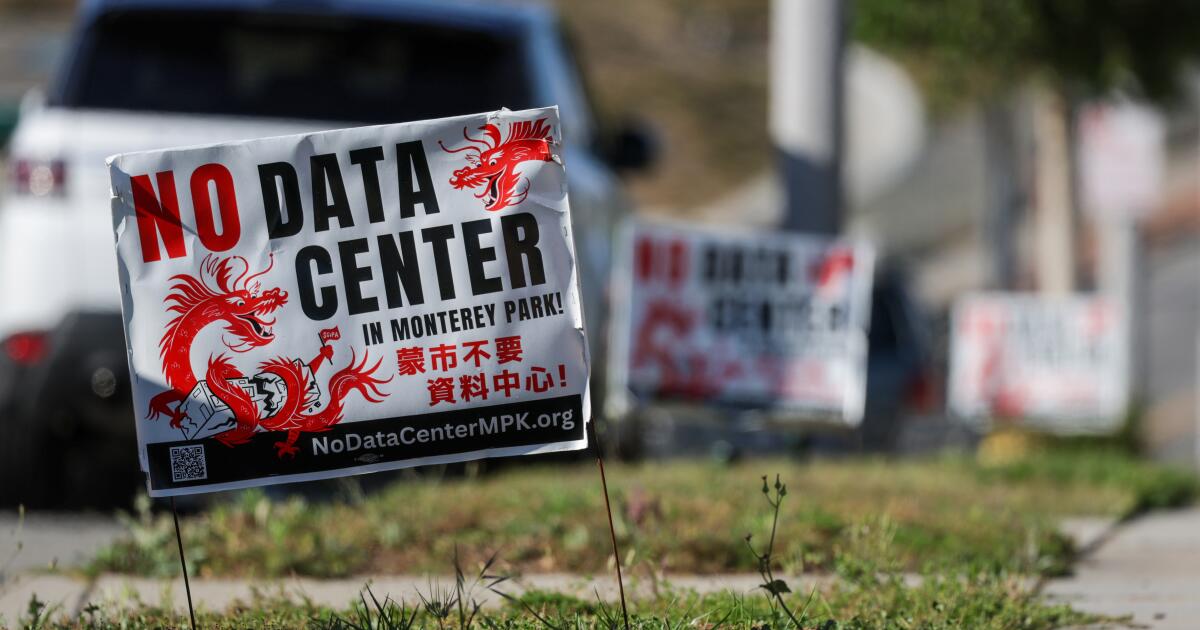
In a first for the country, voters in Monterey Park ban data centers
-
 Entertainment40 minutes ago
Review: Muscling past a flat script, a big-screen ‘Masters of the Universe’ embraces its own silliness

