Paramedics had a choice when the call brought them to a man passed out in the dark at K and North Capital streets Northeast, his arms crossed loosely over his chest.
Washington, D.C
How D.C.’s first sobering center could ease drug and alcohol addiction


Until recently, their only choice would have been a hospital emergency room. But on this cold January night, the paramedics had another option: the D.C. Stabilization Center, a place where people who’ve used drugs or alcohol can safely recover for up to 24 hours under the care of nurses and mentors who have been in their shoes.
In just over three months, the center on K Street Northeast has surpassed 1,000 admissions.
Mayor Muriel E. Bowser opened the center to fanfare last year as part of the District’s overall plan to reduce fatal overdoses, which have killed more than 400 Washingtonians annually for four consecutive years, outpacing the city’s homicide toll.
The facility, one of about 60 across the country in cities such as Baltimore, San Francisco, Houston and St. Louis, aims to link patients with treatment — if and when they are ready. If successful, District officials say, the approach will free up overburdened emergency responders and alleviate strain on hospitals still confronting pandemic-era staffing shortages.
Comprehensive solutions to the opioid crisis have eluded the city as the death toll continues to rise. And while public health advocates have called for the Bowser administration to demonstrate greater urgency and provide more wraparound supports, such as housing, many have hopes that the center will help.
A warm room. A safe place to sleep it off. Someone to talk to who understands. All awaited the man on the curb, if he wanted them.
Paramedics covered him in a pale yellow sheet before loading him onto a stretcher and into the back of an ambulance. Robert Holman, the D.C. Fire and EMS medical director along for the ride this evening, rested a gloved hand on his shoulder and tried to rouse him with basic Spanish. “Cómo sientes?”
The man’s head lolled back under the bright lights as a digital clock ticked off the minutes. 3. Firefighter paramedic Cody Grosch tapped a report on his laptop as paramedics checked his vital signs and discussed his condition.
The radio sprang to life again. The ambulance was on the move.
It was 2018, and the horrors of the pandemic were still years away. Still, medics were taking longer to drop off patients at hospitals as calls were mounting for people on drugs or alcohol, city data shows, reflecting in part a surge of deadly fentanyl into the city’s drug supply.
Holman pushed for a sobering center but knew the city’s Fire and EMS department couldn’t get it done alone. That’s when Barbara J. Bazron, director of the Department of Behavioral Health, reached out, saying she helped set up a similar center in Baltimore and it could work in D.C.
Years later, they are betting millions in city funds annually on the center to help meet a still growing need. There were 427 opioid-related fatal overdoses in D.C. last year through October, according to the most recent data available from the chief medical examiner’s office, putting the District on track to outpace a 2022 high of 461 overdoses.
Bowser declared a public health emergency on opioids in the fall — set to expire Feb. 15 — and a panel of local officials, providers and recovering drug users known as the Opioid Abatement Advisory Commission began meeting in October to make recommendations to Bowser for how to divvy up the settlement funds to prevent and treat substance abuse disorder.
City officials say they know the center won’t solve all the city’s problems with addiction, but it could save lives.
The location was an early hurdle. They looked back at a year of data to confirm known hot spots in Columbia Heights and east of the Anacostia River, as well as in central D.C. near Union Station and the homeless shelter at 2nd and D streets Northwest, one of the largest in the nation. Despite pushback from advocates who argued Wards 7 and 8 needed it more, officials chose 35 K St. NE for its central location and the relative ease of using a building where the city already ran an adult behavioral health clinic.
Covid put plans on hold in 2020, and they tried three times to find a local operator before settling on an agency based in Arizona, Community Bridges Inc., to run the center.
Since the center opened in late October, 730 people people have been admitted, some more than once, for a total of 1,019 admissions, city data as of Feb. 5 shows. More than 70 percent of admissions have been Black and 80 percent male. The average age is 45.
Nearly 60 percent of patients used alcohol and at least 10 percent opioids, city data shows, based largely on self-reporting. The opioid antidote naloxone was administered twice, according to city data. The center also sees cases involving PCP, K2 and xylazine.
Nurses typically do a urine drug test and breath analysis on patients, who change into scrubs and can shower and eat if they’d like. Contraband such as weapons or drugs is confiscated.
Officials say they do not yet have a plan for tracking the long-term progress of patients, knowing they may turn down treatment many times before giving it a try. One person visited at least 17 times in just over three months, Bazron said, adding their 18th visit could be the one that does the trick.
About 17 percent of total admissions, 176 patients, have gone to residential treatment or a shelter or gotten a referral for other behavioral health care, city data shows, but for now, that’s where the path ends.
“We’re making an initial hot connection,” Bazron said.
Back on K Street Northeast, the ambulance pulled into the parking lot at the stabilization center, known as Hospital 99 to medics. Flashing red ambulance lights bounced off the beige bricks.
The man lay motionless, his head turned to the side, as paramedics rolled the gurney up a ramp, through glass doors and into the brightly lit lobby. A sign on the wall pledged empathetic care, a safe space to recover and a pathway for a long-term solution.
Nurses were expecting him — and recognized him. The man, 63, had left around noon that same day, they said, planning to go to a shelter. Paramedics found him barely a block away.
“How ya doing? You gonna come stay with us?” the center’s clinical director, Mary Page, asked. He nodded. A wheelchair appeared. “Remember me from this morning? I gave you food?”
Alert to verbal/tactile stimuli? Check. Blood pressure under 200 mmHg. Check. No signs or trauma or need for sutures. Not combative or violent. No chest pain. A nurse searched his jacket and handed a bottle of Taaka vodka to a security officer, who stashed it in a drawer. His clothes and belongings would be catalogued and locked in a bin for him.
They swapped his shoes for grippy socks. His feet dragged on the floor as he was wheeled backward into an intake room. “Feel better,” Holman said after him, as the door closed.
Most patients rest in one of 16 smooth blue reclining chairs under low lights and the soft glow of television, as nurses move around the floor. The average stay is 15 hours.
Paramedics have brought the vast majority of patients to the center — the others come via friends or family or walk in on their own. Not everyone is eligible.
The sobering center is not right for anyone who shows signs of trauma or needs sutures, is combative or violent or has vital signs outside a certain range, among other qualifiers on a 14-point checklist that medics and the center staffer both sign.
Two of these came during another freezing 24-hour shift in January.
At 2:46 p.m., dispatch sent a crew to a reported cardiac arrest — a signal of a possible drug overdose — at Georgia Avenue and Columbia Road Northwest. There, they found a 41-year-old man sitting on the ground in the corner of a bus shelter, clutching the bench seat, his head nodding as he struggled to stay awake.
They suspected alcohol intoxication. The ad behind him showed a hand holding a canister of Narcan. “Be Ready. Save a Life.”
He told paramedics he wanted to get on the bus. At 86 over 70, his blood pressure was too low for the stabilization center. They took him to George Washington University Hospital, where medics spent about an hour and 45 minutes waiting for a bed for the patient, FEMS officials said later.
At 6:33 p.m., it was 26 degrees when dispatchers routed a crew to North Capital and H streets Northwest. Paramedics found a man, 40, shivering and moaning in nothing but a sweatshirt and sweatpants, saying he wanted to kill himself.
Firefighter paramedic Kyle Belton wrapped a blanket over his head and shoulders and propped him up against a building for support.
“Cold,” the man said over and over.
“We’re gonna get you some help,” Belton said.
They pricked his finger to test his blood sugar. At 132 over 78, his blood pressure was elevated. He was shaking too hard for them to get an accurate heart rate. Someone suspected he may have used K2, or synthetic marijuana.
The man wasn’t out of control but was probably off his psychiatric medication, emergency personnel concluded. Suicidal ideation disqualified him from the stabilization center, making a hospital the best choice.
Later, they could arrange a ride for him to a warming center. Belton advised EMTs on their way to prepare heat packs.
Once they eased him into an ambulance, Belton retrieved his sneakers from the street, brushing dirt from the white leather.
“You’re not alone,” Belton told him.

Berk Kutay Gokmen
28 June 2026•Update: 28 June 2026
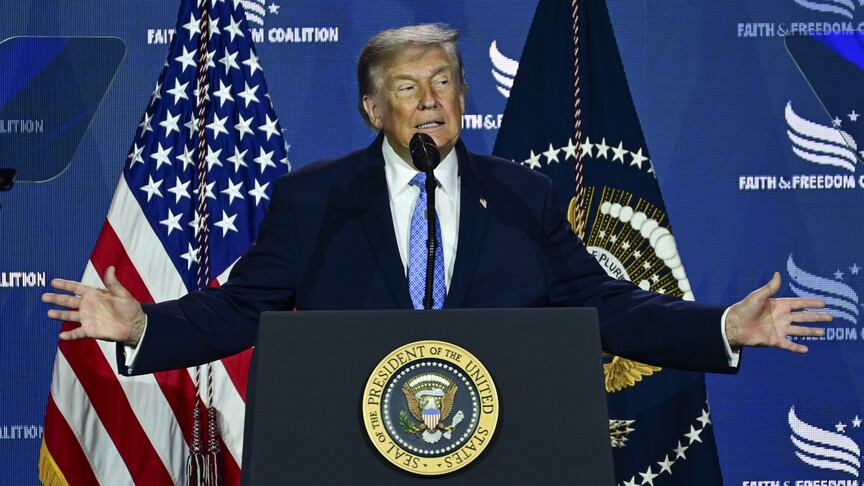
US President Donald Trump on Sunday criticized Democratic mayoral nominee Janeese Lewis George, calling her a “communist” and attacking her policy positions ahead of Washington, DC’s mayoral election.
“Janeese Lewis George, the Communist who is almost certainly going to be elected Mayor of Washington, D.C., has stated that she wants to empty the prisons, make D.C. a Sanctuary City, oppose ICE, welcome Criminal Illegal Aliens back into our beloved Capital, resist Anti-Crime Crackdowns, Defund the Police, continue and expand Cashless Bail, and so many other Capital destroying ‘things’,” Trump wrote on his Truth Social platform.
George won the Democratic primary for mayor of Washington, DC, earlier this month, securing her party’s nomination in the heavily Democratic city and becoming the likely successor to outgoing Mayor Muriel Bowser after the November general election.
Trump said he would not allow Washington, DC, to be “destroyed.”
“In the end, it will never work out, nor will I let it even have a chance because I have worked too hard to make Washington, D.C., the Envy of the World, with almost No Crime, and a Beautification process that has been second to none,” he said.
Trump also said he would “meet with Janeese Lewis George,” adding that Washington, DC, is “again a Safe and Prestigious Community.”
“Many people, including myself, have worked long and hard to get it there, and we will not let it be destroyed by a Communist adherent who has no intention to, MAKE WASHINGTON GREAT AGAIN!” he added.

Just in time for the Fourth of July, the Smithsonian Institution in Washington, D.C., has rolled out a big new exhibit highlighting nature in all its glory, with specimens from across America. But the Hawaiʻi offerings are a bit of a dud.
The Smithsonian’s National Museum of Natural History is a vast repository, occupying a stately edifice on the National Mall. It holds some 148 million objects, including more than a million from Hawaiʻi, including eight priceless feathered cloaks, but when the institution’s curators picked out one item to exemplify each state for this exhibit, they gave Hawaiʻi a rock.
Yes, a rock.
Seen in person, it’s a striking black clump of glittering pāhoehoe lava, and of course we are proud of our lava, but it comes across as, well, underwhelming.
Civil Beat is focusing on transparency, accountability and ethics in government and other institutions. Help us by sending ideas and anecdotes to sunshine@civilbeat.org.
Millions of visitors are expected to arrive in Washington, D.C. in the next two weeks. Many will be drawn by the fanfare associated with the 250th anniversary of the signing of the Declaration of Independence. In the eyes of many Americans, President Trump has tainted the occasion by claiming personal sponsorship of it.
To be fair, the city is looking pretty good, decked out in its finery for the events, and some improvements have been made. Flags are flying; the lawns look green and lush. The scene is drawing large crowds of tourists from all over the world, cheerfully milling about and popping into the many free museums that line the mall.
There are also some notable exceptions: The reflecting pond by the Lincoln Memorial is definitely tainted by algae infiltration. There’s also a bit of slime attached to what was reportedly a no-bid job for the renovation work by a Trump donor.
Also to be fair here: Hawaiʻi has had difficulties with its own reflecting pool, the now-waterless water feature at the State Capitol.

Amid the ongoing partisan warfare, Hawaiʻi’s state government, along with about 10 other Democratic-controlled states, has decided not to participate in the D.C. festivities. That includes the Great American State Fair, now being set up on the National Mall, which will host some 56 themed pavilions where individual states are expected to highlight what they believe makes them special. Sprawling over 10 city blocks, crowned by a 110-foot ferris wheel, the festival will feature concerts, military flyovers, fireworks displays, movie screenings and exhibit spaces representing the nation’s states and territories.
In a statement, Erika Engle, a spokeswoman for Gov. Josh Green, said the state is not officially participating, adding that no funds had been allotted for it by the Legislature or Congress.
She added that Washington, D.C, “is 5,000 miles away.”
That’s a distance that hasn’t previously inhibited the governor, whose peregrinations to the nation’s capital have almost qualified him as a frequent flyer.
This is supposed to be a sign of how Hawaiʻi’s leaders are effectively rejecting Trump. As if Trump cares whether Hawaiʻi participates or not.
It’s a strange place to make a stand. July Fourth is bigger than any president. The signing of the Declaration of Independence represents a rare kind of bravery. The 56 signers risked their lives to sign it, knowing they would have a target on their backs, placed there by King George III, one of the world’s most powerful monarchs.
In fact, people who signed resolutions against the king in the past could expect persecution not just in this life but in the next. In England in the 1630s, the autocratic King Charles I decided to bypass the elected body and instead to rule by executive order. Discarding established law and tradition, he disbanded Parliament for 11 years.
The English people thought that was high-handed and, amid a set of bloody civil wars that killed 200,000 people, he was eventually executed. But when his son was restored to the throne in 1660, the 59 people who had signed the former king’s death warrant were themselves hunted down. Many were drawn and quartered; the lucky were imprisoned for life.
Oliver Cromwell, the Parliamentary ringleader, had already died but his corpse was exhumed and he was hanged. His body was hung in chains and his decapitated head was impaled on a pike and put on public display for 20 years. Almost 100 years later, his embalmed head was still being carted about as a gruesome trophy, even as the signers of the Declaration of Independence put pen to paper.
Back in 1776, the memory of what vengeful kings do to their enemies was high in the minds of those who were publicly protesting Charles II’s autocratic heir, George III. In fact, one of the first ships built and commissioned by the Connecticut General Assembly, launched just two weeks before the Declaration of Independence was signed, was named the Oliver Cromwell.
Democracy has had its ups and downs.
Back to the exhibit at the Smithsonian.

The goal of the curators was to reflect America’s natural diversity and how humans interact with it. In dozens of exhibits spread over 5,000 square feet, visitors can learn about the oddities and idiosyncrasies in the natural world, from rocks to birds to butterflies to snakes to fossils to plants and also how humans have incorporated these items into crafts and artistry. It touched on the problems of animal extinction and climate change.
A video graphic allows people to track bird migration routes across the continental United States.
One display explains the long history of traditional blacksmithing in Guam, another provides examples of Samoan siapo bark cloth.
In addition to several lava rocks representing Hawaiʻi, the exhibit also featured a lovely Niʻihau snail shell necklace and a goby fish from Kāneʻohe Bay, which the exhibition touted as one of the largest sheltered bodies of water in Hawaiʻi, known for its living corals.
But more striking symbols of Hawaiʻi seemed notably sparse and some obvious elements are missing. How nice it would have been to see a feathered cape or an example of one of the brightly colored lizards that have played such an important role in Hawaiian mythology. I would have liked to have seen more of Hawaiʻi’s beautiful birds and butterflies.
Another thing that appears to have gone missing are Hawaiian philanthropic donors making the case for the state’s natural splendors. The display’s list of financial sponsors shows philanthropy from both blue and red states but nothing from Hawaiʻi.
That’s partly because we are suffering another form of extinction. We have a lot fewer large companies based in Hawaiʻi than we once did, and so there are fewer corporate sponsors. Even Hawaiian Airlines, once a mainstay of exhibits like this that appeal to frequent travelers, has been subsumed into an airline from another state.
We do have more billionaires than we once did, of course, but they own estates in so many places that it is hard to know what they actually consider home.
They just better not steal our rocks.

Sign up for our FREE morning newsletter and face each day more informed.

To mark Gun Violence Awareness Month, residents in Southeast D.C. came together to search for a lasting solution.
The Trigger Project held a peace walk Saturday afternoon reflecting on lives impacted by gun violence
The Trigger Project decided to host the walk to give victims’ loved ones a chance to be among others who have experienced the pain of losing a loved one.
The agency said it prides itself on getting the word out about how to prevent gun violence through lived experiences, community leadership and partnerships. The group aims to uplift young people through healing, opportunity and connection while addressing the root causes of gun violence. Another critical part of the event was to ensure that young people have a safe space where they can hang out.
“We’re losing too many of our babies to the streets, you know what I’m saying?” said Darlene Williams, who said she has been a victim of gun violence and also lost her granddaughter to gun violence. “Like I say, the guns don’t kill, people kill. [..] Be around other people, you know what I’m saying, that’s going through the same thing that we’re going through.”
-

 Pennsylvania51 seconds ago
MSU basketball extends offer to Pennsylvania 4-star center prospect
-
Rhode Island8 minutes ago
RI Lottery Numbers Midday, Numbers Evening winning numbers for June 28, 2026
-

 South-Carolina11 minutes ago
South Carolina Lottery Pick 3, Pick 4 results for June 28, 2026
-
South Dakota16 minutes ago
SD Lottery Millionaire for Life winning numbers for June 28, 2026
-
Tennessee23 minutes ago
TN Lottery Cash 3 Evening, Cash 4 Evening winning numbers for June 28, 2026
-

 Texas26 minutes ago
After historic floods, Texas Hill Country Little League is back
-

 Utah31 minutes ago
Sculptor to build $55 million monument depicting American history in Utah
-
Vermont38 minutes ago
VT Lottery Pick 3, Pick 3 Evening results for June 28, 2026

