Business
Video: Fed Wants More ‘Good Data’ Before Cutting Interest Rates, Powell Says


new video loaded: Fed Wants More ‘Good Data’ Before Cutting Interest Rates, Powell Says
transcript
transcript
Fed Wants More ‘Good Data’ Before Cutting Interest Rates, Powell Says
After the Federal Reserve announced that interest rates would remain unchanged, Jerome H. Powell, the Fed’s chair, signaled that cuts could come this year — though not by the central bank’s next meeting.
-
The committee decided at today’s meeting to maintain the target range for the federal funds rate at 5.25 to 5.5 percent and to continue the process of significantly reducing our securities holdings. We believe that our policy rate is likely at its peak for this tightening cycle, and that, if the economy evolves broadly as expected, it will likely be appropriate to begin dialing back policy restraint at some point this year. The committee does not expect that it will be appropriate to reduce the target range until it has gained greater confidence that inflation is moving sustainably toward 2 percent. We will continue to make our decisions meeting by meeting. We’re looking for greater confidence that inflation is moving sustainably down to 2 percent. Implicitly, we do have confidence and has been increasing, but we want to get greater confidence. What do we want to see? We want to see more good data. It’s not that we’re looking for better data. We’re looking at continuation of the good data that we’ve been seeing.
Recent episodes in Business



It’s that time of year when thoughts turn to sunny, lazy days by the water. Whether you are longing for an ocean beach or a grassy riverbank, here are new properties to consider, including laid-back retreats in the Hamptons; a chic hotel on the harbor in Charleston, S.C.; and luxurious resorts in Portugal and Majorca — just in time to plan a summer getaway.
Montauk, N.Y.
More than 40 years old, the Sunset Montauk, about a 10-minute drive from the Montauk Point Lighthouse, has been reimagined for a new generation. Drawing inspiration from the area’s surf culture, it is now the 29-room-and-suite boutique Hotel Corduroy with a retro, breezy atmosphere. Step into the lobby and you’ll find a Swedish armchair upholstered in a kilim rug, lighting from the 1970s and a large photograph of a surfer.
Rooms are spread across three buildings with 1960s-style furniture, including reeded bamboo bedside tables, and other nods to the past, like vintage cassette players. Choose from tapes in the lobby with music by Willie Nelson, Steely Dan, Neil Young, Dolly Parton and the Cars. Ward + Gray worked on the hotel’s interior design. Outside, the bay is almost at your doorstep.
It’s a short drive to the village of Montauk and to Ditch Plains Beach on the Atlantic; a 10-to-15-minute drive brings you to Montauk Point State Park and Camp Hero State Park. The property offers guests access to a private area on Sunset Beach (from June through mid-September), as well as bikes. You can play cornhole and bocce on the lawn, or laze on a sofa or a lounge chair. Rates from $850 a night in June, and from $995 in July and August. Dog-friendly rooms are available for $75 a night per dog.
Hampton Bays, N.Y.
On the water by Shinnecock Bay in Hampton Bays, this casual 18-room-and-suite hotel was once a 1960s motor inn. Today it’s a hideaway in a residential neighborhood with a pool and dock on Penny Pond that has space for guests who bring boats.
Hop on one of the hotel’s complimentary bikes and ride to Atlantic beaches, where you can surf, soak up the sun and check out restaurants. (Popular spots in Southampton, like Cooper’s Beach, are about a 20-minute drive away.)
Part of Lark (a New Hampshire-based boutique hotel company), the Penny Lane provides free breakfast in its airy lounge area. Rooms have mini-fridges and are decorated in white with touches of green and pale wood. Accommodations include king rooms with porches, and one- and two-bedroom suites. Some have water views. Rates from $349 a night, double occupancy. Pets are an additional $50 a night. The hotel is open April through October.
This new 191-room-and-suite escape named for the Cooper River has a prime spot on Charleston’s harbor. Its polished maritime vibe befits its location, with wide-plank oak floors and shiplap wall paneling by the New York-based interior design studio Champalimaud Design. There’s also a private marina where boats, including a Hinckley yacht, are available for excursions.
Stretch out on a daybed or in a cabana at the rooftop infinity pool and sample cocktails and bites from Bar Marti overlooking the harbor. The chef Nick Dugan of Charleston’s Sorelle is overseeing the Cooper’s restaurants, including the Crossing, a yacht-inspired space designed by the New York City-based architecture and design firm Meyer Davis, with teak floors, lacquered blue ceilings and water views. Linger over hummus and baba ghanouj with pita, wood-fired black bass, and crudo and shellfish from the raw bar. Coming this summer: CurrentBurger will serve nostalgic fare like smash burgers, fries and milkshakes. Or stop in at the hotel’s Cooper Coffee & Wine, which will offer coffee and breakfast during the day and transition to a wine bar in the evening.
After exploring, unwind in the 7,000-square-foot spa and, in case you don’t get all your steps in, there’s a 24-hour fitness center. Rates from $895 a night.
Alentejo region, Portugal
About 80 miles south of Lisbon, on the coast of Portugal’s rugged Alentejo region, Sublime Sand — a village-like enclave featuring 43 villas that opened this month — is set amid sand dunes, rice fields and pine forests.
The villas, which have private pools, make it easy for multigenerational families and groups to stay together. Explore forest trails, go for a bike ride or introduce the youngest members of your party to the kids’ club with its own pool. There’s a spa, fitness areas and tennis and padel courts. A gathering space called Aqua has indoor and outdoor pools, a hammam, a hot tub, an Italian restaurant and a poolside bar. And though the property is about four miles from the shore, because of environmental regulations, Sublime offers access to a private beach that you can visit via buggies.
The family-friendly Sublime Sand is across from Sublime Terracotta, a luxurious adults-only getaway; together they are known as Sublime Comporta. Between them there are nine places to eat and drink, including three new restaurants: the upscale steakhouse Beefbar, which originated in Monte Carlo; Davvero Comporta, an Italian restaurant; and Davvero Blu, a poolside bar. After dark, head to the resort’s nightclub, Ruína. Rates for Sublime Sand start at about $1,400 a night.
Also in Alentejo, Atlantic Club Comporta, a real estate development and community inside the Sado Estuary Nature Reserve, is a new collection of 24 villas created by two of the most celebrated names in design: the French interior designer Jacques Grange, whose clients have included Yves Saint Laurent and Valentino, and the American garden designer Madison Cox, known for gardens around the word such as the Jardin Majorelle in Marrakesh.
Each of the villas has several buildings (for example, a main house and a guesthouse) and their owners can rent out one or more. Set on 35 acres, the villas have courtyards and hotel-like amenities, including housekeeping and concierge services. Weekly rates for a house begin at around $15,000, or about $2,143 a night. Inquiries can be made on the Atlantic Club Comporta’s booking page.
Majorca, Spain
Opening June 1, this sun-drenched escape perched above the Bay of Palma in Calvià has 131 rooms, suites and casitas, some with plunge pools or private rooftop pools.
Designed by the Madrid-based firm BG Arquitectura and the interior designer Laura Gonzalez, the property is a short drive or bike ride to the glamorous Puerto Portals marina. Many of the contemporary rooms have sea views; some have balconies or terraces. Beyond your room, there’s a half a dozen places to eat and drink, including Matsuhisa which will have a sushi counter and an outdoor bar with Nobu-style Japanese cuisine and sushi; Leña, a steakhouse by the Spanish chef Dani Garcia, known for the Michelin-starred Smoked Room restaurant in Madrid; and Jacinta, a Mexican taqueria and cantina.
Ditch your phone at the spa with a massage like the Tech Detox. There’s also an indoor pool, two outdoor pools, steam rooms, cold plunges, aromatherapy showers and a fitness center that offers yoga, meditation and circuit-training classes. Stroll the coastline, and hit the clay courts overlooking the Mediterranean for tennis or padel. Rates from $1,839 a night.
Follow New York Times Travel on Instagram and sign up for our Travel Dispatch newsletter to get expert tips on traveling smarter and inspiration for your next vacation. Dreaming up a future getaway or just armchair traveling? Check out our 52 Places to Go in 2026.
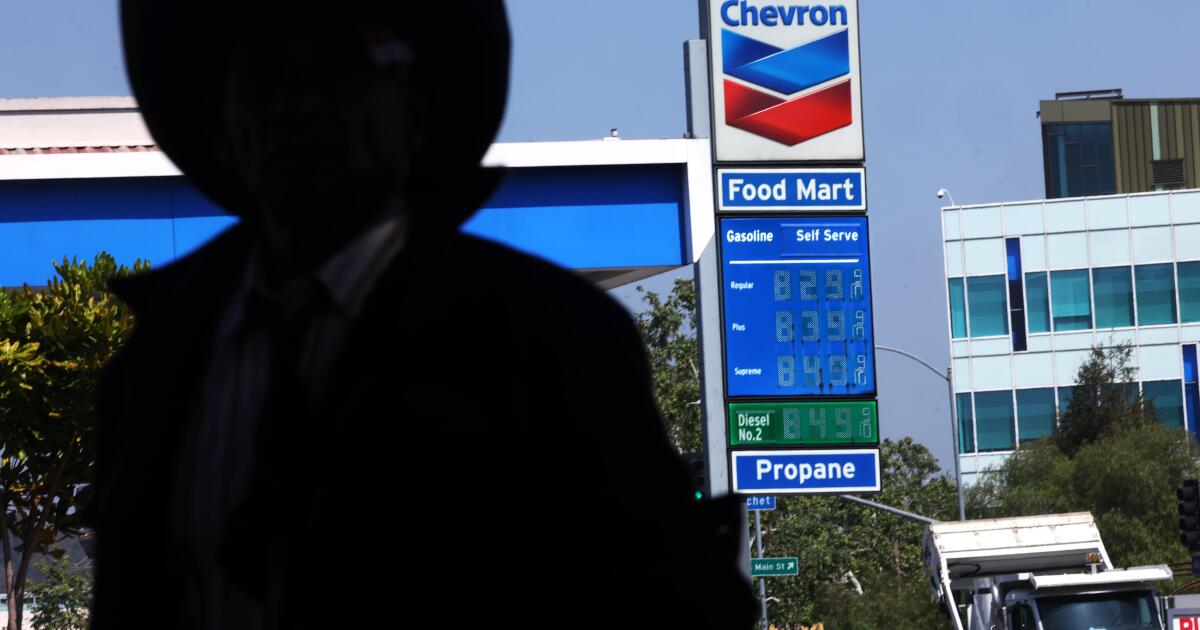
The blame game over surging gas prices is heating up as Gov. Gavin Newsom suggested Chevron could be gouging its customers.
California’s governor, who is not shy about promoting his positions with provocative posts, warned Memorial Day travelers on X against pumping gas at Chevron.
“Californians, if you’re hitting the road this holiday weekend, be sure to AVOID Chevron,” he said in the post, which included screen grabs showing Chevron gas prices higher than those at nearby unbranded gas stations. “Unbranded gas comes from the same refineries, storage tanks, and pipelines.”
The governor’s call-out is part of a larger spat between some California politicians and Chevron. The gas company posted signs at some of its California gas stations blaming the state’s high prices on Sacramento policies.
“California politicians are choosing foreign oil and fuels over local jobs and lower costs,” the signs read.
It includes a QR code that directs people to a Chevron webpage asking people to “speak up for affordable, reliable energy.”
A spokesperson for Chevron did not immediately respond to a request for comment.
A Chevron spokesperson told the Associated Press the signs were part of a campaign launched three years ago to educate the public on how California’s policies affect gas prices.
A Chevron refinery in El Segundo on May 4.
(Kyle Grillot/Bloomberg via Getty Images)
Chevron, as well as other top energy companies and experts, has emphasized that higher taxes, fees and standards on gas in California, as well as its restrictions on refining, have bolstered prices at the pump. Gas prices are among the highest in the country, even in the best of times, and recent problems influencing supply from the Middle East have triggered a unique challenge for the state, industry leaders say.
The price of gas has skyrocketed in California and across the country since the United States and Israel attacked Iran in late February. Gas prices have not stabilized since, and California’s average is nearly $1.60 higher than the national average. The state’s average gas price is $6.13 as of Friday, according to the American Automobile Assn.
A number of factors account for California’s higher costs, including a premium blend of gas that limits pollution, environmental program fees, the relative isolation of the state’s fuels market, and state and local taxes, according to the California Energy Commission.
Californians have scaled back holiday travel and cut down on leisure night outs as the prices on the pumps don’t stabilize.
Newsom noted in the X post that big oil companies are making billions of dollars off the Iran war. The price of crude oil has surged since the war started, as the Strait of Hormuz, through which oil typically passes, was effectively shut off.
Chevron is the state’s biggest branded retailer, controlling 19% of California’s gas market with more than 1,600 stations, according to the state’s energy commission.
The commission’s analysis of 2024 gas prices found Chevron had a retail margin of 84 cents. The price difference between the oil company and unbranded gas stations was 48 cents that year.
Tensions between the oil giant and the state rose when Chevron relocated its headquarters to Texas in 2024. The move ended the company’s long history in the state, dating back to its founding 145 years earlier.
The oil company complained then about Sacramento’s energy and climate policies. Companies, particularly in the tech sectors, have fled the state since then, blaming the state’s high operating costs.
California taxes consumers 70 cents per gallon of gas, the highest state tax in the country.
Newsom has been a staunch opponent of big oil companies, but the laws he’s passed have largely stalled. He signed a law in 2023 that would penalize oil companies for excess profits. Regulators voted to hold off plans until 2030 after two major oil refineries threatened to close up shop in the state.

Los Angeles is the birthplace of modern skateboarding, a city so chock-full of spots that whenever I leave the house for an errand or crosstown meeting, I scan the landscape looking for handrails and schoolyards I recognize from old skate videos. But four years after moving to the city, I have yet to skate any of the major landmarks: Never hit the ledges at the Jkwon plaza, never ollied across the Santa Monica sand gaps, never rolled around the West Los Angeles Courthouse.
Instead, a few mornings each week, I get up early and head to a Costco parking lot.
I am drawn there by a pair of parallel curbs that were designed to corral shopping carts. Unbeknown to shoppers on their way to rotisserie chicken and pallets of toilet paper, the curbs are world famous.
Their image has been reproduced on stickers, T-shirts and skateboard graphics. Pilgrims fly across the country and from Europe to skate them, sometimes taking dimensions so they can mold replicas back home. In January, when Nike released a limited-edition skate shoe under Costco’s Kirkland brand, it was an Easter egg for those in the know.
When I tell my normal friends about the curbs, they often ask if there is some unifying feature that makes all Costco parking lots great for skating, or if this particular Costco’s curbs are somehow extra special. The answer to both is, not really.
The curbs at my Costco are double-sided, meaning they have level asphalt on either side, which allows you to perform popover tricks that are impossible on sidewalks and planters. But mostly the spot is known because people in L.A. started frequenting it. As videos spread on social media, more people showed up, and the cycle of skate fame commenced, until one day “Costco curbs” were recognizable to skaters around the world.
I should note that I am 48 years old, which puts me around the median age of the regulars who skate at Costco in the mornings. Every now and then I meet someone in their 20s or early 30s, but the overall vibe is more AARP than Maximum Rad.
What I love about Costco is that it is the perfect expression of how skateboarders can turn even the blandest form of American architecture — the big box parking lot — into a thriving community space. At a time when people are lonely and disconnected, a bunch of 40- and 50-year-olds gather around low-stakes terrain, reconnecting with old friends and joking about tricks they can no longer do.
One morning last August, I arrived at the lot around 7:30 and found Jason Filipow, a 55-year-old Costco regular, clearing pebbles with an electric blower. Filipow was there with David Chaiken, 59. The last time they had seen each other was almost 40 years earlier, when they were both arrested while skateboarding in a drained municipal pool in South Carolina. Chaiken now lives in Texas and was in L.A. to visit his 30-year-old son. They had organized a reunion session at Costco over Instagram. If not for skateboarding, they probably would never have crossed paths again.
Chaiken has gray hair, fused vertebrae, a repaired rotator cuff and two metal plates in his left arm. On the morning I met him, he was wearing a single elbow pad on the bum left side; his right arm had a tattoo of a cup of coffee under the words “Mug Life.” As Chaiken rolled around getting warm, Filipow rubbed wax on the curbs, spritzed them with sealant, smoothed the droplets with a rag, jumped rope for two minutes, and queued Eric B. & Rakim on a portable speaker.
Popular spots are where skate history gets written. The Del Mar Skate Ranch north of San Diego was where a young Tony Hawk learned to fly in the early 1980s; a decade later, Embarcadero Plaza in San Francisco set the template for the urban-centric “street” skateboarding that is now the sport’s main voice. The Costco I go to — whose precise location in L.A. County I am not going to reveal because no one who skates there wants to ruin it — reflects how skateboarding now extends deep into middle age. It is a place where loss comes into focus and just showing up is a win.
After Filipow completed his prep ritual, I asked him if, like me, he found skateboarding to be more meaningful now that he is closer to the end than the beginning.
“For sure,” he said. “It’s that feeling of, it’s still possible.”
Curb Enthusiasm
Curbs are the closest thing skateboarding has to a universal training ground. They’re the first thing you ollie up, the first slick surface you slide across, the first right angle you grind through on your axles. Ask almost any skateboarder where they started out, and more often than not the answer is the curb in front of a local school, or behind some Jack in the Box, or a branch of the Department of Motor Vehicles, where the slick red paint denoting “no parking” is the skate equivalent of being dipped in gold.
For me it was a white curb behind a small office complex in Napa, Calif., where I went to high school. My friends nicknamed the spot “Solar Crisis” because it was lit by a towering light pole whose fuzzy glow reminded us of the unstable sun in a bad science fiction movie of the same name.
The leader of our crew, Victor Ramos, was a few years older and owned the skate shop where we hung out. He understood the bargain: he got to run the clubhouse but had to be the designated adult. In an era when everyone seemed to be a latchkey kid, Victor let boys be boys while yanking us back from hard drugs, violence and other categories of truly bad. He was the 21-year-old who could make fun of smoking teenagers without seeming like a scold, both a source of authority and someone you could chill with at a curb.
In California and much of the rest of the country, curbs tend to have an angled base that engineers call “the batter.” The batter creates a small ramp whose purpose is to redirect wayward tires back into the roadway. It also makes curbs a great obstacle for skateboarding: When hit just right with skateboard wheels, the batter kicks the rider atop the curb and makes a loud slap right before the axles tear into concrete. Skaters call this a “slappy.”
Slappies were popularized in the early 1980s by skaters who began slashing into curbs with the same carving motions they used to grind the lips of swimming pools. By the time I got heavily into the sport in the early ’90s, they were considered a retrograde trick. Young people were supposed to ollie, getting all four wheels off the ground, and land on top of the curb, not ram into them like guys in their 30s did.
Curbs remained a central feature of skateboarding, but as a basic building block where you figured out new tricks on the way to benches, ledges and handrails, depending on how gnarly you were. I spent the late ’90s and 2000s chasing that path before regressing. As my supply of free time and vertical leap diminished, I was humbled back to curbs and forced to learn slappies as an adult.
A Hot-Pink Board With a Skull
It turns out I was not alone. Somewhere around my mid-30s skate companies started releasing a slew of boards with graphics from the early ’80s and ’90s. Social media was populating with accounts dedicated to curbs and skate nostalgia, while companies like Tired Skateboards began marketing explicitly to over-the-hill skaters of the sort who use orthotics and toe stretchers to keep it going.
According to my iPhone, I did my first slappy on Dec. 14, 2013, at 2:44 p.m. I know this because Victor filmed it at the North Berkeley BART station shortly after I moved back to Northern California following a decade in New York. I was 36 and remember him coaching me through the trick. I now wish I had the off-camera banter instead of the eight-second edit he texted me after I landed one.
We had been out of touch for 15 years, but within a week of my return were back to filming tricks. Only now we were a pair of yuppies, an identity fated for me, but a significant turn for him.
Victor came from a family of agricultural workers who immigrated to the United States from Mexico when he was a child. Scarcity defined his experience in ways it had not defined mine. The story of his first skateboard, for instance, was a winding tale of neighborhood barter that netted him a hot-pink board with a skull on it. Mine is my dad driving me to a skate shop on my birthday and buying me a new board after I pointed to it on a rack.
By the time we linked back up, Victor was working as a graphic designer at a fast-growing start-up in a South of Market skyscraper. He had sold the shop in Napa, moved to San Francisco and put himself through college working restaurant jobs. We were now both responsible professionals, but on weekends we skated together, often in the parking lot of the Rockridge BART station, one of the best curb spots in the Bay Area. When Covid shut down offices in 2020, BART ridership collapsed and an algae bloom of freshly waxed curbs took over the station’s parking lot.
Like sourdough and Peloton rides, skateboarding helped people around the country blast through the tinnitus of lockdown life. Skate companies reported sales doubling and tripling while skate magazines documented an explosion in D.I.Y. skate parks that arose in newly deserted spaces. An interesting feature of this spike in activity was the big contributions from groups not normally associated with skateboarding: young women and middle-aged men.
A Best-Selling Midlife Crisis
Mastering a skateboard trick takes focus, and for a moment, it distracts you from whatever else is going on.
When the pandemic began, Ira Ingram had just turned 40. Ingram is a fixture of the Costco scene who goes by the nickname Curb Killer. He grew up skateboarding in Orange County and spent his teens and 20s chucking himself down stairs and handrails, then rediscovered curbs in his late 30s. Bald, fat (his description) and careening through a divorce, he resolved to spend lockdown making a short video, which skaters call a “part.”
The part, called “MID LIFE CRISIS,” is a compilation of curb tricks broken up by outtakes with the spectacle of a 250-pound man slamming into concrete. Half of it was filmed at Costco, and in an accompanying interview Ingram talks about how skateboarding helped him through one of the darkest moments of his life. The sport is his therapy; it’s his link to friends and music. “Everything good, you could draw a line to skateboarding,” he says in the video.
“Mid Life Crisis” came out in August 2021, about the same time that Heroin Skateboards began selling a “Curb Killer” skateboard with Ingram’s name on the top. The board has a wide egg shape that was popular in the early ’90s. Splayed across the bottom are cartoonish horror graphics of an egg in a hockey mask holding a bloody machete that it used to mutilate a pair of curbs that are obviously the ones at Costco.
The Curb Killer sold out in days and helped transform Heroin from a niche brand to a top-selling skate company. Five years later, Heroin is now selling the Curb Killer 9. Ingram asked me to make clear that while he is good on curbs he is “not a real pro skater.” That is, in fact, his appeal. He skates like a normal guy having fun, and it reminds you of being with friends.
‘Some News’
On Friday, July 31, 2020, I drove from Oakland to Napa to skate an outdoor mini ramp in a friend’s backyard. Victor had been texting me about some mystery stomach troubles, but resolved to come out and skate with us.
I parked my Volkswagen S.U.V. with two child car seats next to Victor’s Mini Cooper. As we pulled boards out of our respective trunks, he told me something extraordinary. The start-up he worked for had been sold for a billion dollars. I bluntly asked how much money he had made.
Victor seemed embarrassed by the sudden abundance. He said he would be “pretty good.” I never learned the exact value of “pretty good,” but it was more like buy a house no problem than life of private jets. It was still a life-altering sum, and the supply of good will I felt for Victor was so bottomless and pure, so free of jealousy or status envy, that I wanted to thank whoever bought his company for allowing me to experience it.
Six days later, Victor sent a group text to update his friends on “some news.” His stomach pains had gotten so bad that he had gone to the hospital. The doctors found a tumor.
“So, colon cancer,” he wrote.
He’d already had an operation. He was recovering while waiting for pathology reports, but had gotten up to walk that morning, which felt nice. “Like a good sesh,” he wrote.
During the procession of chemo, surgeries and more chemo, Victor went from rolling on a board to positioning a lawn chair in front of a curb so he could cheer the session and film tricks. None of the treatments went well, and whatever hope we had at the beginning was doused by his thinning frame. In May 2022, Victor drove to a Napa skate park and left his board under a canopy by the bowl, officially done.
“I hope some kid finds it and rips it hard,” he wrote a friend. “It’s weird letting it go tho.”
I moved to Los Angeles the next month and fell in with a new crew at Costco. As Victor faded, the words “I love you” began showing up in our texts, replacing the jokey vulgar phrases we used to yell at each other when someone was being too timid on their board.
That fall, when I drove north to see him for the last time, friends warned me that he might not be well enough for visitors. They advised that the best chance to say goodbye was to linger near his childhood home, where he was in hospice. So I posted myself at a curb and texted Victor that I was nearby and could come by if he could handle it. A few slappies later, he texted back, and I drove over to yap about skateboarding for an hour. When it was time to go we hugged, pulled tighter, and for the first time in 30 years of friendship, cried in each other’s arms.
No Comply
Recently I was skating Costco with Ira Ingram. He is now 46 and pays the rent making films and publishing Art Bar magazine with his new wife.
It had been an epic morning: Jérémie Daclin, a former pro skater from Lyon, France, was there, part of a slappy vacation Daclin takes to California each year. The sun was out, and the lot was uncharacteristically sparse, so there were fewer cars to dodge. The session extended to late morning.
Our friend Chris Fairbanks, a 51-year-old stand-up comedian, started trying a “no comply” over a planter box. Think of it as a long skip on a skateboard, only harder than that sounds. Ingram was standing by his van (license plate: CURBS) complaining about diesel prices when he noticed Fairbanks getting closer to landing the trick, so he sauntered over and started filming.
For the next few minutes they fell into a routine every skater knows, the one where the guy trying the trick says he will land it on the next attempt, then fails; the friend filming says he can film only one more, then stays for yet another. Each continued to encourage the other by claiming they were running out of time to make it happen. Then it did happen, and Fairbanks rode away to cheers.
When I asked Fairbanks about it later, he said his first thought was that it might be the last time he did that trick. He got a hip replacement in 2018 and needs to do the other. Sometime sooner than later, he said, he will head home after skateboarding and realize it was his last session. Just not today.
-
 San Diego, CA6 minutes ago
Before streaming and television, movies arrived by reel in San Diego
-
 Milwaukee, WI12 minutes ago
Milwaukee police investigate crash that left pedestrian with life-threatening injuries
-

 Atlanta, GA18 minutes ago
When Women Can’t Afford to Work, Atlanta Pays the Price – SaportaReport
-

 Minneapolis, MN24 minutes ago
Overnight Minneapolis shooting leaves one man dead
-

 Indianapolis, IN30 minutes ago
Crown Hill to host 153rd Memorial Day Ceremony
-

 Pittsburg, PA36 minutes ago
Pine-Richland, Elizabeth Forward high schools among the top winners of Pittsburgh CLO Gene Kelly Awards
-

 Augusta, GA42 minutes ago
VA Augusta hosts Memorial Day ceremony with American Legion Riders
-

 Washington, D.C48 minutes ago
Central Oregon NJROTC cadets preparing for Memorial Day Parade in Washington, D.C.

