Denver, CO
Understanding the Denver Broncos' salary cap situation – DNVR Sports


It’s officially the offseason in Denver, and that means it’s time for a salary cap refresher.
Maybe you don’t know how the NFL salary cap works. Maybe you need a refresher. Maybe you already understand the cap and don’t need to read any of this.
Regardless, here are answers to some of the questions Broncos fans might be asking this offseason.
(All of the numbers below come from Spotrac, OverTheCap or the NFLPA.)
How much salary cap space do the Broncos have?
-$30 million.
The number isn’t set in stone quite yet. Sometime in the next two months, the NFL will announce the official salary cap for the 2024 season. Most projections expect the cap to be about $242.5 million, which is up from $224.8 million in 2023.
The Broncos currently have about $273 million in salary cap liabilities for 2024. They’ll roll over their $1 million in unused salary cap space from 2023. That will leave them about $30 million over the expected salary cap, which places them in the bottom five of the NFL in cap space.
In other leagues, going over the salary cap can be allowed. For example, MLB has a luxury tax, or a tax on all spending past the limit.
The NFL has a hard cap, though. There’s no exceeding the limit.
Why don’t the Broncos have salary cap space?
These are the 10 biggest earners for the Broncos in 2024, by salary cap hit:
- Russell Wilson ($35.4 million)
- Garett Bolles ($20 million)
- Zach Allen ($19 million)
- Mike McGlinchey ($18.5 million)
- Justin Simmons ($18.25 million)
- Courtland Sutton ($17.3 million)
- Tim Patrick ($15.57 million)
- Ben Powers ($15.25 million)
- Jerry Jeudy ($12.99 million)
- DJ Jones ($12.96 million)
These 10 players take up $185 million in cap space, or about 76% of the salary cap.
Can NFL teams spend cash instead of salary cap?
No. Every dollar a team spends on players must be accounted for in the salary cap.
However, when teams account for that money is flexible, especially with excess cash.
NFL contracts can provide players money in various ways, but the two most common ways are through salaries and signing bonuses. Salaries must be accounted for in the year the team gives the player the money, but signing bonus money is split evenly across each year of the contract.
For example, imagine the Broncos sign a new player to a five-year contract this offseason. If they give him a $10 million salary in 2024, that will add $10 million to the Broncos’ salary cap spending in 2024.
But if they give him a $10 million signing bonus, the cap hit is split over all five years of the deal. In salary cap dollars, the bonus would cost the Broncos $2 million in 2024, $2 million in 2025, $2 million in 2026, $2 million in 2027 and $2 million in 2028.
By spending cash up front—a signing bonus—the team gets to push some of the salary cap implications down the road.
Every dollar the team spends on players must be accounted for in the salary cap, but cash signing bonuses can push that accounting to future years.
How will the Broncos get under the salary cap?
The Broncos have two primary ways they can reduce their salary cap liabilities.
- Trade or release players.
- Restructure contracts.
The first option is clear. If somebody has a $15 million non-guaranteed salary in 2024 and the Broncos decide to release him, they would gain $15 million in 2024 salary cap space.
The second option is more complicated.
A contract restructure means the team and the player agree to change the contract. This can be adding incentive, reducing pay, or any number of other things.
The most common type of restructure is a “simple restructure.” In this case, the player’s salary is converted to a signing bonus, which (as explained above) spreads his salary cap hit of the remainder of his contract.
Let’s look at Mike McGlinchey’s contract, for example.
McGlinchey has four years remaining on his deal. In 2024, his salary is $15 million. If McGlinchey and the Broncos agree to a simple restructure, they would reduce the salary to the minimum veteran salary (about $1.5 million) and convert the rest ($13.5 million) to a bonus. That bonus would be split over all four remaining seasons for salary cap purposes.
Instead of accounting for the entire $15 million that McGlinchey is due in 2024, the Broncos could reduce his cap hit to $4.875 million (the $1.5 million minimum salary plus one-fourth of the $13.5 million bonus).
The downside is that the Broncos’ salary cap bill for McGlinchey will increase in each of the other three remaining seasons by $3.375 million, one-fourth of the bonus.
For the Broncos, pushing some of the salary cap money down the road could make sense.
For McGlinchey, accepting the restructure makes even more sense. Instead of waiting until football season to get paid his $15 million in weekly installments, he gets the bulk of the money right away.
Who could the Broncos trade to clear salary cap space?
The Broncos could save at least $45 million in salary cap space in 2024 by trading any of these players:
Garett Bolles — $16 million
Justin Simmons — $14.5 million
Jerry Jeudy: $12.99 million
DJ Jones — $9.97 million
Courtland Sutton — $9.65 million
Tim Patrick — $9.5 million
Zach Allen — $7.75 million
Jarrett Stidham — $6 million
Ben Powers — $5.5 million
Alex Singleton — $4.67 million
Mike McGlinchey — $4.5 million
Who could the Broncos release to clear salary cap space?
The Broncos could save at least $5 million in salary cap space in 2024 by releasing any of these players:
Garett Bolles — $16 million
Justin Simmons — $14.5 million
Courtland Sutton — $9.65 million
Tim Patrick — $9.5 million
DJ Jones — $9.97 million
Jarrett Stidham — $4.5 million
What is dead cap?
Dead cap is money that is accounted for in the salary cap for a player that is no longer on the team.
For example, Randy Gregory has a $7.1 million salary cap hit for the Broncos in 2024. That is “dead money” because Gregory is no longer on the team.
Dead cap is the remaining money that has been paid to a player, but hasn’t yet been accounted for in the salary cap. Gregory’s dead money comes from two places:
- His signing bonus.
- A restructure.
Gregory signed a 5-year, $70 million contract with the Broncos. His salaries in the first two years (2022 and 2023) were guaranteed.
Gregory got a $10 million signing bonus. For salary cap purposes, that bonus cost the Broncos $2 million in each of the five seasons. The Broncos traded Gregory in October, during his second season. That left three seasons of signing bonus—$6 million—to be accounted for. That’s $6 million of the $7.1 million of the dead cap hit the Broncos will take in 2024.
Even though the Broncos traded Gregory to the 49ers, Denver is still responsible for that dead cap hit, because they were the ones who gave him the cash. Whoever pays the cash must also pay the cap hit.
The other $1.1 million of Gregory’s dead cap hit for Denver comes from a restructure that was done at the time of the trade to make the deal a little sweeter for the 49ers. We won’t dig into those numbers though. You get the point.
Can the Broncos cut Russell Wilson?
Yes.
The Broncos have two paths to release Russell Wilson:
- Release him in the next two months.
- Release him after two more seasons.
In theory, the Broncos could move on from him at a different time, but that would be financially reckless.
Here’s why: Wilson’s contract includes a guaranteed salary for 2025, but only if Wilson is still on the roster on March 17th, 2024. If the Broncos release Wilson before that date, they won’t owe him any of his $37 million 2025 salary.
So, if the Broncos keep Wilson for the 2024 season, they might as well keep him for the 2025 season, too. They’ll be paying him either way.
If the Broncos move on from Wilson this offseason, his cap hits will look like this:
2024: $35.4 million
2025: $49.6 million
2026+: $0
If the Broncos keep Wilson for the next two seasons, his salary cap hits will look like this:
2024: $35.4 million
2025: $55.4 million
2026: $18.4 million
2027: $12.8 million
2028+: $0
In other words, the Broncos won’t save any salary cap space this season if they move on from Wilson, but they will save $37 million (Wilson’s 2025 salary) over the following three seasons.
Will the Broncos be able to sign free agents?
Yes, but probably not like last year.
The Broncos were one of the NFL’s biggest spenders in free agency in 2023. They brought in Mike McGlinchey, Ben Powers and Zach Allen. All three players earn at least $10 million per year.
Broncos general manager George Paton gave his take on the situation at his end-of-season press conference.
“We won’t be in on the first wave of free agency like we were last year,” Paton said. “You can’t do that every year. We’ll be very strategic and very specific on what positions and what players we try to sign.”
If the Broncos wanted to get aggressive, they could find a way to get a top-10 free agent. But they would need to do some gymnastics to make the numbers work.
Most free-agent contracts include big signing bonuses and smaller first-year salaries. That means cap hits are generally low in Year 1.
For example, Mike McGlinchey’s average cap hit on his five-year deal is $17.5 million. But his Year 1 cap hit was $6 million.
While the Broncos probably won’t make any big moves in free agency, they can probably do more than you’d expect given their current situation. Most of the bills for new players will be paid down the line.
Which Broncos will be free agents?
Eight of Denver’s starters will be unrestricted free agents this offseason.
- ILB Josey Jewell
- C Lloyd Cushenberry III
- CB Fabian Moreau
- TE Adam Trautman
- S PJ Locke
- DT Mike Purcell
- FB Michael Burton
- K Wil Lutz
The following reserves will also be unrestricted free agents:
- CB K’Waun Williams
- T Cameron Fleming
- DT Jonathan Harris
- LB Justin Strnad
Have more questions? Leave them in the comments below.


A year ago, the Denver Broncos had some questions about the future of their center position. However, during the bye, the Broncos answered those questions by extending one their starter.
Even with that extension, the Broncos still have some questions about the position’s future, partly due to the structure of the deal they granted and the position’s depth.
Our last installment in this positional series was at offensive guard, where the Broncos are very strong and deep. As we continue breaking down each position on the Broncos’ roster ahead of training camp, let’s examine where things stand at center.
Starter
Luke Wattenberg
Wattenberg is the starter and will remain so after the big extension Denver gave him in November 2025. Before the extension, his play was solid, but afterward, he looked like a top 10 center in the NFL — then he suffered a shoulder injury.
Wattenberg’s long-term place with the Broncos will depend entirely on his play, as his four-year, $48 million deal is structured so that Denver can get out of it after the 2027 season. It’s essentially a two-year deal for about $25 million.
If Wattenberg isn’t cutting it or can’t stay healthy, the Broncos could move on and save themselves $23 million. He’s missed six games to injury since becoming the starter in 2024, so the Broncos’ depth could be tested with Wattenberg as the guy.
Backup
Alex Forsyth
The backup spot is held by Forsyth, a solid run blocker who struggles in pass protection. He has seen the field some over the last two years. When Forsyth stepped in for Wattenberg late last season, he looked much the same as he did in the same role in 2024.
There are still questions about Forsyth, not only with his play but also with the fact that he is entering the final year of his rookie deal as a 2023 seventh-round draft pick. Denver could be looking for a new backup center after this season, as he could decide he wants a chance to start elsewhere and walk in free agency, especially with six career starts on his resume.
Wattenberg will be the starter for 2026 and 2027, so long as he avoids the injury bug. He hasn’t been able to stay on the field since taking over for Lloyd Cushenberry III as the starter in 2024, so if the best predictor of future outcomes is past outcomes, the Broncos had better be prepared for Forsyth to see the field at some point in 2026.
The Others
Gavin Ortega and Michael Deiter
Oretega is an undrafted rookie the Broncos brought in, and he has a chance to compete for a practice squad spot. The Broncos brought Deiter in last year after injuries to Wattenberg and Forsyth.
There isn’t a spot for either of these players on the 53-man roster, barring preseason injuries, and it can be tough to keep two centers on the practice squad, even if the players have guard versatility.
The Takeaway
While the Broncos have the starting job locked up with Wattenberg for the next two years, their depth is still questionable. Forsyth hasn’t shown the development you want to see, and will be a free agent after this season.
Denver could find itself looking for a center in the 2027 NFL draft to develop in case Wattenberg’s play drops off, or if he isn’t able to sustain the high level of play he displayed after getting his extension late last year.
Sign up for our free Denver Broncos On SI newsletter, and get breaking Broncos news delivered to your inbox daily!
 Add us as a preferred source on Google
Follow
Denver, CO
Denver Transplant Games sets Guinness World Record for mos living donors, recipients in one place at one time

DENVER (KMGH) — The biennial Transplant Games wrapped up in Denver this week, bringing hundreds of organ donors and recipients together to compete in everything from cycling and swimming to darts and trivia at venues all over the city.
In fact, the games set a Guinness World Record for most living donors and recipients in one place at one time, with 966 gathering at the Colorado Convention Center.
Angela Laino, who used to live in Boulder, came back to Colorado to compete in the games. She donated a kidney to a stranger in January before running in the 5K event.
“I’m what they call a non-directed living kidney donor, which means that I don’t know who my recipient was,” she explained. “So I just said, ‘Whoever needs my kidney, I’m sure they’ll find the best match for it.’”
Laino said she was inspired by her job, working “on and off” as a dialysis social worker for 17 years.
“I really saw the challenges that my patients faced,” she said. “I saw what they had to go through to get on the [transplant] wait list… I know what transplant means for people. I’ve seen it firsthand. And to be able to see them come out here, compete, they’re doing basketball, they’re doing badminton, they’re swimming, they’re cycling, they’re running. They are living their full lives, and that’s really what transplant can do for people.”
Laino said the games unite the community and show off its resilience.
“When you go through the transplant process, sometimes you feel alone, you feel like you’re the only one going through this,” Laino said. “And then you come to an event like this and you literally see thousands of people. You see recipients, living donors, donor families coming together for the same cause. It’s really inspiring, because it really helps to get the word out, spread awareness about the organ shortage, and it shows people what recipients and donors can do after they have the surgery.”
Dr. Michael O’Shea — a nephrologist, a doctor who cares for kidney disease patients and the kidneys in general — agrees. But he said more needs to be down to support patients and spread the word about the need for organ donations.
The National Kidney Foundation estimates 37 million Americans have Chronic Kidney Disease, which occurs when kidneys cannot filter the blood properly, leading to serious health issues. Because symptoms can be minimal in early stages of the disease, many patients don’t realize they have it.
“I think education about kidney transplant, both on the patient side as well as on the potential donor side, could be markedly ramped up and improved,” Dr. O’Shea said. “It’s struggles with communication between transplant centers, patients, and community nephrologists. No one’s fault. It’s just a very complicated delivery system.”
In the case of kidneys, people can become diseased donors — who register to donate in the case of their sudden death — or living donors, who donate one kidney will relying on the other. Dr. O’Shea said both are critical to meet nationwide demand for life-saving transplants, though the living donations tend to have a longer lifespan — around roughly 20 years — for recipients.
“A number of folks get transplanted every year off this list,” O’Shea explained. “It is also true that a greater number of folks get added to the list every year.”
To register to become a deceased donor, Coloradans can visit their local Department of Motor Vehicles office or visit registerme.org.
O’Shea said those considering living donations face an “exceedingly small” medical risk for end-stage kidney disease, but should consult with their doctor about the decision.
Even as the games leave Denver, a reminder will stick around through the summer. Denver Parks and Recreation, the Downtown Denver Partnership and DaVita have partnered to set up a basketball court in Skyline Park near Arapahoe and 17th Streets, in order to keep the spirit of the games alive and honor the resilience of organ donors, recipients and their families.

Getty
Denver Broncos star Pat Surtain II is navigating uncertainty on and off the field.
Pat Surtain II and the Denver Broncos could already have to overcome not having outside linebacker Jonathon Cooper for an indeterminate length of time amid his ongoing legal matters, and the 2024 Defensive Player of the Year is now facing another hurdle.
This one affects Surtain off the field, and personally.
It will be but a footnote on his 2026 season, but the standout defender’s recent experiences are reminders about how quickly things can change in the NFL.
Broncos’ Pat Surtain II Gets More Bad News
GettyPat Surtain II could have forced to make a difficult decision about one of his ventures off the field.
In addition to his award-winning play on the field for the Broncos, Surtain has also taken on podcasting during his spare time. He co-hosts the “Closed on Sundays” podcast with fellow Alabama alum and current Detroit Lions cornerback Terrion Arnold.
The duo’s joint venture is in imminent danger.
“#Broncos star Pat Surtain II has a successful podcast with Arnold,” The Denver Post’s Troy Renck posted on X on June 24. “Now, Arnold is facing some serious charges.”
According to NFL.com’s Grant Gordon on June 24, “Detroit Lions cornerback Terrion Arnold has been arrested in connection with a February robbery and kidnapping in Tampa, Florida, the Hillsborough County State Attorney announced late Wednesday night.
“Arnold, 23, turned himself in at Orient Road Jail (Florida) on Wednesday and is facing eight total felony charges — four for robbery with a firearm or deadly weapon and four for kidnapping, the Hillsborough County Sherriff’s Office told NFL.com. Arnold is being held with no bond and is due in court Thursday at 1:30 p.m. ET, per the Sherriff’s office.”
Arnold’s charges “carry a potential life sentence in prison,” per Gordon.
Gordon also noted that prosecutors will request he remain in custody until his trial. That is in addition to his current no-bond status.
The matter all stems from an alleged retaliation attempt after Arnold and several friends had their property stolen from an AirBNB they were staying in. Arnold is the alleged mastermind of the plot, which targeted individuals police say were not involved with the initial theft.
Broncos Navigating Distractions
GettyPat Surtain II and the Denver Broncos are navigating legal issues with a player on their roster.
Surtain and Arnold last put out an episode of the podcast in February. Moreover, the Lions corner’s status and their podcast must come after Surtain’s commitment to the Broncos, who are once again expected to be one of the top teams in the NFL.
They face an internal threat to that, with Cooper.
Broncos head coach Sean Payton said they are following the NFL’s lead on handling the matter, while Surtain expressed support for his teammate.
“He’s our brother at the end of the day, and we all rally behind Coop,” Surtain told reporters on June 16 when asked directly. “We just wish him the best with everything, but just keeping him in good spirits.”
Cooper’s situation, obviously, affects the Broncos–and, by default, Surtain–directly.
Still, the star corner could need a new podcast partner, lest he prefer to sunset the endeavor entirely, as well as hope Denver can replace a key piece in Cooper if necessary.
Josh Buckhalter covers the NBA and NFL for Heavy.com. He has covered both leagues since 2016, including bylines at FanSided, Last Word on Sports and Clocker Sports. He’s based in Villa Park, Illinois. Follow Josh on Twitter and Instagram: @JoshGBuck More about Josh Buckhalter
-
 Sports7 minutes ago
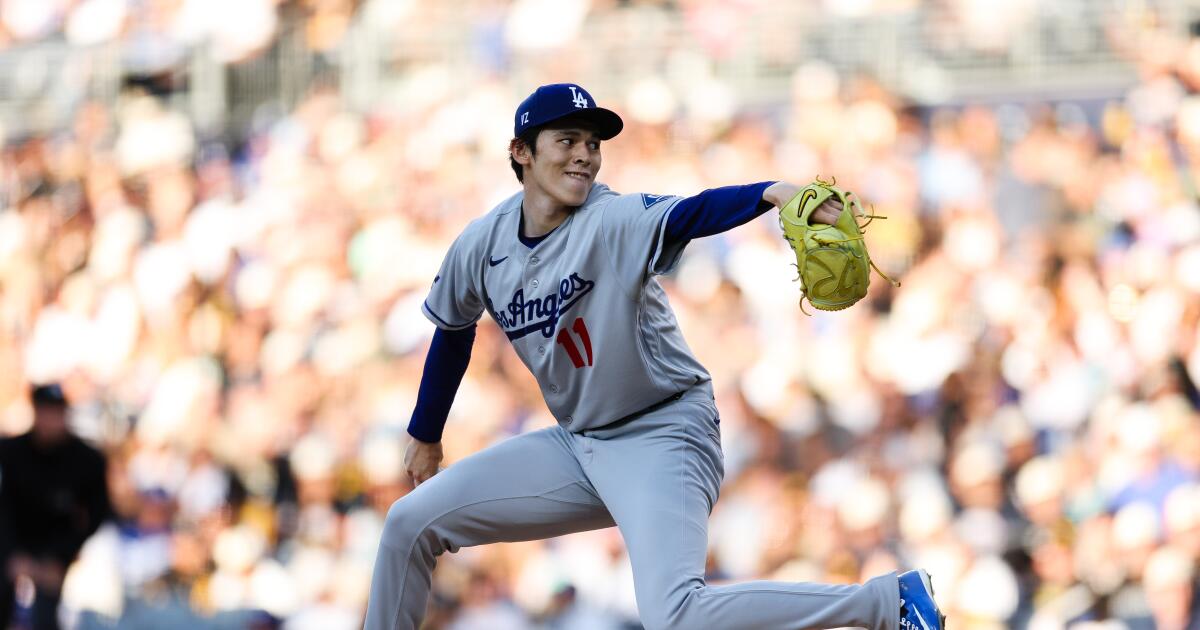
Roki Sasaki struggles with command early, Dodgers fall to Padres
-

 World15 minutes ago
Trump threatens 100% tariffs over EU digital tax
-

 News40 minutes ago
Utah County declares State of Emergency as wildfires ‘ravage’ the state
-

 Los Angeles, Ca2 hours ago
Man found guilty of sex trafficking victim along L.A.’s Figueroa Corridor
-

 Detroit, MI2 hours ago
No. 23 overall pick in the 2026 NHL draft | Detroit Red Wings
-

 San Francisco, CA2 hours ago
San Francisco Pride kicks off with rainbow lasers, ValQueeries celebrate at Valkyries Pride Night
-

 Dallas, TX3 hours ago
How to buy Egypt vs. Australia World Cup soccer tickets
-

 Miami, FL3 hours ago
Helping Venezuela: Miami search-and-rescue team prepares to deploy

