Culture
Don't count out Baker Mayfield and the Buccaneers, who keep beating the odds


TAMPA, Fla. — From the very first day that Todd Bowles and the Tampa Bay Buccaneers took the field for training camp, few outside the organization gave them much of a chance this season.
Quarterback Baker Mayfield was on his fourth team in 19 months, trying to fill the recently retired Tom Brady’s massive shoes. The roster lacked household names from the Bucs’ 2020 Super Bowl season and instead featured unproven youngsters in some of those key spots. Oddsmakers predicted Bowles could be among the first NFL head coaches fired this season. The Bucs just never had that championship feel, at least not to outsiders.
So, it came as no surprise early last week when, despite having defied expectations by winning the NFC South, Tampa Bay was pegged by Las Vegas as a home underdog for its NFC wild-card matchup with a sagging Philadelphia Eagles team.
The Buccaneers simply shrugged off the lack of respect, then attacked the Eagles with a vengeance Monday night at Raymond James Stadium.
Riding an aggressive defensive performance and paced by a gutsy performance from Mayfield, the Buccaneers thumped Philadelphia 32-9 to advance to the divisional round of the playoffs. Tampa Bay will travel to Detroit for a Sunday afternoon game against the Lions, who are riding high after beating the L.A. Rams for their first playoff victory in 32 years.
“The underdog role doesn’t bother us,” linebacker Shaquil Barrett said. “We know our capabilities in the locker room, no matter what is projected or what people would think is going to happen in the game. We always come in thinking we’ve got a great chance of winning the game. So, people saw us as the underdog tonight, and we know they’ll see us as the underdog going into Detroit, but we know we’ve got to keep doing the same stuff.”
GO DEEPER
Buccaneers finish off reeling Eagles in NFC wild-card matchup
It’s often said that teams take on the personality of their strongest leaders, and the Buccaneers are no different. Players will readily admit they are a blend of Bowles and Mayfield.
Bowles, the second-year head coach, is stoic and unflinching but also intensely competitive. The former defensive back is calculated yet highly aggressive. Mayfield, meanwhile, is so unapologetically himself. He’s brash at times, always fiery as a competitor and plays with the toughness of a middle linebacker.
Drawing inspiration from their coach and quarterback, the Buccaneers steeled themselves all season against the outside noise, particularly doing a four-game losing streak that stretched from October to November, and morphed into a 1-6 skid.
“We just stayed the course,” Barrett said. “We always knew we were a better team than we were on the losing streak that we had. … Now, everything is starting to click and that’s why we stay with the program and trust the process and just keep doing what you’re supposed to do. We knew it was going to start working.”
The confidence grew during a four-game win streak and 5-1 run by the Bucs to close out the regular season while clinching the division. And the resolve remained just as strong this week as the Buccaneers prepared to avenge a 25-11 loss to the Eagles in Week 3.
The Buccaneers wanted to turn the tables after giving up 472 total yards, including 201 on the ground, to the Eagles in that initial meeting. Mission accomplished. Monday night, it was the Buccaneers who amassed 426 total yards and 23 first downs, converting 6 of 14 third-down attempts. They held the Eagles to 276 yards (only 42 yards rushing) and 0-for-9 on third down.
Bowles and his defense delivered a signature performance while eliminating the threat of the Eagles’ rushing attack. They forced quarterback Jalen Hurts to beat them with a short-staffed wide receiving unit while also nursing a painful and slowly healing dislocated middle finger on his throwing hand.
Turning the Eagles one-dimensional enabled Bowles to dial up one blitz-heavy package after another. Hurts (sacked three times, including a safety) and his teammates and coaches never figured out how to adjust.
ONCE AGAIN, HOW Y’ALL FEELING BUCS FANS?! 😱
📺: #PHIvsTB on ESPN/ABC
📱: Stream on #NFLPlus https://t.co/rFlj59UzNi pic.twitter.com/VtoFNKaLZ5— NFL (@NFL) January 16, 2024
Linebacker Devin White said the Bucs defense entered the game “with a dominant mindset. We wanted to jump on them early and just beat them. I think it was the preparation. That played a big part and coming in here with a winning attitude.”
Offensive players drew fuel from those defensive heroics, as well as inspiration from Mayfield. The quarterback was so battered and bruised from rib and ankle injuries, he brought in his personal physiotherapist twice during the week in hopes that the extra treatment would give him a shot at playing.
It worked. Mayfield passed for 337 yards, three touchdowns and no interceptions while also scrambling for 16 yards on two carries. Mayfield became only the second Buccaneers quarterback — Brady is the other — to pass for 300 yards or more in a playoff contest.
“He gutted it out,” Bowles said. “I mean, if you looked at him during the week, he was limping around, he wouldn’t practice and he was getting a little better each day. … He never flinched (Monday). He made play after play after play.”
He Baked. 👨🍳
📺: #PHIvsTB on ESPN/ABC
📱: Stream on #NFLPlus https://t.co/rFlj59UzNi pic.twitter.com/GjDnqU2FLh— NFL (@NFL) January 16, 2024
Tight end Cade Otton, who had a team-high eight catches for 89 yards, said the Bucs as a team take on Mayfield’s character.
“It’s just watching his actions. The way he plays, the way he practices, the way he leads, it’s very genuine and he is always just competing,” Otton said “He’s wanting to win, but he also wants camaraderie with us. It’s just a great person to have as the leader of our team.”
“He’s a dog,” left tackle Tristan Wirfs said. “He’s a super tough guy and incredible competitor. He’s been doing everything he can to be out there with us. It’s just awesome to see.”
The Buccaneers listed Mayfield as questionable entering the game, but the quarterback said there was never a chance in his own mind that he wouldn’t play Monday night.
“We worked extremely hard to get a chance to be in the playoffs and we just wanted an opportunity and our guys came out and played really, really well,” said Mayfield, whose three touchdown passes went for 44, 56 and 23 yards. “Special teams, defense — once again … we’re happy, but still got more to go.”
The redemption tour continues Sunday in Detroit, where the Bucs will attempt to avenge a 20-6 Week 6 loss to the Lions. Detroit is an early 6 1/2-point favorite, but no one in Tampa cares about that. Why would they, given the odds they’ve defied thus far?
(Photo: Julio Aguilar / Getty Images)
“The Football 100,” the definitive ranking of the NFL’s best 100 players of all time, is on sale now. Order it here.



new video loaded: The A.I. threat to audiobooks

By Alexandra Alter, Léo Hamelin and Laura Salaberry
May 20, 2026

At 53, and after more than a decade in the industry, things are happening for the romance writer Kennedy Ryan that were not on her bingo card.
The most recent: a first look deal with Universal Studio Group that will allow her to develop various projects, including a Peacock adaptation of her breakout 2022 novel “Before I Let Go,” the first book in her Skyland trilogy, which considers love and friendship among three Black women in a community inspired by contemporary Atlanta.
With a TV series in development, Ryan — who published her debut novel in 2014 and subsequently self-published — joins Tia Williams and Alanna Bennett at a table with few other Black romance writers.
“What I am most excited about is the opportunity to identify other authors’ work, especially marginalized authors, and to shepherd those projects from book to screen,” said Ryan, a former journalist. (Kennedy Ryan is a pen name.) “We are seeing an explosion in romance adaptations right now, and I want to see more Black, brown and queer authors.”
Her latest novel, “Score,” is set to publish on Tuesday. It’s the second volume in her Hollywood Renaissance series, after “Reel,” about an actress with a chronic illness who falls for her director on the set of a biopic set during the Harlem Renaissance. The new book follows a screenwriter and a musician, once romantically involved, working on the same movie.
In a recent interview (edited and condensed for clarity), Ryan shared the highs and lows of commercial success; her commitment to happy endings; and her north star. Spoiler: It isn’t what readers think of her books on TikTok.
Your work has been categorized as Black romance, but how do you see yourself as a writer?
I see myself as a romance writer. I think the season that I’m in right now, I’m most interested in Black romance, and that’s what I’ve been writing for the last few years. It doesn’t mean that I won’t write anything else, because I don’t close those doors. But the timeline we’re in is one where I really want to promote Black love, Black art and Black history.
What intrigued you about the period of history you capture in the Hollywood Renaissance series?
I’ve always been fascinated by the Harlem Renaissance and the years immediately following. It felt like a natural era to explore when I was examining overlooked accomplishments by Black creatives. I loved the art as agitation and resistance seen in the lives of people like James Baldwin or Zora Neale Hurston, but also figures like Josephine Baker, Lena Horne and Dorothy Dandridge, who people may not think of as “revolutionary.” The fact that they were even in those spaces was its own act of rebellion.
What about that period feels resonant now?
The series celebrates Black art and Black history and love at a time when I see all three under attack. Our art is being diminished and our history is being erased before our very eyes. I don’t hold back on the relationship between what I see going on in the world and the books I write.
How does this moment in your career feel?
I didn’t get my first book deal until I was in my 40s, so I think this is the best job I’ve ever had. I’m wanting to make the most of it, not just for myself, but for other people, and I think the temptation is to believe that it will all go away because that’s my default.
Why would it all go away?
Part of it is because we — my family, my husband and I — have had some really hard times, especially early in our marriage when my son was diagnosed with autism, my husband lost his job, and we experienced hard times financially. I’ll never forget that.
When I say it could all go away, I mean things change, the industry changes, what people respond to changes, what people buy and want to consume changes. So I don’t assume that what I am doing is always going to be something that people want.
Why are you so firmly committed to defending the “happy ending” in romance novels?
It is integral to the definition of the genre that it ends happily. Some people will say it’s just predictable every one ends happily. I am fine with that, living in a world that is constantly bombarding us with difficulty, with hurt, with challenge.
I write books that are deeply curious about the human condition. In “Score,” the heroine has bipolar disorder, she’s bisexual, there’s all of this intersectionality. For me, there is no safer genre landscape to unpack these issues and these conditions because I know there is guaranteed joy at the end.
You have a pretty active TikTok account. How do you engage with reviews and commentary on the platform about you or the genre?
First of all, I believe that reader spaces are sacred. Sometimes I see authors get embroiled with readers who have criticized them. I never ever comment on critical reviews. I definitely do see the negative. It’s impossible for me not to, but I just kind of ignore it. I let it roll off.
How does this apply to being a very visible Black author in romance?
I am very cognizant of this space that I’m in right now, which is a blessing, and I don’t take it for granted. I see a lot of discourse online where people are like, “Kennedy’s not the only one,” “Why Kennedy?,” “There should be more Black authors.” And I’m like, Oh my God, I know that. I am constantly looking for ways to amplify other Black authors. I want to hold the door open and pull them along.
How do you define success for yourself at this point?
I have a little bit of a mission statement: I want to write stories that will crater in people’s hearts and create transformational moments. Whether it’s television or publishing, am I sticking true to what I feel like is one of the things I was put on this earth to do? I’m a P.K., or preacher’s kid. We’re always thinking about purpose. And for me, how do I fit into this genre? What is my lane? What is my legacy? Which sounds so obnoxious, you know, but legacy is very important to me.

Welcome to Great Adaptations, the Book Review’s regular multiple-choice quiz about printed works that have gone on to find new life as movies, television shows, theatrical productions and more. This week’s challenge highlights the screen adaptations of popular books for middle-grade and young adult readers. Just tap or click your answers to the five questions below. Scroll down after you finish the last question for links to the books and their screen versions.
-

 Movie Reviews3 minutes ago
‘The Birthday Party’ Review: Hafsia Herzi, Benoît Magimel and Monica Bellucci in Léa Mysius’ Gripping if Uneven Home-Invasion Thriller
-

 World15 minutes ago
Video: Europeans Remain Wary as Trump Promises to Deploy Troops to Poland
-

 Politics27 minutes ago
Video: Tulsi Gabbard Resigns as Intelligence Chief
-

 Health45 minutes ago
Eili Lilly’s Retatrutide Weight-Loss Results Rival Bariatric Surgery
-
 Lifestyle1 hour ago
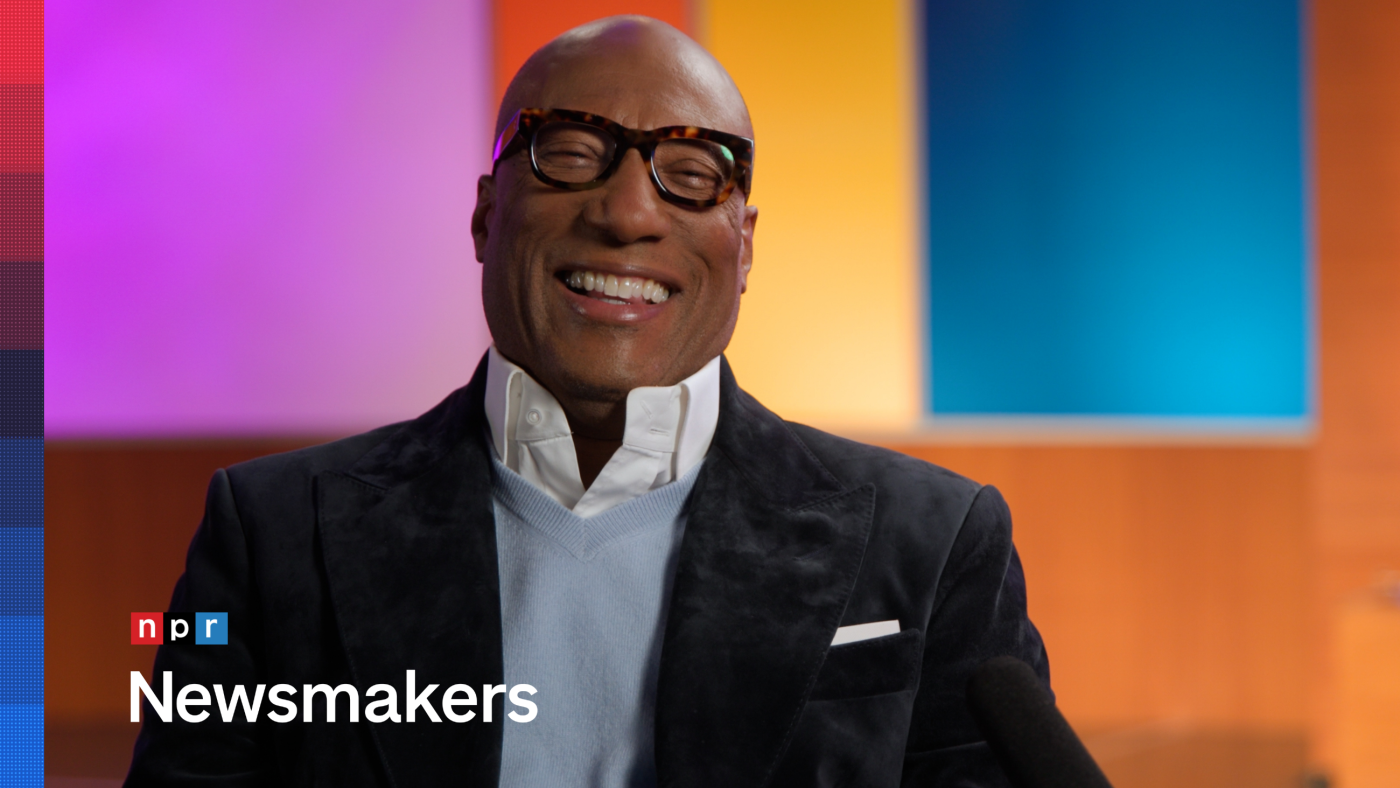
Late night has enough political humor already, says host stepping into Colbert’s slot : NPR’s Newsmakers
-

 Technology1 hour ago
Google’s AI search is so broken it can ‘disregard’ what you’re looking for
-

 World1 hour ago
Mojtaba Khamenei using ‘bin Laden template’ to survive, learned from Abbottabad: analyst
-

 Politics1 hour ago
Military families demand DOJ distribute nearly $800M from French cement company found guilty of bribing ISIS

