Northeast
Maryland suspect admitted to killing roommate during remote control dispute: police

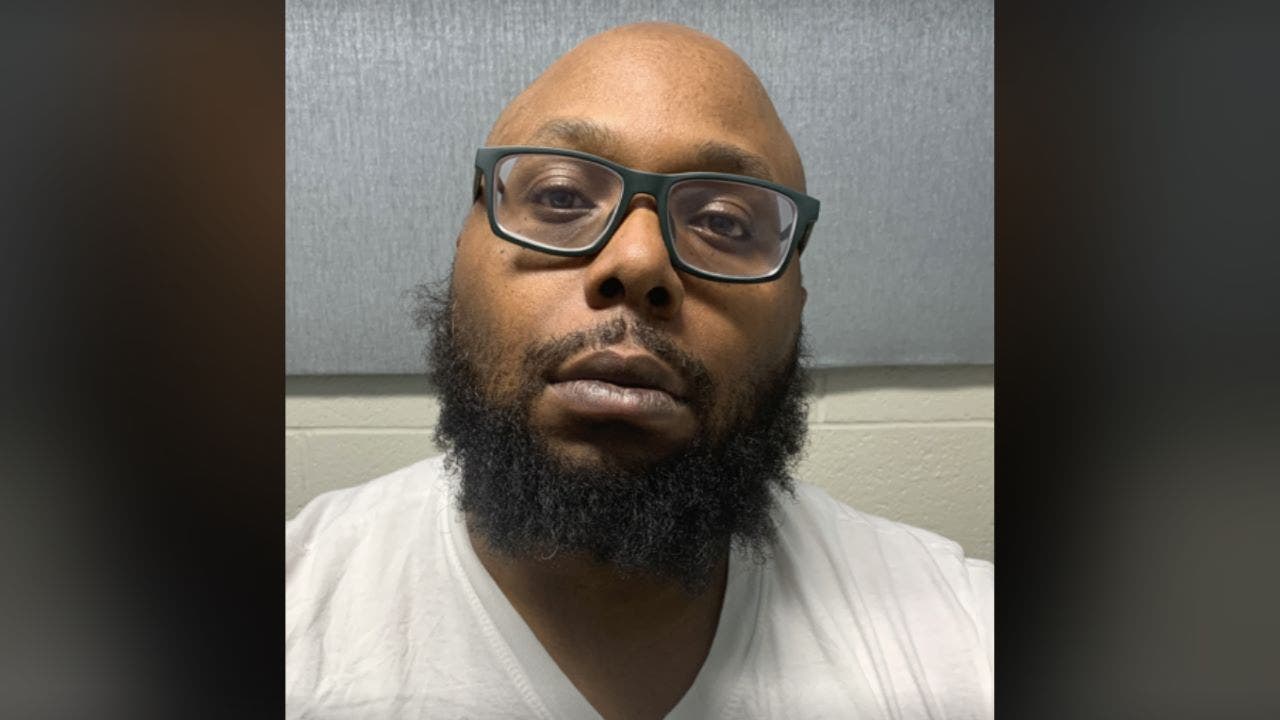
A Maryland man was arrested after he allegedly shot and killed his roommate during an argument about a remote control, police said.
Springdale resident Richard Bennaugh, 38, was charged with manslaughter in connection to the death of 27-year-old Domonique Scott Hayes last week. Prince George’s County Police said on Instagram Friday that its officers responded at around 12:30 p.m. on Thursday.
“Officers discovered the decedent inside of a home suffering from gunshot wounds,” the police’s statement read. “He was pronounced dead on the scene.”
“The preliminary investigation revealed Bennaugh shot the decedent during a dispute,” authorities added.
MURDERED BALTIMORE TECH CEO LATEST VICTIM OF PROGRESSIVE CRIMINAL JUSTICE, EXPERTS SAY
Springdale resident Richard Bennaugh, 38, was charged with manslaughter in connection to the death of 27-year-old Domonique Scott Hayes. (Prince George’s County Police)
According to documents obtained by FOX 5 DC, Bennaugh called police around six hours after the shooting, which happened between 5:30 a.m. and 6 a.m.
He reportedly told them that his roommate “had come at him with knives,” the document said.
Bennaugh recounted to police that he fell asleep on the sofa and was woken up by Scott Hayes “making a lot of noise” in the kitchen. Scott Hayes then repeatedly asked Bennaugh where the remote was, but the suspect ignored him.
BALTIMORE’S ‘CRAZY’ CRIME SURGE TAKES TOLL AS LONGTIME LOCAL BUSINESS FORCED TO CLOSE: ‘NOT SAFE’
Bennaugh reportedly told police that his roommate “had come at him with knives.” (FOX 5 DC)
Bennaugh, who had a blanket on his head, removed the blanket and allegedly saw Scott Hayes holding two knives. The suspect then grabbed his handgun and started shooting before running to his room on the third floor.
Prince George’s County Police is actively investigating the shooting. (FOX 5 DC)
The suspect claims that he didn’t see that Scott Hayes was injured, so he assumed that none of the bullets hit him and went back to sleep.
Prince George’s County Police ask anyone with information about the case to contact its homicide unit at 301-516-2512.
Read the full article from Here


RANDOLPH, Mass. (WWLP) – A Randolph resident has won a $1 million prize through the final drawing of the Massachusetts State Lottery “$4,000,000 Monopoly Doubler” instant ticket game.
Brenda Mellor of Randolph claimed the game’s tenth and final $1 million prize.
She selected the cash option and received a one-time payment of $650,000 before taxes. Mellor said she plans to use the winnings to pay for home improvements, including renovations to her roof and pool.
The winning ticket was purchased at The Variety Store at 2 Mazzeo Drive in Randolph. The retailer will receive a $10,000 bonus for selling the ticket.
Local News Headlines
WWLP-22News, an NBC affiliate, began broadcasting in March 1953 to provide local news, network, syndicated, and local programming to western Massachusetts. Download the 22News Plus app on your TV to watch live-streaming newscasts and video on demand.
New Hampshire
Photo Exhibit | Art Talk | Crew Competition | Nashua Genealogy Club | More: Week Ahead Events

NASHUA, NH — Here is the week ahead roundup.
Get out, New Hampshire.
Event listings are free on one Patch site. You can share your calendar info on other community sites for a modest fee, starting at 25 cents per day. To get started, visit the Events link on the front page of all Patch sites. Statewide calendar roundups are published on most Sundays and Wednesdays. Visit any of the 223 New Hampshire Patch Event sites (patch.com/map/new-hampshire) for updated listings.

For hours, the masked protesters and masked ICE agents have stood staring at each other, separated by a thin strip of asphalt. At the edges of the crowd, New Jersey state troopers stand around, arms crossed, looking bored. Daylight hours at Newark’s Delaney Hall immigration detention center are quieter, the crowds thinner, the officers behind the gates more relaxed. It’s when, until recently, families could still go in and out, visiting their relatives inside. But when night falls, things change.
“When sunset happens, they’re going to push us into that cage and mace the fuck out of us,” says a street medic we’ll call Egg. “When they come, they’ll come hard and fast.”
The cage Egg is referring to is a small square of orange fencing set up on the street outside of Delaney Hall. It’s there because New Jersey’s new Democratic governor, Mikie Sherrill, has for days tried to quell the protests outside of the detention center, and has determined that what demonstrators need is a designated “protected speech zone.” Temporary fencing isn’t going to cut it, though — not for the protesters and certainly not for the detainees suffering inside of Delaney Hall.
On May 22, a group of detainees in DHS custody began a hunger and labor strike over what they claimed were inhumane conditions inside the facility. In a series of letters, detainees described a horrific list of ailments and injustices, including the persistent spread of disease, long response times by guards in the case of accident and injury, worm-riddled food, insufficient medical care, and dilapidated bathrooms that were in “inhumane condition.”
“We’d like to apologize for the way we entered the United States,” the detainees wrote. “Our American dream is safety and protection — with our families. Although this is a difficult situation, we trust in God and believe in American justice.”
Thus far, the detainees wrote, American justice has been hard to find. They claim that after surrendering themselves to U.S. authorities, they have been held for months, even when they sought to voluntarily return to their country of origin. One of the letters contained hundreds of signatures of detainees who were desperate to get out of Delaney Hall, offering to leave the country by any means just to escape the conditions inside. As news trickled out of the center, families of the detainees set up aid tents and resource centers outside, helping visitors meet with their loved ones during visiting hours. But as the DHS continued to ignore the detainees’ demands for more humane treatment, protests picked up steam, and pressure mounted to allow a full inspection of the facility.
On Monday, Sherrill and other New Jersey politicians attempted to visit the facility. They were allowed inside, but denied full access. “My request for access to Delaney Hall was formally denied this morning, raising serious questions about what they are trying to hide from public view,” Sherrill wrote in a statement afterwards. “I will continue to hold ICE accountable. … In New Jersey, we believe in the rule of law and that everyone deserves to be treated with basic dignity.”
Protests outside the facility, meanwhile, spiraled into violence. ICE agents flooded waves of protesters — including New Jersey Senator Andy Kim — with pepper spray, smashing their bodies into the ground and, in one case, into oncoming traffic on the road outside. They shot pepper balls and fired tear gas. The crowds outside mounted. Delaney Hall canceled visiting hours.
On Friday night, Sherrill sent in the state police — not to open or inspect the facility, but to clear the streets of protesters.
I ARRIVED at Delaney Hall at around 6:30 on Friday evening. Jersey state troopers had closed the road more than half a mile from the facility in either direction, stemming the near-constant flow of semi-truck traffic. Delaney Hall is in a desolate, industrial area of Newark, on a straight strip of road that passes the county jail, shipping companies, an asphalt plant and several fuel depots. When the wind picked up from the south, I could smell the sewage treatment plant nearby. As I approached the facility, I passed an organized row of tents and port-a-potties set up by activists to support families of detainees, along with stacks of boxes overflowing with protective equipment: respirators, goggles, masks, even knee and elbow pads. In front of Delaney Hall, a loose crowd of protesters was set up in the street. Militant, masked anti-fascists stared down a line of ICE agents in full combat gear — body armor, helmets, guns — standing at the gates of the facility.
It was still daylight, and the mood was largely calm. Some elderly protesters chanted and sang on a megaphone, priests and clergy drifted around, activists pushed carts of water and snacks. No one paid much attention to Sherrill’s “protected speech zone,” except to use the empty blacktop as a canvas for chalk art. But there were signs that everyone expected the night to get much more tense.
“You know what’s next, just go home!” a guy wearing a surgical mask in the crowd shouted abruptly. He wasn’t speaking to ICE, though; he was addressing the state troopers loitering around the edges of the protest. “You don’t have to be here! Go home to your wife and children!”
I moved around the crowd, chatting with protesters. Most didn’t want to give their real names. As activism has been increasingly criminalized since Donald Trump retook office, the rank and file of America’s protest movements have become more and more private about who they are. Eventually, I met Egg, the street medic. “Mikie Sherrill sold us out — now they’re here to tell us to fuck off,” he said, motioning to the state police. Egg explained what he thought would happen next. Because of the clashes with ICE agents, who had been brutalizing protesters for days, Egg thought that Sherrill had sent in the state police to keep the protesters in line. He wasn’t impressed with the “cage” — the “protected speech area” — but figured it would be an excuse for the staties to clear the streets later on. He assumed that when it got dark, we’d get a dispersal order, and anyone who didn’t comply would get fucked up. “We’re still here because it’s the right thing to do,” Egg said.
A few minutes later, I sidled up to one of the staties nearby. I asked if they had a timeline in mind, a curfew or a dispersal order at the ready. “Not that I know of.” he shrugged, casually.
But the crowds outside had a clear goal in mind.
“We’re not out here to be like ‘fuck ICE, fuck the state police,’” another protester, who called himself Roland, told me. “We’re here to support them,” he added, motioning to the detainees inside. Delaney Hall is not a huge complex: from the street, you can hear detainees yelling, and see their silhouettes in some of the barred windows.
As dusk fell, things stayed quiet. Protesters sat on the asphalt, taking a moment of rest. “Fuck you ICE!” one yelled, in between bites of a bodega sandwich. There was a brief interlude in which a group of protesters went over to yell at a right-wing livestreamer who showed up to “evangelize,” he said. A smattering of other conservative influencers and streamers also wandered around, largely ignored. Everyone, including me, had a persistent dry cough. One photographer told me he thought so much pepper spray had been deployed that week that its residue was infused into the dust and dirt on either side of the street.
At 9 p.m., though, things started to change. Some of the state troopers, who were in their normal duty uniforms, pulled back off the streets. A few street medics made their way through the crowd with some intel: ICE was planning a shift change. Clashes often happen when vehicles are moving in and out of the facility; earlier in the week, ICE had relocated a detainee that was involved in the internal protests to another facility, prompting outrage from family members and protesters alike. As twilight gave way to darkness, the crowd split as a commotion broke out down the street. The state police were back. On a loudspeaker, a sergeant read out an order to disperse. The crowd yelled back. The sergeant’s SUV drove away. In the distance to the north, way down the street, a line of riot police appeared.
This was it: what both cops and protesters had been waiting for. Everyone pulled on their masks. For the moment, the ICE agents were forgotten. The riot line marched down the street, getting right up in the faces of the protest’s front line. “GET BACK. GET BACK. GET BACK,” the cops chanted, voices muffled by their gas masks. They tossed a volley of flash-bang grenades, three concussions that ripped down the street. The protesters fell back, and the cops stomped forward. Behind the riot line, a squad of mounted police tried to form up, their massive bay horses dancing around as the grenades went off. The line had passed me by quickly as I stood on the sidewalk and expanded to fill the entire width of the street, trapping me in a strange liminal space to the side of the cops’ back line. I watched an officer with a grenade launcher raise and fire a canister of tear gas down the street, and heard it explode with a bang as gas billowed out and blew back towards him. The riot line split abruptly, and the mounted unit charged into the gap forcing the protesters back even more: medieval battle tactics adapted for use on modern streets. The riot line reached the protected speech area, ripping aside the orange fences, the metal clangs making the huge horses skitter at odd angles as they retreated. On the fringes, the troopers started to make arrests, slamming several protesters to the ground. I watched them lead an old man, eyes streaming, groaning and retching, down the street, his hands zip-tied behind his back. “Legal aid! Legal aid! What’s your name!” a volunteer yelled to him. He summoned up enough breath, standing straighter, enunciating every syllable. A few minutes later, the cops led another woman through the gap in the lines. She was moaning in pain, one of her legs unable to support her weight. I couldn’t hear her name.
The protesters’ yells and chants died out as they fought the gas and grenades. The gas drifted down the street, enveloping everyone. The staties pushed past Delaney Hall, where a gaggle of ICE officers watched. As space cleared, a group of the ICE agents struck out from their post, moving across the street to where protesters had stacked aid supplies and food, trashing everything in sight. Behind them, the facility gates opened, and a line of cars streamed out: ICE and DHS officers, headed home for the day.
After the ICE cars were clear, the line of state police fired one more volley of gas and flash bangs, then retreated quickly down the street, melting back into the darkness to the north. The protesters slowly regrouped, catching their breath. “This is all about a fucking shift change,” a volunteer in an orange vest next to me said, as we coughed off the last of the gas. “They did all that so they could fucking leave.”
With the street clear, the protesters turned back to the ICE agents at the gate, the replacements for the ones who had just left. Someone brought out a boombox. For the moment, no one seemed inclined to continue the fight, as groups of protesters peeled off their masks and laughed off the adrenaline dump. Others picked through the wrecked supply camp, collecting witness statements about the ICE agents’ actions. It was around 10:45, roughly 45 minutes since the first call to disperse. The protesters were already regrouping.
“Whose streets!” someone yelled. “Our streets!”
On Saturday, protests continued. During the day, Sherrill re-established special zones for protesters, containing a pro-ICE right-wing counter protest in one and deploying the state police to keep the two sides apart. A small group of Proud Boys showed up, trading insults with the protesters from within their own enclosure, before beating a hasty retreat. The crowds grew even bigger. Left-wing livestreamer Hasan Piker showed up, fending off trolls and an even larger contingent of right-wing influencers who tried to rope him into debates. And after dark, the state police moved in again.
For some protesters, taking a beating night after night can be disheartening. Watching the politicians who say they’re on your side order cops to keep you in line feels like defeat. But the sustained protests have turned the Delaney Hall detainees into a national story. The politicians responsible can’t ignore it now, can’t let it slide as another one of the Trump administration’s many local predations in cities and communities across the country that we never see on the news. Unlike the protests in Los Angeles or Minneapolis, however, the Trump administration didn’t spark the Delaney Hall demonstrations with PR stunts and rhetoric. Those came later, of course — Markwayne Mullin posting constantly about rioters, former DHS commander Gregory Bovino trying to recapture some relevancy. The protests sprang up because of a small, dedicated community response to the mistreatment of a few hundred detainees. The protesters chose this ground, and if what I saw Friday was any indication, they’re determined to stick around.
Visiting hours at Delaney Hall, however, are still canceled. Many families don’t know that and show up anyway, Cat, an organizer with the immigrant rights group Cosecha, told me. What they find, instead of their loved ones, is a militarized compound closed up tight. No one, except the men with guns and armor, goes in, and few come out. Outside, the battle in the streets continues. On Friday, as I walked back to my car, I ran into two long-time activists, a husband and wife, watching the still-raging clashes down the street. “At least when we protested Obama it wasn’t this level of violence,” Giancarlo, the husband, told me, as we watched an officer spray a crowd of protesters at a barricade with pepper balls. “Now it’s just a whole different beast.”
-

 Massachusetts6 minutes ago
Randolph woman wins $1M lottery prize, plans to use winnings for home improvements
-

 Minnesota9 minutes ago
Man, 29, drowns in northern Minnesota lake
-

 Missouri19 minutes ago
Which ex-Missouri football players will face former team this season?
-

 Mississippi21 minutes ago
Mississippi State baseball beats Cincinnati 10-5, moves within one win of regional title – SuperTalk Mississippi
-
 Montana29 minutes ago
From Poachers to Public Auction: Montana’s Wildest Garage Sale Returns
-

 Nebraska36 minutes ago
What channel is Arizona State vs Ole Miss or Nebraska on? How to watch
-

 Nevada39 minutes ago
Nevada State Legislature Races: Who’s Running in the Assembly? – Sierra Nevada Ally
-

 New Hampshire44 minutes ago
Photo Exhibit | Art Talk | Crew Competition | Nashua Genealogy Club | More: Week Ahead Events

