West
Survivors of polygamist cult reveal inner sanctum of murder, sweatshops, car theft rings
Survivors who endured decades of abuse and violence detailed their experience in a fundamentalist Mormon cult, headed by a polygamist nicknamed “The Mormon Manson,” that is credited with dozens of assassinations.
The Church of the First Born Lamb of God, headed in Chihuahua, Mexico and lead by self-styled prophet Ervil LeBaron, is dissected in full bloody detail in the Hulu documentary series “Daughters of the Cult.”
“It blows my mind. I sit and think, ‘This is impossible,’” Celia LeBaron, one of the cult leader’s daughters, said in the new documentary. “If I hadn’t lived through it, I don’t know if I could believe it. Our family was killing people because of our father.”
Another of LeBaron’s children interviewed in the series, Hyrum, told producers that he was unsure exactly how many siblings he had from his father’s side – collectively, they estimated approximately 50.
GYPSY ROSE SAID SHE DIDN’T WANT ABUSIVE MOTHER DEAD DESPITE HELPING KILL HER
“It blows my mind,” Celia LeBaron, one of the cult leader’s daughters, said in the new docuseries. “I sit and think, ‘This is impossible.’ If I hadn’t lived through it, I don’t know if I could believe it. Our family was killing people because of our father.” (ABC News Studios)
CLICK HERE FOR MORE TRUE CRIME FROM FOX NEWS
The Church of Jesus Christ of Latter-day Saints, widely known as the Mormon church and headquartered in Utah, abandoned polygamy in 1890.
In response, Alma Dayer LeBaron moved south of the border with his wives and children in 1924, NBC News reported. Ervil and his older brother broke free from their father’s community, attempting to join the Latter-day Saints.
But after they were excommunicated for practicing polygamy, the family started the Church of the First Born in response.
LeBaron, who would have 13 wives and at least 50 children, broke off to start his own church in the ’60s. Soon, he began targeting rival cult leaders, convincing his flock to do his bidding in exchange for admittance into heaven.
“We were taught to live in awe of him as God’s prophet, as the one true prophet on Earth,” Anna LeBaron, Ervil’s daughter, told BBC.
KENNEDY COUSIN MICHAEL SKAKEL SAYS COPS WITHHELD EVIDENCE IN 1975 MARTHA MOXLEY MURDER PROBE
Ervil LeBaron died of an apparent suicide in jail at 56 in 1981 – but his followers were implicated in more killings after his death. (Associated Press)
Blood atonement – an old Mormon doctrine that allowed sinners to be killed to cleanse them of evil – was used as reasoning for the killings, BBC reported. Leaders of the church refer to the practice as a “theoretical principle” that they do not implement in practice, according to the Deseret News.
LeBaron murdered his own brother for control of the group in 1972, according to the documentary – before he was sentenced to life in prison in 1980 in the death of rival sect leader Rulon Allred, he urged his followers to carry out numerous killings on his behalf.
Although LeBaron was arrested in Mexico for his brother’s killing two years later, his conviction was overturned as the result of a technicality – or, according to some interviewed in the five-part docuseries, a bribe.
His followers raided Los Molinos, an offshoot sect started by LeBaron’s younger brother, to kill the opposing cult leader – although they destroyed the town and killed two men, Verlan LeBaron was unscathed.
BRYAN KOHBERGER JUDGE OFFICIALLY DENIES FIRST REQUEST FOR TV CAMERAS IN COURT
Rulon Allred, a leader of competing Mormon sect the Apostolic United Bretheren, was killed by two of LeBaron’s followers in 1977. The two women broke into his Utah medical practice disguised in red wigs and shot him dead in an examination room. (Associated Press)
The cult would kill at least 25 people in Mexico, the Los Angeles Times reported.
Allred, a homeopath and chiropractor in Salt Lake City who had 48 wives, headed the Apostolic United Bretheren sect – on May 10, 1977, two women in disguises and red wigs broke into his practice and shot him dead on LeBaron’s orders, per reporting by Oxygen.com.
Police investigating the murder began to suspect that Allred’s religion was the motivation for his killing after pamphlets from the Church of the First Born Lamb of God telling readers to “repent or be destroyed” were distributed among Allred’s followers, Oxygen reported.
Two red wigs and a box containing a gun were found near the scene – investigators were able to trace that gun back to his youngest wife, Rena Chynoweth.
When LeBaron was arrested, his web of criminal activity – that spanned from the murders to sweatshops and car theft rings – began to unravel.
But even after his death at 56 years old of an apparent suicide 1981, his followers continued to kill in his name.
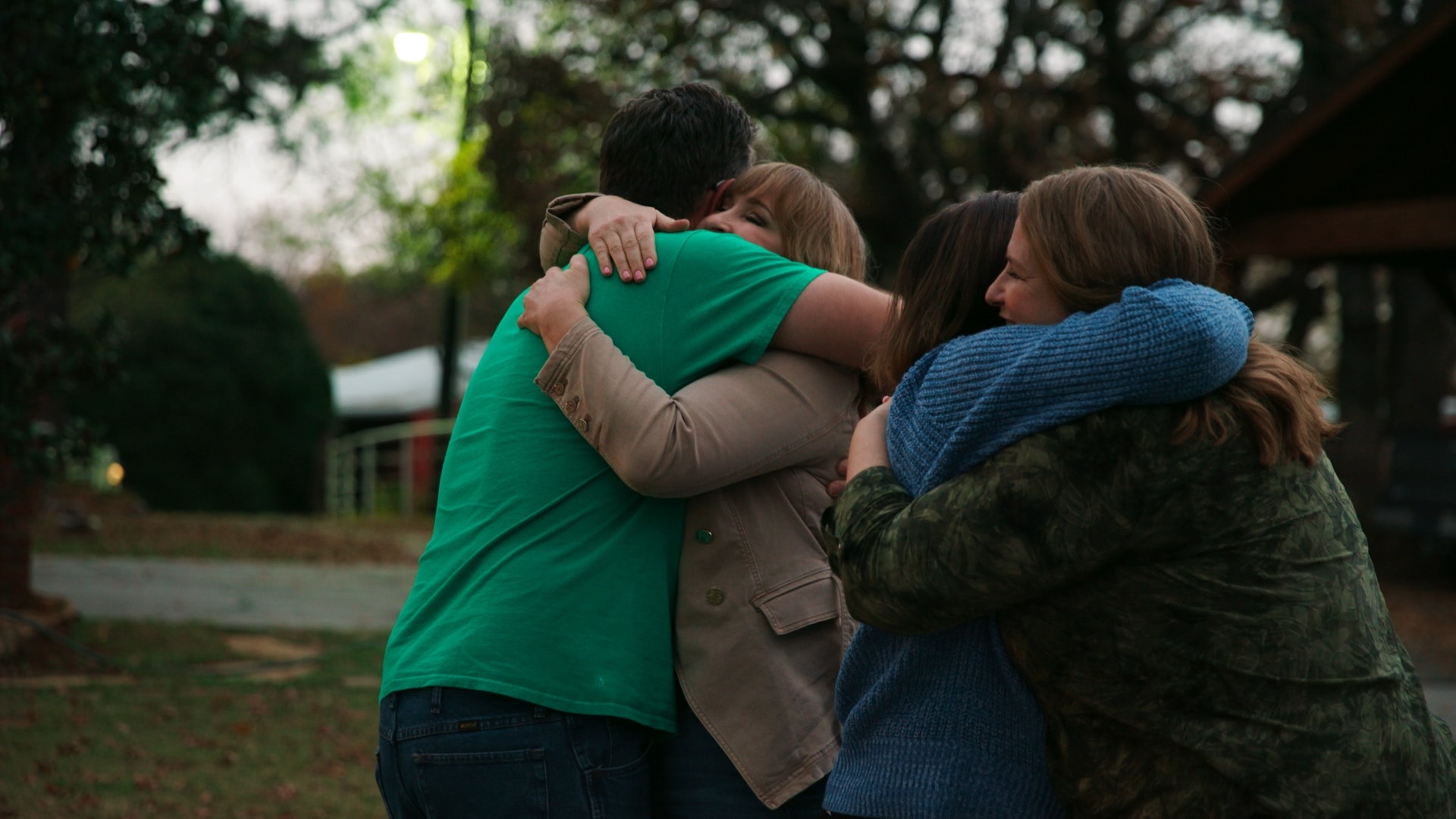
A group of LeBaron’s surviving children can be seen embracing in a still from the five-part docuseries. Although they are uncertain exactly how many siblings they have, LeBaron’s children estimated that there are about 50 to 55. (ABC News Studios)
Based on a screed written by the late LeBaron during his incarceration, his followers compiled a hit list of about 50 people, Oxygen reported.
Several members of the cult were arrested in the ‘80s and ’90s, according to VICE, and one was arrested in 2011 in connection to four Texas killings.
Nine members of LeBaron’s family in a convoy en route to a wedding were shot dead in 2019 by Mexican hitmen, VICE reported. The family had allegedly been speaking out against drug traffickers and advocating for looser gun controls to protect themselves against them.
Read the full article from Here

Alaska
Opinion: Life lessons learned from mushing and old-time Alaska
This is the beginning of the Iditarod spring, signaled by the burst of sun and what used to be the long wait for dog teams to pass under the arch in Nome, the finish line a thousand miles away from Anchorage. For old-timers, it’s the story of the way Alaska used to be. What once was a 30-day wait has become about 10 days for winners to celebrate and the rest of us to shout, “Well done.”
My story is about family that welcomed immigrants from all over the world to be among the last groups of Indigenous people in the country, a life of taking good care of dog teams, and of parents who taught their children how to live in a wild, rugged frontier.
I came to be in a different age, a time of dog teams that ruled the trails to mining camps and where the salmon ran strongest — before the introduction of the snowmachine that revolutionized rural and Native Alaska.
For the Blatchford family, it is a recognition that some things will always stay the same and everything else changes. All four of my grandparents were noncitizens. My mother Lena’s parents of Elim were Alaska Natives, as was my dad Ernie’s mother, Mae, of Shishmaref. The name Blatchford comes from his father, the Englishman who was born in Cornwall and arrived in Nome during the gold rush. His brother, William, was one of the early immigrants, and by 1899 there was a creek just outside Nome named after him. He discovered gold. My grandfather, Percy, found gold, too, but it was a different kind of wealth, a finding that he had found home and never left.
I was born in Nome, delivered by an Iñupiaq Eskimo midwife in a one-room cabin where the frozen Bering Sea met the treeless tundra’s permafrost. Dad had a dog team. I like to think that the dogs were anxious for me to be born because it was hunting time for Dad to hitch them up and mush out to where the sea mammals, snowshoe hares, ptarmigan and other game thrived in the winter. My earliest memories are of dogs; all of them working as a team to bring home the game so we could have a fine meal cooked by Lena. In the Arctic, dogs were essential for family survival. If you didn’t hunt, you didn’t eat.
There are several memories that remain strong. I suppose I can call them lessons of the Arctic.
The first is to take care of the dogs and treat them well. Dog lovers all over the world know very well that a dog, whatever the breed, is loyal and will die to protect the one who feeds and pets it. If you don’t feed a husky, it won’t pull, and it could mean a long time before the family eats. When a dog team is hungry, it will race back home to be fed a healthy meal. Mother Lena must have been a great cook because Dad said the dog team always raced back to the edge of Nome, where Lena was waiting beside the propane stove. For Mike, Tom and me, our job was to take the rifle, shotgun and .22 into the cabin to be cleaned and oiled. Once that was quickly done, we unhitched the dogs and then fed the team.
All three of us boys had special responsibilities to Tim, Buttons and Girlie. Tim, the lead dog, was brother Mike’s pet; Tom had Buttons, and I had Girlie. We made sure they were healthy and well cared for. Dad would often comment that “Papa,” our grandfather Percy, the Englishman, took good care of his dog teams, being kind to the dogs and feeding them. Dad was the oldest of a large family that lived in Teller and later Nome.
“Papa” Percy was a prospector, fox farmer and a contestant in the All-Alaska Sweepstakes, the dog team race from Nome to the mining camp of Candle, a 400-mile race. He didn’t win, but he finished well, very well. The stories of the Sweepstakes have remained with the family for over a century. At a memorial service in Palmer for “Doc” Blatchford, Aunt Marge, without a question or a prompt, said that Papa took good care of his dogs.
Percy Blatchford was a legend in the Alaska Territory. As a teacher of Alaska newspapers, I would find headlines similar to one in the Fairbanks Daily News-Miner that blazed on the front page: “Blatchford Wins Solomon Derby.” There was even a story in The New York Times.
There’s probably no other sport in Alaska that brought Alaskans together like dog mushing. When old-timers would visit over strong coffee, dogs and dog team racing would come up. In the territory, there were few high schools and fewer gymnasiums, so the only team sport was dog mushing. It was something to talk about that was unique to Alaskans.
I used to travel in rural Alaska quite a bit. In the smaller communities, I would see the teams and would wonder how long they would power the engines that brought the mail and the foodstuffs down and up the trails. When I think of dog teaming, I think of the Iditarod and wonder, and then come to know, what the strength of the story would mean for bringing generations together from Papa Blatchford to his eldest son Ernie and to the fourth generation of Blatchfords in Alaska.
There are times when I think that old-time Alaska is gone. But then my faith and confidence in the old-time spirit are ignited when I see what others in the Lower 48 see. When I was walking in downtown Philadelphia, I looked up and saw on an ancient federal building a stamped concrete sculpture of a dog musher leaning into a blizzard. Such is the way I think of the Iditarod and the lessons I learned growing up with the dog team, preserved in my memories.
Edgar Blatchford is former mayor of Seward, Mile 0 of the Iditarod Trail.
• • •
The Anchorage Daily News welcomes a broad range of viewpoints. To submit a piece for consideration, email commentary(at)adn.com. Send submissions shorter than 200 words to letters@adn.com or click here to submit via any web browser. Read our full guidelines for letters and commentaries here.
Arizona
3 men sentenced in Arizona for multi-million dollar scam against Amazon
PHOENIX (AZFamily) — Three Valley men have been sentenced for their roles in what prosecutors described as a “sophisticated fraud scheme” against an online shopping giant.
In a news release, the U.S. Attorney’s Office said Mughith Faisal, 29, of Glendale, was sentenced on Feb. 5 to 18 months in prison. His brother, Basheer Faisal, 28, of Glendale, was also recently ordered to spend 18 months in prison.
The feds said a third defendant in the case, Abdullah Alwan, 28, of Surprise, was sentenced to six months in prison after the trio pleaded guilty to wire fraud.
Prosecutors said the three were also each ordered to pay $1.5 million in restitution to Amazon.
According to federal officials, Alwan worked in Amazon’s logistics division and left the company in 2021 when he reportedly used his knowledge to manipulate rates for transportation deliveries assigned to Amazon’s third-party carriers.
The feds said Basheer and Mughith Faisal used “Blue Line Transport” to knowingly get to increased transport rates that Alwan would then input into Amazon’s system, ripping them off out of $4.5 million.
The FBI’s Phoenix Division helped in the investigation, which was then prosecuted by the U.S. Attorney’s Office for the District of Arizona.
See a spelling or grammatical error in our story? Please click here to report it.
Do you have a photo or video of a breaking news story? Send it to us here with a brief description.
Copyright 2026 KTVK/KPHO. All rights reserved.
California
PlayOn Sports fined $1.1 million by California watchdog over student data violations
SACRAMENTO, Calif. (FOX26) — California’s privacy watchdog has ordered PlayOn Sports to pay a $1.10 million fine and change how it handles consumer data after finding the company’s practices violated state law in ways that affected students and schools in the state.
The California Privacy Protection Agency Board issued the decision following a settlement reached by CalPrivacy’s Enforcement Division.
The decision is the first by the board to address privacy violations involving students and California schools.
Schools across the country use PlayOn Sports’ GoFan platform to sell digital tickets to high school sporting events, theater performances, and homecoming and prom dances, with attendees presenting tickets at the door on their mobile phones.
Schools also use PlayOn Sports’ platforms for other sports-related activities, including attending games, streaming them online, and looking up statistics about teams and players.
In California, about 1,400 schools contract with PlayOn Sports for these services.
[RELATED] X faces possible fines as EU probes Grok nonconsensual, sexualized deepfakes
GoFan is also the official ticketing platform for the California Interscholastic Federation, the governing body for high school sports.
According to the board’s decision, PlayOn Sports used tracking technologies to collect personal information and deliver targeted advertisements to ticketholders and others using its services.
The company allegedly required Californians to click “agree” to tracking technologies before they could use their tickets or view PlayOn Sports websites, without providing a sufficient opt-out option.
“Students trying to go to prom or a high school football game shouldn’t have to leave their privacy rights at the door,” said Michael Macko, CalPrivacy’s head of enforcement. “You couldn’t attend these events without showing your ticket, and you couldn’t show your ticket without being tracked for advertising. California’s privacy law does not work that way. Businesses must ensure they offer lawful ways for Californians to opt-out, particularly with captive audiences.”
The decision also describes students as a uniquely vulnerable population and warns that targeted advertising systems can subject students to profiling that can follow them for years, expose them to manipulative or harmful content, and develop sensitive inferences about their lives.
Instead of providing its own opt-out method, PlayOn Sports directed students and other users to opt out through the Network Advertising Initiative and the Digital Advertising Alliance, which the decision said violated the company’s responsibility to provide its own way for consumers to opt out. The company also allegedly failed to recognize opt-out preference signals and did not provide Californians with sufficient notice of its privacy practices.
“We are committed to making it as easy as possible for all Californians — from high school students to older adults, and everyone in between — to make the choice of whether they want to be tracked or not,” said Tom Kemp, CalPrivacy’s executive director. “Californians can opt-out with covered businesses, and they can sign up for the newly launched DROP system to request that data brokers delete their personal information.”
Beyond the $1.10 million fine, the board’s order requires PlayOn Sports to conduct risk assessments, provide disclosures that are easy to read and understand, and implement proper opt-out methods.
The order also requires the company to comply with California’s privacy law prohibiting the selling or sharing of personal information of consumers between 13 and 16 without their affirmative opt-in consent.
-
World7 days agoExclusive: DeepSeek withholds latest AI model from US chipmakers including Nvidia, sources say
-
Massachusetts1 week agoMother and daughter injured in Taunton house explosion
-
Denver, CO1 week ago10 acres charred, 5 injured in Thornton grass fire, evacuation orders lifted
-
Louisiana1 week agoWildfire near Gum Swamp Road in Livingston Parish now under control; more than 200 acres burned
-
Florida4 days agoFlorida man rescued after being stuck in shoulder-deep mud for days
-
Wisconsin3 days agoSetting sail on iceboats across a frozen lake in Wisconsin
-
Maryland4 days agoAM showers Sunday in Maryland
-
Oregon5 days ago2026 OSAA Oregon Wrestling State Championship Results And Brackets – FloWrestling