World
Zelenskyy seeks 50,000 Russian ‘losses’ a month to win the Ukraine war


Ukrainian President Volodymyr Zelenskyy says he plans to increase his armed forces’ lethality as part of a strategy to disarm Moscow and turn a deadlocked negotiating table.
“The task of Ukrainian units is to ensure a level of destruction of the occupier at which Russian losses exceed the number of reinforcements they can send to their forces each month,” he told military personnel on Monday.
list of 4 itemsend of listRecommended Stories
“We are talking about 50,000 Russian losses per month, this is the optimal level,” he said.
Video analysis, Zelenskyy recently said, showed 35,000 confirmed kills in December 2025, up from 30,000 in November and 26,000 in October. But on Monday, he clarified that the 35,000 were “killed and badly wounded occupiers”, who would not be returning to the battlefield.
His commander in chief, Oleksandr Syrskii, conservatively estimated “more than 33,000” confirmed kills in December.
Ukraine believes it has killed or maimed 1.2 million Russians since Russia’s full-scale invasion in 2022.
The Center for Strategic and International Studies recently estimated that Russia had suffered 1.2mn casualties, including at least 325,000 deaths, and Ukraine up to 600,000 casualties, with as many as 140,000 deaths.
Al Jazeera cannot confirm casualty estimates from either side.
The war is currently stalemated, with Russia struggling to make meaningful territorial gains.
Russia held just more than a quarter of Ukraine a month into its full-scale war, in March 2022, according to geolocated footage.
The following month, Ukraine pushed Russian forces back from a string of northern cities – Kyiv, Kharkiv, Sumy and Chernihiv – leaving Russia in possession of one-fifth of the country.
In August and September 2022, then-ground forces commander Syrskii masterminded a campaign to push Russian forces east of the Oskil River in the northern Kharkiv region, and Russia itself withdrew east of the Dnipro River in the southern region of Kherson, leaving it with 17.8 percent of the country.
In the last three years, Russia increased that number to 19.3 percent.
For almost six months, Russia has struggled to seize two towns it has almost surrounded with 150,000 troops in Ukraine’s eastern Donetsk region.
“In Pokrovsk and Myrnohrad, the Ukrainian Defence Forces continue to contain the enemy, which is trying to infiltrate the northern districts of both cities in small groups,” Syrskii said last week.
Russia claimed it had captured the northern city of Kupiansk last month, but Russian military reporters say Ukrainian forces have retaken control of the town and surrounded the Russian assault force within it.
The engine of war
Zelenskyy’s strategy involves increasing domestic drone production and honing the skills of drone operators, because drones now hit 80 percent of targets on the battlefield.
“In just the past year alone, 819,737 targets were hit – hit by drones. And we clearly record every single hit,” he said on Monday.
The military has instituted a point system, rewarding drone operators for the number and precision of their hits.
That reflects a system put in place in April 2024, offering financial rewards to ground troops for destroying Russian battlefield equipment, culminating in $23,000 for capturing a battle tank.
Zelenskyy appointed Mykhailo Fedorov as defence minister this month, who previously served as digital transformation minister and deputy prime minister for innovation, education, science and technology.

Last week, Fedorov began to appoint his advisers. They include Serhiy Sternenko, who last year created Ukraine’s largest non-state supplier of military drones, to step up drone production. Fedorov’s former deputy at the digital transformation ministry, Valeriya Ionan, was put in charge of international collaborations, thanks to her experience with Silicon Valley giants like Google and Cisco. Fedorov also appointed Serhiy Beskrestnov as technological adviser. Beskrestnov is an expert on Russian drone and electronic warfare innovation.
Russian assaults pound Ukraine
Zelenskyy’s war aims stem in part from the fact that Russia refuses to give up its campaign to seize more of Ukraine.
Despite US President Donald Trump’s efforts to bring about a ceasefire, talks remain deadlocked over the future of Donetsk.
Russia’s worst attack against Ukrainian cities and energy facilities last week came on Saturday, involving 375 drones and 21 missiles, as Russian, US and Ukrainian delegations were negotiating a ceasefire in Abu Dhabi.
The strike left 1.2 million homes without power nationwide, including 6,000 in Kyiv.
Energy Minister Denys Shmyhal said 800,000 homes in Kyiv were still without power following three previous strikes this month. “Constant enemy attacks unfortunately keep the situation from being stabilised,” he wrote on social media.
Zelenskyy told Ukrainians in an evening video address that electricity supply problems were still widespread in Kyiv, Kryvyi Rih, Dnipro and in the Chernihiv and Sumy regions.
“We are scaling up assistance points and warming centers,” he said, adding that 174 [crews] were working to fix the damage in Kyiv alone. Shmyal said 710,000 people were still without power in Kyiv.
A Czech grassroots initiative fundraised $6m to buy hundreds of electric generators for Ukrainian households. On Friday, the European Commission said it was sending 447 generators to Ukraine.
On Wednesday, Russian drones killed three people. Two of them were a young couple in Kyiv killed when a drone struck their apartment building. Rescuers found only their four-year-old daughter alive.
“When I carried her out, the girl started crying very hard, and then she began to shake violently,” said Marian Kushnir, a journalist who was a neighbour of the couple.
At least five more people died when a drone struck a passenger train in the northern Kharkiv region, and two children and a pregnant woman were wounded when 50 drones rained down on the southern port of Odesa.
Talks in Abu Dhabi ended without a ceasefire. Kremlin spokesman Dmitry Peskov had said before they began that Russia was not willing to compromise on any of its territorial demands.
US Secretary of State Marco Rubio said talks were focusing on the nub of disagreement between the two sides, which is Ukraine’s refusal to hand over the remaining one-fifth of Donetsk that Moscow does not control.
Talks are scheduled to continue in Abu Dhabi on Sunday, officials said.
Unvarnished truth from Zelenskyy
In a scathing speech to the World Economic Forum in Davos, Zelenskyy accused his European allies of “wait-hoping” the Russian threat would disappear after almost four years of war in Ukraine.
“Europe relies only on the belief that if danger comes, NATO will act. But no one has really seen the Alliance in action. If Putin decides to take Lithuania or strike Poland, who will respond?” Zelenskyy asked.
US President Donald Trump’s threat to take Greenland by force on January 17, he said, revealed Europe’s lack of readiness when seven Nordic countries sent 40 soldiers to the island.
“If you send 30 or 40 soldiers to Greenland – what is that for? What message does it send? What’s the message to [Russian President Vladimir] Putin? To China? And even more importantly, what message does it send to Denmark – the most important – your close ally?”
In contrast, said Zelenskyy, Trump was willing to seize Russian tankers selling sanctioned oil, and put Venezuelan President Nicolas Maduro on drug charges, while Putin, an indicted war criminal, remained free. “No security guarantees work without the US,” he said.
NATO Secretary-General Mark Rutte echoed those sentiments in a speech to the European Parliament on Monday [January 26].
“If anyone thinks here . . . that the European Union or Europe as a whole can defend itself without the US, keep on dreaming,” he said. “You can’t.”



NEWYou can now listen to Fox News articles!
President Donald Trump spoke with British Prime Minister Keir Starmer on Sunday to discuss escalating tensions in the Middle East, with a focus on the urgent need to reopen the Strait of Hormuz and restore global shipping.
The leaders discussed the current situation in the Middle East, and in particular, the need to reopen the Strait of Hormuz to resume global shipping, Downing Street said in a statement.
STEALTH BOMBERS LANDING AT UK BASES ‘IN DAYS’ AFTER TRUMP PRESSURES STARMER: REPORT
Keir Stamer, UK prime minister, during a news conference providing an update on the situation in the Middle East, at Downing Street in London, UK, on Thursday, March 5, 2026. (Tolga Akmen/EPA/Bloomberg via Getty Images)
“They agreed that reopening the Strait of Hormuz was essential to ensure stability in the global energy market. They agreed to speak again soon.”
The call came amid a rapidly intensifying conflict in the region, with Iran blocking the strategically vital strait since the United States and Israel launched coordinated strikes against Iranian targets on Feb. 28.
The military action triggered swift retaliation from Tehran and has since escalated into a broader regional war as Iran has sent missiles into numerous neighboring countries not directly involved in the initial conflict.
UK NUCLEAR SUBMARINE DEPLOYED TO ARABIAN SEA BEFORE IRAN TARGETS KEY US-UK BASE: REPORTS
President Donald Trump takes questions from reporters during a meeting with Irish Prime Minister Micheál Martin in the Oval Office of the White House, on St. Patrick’s Day, Tuesday, March 17, 2026, in Washington. (AP Photo/Alex Brandon)
On March 21, Trump issued a 48-hour ultimatum to Iran demanding the reopening of the key maritime route, through which approximately 20% of the world’s oil supply passes.
In a post on Truth Social, Trump warned that failure to comply would result in further U.S. action, including potential strikes on Iran’s energy infrastructure.
EU PUSHES FOR END OF IRAN WAR IN A MANNER WHERE ‘EVERYBODY SAVES FACE’
Bulk Carrier, Belray, in the Gulf, near the Strait of Hormuz on March 22, 2026 in northern Ras al Khaimah, United Arab Emirates. (Getty Images/Getty Images)
Sunday’s conversation between Trump and Starmer perhaps reflected a thaw in the tense relationship between the two leaders.
Trump had publicly criticized the U.K. government, stating that Britain “should have acted a lot faster” in allowing the U.S. to use British military bases for strikes targeting Iranian missile sites.
Starmer had also maintained that the use of U.K. bases could only be justified under the principle of “collective self-defense” in the region.
He had initially declined to support the U.S.-Israeli military operation, drawing repeated criticism from the White House.
CLICK HERE TO DOWNLOAD THE FOX NEWS APP
Meanwhile, Trump appeared to apply public pressure, sharing a “Saturday Night Live” clip Sunday mocking the British prime minister’s handling of the crisis.

France’s municipal runoff delivered a mixed verdict for the country’s main political forces on Sunday: the Left held Paris with Socialist Emmanuel Grégoire, the far-right and its allies scored a major symbolic win in Nice, and mainstream parties pointed to resilience in several big and mid-sized cities ahead of the 2027 presidential race.
ADVERTISEMENT
ADVERTISEMENT
Municipal elections in France are local contests to elect mayors and local councils, but they are closely watched because they test party organisation, alliance-building, and grassroots strength before national campaigns begin.
In the capital, Socialist Emmanuel Grégoire defeated conservative rival Rachida Dati, ensuring Paris remains under left-wing control after outgoing mayor Anne Hidalgo chose not to seek another term.
The result extends a quarter-century of left-led rule of the capital and hands to the Socialists one of the most visible prizes of the night. Grégoire presented the result as a mandate for a progressive vision of the city.
Elsewhere, the left also had reasons to celebrate. In Marseille, Socialist incumbent Benoît Payan was re-elected after the far right had hoped to seize France’s second-largest city.
While in Lyon, Green mayor Grégory Doucet held on after a hard-fought race against his conservative rival, which was reshaped by a last-minute merger with the list of hard-left party France Unbowed.
Socialists record strong showing
The Socialists also held or performed strongly in several regional cities, reinforcing the impression of a broader recovery for the traditional left.
For the far right, the picture was more complex. National Rally (RN) leader Jordan Bardella hailed what he called the party’s biggest local breakthrough, and RN kept the southwestern city of Perpignan while also winning smaller municipalities.
But the party fell short in several of the larger cities it had targeted, notably Marseille, Toulon and Nîmes. The exception was Nice, where Éric Ciotti — once a senior figure in the mainstream right and now allied with RN — won the race, giving the far right and its partners control of France’s fifth-largest city.
The elections also brought clearer signs of fragmentation on the centre-right and in President Emmanuel Macron’s camp.
Former prime minister Édouard Philippe was re-elected in Le Havre, strengthening his standing as a possible 2027 contender, while Macron’s centrist forces could point to a symbolic win in Bordeaux, where Renaissance candidate Thomas Cazenave defeated outgoing Green mayor Pierre Hurmic.
At the same time, the loss of Macron’s former PM, François Bayrou, in southwestern Pau, underlined the vulnerabilities of the broader presidential alliance.
Turnout remained a concern. According to the Interior Ministry, participation in mainland France stood at 48.1% at 5 p.m., higher than the Covid-disrupted 2020 election but still below pre-pandemic levels.
Taken together, the results do not predict who will succeed Macron in 2027. But they do sketch the political landscape from which that contest will emerge: a left that can still win major cities, a mainstream right that remains locally entrenched, a centre searching for durable footholds, and a far right that is growing but may still face limits in the country’s biggest urban battlegrounds.
President Trump said that he would “obliterate” Iran’s electricity plants if it did not open the Strait of Hormuz within 48 hours. Iran dismissed the ultimatum as its missiles hit southern Israel, including near the country’s main nuclear research center.

Ryan Gosling and a cute alien team up to save humanity in ‘Project Hail Mary’

AI influencer awards season is upon us

Trump, Starmer agree Strait of Hormuz must reopen as Middle East conflict escalates

As cattle herds shrink and beef prices rise, investors back AI cow collars

Family pleads for help as teen faces life-threatening bone marrow failure

Florida High School Football Rankings: Top 25 teams – Oct. 21

How old is Bo Nix? What to know about Oregon quarterback ahead of 2024 NFL Draft

Cleary's 21 help Le Moyne down Central Connecticut State 69-64 in OT

99th annual Pony Swim held in Virginia

Indiana Members Credit Union announced as new anchor tenant at Bottleworks District
As cattle herds shrink and beef prices rise, investors back AI cow collars

French elections: Paris stays left as far right makes mixed gains

ICE officers set to deploy to airports as delays mount, border czar Homan confirms

Video: ICE Agents Will Be Deployed to U.S. Airports, White House Confirms

Schumer knocks Trump on Iran, plan to send ICE to airports: ‘Asking for trouble’
-

 Detroit, MI4 days ago
Drummer Brian Pastoria, longtime Detroit music advocate, dies at 68
-

 Oklahoma1 week ago
Family rallies around Oklahoma father after head-on crash
-

 Nebraska1 week ago
Wildfire forces immediate evacuation order for Farnam residents
-

 Georgia7 days ago
How ICE plans for a detention warehouse pushed a Georgia town to fight back | CNN Politics
-

 Alaska1 week ago
Police looking for man considered ‘armed and dangerous’
-
 Science1 week ago
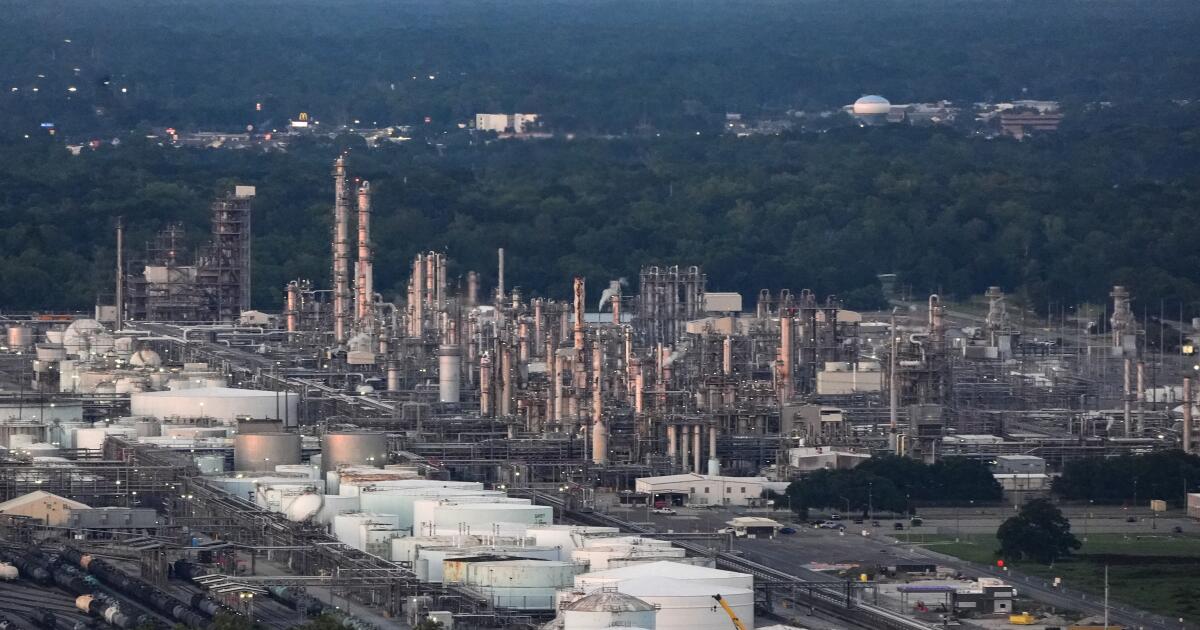
Federal EPA moves to roll back recent limits on ethylene oxide, a carcinogen
-

 Movie Reviews4 days ago
‘Youth’ Twitter review: Ken Karunaas impresses audiences; Suraj Venjaramoodu adds charm; music wins praise | – The Times of India
-

 World1 week ago
Thousands march worldwide in solidarity with Palestine, Iran on al-Quds Day