World
Why is South Africa upset about Iran joining BRICS naval drills?


South Africa has launched an inquiry into Iran’s participation in joint naval drills with BRICS nations last week, apparently against the orders of President Cyril Ramaphosa.
BRICS is a group of 10 countries: Brazil, China, Egypt, Ethiopia, India, Indonesia, Iran, Russia, South Africa and the United Arab Emirates. The acronym BRICS represents the initial letters of the founding members, Brazil, Russia, India, China and South Africa.
list of 4 itemsend of listRecommended Stories
The group, formed in 2006, initially focused on trade, but has since expanded its mandate to include security and cultural exchanges.
It concluded a week of joint naval drills in South African waters on January 16. The drills have caused controversy in the country and drawn the ire of the United States.
Although South Africa regularly holds drills with Russia and China, the latest maritime training comes amid heightened tensions between the US and many of the group’s members, particularly Iran, which until last week was grappling with mass protests at home that turned deadly.
Pretoria said the exercise, named Will for Peace 2026, was essential for ensuring maritime safety and international cooperation. The training “brings together navies from BRICS Plus countries for … joint maritime safety operations [and] interoperability drills”, a statement from the South African military noted before the exercises.
However, US President Donald Trump’s administration, which has previously accused BRICS of being “anti-American” and has threatened its members with tariffs, has strongly criticised the naval exercises.
Here’s what we know about the exercises and why they were controversial:
What were the drills for?
South Africa hosted the BRICS naval exercise, which included warships from participating countries, on January 9-16.
China led the training, which took place near the southwestern coastal city of Simon’s Town, which is home to a major South African naval base.
Exercises in rescue and maritime strike operations as well as technical exchanges were planned, according to China’s Ministry of National Defense. All BRICS countries were invited.
Captain Nndwakhulu Thomas Thamaha, South Africa’s joint task force commander, said at the opening ceremony that the operation was not just a military exercise but a statement of intent by BRICS countries to forge closer alliances with each other.
“It is a demonstration of our collective resolve to work together,” Thamaha said. “In an increasingly complex maritime environment, cooperation such as this is not an option. It is essential.”
The purpose, he said, was to “ensure the safety of shipping lanes and maritime economic activities”.
South African Deputy Defence Minister Bantu Holomisa told journalists that the drills had been planned before the current tensions between some BRICS members and the US.
While some BRICS countries may face issues with Washington, Holomisa clarified that they “are not our enemies”.
Who participated and how?
China and Iran deployed destroyer warships to South Africa, while Russia and the United Arab Emirates sent corvettes, traditionally the smallest warships.
South Africa, the host country, dispatched a frigate.
Indonesia, Ethiopia and Brazil joined the exercises as observers.
India, the current chair of the group, chose not to participate and distanced itself from the war games.
“We clarify that the exercise in question was entirely a South African initiative in which some BRICS members took part,” India’s Ministry of External Affairs said in a statement. “It was not a regular or institutionalised BRICS activity, nor did all BRICS members take part in it. India has not participated in previous such activities.”
Why is South Africa facing US backlash over the drills?
The US is angry that South Africa allowed Iran to participate in the drills at a time when Tehran was accused of launching a violent crackdown on antigovernment protests that had spread across the country.
The protests broke out in late December, when shopkeepers in Tehran closed up their businesses and demonstrated against inflation and the falling value of the rial. These protests swelled into a broader challenge to Iran’s rulers, as thousands of people took to the streets nationwide to demonstrate over a few weeks.
Security forces in some areas cracked down on the crowds, resulting in the deaths of “several thousands”, according to a statement on Saturday by Supreme Leader Ayatollah Ali Khamenei. While activists said thousands of protesters were killed, the Iranian government said this was an exaggeration and claimed police officers and security service members formed a significant chunk of those who were killed.
The Iranian authorities also claimed the US and Israel had armed and funded “terrorists” to inflame the protests. They said agents affiliated with foreign powers, and not state forces, were responsible for the deaths of civilians, including protesters.
The mass uprising is one of the most disruptive the country has witnessed since the 1979 Iranian Revolution. Tens of thousands of people are believed to have been arrested.
Before the BRICS drills, the US warned South African President Cyril Ramaphosa that Iran’s participation would reflect badly on his country, according to a report by the Daily Maverick, a South African newspaper.
Ramaphosa subsequently ordered Iran to withdraw from the exercises on January 9, the paper reported.
However, three Iranian vessels that had already been deployed to South Africa continued to participate.
In a statement on January 15, the US embassy in South Africa accused the South African military of defying orders from its own government and said it was “cozying up to Iran”.
“It is particularly unconscionable that South Africa welcomed Iranian security forces as they were shooting, jailing, and torturing Iranian citizens engaging in peaceful political activity South Africans fought so hard to gain for themselves,” the statement read.
“South Africa can’t lecture the world on ‘justice’ while cozying up to Iran.”
South African political analyst Reneva Fourie said Washington was merely fishing for reasons to criticise South Africa for bringing a genocide case against Israel before the International Court of Justice for its war in Gaza.
“The US is looking for an entry point,” she said.
The US “is facing increased infringement on freedom of expression and association, democracy and human rights as well as increased militarisation. The US should focus on its own dire state instead of meddling in the affairs of others.”
Tensions over the military drills are only the latest point of contention between the US and Iran.
During the 12-day war between Iran and Israel in 2025, Washington sided with Israel, and on June 22, the US bombed three nuclear sites in Iran. Initial assessments from US officials noted that all three were severely damaged. Iran retaliated by bombing a military base in Qatar where US troops are positioned, in what was largely seen as a face-saving exercise.
Which other BRICS members have tensions with the US?
Nearly all members of BRICS have problems with the current US government.
Besides the dispute over Iran joining the naval drills, South Africa is also caught up in a battle of narratives with the Trump administration, which alleges, without any evidence, that the country’s minority white population is being subjected to a “genocide“. In 2025, Trump established a refugee programme for white Afrikaners wishing to “flee” to the US.
The US has also condemned South Africa’s decision to take Israel to the International Court of Justice in December 2023.
The US currently levies tariffs on South African exports of up to 40 percent as a result.
China has been locked in a tense trade war with the US for more than a year. After slapping each other with tariffs exceeding 100 percent early last year, these were suspended pending trade talks. But China then restricted exports of its rare earth metals, which are required for technology crucial for defence, and Trump again threatened more tariffs before the two sides reached an agreement in late October, under which China agreed to “pause” restrictions on the export of some metals.
Russia is also on Washington’s radar because of its war in Ukraine.
Just three days before the drills began, the US seized a Venezuela-linked Russian oil tanker in the North Atlantic due to its sanctions on both countries.
On January 3, the US military abducted Venezuelan President Nicolas Maduro and his wife, Cilia Flores, from the capital, Caracas. Both now face drugs and weapons charges in a New York federal court. In September, the US had begun a campaign of air strikes on Venezuelan boats in the Caribbean, claiming they were trafficking drugs to the US, but providing no evidence.
India has been hit with 50 percent tariffs on its exports to the US, partly as punishment for continuing to buy Russian oil.
This month, the US withdrew from the India-led International Solar Alliance, although this withdrawal was part of a broader move to pull the US out of several international bodies.
Harsh V Pant, a geopolitical analyst at the New Delhi-based Observer Research Foundation think tank, told Al Jazeera that, for India, keeping out of the naval drills was “about balancing ties with the US”.
Pant added that in India’s opinion, “war games” were never part of the BRICS mandate.
While BRICS was founded as an economic bloc, it has widened its mandate to include security.

What has the response been in South Africa?
Ramaphosa’s government has also faced some backlash over the drills at home.
The Democratic Alliance (DA), a former opposition party that is now part of the governing coalition and largely represents the interests of the white minority, blamed Minister of International Relations Ronald Lamola for failing to hold the Department of Defence to account.
Lamola is from the African National Congress (ANC) party, which, until 2024, governed South Africa alone.
“By allowing the Department of Defence to proceed unchecked in these military exercises, Minister Lamola has effectively outsourced South Africa’s foreign policy to the whims of the South African National Defence Force (SANDF), exposing the country to serious diplomatic and economic risk,” the DA said in a statement two days after the exercises started.
“South Africa is now perceived not as a principled non-aligned state, but as a willing host for military cooperation with authoritarian regimes.”
What is the South African government saying now?
South African officials have shifted from initially justifying the drills to distancing themselves from the Iran debacle.
Despite initial statements from officials that the drills would go ahead as planned, Ramaphosa eventually appeared to bow to US pressure and, on January 9, ordered that Iran be excluded, local media reported.
Those instructions do not seem to have been followed by the South African Defence Department or the military, however.
In a statement on January 16, Defence Minister Angie Motshekga’s office said Ramaphosa’s instructions had been “clearly communicated to all parties concerned, agreed upon and adhered to as such”.
The statement went on to say that the minister had established an inquiry board “to look into the circumstances surrounding the allegations and establish whether the instruction of the President may have been misrepresented and/or ignored as issued to all”.
A report on the investigation is expected on Friday.
This is not the first time South Africa has been criticised for its military relations with Iran.
In August, its military chief, General Rudzani Maphwanya, prompted anger from the DA when he embarked on a trip to Tehran and affirmed that South Africa and Iran had “common goals”.
His statement came just weeks after the Iran-Israel war. He was also reportedly critical of Israel while in Tehran.
Some ANC critics called for Maphwanya’s firing, but he has remained in office.



World
Anyma Says He’s ‘Truly Devastated and Deeply Sorry’ Following Canceled Coachella Set: ‘I’m Working on a Solution’

Electronic musician Anyma is speaking out after his Coachella set was canceled due to severe weather condititions early Saturday morning.
“I’m heartbroken,” the DJ, whose real name is Matteo Milleri, wrote in a statement shared to his X account Saturday evening. “I don’t have many words other than to say I’m truly devastated and deeply sorry to everyone who showed up to the main stage, and to those watching the livestream at home. Having the opportunity to perform the new ÆDEN show and share all the new music and art means more to me than I can express. It’s incredibly painful, especially after working day and night for the past year, not just me, but my team and the @coachella crew, who poured everything into this.”
The statement continued: “Safety was and always will be our biggest concern. The dangerous winds not only prevented us and Coachella from building our stage, but also made it impossible for my entire live setup and performance to operate safely.”
While he noted there are no other slots available for him to perform during Coachella weekend 1, Milleri wrote that he is “working on a solution to bring you some music at least,” but doesn’t want to “impose on the other artists’ slots.” “Updates soon,” he concluded.
Anyma was set to perform following Sabrina Carpenter’s headlining set on Day 1 of the festival, but the weather made it unfeasible. Attendees were notified at 12:17 a.m. of this “schedule update” with a statement posted online and sent as a push notification via the Coachella app.
“Due to strong wind conditions affecting Anyma’s stage build, he is unable to perform,” the statement read. “Coachella & Anyma have made this decision together with your safety as the priority. Further updates to come.”
Winds had gusted as high as 35-40 mph in Indio during the day Friday, and there were reports of tents being toppled in the campground area at Coachella. Weather reports for the area on Sunday, the closing day of the festival, show winds predicted at 10-20 mph, although the possibility for gusts again exists.
Even if Anyma is shut out of appearing at Coachella this weekend, he is still on the agenda for the same slot during weekend 2, this coming Friday night.
Anyma first gained popularity as one-half of the EDM duo Tale of Us.
World
Pope Leo calls out ‘delusion of omnipotence’ fueling Iran war in vigil for peace at St. Peter’s Basilica

NEWYou can now listen to Fox News articles!
Pope Leo in a Saturday vigil for peace, called out the “delusion of omnipotence” he claimed is fueling war.
“In prayer, our limited human possibilities are joined to the infinite possibilities of God. Thoughts, words and deeds then break the demonic cycle of evil and are placed at the service of the Kingdom of God,” he said in a prayer service at St. Peter’s Basilica.
He continued, “A Kingdom in which there is no sword, no drone, no vengeance, no trivialization of evil, no unjust profit, but only dignity, understanding and forgiveness. It is here that we find a bulwark against that delusion of omnipotence that surrounds us and is becoming increasingly unpredictable and aggressive.”
In posts on X and during the prayer vigil, the pontiff also warned that war “divides” while hope and faith unite humanity.
TRUMP’S LAST-MINUTE DELAY: WHY HE WAS NEVER GOING TO OBLITERATE IRAN IN THE FIRST PLACE
Pope Leo XIV leads a vigil for peace inside St. Peter’s Basilica at the Vatican on Saturday. (Gregorio Borgia/AP Photo)
“Enough of the idolatry of self and money. Enough of the display of power. Enough of war,” he wrote. “True strength is shown in serving life.”
The archbishop of Tehran, Belgian Cardinal Dominique Joseph Mathieu, was among those in the pews.
Leo’s words came on the same day Vice President JD Vance and a U.S. delegation began face-to-face talks with Iran amid an uneasy ceasefire.
MIKE PENCE WARNS JD VANCE TO AVOID OBAMA-STYLE IRAN DEAL AS NUCLEAR TALKS SET TO BEGIN IN PAKISTAN
They were some of the first American pontiff’s strongest words yet after he called President Donald Trump’s threat against Iran on Tuesday “truly unacceptable.”
“Today, as we all know, there has also been this threat against the entire people of Iran, and this is truly unacceptable,” the pope said earlier this week. “There are certainly issues of international law here, but even more so a moral issue for the good of the whole entire population.”
Pope Leo XIV speaks to the media on the U.S.–Israeli conflict with Iran, as he leaves the papal residence to head back to the Vatican, April 7, in Castel Gandolfo, Italy. (Guglielmo Mangiapane/Reuters)
Trump had written on Truth Social “A whole civilization will die tonight, never to be brought back again. I don’t want that to happen, but it probably will… God Bless the Great People of Iran!”
Hours later, the president announced a two-week ceasefire subject to Iran agreeing to “the COMPLETE, IMMEDIATE, and SAFE OPENING of the Strait of Hormuz,” the president wrote in another post.
As the high-stakes talks began on Saturday in Islamabad, Trump told reporters outside the White House: “We win regardless of what happens. Maybe they make a deal, maybe they don’t.”
Islamabad hosted peace talks between Iran and the U.S. on Saturday. (Farooq Naeem/AFP via Getty Images)
For more than a month, the pope limited his remarks to muted appeals for peace, but in his Easter blessing last Sunday, he urged “those with weapons lay them down. Let those who have the power to unleash wars choose peace.”
CLICK HERE TO DOWNLOAD THE FOX NEWS APP
Leo also invoked what he said were the final words that Pope Francis issued to the world from the same balcony one year ago, during which the late pontiff warned of a “globalization of indifference.”
“What a great thirst for death, for killing we witness each day in the many conflicts raging in different parts of the world,” Leo said, quoting Francis.
Fox News’ Jasmine Baehr and The Associated Press contributed to this report.

Published on
Pope Leo XIV did not hold back on Saturday as he denounced the “delusion of omnipotence” that is powering the US-Israel war on Iran and urges political leaders to stop and engage in peace processes. All while, the US and Iran entered peace negotiations in Pakistan.
ADVERTISEMENT
ADVERTISEMENT
During an evening prayer in St. Peter’s Basilica Pope Leo XIV did not mention the US nor did he mention US President Donald Trump, however, his tone and message appeared directed at US officials and Trump, who have bragged of their military superiority and justified the war using religion.
“Enough of the idolatry of self and money!” Leo said. “Enough of the display of power! Enough of war!”
The US Military Religious Freedom Foundation (MRFF) announced on 3 March 2026 that it had received more than 200 complaints from military personnel from various branches of the armed forces – including the Marines, Air Force and Space Force – accusing their commanders of using extremist Christian rhetoric to justify war against Iran.
Among those in the basilica was the archbishop of Tehran, Dominique Joseph Mathieu. The United States was represented by Laura Hochla, the deputy chief of mission, the US Embassy said.
US-born Pope Leo XIV had initially been reluctant about openly criticising the war, however, he stepped up his criticism starting on Palm Sunday. Earlier this week, he condemned Trump’s threats to annihilate Iranian civilisation calling them “truly unacceptable” and pushed for dialogue to be prioritised.
On Saturday, the pontiff called for all people of good will to pray for peace and demand an end to war from their political leaders.
Praying for peace, Pope Leo XIV said, was a way to “break the demonic cycle of evil” to build instead the Kingdom of God where there are no swords, drones or “unjust profit.”
“It is here that we find a bulwark against that delusion of omnipotence that surrounds us and is becoming increasingly unpredictable and aggressive,” he said. “Even the holy Name of God, the God of life, is being dragged into discourses of death.”
Leaders have used religion to defend their actions in the war. US officials, especially Defence Secretary Pete Hegseth, have spoken about their Christian faith and described the United States as a Christian nation fighting its enemies.
Leo has said that God does not support any war, especially wars where bombs are dropped.
The Vatican is especially worried about Israel’s war with Hezbollah which is spreading into Lebanon, where Christian communities in the south are already suffering.

How Michigan DC Jay Hill will use the secondary to power the defense

Lawmakers close door on Massachusetts online casino legalization

Minnesota’s Pohlkamp helps Denver beat Wisconsin 2-1 for 11th national hockey title, 3rd in 5 years

Mississippi reveals its full history for America’s anniversary year, a contrast to federal efforts
KCPD investigating after 1 man hurt in Saturday shooting

Florida High School Football Rankings: Top 25 teams – Oct. 21

How old is Bo Nix? What to know about Oregon quarterback ahead of 2024 NFL Draft

Cleary's 21 help Le Moyne down Central Connecticut State 69-64 in OT

99th annual Pony Swim held in Virginia

Indiana Members Credit Union announced as new anchor tenant at Bottleworks District

Carney casts himself as NATO defender amid Trump beef, despite Canada missing key benchmark for decades

‘Enough of war!’ says Pope Leo XIV who grows increasingly frustrated
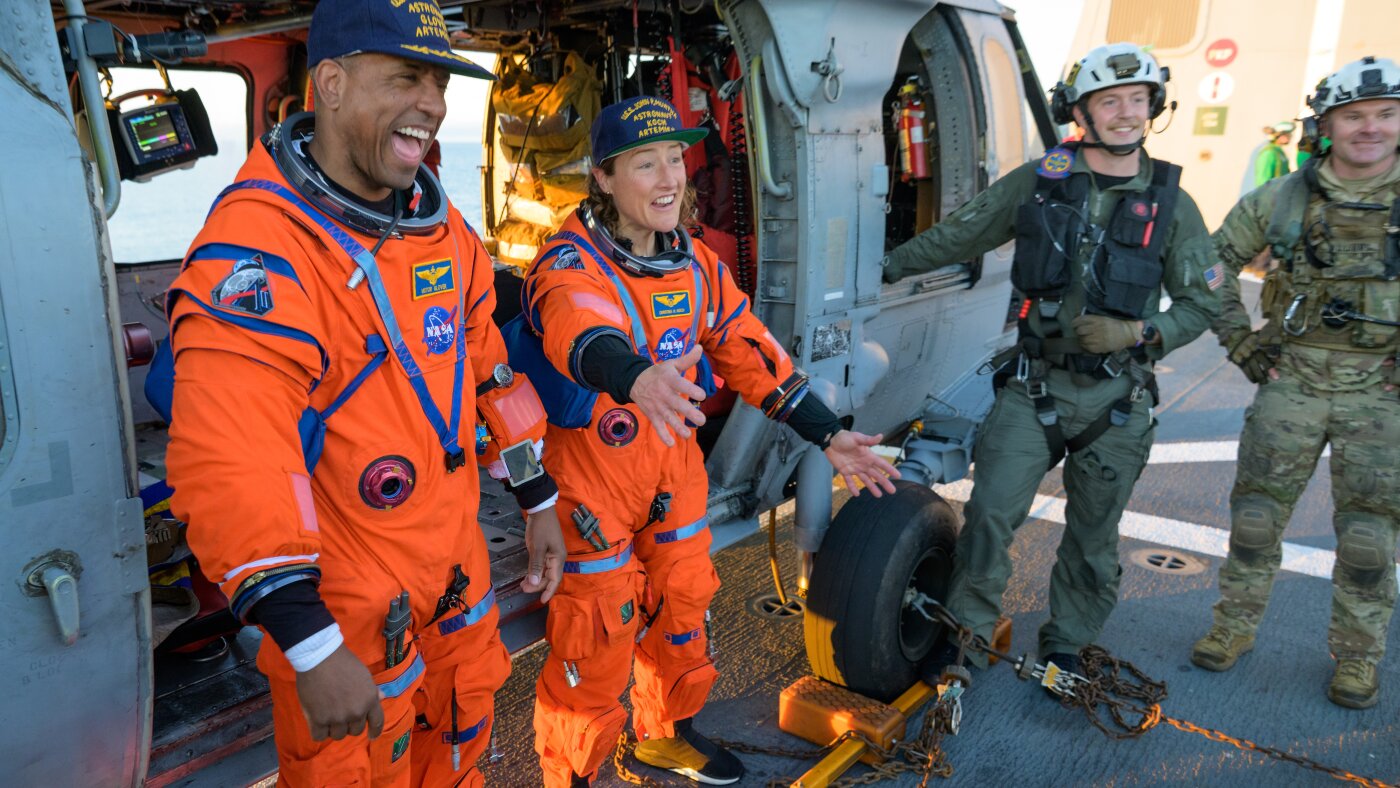
Artemis II splashdown captures nationwide attention

Video: Police Fatally Shoot Man After Stabbings at Grand Central Subway Station

Trump blasts Spanberger ahead of Virginia meetings, says state faces tax base exodus like New York, California
-

 Atlanta, GA1 week ago
1 teenage girl killed, another injured in shooting at Piedmont Park, police say
-

 Georgia5 days ago
Georgia House Special Runoff Election 2026 Live Results
-

 Pennsylvania6 days ago
Parents charged after toddler injured by wolf at Pennsylvania zoo
-

 Arkansas2 days ago
Arkansas TV meteorologist Melinda Mayo retires after nearly four decades on air
-
 Milwaukee, WI6 days ago
Potawatomi Casino Hotel evacuated after fire breaks out in rooftop HVAC system
-

 Indianapolis, IN1 week ago
Fighting Illini begin Final Four preparations in Indianapolis
-

 Technology1 week ago
Anthropic essentially bans OpenClaw from Claude by making subscribers pay extra
-

 Detroit, MI1 week ago
Puppy rescued after getting stuck on chimney in Detroit