World
Ukraine accepts 30-day ceasefire in US talks: What it means for Russia war


On Tuesday, Ukrainian President Volodymyr Zelenskyy said that Ukraine has accepted a 30-day ceasefire with Russia after critical peace talks with the United States in Saudi Arabia.
Washington has, in turn, lifted its pause on military aid and intelligence sharing with Kyiv.
After eight hours of negotiations in the port city of Jeddah, the terms of peace were jointly signed and will be presented to Russia, US Secretary of State Marco Rubio, who represented Washington in Saudi Arabia, said. The ball is now in Moscow’s court, said Rubio.
Here is what we know about the deal that was struck – and what it means for Russia’s war on Ukraine, now into its fourth year, at a time when US President Donald Trump has repeatedly said that ending the conflict is among his top geopolitical priorities.
What is the ceasefire deal about?
The deal was reached after a meeting in Saudi Arabia. Ukraine was represented by Andriy Yermak, head of Zelenskyy’s office; Andrii Sybiha, the minister of foreign affairs; Rustem Umerov, the minister of defence; and Pavlo Palisa, a colonel in Zelenskyy’s office.
The US was represented by Rubio and National Security Advisor Mike Waltz.
The US and Ukraine released a joint statement after the talks on Tuesday. This statement says that the countries have agreed on “an immediate, interim 30-day ceasefire, which can be extended by mutual agreement of the parties”.
In an X post on Tuesday, Zelenskyy added that the ceasefire will apply to missile, drone and bomb attacks “not only in the Black Sea, but also along the entire front line”.
The joint statement added that this is subject to agreement by Russia – underlining the unusual nature of the agreement. Ceasefire deals are usually struck between warring parties, not one of the nations in a conflict and a country attempting to mediate peace.
The statement said that the US “will communicate to Russia that Russian reciprocity is the key to achieving peace”.
On Wednesday, Kremlin spokesperson Dmitry Peskov told reporters that Russia was waiting to be briefed by the US about the ceasefire proposal before it could comment on whether or not it accepts the proposal’s terms.
What does Ukraine get in return for agreeing to a 30-day ceasefire?
The joint statement added that the US will immediately lift the pause on intelligence sharing and military aid to Ukraine.
After a meeting between US President Donald Trump and Zelenskyy on February 28 at the White House took an acrimonious turn, the US had paused military and intelligence assistance to Ukraine.
The statement added that the presidents of both countries had agreed on inking a deal on Ukraine’s critical minerals “as soon as possible”. The US and Ukraine have been discussing a minerals deal for weeks, which will allow the US to invest in Ukraine’s mineral resources. Trump and Zelenskyy were expected to sign this deal during the Ukrainian leader’s recent White House meeting, but the agreement was not signed.
The joint statement does not explicitly mention any security guarantees to Kyiv – something that Zelenskyy has been seeking.
Trump has repeatedly rejected the idea of the US offering security guarantees. However, the Trump administration has argued that US investment in Ukraine, through the minerals deal, would serve as a security guarantee.
In a Fox News interview that aired on March 3, Vice President JD Vance said: “If you want real security guarantees, if you want to actually ensure that Vladimir Putin does not invade Ukraine again, the very best security guarantee is to give Americans economic upside in the future of Ukraine.” Vance implied that this would deter Russia from attacking Ukraine.
What did Ukraine propose at the meeting?
In a post on his X account on Tuesday, Zelenskyy said that the discussion in Saudi Arabia was constructive.
He added that during the meeting, the team from Ukraine proposed three key points; “silence in the skies,” with neither side firing missiles, bombs or launching long-range drone attacks against each other; “silence at sea”; and the release of civilian and military prisoners of war as well as the Ukrainian children who were forcibly sent to Russia.
The Ukrainian leader wrote that Kyiv was ready to accept the proposal. “If Russia agrees, the ceasefire will take effect immediately.”
Rubio also posted on X after the meeting. “We are one step closer to restoring durable peace for Ukraine. The ball is now in Russia’s court.”
How significant is the resumption of US aid and intelligence?
“The US support which was withdrawn in order to force Ukraine into agreeing to the outline of the ceasefire was significant,” Keir Giles, a senior consulting fellow at the London-based Chatham House think tank, told Al Jazeera. He added that Ukraine had no choice but to accept the deal.
The suspension of military and intelligence sharing was hindering Ukraine on the battlefield.
Even before the war in Ukraine started in February 2022, the US provided significant intelligence support to Ukraine. This support would help Ukraine prepare for incoming Russian attacks and also deploy long-range missiles to attack Russian logistical centres.
On March 5, US officials confirmed that this support was suspended. As the suspension came into effect, Al Jazeera’s Charles Stratford, reporting from Ukraine, spoke with a Ukrainian commander in a unit close to the front line. “He said that his unit and many like him right the way along that 1,300km [808 miles] front line in the east and south of Ukraine relied on American intelligence gathering for around 90 percent of the intelligence work that is done,” Stratford said.
While effects of the intelligence suspension were felt immediately, the suspension of military aid spurred a sense of impending doom. “Without the US military aid, Ukrainian forces will gradually lose combat capability. My guess is that the Ukrainians can hold out for two to four months before their lines buckle and the Russians break through,” Mark Cancian, a former US Marine Corps colonel and a senior adviser with the Center for Strategic and International Studies, told Al Jazeera at the time.
Will Russia accept a ceasefire?
Russia has not responded to the ceasefire yet.
“It would be strange and out of character if Russia were to agree to the current proposition without presenting additional demands,” Giles said. “Russia has every incentive now to press for additional demands in order to agree to a ceasefire.”
Giles added that Russian President Vladimir Putin could push for additional demands including sanctions relief or “permanent restrictions on security guarantees given to Ukraine”. Since the war began in 2022, the US and its allies have imposed at least 21,692 sanctions on Russia.
The sanctions have targeted Russian individuals, media organisations, the military sector, energy sector, aviation, shipbuilding and telecommunications, among other sectors.
“If past performance is any guide, those demands will be backed by the US,” Giles said.
Trump, though, said on March 7 that he was “strongly considering” imposing sanctions and tariffs on Russia until a peace agreement is reached with Ukraine.
The Russian Foreign Ministry said that it has not ruled out contacts with US representatives over the next few days, Russian state news agency RIA reported. Trump has said that the US is planning to communicate with Russia in the coming days.
Trump’s Middle East Special Envoy Steve Witkoff plans to visit Moscow to speak with Putin in the coming days, according to two anonymous sources briefed on the matter, Reuters reported. This will be Witkoff’s second meeting with Putin since last month, when he became the first high-level US official to travel to Russia since the beginning of the war.
Waltz, the national security adviser, also told a press conference after the discussion in Jeddah: “I will talk to my Russian counterpart in the coming days.”



SIOUX FALLS, S.D. (AP) — The 14-year-old was riding an electric bicycle at an estimated 25 mph when he slammed into Janet Stotko during her evening walk, leaving her unconscious and bleeding on a sidewalk in her Minnesota neighborhood.
The 2024 crash nearly killed Stotko, who was raced to a hospital with severe brain injuries, a facial fracture and broken eardrum. But after being on a ventilator for two days, spending three weeks in the hospital and enduring brain surgery, she survived, surprising even her doctors.
At a checkup, she said, her doctors told her, “Wow, we can’t believe you’re here.”
Now, she’s pushing for stricter laws regulating e-bikes in hopes that others won’t be hurt.
E-bikes offer a convenient, eco-friendly and cost-effective alternative to cars, but their increasing use is drawing safety concerns. A study by the University of California, San Francisco found that rider injuries from e-bikes nearly doubled each year from 2017 to 2022, and a University of California, San Diego study showed injuries in San Diego among e-bike riders under 18 soared 300% from 2019 to 2023.
Under federal law, most e-bikes are considered nonmotorized vehicles just like traditional bicycles, so riders don’t need a driver’s license or insurance and they don’t have to wear a helmet. But many states have more stringent rules, and regulations vary widely.
Health experts have called for new laws and better enforcement of existing regulations, and officials in many places are taking action.
Here’s what e-bikers should know to keep themselves and people around them safe.
This article is part of AP’s Be Well coverage, focusing on wellness, fitness, diet and mental health. Read more Be Well.
Not all e-bikes are the same
Many states have adopted a three-tier classification of e-bikes: Class 1 have motors that kick in while riders pedal with maximum speeds of 20 mph; Class 2 have throttles that reach the 20 mph maximum without pedaling; and Class 3 provide pedal-assist up to 28 mph.
There are faster versions available, sometimes called e-motos, that can reach 40 mph even without pedaling. Many states treat these bikes like motorcycles, so they’re not allowed on sidewalks or paths, but in some states there are no specific rules for the ultra-fast bikes.
As John Maa, a general surgeon at MarinHealth Medical Center in Northern California, notes, it’s basic math that increased speeds lead to increased injuries.
“It’s Newton’s principles, right? Force equals mass times acceleration, and also kinetic energy is mass times velocity squared,” Maa said.
Learn where you can and can’t ride
Speed limits, helmet requirements and other rules for e-bikes are changing rapidly, and what’s legal in one city or state might be illegal in the next.
New York City imposed a speed limit of 15 mph on all electric bikes in October, and Florida lawmakers recently sent the governor a bill limiting e-bike speeds to 10 mph within 50 feet of pedestrians. In Connecticut, an October law requires all e-bike riders to wear a helmet, and bikes without pedals equipped with batteries over 750 watts will require a driver’s license.
“We were not only hearing from manufacturers and riders, but we were hearing from concerned citizens trying to share the road with these new electric bikes and e-scooters, and also law enforcement who really needed some clear policies set into place,” said Christine Cohen, the Connecticut state senator behind the legislation.
Know your bike
The market is full of vehicles that blur the line between a traditional e-bike and something closer to a motorcycle, and manufacturers don’t always make the distinction easy to spot.
To understand a bike’s capabilities and where it can be legally ridden, check its top speed, motor wattage, and whether it requires pedaling or operates on throttle alone. Anything outside the three-class classification could be subject to motor vehicle regulations, making it illegal to ride on some shared-use paths where slower e-bikes are allowed.
“The first thing we always tell people is familiarize yourself, read the manual, look at some videos, look at your specific model,” said Charles DiMaggio, an injury public health researcher and professor at New York University’s medical school.
Going to a local bike shop instead of buying online can help, enabling riders to ask questions, take a test ride and learn what’s legal and what isn’t.
Follow traditional bike safety measures
Hospitals and medical groups like the American College of Surgeons and American Association of Neurological Surgeons have called for stricter policies and offered safety tips.
Above all, they stress wearing a helmet. Other tips include riding defensively around cars, using front and rear lights, wearing reflective vests in the dark, and avoiding biking under the influence of drugs or alcohol. Experts also recommend against altering an e-bike to make it faster.
Maa added that e-bike riders should consider wearing a motorcycle helmet that covers the neck to protect against spinal injuries. He also advises parents to make sure their children can comfortably ride a pedal bike before they graduate to e-bikes.
“Make sure they’re comfortable, they understand the rules of the road, they’re able to navigate turns, understand the flow of traffic, the use of bicycle lanes,” Maa said.
Minnesota victim wants accountability
After she was injured, Stotko told the city council in her community of Hastings, Minnesota, about her crash to push for a stricter ordinance. The city agreed, reducing maximum e-bike speeds to 15 mph on city trails, prohibiting e-bikes on sidewalks and imposing penalties.
City police issued a citation to the 14-year-old rider for operating an e-bike underage, but no one was charged for the injury to Stotko.
“It’s really about taking accountability and ownership of owning an e-bike and operating one,” she said.

NEWYou can now listen to Fox News articles!
Ukrainian President Volodymyr Zelenskyy is turning battlefield innovation into bargaining power, offering Ukraine’s anti-drone systems to Middle Eastern allies, while seeking more air-defense support as the war with Russia drags into its fourth year.
Zelenskyy met Friday in Abu Dhabi with United Arab Emirates (UAE) President Mohammed bin Zayed Al Nahyan, and the two discussed an agreement by which Ukraine would provide its cutting-edge counter-drone technology in exchange for ballistic missile support and financial aid.
In a wide-ranging interview with Fox News after the meeting, Zelenskyy detailed how Ukraine’s battlefield innovations, namely its anti-Russian drone systems, are influencing defense partnerships worldwide.
ZELENSKYY ANNOUNCES NEXT ROUND OF TALKS WITH US, RUSSIA AS UKRAINE AIMS FOR ‘REAL AND DIGNIFIED END TO THE WAR
In a wide-ranging interview with Fox News, Ukrainian President Volodymyr Zelenskyy detailed how Ukraine’s battlefield innovations are influencing defense partnerships worldwide. (Fox News)
“We have, for example, drone interceptors. We have [a] system of electronic warfare and a lot of things. All these jointly work in one system. This is what we have [that] nobody has,” Zelenskyy told Fox News correspondent Matt Finn in Abu Dhabi.
Ukraine is now sharing elements of that system with at least four Persian Gulf nations — the UAE, Qatar, Jordan and Saudi Arabia — as they confront growing threats from Iran’s drone capabilities.
But Zelenskyy emphasized the partnership must be reciprocal. Ukraine continues to face a “big deficit” of critical air defense weapons, particularly PAC-3 Patriot missiles used to intercept ballistic threats.
“We are ready to help Middle East countries with our expertise and with our knowledge, and we hope … that they can help with anti-ballistic missiles,” Zelenskyy said.
Ukraine has already signed 10-year defense agreements with Saudi Arabia and Qatar, with a similar deal with the UAE expected soon, according to the AP.
TRUMP MEETS WITH ZELENSKYY; TALKS COULD UNLOCK FIRST ZELENSKYY-PUTIN CALL IN FIVE YEARS: SOURCE
A plume of smoke rises from the site of a strike in Tehran early on March 28, 2026. (Atta Kenare/AFP via Getty Images)
Zelenskyy also warned that increasing U.S. military focus on the Middle East amid escalating tensions with Iran and the ongoing “Operation Epic Fury” could slow the flow of weapons to Ukraine.
He claimed Russia is already strengthening Iran’s military by sharing drone technology, including Shahed “kamikaze” drones, as well as battlefield tactics developed during the war.
“Russia will share all they know about this war. … They’re already sharing with Iranians,” Zelenskyy said.
While he stopped short of confirming missile transfers, Zelenskyy suggested Moscow has a strategic interest in prolonging instability in the Middle East to divert U.S. attention away from Ukraine.
“This is what they do,” Zelenskyy said.
On the battlefield, Zelenskyy reiterated that Ukraine will not cede territory in the contested Donbas region, arguing it would weaken defenses, damage troop morale and displace tens of thousands of civilians.
“I think their morale will decrease,” Zelenskyy said.
He also urged the Trump administration not to lose sight of Ukraine while addressing Middle East tensions.
AS UKRAINE WAR DRAGS ON, TRUMP HITS PUTIN BY SQUEEZING RUSSIA’S PROXIES
Destroyed homes after a Russian drone attack March 28 in Odesa, Ukraine. (Viacheslav Onyshchenko/Global Images Ukraine via Getty Images)
More than 270 Russian drones struck Ukraine overnight Friday, leaving at least five people dead, Ukrainian officials said Saturday, according to AP.
CLICK HERE TO DOWNLOAD THE FOX NEWS APP
“I hope that President Trump … will find a way to end this war with pressure on the Iranian regime, and I hope that also they will not forget about … the war of Russia against Ukraine,” Zelenskyy said.
The Associated Press contributed to this report.
Within weeks, the European Commission has wrapped up deals with Mercosur, India and Australia. Yet despite the backlash over the Latin America agreement, Brussels is sticking to a familiar playbook: offensive on wine and cars, defensive on beef.

Decorated Illinois guard Josh Gesky met with Saints ahead of draft

Hundreds gather at Indiana State Capitol for ‘No Kings’ protest

Body recovered from retention pond after reported drowning in Iowa Colony
![~!@[WATCHLIVE!TV]>> NOW Portland Thorns FC vs Kansas City Current Match 𝐋𝐈𝐕𝐄 Free Streams ON Tv Channel](https://i2.wp.com/unicornriot.ninja/wp-content/uploads/2018/09/LiveChannel334x212v2.png?w=80&resize=80,80&ssl=1 "~!@[WATCHLIVE!TV]>> NOW Portland Thorns FC vs Kansas City Current Match 𝐋𝐈𝐕𝐄 Free Streams ON Tv Channel")
~!@[WATCHLIVE!TV]>> NOW Portland Thorns FC vs Kansas City Current Match 𝐋𝐈𝐕𝐄 Free Streams ON Tv Channel

2026 top-50 recruit Chris Washington Jr. drawing interest from Kentucky Basketball

Florida High School Football Rankings: Top 25 teams – Oct. 21

How old is Bo Nix? What to know about Oregon quarterback ahead of 2024 NFL Draft

Cleary's 21 help Le Moyne down Central Connecticut State 69-64 in OT

99th annual Pony Swim held in Virginia

Indiana Members Credit Union announced as new anchor tenant at Bottleworks District

JD Vance says he was ‘obsessed’ with UFOs, believes aliens are actually ‘demons’
The EU's recipe for trade deals : easy on beef, tough on wine
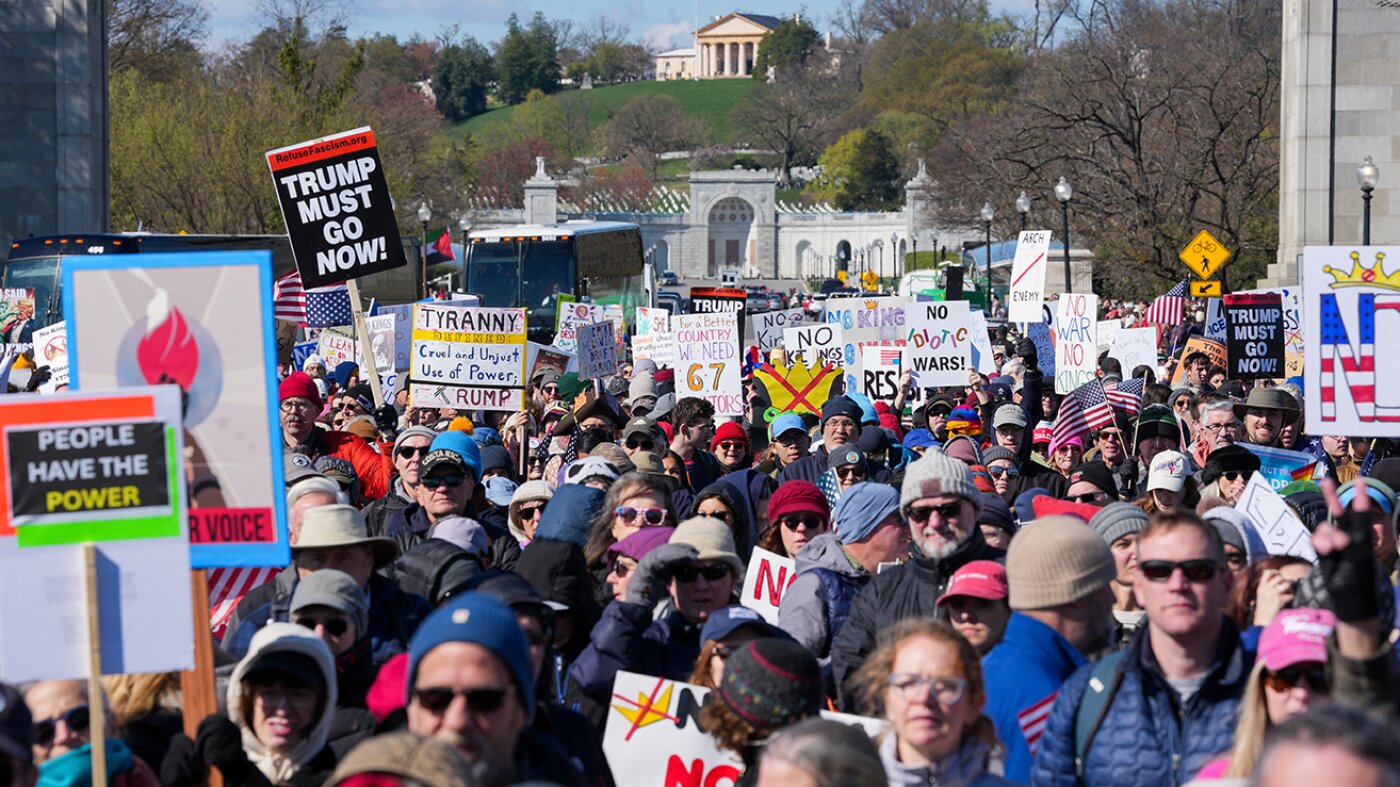
Photos: ‘No Kings’ protests across the country

Jeffries declines to break with indicted Democrat after ethics panel’s guilty verdict

Hundreds of thousands march through London in stand against the far right
-

 Sports1 week ago
IOC addresses execution of 19-year-old Iranian wrestler Saleh Mohammadi
-

 New Mexico7 days ago
Clovis shooting leaves one dead, four injured
-

 Tennessee6 days ago
Tennessee Police Investigating Alleged Assault Involving ‘Reacher’ Star Alan Ritchson
-

 Technology7 days ago
YouTube job scam text: How to spot it fast
-

 Minneapolis, MN3 days ago
Boy who shielded classmate during school shooting receives Medal of Honor
-

 Science1 week ago
Record Heat Meets a Major Snow Drought Across the West
-

 Politics1 week ago
Schumer gambit fails as DHS shutdown hits 36 days and airport lines grow
-

 Texas1 week ago
How to buy Houston vs. Texas A&M 2026 March Madness tickets