World
New European Parliament intergroups: What’s in and What’s Out


Although informal, parliamentary intergroups are a mirror of Europe’s ever-changing priorities—part tradition, part reinvention, and occasionally, a little bit of whimsy.
As the European Parliament embarks on a new legislative mandate, fresh topics are set to capture the attention of MEPs and bring new Parliamentary ‘intergroups’ to life.
These intergroups—informal networks of MEPs from different political groupings—focus on specific issues, often with input from civil society.
Although not official parliamentary bodies, intergroups are formally recognised by the Parliament and established at the start of each term.
For this tenth legislative term, political groups have approved a list of 28 intergroups. Many are being set up this week in Strasbourg, with launch events expected to take place alongside the plenary sessions.
It’s important to note, as the European Parliament clarifies on its website, that intergroups are distinct from “friendship groups”- another more clubbable type of Parliamentary grouping – even if some of their names suggest they might be a lot of fun
To illustrate how MEPs’ interests and engagement with various issues have evolved, Euronews has curated a selection of intergroups—both new and long-standing—from past and present mandates.
The most inclusive LGBTQ+ group in history
The European Parliament’s LGBTQ+ intergroup, confirmed for the fourth time in a row, has come a long way in its journey toward inclusivity.
When it first began, it focused solely on lesbians and gays, even if it’s title “Lesbian and Gay” suggested it consisted of one of each. By the seventh legislative term, the group had expanded to include bisexual and transgender individuals, becoming the LGBT intergroup.
In 2014, “I” was added to represent intersex people, but now that’s been replaced by a “+” symbol, a small change designed to carry a big message: nobody is left out.
Historical Intergroups
Some intergroups have history on their side—quite literally. One focuses on promoting the Camino de Santiago pilgrimage routes and has since broadened its scope to cover other European cultural routes and heritage.
Other enduring intergroups sport distinctive names. SEARICA, for example, tackles seas, rivers, islands, and coastal areas, while ARDI focuses on anti-racism and diversity. But not all historical groups survived this term.
Another intergroup with its own name, the RUMRA dedicated to rural, mountainous, and remote areas since 2014, did not make the cut this time.
Then there are some evergreen intergroups, like those on Sky and Space or Welfare and Conservation, which have been around for several decades and seem destined to outlive us all.
Intergroups not spared by political guidelines
Some new intergroups naturally stem from themes expected to dominate the EU’s agenda in this term. For instance, competitiveness is front and centre with the new intergroup ‘Attracting Investment to Ensure a Competitive and Sustainable EU’ whose title might have been dubbed by Mario Draghi himself.
Others leave a little more to the imagination. Take the new ‘Police’ intergroup for example—will it focus on tackling police violence or advocating for better protection for law enforcement? Or perhaps it’s a secret fan club for The Police, the legendary English rock band. (We’re still waiting to find out.)
 ADVERTISEMENT
Meanwhile, mental health has finally earned its own intergroup, reflecting its rising prominence across policy discussions. First-timers like the resilience, disaster management, and civil protection intergroup are also stepping onto the scene.
The ‘cancelled’ ones
As new intergroups emerge, others inevitably fade away. The Green Deal intergroup, active from 2019 to 2024, has been shelved for this term—apparently, nobody volunteered to carry the torch of the flagship initiative of the past mandate.
This isn’t unusual. Many intergroups have lived short, dramatic lives, surviving only a single term. Remember the eighth legislative mandate’s “Media” and “New Media” intergroups? They lasted no longer than a trending tweet.
Another group called ‘Family, children’s rights, and bioethics’ also struggled to make it past a single term.
ADVERTISEMENTGeopolitical Intergroups
Some intergroups have faded due to shifting political priorities, particularly those dedicated to specific geopolitical areas.
Take the intergroup on Tibet, which ran for a decade before vanishing in 2014, or the Western Sahara group, which has also dissolved now after a decade.
As political tides shift, new groups emerge. This term, a new intergroup titled “The Two-State Solution for Israel and Palestine” has been introduced, reflecting the Parliament’s evolving geopolitical focus and the shifting of interest in the broader geopolitical arena.



Few parts of southern Lebanon remain untouched by the war.
Entire villages have emptied after Israel issued sweeping evacuation warnings for nearly all of the south. Israeli airstrikes have destroyed homes, severed bridges and razed parts of towns. Israeli ground forces have advanced deeper into southern Lebanon, clashing with Hezbollah militants in the rugged, hilly terrain.
The war has brought intense uncertainty to the south, a predominantly Shiite Muslim area dominated by Hezbollah for decades.
This week, Israeli officials offered their most explicit plan to date to occupy a swath of southern Lebanon from the border up to the Litani River after the ground invasion ends. That would amount to about 10 percent of the entire country. Israeli officials have said they aim to establish a “security zone” to prevent the territory from being used to attack Israel.
The hundreds of thousands of displaced Lebanese who fled the south will not be allowed to return to their homes until the “safety and security of northern Israeli residents is ensured,” the defense minister, Israel Katz, said on Tuesday.
Lebanon’s government has condemned Israel’s military campaign and appealed to the international community to intervene. Last week, Prime Minister Nawaf Salam warned the U.N. secretary general, António Guterres, about the risk of Israel annexing the territory south of the Litani River.
Razing border villages
Mr. Katz reiterated on Tuesday that Israel’s plan in southern Lebanon includes demolishing entire Lebanese towns on the border.
Many of Lebanon’s border villages were devastated in the previous escalation of fighting in 2024. At least six villages saw widespread destruction in that war. Israeli airstrikes that persisted after the cease-fire made it virtually impossible for residents to rebuild in those villages.
“There was nothing to return to” after the last war in 2024, said Alaa Suleiman, 40, who fled from his home Kfar Kila, a village along the border with Israel. “Even when people tried to put up prefabricated houses, they were targeted by strikes. It meant we had no hope of ever returning.”
Since the latest war broke out last month after Hezbollah fired rockets at Israel in solidarity with Tehran, Israel has appeared to accelerate its destruction of the border towns.
One video circulating on social media and verified by The New York Times shows several large simultaneous explosions on March 17 in Aita al-Shaab, which is about a mile from the border. Satellite images viewed by The Times from later that day confirmed the damage to the area. The town was already heavily hit in 2024.
The destruction of communities along the border is part of a deliberate strategy by the Israeli military, according to Mr. Katz, who said that the practice of flattening homes in southern Lebanon is “following the Rafah and Beit Hanoun model in Gaza.” There, Israel used bulldozers and controlled demolitions to erase entire neighborhoods.
Bombing bridges
In March, the Israeli military demolished most of the key bridges across the Litani River, in what it said was an effort to prevent Hezbollah from moving reinforcements and combat equipment to southern Lebanon. The waterway, which is as much as 20 miles from the Israeli border at its furthest point, has long marked the dividing line between southern Lebanon and the rest of the country.
Much of the Litani River is situated at the base of a ravine, making the bridges critical — both for civilians still living in the south to leave as well as for medical supplies, food and other essentials to reach those who have remained.
By blowing up the major bridges connecting northern Lebanon to the south, Israel has forced civilian traffic onto a handful of smaller crossings. Should Israel target those crossings, southern Lebanon would be almost entirely severed from the north.
Israeli officials have not made clear whether the military will reach the river itself or only control it from afar, nor how long the military intends to stay there.
A video filmed by Reuters and verified by The Times shows several fiery explosions across a large bridge in Qasmiyeh, in the south of Lebanon. Dark clouds of smoke can be seen rising into the air, along with debris.
Ground assault
After the previous war between Hezbollah and Israel ended in a cease-fire agreement in late 2024, the Israeli military occupied five outposts near the border inside Lebanon.
Since the start of a new war, Israel has sent in at least 5,000 ground troops, according to two Israeli officials who spoke on the condition of anonymity because they were not authorized to talk to the media.
Satellite images analyzed by The Times showed Israeli vehicles in new military positions in four Lebanese towns near the Israeli border. As of late March, vehicles were not visible much deeper into Lebanese territory than where Israeli troops previously reached during the 2024 ground invasion.
In the border town of Khiam, images reveal razed areas and destroyed buildings in various parts of the town.
A mix of Merkava tanks and armored personnel carriers are visible in the images, said Jeremy Binnie, Middle East defense specialist at Janes, a London-based defense intelligence firm.
News of the destruction in Khiam has stirred alarm among residents, nearly all of whom fled when the war broke out.
“After the last war, we rebuilt our home. We said it’s over. And now it’s all being destroyed again,” said Ali Akkar, 78, who was displaced from his home in Khiam. “In the last war, we had some hope to return home. Now we have none.”
Satellite imagery verified by The Times also suggests that there was an Israeli military presence at a hospital near Meiss al-Jabal, a town near the Israel-Lebanon border. Satellite imagery showed what appeared to be armored vehicles in various positions around the hospital complex.
While it has been possible to access satellite imagery from southern Lebanon, cloud coverage obscured the visibility of many areas after March 18, making more recent positions of Israeli forces in Lebanon harder to independently verify.
Targeting infrastructure
Israeli airstrikes have also hit homes, gas stations, money exchanges and other civilian infrastructure that the Israeli military says are being used by Hezbollah.
Israel struck in March at least four fuel stations run by the Al-Amana Petroleum Company, a major fuel distributor that was previously placed under U.S. sanctions for its alleged links to Hezbollah. Israeli officials say these stations are “significant economic infrastructure” for the group.
Video filmed by Agence France-Presse showed the damage to a gas station between the cities of Naqoura and Tyre, in southwest Lebanon. A sign hangs from the roof, which is partially damaged, and a large crater is visible on the pavement.
While Israeli officials say the gas stations help fund Hezbollah, they have also benefited many Lebanese. At times, they have sold fuel at subsidized prices, making them a lifeline for poorer people as the war in Iran drives up fuel costs.
The devastation has anguished residents of the south who have fled and watched from afar as their towns and villages have been destroyed.
“There’s so much more destruction, more fighting, the stakes of this war are much higher than the last one,” said Hooda Rajab, 28, who was displaced from her home on the outskirts of Khiam. “Now we’re asking: Will we ever be able to return home? Even if we can, will there be anything for us to return to?”
World
Iran’s tallest bridge collapses after reported US airstrikes; Iran threatens American allies in retaliation

NEWYou can now listen to Fox News articles!
Iran’s biggest bridge near Tehran has crashed down in a stunning scene captured on camera following reports of U.S. airstrikes, President Donald Trump announced Thursday, as he pressed the regime to make a deal before tensions escalate further.
The B1 highway bridge, a key link between Iran’s capital and the western city of Karaj, is considered the tallest in the Middle East and was only inaugurated earlier this year.
Iranian state TV reportedly warned of potential retaliation, claiming the state’s military has identified multiple bridges in American-allied Middle East nations as targets, according to Iran International.
Trump posted a video on social media capturing a massive plume of smoke and debris after the bridge’s apparent collapse.
KAROLINE LEAVITT FIRES BACK AT NBC NEWS REPORTER WHO ASKED IF TRUMP’S IRAN THREAT AMOUNTS TO A ‘WAR CRIME’
The B1 bridge near Tehran collapsed after reported U.S. airstrikes. (@realDonaldTrump/Truth Social)
“The biggest bridge in Iran comes tumbling down, never to be used again — Much more to follow! IT IS TIME FOR IRAN TO MAKE A DEAL BEFORE IT IS TOO LATE, AND THERE IS NOTHING LEFT OF WHAT STILL COULD BECOME A GREAT COUNTRY!” Trump said in a post on Truth Social.
The strike on the bridge was aimed at cutting drone and missile supply lines to Iranian firing units targeting U.S. and Israeli forces, Middle East outlet i24NEWS reported, citing sources.
Iranian state TV also said the bridge was hit twice, roughly an hour apart, resulting in civilian casualties, Fars News reported.
TRUMP TO ADDRESS NATION ABOUT IRAN AS HE SIGNALS WAR COULD END WITHIN WEEKS
President Donald Trump pauses as he finishes speaking about the Iran war Wednesday, April 1, 2026, in Washington. (Alex Brandon-Pool/Getty Images)
“A few minutes ago, the American-Zionist enemy once again targeted the B1 bridge in Karaj,” the broadcast said, noting that the first strike killed two civilians.
Fars News also reported that other areas of Karaj were struck.
Iran’s IRGC reportedly identified several bridges in American-allied nations as potential targets after the collapse of the B1 bridge. (Morteza Nikoubazl/Nur Photo)
CLICK HERE TO DOWNLOAD THE FOX NEWS APP
The outlet reported that Iran is considering plans to rebuild the bridge with the help of its engineers and experts.
In retaliation, Iran’s Islamic Revolutionary Guard Corps has reportedly identified several bridges in American-allied nations across the Middle East as potential targets, including infrastructure in Kuwait, Saudi Arabia, Bahrain, Abu Dhabi and the Jordan-West Bank region.

Sunday, 12 April 2026 will be a crucial day for the European Union as Hungarians head to the polls for parliamentary elections.
ADVERTISEMENT
ADVERTISEMENT
Hungary’s current prime minister, Viktor Orbán, leader of the eurosceptic Fidesz party, will be challenged by Péter Magyar, leader of the Tisza party and a former member of Orbán’s own party.
To better understand what’s at stake for Budapest and Brussels, Brussels, My Love? sits down with Sandor Zsiros, Euronews’ EU correspondent who hails from Hungary.
Orbán vs Magyar
With 16 years in power, Orbán is Hungary’s most veteran politician in recent history.
According to Zsiros, his popularity is largely due to his political identity. “Orbán is a populist in a way that he always considers what people want,” Zsiros explained. “And, he’s a real power politician who is willing to fight his enemies in an extremely brutal way,” he continued.
Zsiros described how toxic the political campaigning leading up to the election has been. “This is not a real traditional political campaign; it’s a war, they want to destroy each other,” he explained.
Orbán’s main competitor in the election is Peter Magyar, leader of the increasingly popular Tisza party.
Defining the ideological line of Tisza is not easy: “There are a lot of liberal people, a lot of conservatives, also a bit of leftists, but generally the party orientation and the personality of Péter Magyar are very much right-wing conservative traditionalist,” Zsiros said.
In the European Parliament, Magyar’s party sits with the European People’s Party, the alliance of Europe’s centre-right parties while Fidesz is part of the far-right group Patriots for Europe.
One of the main differences between Orbán and Magyar lies in their approach to the EU.
Magyar’s party is pro-European and seeks to restore Hungary’s access to EU funds frozen over rule-of-law concerns. It also pledges to reduce ties between Budapest and Russia. By contrast, Orbán’s party has taken a more eurosceptic stance and maintains relatively close relations with Russia.
The outcome of this election will be crucial as it will impact the balance of power in the EU and influence many decisions, including the EU’s stance on Ukraine.
To find out more about these crucial elections, listen to this episode of Brussels, My Love? and follow our live blog on Sunday, 12 April.
Additional sources • David Brodheim, sound editor and mixer

Ex-Steelers QB Fires Back at Adam Schefter Over Aaron Rodgers Rumor

Kathryn Lively Spears Obituary April 1, 2026 – Thomas Poteet & Son Funeral Directors

Large pothole damages vehicles on I-90 east

Bluebonnets Austin: 25 Best Places To See Blooms In 2026

What is Alabama’s best burger? Foodie picks this local favorite

Florida High School Football Rankings: Top 25 teams – Oct. 21

How old is Bo Nix? What to know about Oregon quarterback ahead of 2024 NFL Draft

Cleary's 21 help Le Moyne down Central Connecticut State 69-64 in OT

99th annual Pony Swim held in Virginia

Indiana Members Credit Union announced as new anchor tenant at Bottleworks District

Video: Trump Struck Iran. Now Farmers Are Paying the Price.

What B-52 bombers bring to Iran fight — and what it means for the war now

Podcast: Hungary elects: what is at stake and who is likely to win?
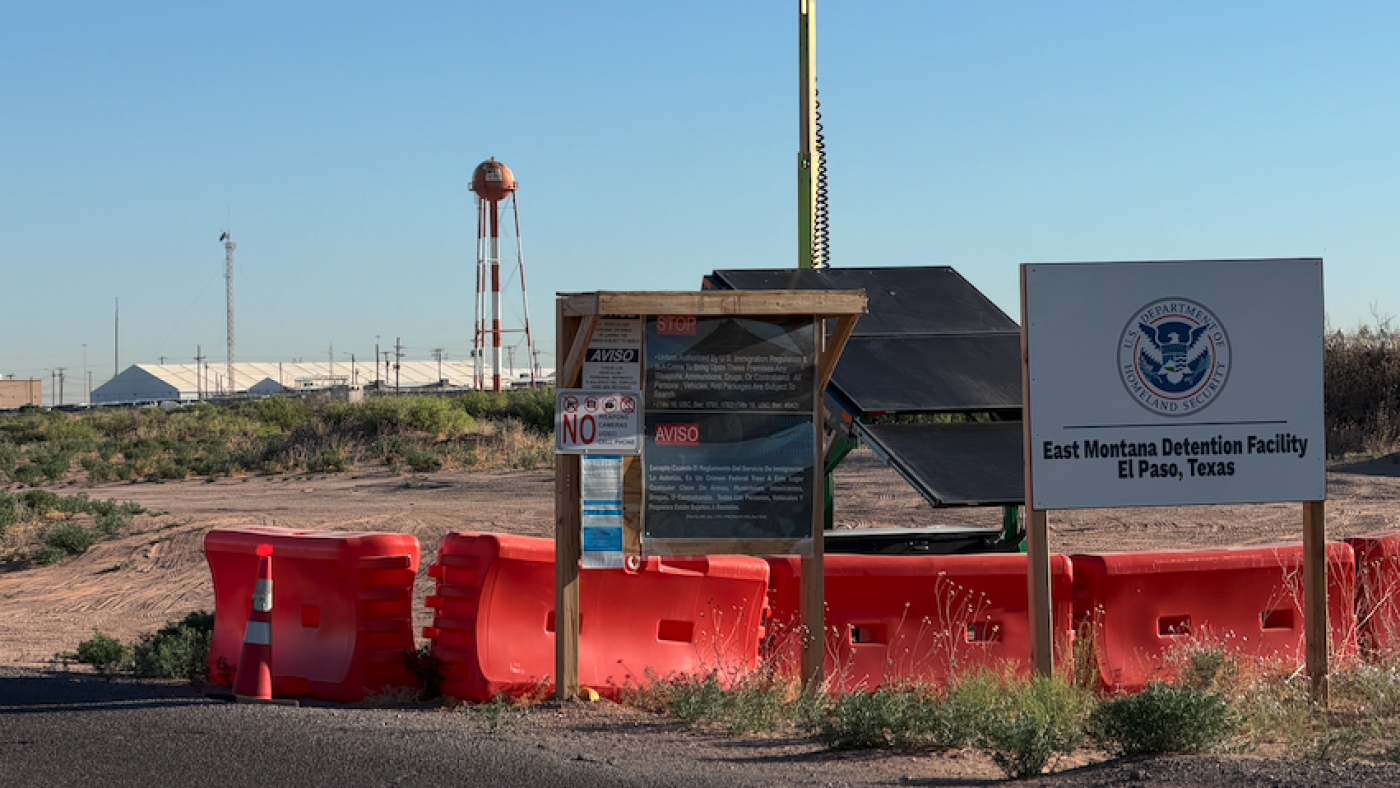
ICE detention deaths are on a record pace. One Texas facility bears the brunt

GOP rails against ‘s— sandwich’ deal as all eyes turn to House to end DHS shutdown
-

 Culture1 week ago
Wil Wheaton Discusses ‘Stand By Me’ and Narrating ‘The Body’ Audiobook
-

 South-Carolina5 days ago
South Carolina vs TCU predictions for Elite Eight game in March Madness
-

 Miami, FL1 week ago
Jannik Sinner’s Girlfriend Laila Hasanovic Stuns in Ab-Revealing Post Amid Miami Open
-

 Culture1 week ago
What Happens When We Die? This Wallace Stevens Poem Has Thoughts.
-

 Minneapolis, MN1 week ago
Boy who shielded classmate during school shooting receives Medal of Honor
-

 Vermont5 days ago
Skier dies after fall at Sugarbush Resort
-

 Education1 week ago
Video: Transgender Athletes Barred From Women’s Olympic Events
-

 Politics5 days ago
Trump’s Ballroom Design Has Barely Been Scrutinized