World
Israel, Hamas cease-fire held up over renewed debate over Philadelphi security corridor, terrorist exchange


Disputes over the now infamous Philadelphi security corridor are once again plaguing efforts to secure a cease-fire between Israel and Hamas, an Israeli spokesman for Prime Minister Benjamin Netanyahu told Fox News Digital on Thursday.
Hopes of cease-fire and hostage exchange deal first confirmed by the U.S. and Qatar on Wednesday appeared to be quelled by the time Americans were waking up on Thursday morning.
“The terrorist organization Hamas repeatedly raises new demands at the last minute, even though everything has already been agreed upon with the mediators, including the U.S.,” spokesman for the prime minister Omer Dostri said, echoing comments made by Netanyahu in which he accused Hamas of “creating a last-minute crisis” and “backing out” of terms negotiated by the mediators.
KIRBY ‘CONFIDENT’ AMERICANS IN GAZA WILL BE FREED SUNDAY AMID REPORTS OF ISRAEL, HAMAS DEAL HOLDUP
Netanyahu said on Thursday that Israel “will exact a very high price for any act of aggression against us from any quarter whatsoever.” (Ma’ayan Toaf (GPO))
When pressed by Fox News Digital for specifics on what issues have once again apparently stalled the deal set to be implemented on Sunday, Dostri pointed to renewed disagreements over the security corridor that runs between the Gaza Strip and Egypt.
“[Hamas is calling for] changing the deployment of Israeli military forces in the Philadelphia corridor,” Dostri said without expanding on what deployment disagreements have occurred.
The passage of land has repeatedly proved to be a sticking point in negotiations and may have contributed to the collapse of a July deal in which American-Israeli Hersh Golberg-Polin was slated to be freed, but which never came to fruition. Golberg-Polin and five other hostages were then killed one month later in a tunnel in Gaza.
Jerusalem has claimed this corridor is vital for its national security interests as Hamas could use it to re-group by relying on smuggling efforts and connections with Jihadi groups in Egypt’s North Sinai region.
Israeli combat engineers search for Hamas tunnels in the Philadelphi Corridor along the Gaza-Egypt border. (TPS-IL)
In response to Fox News Digital, White House National Security Communications Advisor John Kirby said, “We’re aware of these issues and we are working through them with the Israeli government, as well as other partners in the region. We are confident these implementing details can be hammered out and that the deal will move forward this weekend.”
Secretary of State Antony Blinken echoed this sentiment and told reporters in a press briefing that the deal will be “implemented on Sunday.”
IDF soldiers are battling terrorists in the vital Netzarim Corridor in Gaza. (IDF Spokesman’s Unit)
A part of the deal believed to have been agreed to this week said that the Israel Defense Forces (IDF) would remain in the Gaza Strip until the last hostage was freed. But Israel also agreed to begin withdrawing its forces to a security zone surrounding the communities on the Gaza border, reported the Times of Israel.
ISRAEL-HAMAS CEASE-FIRE DEAL HANGS IN BALANCE AS KEY VOTE IS DELAYED
It is unclear what specifics regarding the Philadelphi corridor were agreed under the deal, though a senior diplomatic official told The Times of Israel that Israeli soldiers were intended to remain in the security corridor through the entirety of the first phase of the cease-fire.
But Ruby Chen, father of Itay Chen – an IDF soldier who is believed to have been killed during the Oct. 7, 2023, attacks and whose body was taken into Gaza by Hamas – believes it is the security demands by the far-right in Israel that could once again pose a threat to the hostage deal.
Chen pointed to right-wing government members like National Security Minister Itamar Ben-Gvir and Finance Minister Bezalel Smotrich who have repeatedly rejected any deal that does not include continued IDF presence in the Gaza Strip.
File showing Hamas terrorists during a military parade in the Bani Suheila district on July 20, 2017, in Gaza City, Gaza. (Chris McGrath/Getty Images)
“The coalition members of Bibi, are giving him a very hard time. And you know, he might be looking to get out of it,” Chen said. “It’s easy to blame the other side.”
Another issue that has allegedly popped up, according to Netanyahu’s spokesman, is Hamas’ demands over the release of certain terrorist members currently held by Israel, though Fox News Digital was unable to confirm exactly what new demands have been levied.
In exchange for the hostages still held in Gaza, Israel has agreed to release dozens of Palestinian prisoners in the initial phase of the deal set to last 42 days. During that period, 33 hostages who fall under “humanitarian categories” including any possible children, women, the elderly and the sick will be freed first.
The second phase, which will be negotiated on the 16th day of the cease-fire, will then involve the release of soldiers held by Hamas, both living and dead. Some reports have suggested that Israel could release more than 1,000 prisoners by the time the exchanges are through.
Family members of Americans who were taken hostage by Hamas during the terrorist attacks in Israel on October 7, including (R-L) Ronen Neutra, Ruby Chen, Jonathan Dekel-Chen, Liz Naftali, Adi Alexander, Orna Neutra, and Yael Alexander talk to reporters outside the West Wing of the White House on December 13, 2023, in Washington, DC. The families were invited to a private meeting with U.S. President Joe Biden and Secretary of State Antony Blinken. ( Chip Somodevilla/Getty Images)
Chen has arduously pushed for the release of all the hostages, including the deceased, and argued that the plan to release soldiers and the deceased in a separate stage was no longer good enough.
“[That] was maybe needed seven months ago, when the framework was put in place,” Chen said. “Since then, everybody is humanitarian – including the deceased.
“The only thing that you can predict about the Middle East is that it is unpredictable,” Chen added. “The Middle East is always a match-light away from blowing up.”



new video loaded: What are Trump’s Options in Iran?
By David E. Sanger, Coleman Lowndes, Nikolay Nikolov, Edward Vega and June Kim
January 14, 2026

NEWYou can now listen to Fox News articles!
JOHANNESBURG: A staggering and growing wave of persecution against Christians across sub-Saharan Africa has been laid bare in the latest Open Doors’ World Watch List for 2025. The report says three out of four Christians murdered worldwide are killed in Nigeria.
Fourteen of the top 50 countries worldwide where verified deaths could be reasonably linked to victims’ Christian faith are in sub-Saharan Africa. Open Doors is a global Christian charity supporting Christians persecuted for their faith.
The organization states that one in seven Christians in the world face high levels of persecution. But that figure rises to one in five in Africa.
AFRICAN UNION CHIEF DENIES GENOCIDE CLAIMS AGAINST CHRISTIANS AS CRUZ WARNS NIGERIAN OFFICIALS
Woman in Benue State Christian refugee camp. The camp is inhabited by Christians who fled anti-Christian violence. (Open Doors)
Nigeria
Africa’s most populous nation is also ranked as the seventh worst in the world for persecution in all its forms. According to Open Doors, out of the 4,849 Christians killed for their faith globally in the year up to the end of Sept. 2025, 3,490 of these were murdered in Nigeria — 72% of the total.
Muslims have also been killed in Nigeria. But the latest data from the report shows Christians have been “disproportionately targeted.” These are four of the affected states — there are others:
In Benue State in north-central Nigeria, 1,310 Christians were killed compared with 29 Muslims.
In Plateau State in north-central Nigeria, 546 Christians were killed compared with 48 Muslims.
In Taraba State in northeast Nigeria, 73 Christians were killed compared with 12 Muslims.
In north-western Kaduna State, 1,116 Christians were abducted in 2025, compared with 101 Muslims.
US AMBASSADOR MICHAEL WALTZ DECLARES ATROCITIES AGAINST CHRISTIANS IN NIGERIA ‘GENOCIDE’
Funerals for some 27 Christians who were reportedly killed by Islamist Fulani tribesmen in the village of Bindi Ta-hoss, Nigeria on July, 28, 2025 (Courtesy: Christian Solidarity International (CSI))
“The latest figures should leave us in no doubt: there is a clear religious element to this horrific violence,” Henrietta Blyth, CEO of Open Doors U.K. told Fox News Digital.
Blyth added, “For many thousands of Christians, this will come as no surprise. Those who witnessed their families being killed, and their homes razed to the ground by Islamist Fulani militants report being told by their attackers that ‘we will destroy all Christians.’”
“It’s surely time to dismiss the idea that this violence is somehow ‘random,’” Blyth stated. “If we don’t recognize the clear religious element to the violence, it won’t be possible to properly address this tragic situation.”
Mohammed Idris, Nigeria’s minister of information and national orientation, told Fox News Digital this week, “The loss of life in any form is unacceptable, and the Nigerian government recognizes the pain felt by all affected families and communities.”
Pope Leo XIV condemned the killings of up to 200 people in Yelewata community in Nigeria. (Associated Press)
The minister continued, “Nigeria has consistently maintained that its security challenges stem from a convergence of criminal insurgency, armed banditry, resource competition, and localized communal disputes, not from state-directed or institutional religious persecution. The government remains focused on upholding its constitutional duty to protect all citizens and on advancing security reforms that improve coordination, accountability, and civilian safety nationwide.”
At the time of writing, the new World Watch List had not been released to the minister, but he did share his thoughts on Middle Belt killings, “With respect to the Middle Belt states, the Nigerian government has long stated that violence in this region is primarily driven by long-standing disputes over land and resources, organized banditry, and criminal networks that prey on vulnerable communities, Christian and Muslim alike.”
AFRICA’S CHRISTIAN CRISIS: HOW 2025’S DEADLY ATTACKS FINALLY DREW GLOBAL ATTENTION AFTER TRUMP’S INTERVENTION
He concluded, “while some attacks tragically take on communal or identity dimensions, framing the Middle Belt crisis as a systematic campaign against Christians does not reflect the full security reality on the ground and risks obscuring the role of criminal actors who exploit instability for profit and power.”
The Evangelical church in Omdurman, Sudan after being bombed even though it was not in a combat zone or used by any warring forces. (Open Doors)
Sudan
Some 150,000 are estimated to have died in the civil war that has engulfed this nation since 2023. Open Doors reports, “the situation for the nation’s 2 million Christians is especially grim.”
“We are considered as the enemy by both (opposing) factions, who accuse us of being allied with the other side,” Rafat Samir, general secretary for the Sudan Evangelical Alliance, told Fox News Digital. We are told ‘you don’t belong here’ and driven from our homes. To make matters worse, Christians are often excluded when aid is distributed.” A particular pattern can be seen across sub-Saharan Africa, Open Doors states. The report claims, “Islamist militants enter the vacuums in law and order left by a weak junta and civil conflicts. It means they can operate with impunity across parts of Burkina Faso, Mali, Democratic Republic of the Congo, Central African Republic, Somalia, Niger and Mozambique. Their stated aim is to create ‘Sharia states’ operating under their deadly interpretation of Islamic law.”
Church leaders of the Pentecostal Church in the northeast of Khartoum, stood by as their church building was demolished. The demolition was done under the premise that any building not complying with regulations would be destroyed in July 2025 in Sudan. (Open Doors.)
Elsewhere in the world, North Korea remains top of the list for having the world’s worst persecution of Christians, with Open Doors stating, “If Christians are discovered, they and their families are deported to labor camps or executed.”
A huge spike in reported violence against Christians in Syria has followed the fall of Bashar al-Assad’s presidency in Dec. 2024, and has led the country to jump to number six on the list. China is number 17, with churches driven underground by surveillance and heavy regulation.
In this photo released by the Syrian official news agency SANA, a Civil Defence worker inspects the damage inside Mar Elias church where a suicide bomber detonated himself in Dweil’a in the outskirts of Damascus, Syria, Sunday June 22, 2025. (SANA via AP)
The reporting period for the World Watch List ended some two months before President Trump ordered U.S. forces to bomb Muslim militants in northwestern Nigeria on Christmas Day to try to stop the killing of Christians.
CLICK HERE TO DOWNLOAD THE FOX NEWS APP
Jo Newhouse from Open Doors sub-Saharan Africa, told Fox News Digital, “The U.S. airstrikes (against Jihadi groups in Nigeria) have thrown many of the militant groups in the area into a state of panic. They have been scattering and attacking civilians as they come across soft targets, hoping that they can rebuild their resources through looting and kidnapping.”
“Many Christians across the northern states are in a state of flux, unable to find any safety or stability. They bear the scars of living under the perpetual risk of death, destruction and displacement,” Newhouse said.

Published on
The European Parliament is set to hold a debate about the allocation of public defence funds to Hungary over fears that the money may be misused by Prime Minister Viktor Orbán, who faces a difficult election in April.
The money in question is part of the EU’s Security Action for Europe (SAFE) programme, a €150 billion loan scheme that enables member states to finance the purchase of defence equipment.
This is a part of the plan to boost Europe’s defences in the light of both Russian threats and the uncertainty of support from the United States.
Hungary has requested €17.4 billion in SAFE funds to boost its army. This would be the third biggest SAFE allocation among the member states, even though most of the EU’s regular payments to Hungary are suspended because of rule of law deficiencies and corruption risks.
The Greens in the European Parliament initiated the debate, which has gained the support of mainstream political parties.
“I’m really frustrated that the European Commission chose Hungary as the third largest beneficiary of this whole SAFE programme, which means that Hungary will get €16 billion for its defence industry without any human rights rule of law conditionality,” Greens-EFA MEP Tineke Strik told Euronews.
The debate will take place next Tuesday at the plenary session in Strasbourg, and will not be followed by a resolution.
Treading carefully
MEPs critical of Orbán argue that the EU should impose robust safeguards before transferring the SAFE funds to his government.
The EU has already suspended €17 billion out of €27 billion previously earmarked for Hungary, with payments made conditional on improvements in justice, rule of law and anti-corruption efforts.
EU budget Commissioner Piotr Serafin told the European Parliament last December that the same conditions might be applied to SAFE funds as well, but the 15% down payment could be allocated without conditions.
On Monday, Euronews reported that the European Commission has postponed most upcoming decisions related to Hungary in order to avoid any perception of interference in the current election campaign. But because boosting defence spending is a strategic goal of the von der Leyen Commission, SAFE is an exception.
If approved by the EU Council, the first of the defence payments could happen during the first quarter of this year, just before Hungary’s crucial parliamentary election on April 12.
“This is a huge present to Orbán, because he will get a big part of it before the elections in Hungary,” Strik said. “And because of the lack of conditions, he can use it for his own campaign and sell it as a sign of the legitimacy of his regime.”
“This is really a toxic present for democracy in Hungary.”

Above-ground sensors help Maine Turnpike Authority plan, respond to winter storms

High stakes for Gov. Moore as Maryland General Assembly starts legislative session – WTOP News

Michigan rules on killing coyotes change after months of pressure from hunters

How did Damon, Affleck, Fallon handle Cape Cod town names trying to recite all 351 in MA?

Minnesota Wild Recalls Defenseman David Špaček From Iowa | Minnesota Wild

Florida High School Football Rankings: Top 25 teams – Oct. 21

Cleary's 21 help Le Moyne down Central Connecticut State 69-64 in OT

How old is Bo Nix? What to know about Oregon quarterback ahead of 2024 NFL Draft

99th annual Pony Swim held in Virginia

Video: ‘It Didn’t Have to Happen This Way:’ U.Va. Faculty Call for Review of Police Response to Protests

Republicans light cigars, cigarettes on burning photos of Khamenei to show support for Iranian protesters

EU Parliament questions defence loan’s ‘€17 billion gift’ to Hungary
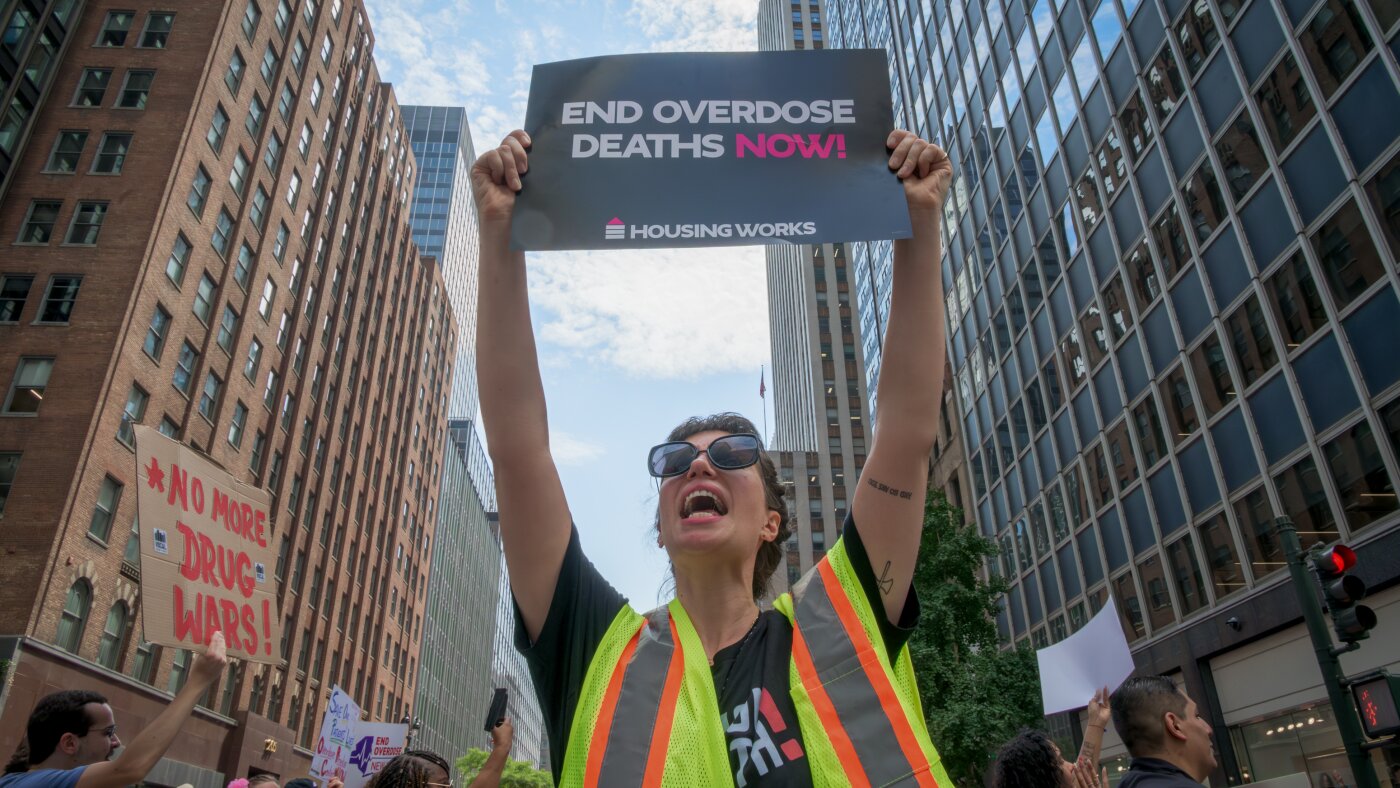
Trump administration sends letter wiping out addiction, mental health grants

Video: Clashes With Federal Agents in Minneapolis Escalate

Venezuela releases multiple American citizens from prison following military operation
-

 Montana4 days ago
Service door of Crans-Montana bar where 40 died in fire was locked from inside, owner says
-

 Technology1 week ago
Power bank feature creep is out of control
-

 Delaware5 days ago
MERR responds to dead humpback whale washed up near Bethany Beach
-

 Dallas, TX6 days ago
Anti-ICE protest outside Dallas City Hall follows deadly shooting in Minneapolis
-

 Dallas, TX1 week ago
Defensive coordinator candidates who could improve Cowboys’ brutal secondary in 2026
-

 Virginia4 days ago
Virginia Tech gains commitment from ACC transfer QB
-

 Education1 week ago
Video: This Organizer Reclaims Counter Space
-

 Iowa1 week ago
Pat McAfee praises Audi Crooks, plays hype song for Iowa State star