World
Ireland looking to send asylum seekers back to UK: Report


UK Prime Minister Rishi Sunak says it’s evidence that his plan to send asylum seekers to Rwanda is acting as a deterrent.
The Republic of Ireland is looking to amend the law to allow the return of asylum seekers to the United Kingdom, according to broadcaster RTE, after an influx over the border with Northern Ireland, which is part of the UK.
Dublin’s Minister of Justice Helen McEntee, who will visit London on Monday, told a parliamentary committee this week that she estimates 80 percent of those applying for asylum in the republic came over the land border with Northern Ireland.
UK Prime Minister Rishi Sunak told Sky News it was evidence that London’s plan to send asylum seekers to Rwanda is acting as a deterrent.
“What it shows, I think, is that the deterrent is … already having an impact because people are worried about coming here,” he said.
In response, a spokesperson for Ireland’s Prime Minister Simon Harris said the leader “does not comment on the migration policies of any other country but he is very clear about the importance of protecting the integrity of the migration system in Ireland”, RTE reported.
“Ireland has a rules-based system that must always be applied firmly and fairly,” Harris also said.
The spokesperson added that the Irish PM had asked his justice minister “to bring proposals to cabinet next week to amend existing law regarding the designation of safe ‘third countries’ and allowing the return of inadmissible International Protection applicants to the UK”.
McEntee is expected to discuss a new returns policy when she meets British Home Secretary James Cleverly in London on Monday.
“That’s why I’m introducing fast processing, that’s why I’ll have emergency legislation at cabinet this week to make sure that we can effectively return people to the UK and that’s why I’ll be meeting with the home secretary to raise these issues on Monday,” she told RTE.
Ireland had previously designated the UK a “safe third country” to return asylum seekers to, but last month the Irish high court ruled that this breached European Union law, stopping the process.
The UK’s Rwanda bill cleared its final parliamentary hurdle last Monday after a marathon tussle between the upper and lower chambers of parliament.
Sunak hopes the bill will prevent asylum seekers from trying to enter the UK on small boats over the English Channel from northern Europe.



NEWYou can now listen to Fox News articles!
President Donald Trump spoke with British Prime Minister Keir Starmer on Sunday to discuss escalating tensions in the Middle East, with a focus on the urgent need to reopen the Strait of Hormuz and restore global shipping.
The leaders discussed the current situation in the Middle East, and in particular, the need to reopen the Strait of Hormuz to resume global shipping, Downing Street said in a statement.
STEALTH BOMBERS LANDING AT UK BASES ‘IN DAYS’ AFTER TRUMP PRESSURES STARMER: REPORT
Keir Stamer, UK prime minister, during a news conference providing an update on the situation in the Middle East, at Downing Street in London, UK, on Thursday, March 5, 2026. (Tolga Akmen/EPA/Bloomberg via Getty Images)
“They agreed that reopening the Strait of Hormuz was essential to ensure stability in the global energy market. They agreed to speak again soon.”
The call came amid a rapidly intensifying conflict in the region, with Iran blocking the strategically vital strait since the United States and Israel launched coordinated strikes against Iranian targets on Feb. 28.
The military action triggered swift retaliation from Tehran and has since escalated into a broader regional war as Iran has sent missiles into numerous neighboring countries not directly involved in the initial conflict.
UK NUCLEAR SUBMARINE DEPLOYED TO ARABIAN SEA BEFORE IRAN TARGETS KEY US-UK BASE: REPORTS
President Donald Trump takes questions from reporters during a meeting with Irish Prime Minister Micheál Martin in the Oval Office of the White House, on St. Patrick’s Day, Tuesday, March 17, 2026, in Washington. (AP Photo/Alex Brandon)
On March 21, Trump issued a 48-hour ultimatum to Iran demanding the reopening of the key maritime route, through which approximately 20% of the world’s oil supply passes.
In a post on Truth Social, Trump warned that failure to comply would result in further U.S. action, including potential strikes on Iran’s energy infrastructure.
EU PUSHES FOR END OF IRAN WAR IN A MANNER WHERE ‘EVERYBODY SAVES FACE’
Bulk Carrier, Belray, in the Gulf, near the Strait of Hormuz on March 22, 2026 in northern Ras al Khaimah, United Arab Emirates. (Getty Images/Getty Images)
Sunday’s conversation between Trump and Starmer perhaps reflected a thaw in the tense relationship between the two leaders.
Trump had publicly criticized the U.K. government, stating that Britain “should have acted a lot faster” in allowing the U.S. to use British military bases for strikes targeting Iranian missile sites.
Starmer had also maintained that the use of U.K. bases could only be justified under the principle of “collective self-defense” in the region.
He had initially declined to support the U.S.-Israeli military operation, drawing repeated criticism from the White House.
CLICK HERE TO DOWNLOAD THE FOX NEWS APP
Meanwhile, Trump appeared to apply public pressure, sharing a “Saturday Night Live” clip Sunday mocking the British prime minister’s handling of the crisis.

France’s municipal runoff delivered a mixed verdict for the country’s main political forces on Sunday: the Left held Paris with Socialist Emmanuel Grégoire, the far-right and its allies scored a major symbolic win in Nice, and mainstream parties pointed to resilience in several big and mid-sized cities ahead of the 2027 presidential race.
ADVERTISEMENT

ADVERTISEMENT
Municipal elections in France are local contests to elect mayors and local councils, but they are closely watched because they test party organisation, alliance-building, and grassroots strength before national campaigns begin.
In the capital, Socialist Emmanuel Grégoire defeated conservative rival Rachida Dati, ensuring Paris remains under left-wing control after outgoing mayor Anne Hidalgo chose not to seek another term.
The result extends a quarter-century of left-led rule of the capital and hands to the Socialists one of the most visible prizes of the night. Grégoire presented the result as a mandate for a progressive vision of the city.
Elsewhere, the left also had reasons to celebrate. In Marseille, Socialist incumbent Benoît Payan was re-elected after the far right had hoped to seize France’s second-largest city.
While in Lyon, Green mayor Grégory Doucet held on after a hard-fought race against his conservative rival, which was reshaped by a last-minute merger with the list of hard-left party France Unbowed.
Socialists record strong showing
The Socialists also held or performed strongly in several regional cities, reinforcing the impression of a broader recovery for the traditional left.
For the far right, the picture was more complex. National Rally (RN) leader Jordan Bardella hailed what he called the party’s biggest local breakthrough, and RN kept the southwestern city of Perpignan while also winning smaller municipalities.
But the party fell short in several of the larger cities it had targeted, notably Marseille, Toulon and Nîmes. The exception was Nice, where Éric Ciotti — once a senior figure in the mainstream right and now allied with RN — won the race, giving the far right and its partners control of France’s fifth-largest city.
The elections also brought clearer signs of fragmentation on the centre-right and in President Emmanuel Macron’s camp.
Former prime minister Édouard Philippe was re-elected in Le Havre, strengthening his standing as a possible 2027 contender, while Macron’s centrist forces could point to a symbolic win in Bordeaux, where Renaissance candidate Thomas Cazenave defeated outgoing Green mayor Pierre Hurmic.
At the same time, the loss of Macron’s former PM, François Bayrou, in southwestern Pau, underlined the vulnerabilities of the broader presidential alliance.
Turnout remained a concern. According to the Interior Ministry, participation in mainland France stood at 48.1% at 5 p.m., higher than the Covid-disrupted 2020 election but still below pre-pandemic levels.
Taken together, the results do not predict who will succeed Macron in 2027. But they do sketch the political landscape from which that contest will emerge: a left that can still win major cities, a mainstream right that remains locally entrenched, a centre searching for durable footholds, and a far right that is growing but may still face limits in the country’s biggest urban battlegrounds.
President Trump said that he would “obliterate” Iran’s electricity plants if it did not open the Strait of Hormuz within 48 hours. Iran dismissed the ultimatum as its missiles hit southern Israel, including near the country’s main nuclear research center.

Trump, Starmer agree Strait of Hormuz must reopen as Middle East conflict escalates

As cattle herds shrink and beef prices rise, investors back AI cow collars

Family pleads for help as teen faces life-threatening bone marrow failure

World Cup teams finalize US base camps as host cities prepare for global crowds

Amazon Health AI brings a doctor to your pocket

Florida High School Football Rankings: Top 25 teams – Oct. 21

How old is Bo Nix? What to know about Oregon quarterback ahead of 2024 NFL Draft

Cleary's 21 help Le Moyne down Central Connecticut State 69-64 in OT

99th annual Pony Swim held in Virginia

Indiana Members Credit Union announced as new anchor tenant at Bottleworks District
As cattle herds shrink and beef prices rise, investors back AI cow collars

French elections: Paris stays left as far right makes mixed gains

ICE officers set to deploy to airports as delays mount, border czar Homan confirms

Video: ICE Agents Will Be Deployed to U.S. Airports, White House Confirms

Schumer knocks Trump on Iran, plan to send ICE to airports: ‘Asking for trouble’
-

 Detroit, MI4 days ago
Drummer Brian Pastoria, longtime Detroit music advocate, dies at 68
-

 Oklahoma1 week ago
Family rallies around Oklahoma father after head-on crash
-

 Nebraska1 week ago
Wildfire forces immediate evacuation order for Farnam residents
-

 Georgia7 days ago
How ICE plans for a detention warehouse pushed a Georgia town to fight back | CNN Politics
-

 Alaska1 week ago
Police looking for man considered ‘armed and dangerous’
-
 Science1 week ago
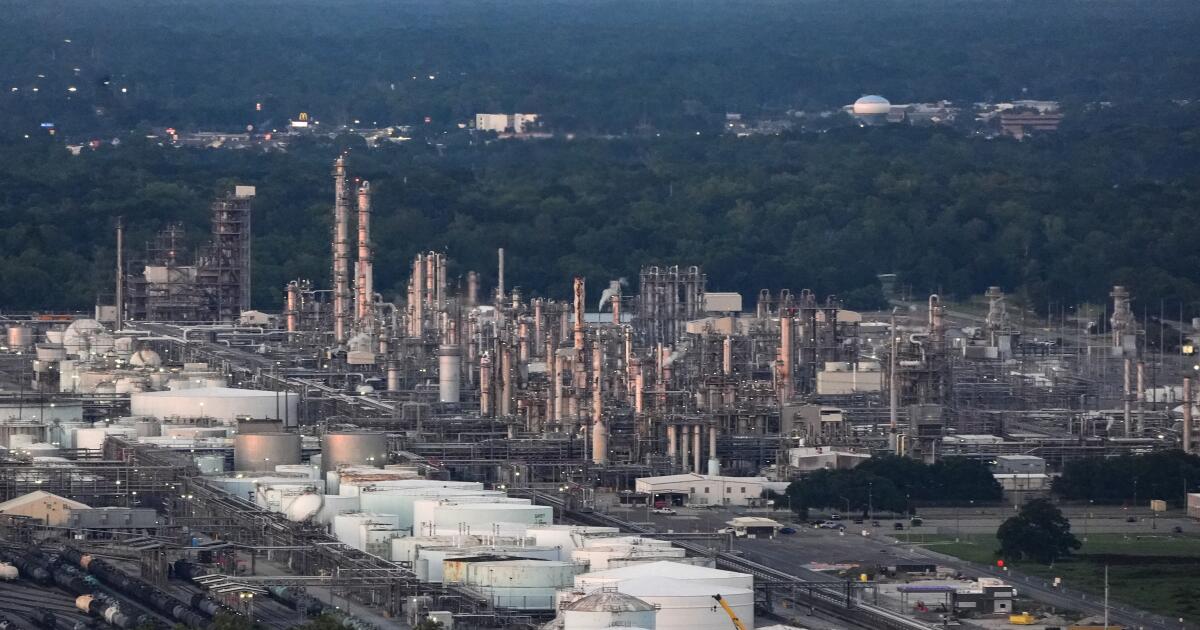
Federal EPA moves to roll back recent limits on ethylene oxide, a carcinogen
-

 Movie Reviews4 days ago
‘Youth’ Twitter review: Ken Karunaas impresses audiences; Suraj Venjaramoodu adds charm; music wins praise | – The Times of India
-

 World1 week ago
Thousands march worldwide in solidarity with Palestine, Iran on al-Quds Day