World
Iran rebuilding nuclear program despite Trump talks, opposition figure claims


NEWYou can now listen to Fox News articles!
Iran is rebuilding nuclear sites damaged in previous U.S. strikes and “preparing for war,” despite engaging in talks with the Trump administration, according to a prominent Iranian opposition figure.
Alireza Jafarzadeh, deputy director of the Washington office of the National Council of Resistance of Iran (NCRI), said newly released satellite images also prove the regime has accelerated its efforts to restore its “$2 trillion” uranium enrichment capabilities.
“The regime has clearly stepped up efforts to rebuild its uranium enrichment capabilities,” Jafarzadeh told Fox News Digital. “It is preparing itself for a possible war by trying to preserve its nuclear weapons program and ensure its protection.”
IRAN SAYS US MUST ‘PROVE THEY WANT TO DO A DEAL’ ON NUCLEAR TALKS IN GENEVA
Reconstruction activity appears to be underway at Iran’s Isfahan nuclear complex. (Planet Labs PBC/Handout via Reuters)
“That said, the ongoing rebuilding of Iran’s uranium enrichment capabilities is particularly alarming as the regime is now engaged in nuclear talks with the United States,” he added.
New satellite images released by Earth intelligence monitor Planet Labs show reconstruction activity appears to be underway at the Isfahan complex.
Isfahan is one of three Iranian uranium enrichment plants targeted in the U.S. military operation known as “Midnight Hammer.”
The June 22 operation involved coordinated Air Force and Navy strikes on the Fordow, Natanz and Isfahan facilities.
US POSITIONS AIRCRAFT CARRIERS, STRIKE PLATFORMS ACROSS MIDDLE EAST AS IRAN TALKS SHIFT TO OMAN
A satellite image shows tunnel entrances covered with soil at Isfahan nuclear complex. (Vantor/Handout via Reuters)
Despite the damage, the satellite images show Iran has buried entrances to a tunnel complex at the site, according to Reuters.
Similar steps were reportedly taken at the Natanz facility, which houses two additional enrichment plants.
“These efforts in Isfahan involve rebuilding its centrifuge program and other activities related to uranium enrichment,” Jafarzadeh said.
The renewed movements come as Iran participated in talks with the U.S. in Geneva.
On Thursday, President Donald Trump warned that “bad things” would happen if Iran did not make a deal.
While the talks were aimed at curbing Iran’s nuclear program in exchange for sanctions relief, Jafarzadeh argues that for the regime, talks would be nothing more than a tactical delay.
TRUMP SAYS IRAN ALREADY HAS US TERMS AS MILITARY STRIKE CLOCK TICKS
Iran Supreme Leader Ayatollah Ali Khamenei “agreed to the nuclear talks as it would give the regime crucial time to avoid or limit the consequences of confrontation with the West,” according to Jafarzadeh. ( Office of the Supreme Leader of Iran via Getty Images)
“Supreme Leader Ali Khamenei agreed to the nuclear talks as it would give the regime crucial time to avoid or limit the consequences of confrontation with the West,” he said.
Jafarzadeh also described the regime spending at least “$2 trillion” on nuclear capabilities, which he said “is higher than the entire oil revenue generated since the regime came to power in Iran in 1979.”
“Tehran is trying to salvage whatever has remained of its nuclear weapons program and quickly rebuild it,” he said. “It has heavily invested in the nuclear weapons program as a key tool for the survival of the regime.”
IRANIAN OFFICIAL SAYS NUCLEAR TALKS WILL CONTINUE AFTER US, TEHRAN NEGOTIATIONS HAD ‘A GOOD START’ IN OMAN
Satellite imagery taken on January 30, 2026, shows a new roof over a previously destroyed building at the Natanz nuclear site. (2026 PLANET LABS PBC/Handout via Reuters)
Jafarzadeh is best known for publicly revealing the existence of Iran’s Natanz nuclear site in 2002, which led to inspections by the International Atomic Energy Agency and intensified global scrutiny of Tehran’s nuclear ambitions.
“The insistence of the Iranian regime during the nuclear talks on maintaining its uranium enrichment capabilities, while rebuilding its damaged sites, is a clear indication that Supreme Leader Ali Khamenei has no plans to abandon its nuclear weapons program,” he said.
CLICK HERE TO DOWNLOAD THE FOX NEWS APP
The National Council of Resistance of Iran, led by Maryam Rajavi, exposed for the first time the nuclear sites in Natanz, Arak, Fordow and more than 100 other sites and projects, Jafarzadeh said, “despite a massive crackdown by the regime on this movement.”



World
Anyma Says He’s ‘Truly Devastated and Deeply Sorry’ Following Canceled Coachella Set: ‘I’m Working on a Solution’

Electronic musician Anyma is speaking out after his Coachella set was canceled due to severe weather condititions early Saturday morning.
“I’m heartbroken,” the DJ, whose real name is Matteo Milleri, wrote in a statement shared to his X account Saturday evening. “I don’t have many words other than to say I’m truly devastated and deeply sorry to everyone who showed up to the main stage, and to those watching the livestream at home. Having the opportunity to perform the new ÆDEN show and share all the new music and art means more to me than I can express. It’s incredibly painful, especially after working day and night for the past year, not just me, but my team and the @coachella crew, who poured everything into this.”
The statement continued: “Safety was and always will be our biggest concern. The dangerous winds not only prevented us and Coachella from building our stage, but also made it impossible for my entire live setup and performance to operate safely.”
While he noted there are no other slots available for him to perform during Coachella weekend 1, Milleri wrote that he is “working on a solution to bring you some music at least,” but doesn’t want to “impose on the other artists’ slots.” “Updates soon,” he concluded.
Anyma was set to perform following Sabrina Carpenter’s headlining set on Day 1 of the festival, but the weather made it unfeasible. Attendees were notified at 12:17 a.m. of this “schedule update” with a statement posted online and sent as a push notification via the Coachella app.
“Due to strong wind conditions affecting Anyma’s stage build, he is unable to perform,” the statement read. “Coachella & Anyma have made this decision together with your safety as the priority. Further updates to come.”
Winds had gusted as high as 35-40 mph in Indio during the day Friday, and there were reports of tents being toppled in the campground area at Coachella. Weather reports for the area on Sunday, the closing day of the festival, show winds predicted at 10-20 mph, although the possibility for gusts again exists.
Even if Anyma is shut out of appearing at Coachella this weekend, he is still on the agenda for the same slot during weekend 2, this coming Friday night.
Anyma first gained popularity as one-half of the EDM duo Tale of Us.
World
Pope Leo calls out ‘delusion of omnipotence’ fueling Iran war in vigil for peace at St. Peter’s Basilica

NEWYou can now listen to Fox News articles!
Pope Leo in a Saturday vigil for peace, called out the “delusion of omnipotence” he claimed is fueling war.
“In prayer, our limited human possibilities are joined to the infinite possibilities of God. Thoughts, words and deeds then break the demonic cycle of evil and are placed at the service of the Kingdom of God,” he said in a prayer service at St. Peter’s Basilica.
He continued, “A Kingdom in which there is no sword, no drone, no vengeance, no trivialization of evil, no unjust profit, but only dignity, understanding and forgiveness. It is here that we find a bulwark against that delusion of omnipotence that surrounds us and is becoming increasingly unpredictable and aggressive.”
In posts on X and during the prayer vigil, the pontiff also warned that war “divides” while hope and faith unite humanity.
TRUMP’S LAST-MINUTE DELAY: WHY HE WAS NEVER GOING TO OBLITERATE IRAN IN THE FIRST PLACE
Pope Leo XIV leads a vigil for peace inside St. Peter’s Basilica at the Vatican on Saturday. (Gregorio Borgia/AP Photo)
“Enough of the idolatry of self and money. Enough of the display of power. Enough of war,” he wrote. “True strength is shown in serving life.”
The archbishop of Tehran, Belgian Cardinal Dominique Joseph Mathieu, was among those in the pews.
Leo’s words came on the same day Vice President JD Vance and a U.S. delegation began face-to-face talks with Iran amid an uneasy ceasefire.
MIKE PENCE WARNS JD VANCE TO AVOID OBAMA-STYLE IRAN DEAL AS NUCLEAR TALKS SET TO BEGIN IN PAKISTAN
They were some of the first American pontiff’s strongest words yet after he called President Donald Trump’s threat against Iran on Tuesday “truly unacceptable.”
“Today, as we all know, there has also been this threat against the entire people of Iran, and this is truly unacceptable,” the pope said earlier this week. “There are certainly issues of international law here, but even more so a moral issue for the good of the whole entire population.”
Pope Leo XIV speaks to the media on the U.S.–Israeli conflict with Iran, as he leaves the papal residence to head back to the Vatican, April 7, in Castel Gandolfo, Italy. (Guglielmo Mangiapane/Reuters)
Trump had written on Truth Social “A whole civilization will die tonight, never to be brought back again. I don’t want that to happen, but it probably will… God Bless the Great People of Iran!”
Hours later, the president announced a two-week ceasefire subject to Iran agreeing to “the COMPLETE, IMMEDIATE, and SAFE OPENING of the Strait of Hormuz,” the president wrote in another post.
As the high-stakes talks began on Saturday in Islamabad, Trump told reporters outside the White House: “We win regardless of what happens. Maybe they make a deal, maybe they don’t.”
Islamabad hosted peace talks between Iran and the U.S. on Saturday. (Farooq Naeem/AFP via Getty Images)
For more than a month, the pope limited his remarks to muted appeals for peace, but in his Easter blessing last Sunday, he urged “those with weapons lay them down. Let those who have the power to unleash wars choose peace.”
CLICK HERE TO DOWNLOAD THE FOX NEWS APP
Leo also invoked what he said were the final words that Pope Francis issued to the world from the same balcony one year ago, during which the late pontiff warned of a “globalization of indifference.”
“What a great thirst for death, for killing we witness each day in the many conflicts raging in different parts of the world,” Leo said, quoting Francis.
Fox News’ Jasmine Baehr and The Associated Press contributed to this report.

Published on
Pope Leo XIV did not hold back on Saturday as he denounced the “delusion of omnipotence” that is powering the US-Israel war on Iran and urges political leaders to stop and engage in peace processes. All while, the US and Iran entered peace negotiations in Pakistan.
ADVERTISEMENT

ADVERTISEMENT
During an evening prayer in St. Peter’s Basilica Pope Leo XIV did not mention the US nor did he mention US President Donald Trump, however, his tone and message appeared directed at US officials and Trump, who have bragged of their military superiority and justified the war using religion.
“Enough of the idolatry of self and money!” Leo said. “Enough of the display of power! Enough of war!”
The US Military Religious Freedom Foundation (MRFF) announced on 3 March 2026 that it had received more than 200 complaints from military personnel from various branches of the armed forces – including the Marines, Air Force and Space Force – accusing their commanders of using extremist Christian rhetoric to justify war against Iran.
Among those in the basilica was the archbishop of Tehran, Dominique Joseph Mathieu. The United States was represented by Laura Hochla, the deputy chief of mission, the US Embassy said.
US-born Pope Leo XIV had initially been reluctant about openly criticising the war, however, he stepped up his criticism starting on Palm Sunday. Earlier this week, he condemned Trump’s threats to annihilate Iranian civilisation calling them “truly unacceptable” and pushed for dialogue to be prioritised.
On Saturday, the pontiff called for all people of good will to pray for peace and demand an end to war from their political leaders.
Praying for peace, Pope Leo XIV said, was a way to “break the demonic cycle of evil” to build instead the Kingdom of God where there are no swords, drones or “unjust profit.”
“It is here that we find a bulwark against that delusion of omnipotence that surrounds us and is becoming increasingly unpredictable and aggressive,” he said. “Even the holy Name of God, the God of life, is being dragged into discourses of death.”
Leaders have used religion to defend their actions in the war. US officials, especially Defence Secretary Pete Hegseth, have spoken about their Christian faith and described the United States as a Christian nation fighting its enemies.
Leo has said that God does not support any war, especially wars where bombs are dropped.
The Vatican is especially worried about Israel’s war with Hezbollah which is spreading into Lebanon, where Christian communities in the south are already suffering.

Steelers Latest DK Metcalf Trade Projection is Bold to Say the Least

Week Ahead in Washington: April 12

Washington Wizards vs Cleveland Cavaliers Live Stream: How to Watch NBA

Austin weather: Flash flood warnings issued for parts of Central Texas

Deputies: Alabama teen arrested for threatening to kill student in Walton County

Florida High School Football Rankings: Top 25 teams – Oct. 21

How old is Bo Nix? What to know about Oregon quarterback ahead of 2024 NFL Draft

Cleary's 21 help Le Moyne down Central Connecticut State 69-64 in OT

99th annual Pony Swim held in Virginia

Indiana Members Credit Union announced as new anchor tenant at Bottleworks District

Carney casts himself as NATO defender amid Trump beef, despite Canada missing key benchmark for decades

‘Enough of war!’ says Pope Leo XIV who grows increasingly frustrated
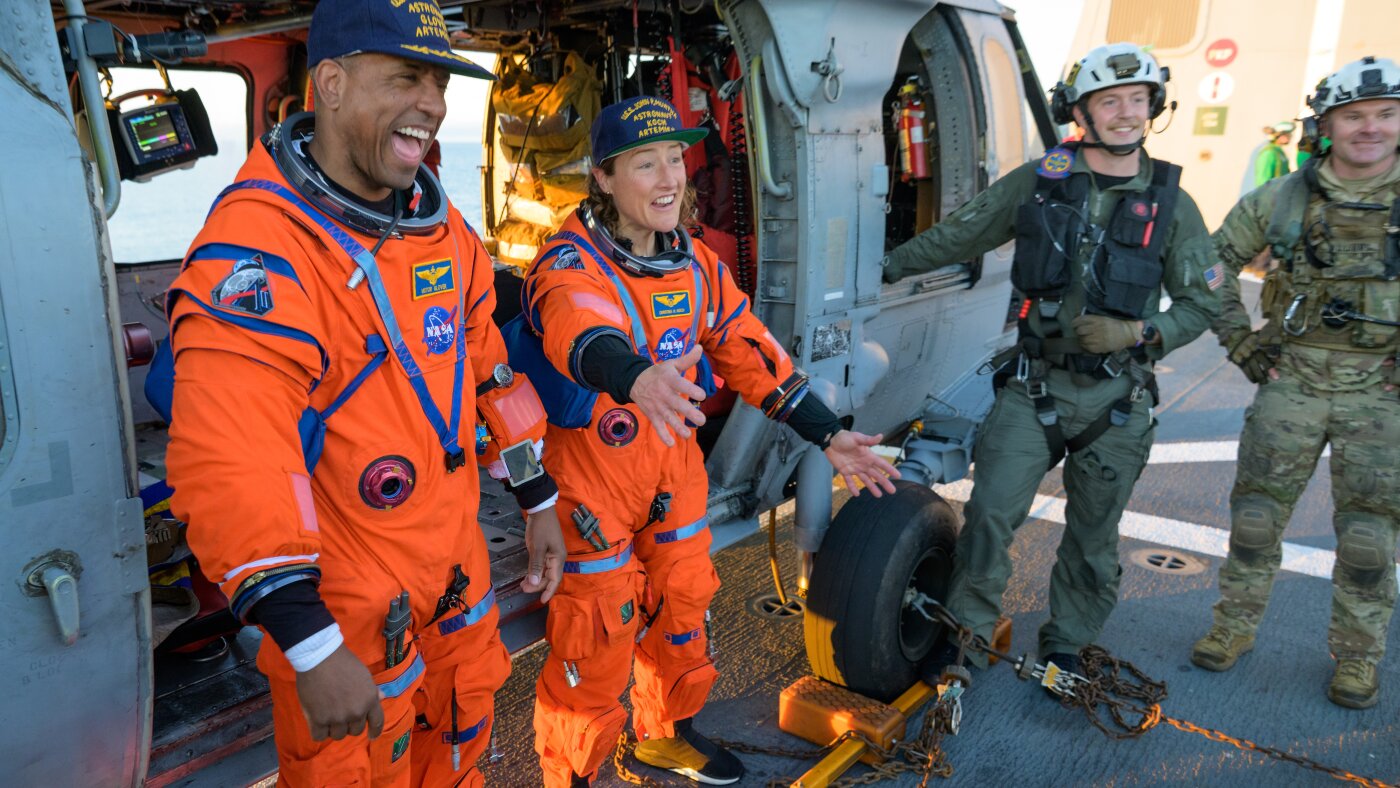
Artemis II splashdown captures nationwide attention

Video: Police Fatally Shoot Man After Stabbings at Grand Central Subway Station

Trump blasts Spanberger ahead of Virginia meetings, says state faces tax base exodus like New York, California
-

 Atlanta, GA1 week ago
1 teenage girl killed, another injured in shooting at Piedmont Park, police say
-

 Georgia5 days ago
Georgia House Special Runoff Election 2026 Live Results
-

 Pennsylvania6 days ago
Parents charged after toddler injured by wolf at Pennsylvania zoo
-

 Arkansas2 days ago
Arkansas TV meteorologist Melinda Mayo retires after nearly four decades on air
-
 Milwaukee, WI6 days ago
Potawatomi Casino Hotel evacuated after fire breaks out in rooftop HVAC system
-

 Indianapolis, IN1 week ago
Fighting Illini begin Final Four preparations in Indianapolis
-

 Technology1 week ago
Anthropic essentially bans OpenClaw from Claude by making subscribers pay extra
-

 Austin, TX5 days ago
ABC Kite Fest Returns to Austin for Annual Celebration – Austin Today