World
Habeck: Climate protection can fail from incompetence, unwillingness


On Tuesday, the Greens helped push a multi-billion euro financial package through parliament, partly aimed at boosting climate protection. Euronews spoke with Vice Chancellor and Federal Minister for Economic Affairs Robert Habeck about climate and Europe.
Germany’s parliament on Tuesday passed a historic bill unlocking a record level of state borrowing for defence and infrastructure through amending the country’s constitutionally enshrined fiscal rules.
The Greens were originally reluctant to offer their support of the bill until they received guarantees last week that €100 billion of the special fund would be directed to supporting climate economic transformation measures.
After the vote, Foreign Minister Annalena Baerbock stressed the close connection between climate protection, energy policy, and security at the Berlin Energy Transition Dialogue (BETD).
“This is a strong and powerful signal, also to our friends in Europe and the world. Germany stands ready to face the epochal challenges posed by the security and climate crises with full force,” she said.
“This €100 billion for climate action is a direct investment in our future and thus also in our prosperity and security. To be clear: climate policy is security policy.”
Outgoing Vice Chancellor and Federal Minister for Economic Affairs and Climate Protection, Robert Habeck, warned that it was now up to politicians to implement the special fund.
“Climate protection in Germany will no longer fail due to money. It can only fail due to inability or unwillingness,” he said.
Although climate change was still a prominent topic at last year’s Munich Security Conference, current geopolitical conflicts have pushed the issue off the political agenda. In snap federal elections in Germany in February, climate change was only a marginal topic.
At the BETD, Habeck told Euronews it was important to put the climate crisis back on the political agenda.
“The lessons are all there. The Berlin Energy Transition Dialogue has expanded on this once again. Security, prices, climate neutrality – everything speaks in favour of bringing this issue forward now and building on the success,” he said.
“We need politicians who continually explain (this issue) to the people, to the public. And we also need these people in the media, who continually ask the right questions.”
In their criticism of the first draft of the financial package, the Greens initially accused the SPD and CDU of wanting to use the package to finance their election promises.
The Greens complained that the package lacked sufficient commitments to climate protection and only after talks with the SPD and the CDU/CSU was an agreement reached on allocating specific climate funds.
Democracy must be successful
When asked how the rise of right-wing and anti-democratic forces in Germany and Europe can be countered, Habeck explained that adopting the attitude of right-wing populism in a watered-down form is the wrong strategy.
Where this had already happened, populism and right-wing radicalism had always won – especially to the detriment of the conservative parties, which would be “eaten up.”
 ADVERTISEMENT
“That’s why the opposite is true,’ emphasised Habeck. “You have to focus on your own values and clearly explain what democracy, freedom of opinion and a diverse society offer in terms of added value and wealth. But it is not enough to simply proclaim these values. Democracy must also be successful and solve the pressing problems.”
Habeck referred to the recent reform of the debt brake by the German parliament and the increase in security and defence spending, which were already overdue.
“The traffic light coalition would certainly not have collapsed if the CDU/CSU had behaved as statesmanlike as my party did,” he added.
“But the traffic light government is perhaps not the decisive factor,” Habeck continued.
ADVERTISEMENT“The important thing is that we have simply lost years. People have become unemployed, companies have gone bankrupt. We have done too little, too late for Ukraine because the CDU/CSU did not take the step that we took yesterday as the upcoming opposition party. They will have to live with this guilt – for decades to come.”






Military analyst Elijah Magnier says the risk of escalation is extremely high as Iran responds to US and Israeli strikes on nuclear and energy facilities in a growing cycle of retaliation.
Published On 22 Mar 2026
World
‘Hamnet’ Spoofed in ‘SNL U.K.’ Sketch in Which Shakespeare Returns From London With Ketamine, ‘Team Anne Boleyn’ Tote and ‘C—y Little Earring’

A very different version of William Shakespeare showed up in the first episode of “SNL U.K,” appearing in a sketch that took comic aim at the biggest British film from this year’s awards season.
In “SNL U.K.’s” version of “Hamnet,” an increasingly Gen-Z hipster Bard returns home from staging plays in London to his doting wife (played by Tina Fey) and family.
“Dost thou not think I appear changed?” he asks on his first time back home. “I got a cunty little earring!”
Later returns to the family home see him on an electric scooter, brandishing a tote bag saying ‘Team Anne Boleyn,’ and proudly showing off “me slutty little chain.”
“London hath changed thee,” Fey’s Agnes Hathaway asserts.
“Thou art in Stratford upon Avon, and I’ve been in London upon ketamine,” says Shakespeare. “I’m like Charlie Xcx, sorry, Charlie 10 100 10. I’m in my glow up era, honey.”
In keeping with the plot of the film, Hamnet is seen falling ill, having “taken the powder” from a new purse. But as Shakespeare notes: “He’ll be fine. Tis but a K-hole.”
Following the “Hamnet” sketch, “SNL U.K.” poked fun at another beloved British institution in a skit in which a Paddington Bear immersive experience sees an actual bear let loose upon guests.
“That was amazing. I’ve lost half my face,” says one. “I always thought that three kids was a bit too many, and now I’ve got the optimum amount … none!,” adds another.
“In retrospect, maybe hot glue-gunning the hat to the bear’s head may have made it more angry,” explains Fay’s experience organiser. “I’m taking it to Broadway regardless”
Studiocanal, which has the rights to Paddington Bear and has its very own Paddington experience in London, has already sued the makers of comedy show “Spitting Image” over their depiction of the bear as a drug-taking, foul-mouthed podcast host. It’ll be interesting to see what they make of this one.
World
Trump proven right on Iran’s long-range missile capability as regime targets US-UK base, experts say

Iran fires missiles toward US-UK military base
Fox News senior correspondent Mike Tobin reports on Iran launching missiles toward a joint U.S.-U.K. military base, while Netanyahu advisor Caroline Glick provides analysis on ‘Fox News Live.’
NEWYou can now listen to Fox News articles!
The Islamic Republic of Iran significantly escalated its war effort against the U.S. with its launch of two intermediate-range ballistic missiles on Friday toward Diego Garcia, a key U.S.-U.K. military base in the Indian Ocean.
The targeting of Diego Garcia, roughly 2,500 miles from Iran, means Tehran’s missile capabilities appear to have exceeded previously acknowledged limits.
In the period leading up to Operation Epic Fury Feb. 28, Iran Foreign Minister Abbas Araghchi claimed, “We intentionally kept the range of our missiles below 2,000 kilometers so we don’t have that capability. And we don’t want to do that because we do not have hostility against the United States people and all Europeans.”
TRUMP VOWS TO HIT IRAN ‘VERY HARD’ AFTER OBLITERATING NEARLY ’90 PERCENT’ OF REGIME MISSILES
Map from the Foundation for Defense of Democracies showing Iran’s missile ranges. (The Foundation for Defense of Democracies)
On Saturday, Israel Defense Forces Chief of Staff Lt. Gen. Eyal Zamir said, “Just yesterday, Iran launched a two-stage intercontinental ballistic missile with a range of 4,000 kilometers [2,500 miles] toward an American target on the island of Diego Garcia. These missiles were not intended to hit Israel. Their range reaches the capitals of Europe — Berlin, Paris and Rome are all within direct threat range.”
IDF spokesman Nadav Shoshani blasted the alleged Iranian deception on X, writing, “Just 3 days before the war, the Iranian regime said they don’t obtain long-range missiles. Today, their lies were exposed once again, when missiles were fired 4000km away from Iran. They hoped to lie their way into becoming a force that can terrorize the world. We didn’t buy it.”
Jason Brodsky, the policy director of United Against Nuclear Iran (UANI), told Fox News Digital, “The Trump administration, in citing Iran’s missile threat as a rationale for Operation Epic Fury, was therefore justified in its decision to undertake military action as Iran has consistently refused to negotiate over its missile program.
“It also shows how dangerous it is to solely rely on Iranian nuclear weapons fatwas and the supreme leader’s public rhetoric in formulating U.S. policy. As long as Iran retains the technical capability beyond public pronouncements, it is a threat.”
BEFORE-AND-AFTER SATELLITE IMAGERY OFFERS A RARE LOOK AT DAMAGE INSIDE IRAN
A banner depicting Iran’s former Supreme Leader Ayatollah Ali Khamenei is placed next to a ballistic missile in Baharestan Square in Tehran, Iran, Sept. 26, 2024, on the sideline of an exhibition marking the 44th anniversary of the start of Iran-Iraq war. (Hossein Beris /Middle East Images/AFP via Getty Images)
“I think it’s a message that the IRGC is in charge in Iran after Supreme Leader Ali Khamenei’s death,” Brodsky said. “When Khamenei was alive, he limited the range of Iran’s missile program to 2,000 kilometers. Khamenei recounted in 2018 how he had rejected overtures from IRGC commanders seeking to increase the range to as much as 5,000 kilometers.
“But now that he has died, those voices in the IRGC seeking to increase the range are likely driving the agenda. The launch of the missiles was likely meant as a signal of the IRGC’s capabilities to threaten U.S. allies beyond the Middle East. For example, this threatens Europe.”
The two long-range Iranian missiles did not hit the base, but the attempted attack marked a significant expansion of Iran’s reach beyond the Middle East and toward a major U.S. strategic hub. One missile reportedly failed in flight, while a U.S. warship launched an SM-3 interceptor at the other, officials said. It was not immediately clear whether the interception was successful. The remote base is a critical launch point for U.S. bombers, nuclear submarines and other strategic assets.
Ilan Berman, vice president of the American Foreign Policy Council in Washington, D.C., told Fox News Digital, “The launch hammers home the president’s point about Iran being an imminent threat. It’s easy for casual observers to ignore, but the increasing maturity of Iran’s strategic programs, plural, has been exponentially expanding the threat that the Islamic Republic poses beyond the Middle East.
“That is what Epic Fury is seeking to address. The administration believes, absolutely correctly in my view, that these types of capabilities cannot be left in the hands of a radical, predatory regime.
HEZBOLLAH, IRAN UNLEASH COORDINATED CLUSTER BOMB STRIKES ON ISRAEL IN MAJOR ESCALATION
Israeli air defense systems are activated to intercept Iranian missiles over the Israeli city of Tel Aviv amid a fresh barrage of Iranian rockets June 16, 2025. (Menahem Kahanna/AFP via Getty Images)
“Despite its public denials, it’s been clear that the Iranian regime has been working on expanding the range of its ballistic missile capabilities for years. The launch toward Diego Garcia confirms that it has made real progress toward that goal and is already able to put targets in the same range as Central and Eastern Europe at risk. Moreover, it’s clear that the regime is seeking still greater capabilities and that, if left intact, Iran’s ballistic missiles would attain intercontinental range soon.”
Berman, the author of “Iran’s Deadly Ambition: The Islamic Republic’s Quest for Global Power,” added, “The parallel development Iran has been carrying out on its space program is significant. The booster used to put payloads into orbit can be married onto a medium-range missile to create intercontinental range capabilities. Before the war, we were seeing a clear convergence of the regime’s strategic programs: its ballistic missile work, its space capabilities and its nuclear program.”
A U.S. B-2 Spirit bomber, part of the 509th Bomb Wing at Whiteman Air Force Base in Missouri, stops for refueling at the U.S. military base on Diego Garcia in October 2001 after an airstrike mission over Afghanistan in support of Operation Enduring Freedom. (U.S. Department of Defense/Senior Airman Rebeca M. Luquin)
He warned about the serious Iranian threat to continental Europe.
“Europe is absolutely at risk as the recent launch makes clear,” Berman said. “I wouldn’t say that a failure to recognize this to date has been due to a grand deception by Tehran, though. It is more attributable to willful blindness on the part of European elites about the extent of the threat that the Iranian regime poses as well as undue faith in diplomacy and arms control in containing it.”
On Saturday, the United Kingdom condemned the attack.
“Iran’s reckless attacks, lashing out across the region and holding hostage the Strait of Hormuz, are a threat to British interests and British allies,” the U.K. Ministry of Defense said in a statement. “RAF jets and other U.K. military assets are continuing to defend our people and personnel in the region.
CLICK HERE TO DOWNLOAD THE FOX NEWS APP
“This government has given permission to the U.S. to use British bases for specific and limited defensive operations.”
Fox News Digital’s Greg Norman and Jasmine Baehr contributed to this report.

The real reasons you’re still exhausted after 8 hours of sleep, according to an expert

Legendary sports agent Leigh Steinberg slams notion of overseas Super Bowl: ‘Convention of Americana’

YouTube job scam text: How to spot it fast
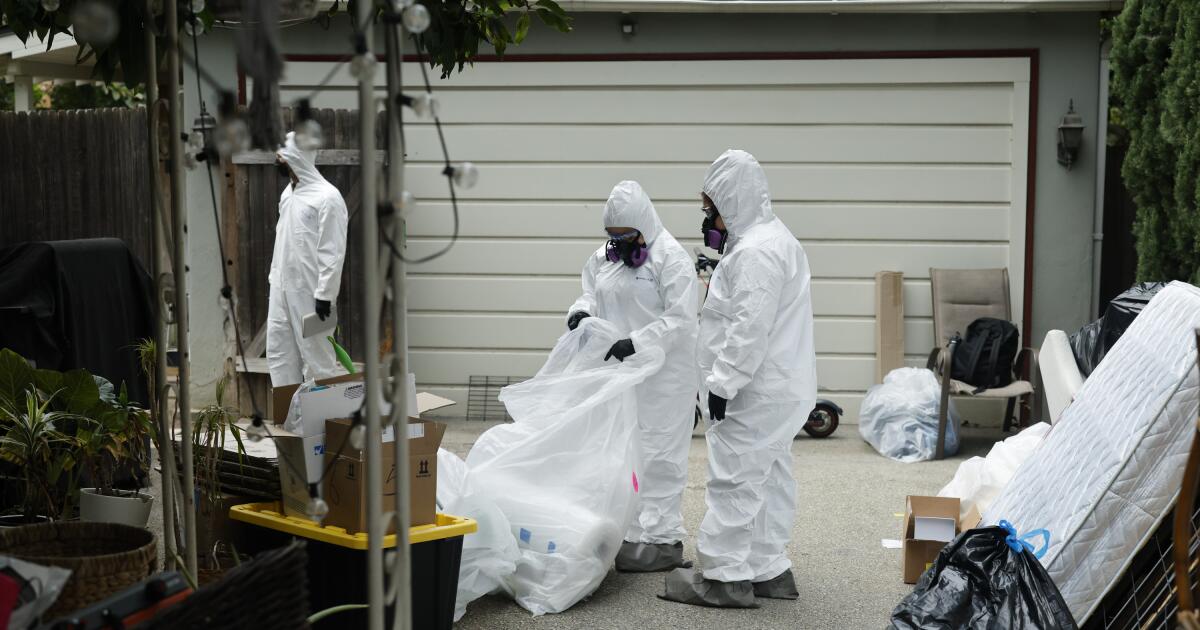
Testing for toxins in smoke-damaged homes could be mandatory. What to know

Review: After more than a decade, Lisa Kudrow and ‘The Comeback’ make a timely, final return

Florida High School Football Rankings: Top 25 teams – Oct. 21

How old is Bo Nix? What to know about Oregon quarterback ahead of 2024 NFL Draft

Cleary's 21 help Le Moyne down Central Connecticut State 69-64 in OT

99th annual Pony Swim held in Virginia

Indiana Members Credit Union announced as new anchor tenant at Bottleworks District

‘Risk of escalation is extremely high as Iran shows it can retaliate’

Immigration agents deploying to airports under border czar as TSA staffing falls short | CNN Politics

Video: Former F.B.I. Director Robert Mueller Dies at 81

Trump gives Iran 48-hour ultimatum to reopen Strait of Hormuz or face strikes on power plants

Macron pushes tougher EU digital action ahead of key votes
-

 Detroit, MI4 days ago
Drummer Brian Pastoria, longtime Detroit music advocate, dies at 68
-

 Oklahoma1 week ago
Family rallies around Oklahoma father after head-on crash
-

 Nebraska1 week ago
Wildfire forces immediate evacuation order for Farnam residents
-

 Georgia6 days ago
How ICE plans for a detention warehouse pushed a Georgia town to fight back | CNN Politics
-

 Alaska1 week ago
Police looking for man considered ‘armed and dangerous’
-
 Science1 week ago
Federal EPA moves to roll back recent limits on ethylene oxide, a carcinogen
-
 Science1 week ago
H5N1 bird flu spreads to sea otters and sea lions along San Mateo coast, wildlife experts say
-

 Movie Reviews3 days ago
‘Youth’ Twitter review: Ken Karunaas impresses audiences; Suraj Venjaramoodu adds charm; music wins praise | – The Times of India