Entertainment
Jessica Knoll’s new sexy thriller proves why she is the queen of dark beach reads


Bestselling author Jessica Knoll’s protagonists mostly follow a specific pattern: They are women who have learned Not. To. Flinch.
On the Shelf
Helpless
By Jessica Knoll
Scribner: 320 pages, $28
If you buy books linked on our site, The Times may earn a commission from Bookshop.org, whose fees support independent bookstores.
And, apparently, neither does Knoll. Talking over Zoom about her fourth novel, the erotic thriller “Helpless,” which is out this month, the author is blunt about the challenges it took to complete the book. “It takes a lot of skill to write good sex,” Knoll says. “I relied a lot on feedback from my editor and from my book agents saying ‘this is hot; this is not.’”
Knoll has written romantic scenes before, but “Helpless” needed to be enthralling and economic enough not to get her kicked off of Target’s bookshelves. In the end, the author says, “I went by what felt good and natural for these characters and maybe a little bit of the really unfiltered talk you have with your girlfriends after a couple martinis or are on a girls trip.”
Knoll’s successful career as a novelist rests on her knack for creating provocative page-turners that depict the absolute worst things one person could do to another — but in such a sensational, tongue-prickling-sour-candy kind of way that her books come off as devilishly evil beach reads. Since her debut bestseller, 2015’s “Luckiest Girl Alive,” — a master class in braided narration between a Machiavellian magazine editor and her younger self who endured so much emotional and physical trauma that it’s no wonder she grew up to be extremely calculating — to 2018’s reality TV-set “The Favorite Sister” and 2023’s “Bright Young Women,” a response to the public’s obsession with immortalizing serial killers while also not knowing the name of a single one of their victims. Knoll’s books are not only stories about women who do not care if you like them but also ones where disastrous results await the women who do follow our cultural conditioning to be agreeable to men.
Her “Helpless” heroine is not so different from a lot of her previous main characters: Type A overachievers with cutting inner monologues that let the reader know they’re always one step ahead in the social Darwinism that is female relationships. This time, she’s named Faye Heron, an Emmy-winning Hollywood multi-hyph who found cachet while working on one of those edgy premium dramedies that probably aired on HBO. Faye, and her husband/producing partner, have parlayed this notoriety into indie, cool-kid projects that are just commercial enough that some of the target audiences’ boomer parents may also watch.
When Faye’s beloved college professor dies suddenly and she’s asked to speak at a memorial ceremony, nostalgia and flattery make her drop everything and hightail it back to the leafy northeastern college town. The place is a time capsule with sketchy internet service, drunken frat boys, and — most crucially — Faye’s college boyfriend Henry, who is now married with two kids and still lives in the area. The clothing references and song choices are popcorn for those old enough to remember the aughts but young enough to party during them. The Elsa Peretti-designed Tiffany & Co. heart necklace that was the it-girl accessory of the time, and now is one that Gen Zers are fishing out of the bottoms of their parents’ jewelry boxes, factors significantly into the plot.
Although the story eventually spirals into other tropes of the Knoll-niverse — kidnappings, cover-ups, affairs, the laissez-faire security that only old money affords — Faye stands out because she wants to be told what to do. In a secure and mutually consenting relationship, of course. And preferably after she’s told her partner what she wants.
“Helpless” was influenced by the 1995 Susanna Moore thriller “In the Cut” as well as Sarah J. Maas’ currently uber-popular romantasy series “A Court of Thorns and Roses,” both of which discuss power imbalances and smart women who become enamored with dangerous lovers.
Knoll has always been open about creating work that’s commercial. She famously wrote a 2018 New York Times opinion piece, titled “I Want to Be Rich and I’m Not Sorry,” that discussed her need to rank in money with an almost Scrooge McDuck fervor: “Success, for me, is synonymous with making money,” she writes. “I want to write books, but I really want to sell books. I want advances that make my husband gasp and fat royalty checks twice a year. I want movie studios to pay me for option rights and I want the screenwriting comp to boot.”

(Evelyn Freja / For The Times)
During our Zoom, with the background carefully faded behind her wavy blond bob, she promises that she doesn’t just copy and paste her subjects and settings from what sells.
“I’m just always looking on what the spin is; like, what the timely take is on something that happens to capture my attention,” she continues, citing a habit she credits to her early career working in women’s magazines like Cosmopolitan and Self. She adds that “I just happen to be interested in, like, really dark s—.”
“Helpless,” Knoll stresses, is a work of fiction; even though fans may be looking to draw comparisons to her life since “Luckiest Girl” was heavily influenced by her own career and childhood. Like the book’s Faye, Knoll went to a private liberal arts college. She’s spent time in the Adirondacks with the wealthy families who vacation in bare-basics cabins on the land they own. And she has dealt with her share of studio executives. Unlike Faye, Knoll is happily married to her husband, financial technology executive Greg Cortese. They share a young daughter. Last year, the family moved back to New York after some time in Los Angeles.
She does relate to Faye’s wealth dynamics. Her “Helpless” heroine grew up middle class but now has reached the “made it” level of nervous cockiness that happens when you combine new money and fame; the dream of so many who move to L.A. Henry, Faye’s ex, and his family are so comfortable in their generational wealth that he was raised to wear the same, now-bleach-stained, chambray button-down he had in college than buy a new one because clothes aren’t sound investments.
Knoll says she doesn’t want “things to feel didactic,” but concedes that class divides offer a treasure trove of stories.
“I just find myself going back to, again and again, this idea of someone who is the outsider because they don’t have the pedigree of their peers, but however many years later they’ve accomplished something and they think that they’re on more equal footing with these people from their past,” Knoll says. “Then something happens that brings them back into this environment where maybe they felt less-than years ago. They think that they’re going to go back and be like, ‘well, I’ll show you now because I’ve made it’ and those feelings of inferiority are still there.”
As she’s grown older and her career has become more stable, Knoll says she doesn’t think about success and fame the same way she did when she wrote her viral opinion piece or gave interviews where she talked about money and her own financial security. She says now that her priority is “the longevity of the career.”
Like her heroines, no one tells Knoll what to do. Unless she gives the OK.
Friedlander is a pop culture and entertainment journalist based in Los Angeles who hates coffee but loves Coke Zero.


Olivia Wilde, Seth Rogen, Edward Norton and Penélope Cruz star in The Invite.
A24
hide caption
toggle caption
A24
The new comedy film The Invite centers on an unhappy married couple who host another couple — they live upstairs — for an uncomfortable, and revelatory, evening of dinner and charcuterie. The film’s screenwriters, Rashida Jones and Will McCormack, are actors who are also longtime writing and producing partners.
Jones and McCormack met decades ago, when McCormack’s sister (actor Mary McCormack) set them up on a date. It didn’t work out as a romantic pairing. Instead, it was the start of a long-running creative partnership.

“We’re really like brother and sister who dated briefly, which is not weird,” McCormack jokes. “I think we both knew right from the very beginning that we were connected and that we had to be in each other’s lives. And it took us a minute to sit down to write, but finally we did, and I’m so glad we did.”
Jones says she and McCormack share a voice: “The two of us have the same clip, the same rhythm, and we’re so different in so many ways, but we just kind of like fit like puzzle pieces conversationally very quickly, which is a wonderful thing to have with a writing partner.”
Inspired by the 2020 Spanish film The People Upstairs, The Invite takes place over the course of one night in a chicly appointed apartment in San Francisco. Two couples gather for dinner, and as the evening unfolds, the stories they’ve been telling themselves about their relationships and about themselves fall apart.
McCormack describes the film as a sex comedy that’s not really about sex. “It’s about wanting to be seen and heard and valued,” he says. “You live with someone for so long and it’s really hard.”
Jones says it’s no accident that their work tends to focus on relationships and middle age: “Selfishly, it’s great that we can channel the thing we’re most interested in, which is relationships, living with other people, being parents, losing parents, being alive, getting older, being middle-aged, looking straight down the barrel of the back half of life. All these things we got to bring to this script.”
Interview highlights

Will McCormack and Rashida Jones attend the Los Angeles premiere of The Invite on June 23, 2026.
Valerie Macon/AFP via Getty Images
hide caption
toggle caption
Valerie Macon/AFP via Getty Images
On their working relationship
Jones: We write separately. We write together. We’re in an open relationship as writers, a very healthy, open relationship. But when we come together, there’s a thing that happens.
McCormack: I think we always found the same things funny. … And I think also the same things sort of broke our hearts, and I think that we wanted to try to say something together. There were movies that appealed to us both, and there was a voice that we shared from the beginning. There was just an easy rapport.
On acting out the dialogue together as they’re writing it
Jones: Well, we act while we’re writing, but that’s our discovery process of dialogue because we’re lucky, we both started as actors and can do a good job with that. So often we act out the scenes and if it’s not working, it doesn’t feel right … that’s easy to fix.
On why they’re drawn to stories about heartache

McCormack: Life is really just a series of losses. It’s one loss and one heartbreak after another. When your little summer ends and you don’t want it to end, and then you get your heart broken, and then you have kids, and they’re gonna break your heart, and then your parents die and then [you] start to lose bone density. …
Those moments can actually be the funniest because they’re so raw. And it’s when we feel connected, right? Like, heartbreak is the thing that binds us. Like, no matter who you are or no matter where you are or no amount of how old you are, like you’re gonna go through heartache. … And to be able to dig into some of those moments with Rashida has just been such a gift, and I don’t take that for granted to be able to do that for a living.
On Quincy, her documentary about her dad, Quincy Jones, and experiencing anticipatory grief
Jones: I filmed for six years, and the second to last year of filming, he went into a diabetic coma, and we stopped filming, and luckily my brother filmed a little bit in the hospital because we were going to kind of show him what he had been through if and when he came out and we were so lucky he did come out at 82. … But having that moment where he was that close to death, and then deciding to put that in the film and show him overcoming that, I think was my way of sort of preparing for the inevitable, you know? And I was so lucky to have him for another nine years after that, but ultimately, I knew what was coming, and it was really a love letter to my dad, but also a way to hopefully reach out to other people and say, listen, we’re all going to go through this and we want to be honest about what it’s like for our family to come to the other side of this.

My dad is obviously an icon and a culture shifter, and he had been documented a lot before. And what I felt like people missed, because he’s so successful at what he did, was they missed his personality. They missed the personal side of him, which is a very important part to why he was successful. It’s not just his talent and his hard work, but he had this gift with people. And he had a way of relating and being honest and getting to the heart and the honesty of something and the intimacy of something so fast with a stranger, with his kids, with the people who loved him, the people didn’t know him. And I really wanted that to be on screen.
On what they bring out in each other
Jones: Will is like my closest chosen family in a way. … I don’t wanna get emotional, but I feel like Will, and I see the child versions of ourselves and can really take care of that little kid in each other, because we’re both very hard on ourselves. … We sort of like, very kind of gently, love and respect each other and give each other the benefit of the doubt that we might not give ourselves. And then, I think, born of that is this sort of thing that lives in the intersection between pain and humor, and maybe hopefully something divine, like hopefully we leave some room, as my dad always said, “for God to walk in the door,” because that’s really our job ultimately is to channel. And so hopefully there’s something about us coming together that allows that to happen.
McCormack: I don’t want to get emotional either, but what she said.
Ann Marie Baldonado and Susan Nyakundi produced and edited this interview for broadcast. Bridget Bentz, Molly Seavy-Nesper and Meghan Sullivan adapted it for the web.

Way back in 2017 I reviewed a film called Demon Hunter (which was recently rereleased as Taryn Barker Demon Hunter), a moody character driven horror action hybrid that I enjoyed very much. After a very long wait, a sequel, Demon Hunter: Time 2 Kill, has finally been released in the world.
Read on for my thoughts on the film
Synopsis
Taryn Barker is just your average everyday monster slaying, wise-cracking, demon hunter on the hunt for two pieces of an ancient artifact, The Necrox. Standing in her way is Elysia Cronika, the CEO of Illumini Industries and a member of the Satanic sect The Stygian.
Cronika plans to obtain the Necrox to unleash Hell on Earth. The problem is Taryn is hard to kill and with every demon sent to eliminate the demon hunter getting wiped out, she gets closer to saving the day.
As a last resort, Cronika sends Taryn through time alongside a band of innocent teenagers to the year 1987 and now Taryn needs to protect the group from a notorious summer camp slasher Lucien Krull, whilst finding the Necrox and a way back home to the present
Demon Hunter: Time 2 Kill was written and directed by Zoe Kavanagh. The film stars Niamh Hogan, Lisa Wilcox, Angel Nichole Bradford, Kevin O’Malley, Anthony Cespedes, CJ Dorsey, Valeria Arango Gomez, Jada Krueger and Desiree Xu.
After all these years, it was nice to see Taryn Barker return. She’s a little less moody and more grown up and she has a stronger sense of humor. One thing that hasn’t changed is that she’s an absolute badass. I was really impressed with the increased action, fight scenes and stunt work. Niamh Hogan does a great job as Taryn. She kills it at the fight scenes, she’s got great comedic timing and she’s just genuinely fun to watch.
I was really happy to see Kevin O’Malley return as Ethan, as I felt he was one of the strongest characters in the first film and I really enjoyed his chemistry with Taryn. He’s given a lot more to do here and that was exciting. The cast includes a lot of new additions and there was definitely some highlights.

Angel Nichole Bradford (one of my absolute favorite indie actresses) plays Deborah, a character who shares a sisterly energy with Taryn. I loved the way they looked out for each other and always had each other’s back. Enea Pagni’s Jay and Jacob Rainer’s Lawrence were 2 characters I was able to root for. I loved their friendship. Last but not least is Desiree Xu’s Azumi, a demonology expert who is also a ninja. She was definitely a badass and I loved seeing her work together with Ethan.
The story here is much different than the first film, including time travel and a strong slasher element, which I really enjoyed. It gave Demon Hunter: Time 2 Kill a unique feel and set it apart from the first film. Given the slasher elements, it’s much gorier than the original film, which is sure to please those who enjoy that sort of thing. I loved how the film ended and am curious to potentially see where the series could go from here.

Final Thoughts
Demon Hunter: Time 2 Kill is an excellent sequel that increases the action, has some well executed fight scenes and ups the body count. Demon Hunter: Time 2 Kill is supernatural slasher/action film that is well worth a checking out. Highly recommended.
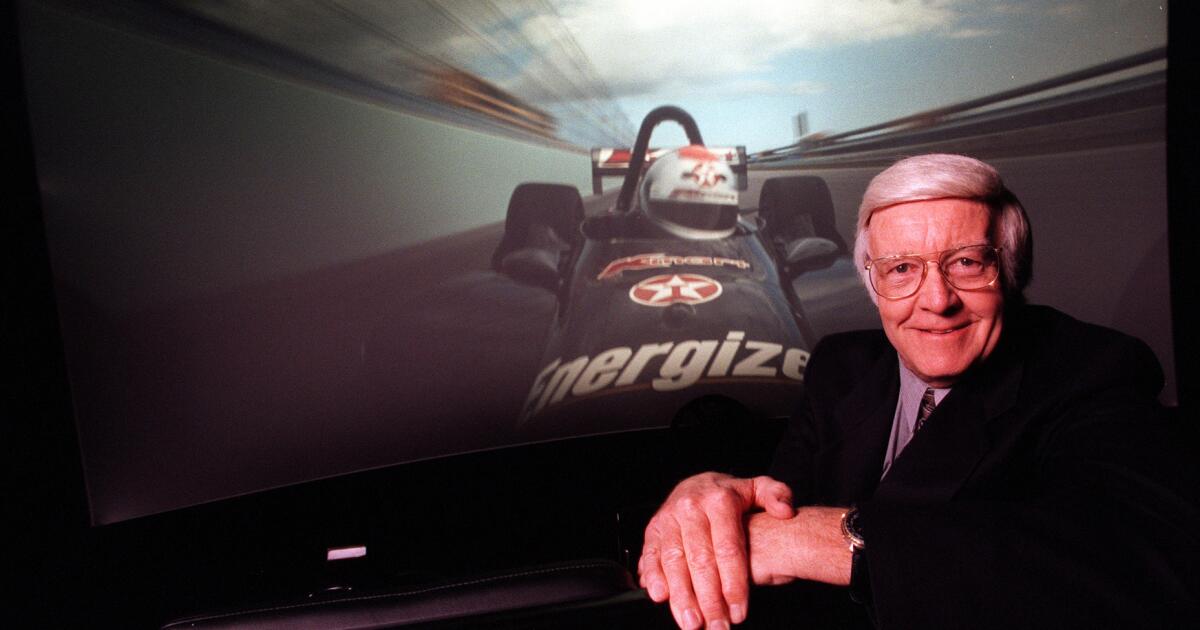
Don Iwerks, an Academy Award-winning special effects pioneer whose innovations transformed film and Disney theme parks, died peacefully Thursday at the age of 96, the Walt Disney Co. announced.
For Disney and his own studio, Iwerks Entertainment, Iwerks helped develop technologies and techniques like Circle-Vision, the 360-degree camera behind “America the Beautiful” and other early Disney attractions, and the 3-D effects used in attractions like Captain EO and the Star Tours ride.
“There was a ‘can-do’ attitude I learned from Walt and my father,” Iwerks said, according to a statement shared by the Disney Co. “Walt gave everyone a feeling that they were creating things that others had never thought of before, of being a part of history.”
Born July 24, 1929, Iwerks received his first camera at age 14 as a gift from his father, animator Ub Iwerks.
The elder Iwerks met fellow artist Walt Disney when both men were teenagers working at a Kansas City, Mo., art studio. They would go on to work together at the Disney Brothers Cartoon Studio, where Iwerks designed and animated “Plane Crazy,” the first Mickey Mouse cartoon.
After a stint at his own animation studio, Ub returned to Disney as a special effects engineer, pioneering techniques like the 360-degree motion-picture camera.
“He was absolutely my inspiration because he was technically minded. He made my childhood and formative years one of the greatest times of my life,” Don Iwerks told The Times in 1998.
The Iwerks family moved to the San Fernando Valley in 1936, where Don graduated from Van Nuys High School in 1947.
He served as a photographer in Germany during the Korean War and joined his father at Disney following his 1952 discharge from the U.S. Army. An allergic reaction to chemicals used to develop film led to his transfer to the company’s Studio Machine Shop, where he spent the next 34 years.
Don spent three months in the Bahamas manning underwater cameras for the 1954 Disney film “20,000 Leagues Under the Sea.” He then worked as the camera technician on “A Tour of the West,” an original Tomorrowland attraction at the soon-to-be opened Disneyland. The immersive 360-degree film was shot on the Circarama camera system his father invented.
Together, Don and Ub developed technologies like the “endless loop” system that enabled a single film print to run for up to 10,000 performances with minimal intervention and refinements to the photography processes used in “Mary Poppins” (his favorite of the Disney films) and other movies.
His own hands were used as the model for those of the Abraham Lincoln Audio-Animatronics figure in “Great Moments with Mr. Lincoln,” which opened at Disneyland in 1965. The “Iwerks Hands” now appear on similar figures at Disney parks around the world, according to his family.
In 1998, Don Iwerks received the Academy of Motion Pictures’ Gordon E. Sawyer Award for “technical contributions” that “brought credit to the industry.” In 1999, he received an Oscar for Scientific and Technical Achievement.
(Iwerks Family)
In 1986, he co-founded Iwerks Entertainment, which soon became a major player in the film and theme park industries. The company specialized in large-format films and created the 3-D projection system used in the Terminator rides at Universal Studios parks in Hollywood and Florida.
His innovations were honored with the Academy of Motion Picture Arts and Sciences’ honorary Gordon E. Sawyer Award and an Academy Scientific and Technical Award, among other prizes.
“It’s very obvious that computers are playing a big role in motion pictures today. The digital technology in film is able to put elements of scenes together on a film and have them look lifelike. It’s hard to know where that will go,” Iwerks said in a 1998 interview.
“My view is that technology should support a good story and add to it. Technology for technology’s sake?” he said with a shrug. “You still need good films.”
Iwerks is survived by his wife of 54 years, Betty; his sons, Larry and John; John’s wife, Chris; his daughter Leslie, and great-nephew,Mike, both of whom have also worked for Disney, according to an obituary shared by his family. His daughter Tamara preceded him in death.
“Like his father, he was a humble genius, a consummate problem solver, and delighted in sharing knowledge, encouraging others, and approaching every challenge with confidence and grace,” his family said in the statement from Conejo Mountain Funeral Home in Ventura.
Both Don and Ub Iwerks are commemorated in a storefront window on Main Street U.S.A. in Disney World’s Magic Kingdom. Located above the Main Street Bakery, the window is a lasting tribute to a family who made some of the park’s magic possible.
“Iwerks-Iwerks Stereoscopic Cameras,” the lettering reads. “No Two Exactly Alike.”
-

 New Jersey2 minutes ago
Heat wave to bring near 100 degree weather. When does NJ heat wave start
-

 North Carolina14 minutes ago
E. 4th Street in Washington to close July 14-15 for sewer line replacement
-

 North Dakota20 minutes ago
Carmen Tweeten
-

 Ohio26 minutes ago
Come Hang Out With Your Fellow Autopians In Detroit And Ohio Next Week – The Autopian
-

 Oklahoma32 minutes ago
OKFB pleased with newly proposed settlement in long-running State of Oklahoma poultry case | Oklahoma Farm Bureau
-

 Oregon38 minutes ago
Oregon joins multistate lawsuit seeking to block Warner Bros.-Paramount merger
-

 Pennsylvania44 minutes ago
Governor Josh Shapiro signs overdue Pennsylvania state budget with bipartisan support
-

 Rhode Island50 minutes ago
Rhode Island Foundation is offering three composers $30,000 grants — applications due Aug. 10 – What’s Up Newp

