World
European Left elects Walter Baier as top candidate for June elections


Baier, the current party chairman with little European experience, was the only contender. He was elected in a closed assembly in Slovenia.
The European Left on Saturday elected Austrian Walter Baier as their spitzenkandidat or pick to lead the European Commission following the elections in June.
Baier, 70, who hails from the Austrian communist party, has been the group’s president since December 2022 but had, until then, little experience in European politics.
He defended his lack of European credentials at the group’s meeting in Ljubljana, Slovenia, on Saturday, telling reporters that “frankly speaking, Europe is not just Brussels.”
“Europe is 27 nations and hundreds of cities and millions of citizens. The European Left wants to be the voice of these people, whose voices are rarely heard in Brussels,” he said.
Despite being the group’s spitzenkandidat, Baier is not on any national list and will therefore not run for an MEP seat.
The party’s assembly, which unlike the other groups was held behind closed doors, also served to agree on a manifesto for the European elections scheduled to be held on June 6-9.
The Left has set five priorities for the upcoming campaign: civil rights, peace and democracy, the cost of living, the climate crisis and public services and social rights.
A difficult road to the European Commission
The lead candidate system, also known as the Spitzenkandidaten process, allows European parties to choose their leader for the European elections. If the party secures the highest number of seats, the candidate then becomes the top contender for the European Commission president job.
The incumbent, Ursula von der Leyen, is currently the one to beat after she announced earlier this week her wish to run for her second term. She is expected to be formally endorsed as the centre-right European People’s Party (EPP) spitzenkandidat at the group’s conference in early March. The EPP is the biggest group in the hemicycle and is projected to remain so after the ballot.
The Greens have already picked Terry Reintke and Bas Eickhout as their leaders for the elections while the Social Democrats are expected to anoint Nicolas Schmit, the current European Commissioner for Employment and Social Rights, for the role at their meeting next week.
The Left’s chances of winning the leadership of the European Commission are very low.
The party is very divided going into the elections and although current projections by EU Elects, a poll aggregator, predict the group could up its number of seats from 37 to 42, a reshuffle of parties after the June plebiscite could actually see it lose of MEPs.
The newly created Spanish party Sumar, for instance, previously joined the ranks of the European Left-affiliated Podemos party but suggested recently that it could instead join the Greens.



Good morning from Brussels.
ADVERTISEMENT

ADVERTISEMENT
The two-week truce agreed by Washington and Tehran on Tuesday evening has left the world on edge.
A meeting between NATO Secretary-General Mark Rutte and US President Donald Trump in Washington overnight failed to ease pressure on the transatlantic alliance, after several NATO countries resisted Trump’s calls to help reopen the Strait of Hormuz over the last weeks.
After more than two hours at the White House, Rutte told CNN that Trump was “clearly” disappointed with many NATO allies, adding: “I can see his point.” The NATO chief said, however, that even if “some” allies had failed to meet their commitments in the Iran operation, “the large majority of Europeans” had been helpful.
In recent weeks, Trump has threatened to withdraw from the 32-member alliance.
“NATO WASN’T THERE WHEN WE NEEDED THEM, AND THEY WON’T BE THERE IF WE NEED THEM AGAIN,” Trump posted on Truth Social overnight after meeting Rutte.
Speaking to Europe Today, former US ambassador to NATO Ivo Daalder said threats by Trump to pull out of NATO, alongside disputes with European allies over their reluctance to participate in the Iran war, have triggered the “worst crisis” the alliance has ever experienced.
“The last six weeks have been extraordinarily damaging to NATO,” he said, adding: “We see a divided NATO, which has been the goal of first the Soviet Union and then Russia for the better part of 80 years.” Watch.
Meanwhile, the terms of the agreement between the US and Iran remain contested by both sides, with Lebanon’s fate still unclear after Israel carried out a new wave of heavy strikes in the country of the cedars, killing 182 and injuring 890, according to the Lebanese health ministry.
In a call on Wednesday evening with French President Emmanuel Macron, Iranian President Massoud Pezeshkian stressed the need for a ceasefire in Lebanon, calling it a key condition of Iran’s ten-point plan.
But US Vice President J.D. Vance earlier denied Lebanon was included in the deal, saying the US position focused on Iran and its allies, including Israel and the Gulf Arab states. Macron, who also spoke with Trump, expressed hope Lebanon would be part of the agreement.
Vance will lead a US delegation to Pakistan for talks with Iran starting Saturday.
Israeli bombings in Lebanon amid the regional ceasefire sparked sharp international reactions. UN High Commissioner for Human Rights Volker Türk said the scale of the killing and destruction was “nothing short of horrific,” adding that “such carnage, within hours of agreeing to a ceasefire with Iran, defies belief.”
European leaders also reacted. Belgian Foreign Minister Maxime Prévot was at the Belgian embassy in Beirut a few hundred meters from where missiles struck.”This must stop,” he wrote on X saying the ceasefire must include Lebanon.
Spanish Prime Minister Pedro Sánchez, a staunch opponent of the war in Iran, also said on X that Israeli Prime Minister Benjamin Netanyahu’s “contempt for life and international law is intolerable,” calling for the EU to suspend its Association Agreement with Israel.
Italian Foreign Minister Antonio Tajani, who spoke with Lebanese President Joseph Aoun, warned that Italy does not want “a second Gaza.” Tajani also summoned the Israeli ambassador to the Farnesina.
After US-Iran ceasefire deal, Europe faces tough questions
European leaders were quick to hail the ceasefire agreement between the United States and Iran as a “much-needed de-escalation”, as Ursula von der Leyen put it.
The breakthrough, however, leaves several major questions unanswered for Europeans, who have been largely sidelined from the diplomatic process, Jorge Liboreiro writes.
Chief among them is the Strait of Hormuz, which used to carry a fifth of the world’s oil and gas supplies before the war erupted. Europeans have repeatedly voiced their readiness to help secure the waterway, but only after the hot phase of the conflict is over. Now, with the ceasefire deal on the table, they will be asked to make good on their promise. According to French President Emmanuel Macron, a group of about 15 countries is preparing to deploy a “strictly defensive mission” to the strait.
Tehran, however, has indicated it wants to retain tight control of Hormuz, and Donald Trump has floated a “joint venture” to charge vessels for transit, which Brussels considers unlawful.
Besides freedom of navigation, Europeans face the prospect of granting sanctions relief to Iran, which could be hard to stomach given Tehran’s support for Russia’s war on Ukraine. And there are serious concerns about Lebanon’s exclusion from the ceasefire deal.
Read Jorge’s full analysis.
Leaked audio reveals Szijjártó calling Lavrov ahead of crucial EU summit
Several Hungarian investigative news outlets revealed that Hungary’s Foreign Minister Péter Szijjártó called his Russian counterpart, Sergey Lavrov, in 2023 to brief him on a debate among EU leaders over whether to open accession talks with Ukraine at a key summit in Brussels.
“Sometimes good-willed direct blackmailing is the best option,” Lavrov said as Szijjártó stepped out of the meeting to call him, according to transcripts of the audio recording, which was leaked days before Hungary’s pivotal general election on Sunday.
The call took place before Orbán lifted his veto and stepped out of the leaders’ meeting for a coffee break, enabling the other 26 EU leaders to approve the start of Ukraine’s membership talks. Szijjártó remained in the room, continuing to observe the negotiations after Orbán left.
Sandor Zsiros has more.
If you have any questions about the Hungarian elections, drop them below this post on our social media. Sándor will reply with another video on Friday.
More from our newsrooms
Two French nationals return to France after four years in Iranian prisons. President Emmanuel Macron welcomed Cécile Kohler and Jacques Paris, two French citizens who arrived back in the French capital on Wednesday after nearly four years in detention in Iran on espionage charges.
Investigation reveals major global router breach by Russian GRU. After a major investigation in collaboration with international partners, the FBI has uncovered a large-scale operation by Russian hackers targeting data from governments, armed forces, and critical infrastructure.
We’re also keeping an eye on
– Valdis Dombrovskis, European Commissioner for the Economy, holds an exchange of views with MEPs from the European Parliament’s Committee on Economic and Monetary Affairs.
– Italy’s Prime Minister Giorgia Meloni addresses the Italian parliament.
That’s it for today. Remember to sign up to receive Europe Today in your inbox every weekday morning at 08.30.
World
‘The Pitt’ Actor Patrick Ball Cries While Revealing Show Got Him Out of $80,000 Worth of Debt: ‘I Thought I Was Gonna Die With It’

“The Pitt” actor Patrick Ball broke down in tears while speaking to Cultured magazine and revealed how the Emmy-winning HBO Max medical series helped him get out $80,000 worth of student loan debt. Ball stars on the show as Dr. Frank Langdon. “The Pitt” is currently airing its second season on the streamer.
“I paid off my student loans like three months into ‘The Pitt,’ and that was a really profound moment because I thought I was gonna die with it,” Ball said through tears. “It’s a huge burden to carry, and a lot of people carry it. I was $80,000 in debt and I had been through a series of failed relationships where my financial insecurity was a real problem. I had just thought that was going to be my life forever, and that is a really heavy thing to live with.”
Ball added, “Paying off those student loans and getting back to zero, I remember being like, ‘Man, if this show works, great. If it doesn’t work, they can’t take that away from me. I am out of debt.’ No take-backsies on that.”
Ball earned a Critics’ Choice Television Award nomination for best supporting actor in a drama series thanks to his performance on “The Pitt.” He won a SAG Award as part of the show’s ensemble cast, which is headlined by Emmy winner Noah Wyle. Prior to being cast in “The Pitt,” Ball was leaning towards a life outside of Hollywood all together.
“The financial outlook can be bleak. I was looking for an off-ramp,” Ball told the publication, noting his then-girlfriend’s dad was trying to convince him to join the FBI. He was later working four jobs when he moved to New York City.
“I was working at a coffee shop, I was working at a restaurant, I was working as a wardrobe assistant for ‘And Just Like That,’ I was doing these corporate coaching seminars,” he continued. “I don’t think I’ve told anybody this story, but I was doing these seminars where they’d bring me into Blackrock and Blackstone and Goldman Sachs, and they would want to teach these young administrators how to have difficult conversations, à la how to fire somebody. They would bring me in as an actor so that these administrators could get practice firing someone. So I have been fired more than anyone you’ve ever met, I promise you. I’ve been fired thousands of times. And then the call for ‘The Pitt’ came in and everything was different.”
Head over to Cultured’s website to read Ball’s profile in its entirety.

NEWYou can now listen to Fox News articles!
The United Kingdom’s only warship deployed to the eastern Mediterranean during the Iran conflict has been forced into port over a “technical” issue, abruptly sidelining a key piece of Britain’s regional military presence as pressure mounts on Prime Minister Keir Starmer’s handling of the crisis.
The docking of HMS Dragon — a Type 45 destroyer tasked with defending U.K. assets and projecting force near the conflict zone — weakens Britain’s visible military posture at a sensitive moment, as a fragile U.S.-brokered pause takes hold and criticism from Trump administration officials and conservative voices builds over delays and restrictions that they say damaged London’s credibility with allies.
HMS Dragon was facing issues with its “onboard water systems,” which impacted water provisions for sailors on board, The Daily Mail first reported.
MULTIPLE ALLIES DECLINE US CALLS FOR STRAIT OF HORMUZ SUPPORT AMID RISING MIDDLE EAST TENSIONS
British Prime Minister Keir Starmer discusses defense spending and naval capabilities, pictured alongside the Type 45 destroyer HMS Dragon (D35) featuring its distinctive red dragon bow art. (Justin Tallis/AFP via Getty Images; Phby Jaimi Joy-WPA Pool/Getty Images)
“HMS Dragon is undertaking a routine logistics stop and a short maintenance period in the Eastern Mediterranean, allowing the ship to take onboard provisions, optimise systems and conduct maintenance,” the Ministry of Defense said in a statement to the outlet.
The ministry said in a statement to the Daily Mail that if necessary the ship will be “able to sail at short notice.”
“The UK continues to maintain a robust and layered defensive presence in the Eastern Mediterranean, working in coordination with allies. This includes Typhoon and F-35 jets, Wildcat and Merlin helicopters, and advanced counter-drone and air defence systems.”
While the Iran war began on Feb. 28, the U.K. did not announce the deployment of HMS Dragon to protect its air bases in Cyprus until five days later. The announcement came a day after Iranian-backed militia group Hezbollah struck RAF Akrotiri, one of the United Kingdom’s air bases in Cyprus. HMS Dragon did not depart from Portsmouth, England, until March 10 — a week after Starmer’s announcement.
HEGSETH DECLARES ‘DECISIVE MILITARY VICTORY’ OVER IRAN
The Type 45 destroyer HMS Dragon is seen moored in the Royal Navy Dockyard on Oct. 28, 2024, in Portsmouth, England. Keir Starmer confirmed on March 3, 2026, that the HMS Dragon would be deployed in Cyprus. (Matt Cardy/Getty Images)
Trump and Starmer have been at odds since the conflict’s onset. While the United Kingdom has allowed the U.S. military to operate out of those bases, Starmer restricted the U.S. military from carrying out offensive missions from its bases. Trump compared Starmer’s approach to Iran to former United Kingdom Prime Minister Neville Chamberlain, who adopted an appeasement policy toward Nazi Germany during World War II.
During a press briefing, War Secretary Pete Hegseth on Wednesday called on “so-called allies,” referring to the United Kingdom, to “take notes” on what the U.S. and Israel accomplished.
Criticism of Starmer’s handling of Iran is also coming from United Kingdom Shadow Housing Secretary James Cleverly, a member of the Tory Party who is also a military reserve officer. Cleverly scrutinized Starmer’s decision to visit the Middle East after the ceasefire was brokered in an interview with GB News.
FARAGE SLAMS BRITISH PRIME MINISTER FOR ‘EXTRAORDINARY’ LACK OF SUPPORT FOR TRUMP’S IRAN STRIKES
“He was opposing the United States using their own aircraft from British bases. Then he was in favor of it. He delayed the decision to deploy British naval assets,” Cleverly said.
“He left British military personnel and our allies in the region not properly defended, and now he’s finally engaging properly with this situation,” Cleverly continued.
He claimed that Starmer’s conduct had cost the country “credibility on the world stage.”
President Donald Trump meets with British Prime Minister Keir Starmer on July 28, 2025, in Turnberry, Scotland. (Christopher Furlong/Getty Images)
“I know a lot of our friends and allies in the region and beyond are very disappointed in Britain’s response. And that is entirely because of decisions that Keir Starmer failed to make,” Cleverly said.
British journalist Patrick Chrysty, host of GB News, also criticized the United Kingdom’s efforts in the Iran war. He called Secretary of Defense John Healey a “bumbling idiot.”
“It took us a month to get HMS Dragon to Cyprus after Iranian-backed terror group Hezbollah attacked our military base there… And right as the world holds its breath, HMS Dragon has a fault with its fresh water supply. It’s gone to dock for repairs. It’s out of action. This is an abomination!”
CLICK HERE TO DOWNLOAD THE FOX NEWS APP
John Hemmings, director of the National Security Centre at the Henry Jackson Society, said in a statement to Fox News Digital that Starmer’s visit to the Gulf is his way of showing the United Kingdom is in support of Western allies’ efforts in Iran.
“UK Prime Minister Starmer’s trip to the Persian Gulf shows the pressure he is under to ‘fly the flag’ and it’s clear that he’s trying to use Britain’s traditional networks and connections amongst the Gulf Arabs. In some ways, the Starmer team’s behind-the-scenes mediation strengths were proven in the Hamas-Israel peace deal with Jonathan Powell leading,
“This time, Yvette Cooper at the FCDO has been in the lead, running a virtual meeting of over 40 countries to coordinate a response to Iran’s blockade in early April.”
Fox News Digital reached out to the U.K.’s Ministry of Defense for comment.
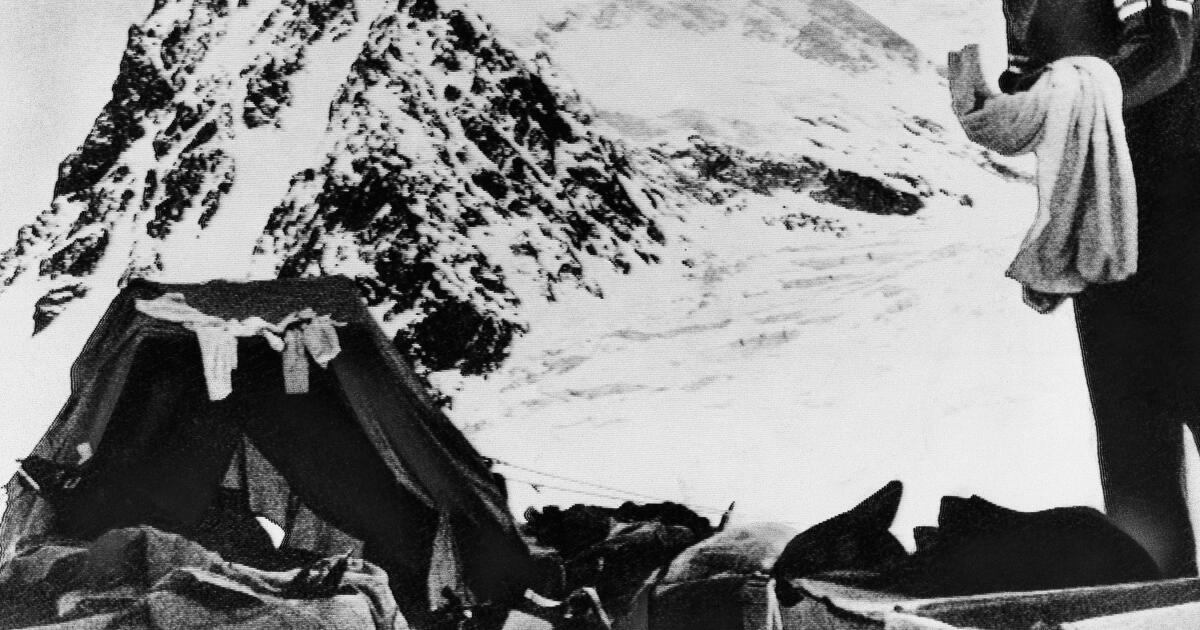
Jim Whittaker, first American climber to scale Mount Everest, has died

Newsletter: NATO holds amid fragile Iran ceasefire
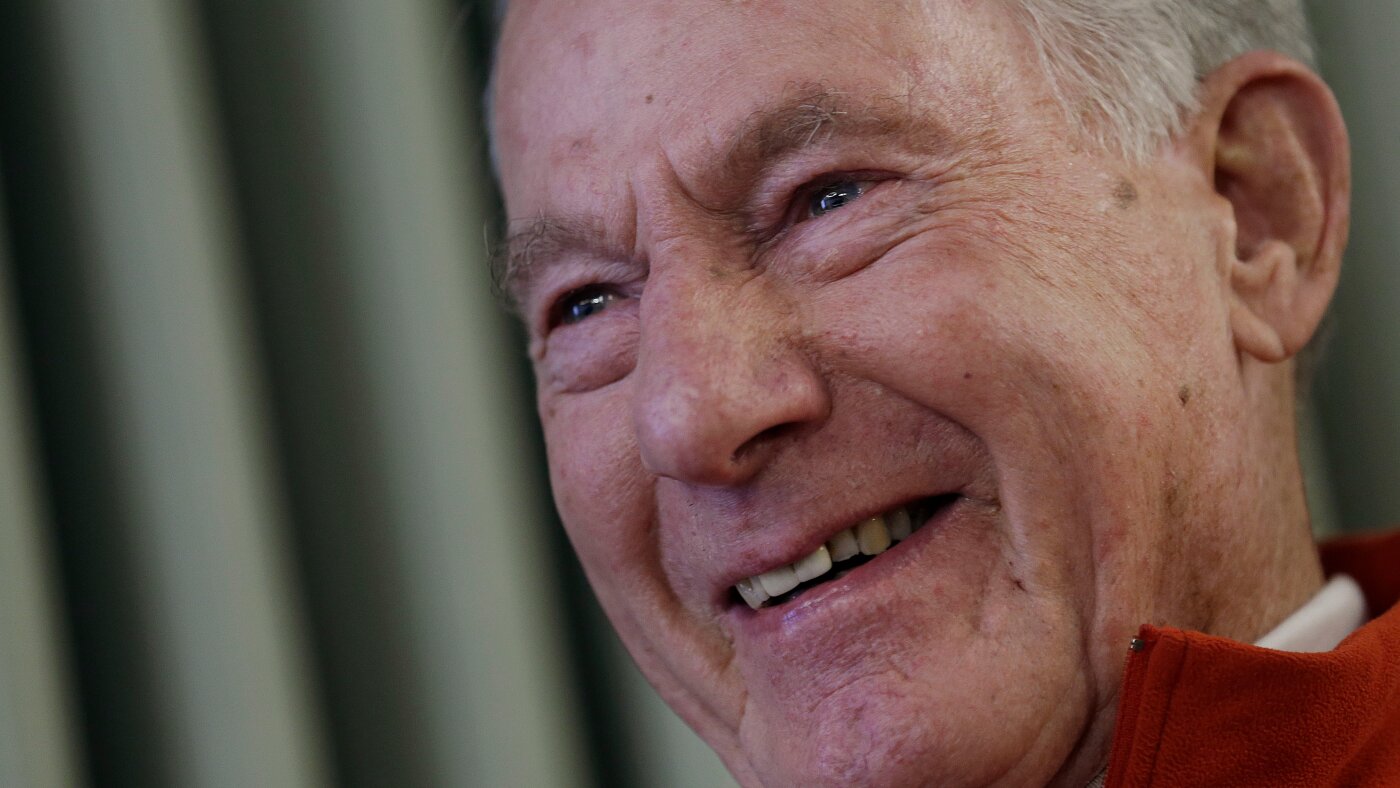
Jim Whittaker, the first American to summit Mount Everest, dies at 97

Video: Suspect in Gilgo Beach Murders Pleads Guilty

Closed Detroit behavioral facility faces lawsuit over alleged sex abuse of teen

Florida High School Football Rankings: Top 25 teams – Oct. 21

How old is Bo Nix? What to know about Oregon quarterback ahead of 2024 NFL Draft

Cleary's 21 help Le Moyne down Central Connecticut State 69-64 in OT

99th annual Pony Swim held in Virginia

Indiana Members Credit Union announced as new anchor tenant at Bottleworks District
Newsletter: NATO holds amid fragile Iran ceasefire
Jim Whittaker, the first American to summit Mount Everest, dies at 97

Video: Military Families Bear the Burden of War, Again

Fox News Poll: Record number say taxes are too high; government spending seen as wasteful

‘Even the street cats ran’: Inside Israel’s deadliest attack on Beirut
-

 Atlanta, GA4 days ago
1 teenage girl killed, another injured in shooting at Piedmont Park, police say
-

 Culture1 week ago
Do You Know Where These Famous Authors Are Buried?
-

 Movie Reviews7 days ago
Vaazha 2 first half review: Hashir anchors a lively, chaos-filled teen tale
-

 Georgia2 days ago
Georgia House Special Runoff Election 2026 Live Results
-

 Pennsylvania2 days ago
Parents charged after toddler injured by wolf at Pennsylvania zoo
-

 Education1 week ago
Video: We Put Dyson’s $600 Vacuum to the Test
-
 Milwaukee, WI3 days ago
Potawatomi Casino Hotel evacuated after fire breaks out in rooftop HVAC system
-
 Entertainment1 week ago
Inside Ye’s first comeback show at SoFi Stadium