World
EU leaders say Russia responsible for death of Alexei Navalny


Several EU leaders have said they hold the Kremlin directly responsible for the sudden death of Alexei Navalny.
Navalny, 47, the face of Russia’s silenced opposition, died in prison on Friday following years of political persecution at the hands of the state.
The EU, which has long saluted Navalny’s unwavering fight for Russian democracy, had previously attempted to exert pressure on the Kremlin for its systemic repression of government critics.
EU leaders on Friday pinned blame for Navalny’s death – which has rocked Brussels and EU capitals – on Putin’s Russia.
“The EU holds the Russian regime (solely) responsible for this tragic death,” European Council President Charles Michel said on social media platform X.
Michel’s words were echoed by Josep Borrell, the EU’s high representative for foreign affairs, who said: “Let’s be clear: this is Putin’s sole responsibility.”
An official on behalf of the EU’s diplomatic arm, headed by Borrell, also said the bloc held Putin’s Russia directly accountable for Navalny’s passing.
“Russia took his freedom and his life, but not his dignity,” Roberta Metsola, President of the European Parliament, said.
“Alexei Navalny didn’t die in prison, he was killed by the Kremlin’s brutality and its aim to silence the opposition at any cost,” Lithuanian President Gitanas Nausėda said.
“Alexei Navalny’s death is yet another dark reminder of the rogue regime we’re dealing with – and why Russia and all those responsible must be held accountable for each of their crimes,” said Estonia’s Kaja Kallas, who was listed ‘wanted’ by the Kremlin earlier this week for what it says are charges relating to historical memory.
“Putin’s regime imprisoned and has now tortured to death one of the last symbols of democracy in Russia,” Latvian prime minister Evika Silina said.
“I call on Russia to cease repressing political opposition and release all political prisoners,” Silina added.
The three Baltic EU states are staunch backers of Kyiv and have called for harsh EU measures against Russia for its war in Ukraine and repression at home.
European Commission President Ursula von der Leyen said she was “deeply disturbed” by the news of his death. “A grim reminder of what Putin and his regime are all about,” she said.
Tributes also poured in from the Belgian, Czech, Dutch, French, German, Polish, Spanish and Swedish leaders.
Greatest threat to Putin exterminated
Navalny was seen as Russian President Vladimir Putin’s fiercest political opponent and greatest threat to his grip on power.
He was awarded the European Parliament’s Sakharov prize for freedom of thought in 2021 for his tireless fight against the corruption and human rights abuses in Russia, despite several attempts by the Kremlin to threaten, torture and poison him.
His daughter Daria Navalnaya, receiving the prize while her father was serving a prison sentence at a Russian forced labour colony, gave the following message to the European Parliament on his behalf:
“Say that no one can dare to equate Russia to Putin’s regime. Russia is a part of Europe and we strive to become a part of it,” she said in 2021.
 ADVERTISEMENT
“But we also want Europe to strive for itself, to those amazing ideas, which are at its core. We strive for a Europe of ideas, the celebration of human rights, democracy and integrity.”
In 2020, Navalny was urgently evacuated from a Siberian hospital to Germany, where he was treated after being poisoned with a Novichok-type nerve agent.
Despite the apparent attempt at assassination by the Russian regime, he returned to Russia in 2021, where he was sentenced to 19 years in a penal colony on charges of extremism.
He had initially been serving his sentence in a prison in central Russia, but was transferred late last year to a “special regime” penal colony above the Arctic Circle.
An EU official said Friday Navalny had been “slowly killed” in prison.
ADVERTISEMENTDeath could prompt further sanctions
An senior EU official speaking on condition of anonymity said on Friday that Navalny was someone “we really admired and appreciated” and whose fight the bloc had “followed for years.”
But his death also casts a harsh light on the bloc’s inability in the years prior to the war in Ukraine to exert sufficient diplomatic pressure on Russia to comply with its human rights obligations.
In 2021, a year before the start of the war, the bloc slapped sanctions, including travel bans and asset freezes, on Russian officials responsible for Navalny’s detention under the so-called Magnitsky act.
Further sanctions were imposed on individuals involved in Navalny’s chemical poisoning in November 2022, eight months following the invasion of Ukraine.
His death will be discussed when EU foreign ministers gather in Brussels on Monday.
ADVERTISEMENTThe official added that the bloc was “ready to see if we can list (sanction) more people involved in this murder.”



The UK has appropriated its last working steelworks, following fears its former Chinese owners would shut it down.
Published On 17 Jul 2026
Beijing has warned the United Kingdom that its nationalisation of British Steel has “severely undermined” Chinese companies’ confidence in investing in the UK.
The UK nationalised the loss-making company on Thursday in what the government said was a move taken to protect national interests.
list of 3 itemsend of listRecommended Stories
British Steel is the only source of primary steelmaking in the UK. It supports approximately 2,700 jobs across its main steelworks in Scunthorpe and across the wider supply chain.
The company’s former owner, Jingye – which is among the 100 biggest companies in China – bought British Steel for 70 million pounds ($94m) in 2020. By 2025, Jingye said it was losing 700,000 pounds ($942,000) every day.
British Steel’s nationalisation has been in the works for more than a year.
In March 2025, Jingye carried out a consultation that concluded that the British Steel furnaces were not financially sustainable. The following month, it emerged that Jingye had cancelled orders for a key material used in the steelmaking process, stoking fears that it was planning to shut down the blast furnaces.
That month, the UK government seized operational control of British Steel from Jingye to stop that from happening. The Chinese company retained ownership, but lost operational control.
Thursday, though, saw ownership officially transfer to the UK government, which says it will appoint an independent valuer to “assess whether any compensation is payable” to Jingye.
The process has angered Beijing. The expropriation of British Steel “seriously damaged” Jingye’s legitimate rights and interests and “severely undermined” Chinese companies’ confidence in investing in the UK, China’s Ministry of Commerce said in a statement on Friday.
The UK, the ministry said, has “forcibly” taken over the company and “disregarded” Jingye’s contributions to the British economy and society.
The ministry urged the UK to fulfil obligations under the China-UK Investment Protection Agreement and said it would assist Chinese companies in protecting their rights.


Iran threatens to close Strait of Hormuz, impacts global oil prices
FOX Business’ Lauren Simonetti details escalating tensions in the Strait of Hormuz as Iran threatens to block shipping lanes and impose new conditions. This move follows reports of vessels being struck by Iranian drones since March. The uncertainty surrounding the vital waterway has led to a 2% drop in crude oil prices, affecting the global market.
NEWYou can now listen to Fox News articles!
Iran has reportedly instructed Yemen’s Houthi terrorists to prepare to close a critical Red Sea gateway if the United States attacks Iranian power infrastructure, Reuters reported, a threat experts warn could sharply disrupt global shipping even if the group cannot completely seal the waterway.
“This threat should be taken seriously,” Nadwa Al-Dawsari of the Middle East Institute told Fox News Digital. “With recent escalation and U.S. strikes on Iran, Tehran has already signaled that the Bab al-Mandab could become part of its response.”
Three sources told Reuters on Thursday that Iran’s leadership had discussed using the Houthis to shut the Bab el-Mandeb Strait and recently conveyed the request to the group. A source close to the Houthis said missiles and drones had been deployed near the waterway and that the group was awaiting an order to begin attacking shipping.
IRAN-BACKED TERROR PROXY HOUTHIS THREATEN FRESH ATTACKS AFTER YEMEN AIRPORT STRIKE
A Houthi follower during a pro-Iran demonstration, in Sanaa, Yemen, April 6, 2026. (Khaled Abdullah/Reuters)
Edmund Fitton-Brown, a former British ambassador to Yemen and senior fellow at the Foundation for Defense of Democracies, warned in a recent Fox News Digital report that a full resumption of the Houthi maritime campaign could trigger wider fighting.
“It will be interesting if the Houthis do go all in, and resume their campaign against Red Sea shipping with full intensity,” Fitton-Brown said. “This will draw international anger and likely result in Israeli and U.S. strikes on Sana’a and Hodeida.”
“There is potential for a general escalation if this happens, albeit one in which the allies have a clear military advantage,” he added.
Al-Dawsari said the Houthis have continued developing the weapons needed to threaten the narrow shipping corridor despite largely refraining from maritime attacks over the past year.
“While the Houthis have largely refrained from attacking shipping for about a year, they have continued to advance their maritime capabilities, including missiles, drones and sea mines,” she said. “They may not be able to fully close the strait, but they could significantly disrupt shipping and raise costs and risks for commercial traffic.”
US CLAWS BACK KEY CONCESSION TO IRAN AFTER FRESH ATTACKS ON COMMERCIAL SHIPS IN STRAIT OF HORMUZ
This photo released by the Houthi Media Center shows Houthi forces boarding the cargo ship Galaxy Leader on Nov. 19, 2023. (Houthi Media Center via AP)
But the group would not necessarily need to physically control the waterway. Its previous missile and drone campaign demonstrated that repeated attacks — or even a credible threat of them — can push major shipping companies to reroute vessels around Africa, driving up insurance, fuel and freight costs.
The Bab el-Mandeb connects the Gulf of Aden to the Red Sea and Suez Canal, making it one of the world’s most important maritime choke points. The consequences of renewed attacks would be especially severe because Iran has already disrupted shipping through the Strait of Hormuz, historically the principal route for roughly one-fifth of global energy supplies.
A substantial volume of Gulf oil has consequently been redirected through Saudi Arabia to the Red Sea port of Yanbu. Reuters reported that the Bab el-Mandeb route now carries approximately 7% of global energy supplies and that Saudi Arabia has shifted about 70% of its energy exports through Yanbu.
The reported instructions also raise new questions about how much control Tehran exercises over major Houthi military decisions.
In this image provided by the U.S. Navy, the amphibious dock landing ship USS Carter Hall and amphibious assault ship USS Bataan transit the Bab al-Mandeb strait on Aug. 9, 2023. (Mass Communications Spc. 2nd Class Moises Sandoval/U.S. Navy via AP)
“Any decision to escalate in the Bab al-Mandab would be strategic and tied more to the interests of Iran and the Axis of Resistance than to Houthi interests alone,” Al-Dawsari said. “Decisions of this magnitude are likely coordinated through the Axis’ joint operations room under IRGC oversight.”
A source close to the Houthis claimed representatives of Iran’s Islamic Revolutionary Guard Corps in Yemen would control the timing of any move against the strait, Reuters reported.
The latest warning follows earlier Houthi threats against maritime traffic. In the June 12 report, Fox News Digital reported that the group had announced a complete ban on Israeli-owned ships in the Red Sea and declared them “legitimate targets.”
EXPERT WARNS OF ‘GENERAL ESCALATION’ OF FIGHTING IF HOUTHIS RESUME RED SEA CAMPAIGN
A satellite imagery shows Bab el Mandeb Strait, a key shipping waterway and the gateway to the Red Sea, in this handout picture dated July 12, 2026. (Nasa Worldview/Handout via Reuters)
A State Department spokesperson told Fox News Digital at the time that the actions of Iran and the Houthis were “unacceptable” and “dangerous,” warning that they could inflame regional tensions and further disrupt global supply chains.
U.N. Secretary-General António Guterres has “repeatedly condemned” Houthis attacks against ships in the Red Sea and called on all parties Thursday to avoid further escalation, his spokesperson, Stéphane Dujarric, told Fox News Digital.
“Any disruptions or attacks would endanger the safety and security of seafarers, freedom of navigation and the stability of global supply chains and have a negative impact on the economic and humanitarian situation in Yemen and beyond,” Dujarric said. “The Secretary-General underscores that U.N. Security Council Resolution 2722 (2024) must be fully respected in its entirety,” he said on the resolution condemning at least two dozen Houthis attacks on commercial vessels since November 2023 and demanding an immediate end to the attacks.
The emerging threat has also renewed scrutiny of the Iranian weapons networks that helped build the Houthis’ missile and drone arsenal.
Amr Al-Bidh, foreign affairs chief of the Southern Arabian Transitional Council, said that the reported threat also exposed broader failures in the handling of Yemen’s security crisis. “The fact that individuals convicted of trafficking Iranian weapons to the Houthis and leading terrorist operations are now being released under a U.N.-brokered deal only underscores how poorly the Yemen crisis is being managed,” he said, “the main beneficiary of this vacuum is Iran, as seen in its credible threat to close the Bab al-Mandab Strait.”
In a July 15 letter obtained by Fox News Digital, the Southern Arabian Transitional Council formerly known as the Southern Transitional Council, a southern Yemeni separatist movement that seeks greater autonomy or independence for the territory of the former South Yemen, warned U.N. Special Envoy for Yemen Hans Grundberg that a U.N.-facilitated detainee agreement may include people the council says were convicted of assisting Iranian weapons transfers to the Houthis.
A missile is launched from a warship during the U.S.-led coalition operation against military targets in Yemen, aimed at the Iran-backed Houthi militia that has been targeting international shipping in the Red Sea, in this handout picture released on Jan. 12, 2024. (US Central Command via X/Handout via REUTERS/ File Photo)
CLICK HERE TO DOWNLOAD THE FOX NEWS APP
An annex identifies individuals the council alleges were members of a cell that smuggled drones, aviation fuel and heavy and medium weapons from Iran to Sanaa.
The Office of the U.N. Special Envoy for Yemen said it received the letter only after the agreement had already been signed and stressed that it does not determine which detainees are released.
“We have received the letter after the agreement was signed,” spokesperson Ismini Palla told Fox News Digital. “The United Nations – as well as the International Committee of the Red Cross (ICRC) – do not decide who is released and who remains in detention. Our role is limited to mediating the negotiations and ICRC leads on the implementation of the release operation.”
Palla added that “the names of those released are proposed and agreed between the parties under the framework of the Stockholm Agreement on prisoners’ exchange of 2018.”
Fox News Digital reached out to the State Department and the Iranian Mission to the United Nations on the latest developments.
Fox News’ Paul Tilsley and Reuters contributed to this report.
-
 Business5 minutes ago
Netflix reports higher profits as investors worry about growth
-
 Entertainment11 minutes ago
Kris Jenner’s mom, beloved matriarch Mary Jo ‘MJ’ Shannon, dies at 91
-
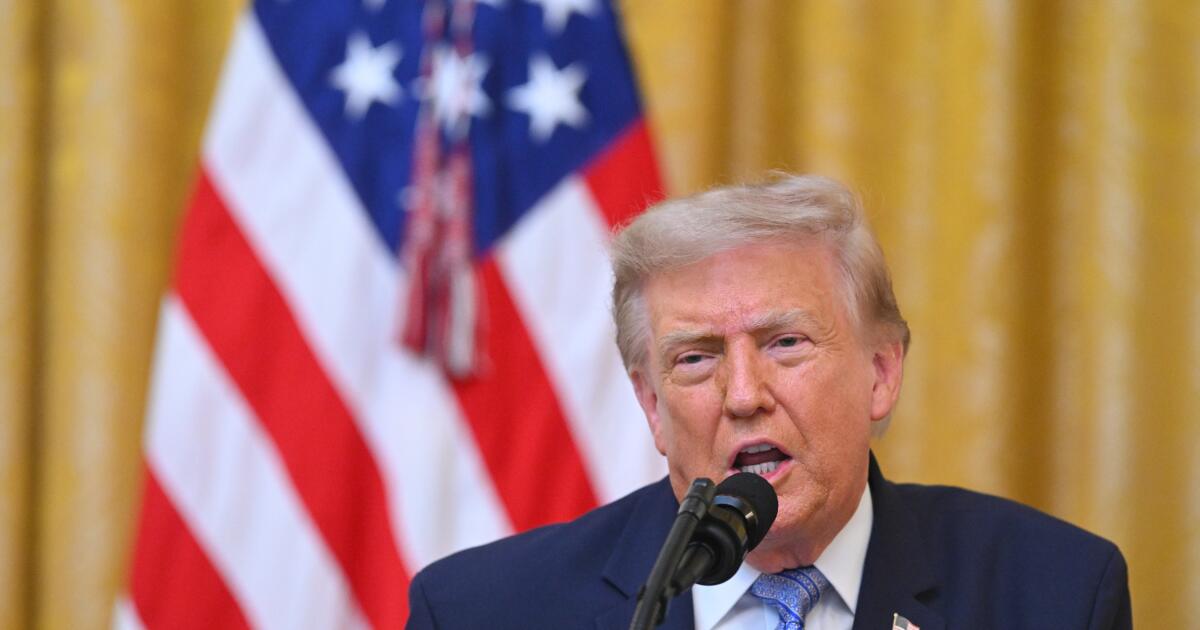 Politics23 minutes ago
Trump repeats debunked claims about voting vulnerabilities in prime-time speech
-
 Science29 minutes ago
Bass administration quietly replaced chief heat officer a month ago
-
 Sports35 minutes ago
UCLA women embrace new players, tougher standards in bid to repeat as champs
-

 World47 minutes ago
China rebukes UK over nationalisation of British Steel
-
 News1 hour ago
Flood sirens blare in South Central Texas as rivers reach perilous heights
-

 Los Angeles, Ca3 hours ago
Arrest made in deadly shooting at 4th of July gathering in Compton; search for 2nd suspect continues

