World
Czech Dam Project Was Stalled by Bureaucracy. Beavers Built Their Own.


For years, officials in the Czech Republic had pushed a dam project to protect a river south of Prague, and the critically endangered species living in it. But the project, hamstrung by land negotiations, stalled.
In the meantime, a group of chisel-toothed mammals — renowned for their engineering skills and work ethic, and unencumbered by bureaucracy — decided to take on the task. The beavers of Prague simply built dams themselves.
The rodents’ fast work saved the local authorities some 1.2 million euros, according to a news release from the Nature Conservation Agency of the Czech Republic, a government agency responsible for conservation across the country. “Nature took its course,” Bohumil Fišer, the head of the Brdy Protected Landscape Area, where the revitalization project was planned, said in the statement. The beavers, he added, had created the ideal environmental conditions “practically overnight.”
The project, on a former army site on the Klabava, a river about 40 miles southwest of Prague, the Czech capital, was drafted in 2018 and had a building permit, but had been delayed for years by negotiations over the land, which had been used as a military training grounds, Agence France-Presse reported on Tuesday. Officials had hoped to build a barrier to protect the river and its population of critically endangered crayfish from sediment and acidic water spilling over from two nearby ponds, A.F.P. reported.
The beavers began working before the excavators could even break ground. It was not immediately clear specifically when the dams were built and how long it took to build them.
The new wetland created by the dams covers nearly five acres, the conservation group said. It is twice as large as the area that the humans had planned, Agence France-Presse reported. “It’s full service,” Mr. Fišer told A.F.P. “Beavers are absolutely fantastic and when they are in an area where they can’t cause damage, they do a brilliant job.”
Despite their remarkable ability to construct dams, beavers often draw the ire of landowners and farmers for destroying trees, eating crops and flooding roads and fields. But in thinning a tree canopy, the rodents can often help to diversify an ecosystem by allowing in sunlight in so that other plant species can thrive, said Emily Fairfax, an assistant professor of ecology at the University of Minnesota.
“They’re fundamentally changing the way water and life moves through that landscape,” she said.
To build a dam, the beavers, whose weight as adults can range from about 40 to 80 pounds, begin by piling small stones across a river or stream, packing those stones in with mud, and repeating the process to construct a pond, which they then expand to become a wetland, Dr. Fairfax said.
They are motivated by their fear of predators: Beavers are adept swimmers and can hold their breath underwater for 15 minutes. On land, their ungainly waddle makes them easy prey. “They’re basically a big chicken nugget for predators,” which include bears, mountain lions and wolves, she said.
The Czech dam is not the first time the rodents have assisted in building a wetland. Beavers in California have helped to restore a floodplain about 30 miles northeast of Sacramento. In that case, the beavers’ work also helped local officials save money. “All they had to do was let the beavers be there,” Dr. Fairfax said. In other cases, beavers often did work that went unacknowledged. “We sort of have a blindness for beavers,” she said, noting that they were often considered a nuisance because of their alarming size and capacity to rapidly change the landscape.
“They’re powerful, they’re big, and they’re elusive,” Dr. Fairfax said, noting that, despite the beavers’ engineering prowess, they presented a challenge for conservation groups when planning restoration projects.
“Oftentimes we don’t want to allow the beavers to make the choices, because it’s hard to plan around that uncertainty; it’s hard to turn over control to a giant water rodent,” she said. “But that’s when beavers are at their best.”



NEW YORK (AP) — Launching an artificial intelligence tool to take notes and summarize important information from a virtual meeting can be alluring. Seconds after one of the agents attends an hour-long video conference, it can deliver a recap of key points and outline a to-do list for all the participants.
But the way popular AI notetakers accomplish those tasks makes some people avoid using them. The technology turns everything said during meetings into data. Confidential personnel information, corporate strategies, trade secrets and remarks that could later be seen as incriminating — all of it could end up in the wrong hands.
“There are huge risks to the organization on AI notetakers,” Amy Dufrane, the chief executive of human resources training and certification provider HRCI, said. “I don’t think companies should use it at all.”
An AI notetaker is a software application or device that uses artificial intelligence, speech recognition and large language models to record, transcribe and summarize conversations. The tools are intended to save time and improve participation, but professionals in a number of fields say there are reasons to be wary.
This article is part of AP’s Be Well coverage, focusing on wellness, fitness, diet and mental health. Read more Be Well.
Chief among them is uncertainty about where the collected data is stored and for how long. Privacy advocates worry the companies behind the AI notetakers are creating voiceprints without consent. Voiceprints — a type of biometric profile similar to a fingerprint but tuned to the unique intonations and characteristics of one’s voice — can be used to access restricted or confidential information, including the contents of bank accounts.
Some tech companies resell data from the notetaking tools they created or use confidential meeting transcripts and recordings to train their AI models. There’s also the risk that conversations between an attorney and client could become fair game in legal proceedings; a New York federal judge in February ordered a criminal defendant to provide prosecutors with documents he created for his lawyers because it already had been shared with a third party, which was Anthropic’s Claude.
“People who use AI notetakers, they don’t always know where the data goes,” said Justin Daniels, an Atlanta-based corporate attorney at law firm Baker Donelson. “And in my context, if the data goes anywhere else and they’re not aware of it, that attorney-client-privileged conversation may not be attorney-client-privileged anymore.”
Here are some tips on the etiquette of kicking an AI notetaker out of a meeting, the risks of using one and how to protect yourself.
The first step when you join a meeting is check for bots
When you join a meeting, make it a habit to check whether an AI notetaker is present. It might appear as a meeting attendee, often labeled as an AI notetaker, or a pop-up message on the screen informing participants the meeting is being recorded. The latter could signal the presence of an AI notetaker.
Virtual meeting platforms such as Zoom and Google Meet let users know when recording is underway, but some meeting software does not make it clear when a notetaker is present, according to Thorin Klosowski, the Electronic Frontier Foundation’s senior security and privacy analyst.
Participants also may use personal notetaking devices that are separate from the meeting platform, in which case the other attendees wouldn’t necessarily know a discussion was being recorded and transcribed.
“You hope the other person would tell you that they’re doing that,” Klosowski said. “Asking everyone for consent before doing a sensitive meeting would be the most polite approach to take.”
If you’re unsure whether someone has deployed an AI notetaker, you can ask. You can also state at the beginning that a meeting is not authorized for recording.
A polite way to establish such a boundary is to say, “Our company policy is that this meeting cannot be recorded,” Dufrane suggested. This relieves the employee, such as a salesperson who wants to make a good impression, of having to be the “bad guy,” putting the onus on the company instead, she said.
Another option is to allow the notetaker for part of the gathering but turn if off at the end to dedicate time for more delicate topics.
“I won’t start talking about anything substantive until it’s shut off, because I just don’t want to take the risk,” Daniels said.
Assert your privacy rights to protect voiceprints
Many AI notetakers determine unique acoustic signatures, or voiceprints, for each speaker in the room, said Chris Pluymers, associate attorney at The Dillon Law Group in East Lansing, Michigan. That’s how the companies distinguish one speaker from another, labeling them with monikers “Speaker 1” or “Speaker 2.”
One way voiceprints are used is to verify the identities of bank account holders over the phone. If bad actors got ahold of a person’s vocal signature, they could use it to access files, commit fraud or take over accounts, he said.
Laws in some states govern how voiceprints can be created and stored and provide rights that individuals can assert to object to the use of an AI notetaker during meetings they attend.
In Illinois, voiceprints are considered biometric identifiers, similar to fingerprints, and are covered under the state’s Biometric Information Privacy Act, which requires written notice and informed consent before an AI notetaker or other agent collects voiceprints. The law also mandates a documented data retention schedule and destruction policy, Pluymers said. But most companies using the tools have none of those systems in place, Pluymers said.
“In the world of AI, the world of data and privacy, the world of biometric identification, I don’t think you can have such a lax approach to it,” Pluymers said. “I think getting out ahead of it is crucial.”
Under the Illinois law, employees can say they don’t want to attend a meeting with an AI notetaker until they have assurances of where and why the data is being stored, and when it will be deleted, Pluymers said. They can also ask if there is a policy and written consent form to sign.
If an AI notetaker shows up at a meeting unexpectedly, a participant could say, “I prefer we keep this meeting without AI recording or transcript tools and I’d be happy to take my own notes and share a recap if that’s helpful,” Pluymers suggested. “Just being warm and genuine about it and asking them to respect your wishes.”
Know where your data goes
When working with AI notetaking apps, find out whether the companies that built them retain recordings, transcripts or metadata indefinitely or use them to train AI models, said Danielle Kays, a partner at Fisher Phillips who represents businesses on privacy and employment law matters.
“If there is some sort of speaker ID or voice recognition, really understand what that is and how it works,” Kays said.
Even when content is deleted, metadata about meetings can remain stored with the vendor, meaning sensitive business information could influence how the model behaves and in some cases could be memorized or reproduced, she said.
AI notetakers generate text, and that’s easier for outsiders to search through than video or audio files, according to EFF.
“Storing a bunch of video isn’t easy, it’s costly and hard to look through, but text is much easier to search and cheaper to store,” said Klosowski of the Electronic Frontier Foundation.
___
Share your stories and questions about workplace wellness at [email protected]. Follow AP’s Be Well coverage, focusing on wellness, fitness, diet and mental health at https://apnews.com/hub/be-well
World
Argentinian flight instructor jumps to death from plane, 22-year-old student forced to land alone

NEWYou can now listen to Fox News articles!
A flight instructor jumped to his death out of a small aircraft over Argentina, forcing the student pilot he was teaching to land the plane herself.
Leandro Andrés Bertazzo, 42, was on board a two-seat Cessna 150G on Saturday when he made the decision to jump out over the province of Córdoba, according to CNN, which cited its Argentinian affiliate TN.
“He made this tragic decision on board an aircraft with another person by his side,” Eduardo Álvarez, director of the Flying Parrot Córdoba flying school where Bertazzo worked, told TN. “It’s impossible to think about it or understand it, but the human mind is so complex.”
An undated photo of Leandro Andrés Bertazzo, a 42-year-old pilot who jumped to his death from a plane on Saturday, July 4 in Argentina. (Instagram/Leandro Bertazzo)
PILOT DECLARES MAYDAY BEFORE SEAPLANE COMES DOWN IN NEW YORK CITY’S EAST RIVER
Rosario, the 22-year-old student, later told authorities that Bertazzo told her, “You know what you have to do, carry on,” before taking off his gear, opening the door and leaping out, according to Álvarez.
Opening the door of a plane midair is incredibly difficult. Álvarez said it would be akin to trying to open the door of a car traveling 124 miles per hour.
Cessna 150m FRA150M climbing out after take-off with flaps deployed and hills behind. (aviation-images.com/Universal Images Group via Getty Images)
FRANTIC SEARCH UNDERWAY FOR CREW AFTER BOEING 737 WRECKAGE FOUND BY OFFICIALS
Álvarez said that Rosario managed to land the plane safely, despite being in “complete shock.” There was no damage to the plane, according to TN.
Álvarez noted that Bertazzo had gone on a flight with another student earlier in the day.
A view from the main road of the flight school Bertazzo worked at, Flying Parrot Córdoba. (Google Maps)
CLICK HERE TO DOWNLOAD THE FOX NEWS APP
Álvarez also told TN that Bertazzo had visited a psychiatric institute, something that was only known by his family prior to his death.
Prosecutors in Córdoba will lead the investigation into Bertazzo’s death. The plane he jumped from is now in police custody.

Former Olympic canoeist David Hearn denies damaging US President Donald Trump’s Washington, DC reflecting pool renovation.
Published On 9 Jul 2026
A former US Olympian has pleaded not guilty to vandalising the newly renovated Lincoln Memorial Reflecting Pool, in a case that has drawn national attention amid accusations that the administration of US President Donald Trump is trying to shift blame for a troubled renovation.
David “Davey” Hearn, a 67-year-old three-time Olympic canoe racer, entered his plea in federal court on Thursday after prosecutors accused him of “maliciously” damaging the “American flag blue” lining installed at the bottom of the reflecting pool at Trump’s request ahead of celebrations taking place at Washington’s National Mall for the 250th anniversary of the United States’ independence on July 4.
list of 4 itemsend of listRecommended Stories
Federal prosecutors allege Hearn pulled at the liner on June 19, causing more than $1,000 in damage. He has been charged with destruction of government property, an offence that carries a maximum prison sentence of 10 years.
Hearn denied the allegations. He admitted he stopped at the pool during a bike ride, reached inside and touched a section of lining that was already peeling away, but that he did not remove or damage it. He told The Associated Press he let go when a park employee told him to stop.
Hearn’s lawyers argue the prosecution is an attempt by the Trump administration to deflect attention from what they describe as a botched renovation project.
“This indictment reflects the administration’s effort to shift blame for their own failures,” they said in a statement. “The justice system exists to determine facts, not to provide political cover.”
The 620-metre (2,030-foot) reflecting pool reopened in June after Trump ordered the new liner to be installed across the bottom. He said he was compelled to go ahead with the $14.7m renovation after a friend visiting from Germany called the pool dark and disgusting.
But within days, algae began to spread across the surface, the water turned chartreuse green, and sections of the liner began peeling away.
Experts have explained that the dark new coat of paint at the bottom of the pool would elevate the temperature and allow algae to grow, and that algae blooms in water are common at this time of year, especially in shallow, stagnant water like that of the pool.
Trump blamed the issues on vandals, claiming without evidence that “corrosive and destructive chemicals” were poured into the pool and that vandals “took some form of knife or blade” and put a long “gash into the beautiful facade”, although no one has been charged over those alleged acts.
The US president warned that anyone who allegedly damaged the pool could face long prison terms. “Please remember that there is a 10 year prison sentence for the destruction, or even the attempted destruction, of such things — Which will be fully enforced!” he wrote on Truth Social.

Last week, US Attorney for the District of Columbia Jeanine Pirro announced the indictment against Hearn, accusing him of intentionally damaging the liner.
The US Department of the Interior has said that at least six people were arrested on suspicion of vandalising the pool in the weeks after it reopened. National Guard troops and US Park Police were deployed to protect the site, which was fenced off during July 4 celebrations.
Thursday’s hearing drew a packed courtroom, with dozens of supporters waiting outside after Hearn entered his plea.
The reflecting pool’s problems have continued, with Trump acknowledging it will need to be drained again so the damaged liner can be repaired.
-

 Utah2 minutes ago
Man suspected in 2006 Utah murder left suicide note in Las Vegas jail cell: police
-
 Vermont5 minutes ago
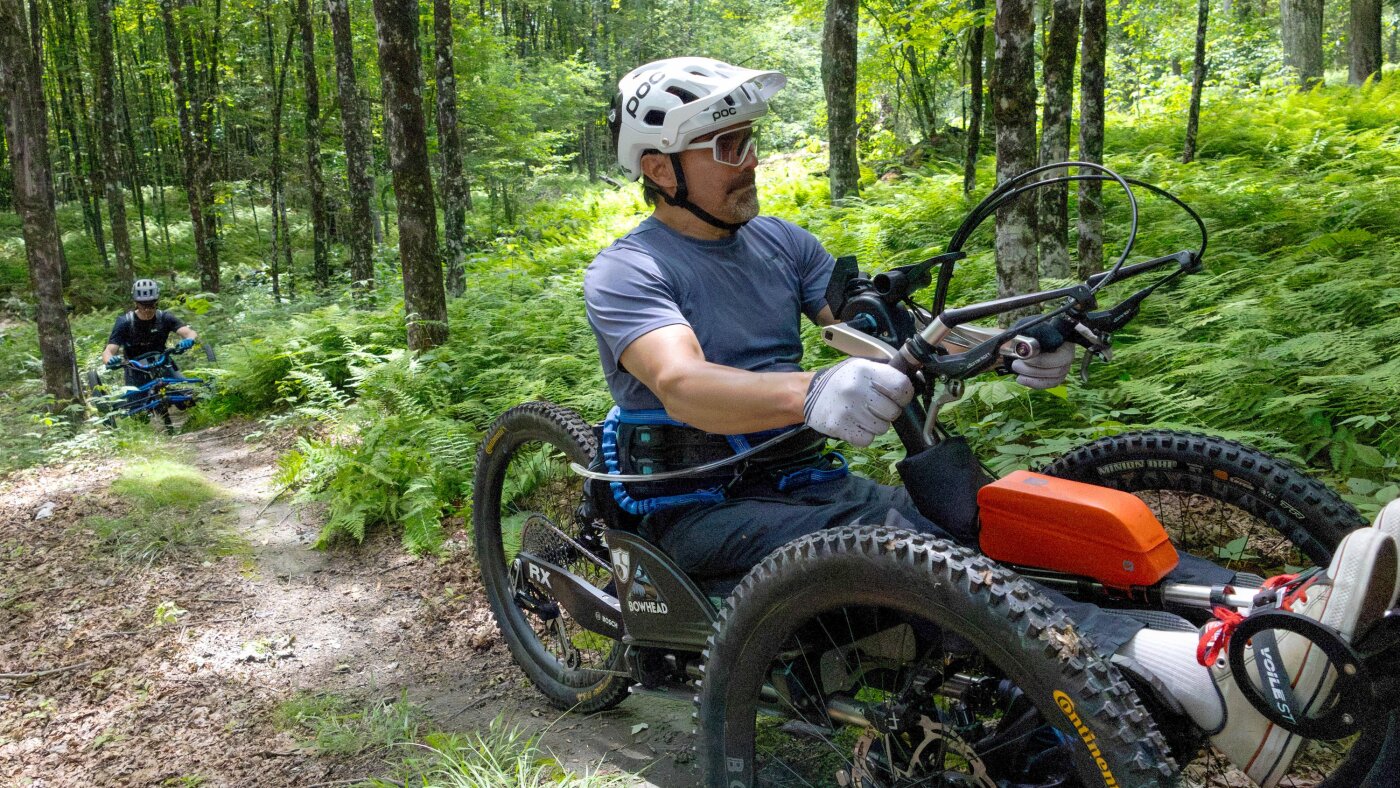
OUTDOOR ACCESS FOR DISABLED IN VERMONT
-
 Virginia10 minutes ago
4 indicted in Virginia double homicide; second victim ID’d as grandmother of 6
-

 Washington17 minutes ago
Washington Commanders are retiring Hall of Famer John Riggins’ No. 44
-

 Wisconsin20 minutes ago
Wisconsin State Patrol rides with truck and bus drivers to spot violations in five areas
-

 West Virginia25 minutes ago
West Virginia town fires entire police force after chief resigns, sergeant alleges evidence room break-in
-

 Wyoming32 minutes ago
WHP: July 5 single-vehicle rollover north of Riverton resulted in one death, one injury
-

 Crypto35 minutes ago
British Airline Jet2 Shares Jump 9% After $536M Fuel Hedge Gain Offsets Middle East Travel Fears

