Wyoming
Wyoming takes a stand against out-of-control political spending


Clements is the president of American Promise, a nonprofit advocate for amending the Constitution to allow more federal and state regulation of money in politics.
On Feb. 13, in the deep red state of Wyoming, a majority of state House members voted for Joint House Resolution 0002, calling on Congress to propose a constitutional amendment to ensure transparency in election spending and allow states to regulate corporate, union and other political contributions.
Wyoming legislators demonstrated again the deep, cross-partisan support for amending the U.S. Constitution to empower Americans to stop the systemic corruption that comes from out-of-control political spending. While the resolution didn’t receive the needed two-thirds vote, the strong majority support (35-26) shows that Wyoming lawmakers, as with most Americans, know the urgency of ending the domination of dark money and outside influence in elections.
Americans oppose out-of-control political spending because it undermines their own rights of free speech and a level playing field in voting and representation. Past Supreme Court decisions – Buckley v. Valeo, reinforced by Citizens United v. FEC – removed power from voters and state and federal lawmakers to set limits on political spending. The theory – unprecedented for 200 years of American history – is that those with massive financial resources have a “free speech” right to deploy those resources, with no limits, to influence election outcomes. Spending in elections by groups, billionaires and even foreign governments has been rising at an alarming rate. Nearly $16 billion may be spent in the 2024 cycle alone, up more than 30 percent from the last presidential election.
Sign up for The Fulcrum newsletter
The American government is supposed to be of, by and for the people, but our current pay-to-play politics has deteriorated into a government bought, paid and sold to the highest bidder. Social media and advertising disinformation campaigns are funded from the shadows, influencing elections with no accountability. Worse, foreign actors exploit the dark money system to manipulate elections and serve their own interests.
Americans have had it with this dangerous Supreme Court-imposed theory about money and free speech. In Wyoming, recent polling shows that 87 percent of voters agree that the coercive influence of money in politics threatens democracy. The constitutional amendment to enable states and Congress to set reasonable limits to regulate campaign spending is favored by 75 percent of Wyoming voters. These extraordinary super-majorities mirror what American Promise is seeing in polling and ballot initiatives around the country.
Now, Wyoming and others are vying to join the 22 states that have taken formal action to advance the For Our Freedom Amendment, the only enduring way to regulate political spending by giving the states and Congress power to set reasonable limits. In November 2023, 86 percent of Maine’s voters approved a law banning spending in elections by foreign government-controlled entities. Maine’s voters, concerned that unhinged claims of “free speech” rights to unlimited election spending might even extend to foreign actors, showed foresight in including a resolution calling for the constitutional amendment: After the foreign money ban was passed, foreign-owned corporations sued in federal court, claiming a free speech right to dominate Maine’s elections with their money. The For Our Freedom Amendment would put an end to such foolishness.
In Pennsylvania, legislators introduced a bipartisan resolution calling for the constitutional amendment solution. Wisconsinites and Arizonans are organizing to move their state into the victory column, and Minnesotans have an amendment resolution moving through the legislative process. Momentum is building because Americans are tired of having the fate of the country and our communities determined by an elite donor class. But that elite is outnumbered. The fact is, 86 percent of Republicans and Democrats agree that money in politics is a threat. It’s time to act, and that’s exactly what these states are doing.
The vote in Wyoming is part of the tipping point that brings constitutional solutions faster than many realize when the need is clear. This constitutional amendment process is the time-honored way that Americans drive reform in the darkest hours. At the beginning of the 20th century, when division, political violence, gender-restricted voting and white supremacy dominated much of the country, The Washington Post’s editors solemnly sniffed at those proposing constitutional amendments. Over the next several years, Americans ratified four amendments, the first of twelve that Americans would secure in the 20th century.
Now the promise of American democracy is on the line again. As Wyoming just showed, Americans know what to do.
From Your Site Articles
Related Articles Around the Web





BILLINGS — Two Wyoming women escaped unharmed after a black bear attacked their tents in the Big Horn Mountains while they were still inside.
Friends Maggie Bassett and Shonna Dehl were on a camping trip when the bear began tearing into their tents while they were asleep on Sunday night.
Click here to hear the story:
Wyoming women escape black bear attack on their tents in the Big Horn Mountains
“It was so scary,” Bassett said.
Basset said it jolted them and their four dogs awake and that both women were shocked at the bear’s behavior.
“It wanted in the tents,” Dehl said. “That’s all it wanted. It didn’t matter what we did.”
Dehl and Bassett proceeded to yell and scream at the bear, even firing gunshots in its direction in an effort to scare it away. None of those efforts worked.
“It was not scared at all,” Bassett said Wednesday afternoon in an online web call. “It didn’t even blink. It just kind of circled around and came back at me from a different angle.”
“It was circling us,” Dehl said. “It felt like it was circling our campground.”
Eventually, the bear scattered away after more gunshots were fired. Then, the two women fled to their vehicle, hiding out for a couple of hours and honking their horn to keep the bear away.
“We were in there for at least an hour,” Dehl said. “Just scared and shaking.”
Eventually, the two drove away unharmed and made their way to Dehl’s family cabin a few hours away.
When they returned the next day, they found their tents collapsed and torn to shreds. Wyoming Game and Fish responded and told the two women they plan to trap the bear and relocate it.
Both Bassett and Dehl said it was a frightening ordeal, especially because they followed all bear-aware protocol, including using bear containers.
“I will never forget that sound of my tent being ripped open,” Bassett said.
Chrissy Webb with Montana Fish, Wildlife and Parks has not been involved in the investigation but said a bear’s memory can bring it back to places where it has encountered unnatural foods before.
“You know it’s not unreasonable for a bear to return to a site where they’ve gotten food in the past,” Webb said. “When bears start accessing those unnatural human-based food is when we start to see bears that can be potentially dangerous because, you know, they’ve got conditioned by this food.”
Webb said there is no way to know if that is what happened in this case, but staying bear aware is crucial for both campers and the animals.
“It’s safer for you to store things properly, and it’s better for the bear’s sake if they’re not able to access those human foods,” Webb said.
For Bassett and Dehl, it’s an experience that has changed the way the two plan to go camping in the future.
“I don’t see myself sleeping in a tent anytime soon, maybe never,” Bassett said.
“Yeah, we’re going to need four walls,” Dehl said.

CASPER, Wyo. — The Boys & Girls Clubs of Central Wyoming recently announced that Cathy Holman, founder of the Prairie Wife brand, has been selected as the 2026 Mick & Susie McMurry Cowboy Code Try Award recipient.
A release from the Boys and Girls Clubs says that Holman will be recognized during the 28th Annual Awards & Recognition Breakfast, happening on Wednesday, September 16 at the Ford Wyoming Center.
“The Mick & Susie McMurry Cowboy Code Try Award recognizes individuals who exemplify the values of the Cowboy Code through integrity, perseverance, service, and leadership,” the release states. “Holman embodies those qualities through her entrepreneurial spirit, commitment to strengthening Wyoming communities, and willingness to use her voice to help others.”
Known as the Prairie Wife, Holman launched PrairieWifeInHeels.com in 2013 to share stories about her life, her family, and the Wyoming way of living.
“What began as a personal blog has grown into one of Wyoming’s most recognizable digital brands, reaching more than 65,000 followers across social media,” the release states. “Through honest storytelling, humor, and authenticity, she has built a community centered on grit, grace, faith, and finding purpose through life’s challenges.”
Throughout the years, Holman has become a much sought-after speaker, emcee, auctioneer and media personality, and she uses her platform to encourage others while championing causes that strengthen families and communities, all across Wyoming.
Due to her own family’s experiences, Holman became a leading advocate for stronger protections for children.
“Working alongside fellow advocates, legislators, and law enforcement, she helped raise awareness that contributed to the passage of House Bill 8, strengthening Wyoming’s stalking laws to better protect minors,” the release continues. “She continues to educate parents, schools, and organizations about online safety, digital responsibility, and protecting children in today’s technology-driven world.”
Holman said that the Cowboy Try represents choosing courage when life is difficult and using adversity to help others.
“The Cowboy Try is what we admire in everybody,” Holman said. “You’re knocked down and you get up again. And if you’re willing to share about getting knocked down, you’re going to help a lot of other people get up again too.”
Holman said that the mission of Boys & Girls Clubs of Central Wyoming reflects her own belief that investing in young people strengthens the future of every community.
“Our children are our future. We are only as strong as they are,” she said. “The Boys & Girls Club is creating a strong future for our communities. From providing a safe place for kids to mentoring, career education, and giving parents peace of mind, the Club is a beacon of hope.”
Holman encouraged young people to move forward with courage.
“Don’t let fear decide your future,” she said. “If you feel there’s something you’re supposed to do, charge forward. Ask for help when you need it, learn from those who have gone before you, and don’t be afraid to try.”
In addition to Holman, the 28th Annual Awards & Recognition Breakfast will honor Bob and Celia Kirkwood for their generosity and lasting impact on the Boys & Girls Clubs of Central Wyoming, as well as the community itself. It will feature nationally recognized speaker, Coach Ken Carter.
The event is open to the public and there is no cost to attend. Guests will have the opportunity to support the Boys & Girls Clubs of Central Wyoming and its mission of inspiring and enabling all young people to reach their full potential.
For tickets or table sponsorships, contact the Boys & Girls Clubs of Central Wyoming at https://bgccw.org/our-events/, email Vanessa at vwarner@bgccw.org, or call (307)235-4079.
Related
Wyoming
Wyoming coal company wins federal money to extract critical minerals from Powder River Basin – WyoFile

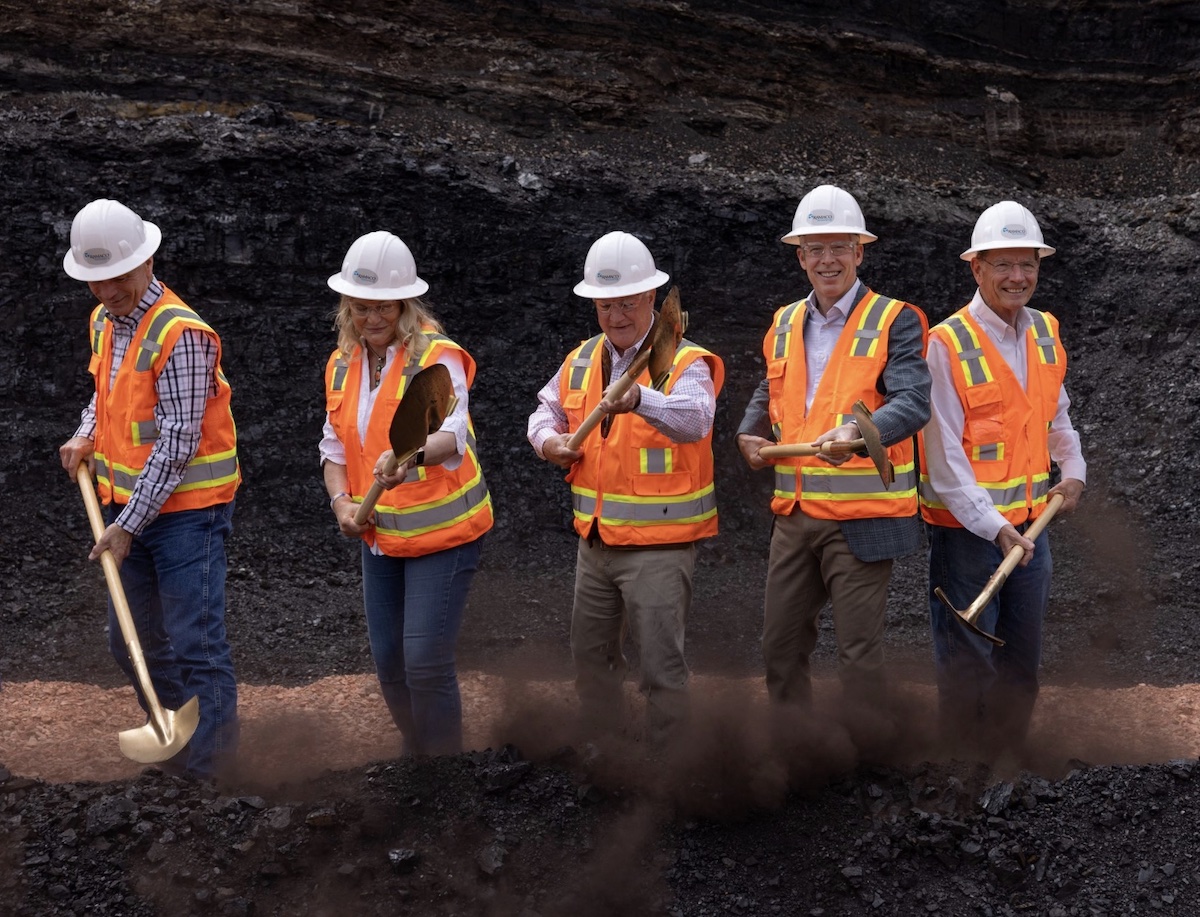
Coal mining giant Peabody Energy, with massive operations in Wyoming’s Powder River Basin, is among five entities that will share a total of $75 million from the U.S. Department of Energy to advance production of rare-earth elements and critical minerals.
As of press time, it wasn’t clear exactly how much Peabody might receive from the department’s Office of Critical Minerals and Energy Innovation, but it will be added to the $6.25 million in taxpayer money granted to the company earlier this year via Wyoming’s Energy Matching Funds program for the same project.
Peabody plans to build a pilot processing facility at its Rawhide mine just north of Gillette to extract rare earth and critical minerals from coal, according to a Peabody document submitted to the state. It would produce “market-ready mixed rare-earth concentrate,” which can be further refined to produce oxides and metals used in modern technology. Once complete, the facility would support 55 new jobs, Peabody says.
“Coupled with the Wyoming Energy Authority grant awarded earlier this year, this [DOE grant] selection reflects the meaningful progress Peabody has made in advancing promising unconventional rare earth and critical mineral opportunities,” Peabody President and Chief Executive Officer Jim Grech said in a prepared statement this week.
The DOE’s support of Peabody’s effort in Wyoming demonstrates the value of Wyoming coal beyond burning it to generate electricity, Wyoming Mining Association Executive Director Travis Deti said.
“Whether it be energy or the domestic supply chain for needed critical minerals and rare earths, Wyoming coal will be needed for the foreseeable future,” Deti told WyoFile. “Of course this all translates into jobs and revenue.”
St. Louis-based Peabody Energy, with a market value of $2.8 billion, is the largest coal producer in Wyoming and the nation. It owns and operates the Rawhide, North Antelope Rochelle and Caballo coal mines in northeastern Wyoming. Rawhide shipped 7.8 million tons of coal in 2025, according to federal data, while Caballo produced nearly 11.7 million tons and North Antelope scooped nearly 65 million tons.
Peabody reorganized after filing for bankruptcy and laying off 235 Wyoming miners in 2016. Today, the company employs about 1,480 coal miners in Wyoming.
Push for rare earth, critical minerals
Rare-earth elements and critical minerals occur all over the world, typically in minute quantities. The metals are increasingly in demand as building blocks for everything from magnets to batteries in devices like cell phones and MRI machines. They’re also frequently used in military equipment.
The U.S. has lagged behind China in producing and refining the metals, giving China an economic advantage in the rocky relationship between the two nations. The U.S., and the Trump administration in particular, has pushed a rare-earth and critical minerals supply chain buildout toward the top of its mining and manufacturing priorities.
Last year, President Donald Trump issued the Immediate Measures to Increase American Mineral Production executive order while invoking the Defense Production Act to fast-track permitting and help finance mining and processing efforts.
With increasing government and private-sector interest, Rare Element Resources recently built a rare-earth demonstration processing plant near Upton. Others are pursuing new mining operations in the Laramie Range and southern Bighorn Mountains. Those are all traditional, hardrock resources. As for Wyoming coal, researchers have known for years that it contains rare-earth and critical minerals, but it’s only a relatively new focus.
Although Ramaco Resources, for years, has said it is reactivating its Brook coal mine near Sheridan to extract critical minerals, Peabody Energy’s entrance into the market brings another level of corporate prowess to the prospect of putting Wyoming on the world map. And the Trump administration’s focus on coal for the metals dovetails with other priorities.
“Today’s announcement advances the Trump administration’s efforts to strengthen the U.S. coal sector,” the Department of Energy said. It “reflects a broader commitment to unlock the value of coal and coal-based feedstocks as domestic sources of critical minerals and materials.”
Gov. Mark Gordon agrees.

“I was happy to support a $6.25 million grant from the Wyoming Energy Authority’s Energy Matching Fund earlier this year to build a pilot processing facility at the Rawhide mine near Gillette,” he told WyoFile this week. “If we are going to get back in the game of supplying our nation’s need for rare-earth elements and critical minerals, we need to look at all sources, including those in and around coal seams. The federal contribution is a great addition to this effort.”
Meantime, Wyoming is investing significant taxpayer money beyond the $6.25 million already granted to Peabody.
Visionary Metals Corp recently received a $250,000 Energy Matching Funds grant for a nickel-and-copper project in the Granite Mountains. Also this year, the Legislature created the Wyoming Rare Earths Fund with $16 million “for commercial deployment projects focused on the processing and separation of rare-earth resources located in Wyoming.”
-
California1 second ago
Popular California Fast-Casual Chain Mendocino Farms Opens 100th Location in Santa Barbara – edhat
-

 Colorado3 minutes ago
United Way of Southern Colorado raises over $400,000 for Aspen Acres Fire victims:
-

 Connecticut8 minutes ago
This Underrated Connecticut Town Is Getting National Recognition as One of the Best Places to Live
-

 Delaware15 minutes ago
Plans advance for Delaware city’s first Chick-fil-A restaurant
-

 Florida18 minutes ago
Summer Scheming ‘26: Florida State Seminoles
-

 Georgia23 minutes ago
Travel and Leisure listed unique experiences in each state, including GA
-

 Hawaii30 minutes ago
Three West Hawaii sex offenders arrested – West Hawaii Today
-

 Idaho33 minutes ago
Idaho Power crews respond to outage affecting 2,163 customers in Canyon County

