Wyoming
Conservative Movement: Freedom Caucus Could Gain… | Cowboy State Daily


Will 2024 be the year the Wyoming Freedom Caucus gains control of the state House?
State Rep. John Bear, R-Gillette, chairman of the growing Republican group, sure hopes so.
Bear said he’s personally taking responsibility for whether or not the Freedom Caucus gains seats in the Wyoming Legislature in the upcoming election. Falling short, he said, “would be a huge disappointment for me.”
Whether this will be the year that the farther right group of Republicans known as the Wyoming Freedom Caucus gains enough seats to have a controlling majority is a hot topic in state political circles.
The answer won’t come until primary election day Aug. 20, when voters will get to say how they feel about the direction the state has been trending over the past couple of years.
By all accounts, 2022 was a positive year for the farther right in Wyoming and Republicans as a whole. The party has padded its supermajority lead by gaining legislative seats over the last two election cycles and has the most Republican-dominated Legislature in the country.
But to some like Wyoming Republican Party Chairman Frank Eathorne, these numbers are all a facade, imploring the audience at a political rally held in Casper on Sunday to “turn this Legislature red.”
Multiple members of the Freedom Caucus who Cowboy State Daily spoke with at the rally and in recent weeks have expressed confidence about their chances in the August primary.
They’re also convinced that most people in Wyoming agree with their political beliefs and that they aren’t being effectively represented.
If the current presidential polls are any indication of the final outcome of that race, and if the results of Republican primaries in other states are also an effective barometer, farther right Republicans might be in for a banner year nationally in 2024.
Bear said he sees these results, and what people are telling him, as positive signs for things to come in the Cowboy State.
“I’m confident that things are going to progress to the right in the House,” he said.
By The Numbers
While Republicans have a supermajority in Wyoming, there’s a growing division between the Freedom Caucus and others in the party who say they’re too far right. Conversely, members of the Freedom Caucus have said these more centrist Republicans as being “liberals” and couch them as adversaries who side with Democrats.
There are 25-26 Republican members of the Wyoming House who are politically aligned with the Freedom Caucus. That leaves about 31 other Republicans and the five Democrats.
Based on those numbers, the Freedom Caucus could gain as few as three seats to claim a majority of the Republican seats in the House. It would have to gain at least five or six seats to take a full majority.
Bear said he sees the former as a more attainable goal.
“If we grow, it means our messaging is working,” he said.
If not, he said the group has to improve its communication tactics.
Bear also pointed out how the Freedom Caucus has likely already clinched two new seats in the upcoming election.
These are the races involving Sheridan resident Laurie Bratten and Casper resident J.R. Riggins, who are both running unopposed to replace outgoing Reps. Cyrus Western, R-Big Horn, and Kevin O-Hearn, R-Mills. No Independent candidates have signed up to take on Bratten or Riggins for the general election yet.
If the Freedom Caucus gains a majority of Republican seats, but not a majority of the total seats in the House, a likely narrative the group will promote is any alliance that forms between other Republicans and Democrats on bills.
The numbers in the Senate are a bit more hazy, and the Freedom Caucus is not directly involved in campaigning any of those races.
But the budget stalemate that played out during the most recent legislative session shows that the chamber is on the precipice of falling to legislators aligned with the Freedom Caucus and may only need to gain one or two seats to do so.
However, well-known members of the Wyoming Caucus, a group that’s organized to oppose the Freedom Caucus, like House Speaker Albert Sommers, R-Pinedale, Reps. Jared Olsen, R-Cheyenne, and Barry Crago, R-Buffalo, are all running for the Senate.
Some have argued that the differences between the two caucuses are overstated and that they agree on most issues.
Others like Bear have pointed to various political scorecards and analysis that show non-Wyoming Freedom Caucus Republican representatives vote much more in unison and closer to Democrats.
Other Perspective
Rep. Jon Conrad, R-Mountain View, asserts that scorecards like these are skewed by the personal biases of those making them, are often too limited and shouldn’t be trusted.
He believes certain people are latching on to catchphrases and shortsighted posturing in Wyoming to determine who they do and don’t like based on sometimes “nefarious reasons.”
“All of us in the Legislature are trying to meet the expectations of our constituents,” he said. “Whether a legislator is conservative or not is being designated by people who don’t designate by looking at all the votes.”
He pointed to the issue of property taxes.
During the most recent legislative session, four bills passed into law providing different forms of tax relief in Wyoming, and the fifth was vetoed by the governor. Conrad sees this as a sign of legitimate progress on the issue, but admitted many of his constituents want more, which he wants to help with.
Conrad is against a 2026 property tax initiative supported by most of the farther right that would cut property taxes by 50% in Wyoming. He believes it would decimate the state’s counties and schools.
He does, however, support an amendment going before the voters this fall to add a separate class of taxation for residential that will give the Legislature much more flexibility to address the issue.
“We need to promote and do more without hurting the respective services in these communities,” he said.
Conrad believes that what’s seen as conservative in one part of Wyoming could be very different in another and that people are more concerned with specific issues rather than this label.
He believes deciding who is a conservative or not is a choice that should be made only by the voters, who he encourages to research every vote their legislator makes.
Do They Represent Wyoming?
Although Wyoming has the biggest Republican majority in the country amongst its voters and the candidates they elect, the state has not passed the most conservative legislation into law by volume, a claim better represented by states like Florida, Idaho and Texas.
It’s a dynamic representative of the state’s place in the West, a region of the country historically known for Libertarian beliefs and more centrist politics. That legacy has been dwindling away over the last few decades with states like Colorado, Washington and California drifting noticeably to the left, and other states like South Dakota, Montana and Wyoming moving right.
Based on election results, strong arguments could be made for both camps that they are more representative of Wyoming, or at least were so in 2022.
“We’re in the majority with those beliefs,” said Rep. Tony Locke, R-Casper, a member of the Freedom Caucus. “Conservative people in this state have to find their voice.”
Backed by former President Donald Trump, U.S. Rep. Harriet Hageman coasted to a 38-percentage-point primary victory over former congresswoman Liz Cheney in her 2022 election. That same year, Gov. Mark Gordon, considered more moderate politically, easily beat his primary and general election opponents in his reelection bid.
Sunday’s political rally was held to give some of the farther right Legislature candidates in Casper, Hageman and Secretary of State Chuck Gray a chance to speak.
“I know that Wyoming has some champions in the Legislature already and I believe we need a few more,” said Jayme Lien, who’s running for House District 38 in Casper.
A spokesperson for Hageman’s campaign said although her presence at the rally and others like it this summer shouldn’t be seen as a formal endorsement of the candidates there, she does have a message for the Wyoming voters.
“The congresswoman believes there are strong conservatives throughout Wyoming and encourages voters to research the voting records and pledges made by the candidates to find the true conservative voices,” Tim Murtaugh, a spokesperson for Hageman said.
During her speech, Hageman also blasted lawmakers in Wyoming who followed COVID-19 mask mandates.
Locke urged those in attendance to expand the number of people they talk to about politics to avoid an “echo chamber,” but nearly all of the candidates who spoke there expressed extremely similar political views.
Although small government representation and lower regulation are Republican fundamentals, some of the bills supported by the Freedom Caucus would do exactly the opposite, putting certain restrictions on health options and small businesses.
Ineffective representation from the Legislature was one of the hallmark complaints expressed at the rally. In short, many farther right conservatives like those who spoke on Sunday believe a majority of the state’s Republican legislators have been duping their voters into making them believe they are more conservative than they actually are.
“I’m tired of electing Republicans and having them voting like Democrats,” said Glenrock resident Kevin Campbell, a candidate in House District 62.
But Bear believes voters are becoming more informed about voting records due to the handful of conservative political ranking websites that have popped over the last few years, social media, and his group’s messaging efforts. The simple presence of the Freedom Caucus, Bear said, has “piqued people’s interest.”
Hageman and Gray have been some of the most prolific faces in Wyoming’s farther right political movement. Both are strong supporters of former President Donald Trump, who Wyoming voted to support with a larger margin than any other state in 2020.
Gray and Rep. Mark Jennings, R-Sheridan, were also on-hand for Sunday’s rally. They were some of the earliest members of the Freedom Caucus in Wyoming. Gray mentioned how when he first entered the State House in 2016, he only viewed six of the 51 Republican members as conservative.
“It was so disturbing,” he said.
Jennings believes the candidates he sees as true conservatives will be taking over in the upcoming election.
“Going door-to-door talking to people, they’re disappointed with what leadership has done,” he said.
Then What Happens?
In his final words given to the roughly 150 people in attendance on Sunday, Gray painted a picture of Wyoming as being run by a powerful cabal made up by the media and establishment politicians.
“This media and the insiders, they’re going to throw everything at you,” Gray told the audience. “We know the coalition we’re up against. It’s the coalition of the media, the insiders and the Democrats, and the insiders are what I call the RINOs (Republican in name only).”
It’s easy to fight for power, but what matters even more is when that power is finally attained.
Some like Rep. Landon Brown, R-Cheyenne, a member of the Wyoming Caucus, have warned that Wyoming people may have to learn the hard way what the Freedom Caucus will do when they come into power.
“You’re going to see a significant reduction in the amount of spending from the state of Wyoming on specifically social services for the state of Wyoming,” Brown told Cowboy State Daily in June. “I think people in the state of Wyoming will quickly see what damage people in the Freedom Caucus can be doing to our state and how atrocious their policy decisions can actually be to us.”
At Sunday’s event, Hageman promoted her efforts to abolish the U.S. Department of Education and Federal Reserve.
“Being courageous in my mind is speaking truth to power,” Hageman said. “We have to be able to be willing to stand up and regardless of what the personal risk may be, you have to be able to call people out for the bad acts that they commit.”
Bear said although he supports these efforts personally, he doesn’t find them indicative of the type of actions the Freedom Caucus will take if it gains control of the House or Legislature.
He sees legislation like this as a way to start a conversation about broader conservative concepts.
“She’s just throwing a pebble down a mountain,” he said. “Politically, it’s not going to start an avalanche but if we don’t try, it takes a lot longer.”
Riggins and Bear believe the country has been moving in a leftward trajectory for a number of decades. Rightward political gains, they argue, have been more measured and limited. Although this may be true in the long term, the U.S. Supreme Court has made notable advances for conservatives in recent years.
“When this country was started it was started by Puritans, we’ve never seen it move back,” Bear said.
Leo Wolfson can be reached at leo@cowboystatedaily.com.


CASPER, Wyo. — As the Aug. 18 primary election approaches, Oil City News is introducing candidate questionnaires to help voters make informed decisions at the ballot box.
Every candidate in the primary field was sent the same three questions and given a limit of 500 words, which could be distributed among their answers as they saw fit. To ensure a fair and direct line to the community, all responses are published exactly as submitted, without edits or alterations.
Candidates were asked:
- What are the most crucial challenges your constituents are facing?
- If elected, how will you address these challenges?
- What qualities or qualifications do you possess that have prepared you to meet these challenges?
Questionnaires are being published on a rolling basis online through Aug. 11. They will be accessible via the Oil City News Election Tracker.
Additionally, Oil City News will mail a comprehensive print voters guide directly to all Natrona County households in mid-July, featuring all questionnaires received by July 6.
Neil Jeske (R), Wyoming House District 59
What are the most crucial challenges your constituents are facing?
affordability, inflation, and trust in government.
If elected, how will you address these challenges?
If elected, I would address the affordability challenge by working to eliminate the corporate socialism/welfare that is plaguing this state and return the taxes to the taxpayers. Money is best spent by the people who earned it, not the government. Currently, Political insiders and special interest are getting our tax dollars for increased profits while the taxpayers take the risk and losses. Eliminating the Wyoming Business Council, Wyoming Energy Authority and getting rid of the Wyoming Stable Token would be a great place to start. The $255 Million the Wyoming Energy Authority gave away in corporate welfare last year could be used to reduce property taxes, upgrade infrastructure, fund Department of Transportation roadside checks to bust illegal truck drivers to keep our motoring public safe.
Inflation can be reduced on the state level by lowering regulations. For example, Zoning laws, licensing requirements, and permitting processes. State spending is also a major issue, and it must be managed with greater discipline, transparency, and accountability to taxpayers.
More trust in government can be obtained by maintaining a 100% open, transparent, and accountable government. This is vital in a free society. Also, encouraging greater public participation in government. Thomas Jefferson said ““If a nation expects to be ignorant and free, in a state of civilization, it expects what never was and never will be.”
What qualities/qualifications do you possess that have prepared you to meet these challenges?
I’m a statesman for Wyoming, not a politician. I stand for ending corporate socialism/welfare, lowering the tax burden on working families, and restoring transparency and accountability so government serves the people of Wyoming, not political insiders or special interests. The proper role of government is to protect life, liberty and property rights.
I bring a commitment to fiscal responsibility, transparency, and practical problem-solving that is grounded in real-world experience and a strong understanding of how government policy affects everyday people. I’ve worked for a living and built a small business on the side, so I understand both what it means to work for a paycheck and what it takes to take risk, create value, and deal with the costs government decisions place on working people.I have also served the public as a municipal garbage man, doing the kind of honest, essential work that keeps our communities functioning and gave me a deep respect for working people, taxpayer funded services and the value of public service.
Related

Nine weeks of the 2026 American Legion Baseball season in the Cowboy State are complete. Gillette and Jackson are undefeated early in North Conference action. Four teams have not played a league game in the North. The Cheyenne Sixers and Hawks lead the South Division, and only one team has not been on the diamond for a conference contest. Five teams have passed the 20-win plateau this season.
WYOPREPS 2026 AMERICAN LEGION BASEBALL STANDINGS WEEK 9
Three Wyoming Legion teams won tournament titles last weekend. The Cheyenne Hawks were the champs at the Dean Bullock Memorial Tournament in Torrington. They beat the host Tigers, 20-5, in the title game. The Cheyenne Sixers took first place at the 5 Tool Baseball Northern Colorado Wood Bat Shootout in Fort Collins after two wins against opponents from Colorado in bracket play. Finally, the Sheridan Troopers won their second consecutive tournament title at the 7th annual Black Hills Veterans Classic in Rapid City, South Dakota. The Troopers went 5-0 on the weekend.
Here are the ninth standings during the 2026 season. Teams are listed by their conference record first.
Sr. Legion North Conference: (Overall Record Listed First, Then Conference Record)
Gillette Roughriders 21-17, 4-0
Jackson Giants 12-3, 2-0
Gillette Rustlers 20-12, 2-2
Powell Pioneers 7-10, 2-2
Sheridan Jets 8-10, 1-1
Casper Wildcatters 12-6, 1-3
Cody Cubs 15-9, 0-0
Sheridan Troopers 21-10, 0-0
Lander Legends 1-6, 0-0
Lovell Mustangs 2-9, 0-0
Casper Drillers 9-5-1, 0-2
Riverton Raiders 8-12, 0-2
Read More Wyoming Legion Baseball News from WyoPreps
WYOPRPES LEGION BASEBALL WEEK 9 SCORES 2026
WYOPREPS LEGION BASEBALL WEEK 8 SCORES 2026
WYOPREPS LEGION BASEBALL WEEK 7 SCORES 2026
WYOPREPS LEGION BASEBALL WEEK 6 SCORES 2026
WYOPREPS LEGION BASEBALL WEEK 5 SCORES 2026
WYOPREPS LEGION BASEBALL WEEK 4 SCORES 2026
WYOPREPS LEGION BASEBALL WEEK 3 SCORES 2026
WYOPREPS LEGION BASEBALL WEEK 2 SCORES 2026
WYOPREPS LEGION BASEBALL WEEK 1 SCORES 2026
Sr. Legion South Conference: (Overall Record Listed First, Then Conference Record)
Cheyenne Sixers 25-4-1, 6-0
Cheyenne Hawks 21-4, 2-0
Casper Oilers 12-9, 3-1
Wheatland Lobos 10-8, 2-2
Douglas Cats 4-23, 1-1
Cheyenne Eagles 8-13, 1-3
Laramie Rangers 10-17, 1-3
Laramie JV Rangers 6-19, 2-4
Torrington Tigers 13-7, 0-0
Green River Knights 7-11, 0-2
Rock Springs Stallions 8-21, 0-2
2025 Wyoming Legion Baseball A State Championship Game
Lovell topped Cody, 5-1, to capture the Single-A Wyoming American Legion Baseball state championship in 2025.
Gallery Credit: Courtesy: Clint Wood
Wyoming Legion Baseball AA State Championship Day in 2025
Photos from the two games on day five of the 2025 Wyoming Legion Baseball AA State Tournament in Cheyenne.
Gallery Credit: David Settle, WyoPreps.com

CODY— A Wyoming archaeologist is speaking out against vandalism of petroglyphs in Bighorn Basin.
Bonnie Lawrence-Smith, president of the Wyoming Association of Professional Archaeologists, said she often sees signs of vandalism near the petroglyphs, such as bullet holes and new engravings.
Watch the report below:
‘Hurts my heart’: Wyoming archaeologist speaks out against petroglyph vandalism
She estimates some the petroglyphs, left by Indigenous Peoples, date back to thousands of years old.
“People have been shooting at these panels for probably decades,” said Lawrence-Smith. “It’s just unfortunate that people think that it’s okay to erase someone else’s heritage.”
Vanessa Willardson/Q2
Other petroglyphs have chalk drawn over them and man-made pecking marks.
“Prior to better education, people would… come out and they would take a piece of chalk, and they would outline the petroglyph because it makes it easier to see in photographs… not understanding the damage that they were doing,” said Lawrence-Smith. “So that’s unintentional vandalism.”
Lawrence-Smith showed MTN a site where many names and dates were scratched onto the surface of the rock panel.
“It hurts my heart,” she said.
Vanessa Willardson/Q2
The site is one of six sites the Bureau of Land Management is investigating for vandalism.
According to a recent BLM press release, another site was damaged from a bonfire, “resulting in discoloration, cracking, and the loss of rock fragments”.
Lawrence-Smith said she wants more people to face criminal charges for vandalism.
“They need to understand that there are repercussions for your actions,” she said.
Vanessa Willardson/Q2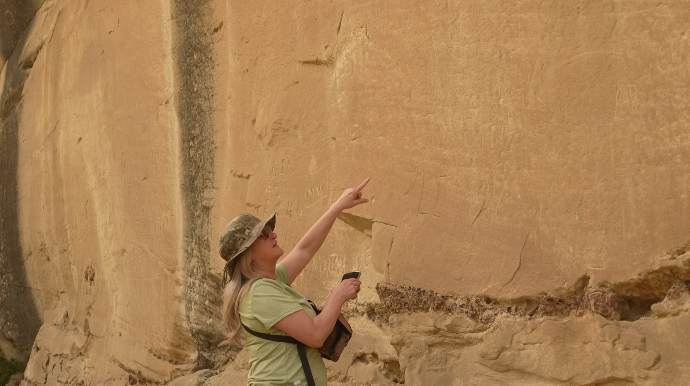
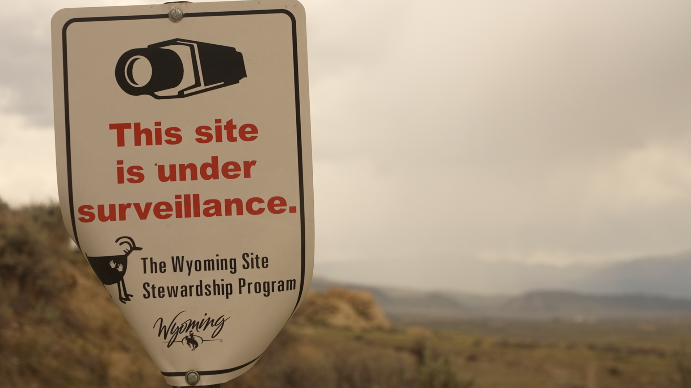
She told MTN she would like to see more participation in the Wyoming Site Stewardship Program.
“You can volunteer, and you can monitor sites,” said Lawrence-Smith. “And then you also have a better timeline of when vandalism does occur.”
Vanessa Willardson/Q2
Even though many sites contain vandalism, Lawrence-Smith has noticed it has decreased over the years.
“What I’ve seen in my 16 years, vandalism is on the downside,” she said. “I’m optimistic. I think they’re getting better.”
BLM encourages people who witness vandalism of rock art sites to leave tips at their Cody Field Office phone number, 307-578-5900.
-

 Pittsburg, PA2 minutes ago
Brandon McGinley: We gotta regatta once again
-

 Augusta, GA7 minutes ago
Henry Brigham pool remains closed as repairs continue
-

 Washington, D.C14 minutes ago
Seasonable Tuesday before the 90s return the rest of the week
-

 Cleveland, OH17 minutes ago
18-year-old shot in Brook Park, 2 arrested in Cleveland
-

 Austin, TX22 minutes ago
New World screwworm in Texas: Austin vet offers advice on keeping pets safe
-

 Alabama29 minutes ago
US appeals court raises concerns about Alabama’s use of nitrogen gas for executions
-
Alaska32 minutes ago
The other Dan Sullivan in Alaska’s US Senate race says candidacy was ‘my choice,’ not a sham
-

 Arizona37 minutes ago
Tranquilized bear caught in trap after falling from tree in Arizona


