Wyoming
Cheyenne School District May Pass Wyoming’s Strictest Library Sex Book Policy


CHEYENNE — Wyoming’s largest school district is considering a library book procurement policy for controversial sexually themed materials that, if passed, would likely be the strictest in the state.
Laramie County School District No. 1 in Cheyenne is discussing a policy that would prevent new books containing “sexually explicit content” of any kind from entering elementary schools and discourage them from being included in junior and high school libraries.
People opposed and supportive of the proposed policy agree it would be the most stringent policy in a state where many school districts are tightening their regulations.
What’s defined as sexually explicit relies on a wide-sweeping definition covering all sexual acts.
In short, if a book contains a sex scene, the district’s librarians would be at least discouraged from buying it.
Since the school district established a new policy for identifying books with sexually explicit content in its circulation last year, there have been 21 titles added to it, almost at the high school level. Any member of the public can nominate books for this disclaimer.
“It’s important, because current policies are not being properly followed and have allowed sexually explicit books into our school libraries, a place with which they do not belong,” said Patricia McCoy, chair of the Cheyenne chapter of Moms For Liberty.
Marcie Kindred, one of the lead organizers of Wyoming Family Alliance for Freedom, is opposed to the proposed policy, which she said amounts to a book ban based on too wide a definition of “sexually explicit.”
“Sexually explicit does not mean without value or merit,” she said. “Sexuality is a part of our life. Teenagers are involved in that with their developmental understanding.”
She said the proposed policy also confirms the suspicions she’s had all along about people wanting to revise the district’s library book policies.
“It confirms they’re trying to keep out books they don’t like personally,” Kindred said.
LCSD1 Board of Trustees Chairman Tim Bolin declined to comment on the proposal as it’s still in its 45-day public comment period.
How It Works
Selection of library materials at the elementary level will be supervised by a district librarian or content area coordinator and cannot contain sexually explicit content.
Selections made at the junior and high school level shall be made by district librarians, who must “endeavor” to select materials, whether free or purchased, that do not contain sexually explicit content.
Materials that meet state and or federal legal definitions for pornography or obscenity will not be included in district library collections.
Kindred said this removes the element of parental choice.
A public records request performed by Cheyenne attorney George Powers shows that 29 of the first 33 nominations were made by a single person, according to an op-ed he wrote for the Wyoming Tribune Eagle.
Kindred also pointed to the fact that during an April school board meeting on this topic, an excerpt was read from a sexually explicit book that is not in circulation in any school library in Wyoming, as proof those fighting for the book policy changes are using “misinformation and sensationalism to scare the public into believing their lies.”
When her daughter was a freshman and sophomore at Cheyenne South High School, McCoy said she checked out books with sexually explicit material and knows other parents who have dealt with similar issues.
When McCoy attempted to read a passage from one aloud at a LCSD1 board meeting, Bolin would not let her.
Check-Out Changes
The new policy on procurement would not apply to books already in the library system.
Last year, the LCSD1 board of trustees approved a new policy that removed the district’s “opt-out” policy and replaced it with an “opt-in” policy for checking out sexually explicit books from its school libraries. This changed the responsibility to the parents to actively decide if they want their children to access sexually explicit books rather than only deciding if they don’t want to access them.
Under that change, parents and guardians have an ability to opt-out their children from being allowed to either check out any books flagged for containing sexually explicit content, allow their children to only check out specific titles containing this content, full access without restrictions, or no access to any books.
Context
In 2023, Park County School District 1 in Powell passed a new book selection and adoption policy for its school district. According to the Powell Tribune, this includes considerations such as supporting standards, user appeal, maturity, favorable reviews from “authoritative sources,” diversity of viewpoints, and representation from religious, ethnic and cultural authors.
In addition to the criteria, the librarians there are supposed to take input from stakeholders in accordance with the district’s mission and values.
The school district also created more options for the removal and restriction of existing books by developing a scoring rubric for a book’s content and the creation of a committee to review removal requests.
Sheridan County School District 1 in Big Horn is also considering new policies for removing library books from its shelves.
In Gillette, the head librarian of the Campbell County Public Library System was fired in 2023 after refusing to move contested books from the juveniles’ sections of the libraries to the adult sections.
McCoy said she is very confident the LCSD1 board will approve the new policy.
“I have faith in our community and many people I have spoken with are in favor of the new procurement policy,” she said. “It is up to us as educators, parents, and community members to protect our children’s innocence and allow them to be children.”
The policy’s review period will be open until 4 p.m. May 23. The board of trustees will decide whether to pass the procurement policy at its June 3 meeting.
Leo Wolfson can be reached at leo@cowboystatedaily.com.



Wyoming State Historic Sites Superintendent Sharie Mooney Shada made an appearance on Sheridan Media’s Public Pulse to speak on the upcoming Immersion in Crow Culture program at Fort Phil Kearny on July 16.
The event begins at 6 p.m. Thursday, July 16 at the Fort Phil Kearny Interpretive Center.
S. Mooney Shada
The rangers host free, family-friendly evening talks and presentations throughout the summer. Shada said the Native American Student Interpretive Ranger Program has enriched the visitor experience at Fort Phil Kearny. In its fourth year at the fort, the program allows a perspective from the indigenous side of history.
Keep up with events at Fort Phil Kearny by clicking here.
Wyoming
‘Not just coloring tipis,’ experts debate quality of Indian education in Wyoming schools – WyoFile

RIVERTON—Nine years after the Wyoming Legislature passed the Indian Education for All Act, education experts say there is still more work to be done.
“I think it is a key priority across the state. Having grown up in Wyoming as a Native student in an off-reservation school, there was never a priority about learning about either tribe; and I still see that today,” Fremont County School District 21 Superintendent Deb Smith told the Wyoming Legislature’s Select Committee on Tribal Relations. “And I’m well into my 50s. So I think we need to push more.”
When the Legislature passed the Indian Education for All Act in 2017, lawmakers did not create an office of Indian education similar to the ones already in place in states such as Montana. Now, some experts and tribal members say they hope Wyoming will move in that direction in the future. But regardless of the particulars of future steps, reservation school leaders told lawmakers that the Indian Education for All Act needs more support and better integration into Wyoming schools.
“As a Native person, we shouldn’t always have to be the one advocating on behalf of our tribes,” Smith said. “People that are Wyomingites should know. They should be sharing that great history.”
Fremont County School District 14 Superintendent Blakke Bertram agreed.
“When there are questions on our state assessment that are geared towards Indian Ed. for All, then I’ll know that we’ve taken it serious,” Bertram told the tribal relations committee during its June meeting in Riverton. “I feel like I have yet to see that.”
The Legislature, he pointed out, recently passed new requirements for literacy education — and backed it up with grant funds and rulemaking. “So when we say something’s important, when we put support and money behind it, we’re saying it’s important. Have we really done that for Indian Ed. for All?”
Revisions underway
When she takes Lander fourth graders on their annual tour of the Wind River Reservation, Fremont County School District Native American Liaison Lisa McCart said one of the highlights is often the visit to Sacajawea’s grave. Having read “Naya Nuki,” the kids usually know who Sacajawea is — but seeing her grave, and hearing Fort Washakie Schools Librarian Robin Levin explain the history of disputes over her burial place, is special.
Fremont County School District 1 is not among the schools regularly invited to testify at tribal relations meetings. However, district representatives sat down with the Lander Journal in the days following the meeting.
As the Lander schools’ Native American liaison, McCart explained, her job involves keeping track of all of the district’s Native students and working with the district’s curriculum coordinator to coordinate learning and cultural experiences. McCart invites in tribal experts, organizes field trips, and works with extracurricular clubs in addition to helping Native students get to, stay in and feel supported at school.
Not every Wyoming school district has a significant population of Native American students, or a Native American liaison. Schools like those in Lander, which are close to the Wind River Reservation, have a bit of an advantage when it comes to integrating Indian education into their classrooms, the Lander district’s Curriculum Coordinator Deidre Meyer explained.

Scotty Ratliff, a member of the Wyoming Department of Education’s relatively new Native American Education Cabinet and a former legislator, said the Wyoming Department of Education could do more to provide districts with resources, teaching materials and curriculum to support the implementation of Indian Education for All statewide. Not every school in Wyoming, he pointed out, is close enough to the Wind River Reservation to have easy access to tribal experts.
The Indian Education for All Act requires that the state take another look at its social studies standards related to the act every nine years. Last updated in 2018, the state is currently in the process of putting together those new standards, the department’s Native American Liaison Rob Black told legislators.
Meyer worked in the Montana Office of Indian Education for years before moving to Lander and was at one point the principal of Fort Washakie Elementary School. She is among several Fremont County educators represented on the committee revising those standards.
Beyond her role as her district’s Native American liaison, McCart is also a member of the Wyoming Department of Education’s Native American Cabinet. In particular, she’s involved in an Essential Understandings subgroup that will be reviewing the updates to social studies standards currently underway to ensure they adequately incorporate tribal perspectives and Native American culture and history.
Learning language
Accessing Shoshone and Arapaho language classes also can be difficult for students, especially for those seeking successive years of Shoshone or Arapaho to qualify for the highest tier of Wyoming’s Hathaway Scholarship, Native American Education Director Roy Brown said. Brown works for Fremont County School District 25, which oversees Riverton schools. Part of the problem is a lack of qualified teachers, Brown and Fremont County School District 38 Superintendent David Holbert noted. Riverton has only ever offered one year of Arapaho language, Brown explained, which means that the district’s students wanting to take Arapaho can’t meet the high-tier Hathaway requirement of two successive years of a foreign language unless they actually take three years of foreign languages.
There are very few available and certified teachers of the Arapaho language, the group of superintendents explained — and even fewer for Shoshone.

McCart recalled that several years ago, Lander pursued its own attempts to bring Northern Arapaho and Shoshone language classes into the district. But, she said, her district found that there are very few people with the appropriate certifications to teach either language as part of a public school class. One of the ideas that she and Meyer have discussed is bringing in tribal elders or others who are fluent in Arapaho and Shoshone outside of a formal class setting, where they might not need to meet the same certification requirements as a teacher but can still help interested students start to learn.
‘[Not just] coloring tipis’
Bertram also challenged the implementation of the current standards for Indian Education for All, even in schools close to the reservation.
“My kids, they go to a neighboring school district, an off-reservation school district. I’ve seen the work that’s going toward Indian Ed. for All in that school district,” Bertram said. “It is not teaching my daughter, my son, about what Indian Ed. for All stands for and what it means to be a Northern Arapaho or Eastern Shoshone tribal member on our reservation.”
He continued: “We’re talking coloring tipis. That’s the kind of stuff we’re seeing on our off-reservation schools when it comes to Indian Ed. for All. And that’s a border school.”
If the district in question had called, Bertram’s district would likely be willing to work with them to share resources, he said.
“I appreciate his passion,” Lisa McCart said of Bertram’s remarks. However, she added, the superintendents at Fremont County school districts meet monthly, and she isn’t aware of any concerns along those lines having been raised at any of those meetings.
McCart and Meyer explained some of the ways Lander schools work to incorporate Indian Education for All into Lander’s curriculum, including reservation tours, cultural events, and the incorporation of Native American literature, history, and legal texts into classes from kindergarten through 12th grade.
For example, a few years ago McCart worked to bring musician and artist Gabriel Ayala, a member of the Yaqui tribe of Arizona, to Lander schools. Ayala worked with a variety of grade levels, McCart said, including teaching kids at Gannett Peak Elementary about the meanings of different symbols in Yaqui culture through an activity that involved the elementary students selecting symbols that would be meaningful to their family and drawing them on a tipi.
“If we weren’t confident in what we’re doing and trying to do in this district, we wouldn’t be vocal at the state level,” Meyer pointed out. “It’s not just coloring tipis.”
To characterize the district’s approach as such, McCart added, “is disrespectful for the [Native] families that choose to be in this district.”
McCart and Meyer noted that communication is key, and they hope Fremont County and Wyoming school districts can work together to ensure all Wyoming students receive an adequate education concerning tribal peoples and issues. If someone has concerns, they said, they both hope they will bring them to them directly so Lander can work to address those concerns.
-
 Florida7 minutes ago
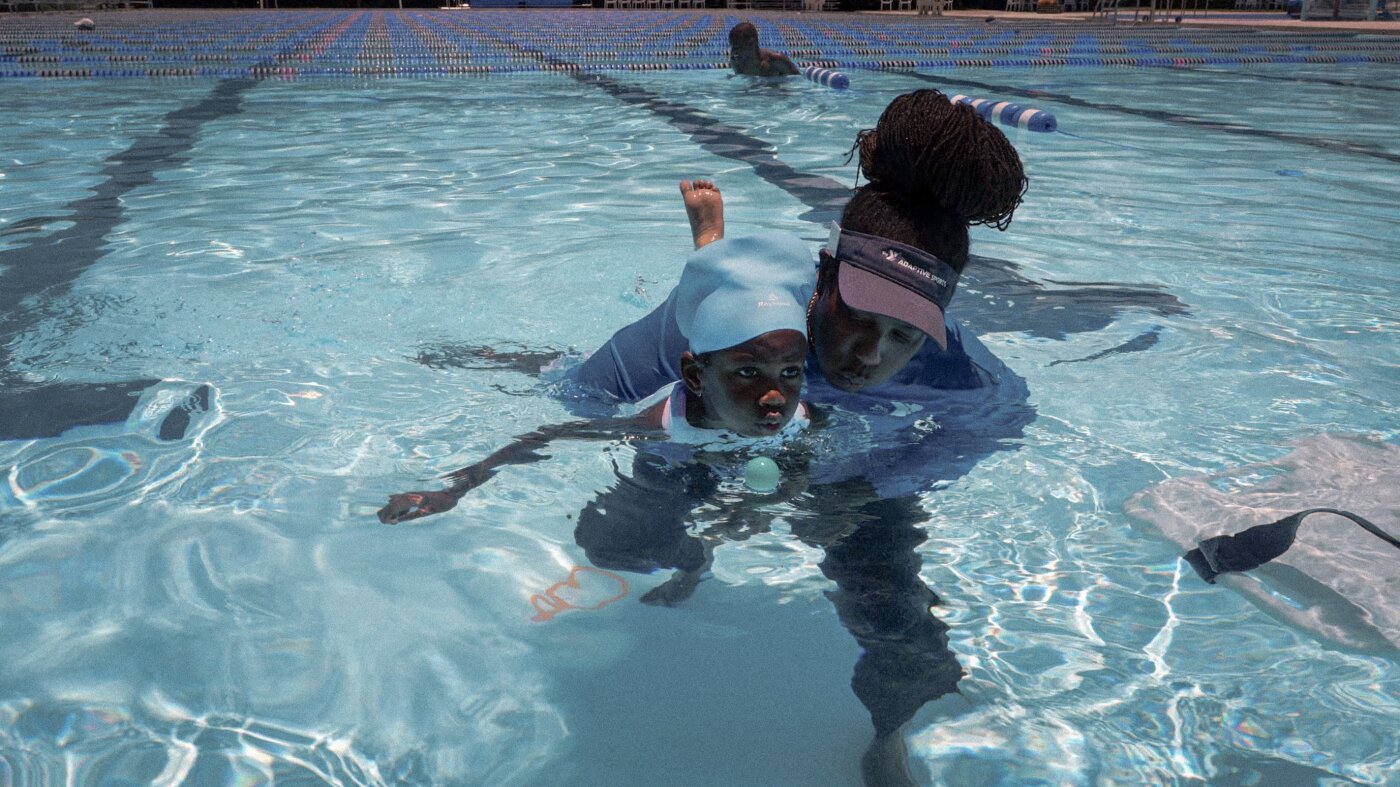
Kids with autism are prone to drowning. Florida is trying to prevent that
-

 Georgia10 minutes ago
Bradenton man wanted for murder is found hiding in Georgia
-

 Hawaii15 minutes ago
Few state bills this year face potential veto – West Hawaii Today
-

 Illinois25 minutes ago
West Suburban hospital sends permanent layoff notices to about 500 furloughed employees
-

 Indiana30 minutes ago
Extreme heat peaks before holiday weekend storms | July 1, 2026
-

 Iowa37 minutes ago
New York Times/Siena Polls in Alaska, Iowa, North Carolina, and Ohio – Siena Research Institute
-

 Kansas40 minutes ago
Kansas State Fair announces Rock Fest with three-band lineup
-

 Kentucky40 minutes ago
Looking for the best hot dog in Louisville? Try these 15 spots

