West
Weird laws in Colorado, including one against throwing snowballs

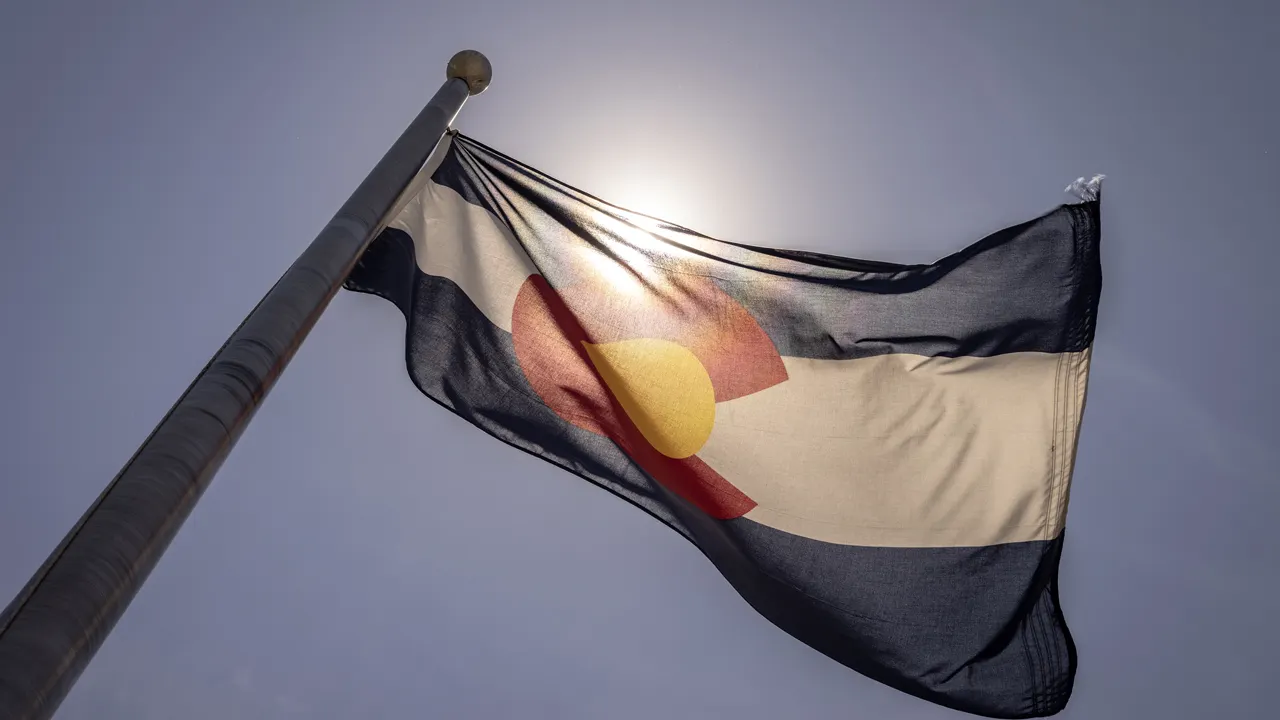
Did you know that throwing snowballs in Aspen, Colorado, is technically against the law?
Every state has its own rather strange laws, and the Centennial State is no exception.
As Colorado is a popular winter vacation destination, it comes as no surprise that there are strange laws revolving around the snowy climate.
BIZARRE LAWS IN CALIFORNIA THAT COULD GET YOU INTO TROUBLE
Read more about a few of the weird laws in Colorado.
- No using upholstered furniture outdoors
- Don’t plan on buying a car on Sundays
- Keep weeds maintained
- No launching snowballs
Every state, including Colorado, has its own laws, some of which seem to be rather strange. (Chet Strange/Bloomberg via Getty Images)
1. No using upholstered furniture outdoors
In Boulder, avoid keeping any upholstered furniture outside. It’s against the law.
According to Boulder General Offenses under Title 5, Chapter 4, 5-4-16, individuals can’t keep “upholstered furniture not manufactured for outdoor use,” in any front, side or backyard.
Upholstered furniture under the law includes couches, chairs and mattresses.
BIZARRE NEW YORK LAWS INCLUDE RESTRICTIONS, PENALTIES FOR TAKING SELFIE WITH TIGER
If the furniture is placed outside while the resident is moving or on a trash day when it is scheduled for pickup, this isn’t a violation of the law.
Additionally, furniture that is placed outside for selling is OK.
2. Don’t plan on buying a car on Sundays
If you are planning on buying a car on a Sunday, you’re out of luck in Colorado.
In the state, “no person, firm, or corporation, whether owner, proprietor, agent, or employee, shall keep open, operate, or assist in keeping open or operating any place or premises or residences, whether open or closed, for the purpose of selling, bartering, or exchanging or offering for sale, barter, or exchange any motor vehicle, whether new, used, or secondhand, on the first day of the week commonly called Sunday,” according to Colorado Revised Statute § 12-6-302.
While you can’t buy a car on Sunday, you can purchase auto accessories or get your vehicle fixed on the day because those businesses are allowed to remain open.
If you are planning on buying a car in Colorado, avoid Sundays because dealerships close their doors that day. (Hendrik Schmidt/picture alliance via Getty Images)
WEIRD LAWS IN MASSACHUSETTS INCLUDING A $20 FINE, POSSIBLE JAIL TIME FOR FRIGHTENING A PIGEON
3. Keep weeds maintained
In Colorado, more specifically Pueblo, residents must keep their weeds under control.
This includes dandelions, which people often majestically blow the seeds off of and make a wish they hope to come true.
“It shall be unlawful for any owner of land to permit weeds in excess of ten (10) inches in height to grow, lie or be located upon such land. It shall be unlawful for the owner of land not to cut, destroy or remove from such land all weeds in excess of ten (10) inches in height,” according to Section 7-4-2 of Pueblo Colorado’s Code of Ordinances.
Several other weeds fall under this law, including Canada thistle, Russian thistle, redroot pigweed, common ragweed and others.
Pueblo, Colorado, takes weeds seriously. Residents must keep their weeds controlled because it’s against the law to let them grow too tall. (Jaap Arriens/NurPhoto via Getty Images)
“This list is not intended to be exclusive, but rather is intended to be indicative of those types of plants which are considered noxious and a detriment to the public health and safety, but shall not include flower gardens, plots of shrubbery, vegetable gardens and small grain plots (wheat, barley, oats and rye),” the law notes.
4. No launching snowballs
In Aspen, be careful before you let that snowball you’ve created fly.
The City of Aspen Municipal Code Sec. 15.04.210 addresses throwing snowballs.
“It shall be unlawful for any person to throw any stone, snowball or other missile or discharge any bow, blowgun, slingshot, gun, catapult or other device upon or at any vehicle, building or other public or private property or upon or at any person or in any public way or place which is public in nature,” according to the law.
Read the full article from Here


The U.S. Supreme Court ruled on Monday that states with laws that allow late-arriving mail ballots, including Nevada, can continue counting them in future elections.
In a 5-4 decision that had potential to affect November’s midterms, the high court upheld a Mississippi law that lets mail votes be counted up to five days after Election Day.
Nevada allows ballots postmarked on or before Election Day to be accepted for up to four days after the election. Mail returned without a legible postmark is accepted for up to three days.
“Nevada’s elections will not change — we will continue to run safe, secure and accessible elections this year without the interference and intimidation of the federal government,” said Nevada Secretary of State Francisco Aguilar in a statement.
The Supreme Court case originated in Mississippi, where the Republican National Committee, Mississippi Republican Party and the state’s Libertarian Party sued the state. Plaintiffs argued that the laws undermine trust and confidence in the election process. Their position centered around federal statutes that set a uniform Election Day.
President Donald Trump, who issued a 2025 executive order that called for an Election Day counting deadline, called the ruling a “tremendous loss” for voter rights.
In a statement, Gov. Joe Lombardo said he agreed with the court’s ruling and called for legislative changes in Nevada.
“Today’s ruling from the Supreme Court reaffirms my stance that states should determine how their own elections are conducted, but there is still a need to enhance transparency and security in Nevada’s elections,” the governor said in a statement. “I fully support the Voter ID ballot measure and will work to ensure our election laws reflect a simple, common-sense principle: Election Day should mean the end of voting, and ballots should be received by Election Day so the results are timely, secure, and trusted by the public.”
Nevada officials react
Attorney General Aaron Ford had signed Nevada onto a Supreme Court amicus brief in support of Mississippi, which argued that establishing an Election Day deadline could lead to a flood of litigation related to ballots that were cast on time but had delayed arrivals.
“Nevada’s elections are free, fair and safe, and Nevadans benefit from a range of choices in how to cast their vote — mail ballots included,” he said in a Monday statement. “Our state has made it clear that we believe our citizens deserve to cast their ballots in the way that is easiest for them, and today’s decision ensures that Nevadans who cast their mail ballot by Election Day will have their legal votes counted.”
Aguilar, Nevada’s chief election officer, earlier said that the state was preparing for the possibility that the high court would issue an opinion reversing the Nevada law. And, he said, recent elections had not seen a high volume of late-arriving ballots. In the 2024 general election, for example, under 10 had arrived by the fourth day after Election Day, he said in April.
Justices split vote
Justice Amy Coney Barrett and Chief Justice John Roberts, both conservatives, joined the three liberal justices in the majority ruling.
“When voting on different days in different states sparked allegations of fraud, Congress set a nationally uniform deadline for voting,” Barrett wrote in the majority opinion. “If varied deadlines for ballot receipt similarly call for a national solution, the American people must choose it through their elected representatives.”
She wrote that about 30 states accept at least some absentee ballots sent by Election Day to be counted afterward.
“Although the election-day statutes refer to a particular ‘day’ for the election, plaintiffs do not contend that everything must occur on that day,” Barrett said.
Justice Samuel Alito penned the dissenting opinion.
“If ballots received after Election Day are added to the set of ballots that dictate the election’s outcome, the electorate’s choice does not occur on election day, and the federal election-day statutes are violated,” he wrote.
Call for voter ID law renewed
After the ruling, Trump repeated his demand for senators to pass the Save America Act, a bill that would require voters to present a photo ID, proof of citizenship and outlaw most mail voting.
“There is no excuse for a politician, or otherwise, to be against the above three requirements. There is only one reason to oppose — CHEATING!,” Trump wrote on Truth Social. “The House of Representatives has approved this vital Act, THREE TIMES. The United States Senate seems unable to do so.”
The Repair the Vote PAC, which is leading a ballot initiative in Nevada to institute voter ID requirements, supports an Election Day deadline.
“This decision makes passing Question 7 even more important, as we must have verification that every ballot that is mailed in was sent in by a legally registered Nevada voter, regardless of when it was received,” said PAC Chairman David Gibbs in a statement, “but especially for those received after the polls have closed.”
Democratic senators Catherine Cortez Masto and Jacky Rosen celebrated the Supreme Court’s decision, adding that Nevada’s elections already are safe and secure.
“Today’s Supreme Court decision preserves that right so that Americans can continue to make their voices heard in the democratic process,” Cortez Masto wrote on X. “This administration will continue to lose in court as it tries to illegally control our elections.”
Added Rosen in her own post: “All eligible voters have a right to make their voice heard, and Trump won’t get away with his attacks on Americans’ voting rights.”
Contact Ricardo Torres-Cortez at rtorres@reviewjournal.com.


The David Woods abuse case and Iowa’s child welfare crisis
David Woods is serving 100-year prison sentence in connection with a case in which he adopted, then abused, boys from the Iowa foster care system.
New Mexico State Treasurer Laura Montoya reintroduced baby bonds to legislative teams at a recent conference.
During this conference, Montoya and her team explained what baby bonds would do, what they would mean for New Mexicans and asked for their thoughts and what she could change to help get it passed in the New Mexico Legislature.
Baby bonds are a way for parents to set children up for success later down the line, Montoya said. New Mexico would allocate around $7,000 to each newborn child as part of the bond proposal. The bond would grow over time, and the child would have access to it at age 18. Bonds could be used for a down payment for a car or to pay for parts of school that are not covered by the lottery or opportunity scholarships, buying or renovating a home, or starting a business all withing the state of New Mexico.
Montoya said the funds would not be used for random expenses.
“Now you might be saying, ‘when I was 18 and I would never give myself that money.’ You’re not getting the money directly. So, what happens is it all gets put into a pool of cash that is invested by the State Investment Council. They manage the money and then when you need it, let’s say you’re a student and NMSU gives us an invoice, you say ‘yes, I went to school and NMSU needs to be paid out,’” Montoya said. “Then it goes to the appropriate (agency), whether it’s EFA (Education Freedom Account) or whoever the Legislature designates, will then sign off the check and send it directly to NMSU. So, it’s their money but it isn’t their money.”
Montoya hypothesized on how a bond would benefit a young New Mexican.
“So, you consider an 18-year-old from a working-class family living in Rio Arriba (County), who dreams of attending a four-year college and eventually becoming a nurse. However, achieving this dream would have been difficult given her family’s working-class income. Having a Baby Bond has already made a difference. Research indicates that even small dollar savings accounts with money designated for school results in low-and middle-income children being more likely to enroll in college,” Montoya said.
Montoya said that statistics from the Treasurer’s Office, other state government agencies and pulled from public records to show what a baby bond could do for someone in a low income bracket.
“So, in Rio Arriba only 6% of adults have a degree beyond a bachelor’s degree. Only 7.5% of renters in Rio Arriba are able to afford median home price and baby bonds can contribute to significant decreases in student loan debt especially for women and people of color. You’ll see that same $7,000 she used $13,000 of it for nursing school when she was 18. Then, she still made another $23,000 and she used 30,000 for a home down payment. By the end of it she still had $150,000,” Montoya said.
The children who receive baby bonds would gain access to them only by taking a financial literacy course — or as Montoya calls it financial fitness course. This could be offered through state banks, but she said maybe later down the line it will be offered in kindergarten through grade 12.
“Financial fitness for me is something that I’m very passionate about because I grew up super humble and we didn’t have anyone to teach us what that looked like in having a savings account and investing and so many New Mexicans don’t. So, the one place we can learn this is in our schools, and we need to partner because a lot of our schools don’t have some of that expertise,” she said. “We need to partner with our banks; we need to partner with others that are doing the work already. We don’t need to reinvent the wheel. We just need to bring more people in to partner.”
Department Head and Professor at NMSU Harikuman Sankaran questioned whether the bonds could be used by students already relying on the New Mexico Legislative Lottery Scholarship and New Mexico Opportunity Scholarship. Deputy State Treasurer Ricky Serna said students had the option to access the funds regardless of scholarship awards.
“If I’m a student that says, ‘I live in Albuquerque and I’m going to UNM, I already don’t have to pay tuition and I have a scholarship and now I don’t have to pay for books and fees. Do I have to now wait until I buy a home to access my baby bond?’ Maybe it’s ‘No, I can tell UNM I have enough to put me to work in the school of arts and sciences or put me to work somewhere because I want to use some of my money now, right?’ I think that’s the idea,” Serna said.
Montoya said that this concern would be addressed later to not overcomplicate the bond proposal.
“But that’s something the Legislature can do in the future, too. I mean we have 18 years, so I don’t want to complicate it at this moment. I just want to keep it as simple as possible, but I understand (the concern) of what you’re saying on the long-term investment to have them buy in,” Montoya said.
Montoya said Baby Bonds have the potential to address some of the state’s largest issues – poverty, educational attainment and housing. As the bond recipient gets older it too can ease the burden of housing, retirement and reliance on public assistance.
Children born in New Mexico could access the investment between the ages 18 and 35 to build wealth.
Montoya asked the public to comment on the use of Baby Bonds, an issue the state Legislature will consider in the 2027 Legislative session.
Leighanne Muñoz is the business and development reporter for the Las Cruces Sun-News and is a fellow with the New Mexico Local News Fellowships and Internships Program, which places emerging journalists in newsrooms across New Mexico. Learn more at www.newmexicolocalnewsfellowships.org. Email her at lmunoz@gannett.com.
The Oregon Lottery offers several draw games for those aiming to win big.
Here’s a look at July 2, 2026, results for each game:
Winning Pick 4 numbers from July 2 drawing
1PM: 3-2-1-6
4PM: 7-1-7-6
7PM: 6-2-0-4
10PM: 5-3-8-0
Check Pick 4 payouts and previous drawings here.
Feeling lucky? Explore the latest lottery news & results
When are the Oregon Lottery drawings held?
- Powerball: 7:59 p.m. on Monday, Wednesday and Saturday.
- Mega Millions: 7:59 p.m. on Tuesday and Friday.
- Pick 4: 1 p.m., 4 p.m., 7 p.m. and 10 p.m. daily.
- Win for Life: 7:30 p.m. on Monday, Wednesday, and Saturday.
- Megabucks: 7:29 p.m. on Monday, Wednesday, and Saturday.
This results page was generated automatically using information from TinBu and a template written and reviewed by an Oregon editor. You can send feedback using this form.
-

 Nevada17 seconds ago
US Supreme Court: Nevada, other states can accept late-arriving mail ballots
-

 New Hampshire5 minutes ago
N.H. State Police announce unexpected death of 19-year veteran
-

 New Jersey12 minutes ago
Legendary NJ Fourth of July lobster catch created record that will never be broken
-

 New Mexico15 minutes ago
$7K baby bond for each New Mexico child? What the state treasurer is proposing
-

 North Carolina20 minutes ago
Warsaw man extradited back to Duplin County in last year’s lottery ticket probe
-

 North Dakota27 minutes ago
North Dakota’s Vantis BVLOS system now open to UAS operators at no cost – Unmanned airspace
-

 Ohio30 minutes ago
Licking County real estate transfers for June 15-19, 2026, hit $697K
-

 Oklahoma35 minutes ago
Can Missouri football get revenge on Oklahoma? How Sooners shape up

