Warm and spicy. Sweet and floral. Woody and earthy.
Washington
The fragrance industry is booming. Here’s why it makes scents.


Fragrance is the fastest-growing category in the prestige beauty sector, with sales climbing 13 percent in the first quarter, according to market research firm Circana. First-time buyers and men are driving much of those gains, gravitating to high-end brands such as Chanel, YSL, Dior, Le Labo, Jo Malone and Tom Ford. Meanwhile, younger shoppers, particularly tweens, are stocking up on gift sets and body sprays available at lower price points, such as Sol de Janeiro.
The upswing speaks to evolving consumer habits after the pandemic, from which Americans emerged flush with savings and eager to indulge. Beauty influencers and the “quiet luxury” aesthetic also propelled interest in prestige scents, which, even at $100 a pop or more, are relatively affordable in a retail space where clothes and accessories routinely come with four- and five-digit price tags. More than 100 million units were sold in the United States last year, Circana said. Annual sales are projected to hit $9 billion by 2026.
“This is unprecedented in industry,” said Larissa Jensen, a beauty industry analyst at Circana. “Everything that goes up, comes down. … We haven’t seen that yet with fragrance. It’s incredible.”
The beauty sector, which includes makeup, skin care and hair care, tends to be resilient regardless of broader economic conditions. We spend when we’re feeling good and when we’re feeling down, Jensen said. If the economy is in a slump, we buy a low-ticket luxury to boost our mood.
It’s an emotional industry, she said. “But fragrance — it’s like the power of scent is unquestionable. It’s nostalgia.”
Prestige fragrance sales have exceeding expectations since the start of the pandemic in 2020, Jensen said. After long stretches at home, their social and professional lives disrupted, Americans wanted to treat themselves. In some cases, that meant dropping more than $300 on a 2.4-ounce bottle of Maison Francis Kurkdjian Baccarat Rouge 540 or 3.4 ounces of Byredo Mojave Ghost perfume.
“What drove fragrance in the immediate post-pandemic period was super luxury,” she said. “It was the $300 and the $400 fragrances that were doing phenomenal.” That, in turn, powered revenue and unit growth, ”which is incredible.”
But consumers also were reaching for scents in the $100 to $200 range, allowing them to dip into luxury with “a reasonable spend,” said Olivia Tong, an analyst at Raymond James Equity Research. “It may not be feasible to buy a purse, shoes or clothes but perhaps you can get the Tom Ford or Chanel fragrance.”
Plus, people wanted to “smell like a rich person,” said Dominica Baird, chair of the business of beauty and fragrance program at Savannah College of Art and Design. You feel like “you’re in a club” when someone compliments your fragrance, she said.
Beauty conglomerate Coty said its seven top brands — Hugo Boss, Burberry, Calvin Klein, Chloé, Davidoff, Gucci and Marc Jacobs — accounted for nearly 90 percent of its fragrance sales. Net revenue in the category swelled nearly 60 percent year over year.
And consumers aren’t settling for just one; they’re going for an array of perfumes or body sprays. For Gen Z, it’s an added layer of self-expression, Tong said.
“It completes the look,” she said. “You may be feeling fresh one day, feeling spicy the next, and making sure you have the scent to go with that.”
Estée Lauder chief executive Fabrizio Freda noted that younger shoppers have as many as eight fragrances in their rotations, “one for every occasion,” he said at a conference in May. “That is a big change [for] the category.”
What’s more, prestige lines are attracting more first-time buyers: Coty reported 5 million new customers last year, a 6 percent increase year over year, CEO Sue Nabi said at a retail conference last month. Men added a nice boost to growth, too, she said.
And they’re spending at a faster rate; prestige sales climbed 17 percent compared with women’s 11 percent year over year, Jensen said.
“Men are becoming more sophisticated beauty consumers,” Baird said. They’re leveling up and reaching for brands such as Gucci, Jensen said, though drugstore staple Axe Body Spray is “still doing great.
Among shoppers ages 25 to 44, sales have soared 19 percent, according to Circana, though unit sales are notably stronger in households that have children. Gen Alpha — those born from 2010 to 2024 — is big on body spray, which tends to be a lower cost, less potent option, Jensen said.
Tweens are particularly enamored with Sol de Janeiro, a body spray and lotion brand with at least seven scents that has gone viral on TikTok. Some industry experts see it as a gateway for younger shoppers looking at influencers, older siblings and parents for what to buy next. And they’re starting to gain expensive taste, with some of the hottest beauty products creeping closer to the prestige category.
At Ulta, which started carrying Sol de Janeiro at the beginning of the year, the brand is “right in that sweet spot for us,” chief operating officer Kecia Steelman said at a conference in June. Fragrance was 10 percent of Ulta’s net sales in the quarter ended May 30, up from 9 percent from the year-ago period. Sol de Janeiro also has gift sets, an attractive option for consumers looking for value and to layer scents, which Steelman noted is one of the top trends this year.
Fragrances from music artists are also popular with younger shoppers. Baird’s students have told her that perfumes from Billie Eilish, Sabrina Carpenter and Beyoncé make them feel connected to the artists.
“There’s something that feels a bit personal about a fragrance,” Baird said, “especially if the celebrity seems genuine about it and it’s not just a money grab.”

The Washington Lottery offers several draw games for those aiming to win big.
Here’s a look at June 7, 2026, results for each game:
Winning Cash Pop numbers from June 7 drawing
02
Check Cash Pop payouts and previous drawings here.
Winning Pick 3 numbers from June 7 drawing
0-0-5
Check Pick 3 payouts and previous drawings here.
Winning Match 4 numbers from June 7 drawing
02-17-21-22
Check Match 4 payouts and previous drawings here.
Winning Hit 5 numbers from June 7 drawing
05-07-08-10-25
Check Hit 5 payouts and previous drawings here.
Winning Keno numbers from June 7 drawing
01-07-11-13-14-20-21-26-28-29-30-32-37-40-41-52-65-66-74-77
Check Keno payouts and previous drawings here.
Feeling lucky? Explore the latest lottery news & results
Are you a winner? Here’s how to claim your lottery prize
All Washington Lottery retailers can redeem prizes up to $600. For prizes over $600, winners have the option to submit their claim by mail or in person at one of Washington Lottery’s regional offices.
To claim by mail, complete a winner claim form and the information on the back of the ticket, making sure you have signed it, and mail it to:
Washington Lottery Headquarters
PO Box 43050
Olympia, WA 98504-3050
For in-person claims, visit a Washington Lottery regional office and bring a winning ticket, photo ID, Social Security card and a voided check (optional).
Olympia Headquarters
Everett Regional Office
Federal Way Office
Spokane Department of Imagination
Vancouver Office
Tri-Cities Regional Office
For additional instructions or to download the claim form, visit the Washington Lottery prize claim page.
When are the Washington Lottery drawings held?
- Powerball: 7:59 p.m. PT Monday, Wednesday and Saturday.
- Mega Millions: 8 p.m. PT Tuesday and Friday.
- Cash Pop: 8 p.m. PT daily.
- Pick 3: 8 p.m. PT daily.
- Match 4: 8 p.m. PT daily.
- Hit 5: 8 p.m. PT daily.
- Daily Keno: 8 p.m. PT daily.
- Lotto: 8 p.m. PT Monday, Wednesday, and Saturday.
- Powerball Double Play: 8:30 p.m. PT Monday, Wednesday and Saturday.
This results page was generated automatically using information from TinBu and a template written and reviewed by a Washington editor. You can send feedback using this form.

Much of Western Washington University’s queer community gathered on campus Thursday, June 4 to celebrate the institution’s third annual Lavender Graduation.
The 2025 ceremony was canceled due to a strike by the university’s operational student employees following more than a year of failed negotiations with WWU. This year, though, about 60 graduates walked the stage inside Viking Union
. Multiple keynote and student speakers took to the podium to congratulate the university’s outgoing students on reaching an academic milestone, and touted the importance of community building during a time when shifts in the country’s social and political fabric have negatively affected minority communities.
Still, the ceremony was filled with joy as those same speakers recounted how the friends and family they’d fostered on campus changed their lives for the better. During the event, four Western Washington University graduates took the time to speak with Cascadia Daily News and reflect on their growth while in school.
Their responses have been edited for brevity and clarity.
Juleyana Cabrera
What did you learn outside of the classroom during your time at WWU?
I think it’s more like another thing I just kind of survived. I’ve lived a really rough life, and I’m the first generation in my family to graduate from any college. So there’s a lot of pressure, but there is also the knowledge within myself that I’ll probably be okay no matter what happens after this. I learned a lot on campus about myself and how I adapt to things.
What does queerness mean to you?
Queerness means to me, it means community, it means family, it means the thing that saved my life. I’m just kind of more grateful than anything. My first ex-girlfriend is the whole reason I moved to town. Rest in peace, she’s not with us anymore, but I don’t know where I’d be without my queer fam.
Did you find WWU to be a welcoming space for you?
There are certain pockets that are OK but there are certain teachers that were straight-up transphobic that I absolutely hate.
Do you have any words of advice for queer students who are about to start the next step of their education at WWU?
Remember to get full sleep. Don’t forget to stay hydrated. Avoid the drama if you can avoid it. Figure out what works best for you and keeps you safe and sane, because keeping yourself safe and sane while navigating all of this is the most important thing.
Joshua Riley

What did you learn outside of the classroom during your time at WWU?
Even as you build community with people, you have to put yourself first. I think that’s the biggest step in building community. When you put yourself first, you can be your most authentic form, and I think that that’s really helped me accept who I am and be happy with who I am.
Do you have any words of advice for queer students who are about to start the next step of their education at WWU?
Go to all of the events you can, talk to all the people you can. Showing up really is the best thing you can do. It helped me get integrated and find my people a lot faster. The events are great and they’re there for you. You should attend them.
Did you find WWU to be a welcoming space for you?
Yes, Western was very welcoming. They talked a little bit about intersectionality (during Lavender Graduation), and my experience as a queer person has been really great. My experience as a person of color has been less great. So that comes together in ways that are sometimes not great and then sometimes really great because you get spaces like Black LGBTQ+ Thriving as well.
I would say ultimately yes, especially as a queer person. Even as I talk about the struggles of being a person of color in these predominantly white spaces, I have been more accepted here than a lot of the white spaces I have been in prior.
What does queerness mean to you?
It means accepting alternate truths and realities, I suppose. There is a heteronormative standard set in place, and when you break that, you accept queerness. To me, that means having pride and joy in the person that you are, no matter who you are and what you bring to the table. Like I said, you kind of put yourself first and learn yourself and love yourself.
Casper Suter

What did you learn outside of the classroom during your time at WWU?
I learned a lot about community. I spent the three-and-a-half years that I was here as a part of the drag campus club on campus. I was a part of it from the day it started. Prior to that, I didn’t have a whole lot of friends or even people within the queer community that I knew at home, so I learned a lot about other people and how they fit into the community and how we all interact together.
What does queerness mean to you?
Being yourself, even through adversity. When I first came to Western, I presented myself very differently than I do now because I felt like it was how I had to be in order to be valid in my identity, and now I feel a lot more comfortable in both my identity and also how I present, regardless of how they overlap.
Do you have any words of advice for queer students who are about to start the next step of their education at WWU?
Find your people. One of my best friends is someone I met the day I moved into the dorms and we’ve stuck together ever since. I know people who went through all of college without really knowing anyone in their community. It took me until my third year to meet other people in my major, so just like finding your people and having people around you so you’re not alone.
Gabriel Diaz-Kelly

What did you learn outside of the classroom during your time at WWU?
I think Western really taught me to listen to people. I came in thinking that I was the only person with my experience. When I came into college, I thought that I knew the most about everything and that no one else could relate to me, and this made me special in a lot of ways. I learned that uniqueness doesn’t really come necessarily from the identities that I hold, but the experiences that I get to share with people.
I was really lucky to be able to find such wonderful queer friendships here. Queer professors, queer mentors and even just in general, college has really forced me to take uncomfortability and turn it into lessons and education.
Did you find WWU to be a welcoming space for you?
I came out as trans super, super young, when I was 13, which is younger than most people my age. One of the main reasons I picked Western is because of their gender-neutral housing. I remember very specifically a call that we gave to Western when I was going through universities calling and asking, “Hey, what is it like to find a dorm when you’re trans,” and they had all of these systems already in place, and I remember me and my mom in the car together becuase she was so worried that her kid wasn’t going to be safe in college.
But I did find a lot of gaps. It wasn’t necessarily because people weren’t working hard enough; it’s just that there weren’t enough people or positions. So it was very easy for me to find a community and support network when it came to my personal life, but when it came to the broader structures of Western, there was kind of a gap that I was lucky enough to fill when I was working as the advocacy and education co-coordinator (for LGBTQ+ Western).
I am leaving this with the full knowledge that my co-coordinator, my other employees, my supervisors have my back 100% of the way, and they’re going to have the next person’s back.
Do you have any words of advice for queer students who are about to start the next step of their education at WWU?
Shut up and listen. I love to talk, I love to get to know people, but you really have to just be on the sidelines to get to know people. Be the dumb person in class, ask the questions, don’t wait for someone to tell you what you’re supposed to know.
Take every opportunity, look up every resource. We have 1,001 resources here at Western. Most students don’t know that we have free audio editing and sewing machines, and we take students out to Mount Baker and we have gender-affirming resources. Say hi to everyone you can say hi to and talk to the people that you don’t think you’d like, because chances are you’re probably going to like them at least a little bit.
What does queerness mean to you?
I think queerness is a way for me to show other people that I want to love them in a very kind way. If I’m alone, I don’t think of myself as queer and trans; those are labels I give to the outside world so that they get some glimpse into what I am.
I don’t need anyone to tell me that I’m valid, I don’t need anyone to tell me that I’m enough because I know that, I’m very secure in that. So what I have in the label “queer” is a billboard to everyone else that says, “I want to love you back. I want to talk to you, I want to get to know you.”
Santiago Ochoa is a CDN visual journalist; reach him at santiagoochoa@cascadiadaily.com; 360-922-3090 ext. 105.

A group of Northeast Texas Community College travelers recently returned from an unforgettable travel study experience in Washington, D.C., where they spent several days exploring the history, government, and culture of the nation’s capital.
The trip provided participants with a unique opportunity to experience many of the places and institutions they have studied and read about over the years. Highlights included a guided tour of the U.S. Capitol led by a member of Congressman Nathaniel Moran’s staff, a tour of the White House, and visits to several Smithsonian museums, including the National Museum of Natural History and the National Museum of American History.
The group also visited some of America’s most recognizable landmarks and historic sites, including the Jefferson Memorial, Lincoln Memorial, Washington Monument, and Mount Vernon, the home of George Washington. Along the way, travelers gained practical experience navigating the city by mastering the D.C. Metro system and exploring the capital like locals.
“The trip was a great opportunity to connect classroom learning with real places, real institutions, and real history,” said Matt Homer, NTCC instructor and trip coordinator. “From government and politics to culture and historical preservation, participants were able to experience concepts they have studied in a much more meaningful way.”
In addition to the educational experiences, the trip offered plenty of opportunities for discussion, reflection, and fellowship among participants.
NTCC offers a travel study course each summer that allows students, employees, and community members to explore a different destination while earning college credit. For more information about future travel study opportunities, contact Matt Homer at thomer@ntcc.edu.
-
 Washington, D.C7 minutes ago
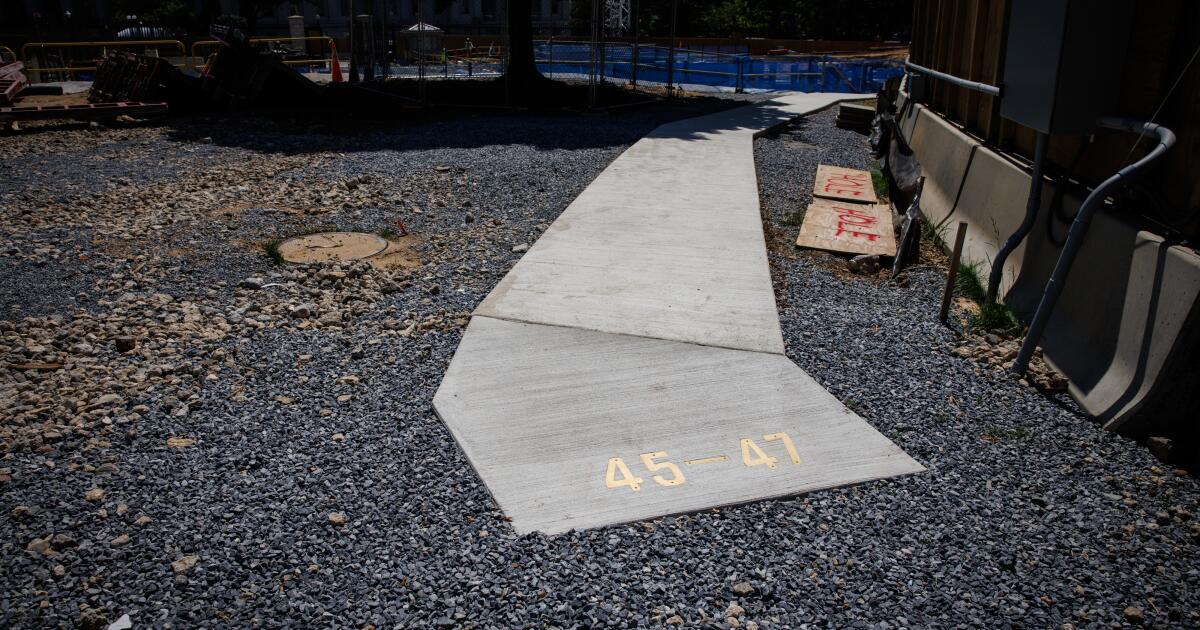
Trump forges ahead with D.C. cityscape transformation against growing resistance
-

 Cleveland, OH9 minutes ago
Union Pacific Big Boy locomotive No. 4014 to stop in Northeast Ohio apart of cross-country tour
-

 Austin, TX14 minutes ago
Texas sweeps Oregon, advances to Men’s College World Series for record 39th time
-

 Alabama22 minutes ago
Flooding Concerns Continue Across North Alabama as More Rain Moves In
-

 Alaska24 minutes ago
Interior raises $3.7M in Arctic National Wildlife Refuge lease sale
-

 Arizona30 minutes ago
Arizona lake closes indefinitely to visitors after all of its fish die
-

 Arkansas36 minutes ago
Arkansas Storm Team Forecast: A few more storms today
-

 California40 minutes ago
Live updates: Trump talks ‘anti-weaponization’ fund, California elections

