Washington
China hits backs at US, says Washington seriously undermined tariff truce | Today News


Beijing, China on Monday hit back at the US, accusing it of seriously violating their recent Geneva trade truce by introducing multiple restrictive measures like AI chip export control guidelines, stopping the sale of chip design software to China and revoking visas for Chinese students.
The US has seriously undermined the consensus reached during the China-US economic and trade talks in Geneva by successively introducing multiple discriminatory restrictive measures against China, a spokesperson for the Commerce Ministry said in a statement, refuting President Donald Trump’s allegation that China had “totally violated agreement with us”.
The US measures included issuing guidance on AI chip export controls, halting sales of chip design software to China, and announcing the revocation of visas for Chinese students, the spokesperson said.
It is significant that China has clubbed the student visas with that of trade and tariff-related issues.
About 2.7 lakh Chinese students, the second largest after India, studying in the US scrambled to work out their plans after US Secretary of State Marco Rubio announced on May 29 that America would begin revoking the visas of some Chinese students, including those studying in “critical fields” and “those with connections to the Chinese Communist Party.”
These actions severely violated the consensus reached during a phone call between the two heads of state on Jan. 17 and gravely harmed China’s legitimate rights and interests, the statement said.
The US has unilaterally and repeatedly provoked new economic and trade frictions, exacerbating uncertainty and instability in bilateral economic and trade relations, the spokesperson said.
Both the US and China agreed to lower tit-for-tat tariffs after talks last month in Geneva. The truce is due to last 90 days to provide time for the top two economies to reach a broader substantive agreement to end their tariff war.
Trump imposed 145 per cent of tariffs against the Chinese exports of about USD 439.9 billion and China retaliated with 125 per cent on American exports of about USD 143 billion.
China also put restrictions on the exports of rare-earth minerals which are all critical materials for defence, new energy batteries, semiconductors and advanced manufacturing and Beijing has not lifted the curbs.
Under the Geneva agreement, the US lowered tariffs imposed on goods from China from 145 per cent to 30 per cent while China dropped its retaliatory tariffs from 125 per cent to 10 per cent.
The recriminations began after Trump said on Friday that China had “totally violated its agreement with us” but did not give details.
However, US Trade Representative Jamieson Greer later said China had not been removing non-tariff barriers as agreed under the deal, according to reports from Washington.
Trump stirred further controversy Friday, saying he will no longer be nice to China on trade, declaring in a social media post that the country had broken an agreement with the United States.
Hours later, Trump said in the Oval Office that he would speak with Chinese President Xi Jinping and hopefully “we’ll work that out”, while still insisting China had violated the agreement.
“The bad news is that China, perhaps not surprisingly to some, HAS TOTALLY VIOLATED ITS AGREEMENT WITH US,” Trump posted. “So much for being Mr. NICE GUY!”
Greer later told TV network CNBC that China was yet to properly roll back other trade restrictions it had levied on the US, BBC reported.
Greer said when China responded to the US’s tariffs with its own, they also put in place countermeasures such as putting some US companies on blacklists and restricting exports of rare earth magnets, a critical component in cars, aircraft and semiconductors.
“They removed the tariff like we did but some of the countermeasures they’ve slowed on,” Greer said.
The strong statements from both sides have raised concerns that trade tensions could again escalate between the world’s two largest economies despite recent negotiations.
The US has unilaterally and repeatedly provoked new economic and trade frictions, exacerbating uncertainty and instability in bilateral economic and trade relations, the spokesperson said.
“Instead of reflecting on its own actions, the US has groundlessly accused China of violating the consensus, a claim that grossly distorts the facts. China firmly rejects these unjustified accusations,” the spokesperson said.
Calling the outcomes of the Geneva talks “hard-won,” the spokesperson said, “China is firm in safeguarding its rights and interests, and sincere in implementing the consensus” and urged the US to immediately correct its wrong practices, jointly uphold the consensus of the talks, and promote the healthy, stable and sustainable development of China-US economic and trade relations.
“If the US side insists on going the wrong way and continues to harm China’s interests, China will resolutely take forceful measures to safeguard its legitimate rights and interests, according to the spokesperson,” the spokesperson added.
This article was generated from an automated news agency feed without modifications to text.



Washington
Whoopi Goldberg, Kerry Washington and More Celebrate Opening Night of The Whoopi Monologues

Kara Young, Dominique Fishback, Kecia Lewis, Kerry Washington and Danielle Pinnock
(Photo by Sergio Villarini for Broadway.com)
The Whoopi Monologues opened on July 13 at Lincoln Center Theater’s Mitzi E. Newhouse Theater, reimagining Whoopi Goldberg’s 1984 one-woman show as an ensemble piece. The cast, which features Kerry Washington, Kara Young, Dominique Fishback, Kecia Lewis and Danielle Pinnock, assembled on opening night to serve red carpet glam. Cedric The Entertainer, Don Cheadle, Angela Bassett, Ana Navarro and Goldberg herself also turned up in their finery. Scroll down for some hot shots of the stars in attendance and check out the full gallery below!

Get Tickets to The Whoopi Monologues!
Diyar Guldogan
14 July 2026•Update: 14 July 2026
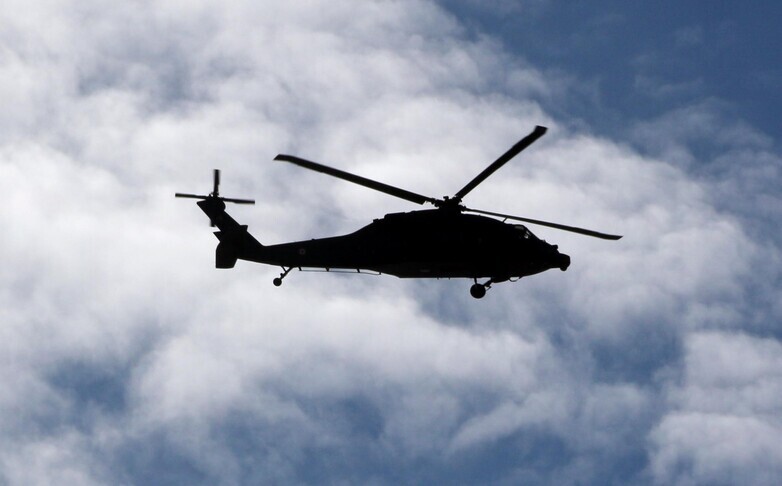
A US Air Force helicopter made a precautionary landing in northwest Washington, DC late Monday, local media reported.
The incident occurred at approximately 9.25 p.m. (0125GMT Tuesday) when a UH-1N Huey helicopter assigned to the 1st Helicopter Squadron at Joint Base Andrews, Maryland landed along Foxhall Road near Whitehaven Parkway NW, close to the Georgetown Reservoir.
All four crew members who were on board are safe, according to media reports.
Maintenance personnel and law enforcement officials remained at the scene into the early hours of Tuesday as authorities assessed the aircraft and investigated the circumstances surrounding the landing.

See what a ‘super’ El Niño could bring
USA TODAY Network reporter Brandi D. Addison breaks down what a strong El Niño could mean for weather patterns across the country.
It may be the middle of July, but the Old Farmer’s Almanac is already looking ahead to the fall with cooler temperatures ahead.
The Almanac, which has been one of the most trusted weather prediction sources for more than two centuries, recently released its fall forecast, showing a wide range of weather throughout the United States.
But what about in the Washington DC region? Here’s what the Almanac says.
What is the fall weather forecast in the Washington DC area?
DC sits along the Almanac’s Atlantic Corridor, and that region should expect a “cool, dry” fall, according to the forecast.
“Expect cooler and wetter conditions than usual this fall,” the Old Farmer’s Almanac says. “Below average temperatures are forecast, along with an uptick in precipitation over traditional averages.”
Last year, DC received 6.53 inches of rain during September, October and November — significantly lower than the city’s 30-year average of 10.50 inches, according to the National Weather Service.
September’s average temperature was 72.2 degrees, with October at 60.3 and November at 49.9 degrees. The season had an average temperature of 60.8 degrees, slightly below the 30-year average of 61.0 degrees.
What does the Farmer’s Almanac say about winter in Washington DC?
In its long-range forecast, the Almanac forecasts above average temperatures this winter in DC with snowfall below normal.
“The coldest periods will occur in mid- to late-December and early and late January,” it says. “The snowiest periods will be in late December, early January, and late February.”
The Old Farmer’s Almanac says it is 80% accurate, but a 2017 University of Illinois study found it to be just 52% accurate.
-

 Wisconsin8 minutes ago
Flood relief grant applications now open for nonprofits, churches in Northeast Wisconsin
-

 West Virginia14 minutes ago
New law allows employers to provide benefits for independent contractors in West Virginia
-

 Wyoming20 minutes ago
Election Q&A: Jessica Crowder for Wyoming House District 43
-

 Crypto26 minutes ago
Blackrock Becomes World’s First $15 Trillion Asset Manager, Unleashes Tokenization Blitz
-
 Finance32 minutes ago
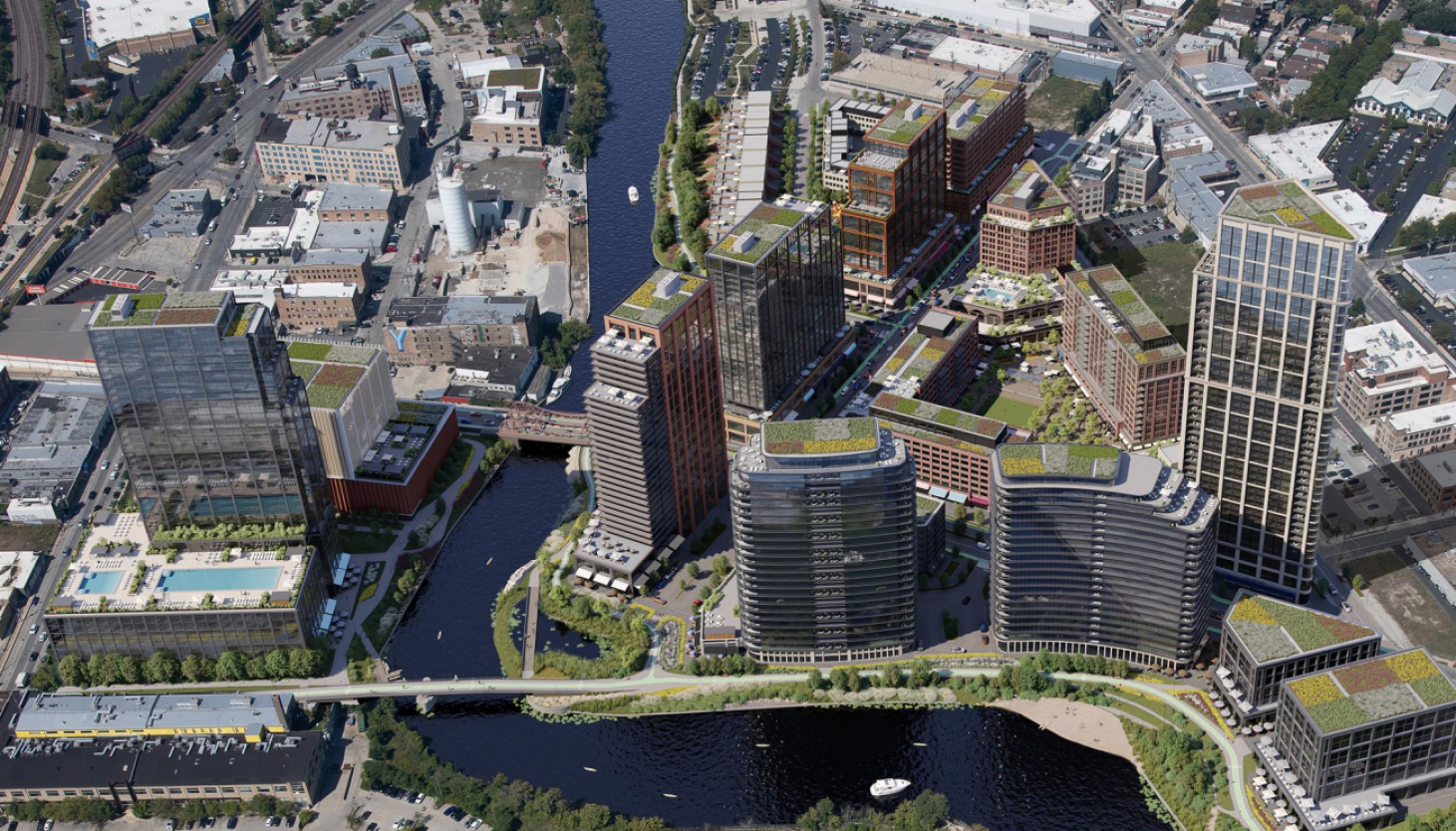
Big financing steps forward for The 78, Foundry Park projects
-

 Fitness38 minutes ago
More Muscle, Less Fat—Is This High-Tech Workout A New Fitness Answer?
-

 Movie Reviews50 minutes ago
Film Review: “The Odyssey” – MediaMikes
-
World1 hour ago
Movie Review: In Christopher Nolan’s ‘The Odyssey,’ an ancient epic is reborn


