It’s been a Murphy’s Law couple of days for teams at the edge of the men’s NCAA tournament field. And it’s made the task of selecting the bracket’s 36 at-large teams all the more difficult.
Washington
Analysis | NCAA tournament bracketology: Selection Sunday has finally arrived


There were the outright bid snatchers, North Carolina State and Oregon. The Wolfpack won its fifth game in five days, dispatching North Carolina for the program’s first ACC tournament title since 1987. Oregon picked off UCLA, Arizona and Colorado in a three-day span to claim the last Pac-12 title.
There was Florida Atlantic, failing to do the rest of the field a favor and falling to Temple in the American Athletic semifinals. Paired with Dayton’s loss in the Atlantic 10 tournament Thursday, there was no help coming from teams that could turn their conferences into one-bid leagues.
Even the borderline tournament team in action couldn’t finish the job. Texas A&M fell to Florida, and the Aggies must wait for the committee’s verdict. That hasn’t been a good thing for Buzz Williams’s team the past two years; in 2022, Texas A&M was left out after a late push. Last year, it was arguably the most underseeded team in the field based on the numbers (though not on its subsequent first-round exit).
Among the other possible losers because of the tumult: Oklahoma and Virginia, two teams that didn’t do much wrong but have limited top-end success; Providence, Seton Hall and St. John’s, a parade of Big East teams with their own résumé limitations; and Indiana State, which last Sunday afternoon was a wild card and might now be an afterthought.
(Or it might not. Indiana State is a hard-to-evaluate variable, because its profile doesn’t look much like the power conference teams it is being compared with).
The one thing all of these teams have in common, whether they receive a reprieve or not, is they could have won more. Virginia could have made free throws. Oklahoma could have beaten someone better than Iowa or Kansas State away from home. Indiana State could have won Arch Madness. Pitt could have played a better nonconference schedule. Texas A&M could have avoided silly losses.
There will be caterwauling Sunday night from many schools, but the confluence of events tightened the field and might lead to a play-in game occupying the No. 10 seed line. It’s anyone’s guess whether the tournament will be a classic, but the week leading up to it already is unusual even by the standards of March.
Sunday’s games to watch
Return to menu
Ivy League final (New York): No. 2 Yale vs. No. 4 Brown, noon (ESPN2)
Brown (13-17) knocked out top-seeded Princeton in the first of Saturday’s Ivy semifinals, setting off day-long carnage for top seeds. The Bears can earn their first NCAA tournament berth since 1986, and third ever, with a defeat of Yale (21-9), which just lost at home to Brown on March 9.
Bracket impact: One-bid territory, though Yale has a much higher seeding territory than Brown.
SEC final (Nashville): No. 4 Auburn vs. No. 6 Florida, 1 (ESPN)
Auburn (26-7) faces a path to an SEC title that goes through the No. 7 (South Carolina), No. 9 (Mississippi State) and No. 6 (Florida) seeds. Those are three NCAA tournament teams so it isn’t a clear path, but it didn’t include Tennessee or Kentucky, either. The Gators (24-10) ended Texas A&M’s run yesterday and have quietly stitched together a 13-4 mark since Jan. 20.
Bracket impact: Both are safely in the field, so maybe there are some seeding stakes here. Auburn can make a case for a No. 3 seed if it wins, and Florida might have a case to climb as high as the No. 5 line.
Atlantic 10 final (Brooklyn): No. 5 VCU vs. No. 6 Duquesne, 1 (CBS)
VCU (22-12) has hired six coaches this century. If the Rams win today, all of them will have led the program to an NCAA tournament within their first two years, with Ryan Odom doing it with a season to spare. Duquesne (23-11) is aiming for its first NCAA berth since 1977.
Bracket impact: Only one of these two is getting in, and both would be right around the No. 12 line.
American Athletic final (Fort Worth): No. 4 UAB vs. No. 11 Temple, 3:15 (ESPN)
UAB (22-11) bounced top-seeded South Florida in the semifinals, while Temple (16-19) won its fourth game in four days by stunning Florida Atlantic. The Owls had won only four games in the 75 days leading up to the American tournament.
Bracket impact: Only one of these two gets in. UAB has the profile of a No. 13 or No. 14 seed, while Temple would be a genuinely difficult team to evaluate. Here’s guessing the Owls would be a No. 15 seed if they complete the five-wins-in-five-days marathon.
Big Ten final (Minneapolis): No. 2 Illinois vs. No. 5 Wisconsin, approx. 3:30 (CBS)
The traditional final game before the selection show pits the Fighting Illini (25-8) and the Badgers (22-12) in a matchup of two teams already in the field.
Bracket impact: It’s always fair to wonder whether the Big Ten final impacts the field unless a bid snatcher is involved. Illinois is going to be a No. 3 or No. 4 seed, while Wisconsin is going to land right around a No. 5 seed.
Return to menu
Last four included: Florida Atlantic, Michigan State, Texas A&M, Virginia
First four on the outside: Oklahoma, Providence, Pitt, St. John’s
Next four on the outside: Indiana State, Seton Hall, Wake Forest, Ohio State
Moving in: Long Beach State, N.C. State, Saint Peter’s, Oregon, Yale
Moving out: Fairfield, Oklahoma, Princeton, Providence, UC Davis
Conference call: Big 12 (8), Southeastern (8), Big Ten (6), Mountain West (6), Atlantic Coast (5), Pac-12 (4), Big East (3), American Athletic (2), Atlantic 10 (2), West Coast (2)
Return to menu
(1) BIG EAST/Connecticut vs. (16) SWAC/Grambling-NORTHEAST/Wagner winner
(8) Texas vs. (9) Colorado State
(5) Wisconsin vs. (12) AMERICAN ATHLETIC/UAB
(4) Alabama vs. (13) SOUTHERN/Samford
(3) Baylor vs. (14) OHIO VALLEY/Morehead State
(6) San Diego State vs. (11) ACC/N.C. State
(7) Washington State vs. (10) Texas Christian
(2) Tennessee vs. (15) BIG SOUTH/Longwood
Connecticut with the top overall seed? It would be easy to give the Huskies that nod over Purdue because they won their conference tournament and no one else on the top line did. But Purdue’s set of victories away from home remains impressive. Those two will be the top two seeds, in some order. … Grambling will make the first NCAA tournament appearance in program history after beating Texas Southern in Saturday’s SWAC title game. …
When Virginia Tech won the ACC tournament as a No. 7 seed two years ago, it got a No. 11 seed. N.C. State will probably receive similar treatment, but in a year with less tumult, the Wolfpack would have been a line lower. … Texas Christian’s profile isn’t fabulous, but it does own a victory at Baylor. It also took both games it played from Oklahoma, which suddenly finds itself in a tenuous situation.
Return to menu
(1) North Carolina vs. (16) MID-EASTERN ATHLETIC/Howard-BIG SKY/Montana State
(8) MOUNTAIN WEST/New Mexico vs. (9) Nebraska
(5) Texas Tech vs. (12) ATLANTIC 10/Virginia Commonwealth
(4) SEC/Auburn vs. (13) AMERICA EAST/Vermont
(3) BIG TEN/Illinois vs. (14) HORIZON/Oakland
(6) Brigham Young vs. (11) SUN BELT/James Madison
(7) Gonzaga vs. (10) MISSOURI VALLEY/Drake
(2) Arizona vs. (15) BIG WEST/Long Beach State
New Mexico has never made it out of the opening weekend of the tournament in 12 tries since the field expanded to 64 in 1985. Nebraska has never even won a game in seven appearances. … Will the committee bump Auburn up to the No. 3 line if it beats Florida? That’s a hard sell for a team that would own three Quadrant 1 victories (it has two entering the day). …
James Madison could be one of the winners from all the upsets Friday and Saturday. The Dukes are comfortably on the No. 11 line in this projection. … Long Beach State fired Coach Dan Monson on Monday, effective the end of the season. Five days later, he led the 49ers to their first NCAA berth since 2012. …
Return to menu
(1) Purdue vs. (16) METRO ATLANTIC/Saint Peter’s
(8) Nevada vs. (9) Colorado
(5) Florida vs. (12) WESTERN ATHLETIC/Grand Canyon
(4) Kansas vs. (13) COASTAL/College of Charleston
(3) Creighton vs. (14) MID-AMERICAN/Akron
(6) Utah State vs. (11) Florida Atlantic/Virginia winner
(7) Clemson vs. (10) Northwestern
(2) Iowa State vs. (15) SUMMIT/South Dakota State
Maybe the committee avoids the rematch of Purdue’s Sweet 16 loss to Saint Peter’s. But heavens knows that game will be referenced no matter who the Boilermakers’ opponent is given their recent run of losses against double-digit seeds. … Grand Canyon makes its third NCAA trip in four years, and at 29-4, this is the Antelopes’ best chance to do some damage in the postseason since moving up to Division I in 2013. …
Florida Atlantic, with a pair of Quad 4 losses (Bryant and Florida Gulf Coast) and Saturday’s setback against Temple, may have played its way to Dayton. It’s definitely unlikely the Owls exceed the No. 9 seed they had last year during their Final Four run. … Northwestern has a profile that’s sneaky underwhelming — a terrible nonconference schedule, a Quad 4 loss to Chicago State and not a truly noteworthy win away from home. Still, the Wildcats beat five projected tournament teams (Purdue, Illinois, Dayton, Michigan State and Nebraska), and that counts for something.
Return to menu
(1) Houston vs. (16) ATLANTIC SUN/Stetson
(8) Dayton vs. (9) Mississippi State
(5) WEST COAST/Saint Mary’s vs. (12) SOUTHLAND/McNeese State
(4) Kentucky vs. (13) IVY/Yale
(3) Duke vs. (14) PATRIOT/Colgate
(6) South Carolina vs. (11) PAC-12/Oregon
(7) Boise State vs. (10) Michigan State/Texas A&M winner
(2) Marquette vs. (15) CONFERENCE USA/Western Kentucky
Even with a clunker in the Big 12 title game, Houston is ranked No. 1 in three of the team sheet metrics and No. 2 in the other two. The Cougars should anchor the South. … Oregon has used surprising Pac-12 tournament title runs to land a double-digit seed twice before (2013 and 2019) under Dana Altman, and both times the Ducks made the Sweet 16. Something to monitor. …
Who you beat should probably matter a little more than who you lost to. Texas A&M has seven Quad 1 victories, including five over teams projected to land a No. 5 seed or better. That should offset the four Quad 3 losses. … Western Kentucky Coach Steve Lutz is now 7-0 in conference tournaments. He led Texas A&M Corpus Christi to Southland titles the past two years, and now has the Hilltoppers back in the NCAA tournament for the first time since 2013. That ends the program’s longest NCAA drought since 1940-60.


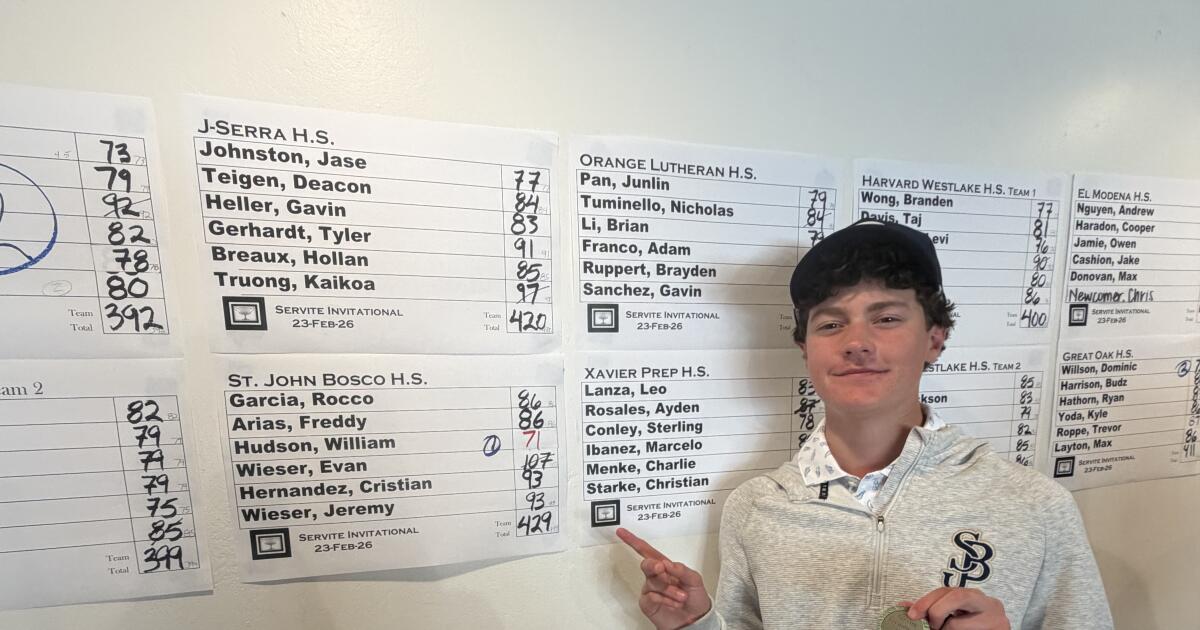


Trinity Rodman signs record deal with Washington Spirit
USWNT forward Trinity Rodman signed a three-year deal with the NWSL’s Washington Spirit. The deal makes Rodman the highest-paid female footballer in the world.
unbranded – Sport
Washington Spirit goalkeeper Aubrey Kingsbury has announced that she and her husband Matt are expecting a baby in July.
The couple made the announcement in a video on the Spirit’s social media channels, holding a baby goalkeeper jersey on the pitch at Audi Field.
Kingsbury becomes the most recent Spirit star to go on maternity leave, following defender Casey Krueger, midfielder Andi Sullivan and forward Ashley Hatch.
Sullivan gave birth to daughter Millie in July, while Hatch welcomed her son Leo in January.
Krueger announced she was pregnant with her second child in October.
Kingsbury has served as the Spirit’s starting goalkeeper since 2018, and has been named the NWSL Goalkeeper of the Year twice (2019 and 2021).
The 34-year-old has two caps with the U.S. women’s national team, and was named to the 2023 World Cup roster.
The club captain will leave a major void for the Spirit, who have finished as NWSL runner-up in back-to-back seasons.
Sandy MacIver and Kaylie Collins are expected to compete for the starting role while Kingsbury is on maternity leave.
The Spirit kick off their 2026 campaign on March 13 against the Portland Thorns.

YAKIMA, Wash. — Yakima could soon take a major step toward redesigning Sixth Avenue after the Washington State Public Works Board awarded the city a $985,600 loan.
The loan was approved for the design engineering phase of the Sixth Avenue project. The funding can also be used along Sixth Avenue for utility replacement and updated ADA use.
The Yakima City Council must decide whether to accept the award. If the council accepts it, the city’s engineering work will move forward with the design of Sixth Avenue.
The cost of installing trolley lines is excluded from the plan. The historic trolleys would need to raise the funds required to add trolley lines.
The award is scheduled to be discussed during next week’s City Council meeting.

Microsoft will ramp up its investment in the University of Washington.
Brad Smith, the company’s president, made the announcement at a press conference with University of Washington President Robert Jones on Tuesday.
That means hiring more UW graduates as interns at Microsoft, he said.
And he said all students, faculty, and researchers should have access to free, or at least deeply-discounted, AI.
“ Some of it is compute that Microsoft is donating, and some of it is pursuant to an agreement where, believe me, we give the University of Washington probably the best pricing that anybody’s gonna find anywhere,” Smith said. He assured the small group of reporters present that it would be “many millions of dollars of additional computational resources.”
The announcement today didn’t include any specific numbers.
But Smith said Microsoft has already invested $165 million in the UW over several decades.
He pointed to Jones’ vision to spur “radical collaborations with businesses and communities to advance positive change,” and eliminate “any artificial barriers between the university and the communities it serves.”
Microsoft’s goal is for AI to help UW researchers solve some of the world’s biggest problems without introducing new ones.
At Tuesday’s announcement, several research students were present to demonstrate how AI supports their work.
Amelia Keyser-Gibson is an environmental scientist at the UW. She’s using AI to analyze photographs of vines, to find which adapt best to climate change.
It’s a paradox: AI produces carbon emissions. At the same time, it’s also a new tool to help reduce them.
So how do those things square for Keyser-Gibson?
“ That’s a great question, and honestly, I don’t know the answer to that,” she said. “I’m highly aware that there’s a lot of environmental impact of using AI, but what I can say is that this has allowed us to make research innovations that wouldn’t have been possible otherwise.”
“If we had had to manually annotate every single image that would’ve been an undergrad doing that for hours,” Keyser-Gibson continued. “And we didn’t have the budget. We didn’t have the manpower to do that.”
“AI exists. If we don’t use it as researchers, we’re gonna fall behind.”
Microsoft reports on its own carbon emissions. But like most AI companies, it doesn’t reveal everything.
That’s one reason another UW student named Zhihan Zhang is using AI to estimate how much energy AI is using.

Technology3 minutes ago
300,000 Chrome users hit by fake AI extensions
Business9 minutes ago
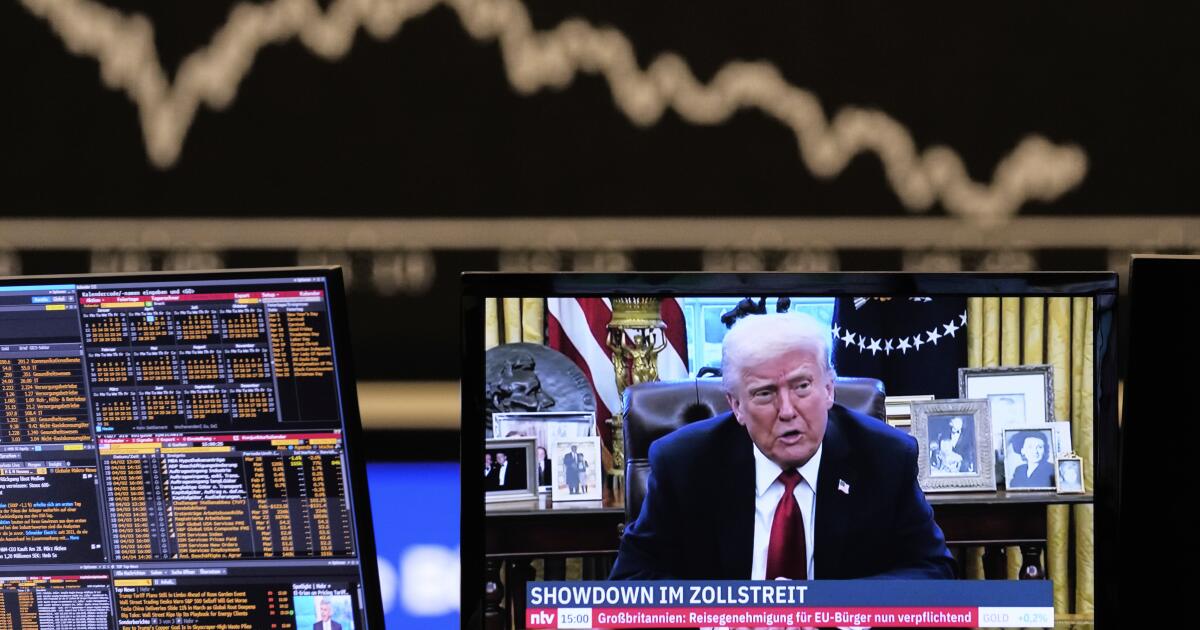
Commentary: How Trump helped foreign markets outperform U.S. stocks during his first year in office
Entertainment15 minutes ago
Philip Glass canceled a Kennedy Center show, but this conductor brings his work center stage at L.A. Opera

Lifestyle21 minutes ago
L.A. Affairs: Sick of swiping, I tried speed dating. The results surprised me
Politics27 minutes ago
Contributor: The last shreds of our shared American culture are being politicized

Florida1 year ago
Florida High School Football Rankings: Top 25 teams – Oct. 21

Connecticut2 years ago
Cleary's 21 help Le Moyne down Central Connecticut State 69-64 in OT

Oregon2 years ago
How old is Bo Nix? What to know about Oregon quarterback ahead of 2024 NFL Draft

Virginia2 years ago
99th annual Pony Swim held in Virginia

Indiana1 year ago
Indiana Members Credit Union announced as new anchor tenant at Bottleworks District

World51 minutes ago
Has India’s influence in Afghanistan grown under the Taliban?

News1 hour ago
Bill Clinton to testify before House committee investigating Epstein links

News11 hours ago
Read Judge Schiltz’s Order

Politics12 hours ago
Vulnerable House Dem lashes out at Trump’s ‘racist’ SOTU challenge: ‘That was uncomfortable’

World13 hours ago
Italy calls for suspension of EU carbon market
-

 World1 day ago
Exclusive: DeepSeek withholds latest AI model from US chipmakers including Nvidia, sources say
-

 Massachusetts2 days ago
Mother and daughter injured in Taunton house explosion
-

 Montana1 week ago
2026 MHSA Montana Wrestling State Championship Brackets And Results – FloWrestling
-

 Oklahoma1 week ago
Wildfires rage in Oklahoma as thousands urged to evacuate a small city
-

 Louisiana4 days ago
Wildfire near Gum Swamp Road in Livingston Parish now under control; more than 200 acres burned
-

 Technology6 days ago
YouTube TV billing scam emails are hitting inboxes
-

 Denver, CO2 days ago
10 acres charred, 5 injured in Thornton grass fire, evacuation orders lifted
-

 Technology6 days ago
Stellantis is in a crisis of its own making