West
Video shows masked thieves raiding art museum artifacts in bold overnight heist: officials

NEWYou can now listen to Fox News articles!
The Oakland Police Department and the FBI are asking for the public’s help in identifying two suspects caught on camera in a museum heist in which over 1,000 historical items were stolen.
The incident occurred at an off-site storage facility maintained by the Oakland Museum of California at around 3 a.m. on Oct. 15, according to officials.
In a statement released by the museum, officials said a preliminary investigation revealed that the heist was likely “a crime of opportunity, not a targeted theft.”
LOUVRE MUSEUM THEFT CASE EXPANDS AS 2 MORE SUSPECTS FACE CONSPIRACY CHARGES IN ONGOING INVESTIGATION
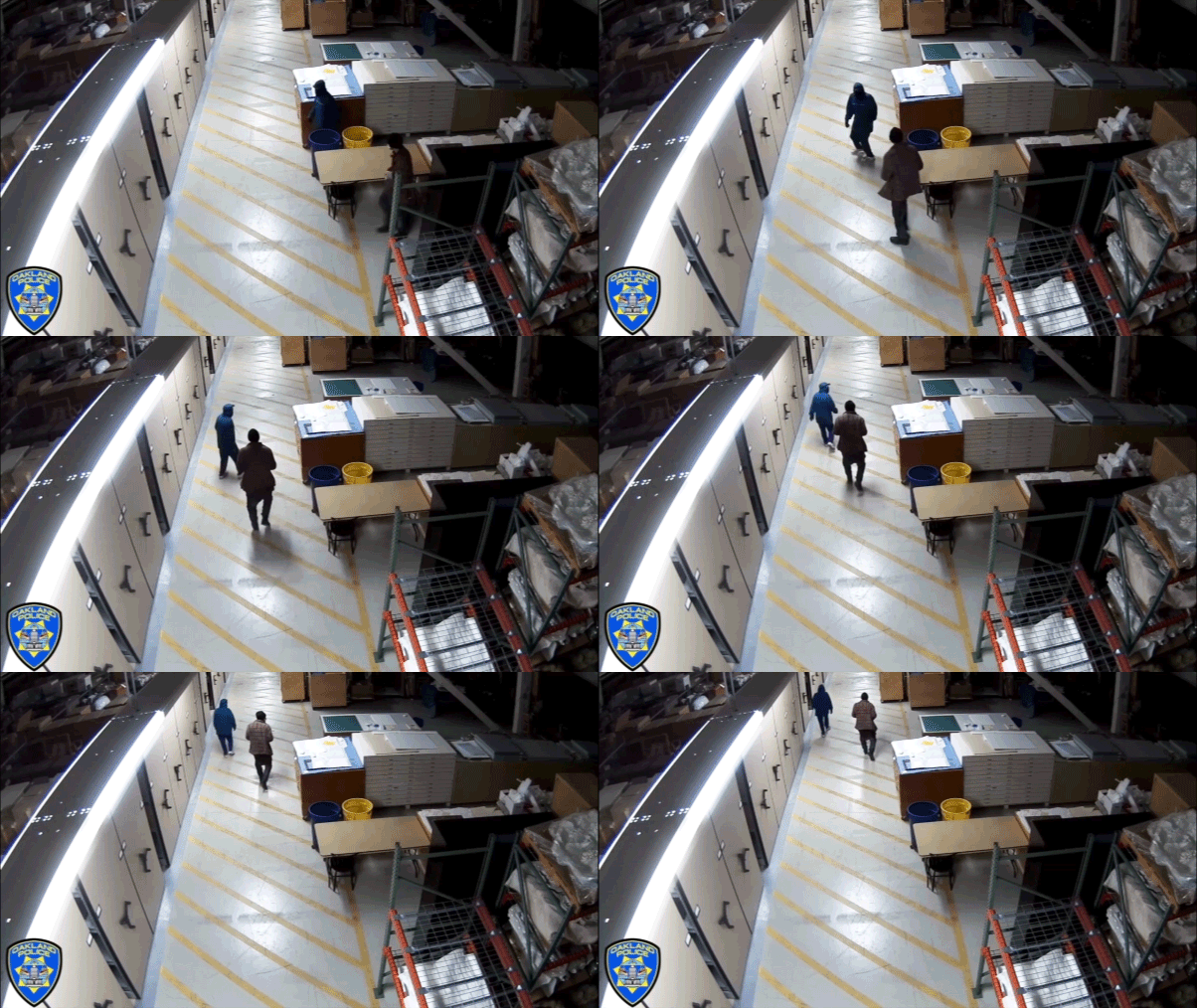
Authorities are searching for two suspects wanted in connection with an overnight museum heist in Oakland on Oct. 15, 2025. (Oakland Museum of California)
“There is no indication that the perpetrators specifically identified the facility as museum storage or sought particular artworks or artifacts,” the statement said. “Instead, it appears they gained access and took items that were most easily available.”
In an Oct. 31 update, museum officials revealed that some of the items stolen consisted of historic memorabilia, including political pins, souvenir tokens and award ribbons – along with several Native American items.
NEW VIDEO PURPORTEDLY SHOWS LOUVRE THIEVES IN ACTION DURING BRAZEN DAYTIME HEIST
One of the suspects has been described by authorities as having a thin build, wearing a plaid long-sleeve shirt, black hoodie, blue jeans and black shoes, according to KTVU. (Oakland Museum of California)
“Additional stolen artifacts of particular sensitivity include six Native American baskets, several 19th-century scrimshaw objects, and a number of daguerreotypes and modernist metalwork jewelry pieces,” the statement said.
Surveillance video shows two masked men entering through an interior hallway of the storage facility before exiting into an outdoor area enclosed by a metal fence.
One of the suspects has been described by authorities as having a thin build, wearing a plaid long-sleeve shirt, black hoodie, blue jeans and black shoes, according to KTVU. The second suspect reportedly has a heavy build, and was wearing a blue sweatshirt, blue pants, black gloves and white shoes.
‘BRAZEN’ LOUVRE THIEVES MADE TARGETED HEIST, JEWELS COULD BE MELTED DOWN: EXPERT
The suspects allegedly stole more than 1,000 historical artifacts from the museum, in what officials are calling a “crime of opportunity.” (Oakland Museum of California)
Across the country, 19-year-old Joshua Vavrin was arrested in New York City after he allegedly hurled water at two priceless paintings at the Metropolitan Museum of Art on Monday, according to the New York Post.
CLICK HERE TO DOWNLOAD THE FOX NEWS APP
Vavrin allegedly damaged the 16th century canvas piece, “Madonna and Child with Saints” and the 19th-century oil-on-canvas painting, “Princesse de Broglie,” the outlet reported. He also allegedly ripped two tapestries off the wall, causing over $4,000 in damages.
The FBI, Oakland Museum of California, Metropolitan Museum of Art and NYPD did not immediately respond to Fox News Digital’s request for comment.
Read the full article from Here



Coffee, croissants and classical music brought office workers, residents and visitors together at One Sansome as the free monthly Baroque & Brew series transformed a weekday morning into a community gathering in downtown San Francisco.
The event, held inside the Conservatory at One Sansome, featured live performances by Philharmonia Baroque and invited attendees to enjoy music in the landmark building’s 8,100-square-foot atrium.
Guests were free to sit or stand while listening, with many nearby office workers stopping in during an early lunch break.
The monthly series is scheduled to return in August and September and aims to bring together downtown workers and neighbors through music and shared public space.
“It’s a beautiful opportunity to have coffee, to be in community, and do what our city is known for—the art, the culture—and to share it with each other,” attendee Roger Joyner said. “It’s a beautiful summertime moment.”
Joyner said events like Baroque & Brew reflect the character of the city.
“I think that’s what San Francisco is meant to be…a city that offers culture and the beauty of art to the world. And we that live here get to enjoy it,” he said.
Organizers said the performances are intended to make live classical music more accessible while contributing to ongoing efforts to revitalize downtown San Francisco.
“It’s just a really nice way for us to get the music out of the concert hall to the people downtown, trying to reactivate Downtown San Francisco and show what a welcoming place we can be as a city,” said Isaac Bunch, general manager of Philharmonia Baroque Orchestra and Chorale.
For Joyner, the event also offered a chance to pause amid the pace of daily life.
“We get to take a break. We are hustle and bustle, doing what we do to make the city work, and then we get refreshed by it,” he said. “I think it’s great — it brings it right into the middle of our hub.”
The gathering highlighted how music, conversation and public spaces can bring people together as downtown San Francisco continues its recovery.
Denver, CO
One tree at a time: Denver nonprofit works to close shade gap as heat dome threatens neighborhoods

DENVER — Some Denver neighborhoods are far more vulnerable to this weekend’s incoming heat dome than others — and the difference comes down to trees.
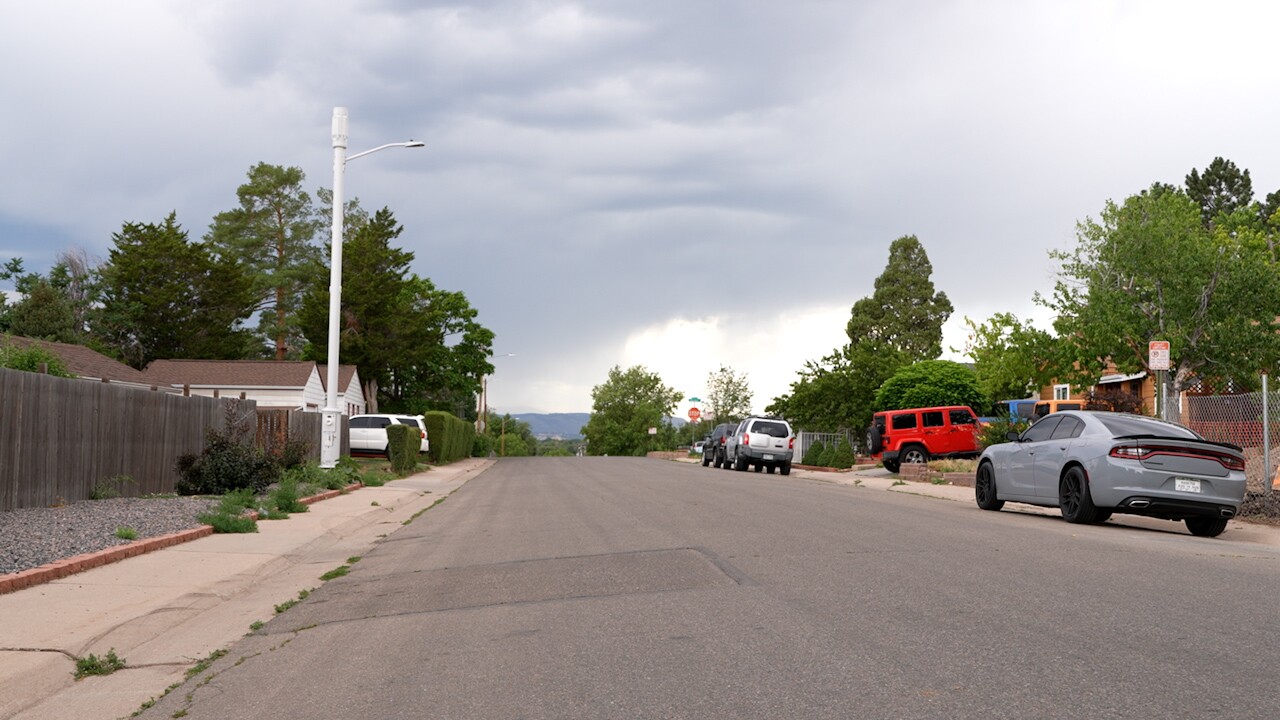
The Valverde neighborhood on the city’s west side has about 9% canopy cover, leaving residents with little shade as temperatures climb toward triple digits.
▶️ WATCH: Denver7’s Claire Lavezzorio learns more about The Park People and how it is helping neighborhoods in Denver.
One tree at a time: Denver nonprofit works to close shade gap as heat dome threatens neighborhoods
Kim Yuan-Farrell, executive director of The Park People, a nonprofit that plants trees in underserved neighborhoods, said the disparity across Denver is stark.
“We have some neighborhoods that have wonderful canopy cover, like 20 to 30% of those neighborhoods are forested. Then a number of our neighborhoods have really low canopy cover, between four or 8% where it’s just significantly less,” Yuan-Farrell said.
Denver7
The Park People identified 28 neighborhoods in need of more tree cover, including Westwood, Globeville and Northeast Park Hill.
Trees can cool an area by 15 to 20 degrees, making a significant difference.
The National Weather Service (NWS) warned the heat dome could last through next weekend.
“The exceptional thing about this is how long it will last,” said NWS meteorologist Russell Danielson. “If you do have trees to take shelter under, it does actually cool down the temperature a decent amount.”
Yuan-Farrell said trees are more than a comfort — they are a critical piece of urban infrastructure.
Denver7
“We really consider it a really essential element of green infrastructure, a real nature-based solution to a lot of these really serious local environmental problems,” Yuan-Farrell said.
In the map below, explore Denver’s libraries and rec centers that welcome the public in from the heat during business hours.
When asked whether Denver has a long road ahead, she did not hesitate.
“We have a lot of work ahead of us,” Yuan-Farrell said. “And we really need our whole community to get involved in that.”
The Park People plant anywhere from 1,200 to 2,000 trees a year. You can apply for one in your yard. Planting is set to begin in September.

Denver7 | Your Voice: Get in touch with Claire Lavezzorio
Denver7’s Claire Lavezzorio covers topics that have an impact across Colorado. If you’d like to get in touch with Claire, fill out the form below to send her an email.

(QUICK LINKS: Music lineups … vendor list … food and drink … Kids Zone info)
6:04 PM: At West Seattle Summer Fest, the crowd has grown steadily, especially now that the workday is over. Main-stage music continues – here’s the second band of the day, Chico Detour:
That’s their song “Crying at My Party.” As main-stage music continues, The Big Dark Corner is just getting going at California/Alaska by KeyBank, a new space this year – programmed by West Seattle’s The Big Dark Records. And you have a wide variety of choices for dinner and drinks – The Porch in the lot behind KeyBank, stands on that side of SW Alaska, some vendors on newly pedestrian-only SW Oregon, the beverage garden by the main stage ..

… and of course all the year-round local venues, many with outdoor cafés. Coordinators say it’s gone smoothly so far. Updates to come!
6:25 PM: That’s Leonard Jarvey and The Sock Monkeys, opening the night at The Big Dark Corner. Still to come there tonight – Sad Dad Autumn at 7, Across 35th at 7:30. Meantime, over in the Kids Zone, the foam party’s back this year:
7:39 PM: A bit of Zookraught and their dance-punk sound on the main stage:
And Across 35th has a throng at The Big Dark Corner – video:
8:20 PM: Vendors are wrapping up for the day, since the festival’s official end time – not counting music – was 8 pm. Here at the Info Booth, most everything’s rolled up too, except our table, and we’re packing up shortly (after one more band – added, here’s that video of Blackie:)
The night wraps up with Alien Crime Syndicate at 10 pm.
ADDED 11:45 PM: Thanks to WSB contributor Jason Grotelueschen for clips from the night’s last two main-stage bands – Caitlin & Brent with the Passenger String Quartet:
And Alien Crime Syndicate:
P.S. Thanks to the many kind people who stopped by our table to say hi – we’ll be back tomorrow, starting at 10 am.
-
 News12 minutes ago
With the white nationalist group Patriot Front, what you see is not what you get
-

 New York1 hour ago
How ‘The Wire’ Star Jamie Hector Spends a Hot Day in Brooklyn
-

 Los Angeles, Ca1 hour ago
Burglars ransack Sherman Oaks condo building during fumigation
-

 Detroit, MI2 hours ago
Metro Detroit weather forecast, July 10, 2026 — 11 p.m. Update
-

 San Francisco, CA2 hours ago
Classical music series helps reconnect downtown San Francisco community
-

 Dallas, TX2 hours ago
Dallas police officers, paramedics recall saving woman stuck in a ravine for days;
-

 Boston, MA2 hours ago
Red Sox win 7th straight game just hours after landing in New York
-
Denver, CO2 hours ago
One tree at a time: Denver nonprofit works to close shade gap as heat dome threatens neighborhoods

