Utah
Utah Hockey Club Unveils Jerseys for 2024-25 NHL Season in Video, Photos


Bruce Bennett/Getty Images
The Utah Hockey Club will make its NHL debut in the 2024-25 season. And now we officially know what digs they’ll be wearing when they first hit the ice.
On Monday, the new team released images of the new home and away sweaters the team will be rocking in its maiden NHL season:
On Saturday, the team revealed what the ice will look like at the Delta Center for the upcoming season:
The Utah Hockey Club will be based in Salt Lake City and compete in the Central Division of the NHL’s Western Conference.
The club made a number of big moves this offseason to fill out its initial roster, swinging trades to acquire defenseman Mikhail Sergachev and John Marino and drafting Tij Iginla and Cole Beaudoin in the first round of the NHL draft. The majority of the roster was filled by assuming the former roster of the Phoenix Coyotes, which suspended operations after the 2023-24 campaign.



LAS VEGAS (FOX5) — Officials have identified a 22-year-old man as the suspect in a Las Vegas homicide case that killed two people in a Southern Highlands neighborhood.
Detectives say 22-year-old Ziaire Ham was the suspect in the case. According to officials, Ham was located on Tuesday, March 3, by the Ogden City Police Department and the Utah Highway Patrol.
Ham was taken into custody and booked into the Weber County Jail. Las Vegas authorities said he will be charged with open murder with the use of a deadly weapon and will be extradited back to the valley.
MORE ON FOX5: LVMPD corrections officer arrested on multiple felony charges
The shooting occurred Monday night at the 11000 block of Victoria Medici Street, near Starr Ave and Dean Martin Drive.
According to police, officers were conducting a vehicle stop in the area when they heard gunfire. After searching nearby neighborhoods they found a car with bullet impacts with a woman and a toddler inside suffering from gunshot wounds.
The pair were transported to hospital where they later died. The Clark County Coroner’s Office identified them as Danaijha Robinson, 20, and 1-year-old Nhalani Hiner.
Copyright 2026 KVVU. All rights reserved.

SALT LAKE CITY (KUTV) — A simple moment watching a child laugh changed everything for Ivan Gonzalez.
Eight years ago, Gonzalez was working at the Ronald McDonald House when he had an idea to throw a birthday carnival for the kids staying there.
“Let’s do a carnival, birthday carnival for the kids,” he said.
MORE | Pay It Forward
What happened during that event stuck with him.
“There I was watching this kid play whack-a-mole, just having a blast, laughing,” Gonzalez said. “And then I see his mom kind of with happy tears because he’s enjoying himself.”
That moment led to something bigger.
Gonzalez realized the experience shouldn’t stop with just one event or just one group of kids.
“I said, wait, we can do this not just for kids in the hospital,” he said with excitement.
So he started a nonprofit called Best Seat in the House, which creates events and experiences for children who often face difficult circumstances.
“We provide events and experiences for disadvantaged kids,” Gonzalez said.
The organization serves children battling cancer and other medical conditions, refugee children, kids living in poverty, those in foster care and children with special needs.
“These kids grow up too fast,” Gonzalez said.
For Gonzalez, the mission is deeply personal.
“I grew up very poor,” he said.
He remembers the people who stepped in for his family when they needed it most.
“The local church, we weren’t even a part of it,” he described. “My parents couldn’t afford Christmas gifts and I still remember the gifts they gave me. They didn’t even know me.”
Today, he hopes to create that same feeling for other children through his nonprofit.
“Kids live in poverty and they don’t know where the next meal is coming from, let alone going to a play or to a game,” Gonzalez said.
But for Gonzalez, the reward isn’t the events themselves, it’s the joy they create.
“You can give me a billion dollars, all the money in the world,” he says as tears roll down his face. “I won’t trade these opportunitieskids just enjoying life.”
Because of his work giving back, KUTV and Mountain America Credit Union surprised Gonzalez with a Pay it Forward gift to help him continue creating those moments for kids across Utah.
For more information on supporting Best Seat in the House, click here.
_____
Utah
‘Don’t release him ever. Please.’ Family of slain Utah teen calls for justice at parole hearing

SALT LAKE CITY — Francisco Daniel Aguilar says he’s sorry for shooting and killing his girlfriend, 16-year-old Jacqueline “Jacky” Nunez-Millan, a Piute High School sophomore, in 2023.
But just as he did when he was sentenced, he didn’t have much of an explanation on Tuesday as to why he shot her not once, but twice.
“It just kinda happened. I was mad. And I stepped out (of my truck) and started shooting,” he said. “When I saw her fall, I just kind of panicked, I just went and shot her again.”
But Jacky’s friends and family members say even before she was killed, Aguilar already had a history of violence, and they now want justice to be served.
“You don’t accidentally take a gun, you don’t accidentally grab a knife … you don’t accidentally shoot someone, those are all choices,” a tearful Rosa Nunez, Jacky’s sister, said at Tuesday’s hearing. “Keep him where he needs to be.
“Don’t release him ever. Please.”
On Jan. 7, 2023, Aguilar, who was 17 at the time, got into a fight with his girlfriend, Jacky, shot her twice and left her body near a dirt road outside of Circleville, Piute County. He was convicted as an adult of aggravated murder and sentenced to a term of 25 years to up to life in prison.
Because of Aguilar’s age at the time of the offense, board member Greg Johnson explained Tuesday that the Utah Board of Pardons and Parole is required to hold a hearing much earlier than the 25-year mark, mainly to check on Aguilar and “see how things are going.” Aguilar, now 20, is currently being held in a juvenile secure care facility and will be transferred to the Utah State Prison when he turns 25 or earlier if he has discipline violations and is kicked out of the youth facility.
According to Aguilar’s sentencing guidelines, he will likely remain in custody until at least the year 2051.
During Tuesday’s hearing, Aguilar told the board that he was feeling “stressed out” during his senior year of high school. He said he and Jacky would often have little arguments. But their bigger fight happened when he failed to get her a “promise ring” around Christmastime, he said.
On the night of the killing, the two were arguing about the promise ring and other items, Aguilar recalled. At one point, he grabbed a knife and then a gun because, he said, he wanted to “irritate” and “scare” Jacky. According to evidence presented in the preliminary hearing, Aguilar and his girlfriend had been “trying to make each other angry” when Aguilar took ammunition and a 9mm gun from his father’s room and then drove to the Black Hill area in his truck with Jacky.
Jacky’s friend, McKall Taylor, went looking for her that night and found her. But after Aguilar shot Jacky in the leg, he began shooting at Taylor, who had no choice but to run to her car to get away. Her car was hit multiple times by bullets. Aguilar then shot Jacky a second time as she lay on the ground and Taylor drove away.
On Tuesday, Taylor’s mother, Lori Taylor, read a statement to the board on her daughter’s behalf.
“My innocence and freedom was taken from me,” she said.
McKall Taylor says the “horrifying events of that night will forever play in my head,” and the sounds of Jacky screaming and the gunshots as well as the sight of Jacky falling to the ground, will never go away.
“Francisco is a murderer who has zero remorse,” her letter states.
Likewise, Rosa Nunez told the board that for her and her family, “nothing in our world has felt safe since” that night as they all “continue to relive this horrific moment.”
After shooting Jacky and driving off, Aguilar says he called his father and “told him I was sorry for not being better, for not making good choices, I told him that I loved him. I was just planning on probably shooting myself, too.”
His father told him that although what he did wasn’t right, “he’d rather see me behind bars than in a casket,” and then told his son to “be a man about it. … This is where you have to change.”
Aguilar was arrested after his tires were spiked by police.
“An apology won’t fix what I did. I’ll never be able to fix what I did. But I want to say I’m sorry,” he said Tuesday. “I don’t even know how to fix what I did. I’m hoping I’m on the right track now.”
Johnson noted that Aguilar has done well during his short time being incarcerated. But that doesn’t change the fact “the crime was horrific,” he said.
The full five-member board will now take a vote. The board could decide to schedule another parole hearing for sometime in the future or could order that Aguilar serve his entire life sentence. But even if that were to happen, Johnson says Aguilar could petition every so often for a redetermination hearing.
The board’s decision is expected in several weeks.
The Key Takeaways for this article were generated with the assistance of large language models and reviewed by our editorial team. The article, itself, is solely human-written.

GLP-1 Drugs Linked to Osteoporosis and Gout: Here’s How To Stay Safe
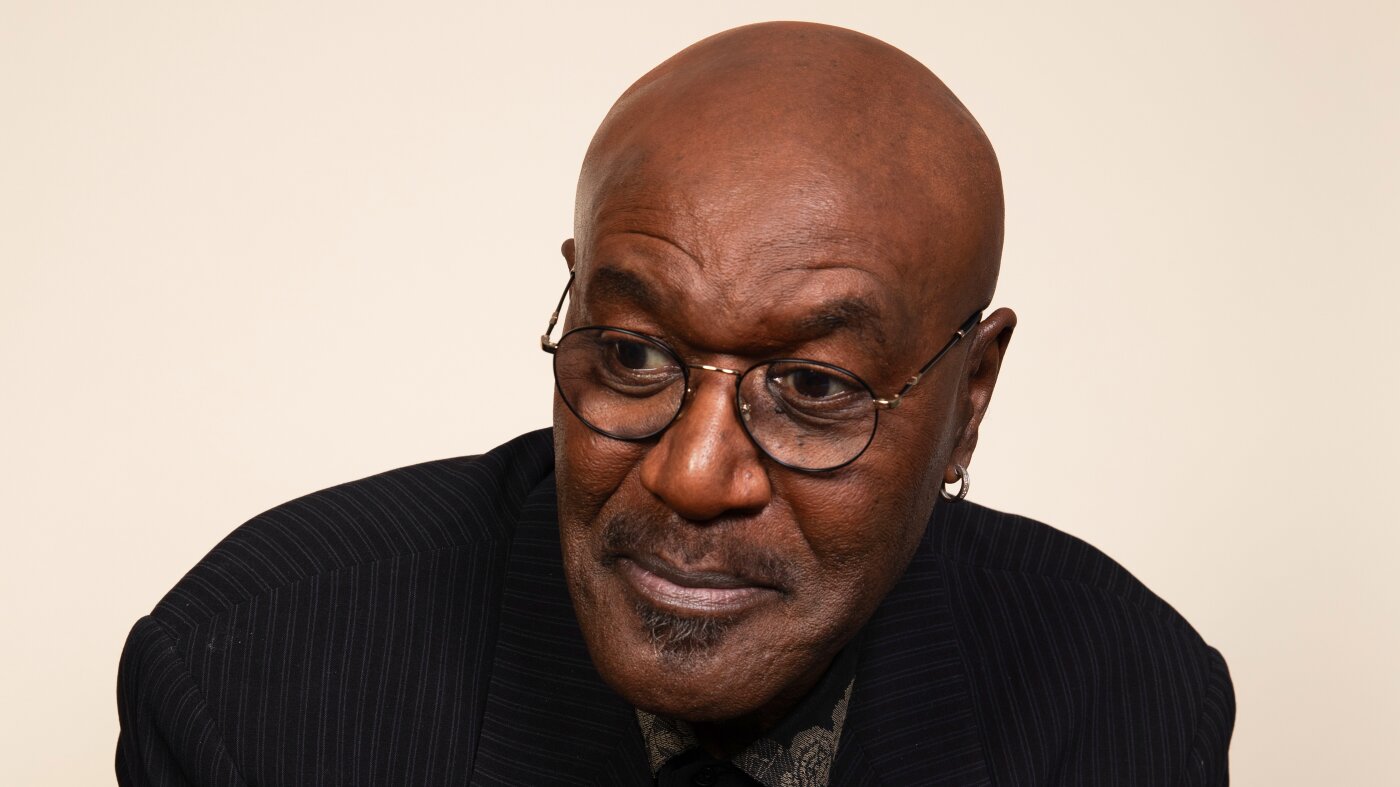
No matter what happens at the Oscars, Delroy Lindo embraces ‘the joy of this moment’

Amazon.com says things are fixed after some issues with logging in and checking out

Private flights account for 30% of departures from Oman airport as wealthy evacuate Middle East

DOJ continues Biden autopen probe despite former president unlikely to face charges

Florida High School Football Rankings: Top 25 teams – Oct. 21

Cleary's 21 help Le Moyne down Central Connecticut State 69-64 in OT

How old is Bo Nix? What to know about Oregon quarterback ahead of 2024 NFL Draft

99th annual Pony Swim held in Virginia

Indiana Members Credit Union announced as new anchor tenant at Bottleworks District
DOJ continues Biden autopen probe despite former president unlikely to face charges
Fact check: Did French border guards mock influencers returning from Dubai amid Iran war?

Iran’s fight for survival / The widening war / Trump’s nebulous goals : Sources & Methods

Map: 4.9-Magnitude Earthquake Shakes Louisiana

Paxton vows he’s ‘staying in this race’ even if Trump backs Cornyn in Texas GOP clash
-

 World1 week ago
Exclusive: DeepSeek withholds latest AI model from US chipmakers including Nvidia, sources say
-

 Wisconsin4 days ago
Setting sail on iceboats across a frozen lake in Wisconsin
-

 Massachusetts1 week ago
Mother and daughter injured in Taunton house explosion
-

 Maryland5 days ago
AM showers Sunday in Maryland
-

 Massachusetts3 days ago
Massachusetts man awaits word from family in Iran after attacks
-

 Florida5 days ago
Florida man rescued after being stuck in shoulder-deep mud for days
-

 Denver, CO1 week ago
10 acres charred, 5 injured in Thornton grass fire, evacuation orders lifted
-

 Oregon6 days ago
2026 OSAA Oregon Wrestling State Championship Results And Brackets – FloWrestling