Utah
Utah football’s keys to victory vs. Kansas State


Utah can keep its Big 12 championship game and College Football Playoff hopes intact with a win over Kansas State Saturday in the Utes’ final home game at Rice-Eccles Stadium this season.
The pivotal matchup from Salt Lake City is set to get underway at 2 p.m. MT on ESPN2. The Utes (8-2, 5-2 Big 12) enter the contest having won five of their last six in blowout fashion, while the Wildcats (5-5, 4-3 Big 12) seek to become bowl eligible for the fifth consecutive season with their sixth win of 2025.
Here’s three keys to victory for Utah as it strives to keep its postseason aspirations alive.
Maintaining a balanced offensive approach is a goal many teams strive to achieve. Leaning on either the run or pass too heavily would be seen as living one dimensionally, giving the opponent a better chance at devising a neutralizing game plan.
The thing is, no one’s been able to stop Utah’s potent rushing attack — no matter how predictable it might seem.
Behind a stout offensive line that features two potential first round NFL draft picks, the Utes run the ball 44.9 times for 278.4 yards per game, the second-highest average in the Football Bowl Subdivision behind Navy (308.2 yards per game). Four Utah players with at least 35 attempts on the season gain 5.3 yards per carry or better, including the team’s top rusher, Wayshawn Parker, who sits at an impressive 7.2 average on 102 attempts.
Devon Dampier’s multi-faceted skillset garners a lot of attention from opponents and the national viewing audience, but Parker’s really picked up steam over the last few weeks too. The Washington State transfer has crossed the 100-yard threshold and rushed for a touchdown in each of his last three games, averaging an incredible 9.0 yards per carry on 42 attempts during that span.
Utah’s especially effective on outside run plays; according to Pro Football Focus, the Utes pick up 7.1 yards on average when running off-tackle plays, trailing only Arkansas and Oregon in that category.
Meanwhile, Kansas State allows 5.3 yards per carry on those same designs, checking in at No. 95 among FBS defenses. The Wildcats have have been solid defending the run lately, with their last five opponents averaging just 3.8 yards per carry, but only two of those teams rank in the top 10 of the Big 12 in rushing yards per game.
Utah’s physicality in the trenches poses an entirely different challenge for defensive coordinator Joe Klanderman to scheme against. Expect the Utes to pound the rock until the Wildcats start to show any signs of being able to stop them.
This season has been quite a roller coaster ride for Kansas State, though not all the ups and downs should be put on Avery Johnson’s shoulders. The 6-foot-3 junior is on pace to complete a higher percentage of his passes, throw fewer interceptions and post an eerily similar quarterback rating to the one he recorded last season while helming a 9-4 Wildcats squad.
Johnson hasn’t been as efficient on the ground in comparison to his 2024 self, but that’s hardly the reason behind Kansas State’s topsy-turvy 2025 campaign. Utah will still need to be aware of his ability to extend plays with his legs, which could come down to how impactful the Utes’ pass rush is against the Wildcats’ offensive line.
Applying pressure will be key to bottling up the Kansas State offense. Per PFF, Johnson’s grade when kept clean ranks No. 22 in the country, while his under-pressure mark checks in at No. 139. If John Henry Daley and company can get home at a consistent rate, Utah’s man-to-man secondary won’t be put under as much pressure to not only stick to Kansas State’s wide receivers, but also defend Johnson when he decides to leave the pocket.
The Wildcats’ front line is giving up only 1.0 sacks per game. But as Cincinnati quarterback Brendan Sorsby has found out, Utah’s front seven can be disruptive even when its not bringing down the quarterback. Still expect an array of uniquely-designed blitzes from Morgan Scalley.
Utah can’t afford many self-inflicted mistakes because that’s just not in Kansas State’s character. The Wildcats have committed the fourth fewest penalties per game (3.5) and given up the ninth fewest penalty yards on average (33.4).
Kansas State is also No. 4 in the FBS with 24 turnovers forced on the season, trailing only SMU, Southern Mississippi and Texas Tech. Klanderman’s unit has forced at least 2 turnovers in each of its last seven games heading into Saturday’s matchup, with Army being the only team on the schedule that didn’t commit at least one.
That said, the Utes will have to value their possessions and remain disciplined on both sides of the ball if they’re to take care of business at home and keep their Big 12 title game and College Football Playoff aspirations alive going into Week 14.
The best way to accomplish that is continue to excel at what’s been working this season: running the football and sending relentless pressure on the opposing quarterback on defense.
MORE UTAH NEWS & ANALYSIS


BEAVER COUNTY, Utah — A massive community effort is underway as volunteers and Beaver County crews distribute thousands of sandbags to protect homes from the potential path of floodwaters.
After the Cottonwood Fires, residents have been waiting for weeks for relief to come in the form of rain, though officials now warn it may come all at once with an increased risk of flooding and debris flow.
Emergency Service Director Les Whitney believes that the fire has left plenty of debris to bring trouble for residents.
“We got a lot of water. We’re bringing debris with it, so tree branches, tree limbs, logs, lots of different size firewood, and that’s all in the creeks. We’re worried about that plugging up our bridges and stuff, so we have heavy equipment and excavators located in strategic places so that we can keep those bridges open,” said Whitney.
An estimated 140 homes and condominiums were spared from the flames, but remain in the paths of floodwaters.
Residents can also pick up sandbags at the Beaver County Sheriff’s Office or at the Beaver County Rodeo Fairgrounds.

EAGLE MOUNTAIN — An Eagle Mountain man currently on pretrial release in 4th District Court who is accused of abusing his dog has been arrested again for allegedly punching the same animal.
Keith Reaves Davis, 43, was booked into the Utah County Jail on Wednesday for investigation of aggravated cruelty to an animal.
Utah County sheriff’s deputies were called Wednesday afternoon to a grocery store on a report that a man was beating his dog after it had gotten off its leash and was stopped by a bystander, according to a police booking affidavit.
“I reviewed security camera footage from the grocery store, and an individual matching the description of the suspect was seen holding the dog in the air by one paw and repeatedly striking the dog on the right hind leg area. I observed the male strike the dog several times before dropping the dog from approximately 1-2 feet. The strikes appeared to be as hard as the male could hit,” the arresting deputy wrote in the affidavit. “The dog did not cry out or whimper as if the dog was accustomed to the abuse.”
When questioned, Davis “admitted to striking the dog because it was not behaving,” the affidavit states.
An animal control officer who responded to the scene to take custody of the dog noted it was the same dog he had taken from Davis exactly three months earlier during another animal abuse investigation.
In that case, Davis was charged in 4th District Court with aggravated cruelty to an animal, a class A misdemeanor; and public intoxication, a class C misdemeanor, after deputies received a tip from a neighbor that a dog was being abused at Davis’ home, according to charging documents. When questioned, Davis “acknowledged hitting his dog as punishment,” the charges state.
Deputies also reviewed videos that the neighbor had filmed. The neighbor told investigators “there was blood from the dog on the ground of the garage and (the neighbor) can hear the dog screaming as if it’s being hurt. Deputies got the videos from the (neighbor) and you can hear very loudly the dog screaming and crying with a lot of loud banging noises. In one of the videos, you can hear the dog sounding like it is being choked by a collar and is grasping for air,” a police booking affidavit states.
Davis’ next court hearing in the April case is scheduled for July 28.
In their latest booking report, sheriff’s deputies note that they “believe further harm will be inflicted on this dog if it is released back to the male a second time,” and have recommended the dog not be returned to Davis.
The Key Takeaways for this article were generated with the assistance of large language models and reviewed by our editorial team. The article, itself, is solely human-written.


Two years after October 7th attacks, Gaza war reshapes global politics
Two years after Hamas attacked Israel, Gaza lies in ruins and global alliances have shifted. Correction: A previous version of this video incorrectly identified the conflict. The conflict is between Israel and Hamas.
A man was arrested in Utah after allegedly stabbing a Muslim employee at a mall multiple times and telling investigators he targeted the victim because of his religion, according to court records.
Peter Michael Larsen, 48, was booked into the Salt Lake County Jail on suspicion of attempted murder and prohibited dangerous weapon conduct following the attack on July 13 at the Valley Fair Mall in West Valley City, Utah, court and online jail records show. West Valley City is a suburb of Salt Lake City.
The West Valley City Police Department said the incident occurred shortly before 3 p.m. local time, when Larsen approached a man working at a kiosk at the mall.
“After a brief interaction, the suspect pulled out a knife and began stabbing him multiple times,” police said in a statement on X. “A few bystanders interfered, and were able to separate the suspect from the victim and subdue the suspect until police arrived.”
The victim, who was not identified by authorities, sustained multiple stab wounds and was taken to a hospital in critical condition, according to police and court records.
Larsen told investigators that he had “targeted the victim with intent to kill him because of his religion (Muslim),” police said in an affidavit obtained by USA TODAY. The affidavit also states Larsen said he believes he is “a catalyst” and “intends to kill Muslims.”
The incident remains under investigation, and police said they were looking into any possible relationship between the suspect and victim. USA TODAY reached out to the West Valley City Police Department for comment.
Police: Suspect poses a ‘substantial danger to the public’
The suspect approached the Muslim man, asked for his name, asked about his religion, and indicated he wanted a bottle of water, The Salt Lake Tribune reported, citing comments from Imam Shuaib Din, who leads the Utah Islamic Center and had been in contact with the victim’s family.
As the victim turned to get the water, the attacker began stabbing him, Din told the newspaper. Police said in the affidavit that they received multiple 911 calls at around 2:30 p.m. local time reporting two men “involved in a physical altercation where one male was stabbing the other.”
When officers arrived at the scene, they observed bystanders pinning the suspect to the ground and “had already removed the knife from his hand,” according to the affidavit. Police said the victim was “bleeding profusely” and was then transported to the hospital.
The victim was identified by friends as Syed Sohail Uddin, local television station FOX 13 and The New York Times reported. A GoFundMe fundraiser organized on his behalf said he was stabbed 15 times and required multiple surgeries.
Larsen was also transported to the hospital “due to being punched in the head from bystanders trying to get the knife out of his hand,” according to the affidavit. He was later medically cleared and taken to the police station for an interview.
Police said in the affidavit that Larsen posed “a substantial danger to the public if released based on his violent actions today, ideologies and pre-planned mass casualty events.”
Advocates condemn stabbing attack at Utah mall
Muslim advocacy groups, including the Council on American-Islamic Relations (CAIR), condemned the attack.
“This horrific attack is yet another reminder that anti-Muslim rhetoric has real-world consequences. When Muslims are routinely demonized, portrayed as threats, or treated as less deserving of equal rights and dignity, some twisted individuals inevitably act on that hatred,” CAIR National Executive Director Nihad Awad said in a statement on July 14.
Civil rights advocates have noted a rise in Islamophobia in the United States over the last two-plus decades following the Sept. 11, 2001, attacks, and more recently because of immigration policies and the fallout of the Israel-Hamas war, according to Reuters.
CAIR, which is the nation’s largest Muslim civil rights and advocacy organization, reported last year that it received a record number of complaints of discrimination and Islamophobic attacks amid the war.
The organization received more than 8,650 complaints in 2024, the highest number since CAIR began publishing its annual civil rights report in 1996, according to the report released in March 2025. Complaints rose more than 7%, breaking the previous record set in 2023.
The Utah attack follows several high-profile incidents targeting Muslims in recent years, including the fatal stabbing of a 6-year-old Palestinian American boy in Illinois in 2023 and a deadly shooting at a San Diego mosque earlier this year.
Contributing: N’dea Yancey-Bragg, USA TODAY; Reuters
-
 Politics6 minutes ago
A new piece of Democrats’ midterm strategy: Being ‘practical’
-
 Science12 minutes ago
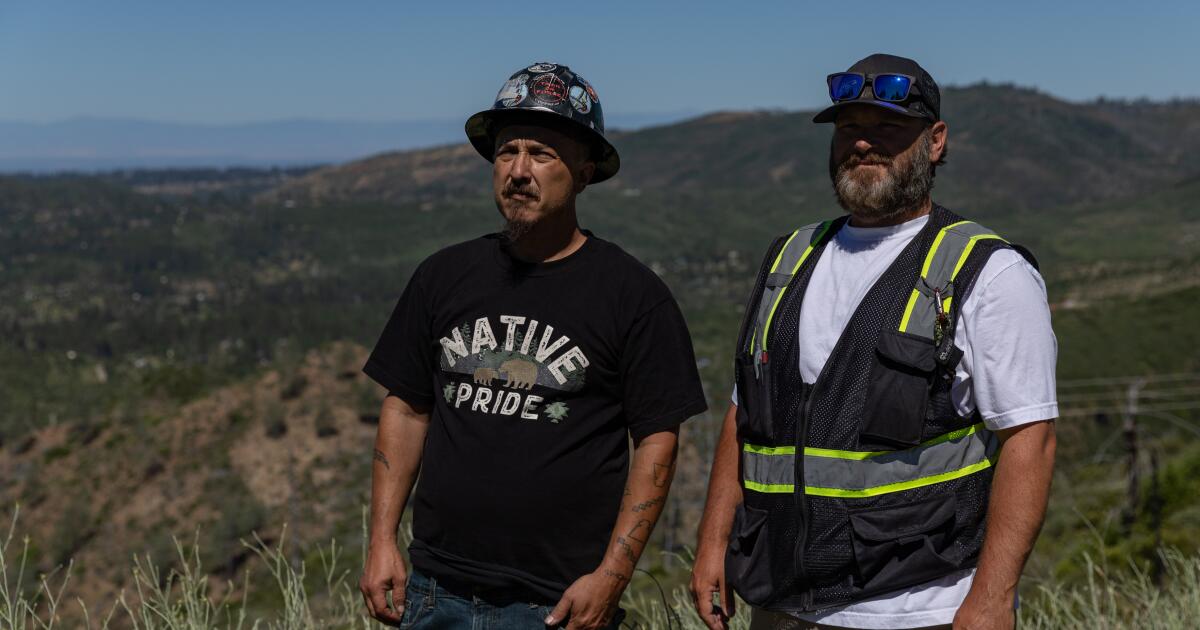
After wildfires destroyed 95% of this California tribe’s forests, members uncovered 1,200 ancestral sites
-
 Sports18 minutes ago
World Cup championship and third-place game: Start times and how to watch
-

 World30 minutes ago
Rule of Law in Hungary shows ‘radical change’ under Magyar, EU says
-

 News60 minutes ago
Where Wildfire Smoke Is The Worst Right Now—And What To Do About It
-

 Los Angeles, Ca3 hours ago
LADWP begins long-term repairs after West Hollywood water main rupture
-

 Detroit, MI3 hours ago
Livestream: Mayor Sheffield, Detroit health chief to address wildfire smoke threat
-
 San Francisco, CA3 hours ago
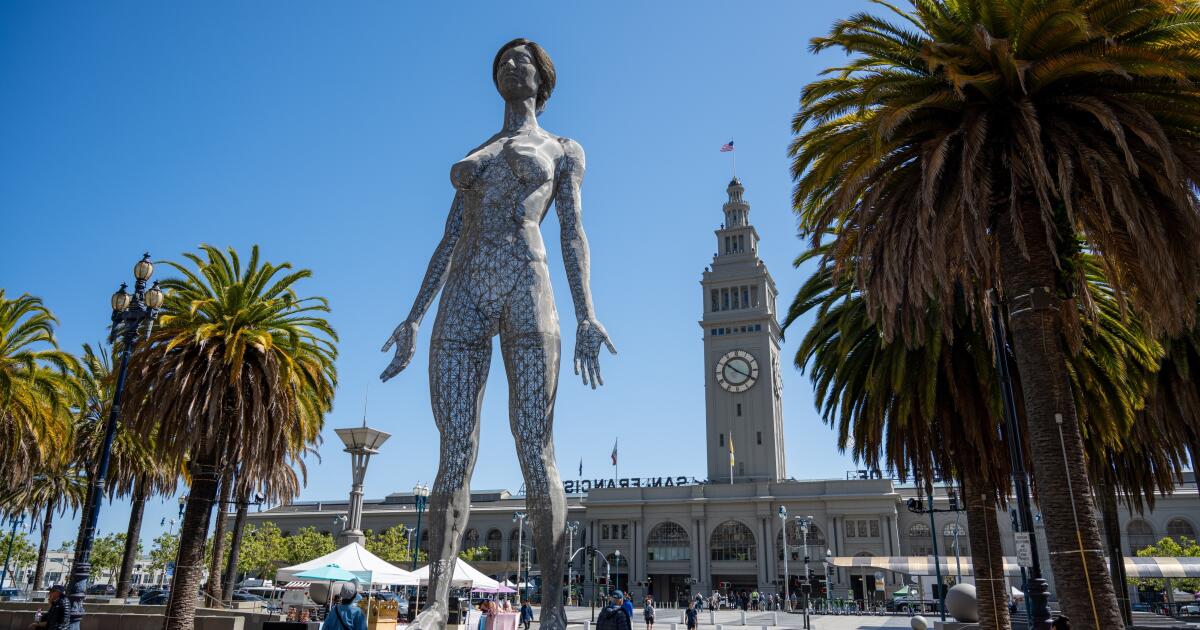
A sculpture of a giant naked woman goes on sale in San Francisco. Bring a crane

