Utah
Utah asks for UEA voucher lawsuit to be dismissed


SALT LAKE CITY — Attorneys for Governor Spencer Cox and Utah Attorney General Sean Reyes have asked a judge to throw out a lawsuit filed by the state’s largest teachers union.
The Utah Education Association sued the state, alleging that its “Utah Fits All Scholarship” is a voucher program that is taking money from the public education system.
In a new court filing, lawyers for the state insisted the program only applies to a handful of students and is not taking an excessive amount of funding.
“The Legislature has allocated funds for the UFA Scholarship Program amounting to less than 1% of the overall budget provided for the public education system. Nothing in the statute that creates the UFA Scholarship Program states or implies that funding for the Program will be taken from funds that would otherwise be appropriated to fund the public education system,” assistant Utah Attorney General Scott Ryther wrote.
The state also argues the legislature is within its authority to do it.
“Accordingly, if the Legislature chooses, as it did here, to create a program to support children in their efforts to seek an educational alternative outside the public education system, the Legislature may do so. The UFA Scholarship Program stands as a separately funded program to support the needs of children who wish to opt out of the public education system,” Ryther wrote.
So far, Utah lawmakers have spent $82.5 million in taxpayer funds on the program. The scholarship offers families up to $8,000 to move their student to private or pay for other school expenses. But the Utah Education Association alleges the Utah Fits All program diverts away money from public schools, in violation of the state’s constitution. The union is asking a judge to block the law from being enforced.
The state of Utah’s court filing also seeks to have Utah State Board of Education member Carol Lear removed as a plaintiff, saying she lacks standing to sue.



Editor’s note: This article is published through the Great Salt Lake Collaborative, a solutions journalism initiative that partners news, education and media organizations to help inform people about the plight of the Great Salt Lake.
SALT LAKE CITY — U.S. Magnesium ceased mineral operations in 2021 amid some equipment failures, which ultimately led to its bankruptcy filing last year.
Yet, state officials say the Tooele County plant was still pulling 50,000 to 80,000 acre-feet of water out of the Great Salt Lake every year, which is about as much as some medium-sized reservoirs can handle and a large chunk of its nearly 145,000 acre-feet in water rights.
It was also the third time that the 4,500-acre facility had shut down over issues, so when its assets went up for auction, Utah leaders decided to strike.
“Rather than just try to reorganize and do the same thing again … the state said, ‘Hey, there’s an opportunity, and we’re going to step up,’” said Joel Ferry, director of the Utah Department of Natural Resources.
Utah agencies and lawmakers acted quickly, swooping in and purchasing it for $30 million during a bankruptcy auction last month. It outbid LiMag Holdings, a company with ties to the plant’s owner, to keep all that water in the lake.
The state’s purchase was finalized last week, after funds from a rainy day account were included in a base budget bill that Gov. Spencer Cox signed. Great Salt Lake Rising, a philanthropic effort to fund lake solutions, ultimately served as a “backstop” to fund the purchase if the state wasn’t able to transfer the funds that quickly.
Utah is now looking at what’s next for the site, including what its duties and obligations are, Ferry told state legislators in a meeting about lake issues on Tuesday.
What the state does know is that it has a mess to clean up. The Environmental Protection Agency included it on its list of hazardous superfund sites in 2009.
“Facility operations and waste disposal practices contaminated soil, air, surface water and groundwater with hazardous chemicals,” the agency wrote, adding that it posed a threat to workers, as well as birds and wildlife.
What the cleanup looks like is still unclear, though. Utah already had a liability with the site because it’s on sovereign lands, and it had leased mineral rights to the company. But now that it owns the site, it doesn’t have a full picture of the situation.
The state has yet to determine how large the contamination is or what all the contaminants are, which will help understand how much it will cost to fix it, said Tim Davis, director of the Utah Department of Environmental Quality. All of that will be compiled into a record of decision outlining how it’ll be cleaned up in the future.
“It’ll take time; it will not happen immediately. A lot of this is very complex, and there will be additional resources. (We’ll) need funding to pay for that cleanup,” he told KSL after the meeting, adding that having the state jump ahead and compile this saves time and money rather than waiting on the federal government.
No timeline has been set for when the report will be released, but Davis suspects the cleanup will take years to complete.
It will be a “significant cost,” which Utah could pay for through new mineral extraction agreements, Ferry said. The critical minerals within the lake, like salt, lithium, potash and, yes, magnesium, are still in high demand, and there are new technologies that can extract them without using much water.
“We’re looking at those kinds of opportunities to do this in the right way,” he said. “But from an air quality perspective (and) from a water quantity perspective, this was one of the biggest things we could have done today to lead to a positive change on Great Salt Lake.”
The Key Takeaways for this article were generated with the assistance of large language models and reviewed by our editorial team. The article, itself, is solely human-written.
Utah
Utah cheer team seeks help finding missing mother, daughter last seen at New York-New York Hotel

LAS VEGAS (KSNV) — A Utah cheer team is asking for the public’s help to find a mother and daughter they say are missing on Saturday February 14.
Tawnia McGeehan and Addi Smith were last seen at the New York-New York hotel.
Police have not confirmed the disappearance.
BE THE FIRST TO COMMENT
Anyone with information is urged to contact 385-985-7249.
Utah
We sold our house in Utah to rent in Denver. The move was a big financial risk, but it was worth it.
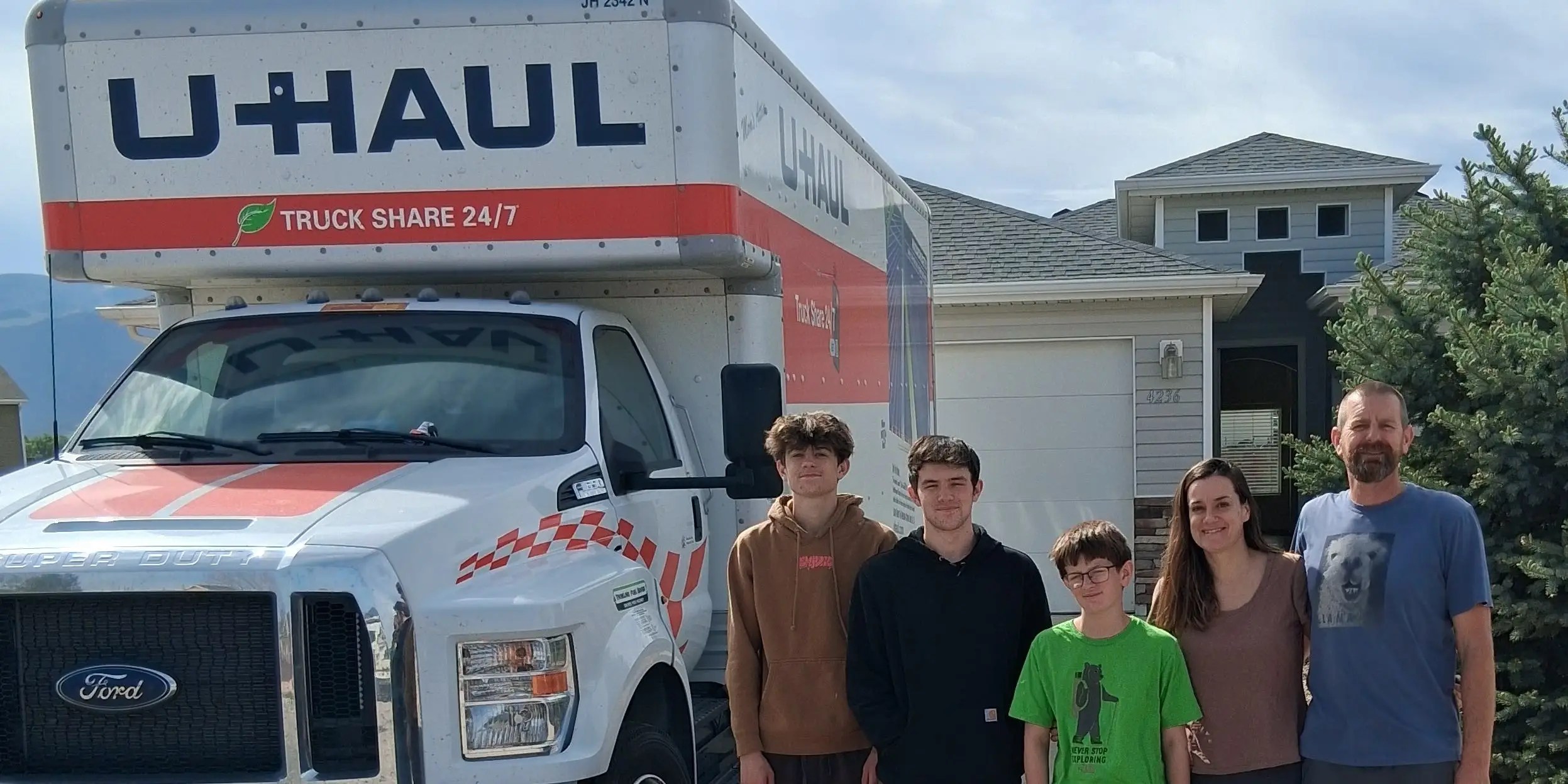
Sometimes, a decision doesn’t make sense on paper, but it just feels right to your soul. That’s what my family’s big move was like.
Last year, our family of five sold our affordable home in rural southern Utah to move into a more expensive rental in a Denver suburb.
We had wanted a change for a long time, and the timing finally felt right. We could’ve stayed where we were “safe” financially, but all our family members were struggling in different ways.
I couldn’t shake the feeling that nothing would really get better until we were brave enough to make a big change — so we did.
Moving from Utah to Denver was a difficult financial decision
One of the hardest parts to accept about moving was leaving our extended family and a house that we had lived in for 13 years.
Even more difficult was that our house in Utah was affordable. We were privileged to buy a house when prices were reasonable, and mortgage rates were low. We would have moved a long time ago, but we felt stuck in a home we had outgrown because it was cheap.
We knew that if we sold our house, we would be paying a lot more elsewhere. But the decision still felt right for our family.
We figured Denver was worth the price increase
We chose a Denver suburb because we love the outdoors and also miss the opportunities that a city provides. We have friends in the area, so we knew we would have a community once we arrived.

Courtesy of Katy Anderson
We chose an area known for its “small town feel.” As soon as we moved in, I immediately fell in love with the neighborhood. We are surrounded by an abundance of mature trees, and are within walking distance of wonderful trails for walking and biking.
I’ve been amazed at the wildlife around us, especially considering we live in a Metro area.
Just walking the trails in our neighborhood, we’ve seen rabbits, coyotes, elk, raccoons, turkeys, and many different species of birds. We feel closer to nature here than we did in rural Utah.
After living here for a few weeks, we decided to purchase e-bikes so we could ride much farther along the trails, including to coffee shops, restaurants, city gardens, and parks.
This area also provides us with access to shopping, museums, concerts, and sporting venues. After living in a secluded town for so many years, having these amenities feels like a luxury.
We’re saving money in other ways
Our rent is high in Denver, and that has been the biggest adjustment.
Before we made the move, I was also worried about the cost of living, but I have been pleasantly surprised. Our kids even get free school lunch thanks to a statewide Healthy School Meals for All program. My kids have all commented that the food is of better quality. They actually want to eat the school lunches here.
We are paying much less for gas in Colorado, as we are driving substantially less. In Utah, we lived on the outskirts of town and had to drive 15 to 20 minutes to get to work or to the nearest grocery store.
When we moved to Colorado, we also immediately ended most of our subscriptions and streaming services. We’ve cut down on our discretionary spending and are eating more family meals at home.
We also chose jobs that would help us adjust to our new housing costs
We knew we would be paying more for housing no matter where we moved, so we chose a location with ample work opportunities. My husband is a psychiatric nurse practitioner, and I have picked up a part time job in addition to my freelance writing business.
We are all making more money in Colorado than we could in Utah, where the minimum wage is still $7.25 per hour. Two of my teenage sons were amazed when they realized how much more they could earn in their new city.
Right now, we are enjoying the freedom of renting. Buying a home in this economy feels daunting, and we want to take our time exploring Colorado to see where we may want to buy if it feels right.
For now, I am grateful that my kids have a chance to experience living in a bigger city with more diversity and opportunities. Overall, I feel like we fit in here in a way that we never did in our old town, and that is priceless.

Mutiny Tiki Bar in southwest Detroit to close, owners say

Flooding closes portions of highways near Sonoma

Massive Dallas-area warehouse will not be used as an ICE detention center, developer says

Miami Dolphins make roster moves

Where to watch Colgate vs. Boston University today: College basketball free stream

Florida High School Football Rankings: Top 25 teams – Oct. 21

Cleary's 21 help Le Moyne down Central Connecticut State 69-64 in OT

How old is Bo Nix? What to know about Oregon quarterback ahead of 2024 NFL Draft

99th annual Pony Swim held in Virginia

Indiana Members Credit Union announced as new anchor tenant at Bottleworks District

Video: We Tracked All the Lawsuits Against the Second Trump Administration

Nancy Mace proposes bill to make aliens deportable, inadmissible for animal cruelty

Ukraine team heads for Geneva talks as Moscow, Kyiv build military pressure

Europeans push back at US over claim they face ‘civilizational erasure’

Department of War transports next-generation reactor in nuclear energy milestone
-

 Alabama1 week ago
Geneva’s Kiera Howell, 16, auditions for ‘American Idol’ season 24
-

 Illinois1 week ago
2026 IHSA Illinois Wrestling State Finals Schedule And Brackets – FloWrestling
-

 Technology1 week ago
Apple might let you use ChatGPT from CarPlay
-

 Culture7 days ago
Try This Quiz on Passionate Lines From Popular Literature
-
 News1 week ago
Hate them or not, Patriots fans want the glory back in Super Bowl LX
-

 Technology1 week ago
We found 20 Verge-approved gifts on sale ahead of Valentine’s Day
-

 Politics1 week ago
Virginia Dems take tax hikes into overtime, target fantasy football leagues
-

 Politics1 week ago
West Virginia worked with ICE — 650 arrests later, officials say Minnesota-style ‘chaos’ is a choice