The Utah Supreme Court on Thursday upheld a block on the state’s near-total abortion ban, leaving in place a law that allows abortions up to 18 weeks of pregnancy. The ruling dealt a blow to Republican legislators who passed the ban two years before Roe v. Wade was overturned and continued to press for restrictions.
Utah
Utah abortion ban remains on hold after ruling by state’s high court


That 2020 “trigger law” would prohibit all abortions except in cases of rape, incest or serious risk to the mother’s health, or if two maternal fetal medicine physicians determine that the fetus has a lethal defect or severe brain abnormality. A state district judge blocked the measure shortly after the U.S. Supreme Court ended federal protections for abortion in 2022, and Thursday’s 4-1 ruling maintains that suspension while the ban’s constitutionality is litigated in the lower court.
The decision by Utah’s majority-female Supreme Court means abortion remains broadly legal throughout the American West, with the exception of Idaho, where it is prohibited in nearly all cases. A ban is on hold in Wyoming, while voters in at least half a dozen states — including Colorado and Nevada plus possibly Montana and Arizona — will vote in November on ballot measures that would strengthen abortion rights.
Planned Parenthood Association of Utah and ACLU of Utah, which challenged the ban in 2022, hailed the ruling while cautioning that their battle has not ended. They argue that the law violates state constitutional rights to privacy, to bodily integrity and to determine one’s family composition.
“Today’s decision means that our patients can continue to come to us, their trusted health care providers, to access abortion and other essential reproductive services right here in Utah,” Kathryn Boyd, president and CEO of Planned Parenthood Association of Utah, said in a statement. But, she added, the group “looks forward to this unconstitutional law being permanently struck down.”
For the legislature’s Republican supermajority, the ruling comes as another court setback. The state says its constitution, ratified in 1895, includes no right to abortion.
The court decision Thursday noted that the justices, all Republican appointees, were addressing only whether the lower court abused its discretion in concluding that Planned Parenthood met the then-standard for an injunction.
“The district court did not,” the majority said, also noting in its ruling that Planned Parenthood “raises serious issues” about the ban’s constitutionality.
Abortion opponents expressed disappointment and even “great sorrow” over the outcome. Gov. Spencer Cox and Lt. Gov. Deidre Henderson said in a statement that they were “hopeful that this decision will be a temporary setback.” Others went further.
“The decision made today is a grim reminder that our society has strayed far from the moral compass that once guided us,” Mary Taylor, president of Pro-Life Utah, said in a joint statement with the leaders of Utah Eagle Forum and Abortion-Free Utah Coalition.
Abortion is now mostly or completely prohibited in 18 states, a patchwork that includes much of the South and Midwest. In Idaho, Utah’s neighbor, a sweeping ban allows only some emergency abortions at hospitals after a Supreme Court decision in June. Arizona prohibits abortion after 15 weeks of pregnancy.
Planned Parenthood operates three of Utah’s four abortion clinics, which do the vast majority of procedures in the state. In 2021, the most recent year for which data is available, 3,129 abortions were recorded.
Utah’s legislature took aim at those facilities last year, requiring abortions to be performed in hospitals and prohibiting the licensing of such clinics. Planned Parenthood also sued over that measure, which it described as a backdoor attempt by the lawmakers to criminalize abortion even as the judiciary weighed their initial law.
The same district court suspended the clinic law just before it was to take effect. The legislature this year repealed the law in a bid to simplify — and expedite — the high court ruling issued Thursday.



SAN JUAN COUNTY, Utah (ABC4) — The Babylon Fire, currently the largest wildfire in the United States, has grown to 106,324 acres, according to Utah Fire Info. The blaze is now 47% contained.
The wildfire is burning about 25 miles southwest of Monticello. Officials said five structures have been lost and 1,467 personnel are assigned.
Current operations
Firefighters are conducting an aggressive attack along the active fire edge, officials said, with a “specialized helitack crew” entering the Dark Canyon to secure the western edge into the bluffs. Crews in Trail Canyon continue to reinforce the fire line.
Fire personnel have reportedly secured containment lines off Steamboat Point and Dry Mesa.
A spot fire remains active on the north-facing slope of Jackson Ridge, officials said. Firefighters continue to protect a critical communication site on Abajo Peak.
Firefighters are using grass and brush on the south slope to keep the fire in heavy timber. Intense fire activity caused fire crews to pull back from Indian Creek, officials said. Complete containment from the southern line back to South Cottonwood is expected by the end of Sunday’s shift.
Firefighters assigned to the structure protection group on the Babylon Fire string hoses connected to a portable water tank along a dozer line west of Monticello, Utah, on July 11, 2026. (Courtesy: Geoff Liesik/U.S. Wildland Fire Service)
Upcoming weather, fire behavior
A critical shift is happening as monsoonal moisture moves in from the south. This will heighten the chance for critical fire weather conditions.
Temperatures will be slightly cooler and morning winds will be breezy, officials said, with some gusting along ridge tops. The main concern is forecasted scattered thunderstorms after noon, with dry storms bringing the potential for lightning and erratic, severe outflow winds.
See a current map of the Babylon Fire, as well as a smoke outlook, below.
-

Babylon Fire Smoke Outlook, July 12, 2026. (Courtesy: Utah Fire Info)

Evacuations, closures
There are 23 evacuation zones in “SET” status at this time. This includes all zones west of Highway 191, south of State Route 211, and north of State Route 95.
All National Forest lands, roads, and trails within the Monticello Ranger District of the Manti–La Sal National Forest are closed. The Needles District of Canyonlands National Park is also closed to ensure public safety and aid firefighting operations.
All BLM-managed public lands west of Harts Draw Road and north through the Indian Creek Corridor to Indian Creek Falls are temporarily closed. This closure reportedly includes key recreation and backcountry areas like Shay Mesa, Beef Basin, Dark Canyon, and the Sweet Alice Wilderness Study Area.
“Anyone not directly involved in firefighting operations must stay out of all closure areas and avoid public lands within the boundary formed by State Route 211 to the north, U.S. Route 191 to the east, and State Route 95 to the south,” fire officials said. “These restrictions are in place to protect the public and allow firefighters to operate safely and effectively.”
Evacuation and closure information can be found on the Babylon Fire Inciweb page here.

Even though only some 50 men born in the state of Utah have reached the majors, there is enough talent to field a mythical dream team comprised of those who were either born in Utah or went to high school there; college MLB products are another story.
So, with a nod to the MLB All-Star game in Philadelphia next week, here is one writer’s Utah dream team, with birthplace/Utah high school and years played in the majors:
Catcher: John Buck (Taylorsville High, 2004-14) — Born in Wyoming, Buck was drafted in the seventh round out of high school by the Houston Astros in 1998. He worked his way through the minors and made his MLB debut June 25, 2004, for the Kansas City Royals after being traded there the day before.
Buck also played for the Toronto Blue Jays, Miami Marlins, New York Mets, Pittsburgh Pirates, Seattle Mariners and Los Angeles Angels. He was an All-Star in 2010 — his only season with the Blue Jays. Buck had 134 career homers with an average of .234.
First base: Chris Shelton (Salt Lake City, 2004-09) — A product of Cottonwood High, Salt Lake City Community College and the University of Utah, Shelton was drafted in the 33rd round by the Pittsburgh Pirates but still lasted several years in The Show.

Shelton had 14 hits in his first 20 at-bats and 24 in his first 51, with 13 homers. He also slugged nine homers in his first 13 games.
“I don’t regret anything. I had some moments and did some great things,” Shelton told the Society of American Baseball Research, or SABR. “It’s always exciting to be a part of people’s memories.”
He had 930 at-bats in The Show — third among Utah natives.
Second base: Glenn Hubbard (Ben Lomond High, 1978-89) — Born in Germany in a military family, Hubbard lived in California before the family moved to the Ogden area. He had 4,441 at-bats with the Atlanta Braves and Oakland A’s with a lifetime average of .244 with 70 homers.
He was an All-Star in 1983 when he hit a career-high 12 homers.
Third base: Vance Law (Provo High, 1980-91) — Born in Idaho, Law was drafted out of BYU by the Pirates — the same club that his father, Vern, pitched for in 1960, when they became World Series champs.
“Vance had a 14-year professional career, with 10 of those years in the major leagues, mostly as a second baseman and third baseman,” per SABR. “He was a regular on the 1983 White Sox who won the division, as well as the 1989 Chicago Cubs who also won a division title.”
Law was the BYU coach from 2000-12. He also coached at Provo High and was an assistant at Utah Valley State College. His son, Adam, played at Provo High and BYU, as well as in the minors for the Los Angeles Dodgers.
Shortstop: Gordon Slade (Salt Lake City, 1930-35) — Slade’s 12 career steals, while not impressive, are the most of a player born in Utah. He is second in hits with 353 while playing with the Brooklyn Robins, the St. Louis Cardinals and the Cincinnati Reds.
Slade hit .257 with eight homers. He died in California in 1974. His 1,372 at-bats in the majors place him second among Utah natives.
Left field: Duke Sims (Salt Lake City, 1964-74) — Sims went to high school in Idaho. He has the most homers (100), hits (580) and RBI (310) of any player born in the state. He spent most of his time with the Cleveland Indians and had a career-best 23 homers in 1970.
“A solid defensive catcher whose career batting average of .239 was deceiving, Sims retired with a very respectable .340 OBP — better than many ‘higher-average’ lifetime hitters. He could also play the outfield. Sims is the only major leaguer born in Utah to get over 2,000 at-bats in the majors,” according to SABR.
He mainly played catcher, but is in the outfield for our dream team purposes. He hit the last homer at old Yankee Stadium and was the catcher that day.
Center field: Bobby Mitchell (Salt Lake City, 1980-83) — Mitchell, born in Salt Lake City, played high school and college baseball in California. In the majors, he played for the Dodgers and the Minnesota Twins.
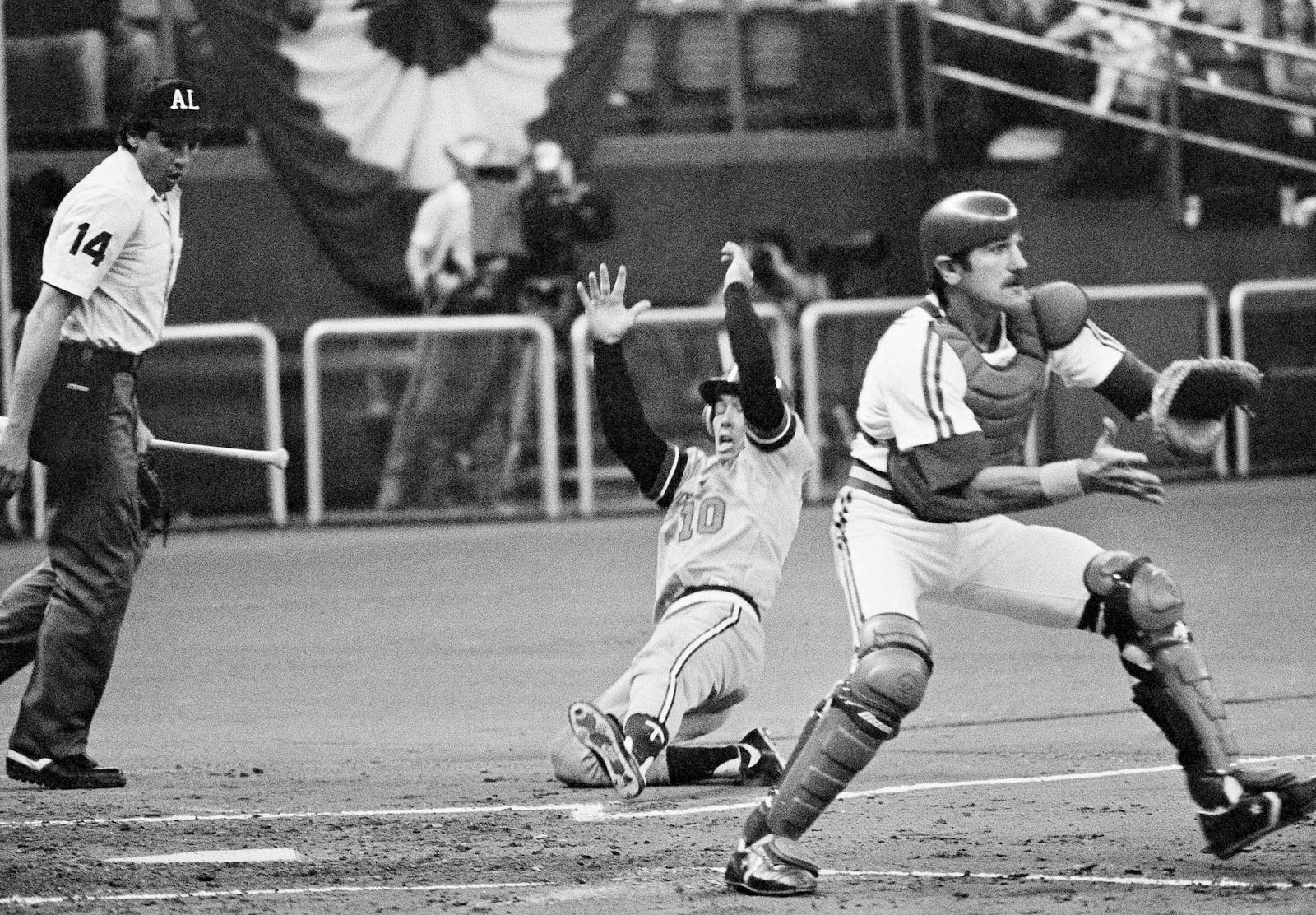
Mitchell played in the Little League World Series in 1967 with Northridge, California, and in the College World Series with USC seven years later.
Right field: Chad Hermansen (Salt Lake City, 1999-2004) — Born in Salt Lake City, Hermansen was a high school product of Nevada, who played for the Pirates, Chicago Cubs, Dodgers and Blue Jays. He had a career-high eight homers in 2002 while with the Pirates and Cubs.
His first MLB homer came in 1999 for the Pirates against the Cubs and his last two games in the majors were for Toronto against the Baltimore Orioles.
Starting pitcher: Bruce Hurst (St. George, 1980-94) — The lefty is the only MLB player born in Utah named to an MLB All-Star game, according to Baseball Reference.
His 145 wins are the most of a Utah native and Hurst was the only pitcher to win at least 10 games every season from 1983 through 1992. The lefty made two key starts in the 1986 World Series for the Red Sox against the Mets, then started Game 7 on short rest.
He’s from “a small Mojave Desert town of about 4,000 people in the southwest corner of the state, 120 miles from Las Vegas,” SABR wrote of St. George. “Called Dixie by the locals, St. George was founded by Mormon missionaries in the 19th century to develop a cotton-farming industry.”
Hurst was mentored by Kent Garrett, a former player at BYU who started American Legion baseball in St. George in the 1970s, according to Prep Baseball Report.
“For some reason Garrett saw something in me,” Hurst told SABR. “He was a stickler for fundamentals and detail. We’d get baseball magazines and cut out pictures of pitchers … and look at the positions they were in. I’d get in front of the three-way mirror and practice my windup. He gave me confidence.”
Closer: Brandon Lyon (Salt Lake City, 2001-13) — Lyon, a Taylorsville High product, had 79 saves in the majors — the most of a player born in the state — and 42 wins while pitching for several clubs. His best season may have been 2007 with the Arizona Diamondbacks, when he had an ERA of 2.68 in 73 games.
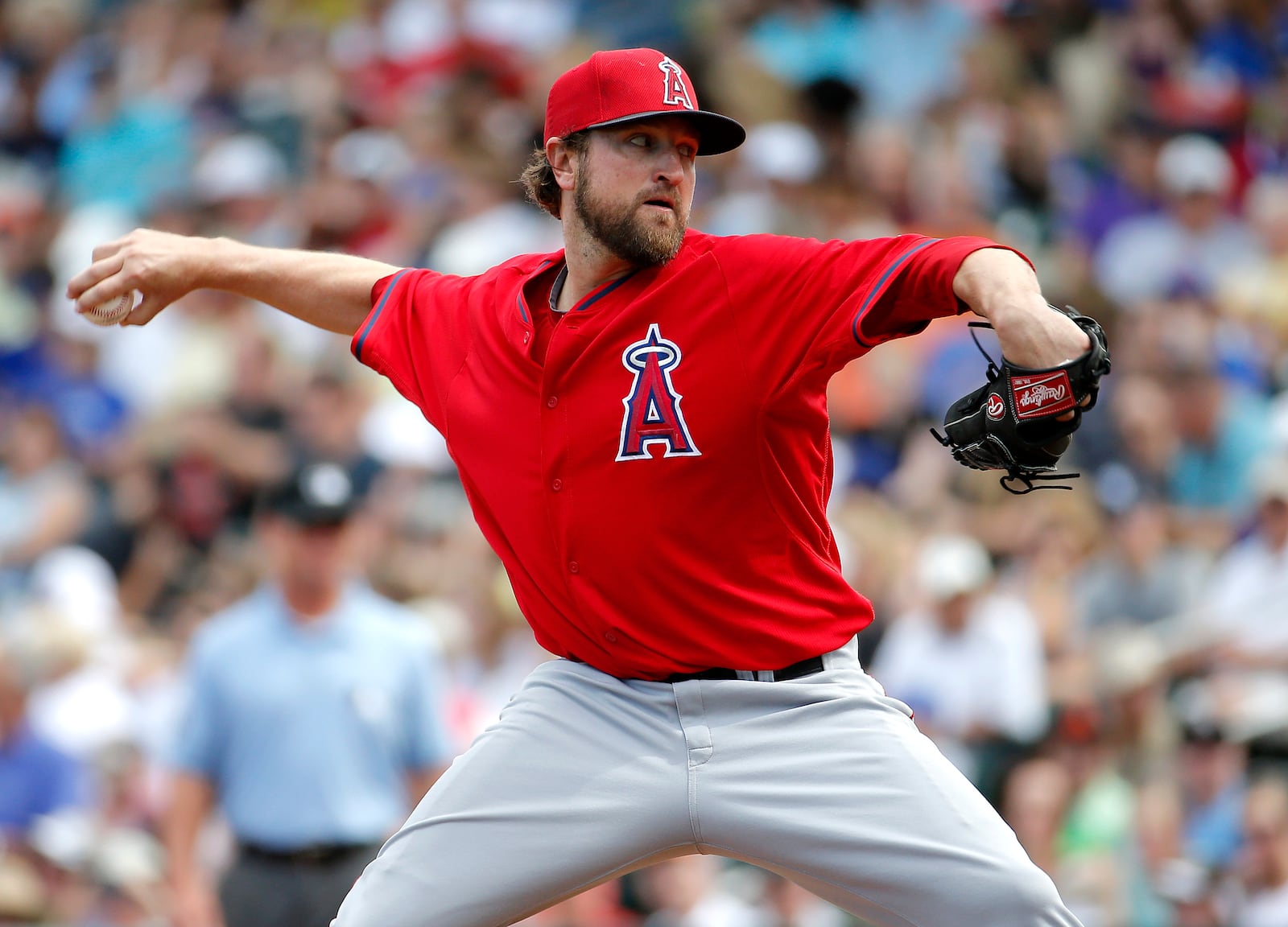
His son, Isaac, was drafted out of Grand Canyon in 2025 by the Seattle Mariners and has pitched in the Washington Nationals’ minor league system for three clubs this year, as he was promoted to Double-A Harrisburg on May 26 from Single-A Wilmington.
Other pitchers: Kelly Downs (Ogden, 1986-93); Ed Heusser (Salt Lake County, 1935-48); Brandon Duckworth (Salt Lake City, 2001-08); Fred Sanford (Garfield, 1943-51).
Downs of Viewmont High won 57 games, Heusser won 56 and Sanford recorded 37 victories.
Heusser died in Colorado in 1956 at the age of 46. He led the NL in ERA in 1944. Sanford died in 2011 in Salt Lake City. He played for the St. Louis Browns, New York Yankees and Washington Senators, and was part of two World Series winners with the Yankees.
Manager: Herman Franks (Price): A catcher in the majors, Franks is the only Utah native to manage in the majors. He guided the San Francisco Giants from 1965-68 and the Chicago Cubs from 1977-79.
Franks was a third base coach on the 1954 New York Giants squad that won the World Series over the Cleveland Indians.
He may have also aided the 1951 Giants in a unique way. Published stories report that he relayed signs to hitters from center field late in the season and he was there when Bobby Thomson hit his famous homer to beat the Dodgers for the pennant in the best-of-three playoff series.
Franks died in Utah in 2009.
Pitching coach: Hurst was the pitching coach of the Chinese national team from 2003-2007. He was also involved in the MLB academies in Europe after his playing career, and he worked in the front offices of the Boston Red Sox and Dodgers.
Coach: Mitchell coached in the minors in the systems of MLB clubs.
General manager: Franks was the general manager of Salt Lake City in the Pacific Coast League and worked in the front office of MLB clubs.
Utah notes
The only natives of Utah to make their MLB debuts in 2025 were Jack Dreyer (Salt Lake City), who grew up in Iowa and is with the Dodgers; Paxton Schultz (Orem, Utah Valley), who is in the Nationals’ farm system after breaking in with Toronto; and Jayden Murray (Vernal, Dixie State), who is with the Cubs after his 2025 debut with the Astros.
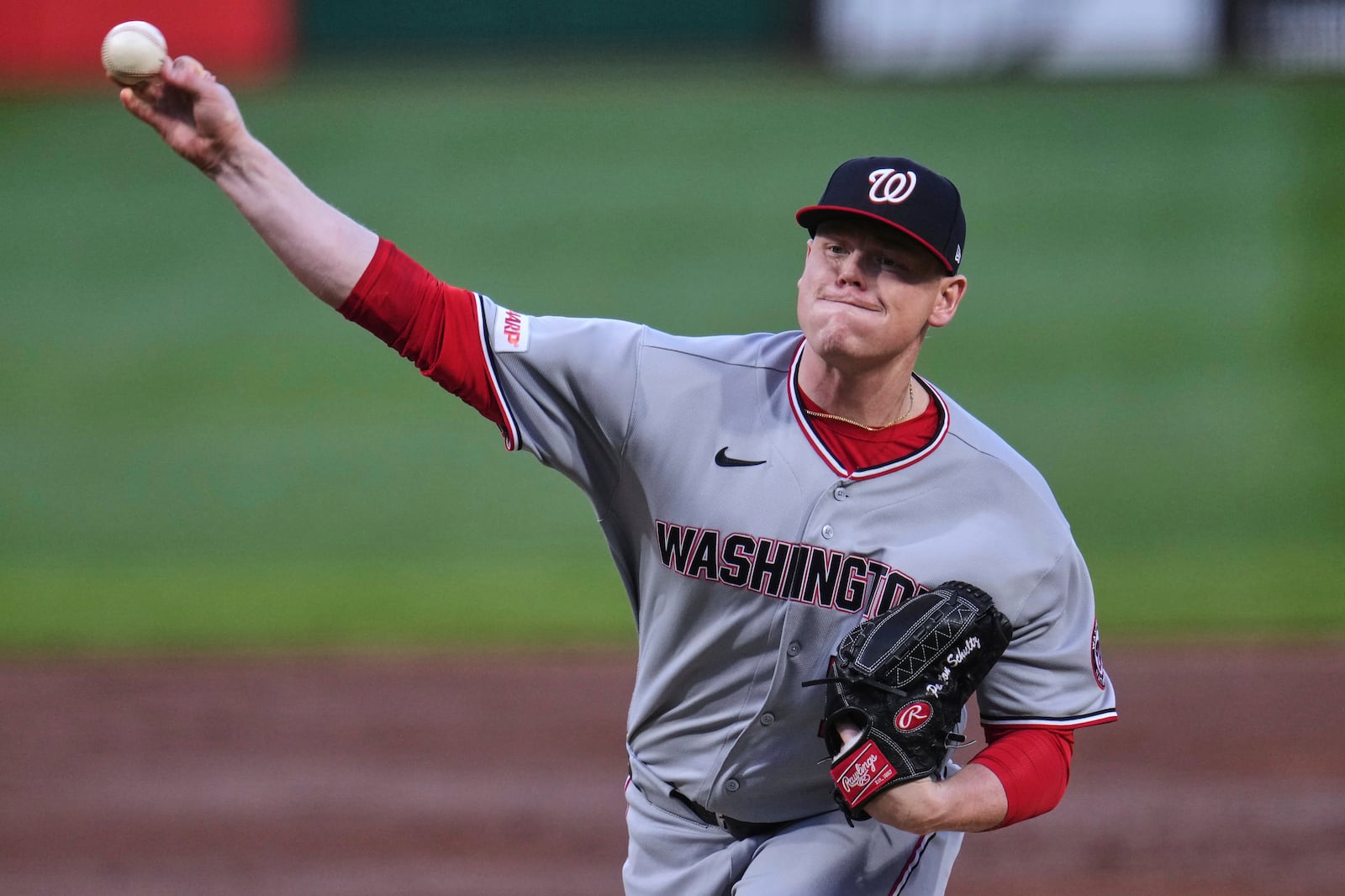
No native of Utah has made their MLB debut this season, as of the time of writing.
The first player born in Utah to make the majors was Lee Thompson (Smithfield), who pitched in four games with the White Sox in 1921. He died in California — the same day as his brother — in 1963 after holding several jobs in that state after his minor-league career.
David Driver is the co-author of “From Tidewater to the Shenandoah: Snapshots from Virginia’s Rich Baseball Legacy.” He covered the Nationals from 2013-22 for several outlets. He has interviewed Buck, Lyons and Duckworth as well as former BYU standouts Jeremy Guthrie and Jackson Cluff, who began this season at Triple-A in the Mets’ farm system. Driver is the former sports editor of papers in Baltimore and his native Harrisonburg, Virginia.

SALT LAKE CITY — A Riverton woman is proving that one moment of compassion can change a life.
On May 21, LaCinda Thackeray was flying home to Utah from Southern California after attending a family funeral when someone outside the window caught her attention.
As she waited to board her plane at John Wayne Airport, she noticed an airport worker struggling to walk across the tarmac.
“I just saw somebody who needed a little bit of support and love and kindness,” Thackeray said. “What really was hard for me was just the conditions he was in, and I didn’t even know his story at that point.”
Before her flight departed, Thackeray recorded a short video of the man and shared it on TikTok, asking if anyone knew who he was.
“Immediately when I sat on the airplane, my thought was, if anybody knew who he was, could we get him retired?” Thackeray said. “I didn’t know it was going to take off. I had no idea.”
Within a few hours, the video had been viewed more than a million times. Thousands of people shared it, and strangers from around the world began asking how they could help.
The internet soon identified the man as 64-year-old James Blair, a Navy veteran who works as a fuel injector and fuel mechanic at the airport.
By all accounts, Blair has lived a life of service. He served in the Navy from 1980 to 1990.
“We were 20 minutes from launching against Iran when the hostages were in Iran. We had all of our planes loaded with bombs and missiles on our ship and were just waiting for President Reagan to give the go-ahead,” Blair said.
After the Navy, Blair said he worked at LAX airport for 13 years and, after a three-year stint as a truck driver, returned to working on planes at John Wayne Airport.
“I’ve been at John Wayne Airport since April of 2006,” Blair said.
Though Blair turned 64 in March, retirement is not on his horizon.
“My plan was to work until I can’t work, until I physically can’t work,” he said. “I have inquiries out about getting knee operations; I’m working on that right now.”
Despite ongoing knee problems, Blair said his priority is his elderly mother, whom he lives with.
Thackeray said much of Blair’s income goes toward her hospice care.
“She has her good days, and she has her bad days,” Blair said.
Encouraged by people online, Thackeray started a GoFundMe campaign. She said donations quickly poured in.
“At one point, I remember telling my husband, ‘What did I do?’” Thackeray said. “When we needed to get him the money, that is when we were a little panicky, but then it changed really fast.”
The overwhelming support, Thackeray said, presented an exciting opportunity but also some challenges in ensuring that Blair would receive the money.
Until recently, Blair didn’t have a smartphone or social media accounts.
His boss volunteered to drive 1.5 hours to his home to help him set up a GoFundMe account so that he could receive the funds as a beneficiary.
“When his boss went out there, it eased so much anxiety,” Thackeray said.
Recently, Thackeray returned to California to personally deliver a $174,000 check to Blair.
For Blair, the support from complete strangers has restored his faith in humanity.
“Not in a million years,” Blair said when asked if he ever imagined something like this would happen.
“I’m just a person trying to do a job, trying to survive, and the way people give their own money. I have a hard time working to pay bills, so other people probably have the same problems. When they’re giving money they really can’t spare, that amazes me. I’m just blown away.”
Thackeray said the generosity extended far beyond the United States.
“I was speechless because I felt like the world showed up, and I think in these times we need people like that.” She said.
“I’ve been speaking to people all over the world, and they’re just, ‘Tell James hi!’ Give him a hug for us!” she said.
Blair also reflected on how deeply the experience has affected him personally.
“I believed in God, but I didn’t really believe in God. But now, with the angel sitting next to you, it’s amazing,” Blair told Thackeray. “I can’t believe how God works in mysterious ways.”
Although Blair is still going to work, he recently used some of the funds to buy himself a bed. He continues to care for his mother.
“I mean, I don’t know what Salt Lake City living is now, but California is really expensive,” Blair said.
What began as a brief glance through an airplane window has grown into an unlikely friendship — and a powerful reminder that a single act of kindness can inspire thousands of people to make a difference.
“I’m so happy for him and that he gets to experience this,” Thackeray said.
“I told him, I’m just a little part of your story, I’m happy that I could do that, but I hope you can always remember the ones that showed up and donated.”
To date, nearly 6,000 people have donated to the fundraiser. It has raised $180,521.00 for Blair.
Thackeray’s TikTok video of Blair has been viewed more than 9 million times, garnering nearly 800,000 likes and 8,000 comments.
For more information about the fundraiser, visit: https://gofund.me/51f1c9e16
*KSL.com does not assure that the money deposited to the account will be applied for the benefit of the persons named as beneficiaries. If you are considering a deposit to the account, you should consult your own advisers and otherwise proceed at your own risk.
The Key Takeaways for this article were generated with the assistance of large language models and reviewed by our editorial team. The article, itself, is solely human-written.
-
Vermont2 minutes ago
VT Lottery Pick 3, Pick 3 Evening results for July 12, 2026
-

 Virginia8 minutes ago
Virginia Lottery Pick 3 Night, Pick 3 Day results for July 12, 2026
-

 Wisconsin20 minutes ago
Wisconsin Lottery Pick 3, Pick 4 results for July 12, 2026
-

 West Virginia26 minutes ago
This week in West Virginia history: July 12 to 18
-

 Wyoming32 minutes ago
First Alert Weather Days through Sat. for excessive heat, possibly through Wednesday for fire danger
-

 Crypto38 minutes ago
The Tech Billionaire Takeover review – a surprisingly fun look at the crypto bros threatening democracy
-

 Finance44 minutes ago
Wedding budget: How to decide what to spend on your big day
-
Fitness50 minutes ago
Are Stamina and Endurance the Same Thing?


