Utah
Supreme Court refuses to hear Utah’s bid to take control of public land


The Supreme Court on Monday declined to hear Utah’s bid to gain control over millions of acres of federal land, dealing a blow to the state’s efforts to assert greater authority over its natural resources.
Why It Matters
Federal agencies currently oversee nearly 70 percent of Utah’s land, including areas crucial for energy production, mining, grazing and outdoor recreation. Utah officials have argued that state control would ensure better local governance and unlock revenue opportunities through taxation and development. However, the state’s proposal excluded its iconic national parks and monuments from the transfer.
Utah’s push for control highlights a broader debate over federal land management in the West, where sprawling landscapes often fall under the jurisdiction of agencies like the Bureau of Land Management (BLM). Critics of federal oversight argue it limits economic potential, while supporters counter that it safeguards public lands for conservation and recreational use.
What To Know
In a brief order on Monday, the high court denied the Republican-led state’s request to file a lawsuit aimed at transferring ownership of approximately half of Utah’s federally managed land, an area comparable in size to South Carolina.
The Supreme Court, as is customary in such instances, provided no explanation for its decision, stating only that “the motion for leave to file a bill of complaint is denied.”
J. Scott Applewhite/AP
The decision comes after Utah sued in August to try to gain control of 18.5 million acres that is held by the federal government.
The filing, which state leaders said was the result of “decades of legal analysis,” targeted BLM land “unappropriated” to parks, monuments or other national sites.
According to The Salt Lake Tribune, Utah Governor Spencer Cox, Senate President Stuart Adams, House Speaker Mike Schultz and Attorney General Derek Brown said they were disappointed in the court’s decision.
The federal Bureau of Land Management declined to comment to The Associated Press.
What People Are Saying
Republican Utah Governor Spencer Cox said in August: “Utah deserves priority when it comes to managing its land. It’s been a tragedy to see what this administration and past administrations have done to our land, closing down roads that have been open for generations.”
Cox, Senate President Stuart Adams, House Speaker Mike Schultz and Attorney General Derek Brown said in a statement to The Salt Lake Tribune: “We are also heartened to know the incoming [Trump] administration shares our commitments to the principle of ‘multiple use’ for these federal lands and is committed to working with us to improve land management. We will continue to fight to keep public lands in public hands because it is our stewardship, heritage and home.”
Utah House Minority Leader Angela Romero, a Democrat, praised the Supreme Court’s decision in a statement to The Salt Lake Tribune as a “win for all Americans and the protection of our environment. Today’s actions serve as an important reminder that our public lands should not be privatized or exploited for short-term benefits.”
What Happens Next
While it’s unclear what state officials will do next, the state said in a statement to The Salt Lake Tribune that they “remain able and willing to challenge any BLM land management decisions that harm Utah.”
This article includes reporting from The Associated Press.



LAS VEGAS (KSNV) — The man arrested for murder in the 2006 death of his wife at a Utah national park left behind a suicide note in his Las Vegas jail cell, according to a police report.
Las Vegas Metropolitan Police released a public report on the death of David Vander Meer, 49, who was in custody on an out-of-state warrant.
The Washington County District Attorney’s Office said in an affidavit that Vander Meer, a former youth pastor, was a suspect in the death of his then-wife, 28-year-old Bernadette Vander Meer, 20 years ago.
Bernadette fell to her death at Angels Landing in Zion National Park. Prosecutors said in their affidavit that they received new information implicating David, alleing that he began having a close relationship with a young girl when she was 14 and he was her youth pastor.
A fugitive task force took Vander Meer into custody in Summerlin, according to an arrest report, and he was booked into Clark County Detention Center on June 22.
In the report on his death, LVMPD said a corrections officer was conducting visual checks at about 9:30 p.m. June 24 when he noticed Vander Meer lying face down on the ground and unresponsive.
Several sections are redacted, but police wrote that the officer performed chest compressions until medical personnel arrived. Vander Meer was taken to UMC, where he was pronounced dead just after 2:36 a.m. June 25.
Investigators wrote that because of “the nature of his case,” Vander Meer was placed into protective custody. He was seen sitting upright and awake at 9 p.m., and he had no known medical conditions. He also did not mention being suicidal during a mental health screening.
Inside the cell, police wrote that Vander Meer “left a hand written suicide letter and a hand written will in his cell which has been photographed and impounded.” The following paragraph of the report was redacted, and no further details on Vander Meer’s death were disclosed.
The Clark County Coroner’s Office has not yet released its official rulings on his cause and manner of death.
Bernadette’s parents, Richard and Laura Gudenkauf, told News 3 they long suspected Vander Meer played a role in her death.
“Because of the girlfriend,” said Laura. “I found insurance policies months later that he had, lots of them.”

It has been a long time since the Jazz last played a meaningful game I desperately wanted them to win, and it is unhealthy how excited I am for this matchup. After a solid three games in the SLC Summer League, the Jazz head south to Las Vegas, and as hot as the desert sun is sure to be outside, on the court, the Thursday night primetime game featuring the top two picks in the draft will be much hotter.
How to Watch the Las Vegas Summer League?
Who: Utah Jazz vs Washington Wizards
When: Thursday, July 9, 2026 | 7:00 MT
Where: Thomas & Mack Center, Las Vegas, NV
How to watch: ESPN, Jazz+
Darryn Peterson and AJ Dybantsa
Summer league games do not matter in the record books, but this game is a statement-making opportunity for both AJ Dybantsa and Darryn Peterson. Given the historical nature of this draft class, especially at the top, there is some real juice to this game that is atypical of most Summer League games. AJ has the chance to silence the noise that has swelled after Darryn’s remarkable performances in the SLC Summer League. Meanwhile, Darryn has the chance to ratchet up the noise and take the NBA world by storm with another solid performance against the Wizards. Can you imagine the narratives if Darryn were to come out and dominate AJ as he has through high school and college? In the words of the great Charles Barkley, I have two words for you… Darryn Peterson, AJ Dybantsa, must-see TV.
Ace Bailey looked really impressive in his 2.5 quarters of play in Salt Lake before missing games with back spasms. It is unknown whether or not he will be ready to go for the Vegas opener, but if he is available, he will probably be the one checking AJ Dybantsa on defense. His combination of length and athleticism could not only make things difficult for AJ on the defensive end but also expose his lackadaisical defense on the offensive end. If Ace is able to go, he will be looking to show the Jazz and the NBA that he is ready to take a leap in year two.
Which Jazz Big Man Will Stand Out?
Which big man will step up this game? In Game 1, we saw a lot of Kylor Kelley, who was a little less than impressive. Against Memphis, Jaxon Kohler, the Utah native, showed up and showed out against Cam Boozer. In game three, although the number of NBA-level players was few and far between, Jonas Aidoo stole the show with his rebounding and ability to play his role. Will we see one of those same three guys seize their opportunity, or will another guy like Micah Handlogten or Eric Dixon steal the show? We saw how vital a big that can roll and catch passes is for Darryn Peterson as a lead guard, playmaking-wise. It will be interesting to see who steps up to the plate to relieve pressure when he is blitzed and double-teamed.
SIDE NOTE: Adam Silver is LAME
No one should ASPIRE to be as boring as Adam Silver. After much excitement was made about Keyonte George making his unofficial coaching debut on Thursday night, according to Sarah Todd, the league has nixed that excitement and won’t allow Keyonte to be coaching on the sideline because who knows why…? I guess they were worried about the Jazz circumventing the salary cap to pay Keyonte or something. Anyways, I guess Will Hardy’s coaching TREE will have to wait for more branches to grow. Adam Silver remains evil in my book.

SALT LAKE CITY, UT (Good Things Utah) – A Park City charitable foundation is challenging outdoor athletes to turn their miles into meals for hungry kids. Terrence Moorehead is the co-founder of the non-profit RipLine Foundation. He says the RipLine Foundation seeks to channel the energy of Utah’s outdoor athletes, adventurers, and enthusiasts into the fight against childhood hunger. RipLine’s mission: Fight Hunger Feed the Future. It’s delivered through three peer‑to‑peer leader challenges across the year that turn movement into meals for children in need. 100% of funds raised go directly to vetted giving partners, including No Kid Hungry, Feeding America, Feed the Children, and Vitamin Angels.
The challenge is to turn every mile walked, run, biked, or hiked, and every hole of golf played into meals for kids facing food insecurity. Terrence says ‘Outdoor athletes are the most generous, motivated, and passionate community in the state and we’re done pretending we can’t do something to help our kids. Every mile is a meal. Every climb is a meal. Every round of golf is a meal. If you’re already moving, you’re already qualified.’
He says this summer they have Miles in the Wild™ – walking, running, biking, and hiking – which currently runs through September, and Balls Out™ which is our summer golf challenge. They are encouraging athletes in their preferred sport to rally networks of family, friends, coworkers, and crews to sponsor their effort.
Terrence says ‘Childhood hunger is unacceptable in a country this abundant — and it’s an area where we can have a real and meaningful impact. What’s been missing is a model that scales — that turns individual effort into measurable, repeatable impact. RipLine is built to do exactly that. Every Leader brings a network. Every dollar reaches a child. The math works. The Foundation has committed to providing one million meals in 2026 alone — its first year of fundraising — with a 2030 target of four million meals and one million children nourished.’
To sign up go to riplinefoundation.org
-

 Pennsylvania5 minutes ago
PA state rep. wants to force the York State Fair to change its name
-

 Rhode Island8 minutes ago
R.I. leading multi-state lawsuit against Trump administration housing policy – The Boston Globe
-

 South-Carolina13 minutes ago
SC is at the top for food waste in the nation. How you can make changes
-

 South Dakota20 minutes ago
Petition to clarify South Dakota proof of citizenship law shot down over technicality
-

 Tennessee23 minutes ago
Tennessee State men’s hockey cancels 2026-27 inaugural season for second straight year
-

 Texas28 minutes ago
Ted Cruz warns Talarico has ‘real chance’ to flip Texas’ U.S. Senate seat
-

 Utah35 minutes ago
Man suspected in 2006 Utah murder left suicide note in Las Vegas jail cell: police
-
 Vermont38 minutes ago
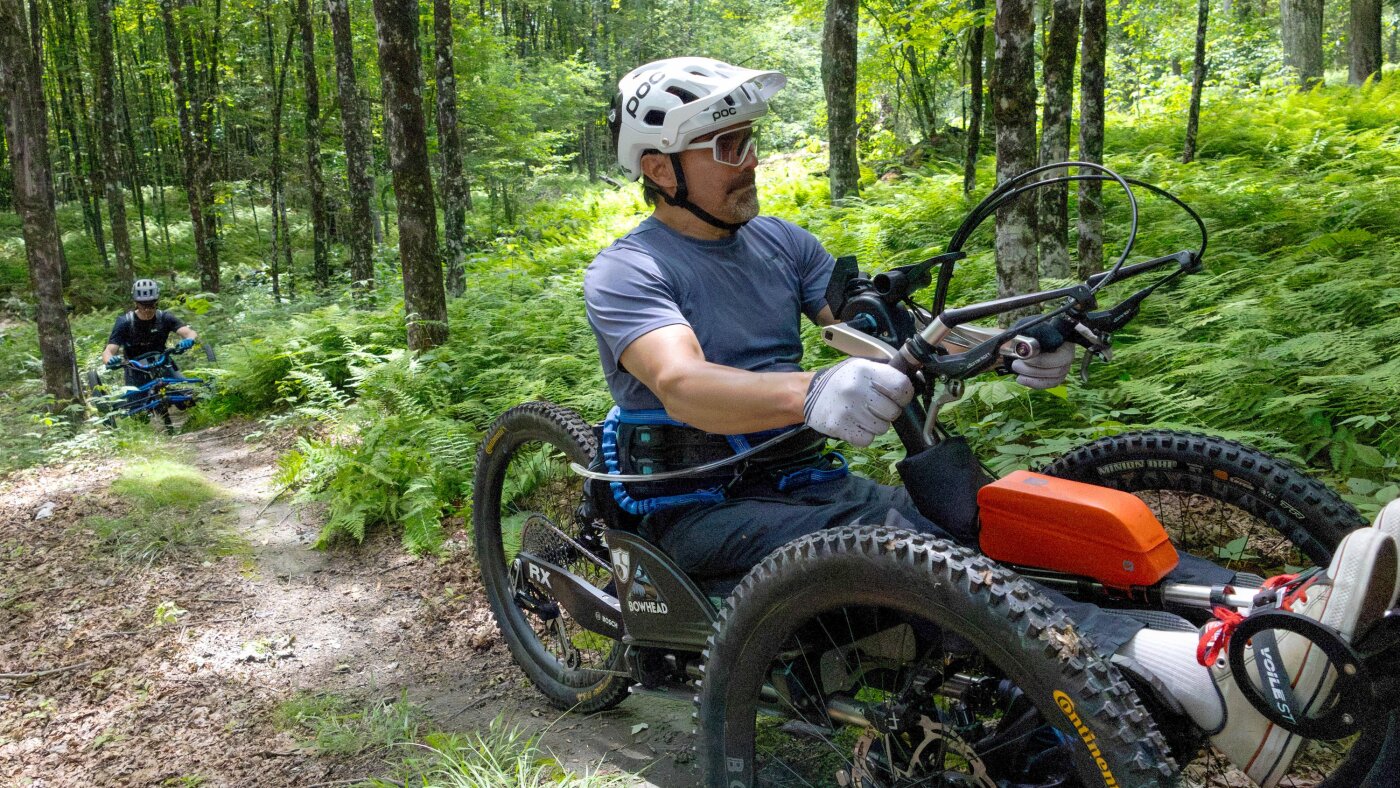
OUTDOOR ACCESS FOR DISABLED IN VERMONT

