


The state House of Representatives debated then voted overwhelmingly in favor of two resolutions that authorize educators to enforce state law over new Title IX regulations, as more than 100 protesters chanted in favor of transgender rights in the rotunda of the Utah State Capitol on Wednesday.
The bills were also overwhelmingly approved by the Utah Senate. Votes were cast largely along partisan lines.
Convening in a special session, Utah lawmakers passed HCR301, sponsored by Rep. Kera Birkeland, R-Morgan, which will “prohibit a government officer from enforcing or assisting in the enforcement of the new regulations promulgated under Title IX.”
Earlier this year, Birkeland sponsored HB257 during the Legislature’s General Session. It requires K-12 students to use public school restrooms that match their sex designated at birth, restricting transgender access to “privacy spaces” in public schools and other publicly-owned buildings.
They also passed companion legislation, HJR301, sponsored by Rep. Neil Walter, R-St. George, which declares “Utah has the sovereign authority with rights and responsibilities to safeguard Utah’s men, women and children.”
The resolution states that the new Title IX regulations constitute “an overreach of federal administrative authority that violates Utah’s rights and interests to provide for the health, safety, welfare of, and to promote the prosperity of, Utah residents.”
The federal Department of Education’s new Title IX rules, set to take effect on Aug. 1, change the definition of sex discrimination to include gender identity and sexual orientation.
The new rules also broaden the definition of sexual harassment and stipulate that colleges and universities are no longer required to hold live hearings to allow students to cross-examine each other. Universities can still hold live hearings if they choose to but students will have the option to participate remotely and stop questions they find “unclear or harassing.”
According to leaders of the Utah State Board of Education, K-12 Utah educators have been asking for guidance on how to comply with the federal guidelines given conflicts between the regulations and state law. The board urged lawmakers to invoke the Utah Constitutional Sovereignty Act, which prohibits enforcement of a federal directive by “government officers” if the Legislature determines it “violates the principles of state sovereignty.”
Declining to enforce the federal rule could put federal education funding in jeopardy. In a gathering with reporters prior to the start of the special session, House Speaker Mike Schultz, R-Hooper, said the federal government provides about 10% of what Utah spends annually on education.
Much of that funding supports programs that serve some of the state’s most disadvantaged children, including Title I programs, school nutrition programs and special education.
Schultz said the state has sufficient funding in reserves to make up the difference if the federal government pulled Utah’s funding.
Utah is willing to sacrifice the funding to stand by its principles, he said.
“We’re on pretty solid legal ground,” Schultz said, noting recent federal district court rulings in Kentucky and Louisiana that have temporarily blocked the new Title IX rule from taking effect, with one judge describing the rule as an “abuse of power” by the Biden administration.
Utah has joined three other Republican-led states and four private entities in a lawsuit that challenges the U.S. Department of Education’s new Title IX rule as well.
“State’s rights means something and the overreach from the Biden administration and the federal government has gotten out of control. Federalism is the way forward,” Schultz said.
University of Utah law professor Cliff Rosky, however, said he believes the underpinning of the resolutions passed by lawmakers, the Utah Constitutional Sovereignty Act, “is unconstitutional. He said it violates the Supremacy Clause of the United States Constitution, which declares federal law, the “supreme law of the land.”
Senate President J. Stuart Adams, R-Layton, said Utah had dealt with the issue of transgender rights “better than any other state. You’ve seen states actually ban transgender sports. We put together a commission. There’s not another state in the nation that’s put together the commission to deal with transgender sports. We’ve led the nation. People shouldn’t be protesting. They should be celebrating what we’ve done,” he said.
The votes on the resolutions were split between Republicans and Democrats, with supporters applauding the move to back states rights and opponents expressing concern about the impact of the votes on transgender youth.
“We don’t need to pit one vulnerable population against another. Transgender kids are not an enemy. They’re not a threat to women. They are kids” struggling to live their lives “and the odds are against them. We should not be the ones making it harder for them,” said Rep. Sahara Hayes, D-Millcreek.
In Senate debate, Sen. Curt Bramble, R-Provo, said by passing the resolutions and previous legislation, “we’ve pounded a stake in the ground and said on these issues, Utah will stand firm and protect women. We’ve passed several bills to that regard and to the extent that the federal government is trying through inappropriate overreach to subvert those laws, we rely on SB57 that we passed. We rely on these resolutions. We say, ‘Not on our watch.’”
Sen. Jen Plumb, D-Salt Lake City, said she has been “unable to figure out if there is a right way to implement (previously passed) policy that is wrong. To me this feels wrong. It doesn’t feel right. It just feels like targeting. This feels politicized and truly it feels like we are really doubling down on hate for an already very marginalized, sometimes unloved-feeling section of our population.”
Sen. Dan Thatcher, R-West Valley City, said the Legislature’s action “very seriously places in jeopardy the $696 million that the federal government provides for nutrition programs, for Title I, for career and technical education, and especially for special ed. So while I do believe we have the authority to do this, and while I do believe that they do not have constitutional leverage … I do believe that that the lack of constitutional leverage will compel them to threaten funding. That’s the biggest thing that I’m worried about. I think this has huge risk.”
HJR301 states that the Education Department “has corrupted the mission of Title IX,” which is to promote women’s and girls sports and protect women and girls from discrimination in education and sports.
Moreover, the new regulations “harm students on college and university campuses by dictating the manner in which a student speaks and expresses opinions or thoughts, altering college and university anti-harassment processes and procedures, and interfering with a student’s due process rights.”
The resolution also states that the rule requires government support of abortion services “in direct conflict with the abortion ‘neutrality’ provisions adopted by Congress” and usurping Utah’s state laws on abortion.
According to the Education Department’s Office of Civil Rights, schools must not discriminate against any student, or exclude any student from their education program or activity, including any class or extracurricular activity, “based on a student’s pregnancy, childbirth, false pregnancy, termination of pregnancy, or recovery therefrom.” Discrimination against a school employee based on these conditions is likewise prohibited.
According to the Education Department’s Office of Civil Rights, schools must not discriminate against any student, or exclude any student from their education program or activity, including any class or extracurricular activity, “based on a student’s pregnancy, childbirth, false pregnancy, termination of pregnancy, or recovery therefrom.” Discrimination against a school employee based on these conditions is likewise prohibited.
HJR301 also states that the Utah Legislature “finds that the new regulations disadvantage women and girls who participate in women’s and girl’s sports by requiring that they compete against biological males.”
The Education Department has stated the final regulations do not include new rules governing eligibility criteria for athletic teams.
A statement by Equality Utah said the state would invariably “embark on costly and time-consuming litigation, all so that the state can continue to police bathroom usage by children. It is high time that Utah starts focusing its resources on helping our children achieve success rather than using them as pawns to score political points.”
Utah lawmakers also passed HB3001, which clarifies Utah law by allowing foreign exchange students to participate in the Statewide Online Education Program.
The bill’s sponsor, Rep. Candice Pierucci, R-Riverton, said without changes to the law some 200 students would be unable to complete their high school graduation requirements.
Under current law, the custodial parent of a student enrolled in a private or home school and taking an SOEP course must be a resident of Utah. HB3001 expands participation in the program by allowing foreign exchange students enrolled in a private school, whose custodial parent lives outside of Utah, to participate.
In other action, the Utah Legislature passed HB3003 to clarify the process for splitting a school district as communities in the Alpine School District, the largest district statewide with more than 87,000 students, contemplate a split.
Rep. Brady Brammer, R-Pleasant Grove, the bill’s sponsor, said the intent of the legislation was to avoid a “messy ballot” and a “messy outcome” if various options to split the district appear on ballots and more than one passes.
The bill eliminates the option for a local school board to initiate the process to create a new school district. It also creates a withdrawal process should voters approve a split and clarifies terms of school board members and other provisions.


BEAVER COUNTY, Utah — A massive community effort is underway as volunteers and Beaver County crews distribute thousands of sandbags to protect homes from the potential path of floodwaters.
After the Cottonwood Fires, residents have been waiting for weeks for relief to come in the form of rain, though officials now warn it may come all at once with an increased risk of flooding and debris flow.
Emergency Service Director Les Whitney believes that the fire has left plenty of debris to bring trouble for residents.
“We got a lot of water. We’re bringing debris with it, so tree branches, tree limbs, logs, lots of different size firewood, and that’s all in the creeks. We’re worried about that plugging up our bridges and stuff, so we have heavy equipment and excavators located in strategic places so that we can keep those bridges open,” said Whitney.
An estimated 140 homes and condominiums were spared from the flames, but remain in the paths of floodwaters.
Residents can also pick up sandbags at the Beaver County Sheriff’s Office or at the Beaver County Rodeo Fairgrounds.

EAGLE MOUNTAIN — An Eagle Mountain man currently on pretrial release in 4th District Court who is accused of abusing his dog has been arrested again for allegedly punching the same animal.
Keith Reaves Davis, 43, was booked into the Utah County Jail on Wednesday for investigation of aggravated cruelty to an animal.
Utah County sheriff’s deputies were called Wednesday afternoon to a grocery store on a report that a man was beating his dog after it had gotten off its leash and was stopped by a bystander, according to a police booking affidavit.
“I reviewed security camera footage from the grocery store, and an individual matching the description of the suspect was seen holding the dog in the air by one paw and repeatedly striking the dog on the right hind leg area. I observed the male strike the dog several times before dropping the dog from approximately 1-2 feet. The strikes appeared to be as hard as the male could hit,” the arresting deputy wrote in the affidavit. “The dog did not cry out or whimper as if the dog was accustomed to the abuse.”
When questioned, Davis “admitted to striking the dog because it was not behaving,” the affidavit states.
An animal control officer who responded to the scene to take custody of the dog noted it was the same dog he had taken from Davis exactly three months earlier during another animal abuse investigation.
In that case, Davis was charged in 4th District Court with aggravated cruelty to an animal, a class A misdemeanor; and public intoxication, a class C misdemeanor, after deputies received a tip from a neighbor that a dog was being abused at Davis’ home, according to charging documents. When questioned, Davis “acknowledged hitting his dog as punishment,” the charges state.
Deputies also reviewed videos that the neighbor had filmed. The neighbor told investigators “there was blood from the dog on the ground of the garage and (the neighbor) can hear the dog screaming as if it’s being hurt. Deputies got the videos from the (neighbor) and you can hear very loudly the dog screaming and crying with a lot of loud banging noises. In one of the videos, you can hear the dog sounding like it is being choked by a collar and is grasping for air,” a police booking affidavit states.
Davis’ next court hearing in the April case is scheduled for July 28.
In their latest booking report, sheriff’s deputies note that they “believe further harm will be inflicted on this dog if it is released back to the male a second time,” and have recommended the dog not be returned to Davis.
The Key Takeaways for this article were generated with the assistance of large language models and reviewed by our editorial team. The article, itself, is solely human-written.

Two years after October 7th attacks, Gaza war reshapes global politics
Two years after Hamas attacked Israel, Gaza lies in ruins and global alliances have shifted. Correction: A previous version of this video incorrectly identified the conflict. The conflict is between Israel and Hamas.
A man was arrested in Utah after allegedly stabbing a Muslim employee at a mall multiple times and telling investigators he targeted the victim because of his religion, according to court records.
Peter Michael Larsen, 48, was booked into the Salt Lake County Jail on suspicion of attempted murder and prohibited dangerous weapon conduct following the attack on July 13 at the Valley Fair Mall in West Valley City, Utah, court and online jail records show. West Valley City is a suburb of Salt Lake City.
The West Valley City Police Department said the incident occurred shortly before 3 p.m. local time, when Larsen approached a man working at a kiosk at the mall.
“After a brief interaction, the suspect pulled out a knife and began stabbing him multiple times,” police said in a statement on X. “A few bystanders interfered, and were able to separate the suspect from the victim and subdue the suspect until police arrived.”
The victim, who was not identified by authorities, sustained multiple stab wounds and was taken to a hospital in critical condition, according to police and court records.
Larsen told investigators that he had “targeted the victim with intent to kill him because of his religion (Muslim),” police said in an affidavit obtained by USA TODAY. The affidavit also states Larsen said he believes he is “a catalyst” and “intends to kill Muslims.”
The incident remains under investigation, and police said they were looking into any possible relationship between the suspect and victim. USA TODAY reached out to the West Valley City Police Department for comment.
The suspect approached the Muslim man, asked for his name, asked about his religion, and indicated he wanted a bottle of water, The Salt Lake Tribune reported, citing comments from Imam Shuaib Din, who leads the Utah Islamic Center and had been in contact with the victim’s family.
As the victim turned to get the water, the attacker began stabbing him, Din told the newspaper. Police said in the affidavit that they received multiple 911 calls at around 2:30 p.m. local time reporting two men “involved in a physical altercation where one male was stabbing the other.”
When officers arrived at the scene, they observed bystanders pinning the suspect to the ground and “had already removed the knife from his hand,” according to the affidavit. Police said the victim was “bleeding profusely” and was then transported to the hospital.
The victim was identified by friends as Syed Sohail Uddin, local television station FOX 13 and The New York Times reported. A GoFundMe fundraiser organized on his behalf said he was stabbed 15 times and required multiple surgeries.
Larsen was also transported to the hospital “due to being punched in the head from bystanders trying to get the knife out of his hand,” according to the affidavit. He was later medically cleared and taken to the police station for an interview.
Police said in the affidavit that Larsen posed “a substantial danger to the public if released based on his violent actions today, ideologies and pre-planned mass casualty events.”
Muslim advocacy groups, including the Council on American-Islamic Relations (CAIR), condemned the attack.
“This horrific attack is yet another reminder that anti-Muslim rhetoric has real-world consequences. When Muslims are routinely demonized, portrayed as threats, or treated as less deserving of equal rights and dignity, some twisted individuals inevitably act on that hatred,” CAIR National Executive Director Nihad Awad said in a statement on July 14.
Civil rights advocates have noted a rise in Islamophobia in the United States over the last two-plus decades following the Sept. 11, 2001, attacks, and more recently because of immigration policies and the fallout of the Israel-Hamas war, according to Reuters.
CAIR, which is the nation’s largest Muslim civil rights and advocacy organization, reported last year that it received a record number of complaints of discrimination and Islamophobic attacks amid the war.
The organization received more than 8,650 complaints in 2024, the highest number since CAIR began publishing its annual civil rights report in 1996, according to the report released in March 2025. Complaints rose more than 7%, breaking the previous record set in 2023.
The Utah attack follows several high-profile incidents targeting Muslims in recent years, including the fatal stabbing of a 6-year-old Palestinian American boy in Illinois in 2023 and a deadly shooting at a San Diego mosque earlier this year.
Contributing: N’dea Yancey-Bragg, USA TODAY; Reuters


Where Wildfire Smoke Is The Worst Right Now—And What To Do About It


LADWP begins long-term repairs after West Hollywood water main rupture


Livestream: Mayor Sheffield, Detroit health chief to address wildfire smoke threat
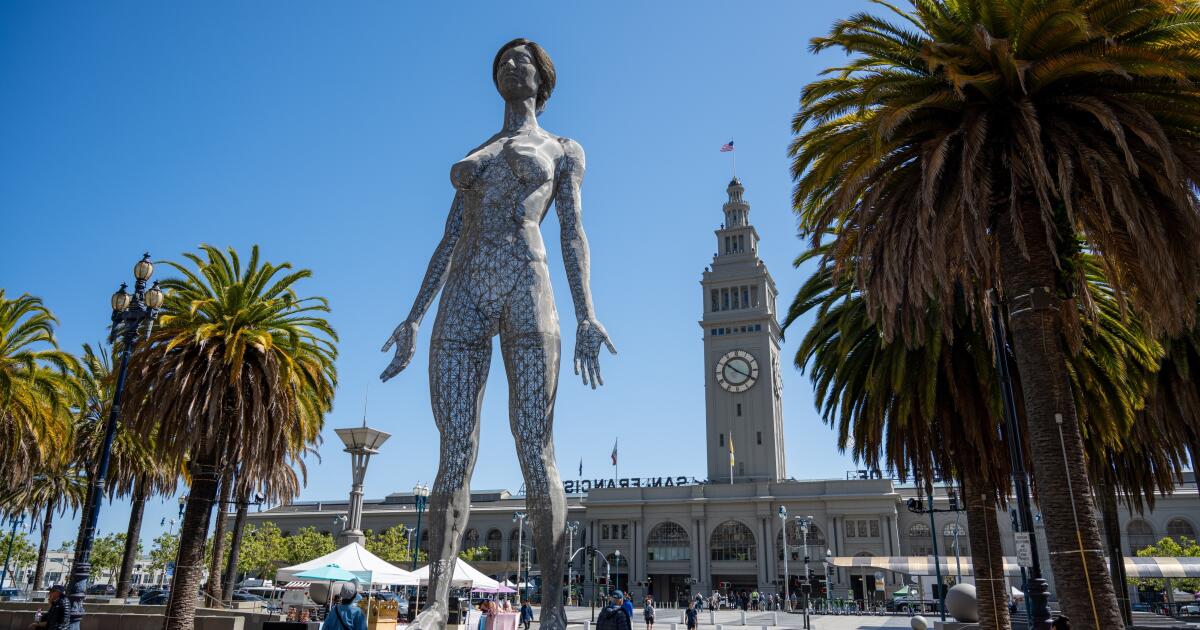
A sculpture of a giant naked woman goes on sale in San Francisco. Bring a crane


No ‘straight answer’: Why Pioneer Cemetery is the latest battleground at City Hall


TSA hosts news conference ahead of World Cup third place match at Miami Stadium


ICE Boston arrests Barbados national during targeted operations in Attleboro


Denver Broncos training camp is 2 weeks away


