Utah
KSL News Daily: The nuclear debate Utah can’t avoid – KSLNewsRadio


This story was adapted from a radio broadcast script using artificial intelligence. Every story, including those adapted with AI, is reviewed by a human editor before publication to ensure that KSL’s editorial standards are upheld.
SALT LAKE CITY — As Utah looks for ways to meet growing electricity demand from data centers, artificial intelligence, manufacturing and population growth, nuclear energy has become part of the state’s energy conversation.
Gov. Spencer Cox has said Utah must embrace nuclear energy if it wants to meet surging electricity demand and remain competitive in the global economy.
“And as I’ve said many times, if you are serious about energy abundance, you have to be serious about nuclear energy,” Cox said.
Much of that demand is being driven by artificial intelligence data centers, which require enormous and reliable power supplies. Proponents say small modular reactors are the answer — offering stable, carbon-free electricity that traditional renewables struggle to match.
Critics, including downwinders and environmental advocates, said Utah’s history with radiation exposure should make state leaders more cautious.
Listen to parts one and two of the nuclear energy reporting on KSL News Daily below.
Advocates tout nuclear reliability and clean air benefits
John Kotek, senior vice president of policy and public affairs at the Nuclear Energy Institute, said nuclear power’s fuel cycle gives it an edge over fossil fuels.
“Once you fuel a nuclear reactor, it’ll run between 18 and 24 months before you have to shut it down and put new fuel in it,” Kotek said. “So you’re not dependent on shipments of coal or gas in a pipeline or what have you.”
Kotek added that nuclear energy produces no carbon emissions or air pollutants, saying it has “a real role to play in cleaning up air quality in the West.”
Dr. Tatjana Jevremovic, director of the nuclear lab at the University of Utah, said the math also favors uranium.
“The amount of energy you get out of a kilogram of uranium is about 10,000 times the amount of energy you get out of a kilogram of coal or petroleum,” Goodell said. “And also it is an energy source that has basically zero carbon emissions along with it.”
Environmental, health groups raise alarms
Not everyone is convinced the benefits outweigh the risks. Carmen Valdez, a senior policy associate at Heal Utah, said co-locating reactors with data centers creates compounding dangers.
“If something were to catch on fire, if something were to fail, you are now accumulating a lot of issues as well as creating toxic spaces,” Valdez said. “If we’re concerned about the cancers coming from data centers, what is the concern about a data center with a nuclear reactor, with spent fuel, on site?”
Valdez urged state lawmakers to invest instead in resources Utah already has in abundance.
“We are extremely equipped for solar. Maybe we should start looking at rooftop solar for our large communities and consumers,” Valdez said. “We have battery storage. We have so many opportunities.”
Waste disposal remains unresolved
Even nuclear supporters acknowledge one lingering challenge: the United States has no permanent disposal facility for radioactive waste.
“The very good part about spent nuclear fuel is that it’s very easy to manage. You put it in pools for a few years, you put it in these concrete and steel containers, and you can leave it on site,” Kotek said. “The challenge is, of course, it is radioactive, so it needs a long-term place to be stored and ultimately disposed.”
The Nuclear Regulatory Commission is an independent federal agency that licenses and regulates the civilian use of nuclear energy. Kotek said the commission has helped to significantly improve plant safety over decades of operation.
“We’ve been operating commercial nuclear power plants in the United States for more than 60 years,” Kotek said. “And when you do something that long, you learn a lot about it. You get good at it.”
Utah’s Downwinders say history demands caution
Between 1951 and 1962, the U.S. government conducted above-ground nuclear testing at what was then called the Nevada Test Site. As a result, the wind carried radioactive debris to thousands of people in Utah, Idaho, Nevada, Arizona and New Mexico.
The people subjected to that fallout are known as Downwinders. For Mary Dickson, a Downwinder and thyroid cancer survivor, the push for nuclear energy carries a deeply personal weight. Dickson advocates for Utahns harmed by radiation exposure from nuclear weapons testing, and she said the state’s history should give leaders pause.
Mary Dickson, a Downwinder and cancer survivor who grew up in Salt Lake City in the path of radioactive fallout during the Cold War, pauses while on a walk with her 3-year-old husky in the foothills in Salt Lake City on Saturday, May 2, 2026. (Tess Crowley, Deseret News)
“The idea that they would be so cavalier and just welcome nuclear energy and everything that goes with it, including nuclear waste, into our state makes us expendable,” Dickson said. “And you’d think with our legacy, we would be far, far more cautious and just say ‘no.’”
Dickson said the concern extends beyond reactors themselves.
“They’re pushing for the facilities for every step — to develop uranium for reactors, to mine it, mill it, fabricate it, enrich it, all of that,” Dickson said. “And they’re looking at these throughout the state.”
Modern reactors designed to contain worst-case scenarios
Goodell said residents worried about safety should consider the track record of communities that already live near nuclear plants. He said modern facilities are engineered with multiple layers of protection.
“We don’t just design them to prevent accidents. We design them to contain accidents, so that even in a worst-case scenario for a nuclear power plant, all of the nasty radioactive material will stay at the plant,” Goodell said.

Graphic accessed from the Downwinders.info website. It indicates which counties in Arizona, Idaho, Nevada, New Mexico, and Utah experienced fallout from nuclear testing.
Dickson acknowledged that newer technology is safer than past designs but said no system is foolproof. She called on Utahns to demand answers from government leaders and push for regulations that protect public health and safety.
Contributing | Simone Seikaly



SALT LAKE CITY — On Sunday, it got all the way up to 109 degrees in Salt Lake City, and on a record-breaking heat day, it was not a surprise to find a packed splash pad.
Weather
Salt Lake City reaches new record high temperature
Max Simakov and his family were visiting from Texas, and let’s just say a triple-digit day is nothing they couldn’t handle.
“Three of us live in Austin, Texas, and so this is actually normal except we have humidity. So this is nothing,” Simakov said.
While the kids were cooling off at the splash pad, things were heating up in the car. FOX 13 News placed a tray of unbaked cookies on the dashboard, seeing how long it would take to bake. In the first 30 minutes, the cookies had already reached 130 degrees, which shows how fast things can heat up.
Sunday night forecast:
Triple-digits sticking around – Sunday night forecast
West Jordan resident Kristina Morrill and her family were at the splash pad on Sunday, and she said she takes extra safety precautions for her family during the summer months.
“I’m vulnerable to the heat, so I can pass out, and so they kind of know hydration is the key,” she said. “Get yourself ready. Start drinking earlier, maybe a couple hours before that.”
“Sunscreen for sure — we are very diligent with that,” Simakov added. “Sometimes in the summertime, kids kind of roam from house to house, from friend to friend, and so I just want to make sure the kids are hydrated.”
In a matter of just two hours, the cookies inside FOX 13’s car had crisp edges, which demonstrated how dangerously hot the inside of cars can get. It’s encouraged not to leave dogs or kids inside the car for long periods of time, especially on triple-digit days.
Salt Lake County has a list of cooling centers across the state, along with their hours, on their website.

SAN JUAN COUNTY, Utah (ABC4) — The Babylon Fire, currently the largest wildfire in the United States, has grown to 106,324 acres, according to Utah Fire Info. The blaze is now 47% contained.
The wildfire is burning about 25 miles southwest of Monticello. Officials said five structures have been lost and 1,467 personnel are assigned.
Current operations
Firefighters are conducting an aggressive attack along the active fire edge, officials said, with a “specialized helitack crew” entering the Dark Canyon to secure the western edge into the bluffs. Crews in Trail Canyon continue to reinforce the fire line.
Fire personnel have reportedly secured containment lines off Steamboat Point and Dry Mesa.
A spot fire remains active on the north-facing slope of Jackson Ridge, officials said. Firefighters continue to protect a critical communication site on Abajo Peak.
Firefighters are using grass and brush on the south slope to keep the fire in heavy timber. Intense fire activity caused fire crews to pull back from Indian Creek, officials said. Complete containment from the southern line back to South Cottonwood is expected by the end of Sunday’s shift.
Firefighters assigned to the structure protection group on the Babylon Fire string hoses connected to a portable water tank along a dozer line west of Monticello, Utah, on July 11, 2026. (Courtesy: Geoff Liesik/U.S. Wildland Fire Service)
Upcoming weather, fire behavior
A critical shift is happening as monsoonal moisture moves in from the south. This will heighten the chance for critical fire weather conditions.
Temperatures will be slightly cooler and morning winds will be breezy, officials said, with some gusting along ridge tops. The main concern is forecasted scattered thunderstorms after noon, with dry storms bringing the potential for lightning and erratic, severe outflow winds.
See a current map of the Babylon Fire, as well as a smoke outlook, below.
-
Babylon Fire Smoke Outlook, July 12, 2026. (Courtesy: Utah Fire Info)

Evacuations, closures
There are 23 evacuation zones in “SET” status at this time. This includes all zones west of Highway 191, south of State Route 211, and north of State Route 95.
All National Forest lands, roads, and trails within the Monticello Ranger District of the Manti–La Sal National Forest are closed. The Needles District of Canyonlands National Park is also closed to ensure public safety and aid firefighting operations.
All BLM-managed public lands west of Harts Draw Road and north through the Indian Creek Corridor to Indian Creek Falls are temporarily closed. This closure reportedly includes key recreation and backcountry areas like Shay Mesa, Beef Basin, Dark Canyon, and the Sweet Alice Wilderness Study Area.
“Anyone not directly involved in firefighting operations must stay out of all closure areas and avoid public lands within the boundary formed by State Route 211 to the north, U.S. Route 191 to the east, and State Route 95 to the south,” fire officials said. “These restrictions are in place to protect the public and allow firefighters to operate safely and effectively.”
Evacuation and closure information can be found on the Babylon Fire Inciweb page here.

Even though only some 50 men born in the state of Utah have reached the majors, there is enough talent to field a mythical dream team comprised of those who were either born in Utah or went to high school there; college MLB products are another story.
So, with a nod to the MLB All-Star game in Philadelphia next week, here is one writer’s Utah dream team, with birthplace/Utah high school and years played in the majors:
Catcher: John Buck (Taylorsville High, 2004-14) — Born in Wyoming, Buck was drafted in the seventh round out of high school by the Houston Astros in 1998. He worked his way through the minors and made his MLB debut June 25, 2004, for the Kansas City Royals after being traded there the day before.
Buck also played for the Toronto Blue Jays, Miami Marlins, New York Mets, Pittsburgh Pirates, Seattle Mariners and Los Angeles Angels. He was an All-Star in 2010 — his only season with the Blue Jays. Buck had 134 career homers with an average of .234.
First base: Chris Shelton (Salt Lake City, 2004-09) — A product of Cottonwood High, Salt Lake City Community College and the University of Utah, Shelton was drafted in the 33rd round by the Pittsburgh Pirates but still lasted several years in The Show.

Shelton had 14 hits in his first 20 at-bats and 24 in his first 51, with 13 homers. He also slugged nine homers in his first 13 games.
“I don’t regret anything. I had some moments and did some great things,” Shelton told the Society of American Baseball Research, or SABR. “It’s always exciting to be a part of people’s memories.”
He had 930 at-bats in The Show — third among Utah natives.
Second base: Glenn Hubbard (Ben Lomond High, 1978-89) — Born in Germany in a military family, Hubbard lived in California before the family moved to the Ogden area. He had 4,441 at-bats with the Atlanta Braves and Oakland A’s with a lifetime average of .244 with 70 homers.
He was an All-Star in 1983 when he hit a career-high 12 homers.
Third base: Vance Law (Provo High, 1980-91) — Born in Idaho, Law was drafted out of BYU by the Pirates — the same club that his father, Vern, pitched for in 1960, when they became World Series champs.
“Vance had a 14-year professional career, with 10 of those years in the major leagues, mostly as a second baseman and third baseman,” per SABR. “He was a regular on the 1983 White Sox who won the division, as well as the 1989 Chicago Cubs who also won a division title.”
Law was the BYU coach from 2000-12. He also coached at Provo High and was an assistant at Utah Valley State College. His son, Adam, played at Provo High and BYU, as well as in the minors for the Los Angeles Dodgers.
Shortstop: Gordon Slade (Salt Lake City, 1930-35) — Slade’s 12 career steals, while not impressive, are the most of a player born in Utah. He is second in hits with 353 while playing with the Brooklyn Robins, the St. Louis Cardinals and the Cincinnati Reds.
Slade hit .257 with eight homers. He died in California in 1974. His 1,372 at-bats in the majors place him second among Utah natives.
Left field: Duke Sims (Salt Lake City, 1964-74) — Sims went to high school in Idaho. He has the most homers (100), hits (580) and RBI (310) of any player born in the state. He spent most of his time with the Cleveland Indians and had a career-best 23 homers in 1970.
“A solid defensive catcher whose career batting average of .239 was deceiving, Sims retired with a very respectable .340 OBP — better than many ‘higher-average’ lifetime hitters. He could also play the outfield. Sims is the only major leaguer born in Utah to get over 2,000 at-bats in the majors,” according to SABR.
He mainly played catcher, but is in the outfield for our dream team purposes. He hit the last homer at old Yankee Stadium and was the catcher that day.
Center field: Bobby Mitchell (Salt Lake City, 1980-83) — Mitchell, born in Salt Lake City, played high school and college baseball in California. In the majors, he played for the Dodgers and the Minnesota Twins.
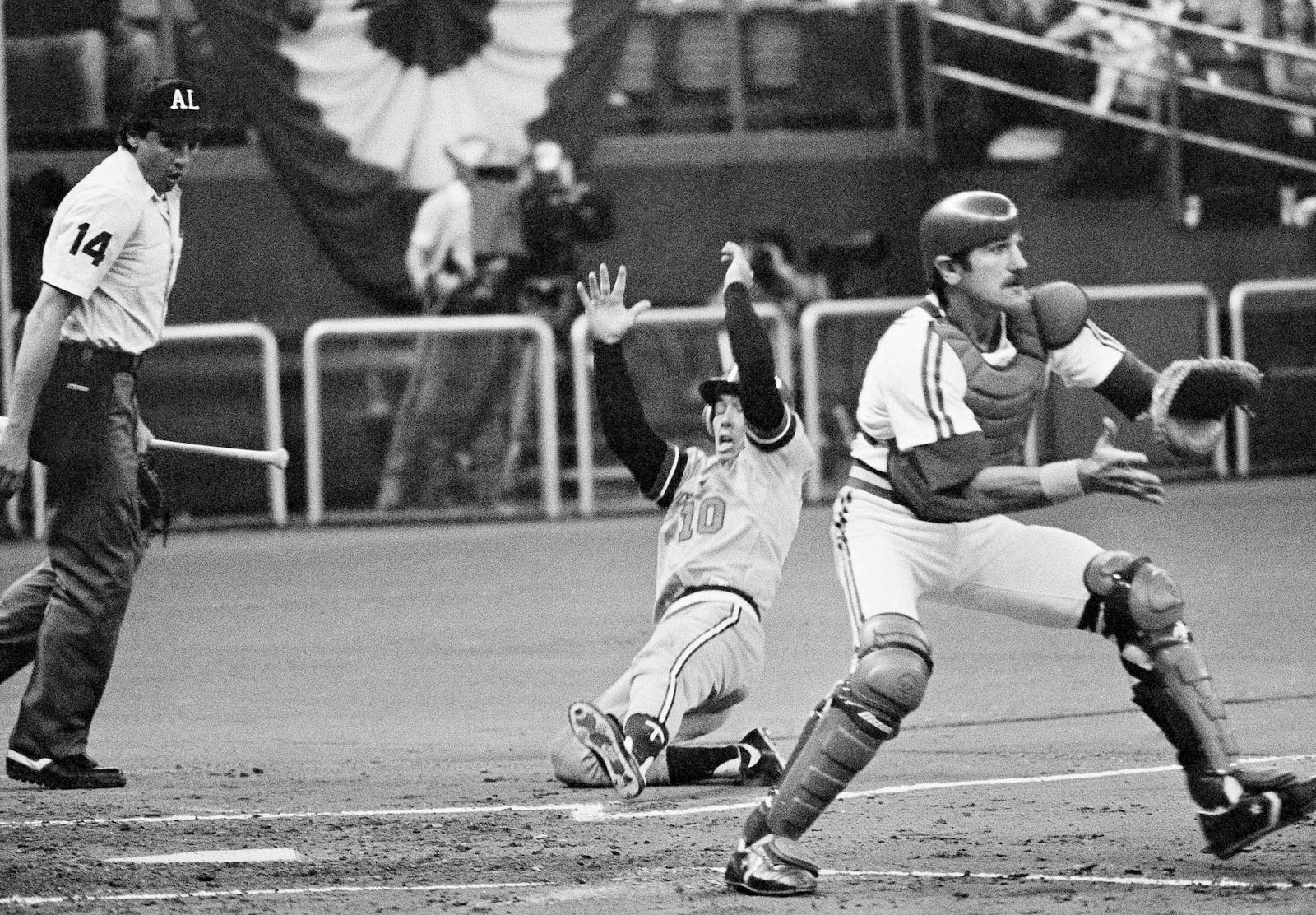
Mitchell played in the Little League World Series in 1967 with Northridge, California, and in the College World Series with USC seven years later.
Right field: Chad Hermansen (Salt Lake City, 1999-2004) — Born in Salt Lake City, Hermansen was a high school product of Nevada, who played for the Pirates, Chicago Cubs, Dodgers and Blue Jays. He had a career-high eight homers in 2002 while with the Pirates and Cubs.
His first MLB homer came in 1999 for the Pirates against the Cubs and his last two games in the majors were for Toronto against the Baltimore Orioles.
Starting pitcher: Bruce Hurst (St. George, 1980-94) — The lefty is the only MLB player born in Utah named to an MLB All-Star game, according to Baseball Reference.
His 145 wins are the most of a Utah native and Hurst was the only pitcher to win at least 10 games every season from 1983 through 1992. The lefty made two key starts in the 1986 World Series for the Red Sox against the Mets, then started Game 7 on short rest.
He’s from “a small Mojave Desert town of about 4,000 people in the southwest corner of the state, 120 miles from Las Vegas,” SABR wrote of St. George. “Called Dixie by the locals, St. George was founded by Mormon missionaries in the 19th century to develop a cotton-farming industry.”
Hurst was mentored by Kent Garrett, a former player at BYU who started American Legion baseball in St. George in the 1970s, according to Prep Baseball Report.
“For some reason Garrett saw something in me,” Hurst told SABR. “He was a stickler for fundamentals and detail. We’d get baseball magazines and cut out pictures of pitchers … and look at the positions they were in. I’d get in front of the three-way mirror and practice my windup. He gave me confidence.”
Closer: Brandon Lyon (Salt Lake City, 2001-13) — Lyon, a Taylorsville High product, had 79 saves in the majors — the most of a player born in the state — and 42 wins while pitching for several clubs. His best season may have been 2007 with the Arizona Diamondbacks, when he had an ERA of 2.68 in 73 games.

His son, Isaac, was drafted out of Grand Canyon in 2025 by the Seattle Mariners and has pitched in the Washington Nationals’ minor league system for three clubs this year, as he was promoted to Double-A Harrisburg on May 26 from Single-A Wilmington.
Other pitchers: Kelly Downs (Ogden, 1986-93); Ed Heusser (Salt Lake County, 1935-48); Brandon Duckworth (Salt Lake City, 2001-08); Fred Sanford (Garfield, 1943-51).
Downs of Viewmont High won 57 games, Heusser won 56 and Sanford recorded 37 victories.
Heusser died in Colorado in 1956 at the age of 46. He led the NL in ERA in 1944. Sanford died in 2011 in Salt Lake City. He played for the St. Louis Browns, New York Yankees and Washington Senators, and was part of two World Series winners with the Yankees.
Manager: Herman Franks (Price): A catcher in the majors, Franks is the only Utah native to manage in the majors. He guided the San Francisco Giants from 1965-68 and the Chicago Cubs from 1977-79.
Franks was a third base coach on the 1954 New York Giants squad that won the World Series over the Cleveland Indians.
He may have also aided the 1951 Giants in a unique way. Published stories report that he relayed signs to hitters from center field late in the season and he was there when Bobby Thomson hit his famous homer to beat the Dodgers for the pennant in the best-of-three playoff series.
Franks died in Utah in 2009.
Pitching coach: Hurst was the pitching coach of the Chinese national team from 2003-2007. He was also involved in the MLB academies in Europe after his playing career, and he worked in the front offices of the Boston Red Sox and Dodgers.
Coach: Mitchell coached in the minors in the systems of MLB clubs.
General manager: Franks was the general manager of Salt Lake City in the Pacific Coast League and worked in the front office of MLB clubs.
Utah notes
The only natives of Utah to make their MLB debuts in 2025 were Jack Dreyer (Salt Lake City), who grew up in Iowa and is with the Dodgers; Paxton Schultz (Orem, Utah Valley), who is in the Nationals’ farm system after breaking in with Toronto; and Jayden Murray (Vernal, Dixie State), who is with the Cubs after his 2025 debut with the Astros.
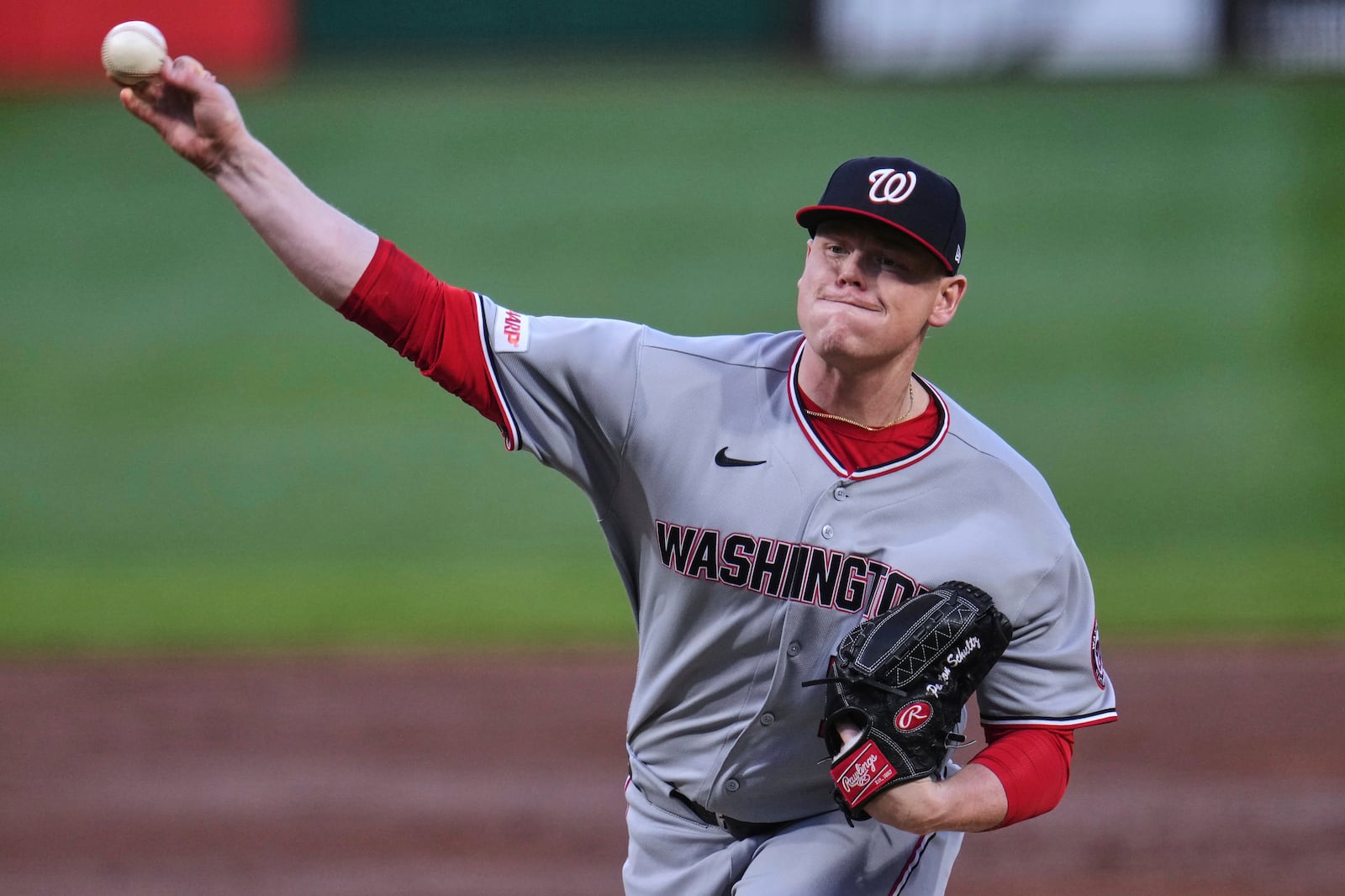
No native of Utah has made their MLB debut this season, as of the time of writing.
The first player born in Utah to make the majors was Lee Thompson (Smithfield), who pitched in four games with the White Sox in 1921. He died in California — the same day as his brother — in 1963 after holding several jobs in that state after his minor-league career.
David Driver is the co-author of “From Tidewater to the Shenandoah: Snapshots from Virginia’s Rich Baseball Legacy.” He covered the Nationals from 2013-22 for several outlets. He has interviewed Buck, Lyons and Duckworth as well as former BYU standouts Jeremy Guthrie and Jackson Cluff, who began this season at Triple-A in the Mets’ farm system. Driver is the former sports editor of papers in Baltimore and his native Harrisonburg, Virginia.
-

 Indiana3 minutes ago
ACLU of Indiana sues over conditions at Monroe County Jail
-

 Iowa9 minutes ago
Northwest Iowa woman taken to the hospital after rollover
-
 Kansas15 minutes ago
Pilot of crop duster plane survives crash Monday in NE Kansas
-

 Kentucky21 minutes ago
Kentucky State Police seeks public vote for national cruiser contest – Winchester Sun
-

 Louisiana27 minutes ago
Louisiana-based study: Bariatric surgery holds promise for young patients
-

 Maine33 minutes ago
High heat and humidity likely to bring storms to Maine
-

 Maryland39 minutes ago
Dog who called Maryland shelter home for 7 years finally adopted: “There wasn’t a dry eye in the house”
-

 Michigan45 minutes ago
Michigan reports 2,640 Cyclospora cases; Lettuce identified as possible source of outbreak

