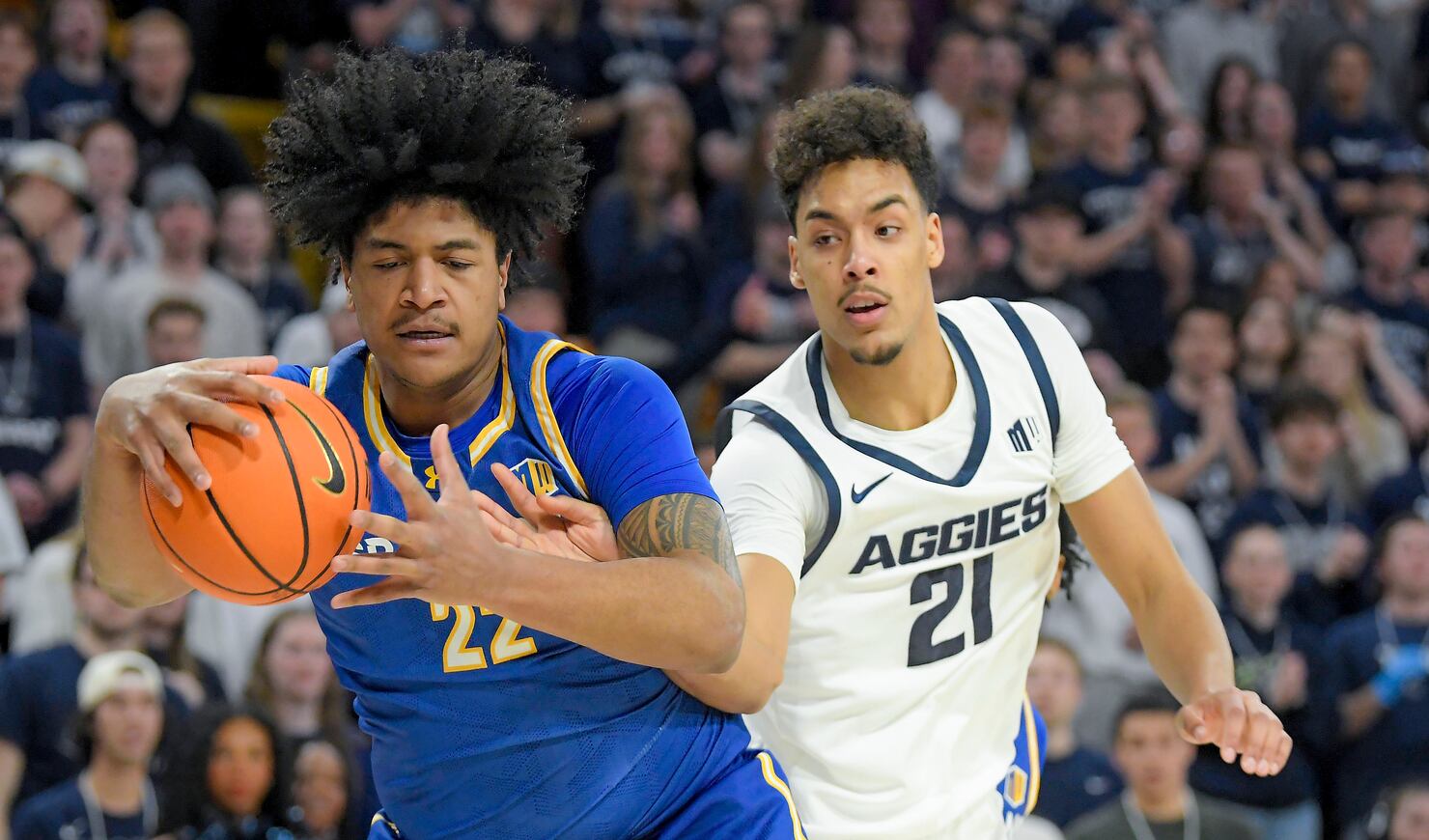
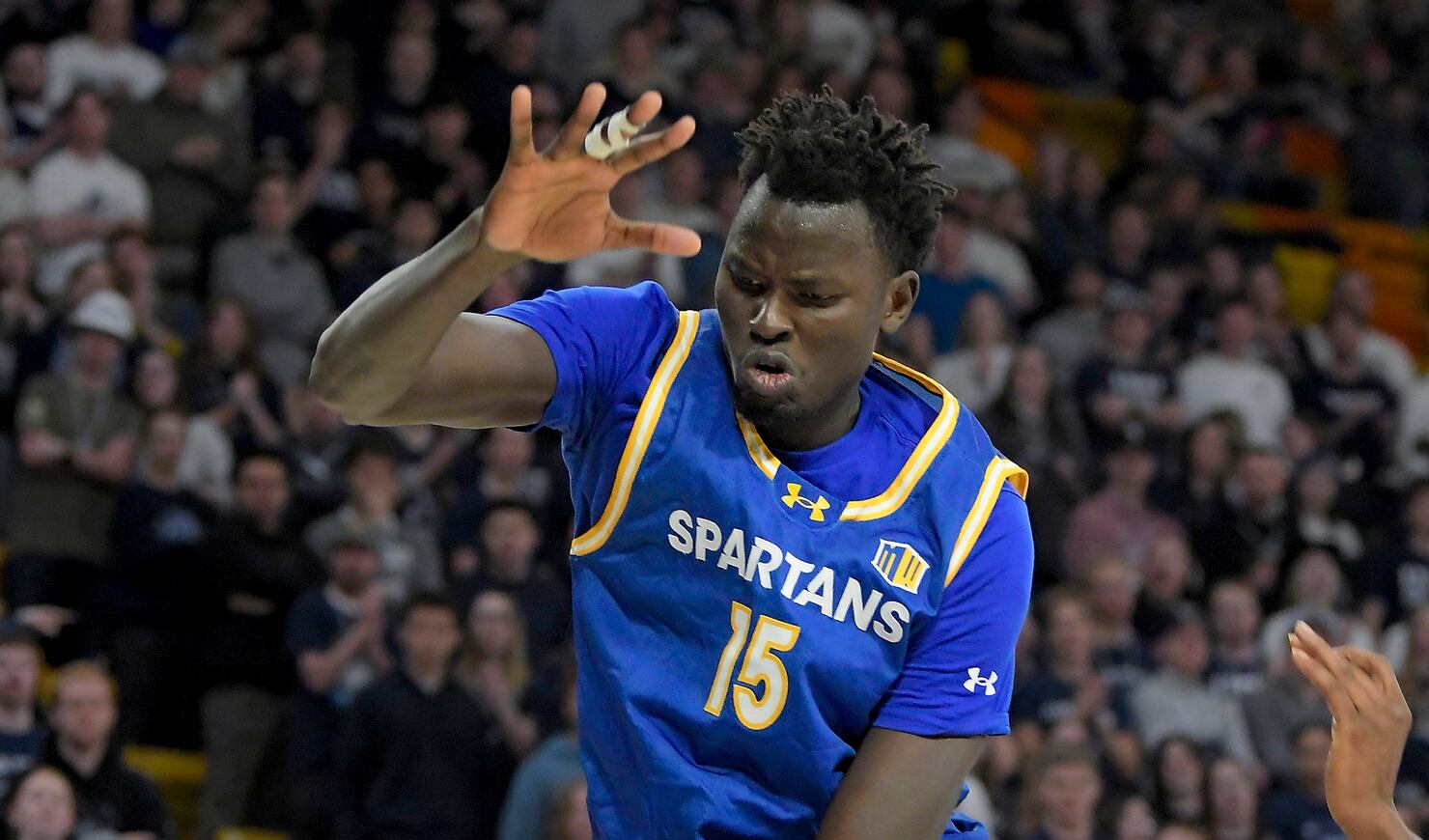
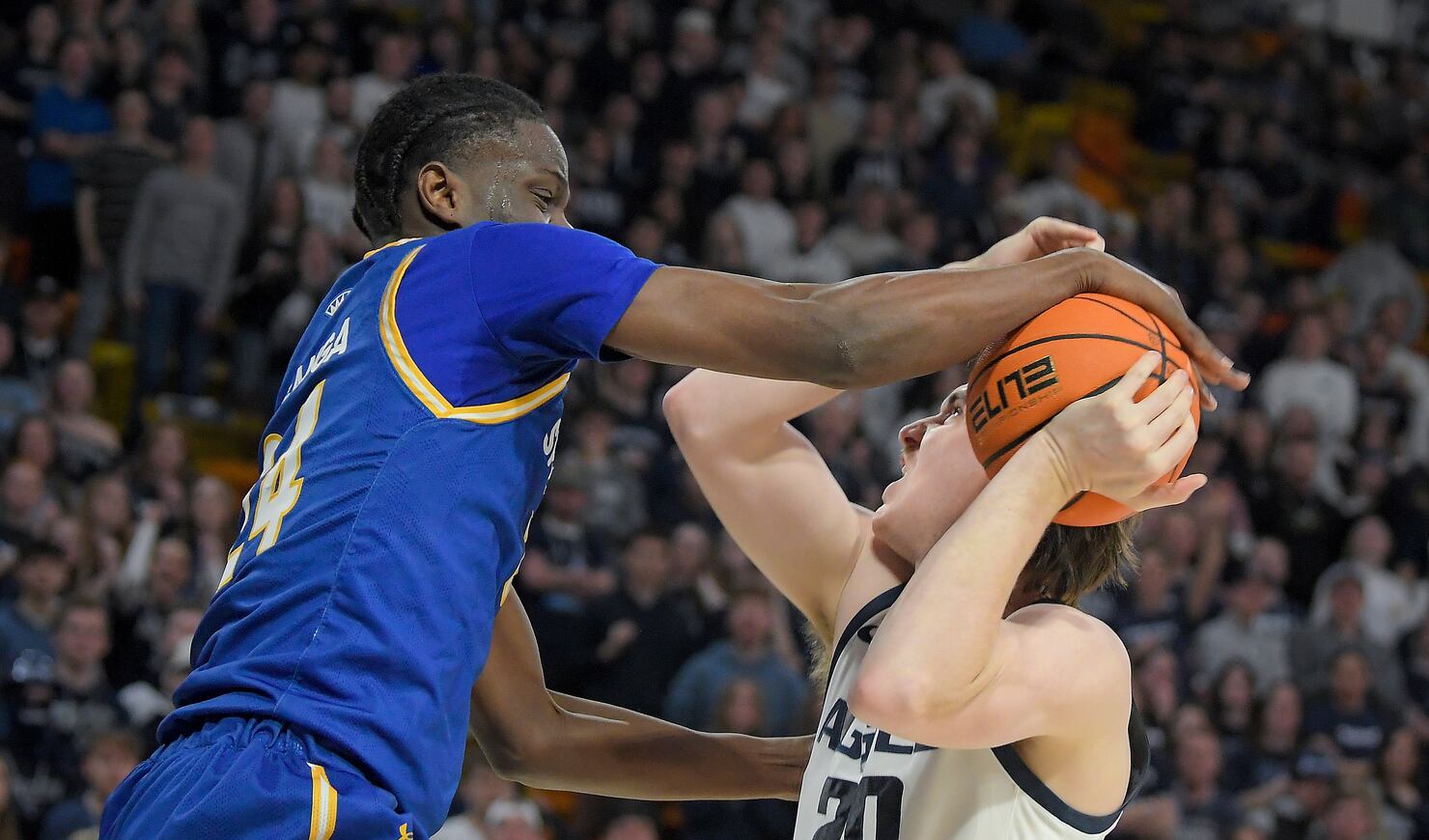
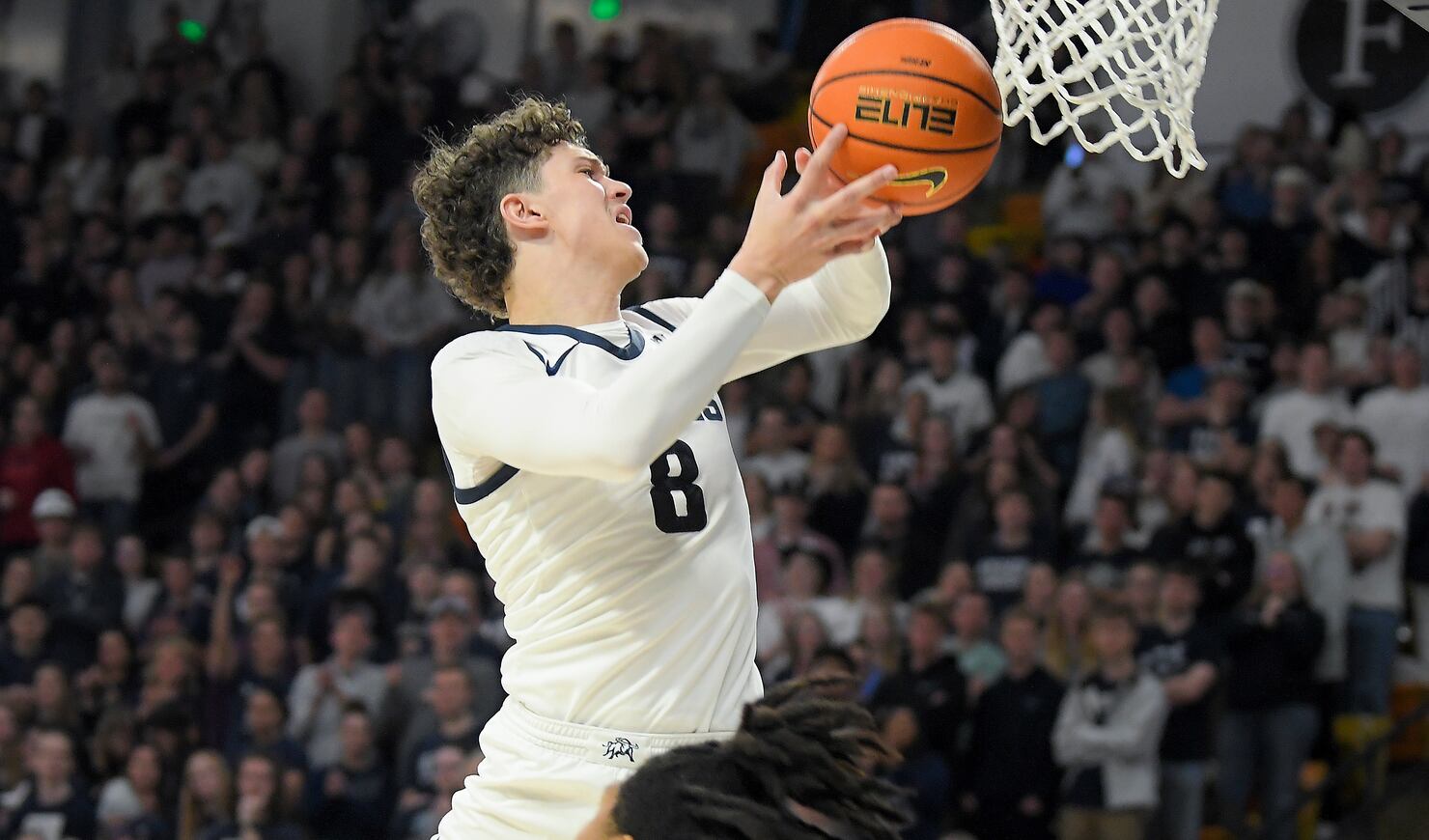
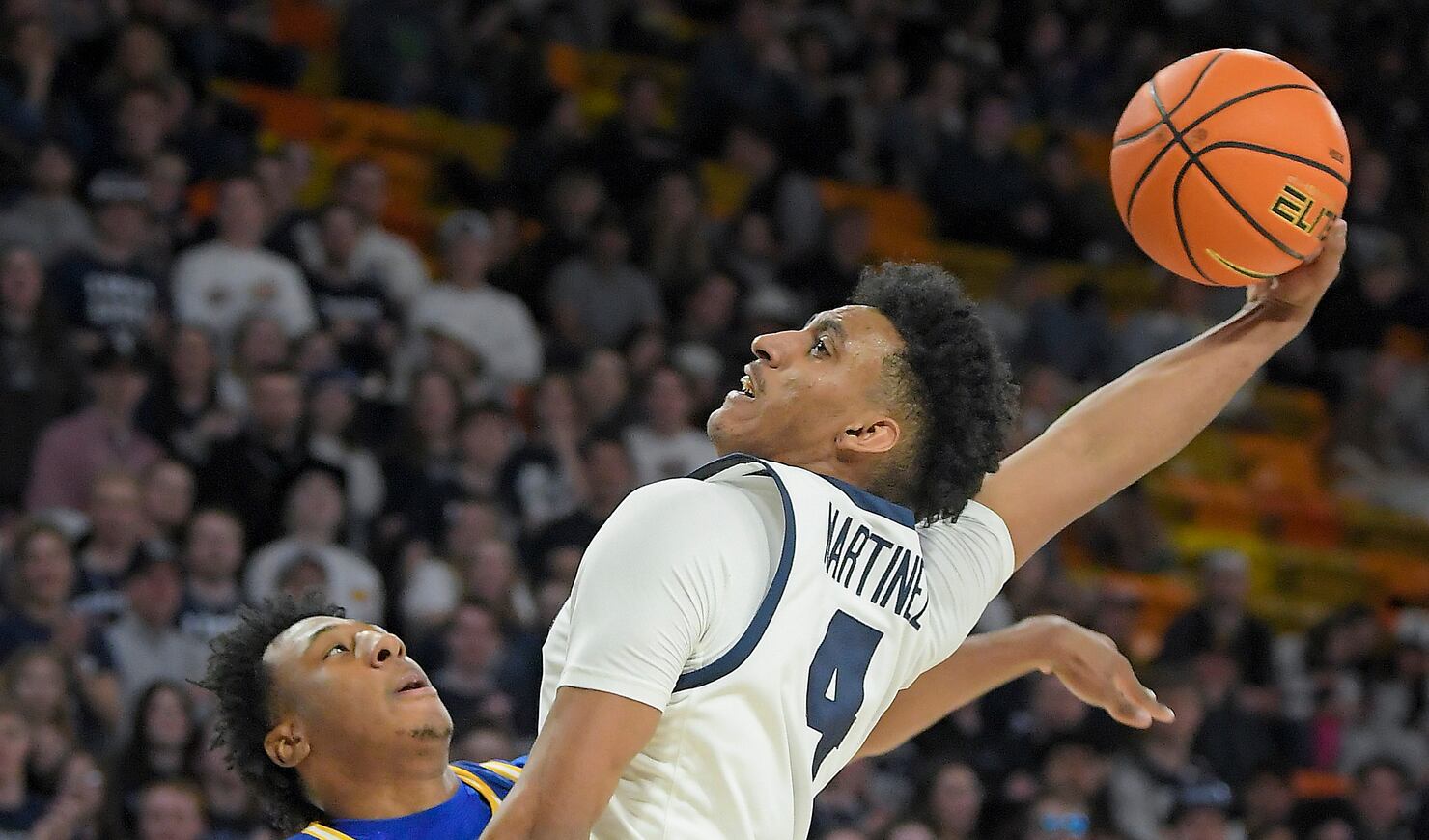


Shortly after the San Jose State basketball team arrived in Cache Valley in preparation for Wednesday night’s game at Utah State, the student-led group of Aggie spirited athletic fans known as The HURD attempted to make amends for a previously unfulfilled promise made to Spartans’ head coach Tim Miles.
Now in his fourth season at SJSU, Miles was gifted a half gallon of chocolate Aggie Ice Cream when he arrived at his hotel on Tuesday, and he took the time to thank The HURD and post a photo of himself on social media enjoying some of the frozen treat.
But by halftime of Wednesday’s game against the Aggies, the veteran coach was suffering from something far more painful than an ice-cream headache.
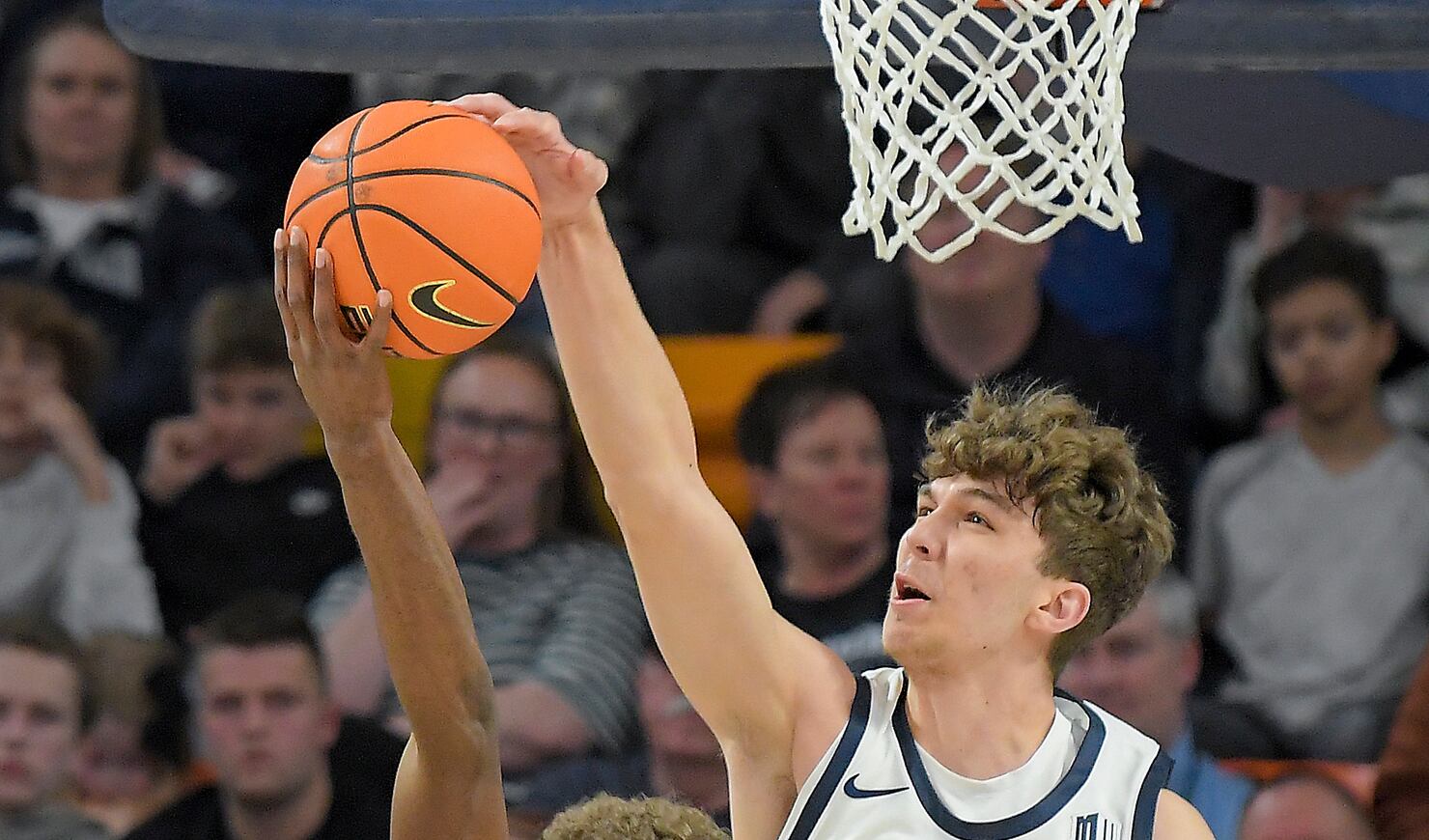
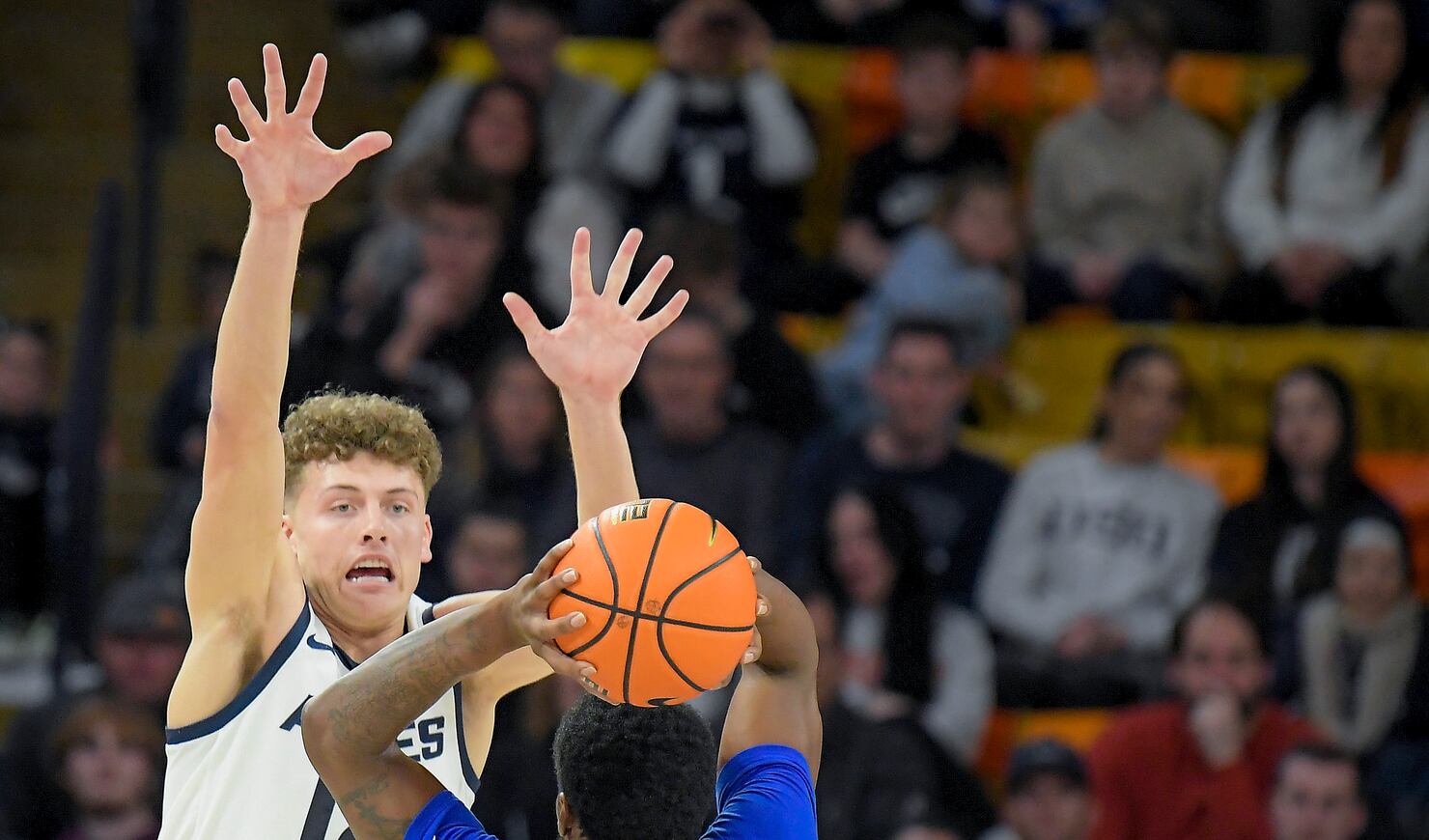
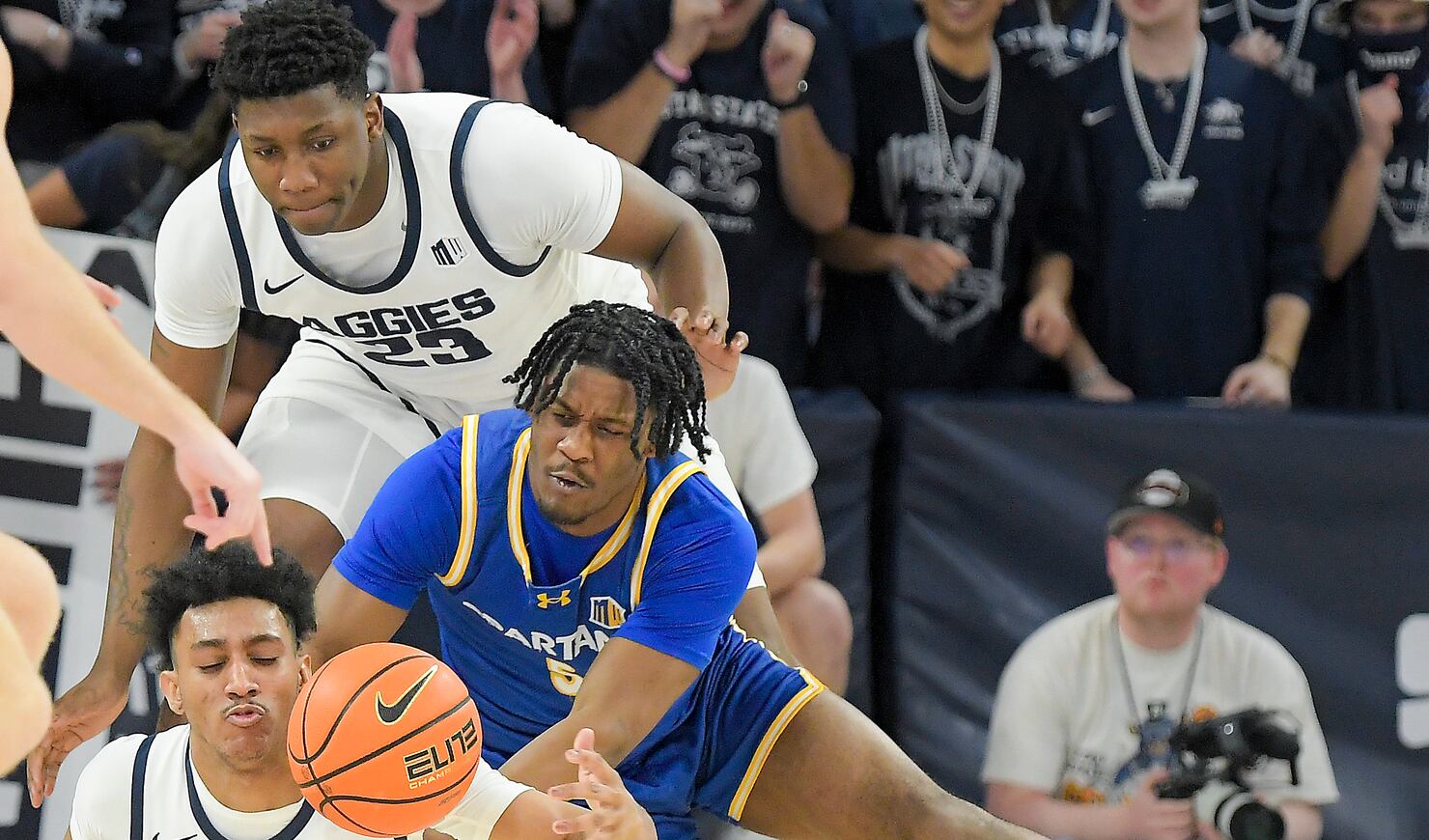
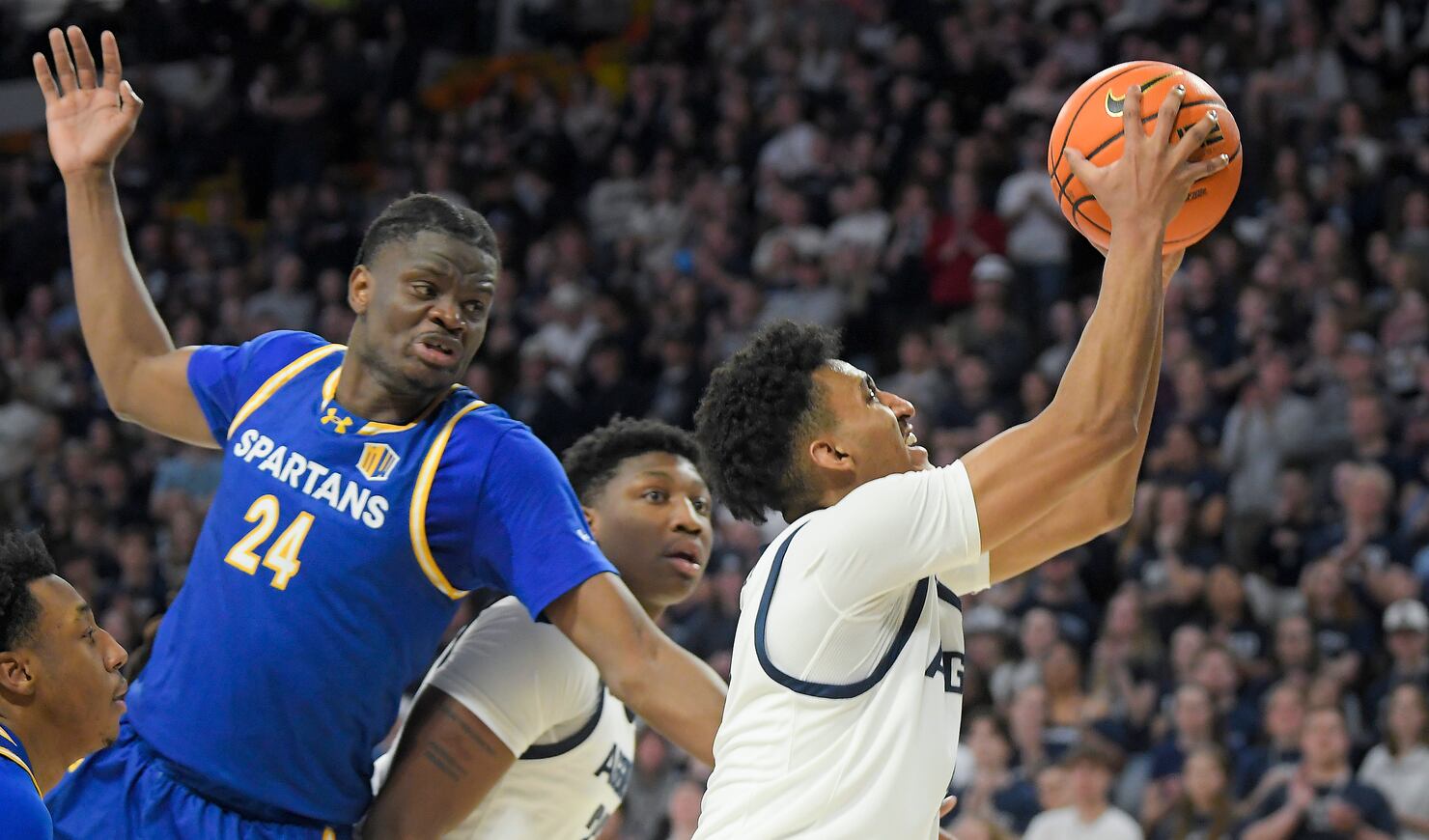
Utah State absolutely dominated San Jose State, 105-57, at the Spectrum to record the largest margin of victory in a conference win in school history, bettering a 45-point win against the Spartans on Dec. 21, 2020.
“It was just a disappointing night for San Jose State,” Miles declared. “I thought that Utah State was clicking on all cylinders. They were great the way they shot the three. I think six different guys hit threes in the first half, and that really set the tone for the whole game.”
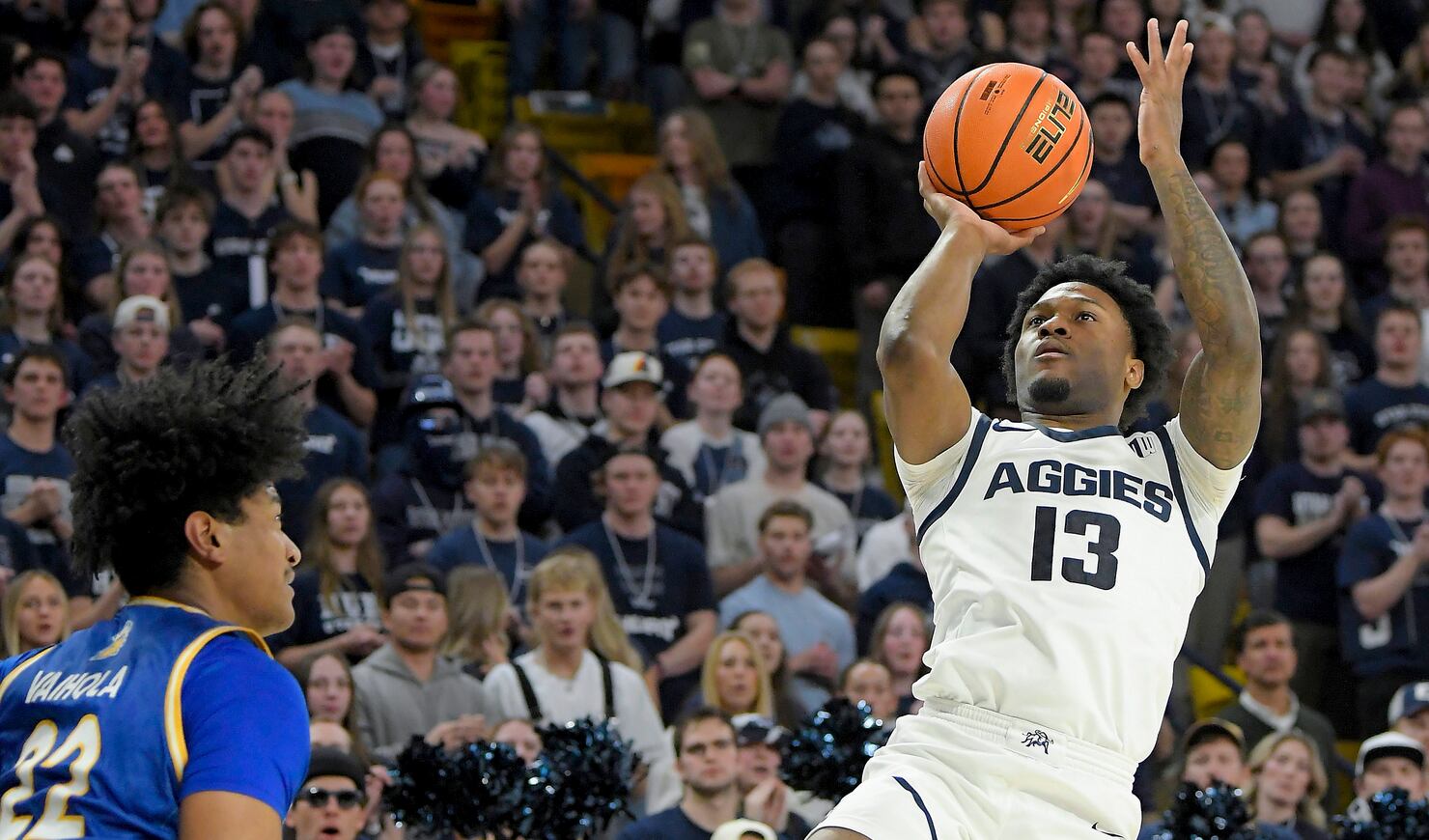
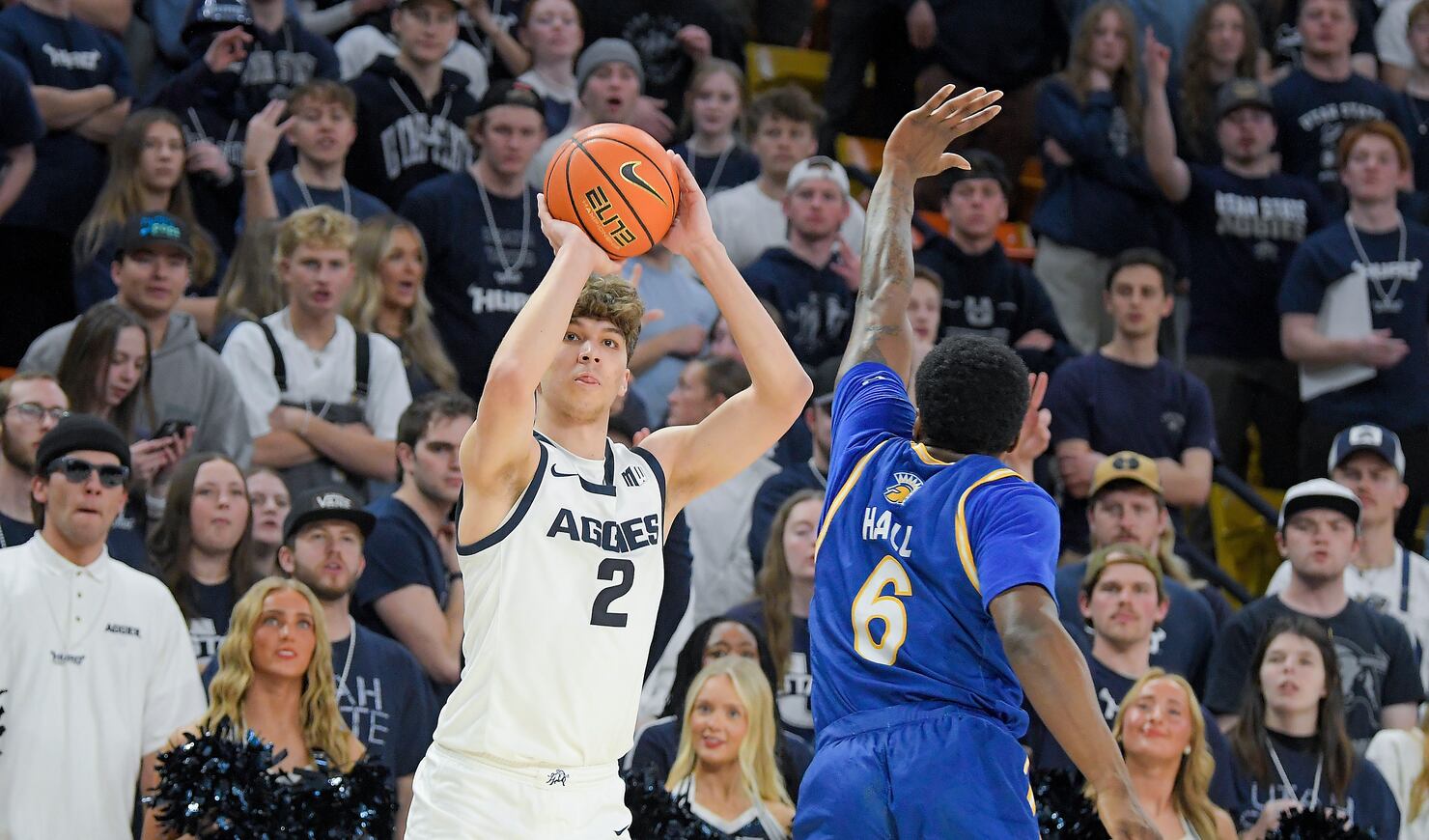
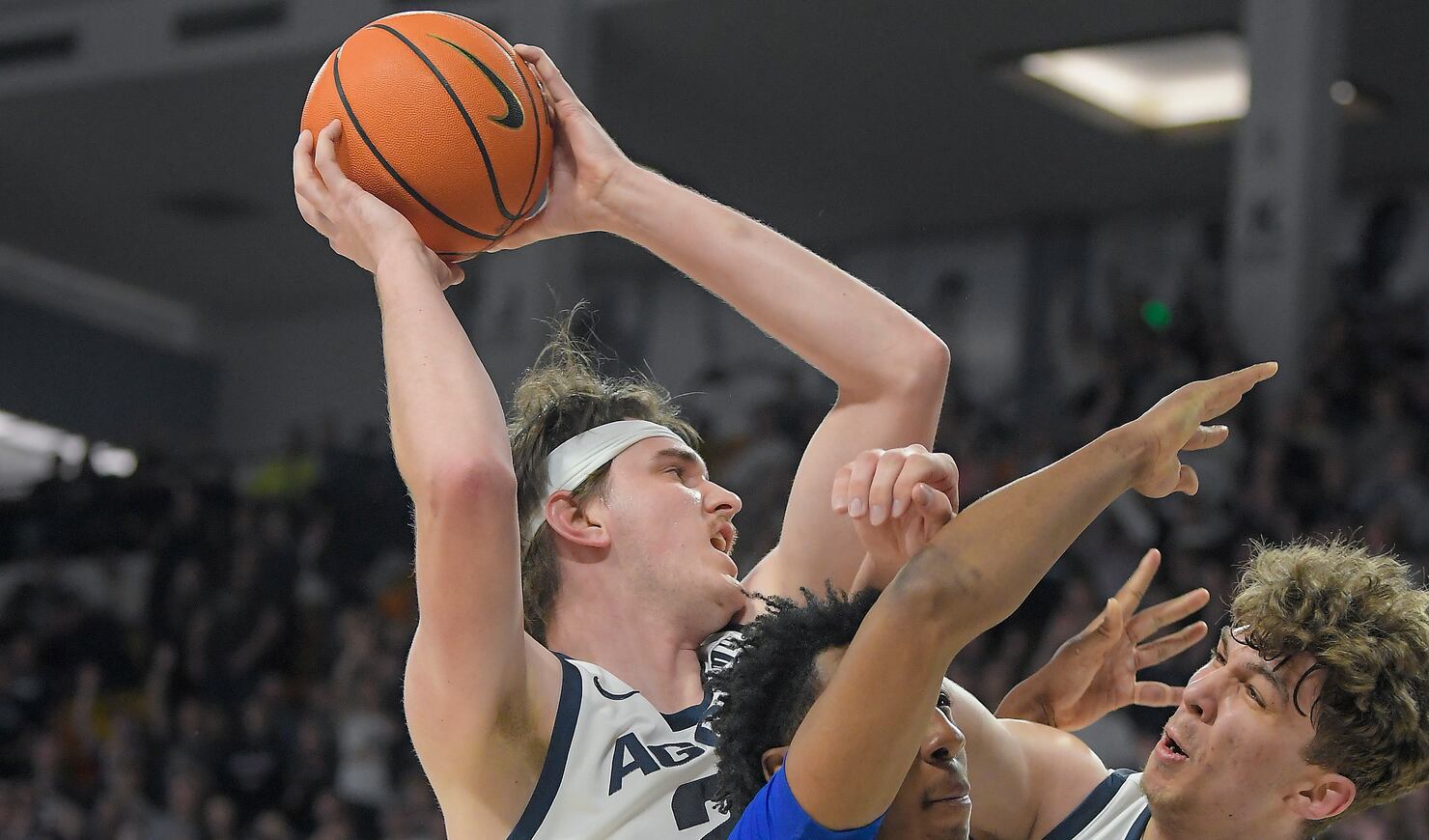
Led by graduate guard Ian Martinez’s game-high 22 points, the Aggies held a 47-24 advantage at halftime and led by as many as 51 points in the second half. All 12 USU players to see action scored at least two points, with guard Mason Falslev (13 points), guard Dexter Akanno (13 points), wing Tucker Anderson (11 points) and guard Deyton Albury (10 points) all scoring in double figures.
Utah State, which was coming off a tough, three-point loss at New Mexico on Sunday, shot 63.6% from the field in the second half, 51.5% for the game and knocked down 13-of-25 (52%) 3-point attempts.
“I thought our guys didn’t let one loss correlate to another,” USU head coach Jerrod Calhoun said. “We’ve talked about mindset for the last 48 hours. Credit to the leaders of our team, Ian and Mason and Drake (Allen), some of those guys that have been around college basketball. They understand the highest of highs and the lowest of lows.
“They had the attention to detail, the defense, the physicality, the rebounding in this game. I’m really proud of our guys.”
The lopsided victory helped the Utah State (23-4 overall, 13-3 in the Mountain West) hold onto second place in the conference standings. But the Aggies did pull within a game of first-place New Mexico (22-5, 14-2) thanks to the Lobos’ 86-78 loss at Boise State Wednesday night.
Utah State has four regular-season games left, starting with Saturday’s home game against San Diego State. The Aztecs (18-6, 11-4) are currently tied for third place with Colorado State (17-9, 11-4).
San Jose State (12-16, 5-11), which hasn’t won in the Spectrum since 1982 and is 4-42 all-time in Logan, gave the Aggies a little scare in the first game of the season in San Jose before losing 85-78 on Jan. 7. But after taking a 4-2 at the start of the rematch, not much went right for Miles’ club as USU scored 10 of the game’s next 12 points.
Former Aggie Josh Uduje, who notched those first two field goals for the Spartans, missed his next 12 shots of the game and San Jose State’s leading scorer at 16.4 points per game ended up scoring just four points in 31 minutes. It was a disappointing return to the Spectrum for Uduje, who was named the co-Sixth Man of the Year last season in the Mountain West after playing a key role for the Aggies in their conference championship run under former head coach Danny Sprinkle.
Uduje initially announced he was staying at USU for another year after Calhoun was hired last April, but then he switched his commitment in May and ended up signing on with the Spartans. Uduje, who was still greeted warmly by the Spectrum crowd of 8,921 on Wednesday, played against the Aggies despite missing the SJSU’s two previous games with elbow and back injuries.
“I thought the crowd really treated Josh with the respect that he deserves; that team last year was pretty special,” Calhoun said. “… As long as I’m the coach at Utah State, which is hopefully a long time, he’s always welcome here. He’s a class act kid.
“… But he’s been having some back issues and hasn’t played in a couple of weeks, but we knew he’d play in this game,” Calhoun added. “Josh is a big focal point of their team, and he gets 16 points a night. So, we wanted to crowd him and make life hard for him. And yeah, he struggled. Just 2 for 14. But credit our guys and our defense.”
Overall, San Jose State shot just 36.8% from the field, were 9 for 32 (28.1%) from 3-point range and committed 13 turnovers to just six for the Aggies.
The Spartans, whose second-leading scorer Will McClendon missed Wednesday’s game with a knee injury, got 15 points each from graduate guard Donovan Yap and junior forward Sadraque Nganga.
“One thing we’ve really talked about lately is defensive stamina, and there were times in the second half we gave up some easy points,” Anderson said. “But we know what we’re capable of, and we’re trying to focus on our strengths and coming out in the second half, not looking at the score and just playing as hard as we can for 20 minutes in the second half.
“We seem to have some really good first halves, but second half defense is where we’ve struggled sometimes. So, we’ve got to keep getting better at that.”
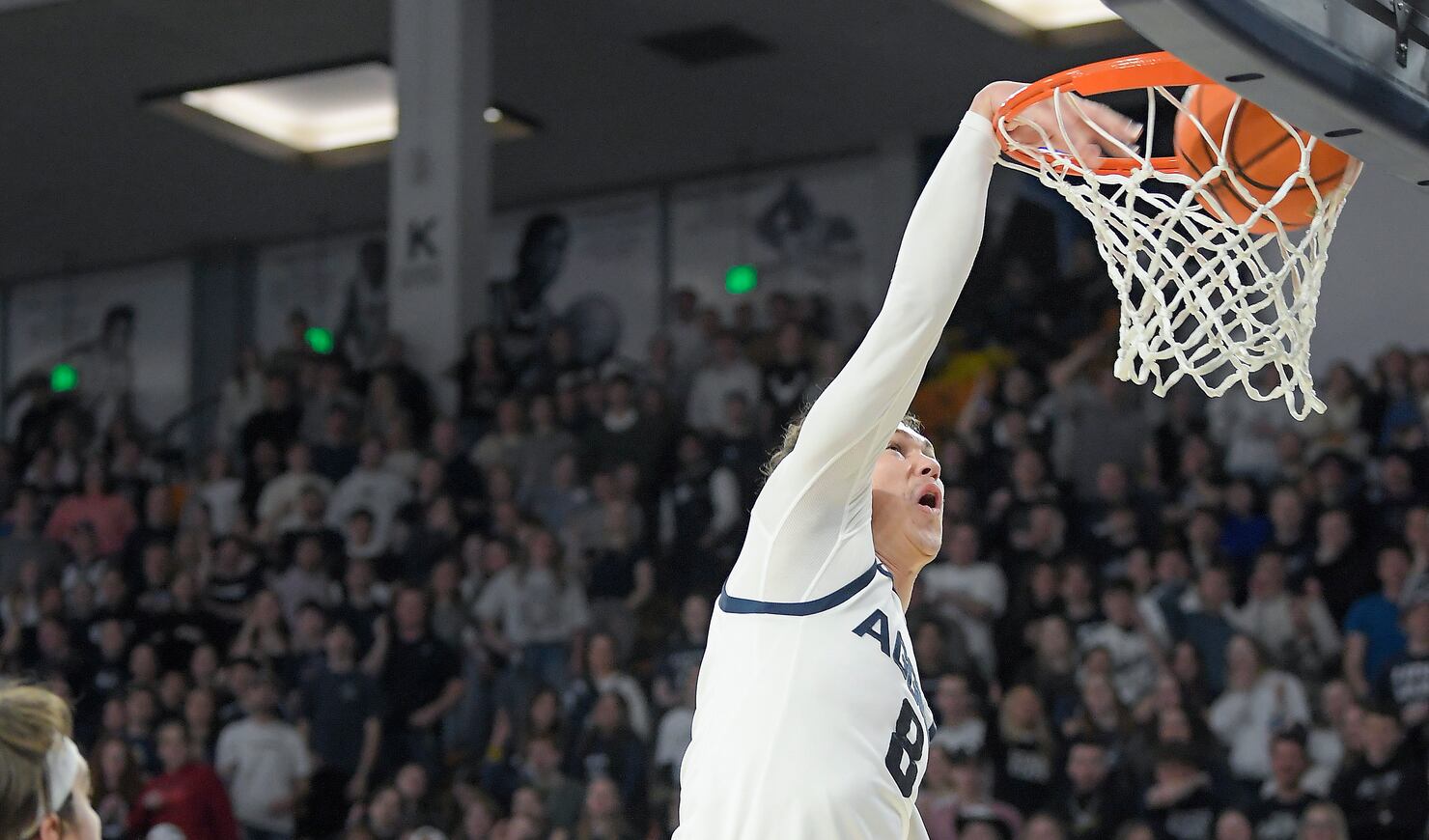
Anderson, who went 3-for-6 from 3-point range against the Spartans, credited Allen for setting him up for an easy dunk in transition in the second half, as well as for a behind-the-back pass from the top of the key that Anderson turned into a 3-pointer on the following possession.
“I think Drake’s been almost like a big brother to me,” Anderson said of Allen, who also flew down the lane in the second half for the most spectacular dunk of the night. “He’s the guy that’s always talking to me and always tells me to keep shooting, and he gave me some good passes tonight.”


as hard as it is to say goodbye to a special place where you’ve made countless memories, letting one good thing go can invite something even better to take its place. When one Chicago-based couple welcomed their first grandchild, they knew that it was time to part ways with their former Victory Ranch, Utah, retreat and expand into a custom-built home in nearby Kamas, which was designed to grow with their family.
With Jennelle Butera of Bloum Design Co. helming the design, every area of the expansive new homestead was tailored to suit the needs of a full, bustling household, with curated design choices that seamlessly coordinate with the majestic mountainous terrain on full display in nearly every room.
To give the space an artful signature all its own, Butera commissioned numerous custom accents. “We love working with local artisans,” she says. “We layered in pieces that feel deeply personal, from a solid walnut dining table with brass butterflies to a gunmetal kitchen hood and blackened steel fireplace surround.”
Though incredibly spacious and airy, the entire interior still has a warm and inviting feel, making it a natural home base for the entire brood to gather. From an intimate breakfast nook just off the main living area to a family room that’s ready for anything—from game night to cocktail hour—to a primary bathroom that could rival the most luxurious five-star spa, this is the ultimate entertaining home, sure to host countless reunions and gatherings in the years to come. And crucially, the space doesn’t feel cordoned off from the gorgeous natural world outdoors, but very much a part of it.
FAST FACTS
Designer: Jennelle Butera, Bloum Design Co.
Location: Kamas, Utah
The Space: A five-bedroom, six-bathroom home across 8,200 square feet
An entryway needs to make a memorable first impression, and the one in this home, anchored by a distinctive custom walnut console table, is so much more than a simple pass-through. “This entry vestibule serves as an artistic moment,” Butera says. There’s subtle beauty to appreciate underfoot as well, as the dappled pattern of the natural stone pavers is used both indoors and out, providing a seamless visual transition.

Rug: Armadillo & Co. Couches: Montauk Sofas. Coffee table: The Future Perfect. Chairs: Verellen. Floor lamps: Vaughan Designs.
Walking into the great room, visitors are struck by two distinct features: expansive panorama windows that showcase sweeping mountain vistas and a sumptuous seating area that practically begs sitters to stay awhile and appreciate the view. The deep olive green Montauk sofas were hand-selected not just for their gorgeous color and plush silhouette, but because they feel like a dream. “The clients even took a special trip to the Chicago showroom to personally sit-test them,” Butera quips.

Table: Project Sunday. Chairs: Maiden Home. Rug: Utah Rugs. Light: Apparatus. Bar shelving: Handmade Industries.
Adjacent to the central seating zone is the dining area; at its heart is a custom-fabricated walnut table with cozy mohair-upholstered chairs that offer plenty of spots for dinner party guests to perch.
“Warm and chocolate tones were chosen to complement the natural landscape,” Butera says, and the effect is the total embodiment of—dare we say—quiet luxury. A sophisticated dry bar awaits service nearby, resplendent in its gleaming wallcovering by Alchemy Helio 3.0.

Banquette: Teerlink Cabinets. Table: Greg Palombo. Chairs: Maiden Home. Pendant: The Urban Electric Co.
For those in-between moments throughout the day, this light-filled breakfast nook, grounded by a custom ash wood table and banquette, offers a casual, quiet corner. “This intimate, everyday space allows them to enjoy the view while sitting with coffee or tea,” Butera says. “It’s also the client’s preferred workspace.”

Countertops: Bianco Superior. Pendants: Allied Maker. Stools: Thomas Hayes Studio. Cabinet hardware: Ashley Norton. Backsplash tile: Bespoke Studio.
“The kitchen showcases a curated interplay of dark and light,” Butera says. Subtle shifts in tone and mood are exemplified through the rich oxidized rift oak cabinetry, which contrasts against the smoky zellige tile backsplash. Crowning the range is a custom gunmetal hood, which Butera calls “the kitchen’s striking focal point.”
The space’s organizational flow was also meticulously mapped out through specialized, streamlined storage to ensure maximum efficiency while also allowing room for beauty. The client’s precious collection of pottery, handmade by her mother, holds court above the cook space in the glass-door upper cabinets.

Rug: Antrim. Couch: American Leather. Chair: Younger + Co. Side table: Moe’s Home. Floor lamp: Visual Comfort.
On the lower level, this entertaining zone ups the casual quotient, offering ample storage space for the household to stash games, books, and other off-the-clock accoutrements. Ever ready for all hosting needs, the space includes an oxidized rift oak bar and kitchenette. “The bar was intentionally designed to be camouflaged and sleek,” Butera notes. It also alleviates the need to run upstairs for a refill.

Wallcovering: Fromental. Pendant light: Visual Comfort & Co. Bed: Lawson-Fenning. Bedding: Boll and Branch. Rug: Rosemary Hallgarten.

Cabinet hardware: Colonial Bronze. Rug: Overland Sheepskin. Closet sconce: The Urban Electric Co.
Waking up is never hard to do in this primary bedroom, which Butera calls “a zen-inspired sanctuary for enjoying the mountain views from bed.” She extended the serene tonal and textural palette to this calming space, adding a watercolor-inspired wallcovering to the room’s feature wall and extending it into the nearby boutique-inspired changing area.

Countertop material: Crema Marfil. Sconces: The Urban Electric Company.

Shower tile: Silver Wave. Shower fixtures: Newport Brass.
“This primary bathroom is a spacious sanctuary, flooded with natural light,” Butera says. Layers of materiality—limestone floor tiles, a marble sink countertop, a white oak custom vanity—read as a naturalistic extension of the alpine atmosphere just outside.

Wall paint: Card Room Green, Farrow & Ball. Pendant: Visual Comfort. Rug: Armadillo. Bed: Maiden Home. Nightstand: Maiden Home.
This entire home was designed with five-star hospitality in mind, so the guest rooms were certainly not an afterthought. “The main-level guest bedroom is a warm and welcoming space designed to make family and guests feel at home,” Butera says. The room’s biophilic-inspired sage, almond, and mauve hues cocoon the sleeper to put the mind at ease, while a lantern-like pendant from Visual Comfort & Co., aptly named “Paper Moon,” hangs overhead.
Jennelle Butera of Bloum Design Co. has been creating thoughtful spaces for over a decade. In each aspect of her projects, Jennelle and her team seek connection and collaboration with both their clients and their creative partners to create homes that are truly a team effort and reflect each contributing point of view.
Follow House Beautiful on Instagram and TikTok.

The Utah Jazz have just one game left on the calendar to decide their final record to close out the 2025-26 season, and with it, finally determine their official lottery odds headed into the offseason.
While the Jazz might be out of the postseason hunt or anything close to it, their matchup agains the LA Lakers holds some high stakes, strictly because of those upcoming lottery odds.
Utah will also need to keep an eye on the Sacramento Kings’ final game of the year against the Portland Trail Blazers, as their outing will also have implications for where the Jazz will stand when it comes to their final lottery standing.
With that in mind, here’s what to watch for in both the Jazz and Kings face off in game 82 of their respective seasons:
The best-case scenario for the Jazz’s lottery odds would be a combination of their own loss to the Lakers, combined with a Kings win vs. the Blazers. That would then put the 22-win Jazz one game below Sacramento in the end-of-year league standings, and with it, the standalone 4th-best odds in next month’s lottery.
That not only gives the Jazz a 12.5% chance at the number-one pick in the lottery, but also guarantees that they’ll retain their top-eight protected pick currently with the OKC Thunder.
It’s safe to assume this is the ideal outcome in mind for those in the Utah front office, but will require a bit of outside help since the Jazz claimed a win against the Memphis Grizzlies to tie Sacramento’s record.
This is what the Jazz don’t want to see. A combination of their own win along with a Kings loss means they drop to sole possession of the fifth-best lottery odds; thus dropping to a 10.5% chance of claiming the number-one pick, and helping OKC to a slim 0.6% chance of taking Utah’s pick.
The fifth-best odds aren’t all bad. You’re given a 44.3% chance that your selection either moves up or stays within that range, and if it remains within the top five, gives Utah a really strong opportunity at a talented player atop the board. But of course, fourth is still better.
Considering the Lakers have a real incentive to win against the Jazz for their own seeding purposes as Utah has quite the opposite, this feels like an unlikely outcome on the surface. Crazier things have happened in the NBA, though.
If the Jazz and Kings both fall to the same result on Sunday night, nothing changes from where the landscape stands now.
Each team will tie with the fourth-best odds in the lottery with either 22 or 23 wins, and will be forced to a tiebreaker in order to determine who gets the fourth and fifth spots in the drawing come lottery time.
That tiebreaker inevitably comes down to a literal coin flip, and therefore would leave the Jazz with essentially just a 0.3% chance that the Thunder will claim their top-eight protected pick. It’s not officially guaranteed that Utah would be the ones walking away with possession of that pick, but it’s pretty dang close.

(Trent Nelson | The Salt Lake Tribune) Herriman has thousands of housing units that are ready to be built but held up because there isn’t water infrastructure on Friday, Feb. 20, 2026.






1 teenage girl killed, another injured in shooting at Piedmont Park, police say


Georgia House Special Runoff Election 2026 Live Results


Arkansas TV meteorologist Melinda Mayo retires after nearly four decades on air


Parents charged after toddler injured by wolf at Pennsylvania zoo

Potawatomi Casino Hotel evacuated after fire breaks out in rooftop HVAC system


Anthropic essentially bans OpenClaw from Claude by making subscribers pay extra


ABC Kite Fest Returns to Austin for Annual Celebration – Austin Today


Puppy rescued after getting stuck on chimney in Detroit


