Utah
Could EPA air quality standards be Utah’s first test of its new sovereignty law?

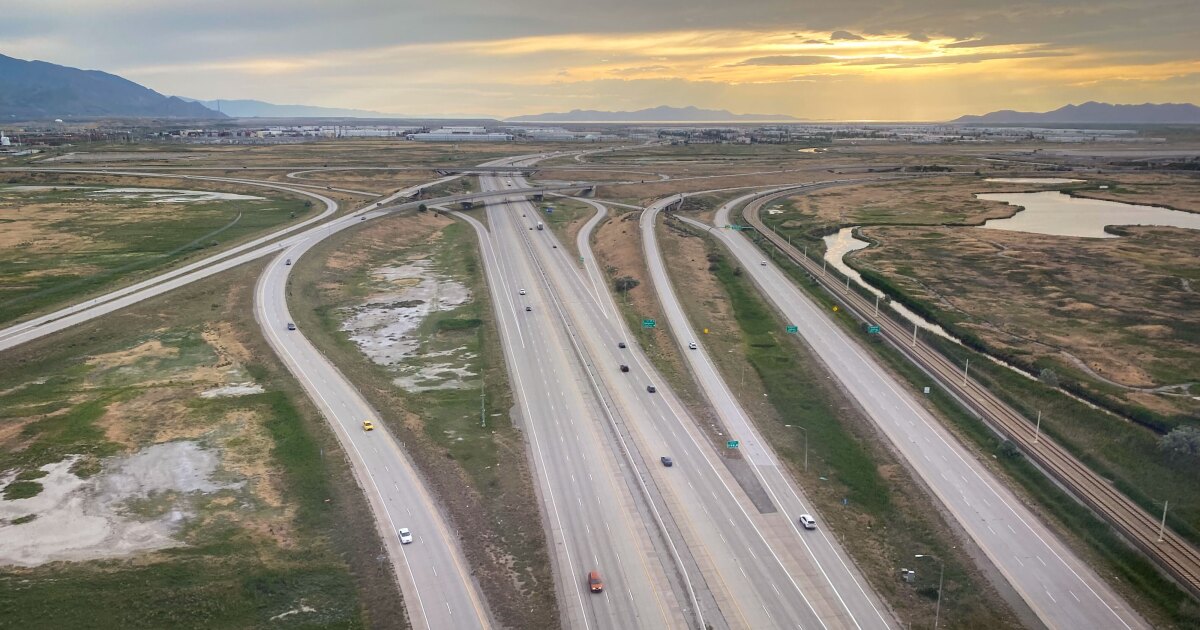
Top Utah officials aren’t happy with federal air quality standards. And their ammunition to fight back could jeopardize the state’s federal highway funding or even the federal government overriding how the state handles air quality to begin with.
In February, Gov. Spencer Cox called the stricter regulations imposed by the Environmental Protection Agency “onerous” and “so stringent” that it will be “impossible” for the state to comply. The EPA reduced the amount of PM2.5 and ozone pollution allowed in the atmosphere, making it harder to fall within the attainment standards, which Utah hasn’t met since 2006. The Utah Attorney General’s Office has filed and joined other states in challenging the agency over its mandates, like the “Good Neighbor Rule,” which targets ozone pollution emitted across state lines.
The majority of the Utah Legislature is so unhappy with the regulations it partly inspired a new state law that aims to push back. Republican Sen. Scott Sandall’s 2024 “Utah Constitutional Sovereignty Act” sets up a process for the state to opt out of federal regulations they deem as overreach.
The first test of the new statute could be the looming air quality battle the state is picking over the updated air quality standards and the Clean Air Act. But it won’t be an easy sell.
“If the state wants to test the red line,” said Brigham Daniels, a law professor at the University of Utah, “this is a risky one.”
During a May 15 Natural Resources, Agriculture, and Environment Interim Committee meeting, Bryce Bird, the director of the Utah Division of Air Quality, said Utah is “still really struggling” to meet EPA ozone standards, especially in Salt Lake, Davis and parts of Weber and Tooele counties. But if the state doesn’t fall within the attainment zone of 70 parts per million, which is considered protective of public health, Utah could face federal funding sanctions.
“That prevents both federal funds being used to expand transportation projects here in that non-attainment area, but it also prohibits state funding from being used for regionally significant projects,” Bird said. “So it really does have that direct impact on the fastest growing metropolitan area in the country.”
If Utah still doesn’t clean up the air after funding is frozen, Bird said the federal government could swoop in and create its own plan for how Utah will meet ozone standards. If that comes to pass, the state “will lose flexibility and input into the plan.”
Utah and the Intermountain West face an uphill battle when it comes to meeting EPA ozone standards. Bird said states like Arizona, Utah and Colorado have “higher natural concentrations of ozone and a greater impact from international transport of the precursor emissions to ozone formation,” which places some of the problem outside of the state’s control.
The fact that Utah isn’t solely responsible for ozone pollution within its boundaries is Sandall’s biggest complaint, calling it “the heart of the heartburn,” and that Utah doesn’t have to “try to comply to an uncontrollable standard.”
“That’s the message that we’ve got to send to the federal government is we can’t do that. There’s no way,” he said during the May 15 meeting. “So whether we do that through legislation, whether we do that through a lawsuit, whatever we do, we have to be the ones to say no.”
Republican Rep. Casey Snider followed Sandall’s comments by stating “perhaps there needs to be a fundamental shift in the key objectives” of the Utah Division of Air Quality centered around “pushing back on this overzealous nature of the federal government rather than simply complying with the impossible.”
Daniels said he’s sympathetic to the predicament the state is in because of what the EPA considers to be “a healthy air quality will be very difficult for the state to obtain,” given the outside exacerbating factors. But challenging the Clean Air Act isn’t that simple.
From his perspective, if Utah does take the steps to challenge the Clean Air Act under the Utah Constitutional Sovereignty Act, the state is likely to fail because of the Supremacy Clause, which says the Constitution and federal statutes are “the supreme law of the land,” trumping any state laws.
Daniels added EPA employees are mandated by federal law to enforce the consequences of a state not complying with standards set by the Clean Air Act and a state sovereignty clause won’t stop them from doing so either.
“Within the realm of environmental law and natural resources law, you almost couldn’t have chosen a worse statute to gamble with,” Daniels said. “Because the federal government doesn’t have any discretion about whether or not it moves forward with sanctions.”


SALT LAKE CITY (KUTV) — After weeks of long days on the fire line, firefighters battling Utah’s Iron and Cherry fires received some four-legged support.
Golden Healers, a Utah nonprofit that provides therapy and service dogs, visited the wildfire base camp at the invitation of the incident management team, giving firefighters a chance to step away from the demands of the job, if only for a few minutes.
The certified therapy dogs spent time with crews in dining areas, gathering spaces and rest areas, where firefighters petted the dogs, took photos and talked about the pets waiting for them back home.
MORE | Utah Fires
“Our firefighters face tremendous physical and emotional demands every day,” said Mike Carlson, founder and CEO of Golden Healers. “Sometimes all it takes is a few minutes with a therapy dog to help someone relax, smile and reset before heading back to work. It was an honor to support these incredible men and women.”
The visit came as hundreds of firefighters continue working to contain the Iron and Cherry fires, which have burned tens of thousands of acres in central Utah.
Golden Healers brought several certified therapy dogs, including Golden Retrievers, doodles, poodles and a corgi. Each dog has completed specialized therapy training designed to help them remain calm in busy, high-stress environments.
Volunteers said the response from firefighters was immediate.
Crews who had spent hours battling wildfire conditions gathered around the dogs, laughing, sharing stories and enjoying a brief reminder of home before returning to their assignments.
One of the most memorable moments came when an entire firefighting crew surrounded one therapy dog, taking turns petting it while talking about their own dogs and families.
For a few minutes, conversations shifted away from fire behavior and operational briefings to life beyond the fire camp.
“Watching these firefighters light up the moment a dog walked over reminded us why therapy dogs are so important,” Carlson said. “These are people who dedicate their lives to protecting our communities, often while spending weeks away from their own families. If we can give them even a few minutes of comfort and emotional support, then we’ve accomplished something meaningful.”
Golden Healers hopes to continue visiting wildfire camps and other first responders across Utah. The nonprofit regularly provides therapy dog visits to hospitals, schools, law enforcement agencies, mental health providers and community organizations.
“Our mission has always been to improve lives through the healing power of dogs,” Carlson said. “Whether we’re helping a child with autism, supporting someone struggling with mental health, or bringing comfort to firefighters after a long shift, these dogs have an incredible ability to connect with people exactly when they need it most.”
_____

State Sen. Todd Weiler previously shared a six-post thread about opponents of the Box Elder data center allegedly being paid by China.
(Rick Egan | The Salt Lake Tribune) Sen. Todd Weiler, R-Woods Cross, says a few words during a ceremonial bill signing to highlight landmark legislation that establishes Utah as a national leader in protecting kids online, in the Gold Room at the Capitol, on Friday, April 4, 2025.

Three firefighters were killed Saturday while battling two wildfires near the Colorado-Utah border, the U.S. Wildland Fire Service announced.
Emily Barker, 38, was from Michigan; Nick Hutcherson, 27, was from Arizona; and Sydney Watson, 26, was from Alabama.
Loved ones and friends started sharing tributes on social media, and FOX 13 News spoke to the loved ones of Emily Barker.
It all started when Sarah Brubeck was looking for a roommate in Colorado.
“Emily answered a random Craigslist ad,” Brubeck said. “We didn’t even know we had so much in common, so we had multiple hockey bags in our garage and multiple snowboards.”
Little did Brubeck know, she was getting a lot more than just a roommate.
“Grew to be more sisters than friends,” she said.
3 firefighters killed in wildfires
Just a couple of states over, Barker had touched the life of Kayla Lindsey.
“I met her when I was doing my interagency fire season with USFS and BLM Idaho,” she said. “You cannot see Emily and not want to talk to her.”
However, both friends’ worlds came crashing down when they heard the news that three firefighters did not make it while responding to the Knowles Fire along the Colorado-Utah border.
“One of our teammates was like, ‘Hey, Emily, let us know you’re safe,’ and she didn’t respond,” Brubeck said. “I just assumed she was out of service, and she would respond when she could, but she couldn’t.”
“I saw it first on Facebook,” Lindsey said. “I just kept reading it over and over, like, ‘That’s not the Emily Barker, I know that’s not my Emily.’”
Barker had died during a burn-over incident, something that hits close to home for Lindsey.
“I remember my first state fire, we pulled our shelters, and that’s never a good feeling. You never want to have to hear the words, ‘Get to your safety zone,’” she said. “I couldn’t imagine as strong as Emily was, how scared she must have felt when that happened, because that’s a terrible way to go.”
“She was more than life itself,” Lindsey added through tears. “She took so much interest in every person she met. She loved her job.”
While the world is getting to know Barker as a hero, her friends said it’s who she’s been all along.
“Showing up to house sit for free while we’re on our honeymoon or offering to carry someone’s hockey bag — she just gave of herself constantly,” Brubeck said.
“Didn’t matter how much she didn’t have in her cup, she always tried to fill everyone else’s,” Lindsey added. “I just wish we had more Emilys in the fire service.”
A wildland firefighter who knew the victims in Utah released the following statement:
“It’s times like these we’re reminded how truly dangerous our jobs are. Fire is the only natural disaster we ask men and women to stand in front of and stop. While we are often successful, sometimes the power of fire overtakes us, despite our best efforts and safest decision making. As we see so much criticism online about how we do our jobs, please remember our ultimate goal is to get every firefighter home safely. Saturday, we failed. The loss of Emily, Nick, and Sydney is burned in our souls. Our agencies and firefighters are hurting. We appreciate the public support now. And we hope that continues long after this has been forgotten for most of you. Because, for us, it is never forgotten. Every decision“It’s times like these we’re reminded how truly dangerous our jobs are. Fire is the only natural disaster we ask men and women to stand in front of and stop. While we are often successful, sometimes the power of fire overtakes us, despite our best efforts and safest decision making. As we see so much criticism online about how we do our jobs, please remember our ultimate goal is to get every firefighter home safely. Saturday, we failed. The loss of Emily, Nick, and Sydney is burned in our souls. Our agencies and firefighters are hurting. We appreciate the public support now. And we hope that continues long after this has been forgotten for most of you. Because, for us, it is never forgotten. Every decision, every pause in action, is because of a lost firefighter. To our fallen comrades… we’ll take it from here.”
-

 San Francisco, CA2 minutes ago
The San Francisco Church That Holds America’s Secrets
-

 Dallas, TX5 minutes ago
Crews battle large fire at Pilates studio in Uptown Dallas, officials say
-

 Miami, FL5 minutes ago
alaïa clads first miami boutique in pink mosaic tiles, from interior to facade
-

 Boston, MA17 minutes ago
Looking for a lodging adventure? Beat the heat at a floating B&B. – The Boston Globe
-

 Denver, CO20 minutes ago
Lavender festival, Tennyson Street Fair and more free and cheap things to do in July
-

 Seattle, WA32 minutes ago
Seattle’s solution for the middle-class housing squeeze: government housing | CNN Business
-

 San Diego, CA35 minutes ago
An Apprentice Program for Commercial Fishing
-
Milwaukee, WI40 minutes ago
Connecting Milwaukee teens to summer work


