Utah
Blame the NBA for Tanking, Not the Utah Jazz


After two straight games of deliberately resting starters in the fourth quarter of action against the Atlanta Hawks and most recently, the Orlando Magic, for their past two losses, the Utah Jazz are sitting at the forefront of the NBA’s “tanking” discussion.
While it’s a loaded conversation, it’s also an incredibly hypocritical one considering that the three best teams in the league right now by record— the Oklahoma City Thunder, Detroit Pistons, and San Antonio Spurs— all built their rosters on the backs of the very evil we’re talking about.
This isn’t saying that the NBA shouldn’t look at ways to prevent this issue going forward, but rather they should look for ways to incentivize winning, as opposed to punishing losing.
Tanking
Let’s make this abundantly clear: any team purposefully hurting their chances of winning games in the short term is guilty.
Throw the term “ethical tanking” out the window, because regardless of the path a team takes, the goal is the same. There’s no moral high ground in this conversation.
Tanking goes against the competitive spirit of sports. After all, the goal of sports is to win, so at its surface, teams trying to be bad is antithetical. However, with how major American sports leagues are geared towards competitive balance, it makes sense for teams looking for high-end talent to try to find that through the draft.
But tanking has been around forever, and it’s not worth going through the endless examples.
Current Model
In an effort to discourage teams from this (thanks, Sam Hinkie), the NBA flattened the lottery odds and now draws the first 4 spots in the event. This has had unintended consequences, though.
Last year, the Utah Jazz and Washington Wizards, who were the two worst teams by record, ended up picking fifth and sixth in the draft, while the Mavericks, who were one more play-in win away from making the playoffs, jumped past 10 teams with a worse record than them to land the already sensational Cooper Flagg. The Spurs, who’d picked in the top four the previous two years, jumped from 8th to 2nd in the order.
The result? Bad teams are forced to stay bad for longer in an attempt to get the high-end talent they’d hoped for, or simply being unable to take the step toward contention, even if they tried. It also incentivizes more teams, especially those on the fringes of the play-in tournament, to about-face and give themselves a better chance at winning the lottery, when otherwise only the worst teams would be battling it out.
This year, there are already at least seven teams that are jockeying for lottery position, and that doesn’t include the New Orleans Pelicans, who can’t get out of the cellar. It’s early February! We still have over a third of the season to go, and more teams have punted than ever.
The other issue with the new lottery system is that it forces teams to worry more about their “floor” because there’s a significant chance that teams will backslide in the order.
Jazz Discussion
Lastly, let’s talk about the Jazz, because they are very much tanking to keep their pick this year. They owe a top-eight protected pick to the reigning champions, meaning if the Jazz land one through eight in the draft order, they’ll keep their pick, and if it’s outside of that window, it goes to OKC.
This is the last year that the pick is owed before the pick debt is extinguished. Frankly, it makes zero sense for the Jazz to give away a premium asset when they can prevent it, so that is what they’ll do.
The reason the Jazz are talked about is because they have talent on their roster. Lauri Markkanen is an All-Star caliber player, while Keyonte George is already knocking on the door in his third season. If Walker Kessler hadn’t injured his shoulder, the Jazz probably would’ve been a play-in caliber team this year and unavoidably conveyed the pick.
After trading for Jaren Jackson Jr. this past week, however, the Jazz are once again under the watchful eye of many. The Jazz are talented, poised for a surge up the standings next season, but also young and have a record of 16-37 and 9 games out of the last play-in spot.
Their options for this year are: strategically keep their pick by putting their young players in uncomfortable positions to develop, or they could push for the play-in, come up short, and give a top-10 pick to the reigning champions for nothing.
Hard decision, right?
Bottom Line
The NBA does have a tanking problem. It’s bad for the product when a quarter of the league is attempting to lose games; however, they have nobody to blame but themselves for the way things are structured.
For the morality police of “ethical tanking,” take a look in the mirror, because in all likelihood, your team would be, is, or has done the same thing that the Jazz are doing right now.
Frankly, each team should do what they deem as the best long-term plan for them, and that’s what the Utah Jazz, and the rest of the teams around the association fighting for draft position, are doing.
Be sure to bookmark Utah Jazz On SI and follow @JazzOnSI on X to stay up-to-date on daily Utah Jazz news, interviews, breakdowns and more!


SALT LAKE CITY — Utah Pride Festival kicked off this weekend, with love and acceptance being the center of what Utah Pride says they represent.
“Sometimes in my world I feel very lonely, and it’s been really cool to show up and see, oh, there’s actually a big community out here,” said Livia who was attending the festival. “I go anywhere else, and I’ll get a lot of looks, and here I can just walk around and not have someone I don’t know question my existence,” added Luna Campbell.
However, it’s no secret that religion is a strong part of the state’s identity, which makes some feel like true acceptance is hard to come by.
“I did grow up in a Mormon household. I know what it is like personally to receive conflicting information about who I am,” said Esera with Utah Pride.
“I’ve had three death threats this week on posts that had 200 views each, and it’s like you put hashtag Christian, you put hashtag Utah, that will happen,” Campbell said.
Many were shocked this week when Governor Cox issued a surprise declaration, that felt like a snub to their community.
Cox declared this June as Fidelity Month, pointing to a recent opinion poll showing that Americans’ support for traditional values has declined, and wants Utahns to prioritize things like faith, family, and country.
“Fidelity Month, I want to say, is not at odds with Pride month. They are all about celebrating community and celebrating togetherness,” said Jackson Carter with Utah Pride, “the idea that we would need to rebrand it and change the name seems a little silly to me.”
This is when the Presbytery of Utah joined the conversation, releasing a statement in support of the LGBTQ community.
“Our denomination embraces them,” said Rev. Dr. Mirjam Haas-Melchior, “churches should have open and safe spaces for communities, especially who are feeling hurt and who do not feel safe, because as Presbyterians we believe in a God that is inclusive and loves all people.”
Reverend Mirjam believes pride and fidelity should go hand in hand, depending on the definition.
“If this is an inclusive understanding that is affirmative of everybody who’s faithful into the entity they believe in, faithful to and loyal to their friends and families, then yes,” she said, “but if this is an exclusive term that is narrowed down, that family is only the nuclear between man and woman, and they only should have children, then I would say it should not go hand in hand.”
Those FOX 13 News spoke to at the pride festival are encouraged that some religious leaders are getting involved in the conversation.
“Religion is queer. Queer people are everywhere. Queer people intersect every single identity you can imagine, so when people are saying that queerness is at odds with faith, it’s like those two things exist together all the time,” Carter said.
“I love, love, love that churches are doing that. I don’t think that pride and church should be separated. Why is it one or the other? It doesn’t have to be. You can do both,” Livia said.
Presbytery of Utah’s full statement:
“Not Opposed but United: A Statement on Pride and Fidelity”
The Presbytery of Utah, as part of the Presbyterian Church (U.S.A.), affirms with joy and conviction that June is Pride Month. We hold that Pride Month does not contradict or stand in opposition to fidelity; rather, it expresses it. Fidelity, rightly understood, is a steadfast faithfulness rooted not in fear or exclusion, but in the boundless love of God revealed in Jesus Christ—and in that love, Pride and Fidelity walk hand in hand.
In a time when public words and policies are dividing or diminishing, we renew our commitment to a vision of fidelity grounded in Scripture and shaped by the Reformed tradition: a fidelity that is covenantal, inclusive, and life-giving. God’s very own nature is fidelity.
“Know therefore that the Lord your God is God, the faithful God, who maintains
covenant loyalty with those who love him” (Deuteronomy 7:9).
We affirm that fidelity is a universal virtue shared across identities, orientations, and traditions. It is not owned by any political or religious group, nor diminished by diversity. It is lived daily by LGBTQ+ individuals, people of color, people of faith, and all who contribute with integrity to the well-being of our communities. Fidelity is also communal. The Church is called to embody mutual care, accountability, and hospitality.
The Church is a covenant community shaped by the Holy Spirit. Our fidelity is expressed not through uniformity but through unity in diversity, where differing voices are honored and held together in love.
Thus, fidelity for us is not withdrawal from the world, but deeper engagement with it—seeking justice, practicing compassion, and walking humbly with God
(Micah 6:8).
In response to public discourse that may seek to define fidelity narrowly or in ways that exclude, we affirm the steadfast commitment of LGBTQ+ Utahns,
whose fidelity to authenticity, family, and community strengthens the social fabric of our state and nation.
During Pride Month and throughout the year, we celebrate the fidelity expressed through love, justice, and inclusion. Diversity does not weaken fidelity. It deepens it and reveals its fullest expression, reminding us that commitment is strongest when it embraces the breadth of human experience.
We call upon leaders and community members across Utah to uphold these values with clarity, compassion, and unity. Fidelity grows when we honor one another, and our communities flourish when every person is welcomed in truth and dignity.
“Let all that you do be done in love” (1 Corinthians 16:14).
Utah
Photos: Utahns turn out for Pride Parade days after Gov. Spencer Cox declares June ‘Fidelity Month’

Marchers filled downtown streets in a colorful procession that followed a weekend of rallies and events celebrating Utah’s LGBTQ+ community.
(Rick Egan | The Salt Lake Tribune) Salt Lake Educators in the Salt Lake Pride Parade on Sunday, June 7, 2026.

It’s time for another check-in for the latest mock drafts around the league. We’re seeing a lot of smoke screens out there, but with that smoke, is there some fire? Last time we did a roundup, it was chalk across the board with AJ Dybantsa to Washington, Darryn Peterson to Utah, Cam Boozer to Memphis, and Caleb Wilson to Chicago. Will it be the same with this latest version? After a few weeks, there were some interesting changes.
It’s a pretty huge change to have Cam Boozer go #1 in Ricky O’Donnell’s latest mock drat but I respect the willingness to go with what you feel. Personally, I feel like if I’m the Wizards or the Jazz, I would want a playmaking wing or guard with that top pick, which is what you have in Darryn Peterson and AJ Dybantsa. Boozer does project to be a point-forward type in the NBA with his impressive skill set, but I’m not sure he’s the Jokic-level initiator that some are projecting.
It’s also the first change seeing Darryn Peterson go #1 in Salerno’s mock. Darryn Peterson was considered by many to be the #1 pick going into this season, but we all know about the struggles to stay healthy and the cramping. If the medicals look good, it wouldn’t be a surprise to see him go #1 given his elite talent.
Over at FanDuel, the odds have not switched. Currently, they have AJ Dybantsa with the best odds to go #1, followed by Darryn Peterson and Cam Boozer.
-

 Technology4 minutes ago
WWDC protesters want Apple to ban Elon Musk’s apps
-

 World7 minutes ago
‘You’re destroying your countries’: Is Europe finally heeding Trump’s warning on illegal immigration?
-

 Politics12 minutes ago
Platner calls Fetterman ‘a–hole’ at town hall as Democratic feud heats up
-

 Health19 minutes ago
Study reveals hidden gut factor that may make some people more susceptible to sepsis
-

 Sports22 minutes ago
2025-26 NBA Finals MVP Odds: KAT Chasing Brunson Atop Board
-

 Technology27 minutes ago
Why your VPN keeps getting blocked and the simple fix
-
 Business34 minutes ago
Trump signs an executive order to vet top AI models for national security risks
-
 Entertainment37 minutes ago
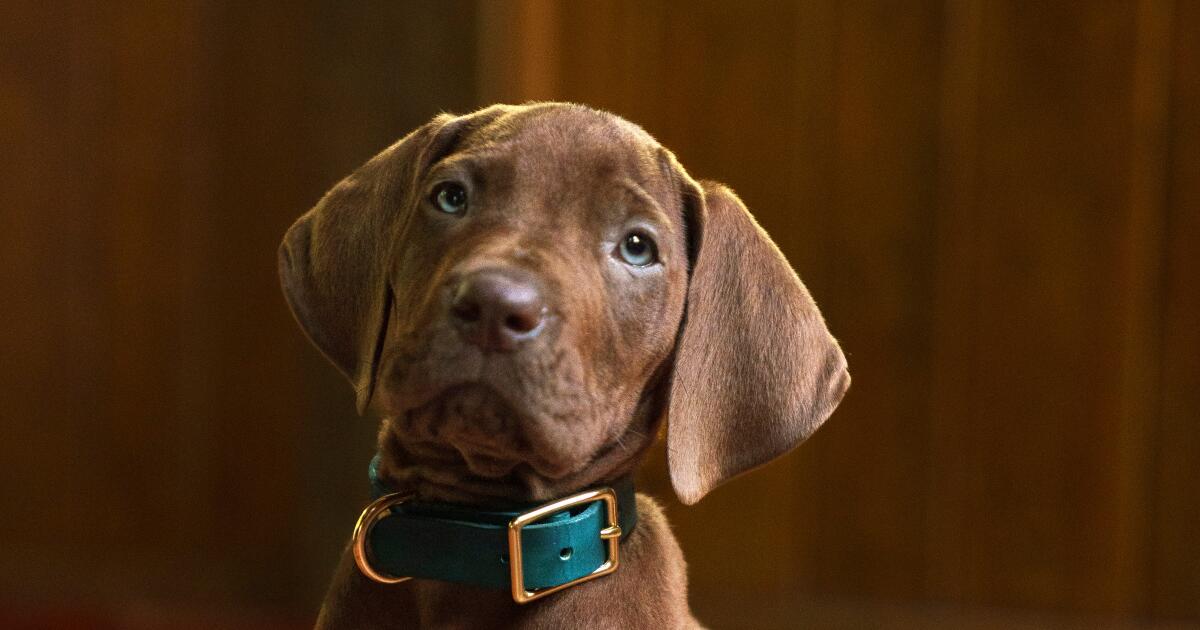
‘Scooby-Doo: Origins’ reveals its mystery-solving pup, and he’s a very good boy

