West
Survivors of polygamist cult reveal inner sanctum of murder, sweatshops, car theft rings

Survivors who endured decades of abuse and violence detailed their experience in a fundamentalist Mormon cult, headed by a polygamist nicknamed “The Mormon Manson,” that is credited with dozens of assassinations.
The Church of the First Born Lamb of God, headed in Chihuahua, Mexico and lead by self-styled prophet Ervil LeBaron, is dissected in full bloody detail in the Hulu documentary series “Daughters of the Cult.”
“It blows my mind. I sit and think, ‘This is impossible,’” Celia LeBaron, one of the cult leader’s daughters, said in the new documentary. “If I hadn’t lived through it, I don’t know if I could believe it. Our family was killing people because of our father.”
Another of LeBaron’s children interviewed in the series, Hyrum, told producers that he was unsure exactly how many siblings he had from his father’s side – collectively, they estimated approximately 50.
GYPSY ROSE SAID SHE DIDN’T WANT ABUSIVE MOTHER DEAD DESPITE HELPING KILL HER
“It blows my mind,” Celia LeBaron, one of the cult leader’s daughters, said in the new docuseries. “I sit and think, ‘This is impossible.’ If I hadn’t lived through it, I don’t know if I could believe it. Our family was killing people because of our father.” (ABC News Studios)
CLICK HERE FOR MORE TRUE CRIME FROM FOX NEWS
The Church of Jesus Christ of Latter-day Saints, widely known as the Mormon church and headquartered in Utah, abandoned polygamy in 1890.
In response, Alma Dayer LeBaron moved south of the border with his wives and children in 1924, NBC News reported. Ervil and his older brother broke free from their father’s community, attempting to join the Latter-day Saints.
But after they were excommunicated for practicing polygamy, the family started the Church of the First Born in response.
LeBaron, who would have 13 wives and at least 50 children, broke off to start his own church in the ’60s. Soon, he began targeting rival cult leaders, convincing his flock to do his bidding in exchange for admittance into heaven.
“We were taught to live in awe of him as God’s prophet, as the one true prophet on Earth,” Anna LeBaron, Ervil’s daughter, told BBC.
KENNEDY COUSIN MICHAEL SKAKEL SAYS COPS WITHHELD EVIDENCE IN 1975 MARTHA MOXLEY MURDER PROBE
Ervil LeBaron died of an apparent suicide in jail at 56 in 1981 – but his followers were implicated in more killings after his death. (Associated Press)
Blood atonement – an old Mormon doctrine that allowed sinners to be killed to cleanse them of evil – was used as reasoning for the killings, BBC reported. Leaders of the church refer to the practice as a “theoretical principle” that they do not implement in practice, according to the Deseret News.
LeBaron murdered his own brother for control of the group in 1972, according to the documentary – before he was sentenced to life in prison in 1980 in the death of rival sect leader Rulon Allred, he urged his followers to carry out numerous killings on his behalf.
Although LeBaron was arrested in Mexico for his brother’s killing two years later, his conviction was overturned as the result of a technicality – or, according to some interviewed in the five-part docuseries, a bribe.
His followers raided Los Molinos, an offshoot sect started by LeBaron’s younger brother, to kill the opposing cult leader – although they destroyed the town and killed two men, Verlan LeBaron was unscathed.
BRYAN KOHBERGER JUDGE OFFICIALLY DENIES FIRST REQUEST FOR TV CAMERAS IN COURT
Rulon Allred, a leader of competing Mormon sect the Apostolic United Bretheren, was killed by two of LeBaron’s followers in 1977. The two women broke into his Utah medical practice disguised in red wigs and shot him dead in an examination room. (Associated Press)
The cult would kill at least 25 people in Mexico, the Los Angeles Times reported.
Allred, a homeopath and chiropractor in Salt Lake City who had 48 wives, headed the Apostolic United Bretheren sect – on May 10, 1977, two women in disguises and red wigs broke into his practice and shot him dead on LeBaron’s orders, per reporting by Oxygen.com.
Police investigating the murder began to suspect that Allred’s religion was the motivation for his killing after pamphlets from the Church of the First Born Lamb of God telling readers to “repent or be destroyed” were distributed among Allred’s followers, Oxygen reported.
Two red wigs and a box containing a gun were found near the scene – investigators were able to trace that gun back to his youngest wife, Rena Chynoweth.
When LeBaron was arrested, his web of criminal activity – that spanned from the murders to sweatshops and car theft rings – began to unravel.
But even after his death at 56 years old of an apparent suicide 1981, his followers continued to kill in his name.
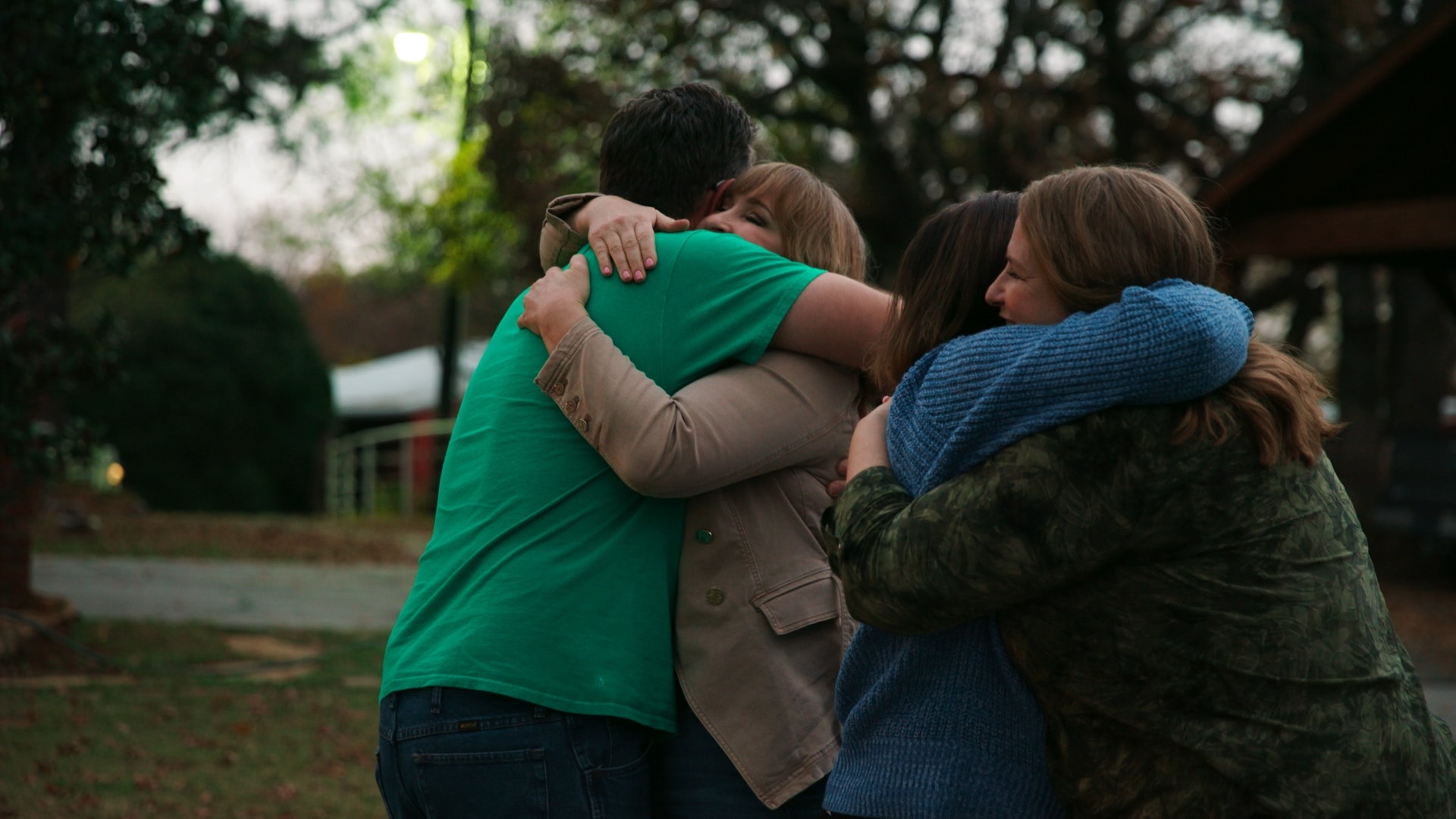
A group of LeBaron’s surviving children can be seen embracing in a still from the five-part docuseries. Although they are uncertain exactly how many siblings they have, LeBaron’s children estimated that there are about 50 to 55. (ABC News Studios)
Based on a screed written by the late LeBaron during his incarceration, his followers compiled a hit list of about 50 people, Oxygen reported.
Several members of the cult were arrested in the ‘80s and ’90s, according to VICE, and one was arrested in 2011 in connection to four Texas killings.
Nine members of LeBaron’s family in a convoy en route to a wedding were shot dead in 2019 by Mexican hitmen, VICE reported. The family had allegedly been speaking out against drug traffickers and advocating for looser gun controls to protect themselves against them.
Read the full article from Here


If you’ve driven Hana Highway recently, as we have, tried to wedge your rental car onto the shoulder at Honolua Bay, inched along North Shore behind an hours-long nonstop line of brake lights, or followed a social media pin taking you to Hoopii Falls, Hawaii just put those exact places into specific future plans.
The state updated plans naming specific beaches, roads, trails, and bays where visitor pressure is highest and outlining what officials say could change at each. The first round of these (DMAPs) leaned heavily on broader goals and community meetings. The latest version, however, now lists the individual sites and attaches proposed actions. These are among the most in-demand places people build into their trips, not some policy abstractions.
Before assuming your next trip will look dramatically different, one basic reality is worth noting. The Hawaii Tourism Authority does not manage the roads, trails, bays, or neighborhoods in question, so the counties, DLNR, Hawaiian Home Lands, and private landowners will be needed to carry out most of what has just been described. In almost every case, the first year at least is focused on more studies, coordination, and setting up of what might come next.

Maui: Hana and Honolua finally get specific plans.
Maui’s plan centers squarely on the iconic Hana Highway, with six of the island’s nine site-specific actions targeting that single corridor.
The ideas are relatively straightforward. Paid community stewards at high-traffic stops such as Keanae Peninsula, a first-of-its-kind Hawaii tour guide certification program requiring culturally accurate mo’olelo (storytelling), safety guidance, and place-based knowledge instead of loosely scripted commentary, together with clearer signage identifying safe and legal pullouts while reminding drivers to let residents pass instead of backing up traffic for visitor photo opportunities.
At Bamboo Forest off Hana Highway, the plan addresses repeated trespassing onto private land. There have been 35 rescues there over the past decade, most requiring use of emergency helicopters. The proposal calls for signage clearly indicating no access. But because that land is privately owned, any real restriction there depends on the owner’s full cooperation.
Honolua Bay carries perhaps the boldest concept of all in the statewide package of suggested changes, including a reservation and shuttle system to eliminate illegal roadside parking, a cultural trail staffed by stewards before visitors ever reach the water, and water stewards who will be paddling out to orient snorkel boat passengers. No procurement process has started, and no shuttle contract exists, so the idea remains on paper for now. Kaupo, where a recently paved road has attracted more traffic and complaints, would also get sensor-linked warning signs at blind hills to focus on driving safety.
Big Island: Kealakekua Bay may see closings.
Kealakekua Bay is the main headline site here, as might be expected. The draft introduces the possibility of “rest days” during coral spawning or other sensitive periods, coordinated by the DLNR, when the bay would be closed to visitors. It is still a concept and would require coordination beyond HTA.
At Keaukaha near Hilo, cruise ship impacts drive the conversation ideas, and the community has pushed for a permanent role in shaping how visitor flow is handled around the port. A steward program piloted in 2023 is now being formalized rather than remaining as a short-term experiment.
South Point, or Ka Lae, sits on Hawaiian Home Lands, so the state’s role here is to support the Department of Hawaiian Home Lands’ existing plan rather than create a new one from scratch. Hilo itself is described as needing more visitor activity even as other Big Island sites seek to manage crowding.

Oahu: North Shore, pillboxes, and parking reality.
On Oahu, it’s the iconic North Shore that anchors the plan. Five sequenced actions are listed, but the first year focuses on studies, coordination, and groundwork.
There is no shuttle system scheduled for immediate rollout and no reservation platform ready to launch. During the public webinar, officials said any fees would be site-specific and pointed to the extremely limited parking infrastructure as a major constraint.
Lanikai Pillboxes and Maili Pillbox are cited as trails that have seen steep increases in use due to social media exposure. Lanikai already has daytime parking restrictions on residential streets between 10 am and 4 pm, and Maili has experienced a recent fatality. The plan for Lanikai is to evaluate managed access, while for Maili, it begins with determining who is responsible for the trail and what authority exists in order to manage it.
Downtown Honolulu appears in the draft as a future walkable corridor linking Iolani Palace, Honolulu Hale, and nearby historic sites and shops.

Kauai: this waterfall became a neighborhood fight.
Hoopii Falls in Kapaa has become one of the most tense sites in the statewide plans. What was once a local waterfall became a high-traffic destination after intense social media exposure. The trail crosses private, lease, and state lands and is not formally maintained, and residents have placed rocks and tree stumps at neighborhood access points to slow or block visitor flow. The plan’s near-term focus is to gather more data and bring landowners together to clarify jurisdiction and what can legally be done before any formal access system is devised.
The Kapaa Crawl along Kuhio Highway is listed as a priority, but the proposed response, which is a shuttle and visitor hub concept centered on Coconut Marketplace, has no funding, no operator, and no timeline.
Kokee and Waimea Canyon are also included. Two of four proposed actions are already deferred beyond the first funding year, and the near-term steps focus has moved to installing visitor counters and studying whether a reservation system would be feasible.
What changes on your next trip.
Across all four islands, social media is repeatedly cited as a significant accelerant, turning lesser-known spots into must-see stops almost overnight. And in that regard, there is no end in sight.
There are no additional statewide fees attached to these newly identified sites, no disclosed budgets for even the most ambitious concepts, and HTA does not gain or lose any new enforcement authority through these drafts.
If you are visiting in the coming months, you are unlikely to encounter reservation systems at Honolua Bay, formalized rest-day closures at Kealakekua, shuttles operating on the North Shore, or state-managed access changes at Ho’opi’i. Most of what is described for year one is groundwork.
You can review the full island-by-island drafts here: https://www.hawaiitourismauthority.org/what-we-do/destination-management-action-plans/
Do these plans go far enough or too far at the sites you know best? Get Breaking Hawaii Travel News

Gov. Brad Little has signed House Bill 533, which would remove the need for license plate stickers on Idaho vehicles.
The legislation, introduced earlier this session by Rep. Jon Weber (R) of Boise, eliminates the requirement for registration stickers on Idaho license plates. Weber stated during the bills intorduction that officers can verify the status of license plates without the stickers, potentially saving the state around $300,000.
During the bill’s introduction, some lawmakers argued that it could increase the workload for law enforcement.
BE THE FIRST TO COMMENT
The new law is set to take effect in July.

The search for a new University of Montana president has drawn more than 60 applicants, according to a spokesperson for the Office of the Commissioner of Higher Education.
“We do not have an exact count at this time, as several applications are still being completed and additional submissions are expected,” said spokesperson and Deputy Commissioner Galen Hollenbaugh in an email earlier this week.
In January, then-UM-President Seth Bodnar announced his resignation to pursue other public service. Wednesday, the final day of filing, he announced he was running as an independent for the U.S. Senate to try to unseat Republican incumbent Steve Daines.
Commissioner of Higher Education Clayton Christian earlier said that with the advice of AGB Search, a firm that’s helped the Montana University System conduct other executive searches, he would undertake an expedited process to appoint a new president.
Christian has been providing brief updates on a website dedicated to the search. Last week, he said he and AGB Search are reviewing applications, and the pool of candidates was “strong and diverse.”
The commissioner also announced he was convening a small working group to assist in the search, members who “represent a variety of perspectives to assist in vetting and narrowing this field of exceptional candidates.”
In an email this week, Hollenbaugh identified the members of the working group who are assisting Christian with application review as:
- Community member and former Regent Joyce Dombrouski
- Faculty Senate Chairperson Valerie Moody
- Staff Senate President Dominic Beccari
- Administration Representative John DeBoer (Vice President of Academic Affairs)
- ASUM (Associated Students of the University of Montana) President Buddy Wilson
Hollenbaugh declined to comment on the way the rest of the process would unfold or the role the working group members would play.
Christian earlier said he anticipated an appointment within one to three months, or as soon as early this month.

Connecticut Launches New Era for Community Hospital Care – UConn Today

Some Delaware lawmakers question Education Department program cuts

Georgia Lt. Gov. candidate releases controversial ‘Sharia law’ video

The Places Visitors Love Most In Hawaii Just Hit Their Limit

Gov. Little signs bill ending license plate registration stickers in Idaho

Florida High School Football Rankings: Top 25 teams – Oct. 21

Cleary's 21 help Le Moyne down Central Connecticut State 69-64 in OT

How old is Bo Nix? What to know about Oregon quarterback ahead of 2024 NFL Draft

99th annual Pony Swim held in Virginia

Indiana Members Credit Union announced as new anchor tenant at Bottleworks District

US submarine sinks Iranian warship by torpedo in a first since World War II

Which oil and gas facilities in the Gulf have been attacked?

Mojtaba Khamenei, son of former supreme leader, tipped to become Iran’s next head of state

Video: Senators Question Kristi Noem on ICE Immigration Tactics

Combustible Republican Senate primary in Texas heading into overtime
-

 World7 days ago
Exclusive: DeepSeek withholds latest AI model from US chipmakers including Nvidia, sources say
-

 Massachusetts1 week ago
Mother and daughter injured in Taunton house explosion
-

 Denver, CO7 days ago
10 acres charred, 5 injured in Thornton grass fire, evacuation orders lifted
-

 Louisiana1 week ago
Wildfire near Gum Swamp Road in Livingston Parish now under control; more than 200 acres burned
-

 Florida4 days ago
Florida man rescued after being stuck in shoulder-deep mud for days
-

 Wisconsin3 days ago
Setting sail on iceboats across a frozen lake in Wisconsin
-

 Maryland4 days ago
AM showers Sunday in Maryland
-

 Oregon5 days ago
2026 OSAA Oregon Wrestling State Championship Results And Brackets – FloWrestling