
Connect with us

West

Strange laws in Nevada, including ones preventing state lotteries and swearing on the Strip

Published

on

Strange laws in Nevada, including ones preventing state lotteries and swearing on the Strip

Every state has perplexing laws on the books, including Nevada. 

With the world-renowned casinos and hotels of the Las Vegas Strip, it comes as no surprise that some of the state’s strangest laws revolve around gambling. 

Read on about unusual laws in the Silver State.

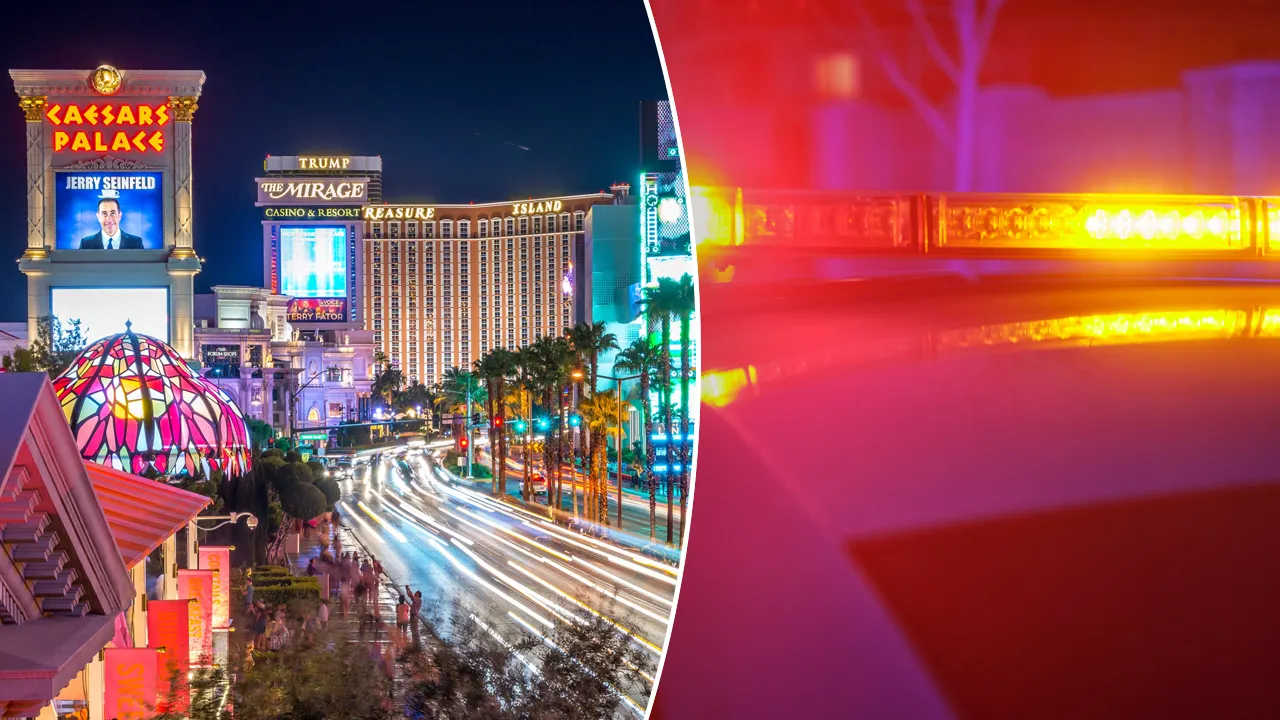
Nevada’s strangest laws include bans on hula-hooping and state lotteries. (iStock)

STRANGE LAWS IN NEW MEXICO, INCLUDING TROUBLE FOR TRIPPING A HORSE 

Advertisement
  1. No state lotteries
  2. Prohibited to pawn property from someone intoxicated
  3. Avoid swearing on the strip
  4. You can’t hula hoop on Fremont Street
  5. Rules of the road for funeral processions

1. No state lotteries

There are five states that don’t participate in state lotteries, and Nevada is one of them. 

The other states that don’t take part in the drawings are Alabama, Alaska, Hawaii and Utah. 

While you won’t be able to buy Powerball or Mega Millions tickets in Nevada, there are plenty of other ways to gamble in the Silver State. 

Nevada may not have state lotteries, but there are plenty of other ways to test your luck. (iStock)

WEIRD LAWS IN MASSACHUSETTS INCLUDING A $20 FINE, POSSIBLE JAIL TIME FOR FRIGHTENING A PIGEON

2. Prohibited to pawn property from someone intoxicated

Nevada is home to many pawn shops, with plenty of rules and regulations regarding sales. 

Advertisement

One law regards buying property from someone who is under the influence. 

According to Nevada Statute § 646.060, “a pawnbroker, and a clerk, agent or employee of a pawnbroker” cannot receive “property from a person under the age of 18 years, common drunkard, habitual user of controlled substances, habitual criminal, habitual felon, habitually fraudulent felon, person in an intoxicated condition, known thief or receiver of stolen property, or known associate of a thief or receiver of stolen property, whether the person is acting in his or her own behalf or as the agent of another.”

Those who break this law are guilty of a misdemeanor. 

3. Avoid swearing on the Strip

The Las Vegas Strip is full of delectable dining, plentiful shops, world-renowned entertainment, lavish hotels and casinos, and sometimes, foul language. 

City municipal ordinance 10.40.030 covers swearing while in the area. 

Advertisement

“The use of profane, vile or obscene language or words upon the public streets, alleys, or highway of the City is prohibited,” according to the law.  

Las Vegas technically has a law against swearing, though it is not one that’s enforced. (Joe Sohm/Visions of America/Universal Images Group via Getty Images)

WEIRD LAWS IN COLORADO, INCLUDING ONE AGAINST THROWING SNOWBALLS

If you do let a swear slip on the Strip, don’t worry. This law is not commonly enforced. 

4. You can’t hula-hoop on Fremont Street

On the historic Fremont Street in Las Vegas, there is plenty to do to keep you entertained late into the night, and also restrictions that may surprise you.

Advertisement

Don’t expect a hula-hooping contest on Fremont Street, as the recreational activity is one of many banned in the area.  

“The use of unicycles, bicycles and other types of cycles, skateboards, roller skates, in-line skates, hula hoops larger than four feet in diameter, and shopping carts, except as authorized by The Fremont Street Experience Limited Liability Company in connection with special events and mall entertainment,” according to Section 11.68.100 the Las Vegas Code of Ordinances. 

Hula-hooping is one of the many recreational activities not allowed by law on Fremont Street. (iStock)

5. Rules of the road for funeral processions

Nevada has a detailed section in state law regarding funeral processions. 

Advertisement

The “Rules of the Road” section of the state’s law covers rights that are granted to an individual driving an emergency vehicle, leading a funeral procession or driving a regulatory agency vehicle.

Included in this law is the right to run red lights after slowing down when necessary and exceeding the posted speed by 15 mph “to overtake the procession and direct traffic at the next intersection.” 

Additionally, those leading funeral processions or driving vehicles mentioned above can “disregard regulations governing direction of movement or turning in specified directions. The driver of a vehicle escorting a funeral procession may direct the movements of the vehicles in the procession in a similar manner and may direct the movements of other vehicles.” 

Read the full article from Here

Continue Reading
Click to comment

Leave a Reply

Your email address will not be published. Required fields are marked *

This site uses Akismet to reduce spam. Learn how your comment data is processed.

California

California gets Bruce Lee Day in a first for US state’s Chinese Americans

Published

on

California gets Bruce Lee Day in a first for US state’s Chinese Americans


Bruce Lee Day aims to honour the San Francisco-born martial arts legend as a cultural bridge and Asian-American icon.

Martial arts icon Bruce Lee will become the first Chinese American in California history to be honoured with an annual namesake day.

California Governor Gavin Newsom signed a law on Tuesday afternoon, officially designating May 17 as Bruce Lee Day.

Advertisement

Recommended Stories

list of 4 itemsend of list

Lee was born in San Francisco in 1940 and returned to the city on May 17, 1959, aged 18, after spending his childhood in Hong Kong.

His daughter, Shannon Lee, CEO of the Bruce Lee Foundation, said the honour reflects her father’s enduring legacy as a bridge between cultures.

“From young people who found confidence and possibility in his philosophy, to families who finally saw themselves represented on screen, to athletes who still draw on his teachings of discipline and inner strength, his reach is profound,” she said in a statement.

State Assembly member Matt Haney, who represents San Francisco, called Lee the “epitome of the best of California”.

“At a time when Asian Americans were too often absent from or stereotyped on screen, Bruce Lee helped generations see themselves represented with strength and dignity,” he said.

Advertisement

The Bruce Lee Foundation and Asian-American groups hope Bruce Lee will be celebrated each year with voluntary activities, including cultural exhibits, public events and classroom lessons.

Born to Chinese parents touring the US with an opera, Lee held birthright citizenship. He moved to Hong Kong as an infant, became a child actor, and studied Chinese kung fu before returning to the US in 1959.

He enrolled at the University of Washington in Seattle in 1961, but dropped out to teach martial arts.

In the 1960s, Lee appeared in Hollywood, most notably as Kato in the TV series The Green Hornet, but said studios typecast him in racist roles and paid him less than white actors.

He returned to Hong Kong and starred in martial arts films, including The Big Boss and Fist of Fury.

Advertisement

Lee died tragically in 1973 at the age of 32 after an allergic reaction to pain medication.

His name and likeness remain widely popular.

Fans gather on his birthday, and a treatment he wrote for a television series inspired the HBO Max show “Warrior”.


Source link

Advertisement
Continue Reading

Colorado

Colorado governor fires two clemency board members who spoke out about Tina Peters’ commutation | CNN Politics

Published

on

Colorado governor fires two clemency board members who spoke out about Tina Peters’ commutation | CNN Politics


Colorado Gov. Jared Polis on Wednesday fired two members of the state’s clemency board after they spoke out against his controversial decision to grant clemency to Tina Peters – an election denier whose sentence was cut in half by the outgoing Democratic governor in May.

Azra Taslimi and Hannah Seigel Proff told CNN they were fired after speaking out publicly, including in a New York Times article in June, in which they revealed secret details about the clemency process and criticized the governor for overruling the board. They told the Times the clemency board twice voted unanimously behind closed doors to reject Peters’ application for an early release from prison.

Polis’ decision in May to release Peters came after President Donald Trump waged a long pressure campaign against Colorado to free her. Peters – who was released from prison in June – was the last Trump ally still in prison for 2020 election-related crimes.

In letters to Taslimi and Proff obtained by CNN, Polis said the two members breached confidentiality by speaking out.

Advertisement

“Specifically, you breached the required duty of confidentiality by publicly divulging Board members’ votes pertaining to a clemency application which you obtained only through your official position on this Board,” Polis wrote in the letters.

The two women told CNN they are disappointed they were fired — but not surprised.

“I’m not upset that he overrode our decision. I think what’s upsetting is that we understand why he did it, which is that you know Tina Peters had a powerful ally behind her,” Taslimi said. “She had political pressure applied in her name, and the governor capitulated to it, and that is what makes this unfair, and that is why I call it selective mercy, because you are giving her the benefit that you don’t give or apply to anyone else.”

Eric Maruyama, a spokesperson for the governor, told CNN in a statement Wednesday, “Publicly disclosing board recommendations and how members vote on any case threatens the credibility of the board, colors future deliberations by the board and breaks clearly stated confidentiality policy articulated in the Executive Order which establishes this board.”

Proff, who served on the board for nearly eight years, said she understood the state rules around the closed-door clemency recommendation process “more as the confidentiality to protect the people who apply for clemency, not to protect the governor.”

Advertisement

The governor primarily justified his decision to release Peters by citing a recent Colorado appeals court ruling that found the trial judge violated Peters’ First Amendment rights by improperly punishing her for her protected speech about the 2020 election.

“It was a straightforward decision because, after reviewing the facts, and reading the Appeals Court decision, I concluded that her sentence was simply too long,” Polis wrote in a Substack post, where he condemned Peters’ crimes.

Now that they’ve been terminated, Proff worries there will be less transparency.

“I worry now that we’ve been terminated from the board what comes of this is that people are less likely to speak out … that politicians will go unchecked on these sort of decisions,” Proff said.

Advertisement


Source link

Continue Reading

Hawaii

BBC Audio | Witness History | Hawaii becomes the 50th American state

Published

on

BBC Audio | Witness History | Hawaii becomes the 50th American state


On 18 March 1959, Hawaii was brought into the United States of America as the 50th state with the passing of the Hawaiian Admission act.

Five months later, on 21 August it was officially proclaimed the 50th state by President Eisenhower.

Former governor of Hawaii, John Waihe’e, tells Jen Dale his memories of statehood and why Hawaii’s history with America means it has become a divisive issue.

Eye-witness accounts brought to life by archive. Witness History is for those fascinated by and curious about the past. We take you to the events that have shaped our world through the eyes of the people who were there.

Advertisement

For nine minutes every day, we take you back in time and all over the world, to examine wars, coups, scientific discoveries, cultural moments and much more.

Recent episodes explore everything from how the Excel spreadsheet was developed, the creation of cartoon rabbit Miffy and how the sound barrier was broken.

We look at the lives of some of the most famous leaders, artists, scientists and personalities in history, including: the moment Reagan and Gorbachev met in Geneva, Haitian singer Emerante de Pradines’ life and Omar Sharif’s legendary movie entrance in Lawrence of Arabia.

You can learn all about fascinating and surprising stories, like the invention of a stent which has saved lives around the world; the birth of the G7; and the meeting of Maldives’ ministers underwater. We cover everything from World War Two and Cold War stories to Black History Month and our journeys into space.

(Photo: President Eisenhower signs the proclamation admitting Hawaii as the 50th state. Credit: Getty/Bettmann)

Advertisement


Source link

Continue Reading
Advertisement

Trending
