Seattle, WA
VIDEO: Scream Club Seattle keeps growing, midway through first year


(Story originally posted 8:22 pm, updated 12:32 am)
By Torin Record-Sand
Reporting for West Seattle Blog
From a distance, they looked like a regular crowd of people enjoying a nice evening walk on the shores of Lincoln Park. But they were gathered here for a singular purpose: to scream. Since September 2025, the Scream Club Seattle has met at Lincoln Park on every third Sunday to scream, led by head organizer Amber Walcker. No explanation, justification, or invitation to scream is needed – come as you are. “There are some harder emotions people come here to deal with, sure, but some people also just come to scream.” head organizer Amber explained.
Tonight’s crowd showed the club is rapidly growing. From around a dozen or so participants in the first gathering in September, tonight seemed to attract around 40 people gathering to let it all out.
As the sun started to set, and everyone was finally gathered together, the Scream Club was ready to begin.
There are only three screams, organizer Amber explained. The first, she said, is a scream to get used to doing it in public. The second scream is there to ground you. And the final – and longest scream – is there to let you have an emotional catharsis.
She also wanted to make sure people were taking care of their vocal health beforehand. As she told everyone to walk a little bit from the meeting place and start to gather near the shore, she instructed the crowd to hum for a few minutes on the way, to warm up the vocal cords.
With that, the crowd walked towards the shore.
“On the count of one – two – three – scream!” said organizer Amber.
You can see our video of the proceedings here. After the screaming, we talked to a few participants about why they came out.
“There’s not one thing that’s really making me want to scream. There’s a lot of stuff going on for me, a lot of emotional ups and downs. Screaming into the ocean together gives you a sense of community.” said Jessie.
“This is my third or fourth time coming to scream. With the political climate, with everything that’s happening, getting together with local community to scream feels more productive than screaming into the internet on social media.” said Ursula.
“This is my first time coming out.” said Liz. “I screamed after the Seahawks won the Super Bowl, and I really felt something. I realized I’ve been feeling a lot of frustration recently, and it felt like coming here was a healthy way to get it out rather than screaming at your neighbors.”
Organizer Amber recognizes much of what they were saying. “Meeting like this can be an important element to have in your mental health toolbox. It’s rare to have scream therapy.” She shared an anecdote about the therapeutic origins of the group, which originally started with a chapter in Chicago. “The founder was a life coach. Their girlfriend was having a bad day, and they encouraged them to go to the Chicago Pier and just let it out. He walked her through the process, and that was that. Eventually they invited more people to come do it.” She hopes to bring that same therapeutic energy to the practice here. “It’s a moment of emotional release more than anything else. Depending on what’s going on in people’s minds, everyone will come here with a different mindset and purpose. We’re providing a safe space to do that.”
Scream Club Seattle meets at Lincoln Park on the first Sunday of every month, and they are also starting to meet on the third Sunday of every month at Golden Gardens in Ballard. Tentatively, the next events will be in Lincoln Park on April 5th around 6 PM, and Golden Gardens on March 15th around 5 PM. If you’d like to know more, you can find them on Instagram here or look at their future events on their Eventbrite page here.


PHOTOS BY OLIVER HAMLIN FOR WEST SEATTLE BLOG
Hundreds of people spent Sunday admiring and photographing the 12 gardens spotlighted on this year’s West Seattle Garden Tour. Among them was WSB contributing photojournalist Oliver Hamlin, who presents a scene from each garden (including some of the gardeners. First, at Garden A, “A Show of Northwest Natives“:
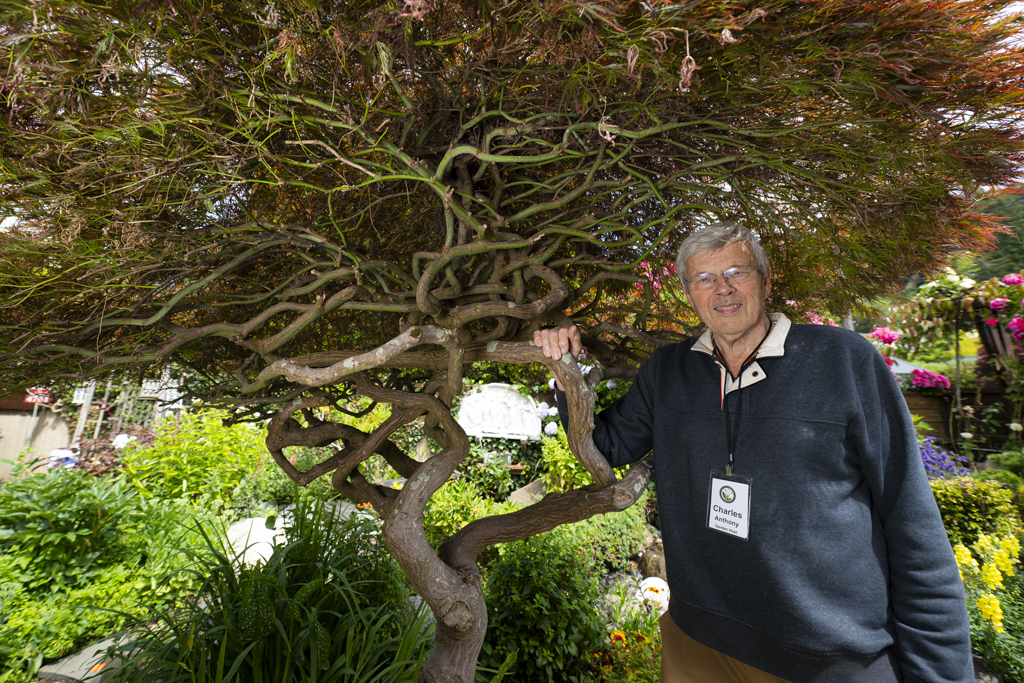
Charles Anthony, who created Garden B, “Salish Sea Sanctuary,” posed with his Japanese Maple:
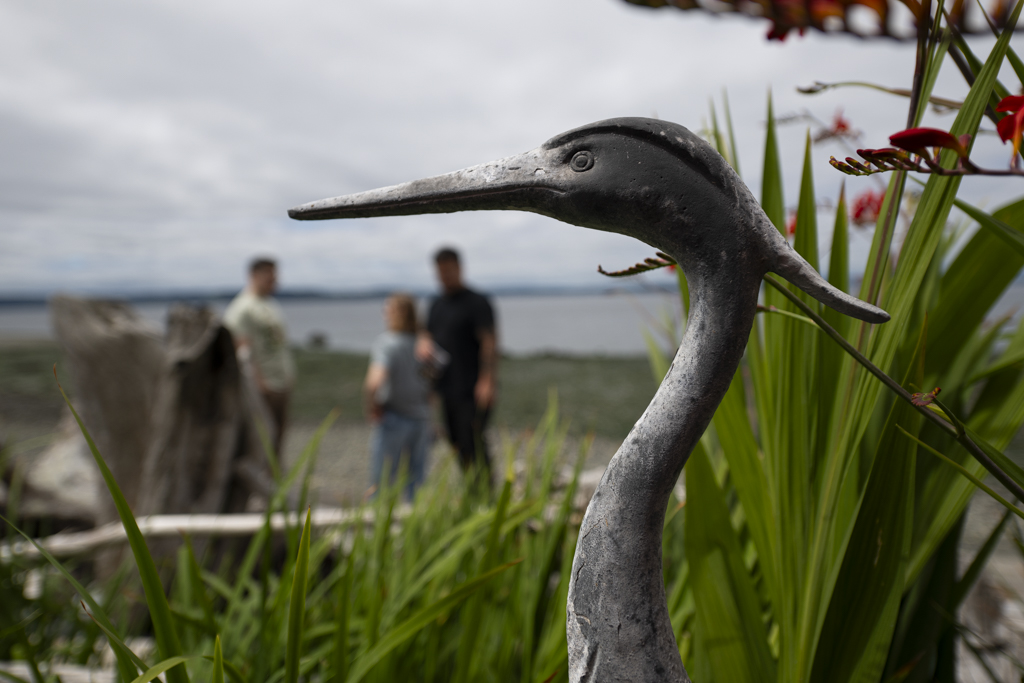
Garden C, “Heron Cove,” has its namesake standing sentinel:
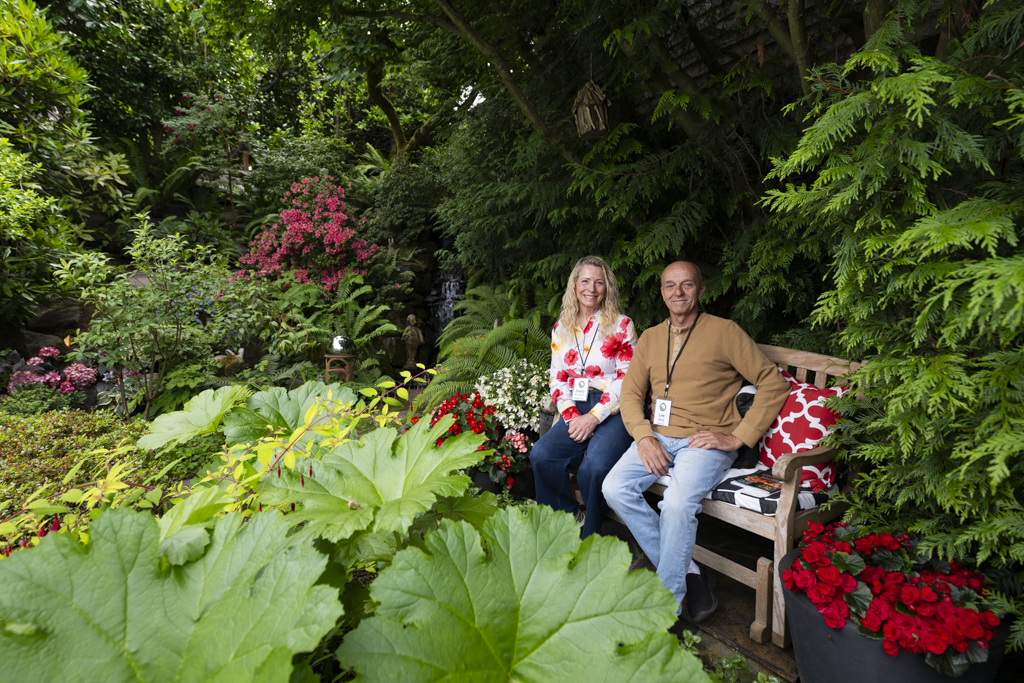
Below are Debra Montgomery and Lee Kelly; she bought the “Heron Cove” house 7 years ago and inherited Lee, who has been the gardener for 40 years. She said the previous homeowners sought out a buyer who wouldn’t tear down the house and would keep caring for the garden, which she and Lee both now do.
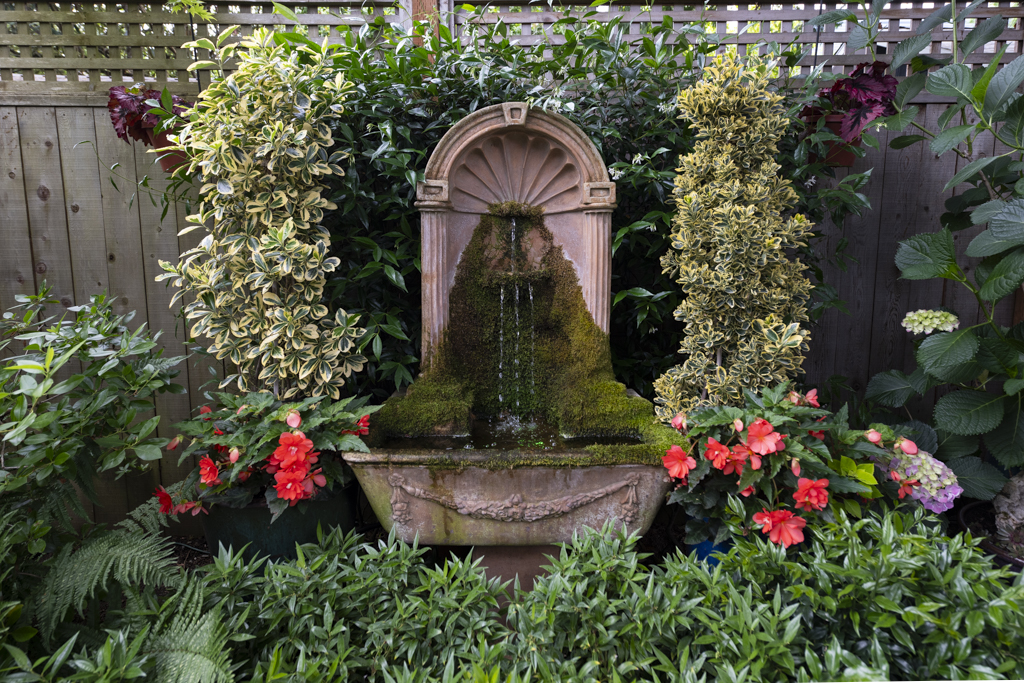
Garden D was described as “Small Spaces, Big Moments”:
Below (L-R) are the gardeners behind Garden D, Laird Applegate and Brian Pelzel:
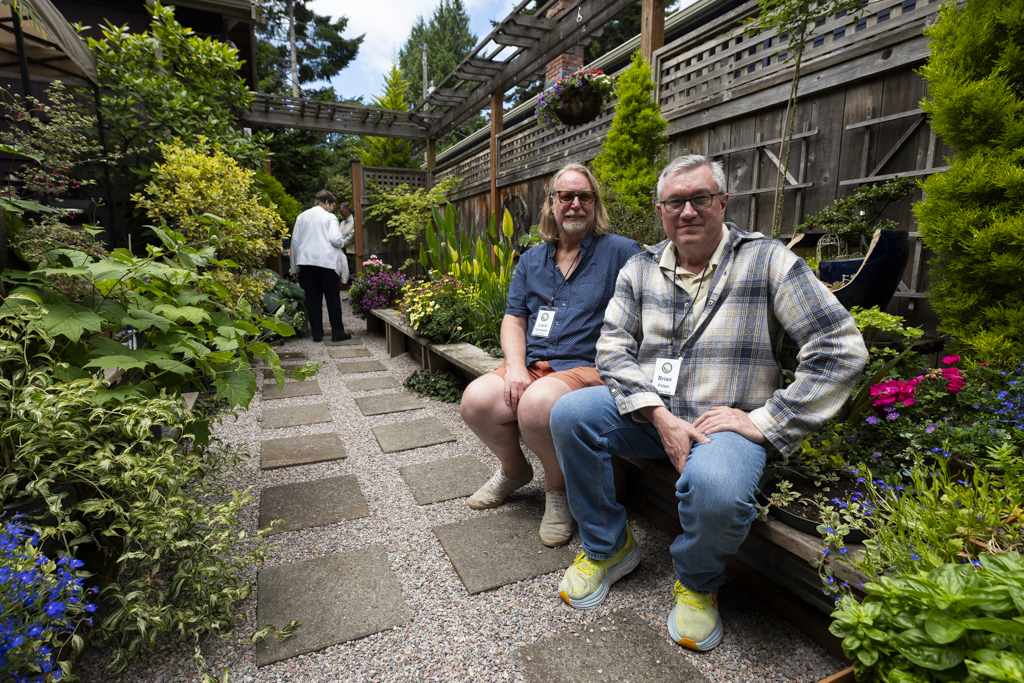
Garden E was “From a Sprawling Lawn and One Tree to …”
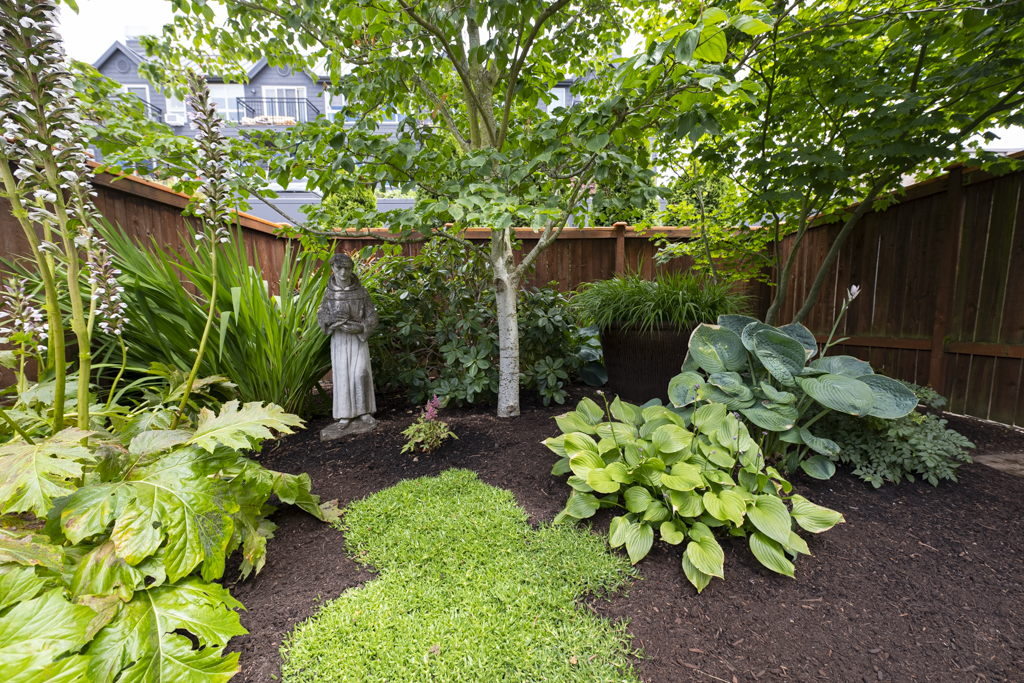
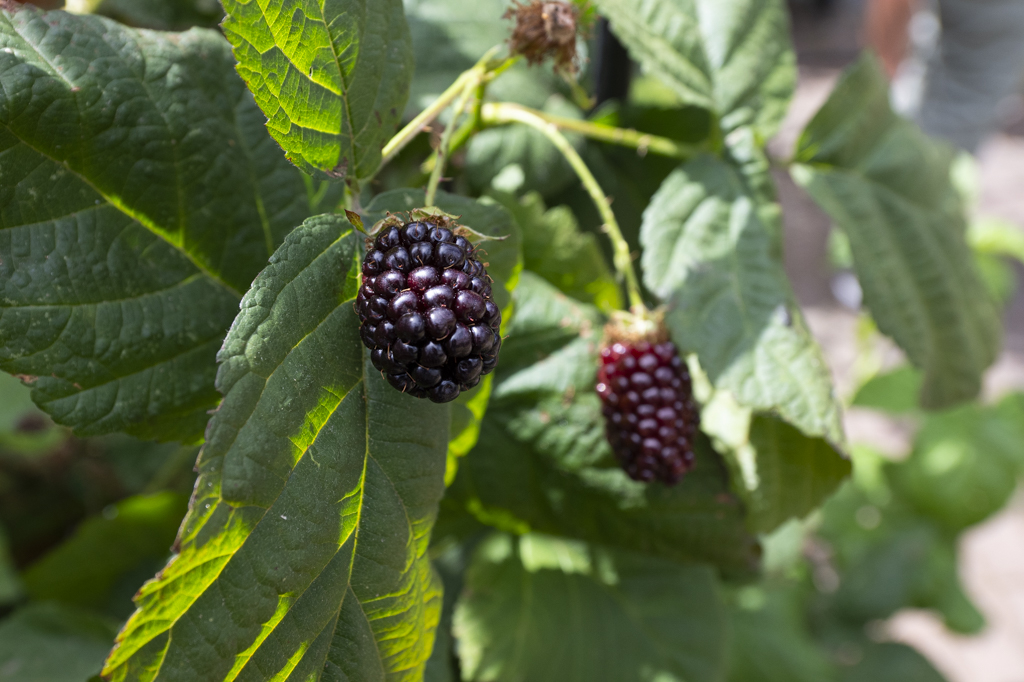
Blackberries are often the bane of a gardener’s existence, but in Garden F, “Transformation,” they were beautiful:
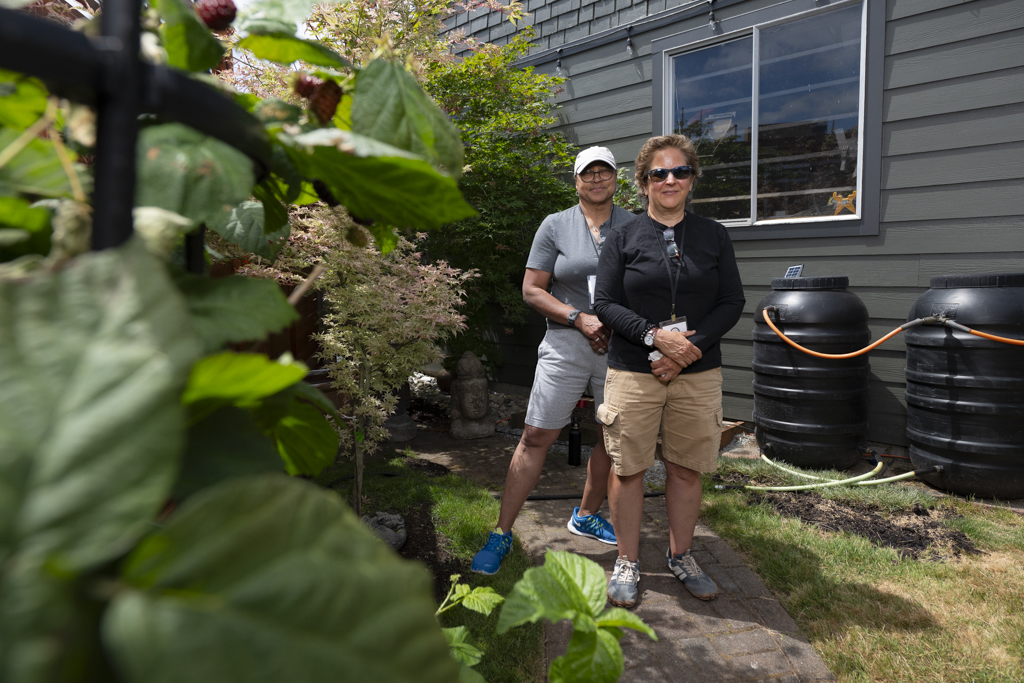
Garden F’s (L-R) Diane Elie and Raquel Gonzalez store water in 60-gallon rainbarrels and told Oliver that it fills most of their irrigation needs:
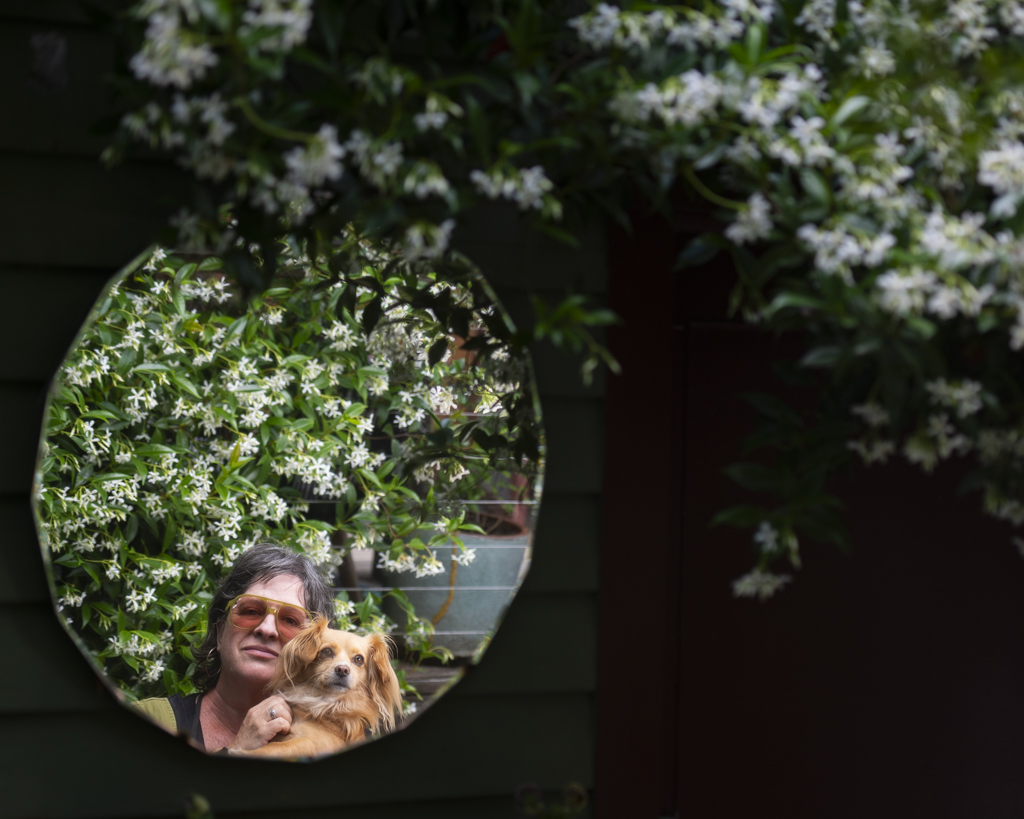
At Garden G, “Hidden Gem,” Julie Robinson-Jasper and Maple the dog are seen through a mirror surrounded by star jasmine at Garden G, “Hidden Gem”:
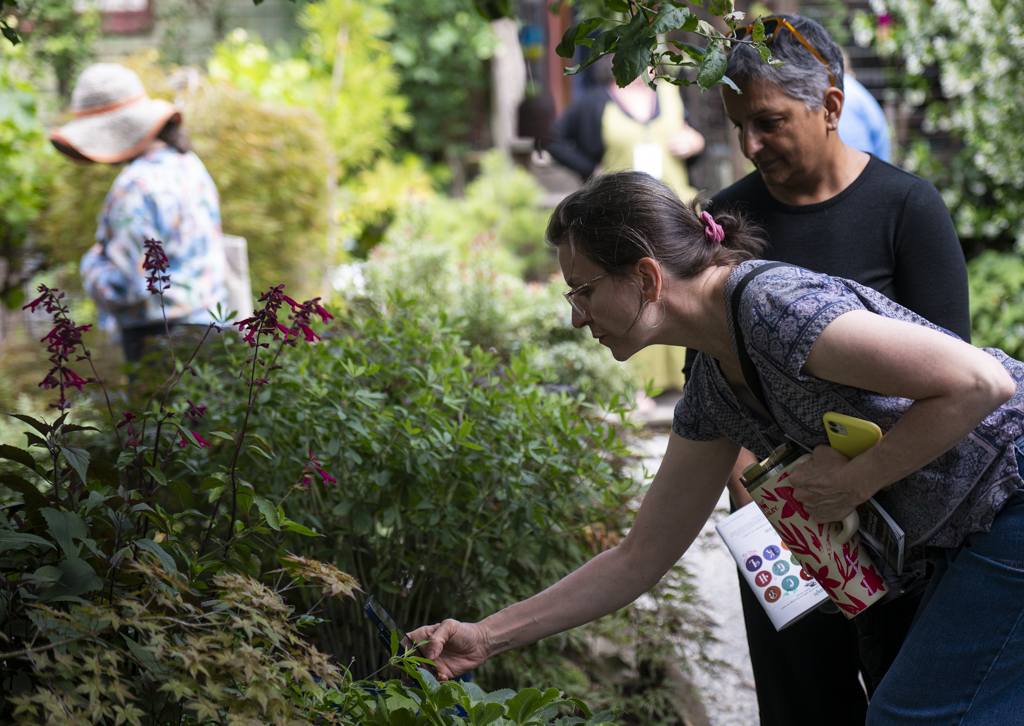
Another scene from Garden G:
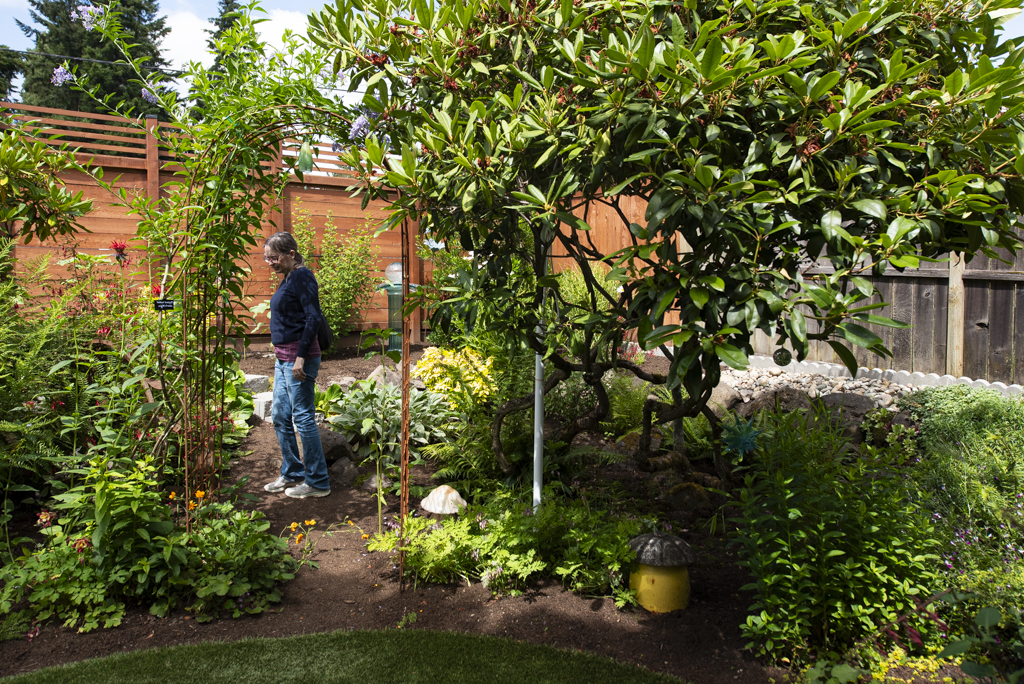
Garden H, “Behind the Fences,” sported an arch of bittersweet nightshade:
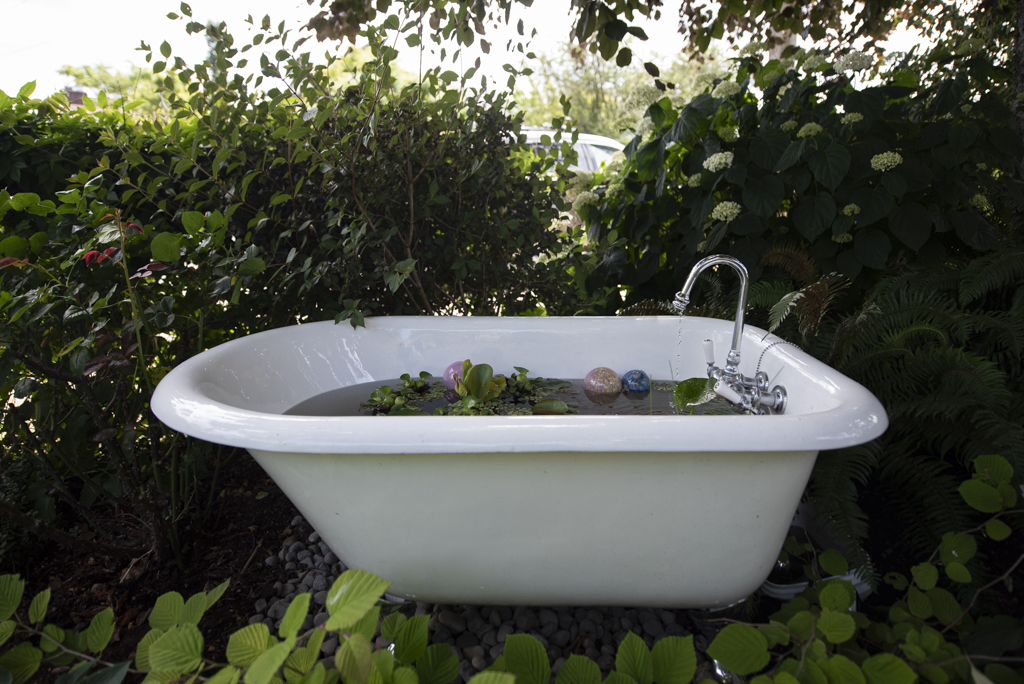
A clawfoot bathtub graced Garden I, “A Fresh Look for A Once-Beloved Garden“:
Garden J, “Garden of Many Rooms,” was conducive to wandering:
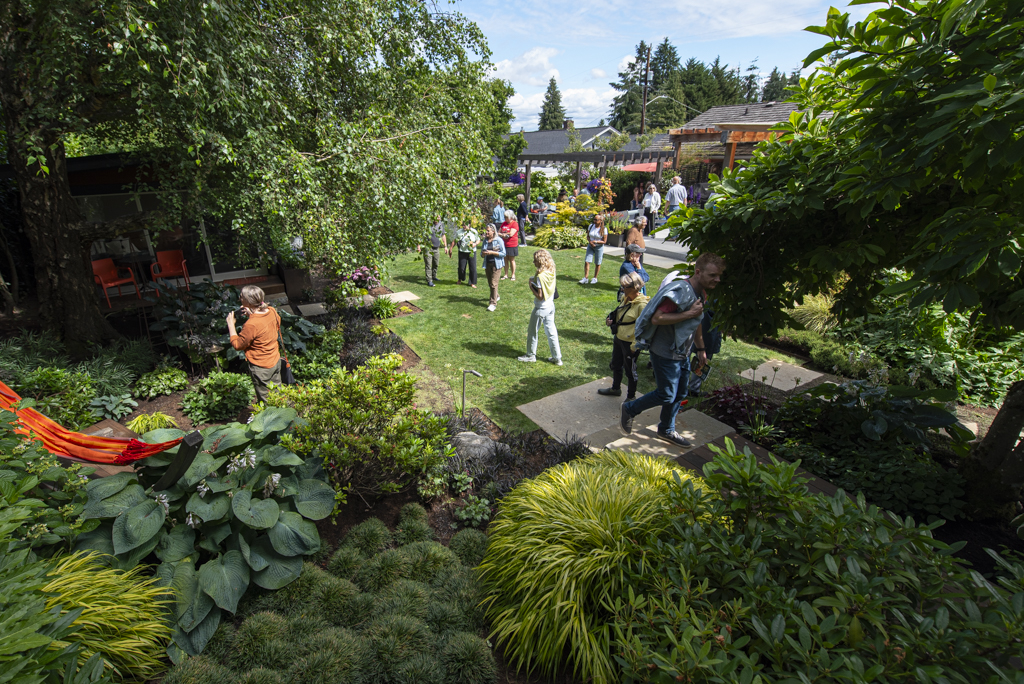
Garden K offered onlookers “Plants from Around the World“:
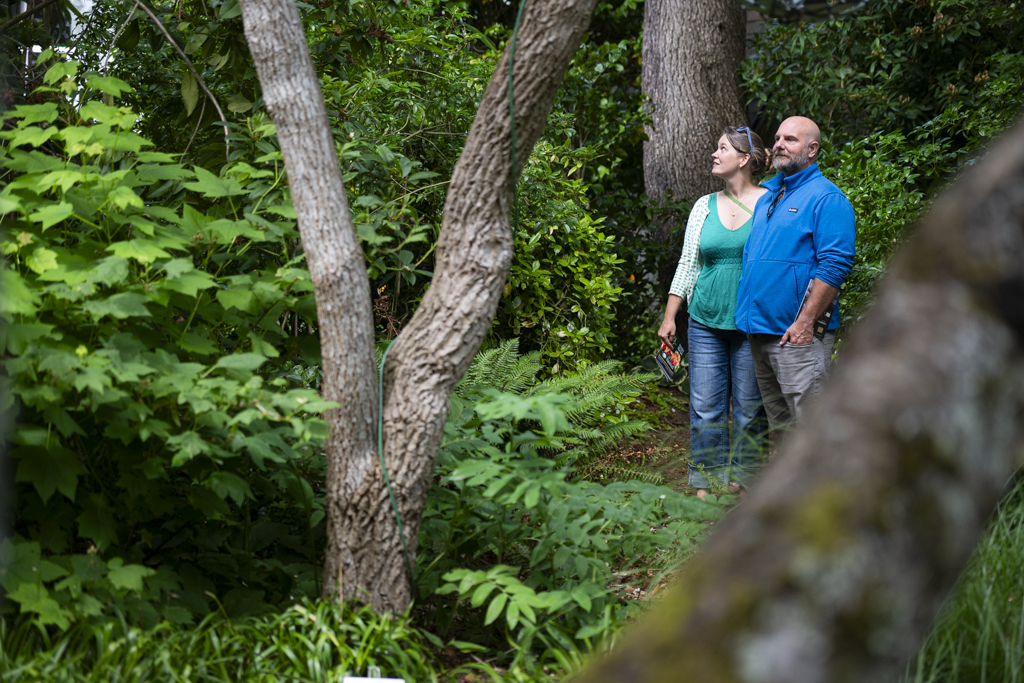
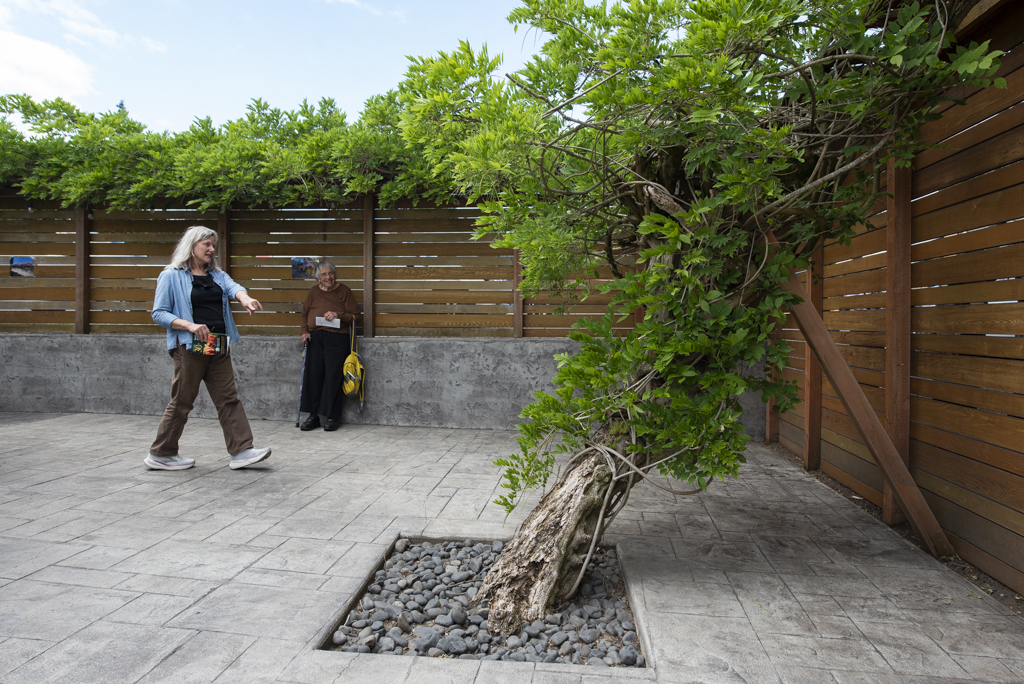
And Garden L, “Conifer Corner,” featured a 75-year-old wisteria:
(Read details of each garden here.) The West Seattle Garden Tour is organized by a nonprofit that uses the proceeds to support other nonprofits – here are this year’s grant recipients; see how to apply for one of next year’s grants by going here (July 15 is the deadline).

Three robberies occurred within 30 minutes of each other on Friday in Seattle, with law enforcement believing they were connected due to the timing, proximity, and similar descriptions of the suspects.
The first of three robberies began at 4:30 a.m. in the 200 block of Highland Drive near Kerry Park, when the Seattle Police Department (SPD) received reports of two men pointing guns at a man, SPD told KIRO Newsradio.
As officers arrived on scene, they located a 32-year-old man. The victim was sitting in his car when two suspects parked their car beside his and approached him with guns. The suspects ordered the victim to exit his vehicle and give them his necklace.
The victim claimed he had nothing of value, and the suspects ultimately fled in a dark sedan, possibly west on W. Highland Drive. The suspects were described as Black males, possibly in their late teens to 20s. Each suspect wore a mask and gloves, but the victim could not accurately recall what the suspects were wearing.
Second Seattle robbery came minutes after the first, this time at a store
Two minutes later, at 4:32 a.m., dispatch received a report of a robbery at a convenience store in the 1600 block of Queen Anne Avenue N. At the scene, officers made contact with a 25-year-old man.
The victims stated that two suspects entered the store, threatened them, and took money from two of the cash register drawers.
Soon after, the suspects fled the scene in a dark colored sedan. One suspect was described as a Black male in his 20s, roughly 6 feet, 2 inches tall with a medium build, wearing a mask, gloves, and dark-colored clothing. The second suspect was described as a Black male, 6 feet tall, with a medium build, wearing a mask, gloves, and dark-colored clothing.
Final robbery targeted a Beacon Hill convenience store with two victims
At 4:51 a.m., dispatch received a third report of a robbery, this time at a convenience store in the 4800 block of Beacon Avenue S.
Officers arrived and made contact with two victims, a 55-year-old man and a 24-year-old man. The SPD investigation revealed that one of the victims was in the cooler and the other was behind the counter when the two suspects first entered the store.
The victim in the cooler exited to see what was happening, then shut the door to the employee area and stayed there until it was safe to come out.
The 24-year-old victim was behind the counter when the suspect pointed a firearm at him. The suspect forced the victim to open the cash register and took the cash while the other suspect stood by the main entry door with a handgun.
Both suspects exited the store and fled the scene in an unknown direction. The first suspect was described as a Hispanic or Black male in his 20s, with a medium build, wearing a mask, gloves, and dark clothing. The second suspect was described as a Hispanic or Black male in his 20s, wearing a mask and gloves, with light colored pants and dark shoes.
No victims reported injuries as a result of each of the three robberies, and no suspects have been apprehended as of this reporting.
SPD’s Robbery Unit has been assigned to each case.
Anyone with information is urged to contact SPD’s Violent Crimes Tip Line at (206) 233-5000.
Follow Jason Sutich on X. Send news tips here.


The Mariners have made the first move in what’s sure to be a rip-roaring Trade Deadline season, acquiring INF Buddy Kennedy from the Giants in exchange for cash considerations.
Kennedy was designated for assignment by San Francisco earlier this morning as outfielder Heliot Ramos returned from the Injured List.
Advertisement
The 5’10” infielder has spent most of the season with Triple-A Sacramento, hitting well, even for the PCL. He’s in the 78th percentile for xWOBA, has a nearly identical K% and BB% (12.6%/12.1%) and rarely whiffs. This all has come out to a .322 batting average and a 152 wRC+. He’s made just a minimal impression in the bigs this season, with 8 plate appearances in 7 games, and zero hits.
Kennedy is likely to head to Tacoma. He can play 3B and 2B in a pinch, and will likely backfill Patrick Wisdom’s role if Wisdom is called up to take over right-handed pinch hitting duties from the currently-employed Rob Refsnyder.
The 27-year-old has not found much traction in the five years since his debut with Arizona in 2022. He’s amassed less than 200 plate appearances across 74 games, with a career 50 wRC+. On the mound, Kennedy has made one appearance this season, pitching one inning and giving up four runs, all earned.
-

 Washington54 seconds ago
America 250 could bring major tourism boost to Washington, DC
-
 West Virginia6 minutes ago
Across West Virginia, public schools are closing. Communities are feeling the loss.
-

 Wisconsin8 minutes ago
What did prized Wisconsin commit Baboucarr Ann average in 2025-26?
-

 Wyoming16 minutes ago
‘Not just coloring tipis,’ experts debate quality of Indian education in Wyoming schools – WyoFile
-

 Crypto23 minutes ago
Japanese Yen Sinks to 162.27, Its Weakest Since 1986, Reviving Intervention Bets
-

 Finance25 minutes ago
World Bank drops climate finance target amid US pressure
-

 Fitness31 minutes ago
Fitness Point: The Small Weekly Investment That Could Transform Your Health – KT PRESS
-

 Movie Reviews41 minutes ago
Movie Review – Minions & Monsters (2026)

