Seattle, WA
This Week in Seahawks History: The Percy Harvin experiment is over


This will be a weekly article series throughout the season looking back on what happened for the Seattle Seahawks 40, 30, 20, and 10 years ago this week.
There’s a pretty ugly 1-3 record with a bad 4th Quarter collapse in 2004 and a failed comeback attempt in 2014 to discuss. Thankfully, we can start out with a win in 1984.
40 Years Ago
Sunday, October 14, 1984
Game Log
Up first is a home game for the Seahawks against the undefeated Buffalo Bills. It got a little hairy, yet they managed to pull it out in the end.
The 1st Quarter went the way of the Seahawks with 17 unanswered points. Dave Krieg started off hot finding Daryl Turner for a 4-yard TD and Steve Largent for a 10-yard TD to put Seattle ahead 14-0. Norm Johnson added a 25-yard FG for the 17-0 lead. Then, the Bills took over in the 2nd Quarter with 14 straight points of their own with none of them coming from their offense. Lucius Sanford returned a fumble 46 yards for the defensive score and then Don Wilson had a 65-yard punt return TD to make the score 17-14 Seahawks at the half.
Seattle extended their lead to 24-14 in the 3rd Quarter on a 1-yard rushing TD by Eric Lane. Buffalo came right back with a 50-yard TD pass from Joe Ferguson to Byron Franklin to pull Buffalo within a FG at 24-21. The Bills then took the 28-24 lead on a 3-yard pass from Joe Ferguson to Preston Dennard in the 4th Quarter. Seattle stormed back and regained the advantage at 31-28 on a Largent’s 2nd receiving TD of the game, this one a 51-yarder from Dave Krieg to keep the Bills winless.
After a rough passing day last week, it was the running game’s turn to have a poor day with just 41 yards on 22 carries. Dave Krieg was 17/29 for 231 yards, 3 TD, 2 INT. Eric Lane was the leading rusher with 6 carries for 21 yards and 1 TD. Steve Largent had 5 catches for 106 yards and 2 TD.
Dave Brown and Terry Jackson each had 1 INT. Mike Fanning had 1.0 sack.
30 Years Ago
Sunday, October 9, 1994
:no_upscale()/cdn.vox-cdn.com/uploads/chorus_asset/file/25663741/10_8_2.png)
Game Log
Similar to the game above, Seattle was facing a winless team in the 1994 Denver Broncos. This time, however, the Broncos and Wade Phillips got their first victory of the season.
What a game for the kicker aficionados. Jason Elam notched the only points of the 1st Quarter with a 26-yard FG to give Denver the 3-0 lead. John Kasay tied it at 3-3 with a 37-yard FG for the Seahawks in the 2nd Quarter. John Elway put the Broncos ahead 10-3 at halftime with a 2-yard rushing TD.
John Kasay kicked a 36-yard FG in the 3rd Quarter to make the score 10-6. Then, Jason Elam nailed 2 FGs from 33 and 37 yards to put Denver up 16-6. John Kasay pulled the Seahawks within 1 score in the 4th Quarter with a 42-yard FG but Seattle could get no closer as the Broncos won 16-9.
Seattle shot themselves in the foot with 5 turnovers. Rick Mirer was 19/39 for 244 yards, 0 TD, 2 INT. Chris Warren had 18 carries for 80 yards. Brian Blades had 6 catches for 90 yards.
Sam Adams and Bob Spitulski each had 1.0 sack in the defeat.
20 Years Ago
Sunday, October 10, 2004
:no_upscale()/cdn.vox-cdn.com/uploads/chorus_asset/file/25663745/10_8_3.png)
Game Log
If you remember the 2004 season, the St. Louis Rams were a major thorn in the side for the Seahawks. This game is the first instance of that.
It started off well for Seattle, though. Shaun Alexander scored on a 1-yard rushing TD as the Seahawks took a 7-0 lead. Josh Brown added 3 points on a 48-yard FG shortly into the 2nd Quarter to give the Seahawks a 10-0 lead. Marc Bulger put the Rams on the board with a 9-yard rushing TD to make the score 10-7. Seattle answered back with a 24-yard passing TD from Matt Hasselbeck to Jerramy Stevens to go ahead 17-7. Hasselbeck threw another TD just before halftime – this one an explosive 56-yarder to Darrell Jackson – to give the Seahawks a 24-7 lead at the break.
The 3rd Quarter was nearly over before Jeff Wilkins hit a 39-yard FG to cut Seattle’s lead to 14 points at 24-10. Josh Brown put the Seahawks back up by 3 scores with a 34-yard FG with 8:42 left in the game. Seems like a pretty safe lead, right?
Wrong.
St. Louis marched right down the field and Brandon Manumaleuna caught an 8-yard TD pass from Bulger to pull the Rams closer at 27-17. Seattle’s offense went 3-and-out giving the ball back to Bulger. On the first play of the ensuing drive, he found Kevin Curtis for a 41-yard TD as the Rams were within a FG at 27-24 with 3:37 left in the game. The Seahawks got a quick first down and then stalled, punting the ball back to St. Louis with a little over 1 minute remaining. The Rams had used all their timeouts but that didn’t matter to Bulger who got them within FG range easily and Wilkins kicked the game tying FG with 13 seconds left to send the game to OT at 27-27.
The Rams won the toss and drove to midfield with a few timely 1st downs. On 3rd and 8 from the STL 48, Bulger ended the game on a 52-yard game-winning TD pass to Shaun McDonald to send the Seahawks into the showers with a bitter 33-27 OT loss.
Matt Hasselbeck was 20/35 for 216 yards, 2 TD, 0 INT. Shaun Alexander had a strong game with 150 yards on 23 carries and 1 TD. Darrell Jackson had 5 catches for 91 yards and 1 TD.
Ken Lucas had 2 INT. Marcus Trufant added 1 INT. Chike Okeafor recorded 2.0 sacks.
10 Years Ago
Sunday, October 12, 2014
:no_upscale()/cdn.vox-cdn.com/uploads/chorus_asset/file/25663748/10_8_4.png)
Game Log
Ugh, I remember this game against the Dallas Cowboys. It was the year when DeMarco Murray was going absolutely nuts. Granted, Dallas ran him into the ground with 392 carries, but they got their use out of him before he hit free agency.
Seattle scored first with a 33-yard FG by Stephen Hauschka to go ahead 3-0. The Seahawks defense held and forced a punt on the Cowboys first drive. Angry Doug Baldwin blocked the punt and Mike Morgan returned it 25 yards for a special teams TD and the 10-0 lead. It seemed like one of those games where the Seahawks would roll.
“Hold your horses,” said the Cowboys.
Dallas scored 17 consecutive points to pull ahead. First, Gavin Escobar caught a 2-yard TD pass from Tony Romo. Then, Dan Bailey hit a 42-yard FG in the 2nd Quarter to tie the game at 10-10. Finally, Romo threw a 3-yard TD pass to Jason Witten with 16 seconds left before the half to give the Cowboys a 17-10 lead.
The Seahawks tied it up at 17-17 in the 3rd Quarter on a 9-yard rushing TD by Russell Wilson. They went ahead 20-17 on another 33-yard FG from Hauschka but Dallas would tie it at 20-20 near the end of the 3rd Quarter on a 56-yard FG from Bailey. Hauschka was money once again in the 4th Quarter from 48 yards to give Seattle the 23-20 lead. Dallas then chewed 5 minutes off the clock and DeMarco Murray finished the drive with a 15-yard rushing TD to put Dallas back ahead at 27-23 with a little over 3 minutes left in the game. Seattle went 4-and-out giving the ball back to Dallas at the SEA 23. The Seahawks defense forced a 31-yard Bailey FG with 1:12 left to make the score 30-23. Their offense had one last gasp, but Russ was intercepted by Rolando McClain on the 2nd play of the drive and the game was over.
Seattle’s offense mustered just 206 total yards. Russell Wilson was 14/28 for 201 yards, 0 TD, 1 INT. Marshawn Lynch had 10 carries for 61 yards. Jermaine Kearse had 3 catches for 62 yards.
One week after allowing just 32 rushing yards on 17 carries, the Seahawks defense was shredded on the ground to the tune of 36 carries for 162 yards. Bruce Irvin had 1.0 sack.
As a last little nugget, this was the last game that Percy Harvin would play for the Seahawks. It was reported that he refused to go back into this game late in the 4th Quarter which was seemingly the last straw. He was traded to the New York Jets on October 19, 2014.



WINNIPEG, Manitoba — The Kraken dropped their fifth-straight game as the Jets won 6-2 in Winnipeg.
The loss adds to the dwindling Stanley Cup Playoff hopes for a Kraken team that’s made the postseason just once since the team began playing in the 2021-2022 season.
The Kraken’s (32-33-11) 75 points trail the Nashville Predators’ 81 points with just six games remaining.
The Jets, Los Angeles Kings, San Jose Sharks, and Saint Louis Blues are ahead of the Kraken in the standings as teams jockey for Wild Card spots.
Kraken captain Jordan Eberle opened the scoring in the first period to give Seattle a 1-0 lead.
The Jets then scored once in the first period and twice in the second to take a 3-2 advantage into the third.
Goalkeeper Joey Daccord was pulled after allowing two goals on 12 shots.
Forward Jared McCann scored early in the third period to bring the Kraken to within one.
The Jets then scored two unanswered goals and an empty-net goal to seal the 6-2 win.
Up next
The Kraken play at the Minnesota Wild on Tuesday.

(Photo by James Bratsanos)
Here’s the Monday list of highlights, most (but not all) from our West Seattle Event Calendar:
PUBLIC HEARING ON UPZONING PROPOSAL: As previewed here, the City Council is holding an all-day public hearing, both in-person and online/phone, under way right now – the agenda explains how to participate.
FREE TAX HELP: The deadline’s nearing … If you need assistance, today from 11 am-4 pm, find drop-in help at Alki Masonic Center. (4736 40th SW)
BABY STORY TIME: Noon at Southwest Library (9010 35th SW). Free.
NO CITY COUNCIL BRIEFING MEETING: Regular 2 pm meeting is canceled today because of the aforementioned all-day hearing.
LONG-DISTANCE ADVOCACY: Write postcards to far-away voters with West Seattle Indivisible, 3:30-5:30 pm at West Seattle (Admiral) Library (2306 42nd SW)
HIGH-SCHOOL SPORTS: In baseball, West Seattle HS vs. Seattle Academy, 3:30 pm at Delridge Playfield (4501 Delridge Way SW); at 4 pm, the Chief Sealth IHS boys’ tennis team plays Rainier Beach at Nino Cantu SW Athletic Complex (2801 SW Thistle); also at 4 pm at NCSWAC vs. Rainier Beach, West Seattle HS plays softball.
FREE HOMEWORK HELP: Drop-in assistance for K-12 students at High Point Library (3411 SW Raymond), 4-5:45 pm.
‘BEFORE THE BADGE’: 5:30 pm, community conversation with SPD recruits, online; our calendar listing explains how to participate.
D&D: Long-running weekly D&D at 6:30 pm at Meeples Games (3727 California SW). All welcome, first-time players too!
‘LISTENING TO GRIEF’ SUPPORT GROUP: 6:30 pm, weekly group gathering for people experiencing grief – you can participate once, weekly, or occasionally. Fee. Before you go, RSVP/register here. (4034 California SW)
ALKI MEDITATION: Monday night meditation at Alki UCC, doors open at 6:45, meditation at 7. (6115 SW Hinds)
MONDAY NIGHT TRIVIA X 3: Three venues for trivia/quiz tonight! Music Quiz at Easy Street Records (4559 California SW), 6:30 and 7:30 pm … 7 pm at The Good Society (California/Lander) … and 7:30 pm with QuizFix at The Skylark (3803 Delridge Way SW).
POOL TOURNAMENT: If you play pool, you’re invited to enter The Corner Pocket‘s weekly tournament starting at 7 pm. $10 buy-in. (4302 SW Alaska)
FAUNTLEROY MEDITATION: Free weekly Zen sitting/meditation in the chapel at Fauntleroy UCC (9140 California SW), 7 pm-8:30 pm.
JAZZ AT THE ALLEY: Monday night music with The Westside Jazz Trio, 8 pm at The Alley (behind 4509 California SW), 21+, no cover.
KARAOKE AT TALARICO’S: 9 pm Mondays, karaoke at Talarico’s Pizzeria (4718 California SW).
Big thanks to everybody who sends info for our calendar; if you have something to add or cancel (or update), please send the info to westseattleblog@gmail.com – thank you!

Thanks for continuing to send West Seattle bird photos! We’ve gathered a few for this gallery. Above, Dan Ciske‘s view of Brant in the sunset; below, Robin Sinner photographed them earlier in the day:

Robin also shared this photo of a Barrow’s Goldeneye:
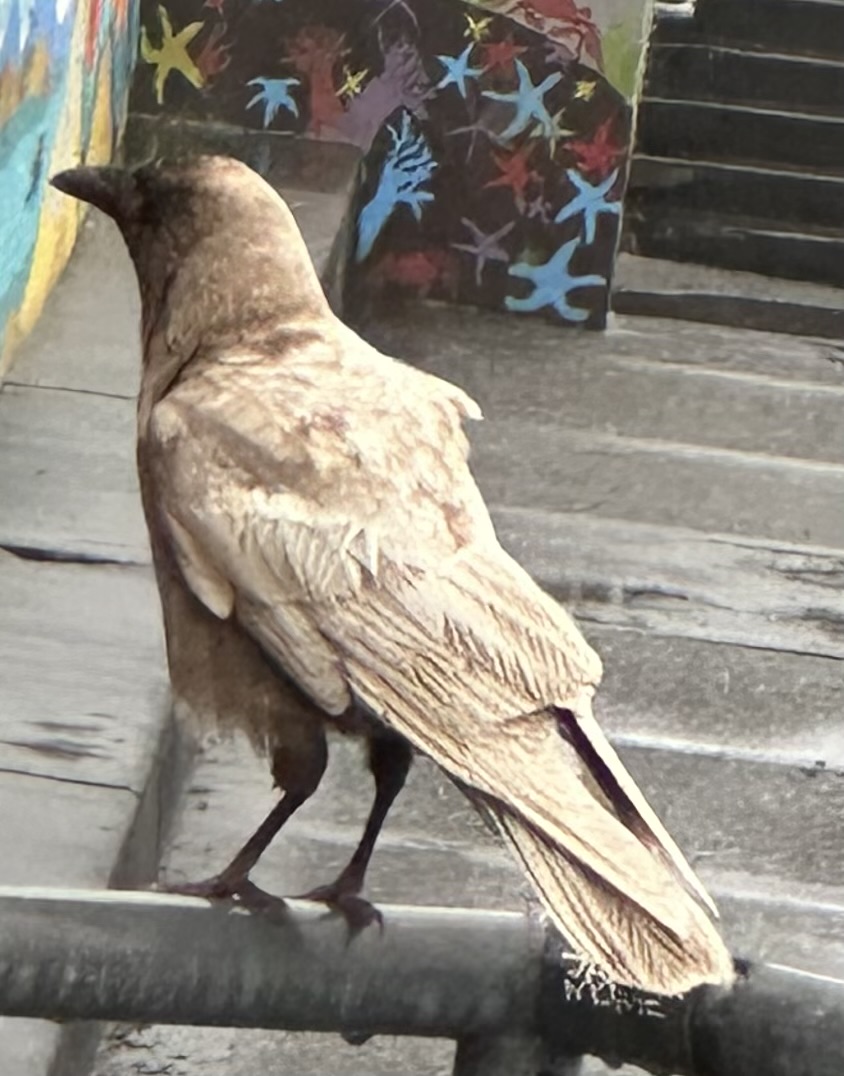
Leucistic (“caramel”) Crows turn up in West Seattle from time to time – Mark Rhea photographed this one:
Here’s a more conventionally colored one, courtesy of K. Smith:
K. also sent this unidentified bird (do you recognize it?):
And we have more recent views of the baby Anna’s Hummingbirds that recently fledged at West Seattle Nursery (WSB sponsor) – from Suzanne Krom:
And from Jerry Simmons:

Again, huge thanks to everyone who shares photos, from birds to breaking news and beyond – westseattleblog@gmail.com or (when urgent) text 206-293-6302 – thank you!

NHL roundup: Zach Werenski says slumping Blue Jackets ‘still in it’

How to watch San Francisco Giants vs. Philadelphia Phillies

After deadly crash, loved one questions suspect’s actions at scene

Unlicensed contractor arrested after allegedly scamming Miami Catholic school out of $220,000

Boston University OT Program Ranks Top in Its Class for Fifth Straight Year by U.S. News & World Report

Florida High School Football Rankings: Top 25 teams – Oct. 21

How old is Bo Nix? What to know about Oregon quarterback ahead of 2024 NFL Draft

Cleary's 21 help Le Moyne down Central Connecticut State 69-64 in OT

99th annual Pony Swim held in Virginia

Indiana Members Credit Union announced as new anchor tenant at Bottleworks District

Map: Minor Earthquake Strikes Near San Diego

Trump claims he’d win as the president of Venezuela — just needs to ‘quickly’ learn Spanish

US Supreme Court clears path for Steve Bannon criminal case dismissal
Trump reiterates threats to bomb Iran’s power plants and bridges

Trump threatens Iranian infrastructure over Strait of Hormuz | BBC News
-

 Atlanta, GA2 days ago
1 teenage girl killed, another injured in shooting at Piedmont Park, police say
-

 South-Carolina1 week ago
South Carolina vs TCU predictions for Elite Eight game in March Madness
-

 Movie Reviews5 days ago
Vaazha 2 first half review: Hashir anchors a lively, chaos-filled teen tale
-

 Vermont1 week ago
Skier dies after fall at Sugarbush Resort
-

 Politics1 week ago
Trump’s Ballroom Design Has Barely Been Scrutinized
-

 Politics1 week ago
JD Vance says he was ‘obsessed’ with UFOs, believes aliens are actually ‘demons’
-
 Entertainment5 days ago
Inside Ye’s first comeback show at SoFi Stadium
-

 Atlanta, GA1 week ago
Fetishist ‘No Kings’ protester in mask drags ‘Trump’ and ‘JD Vance’ behind her wheelchair