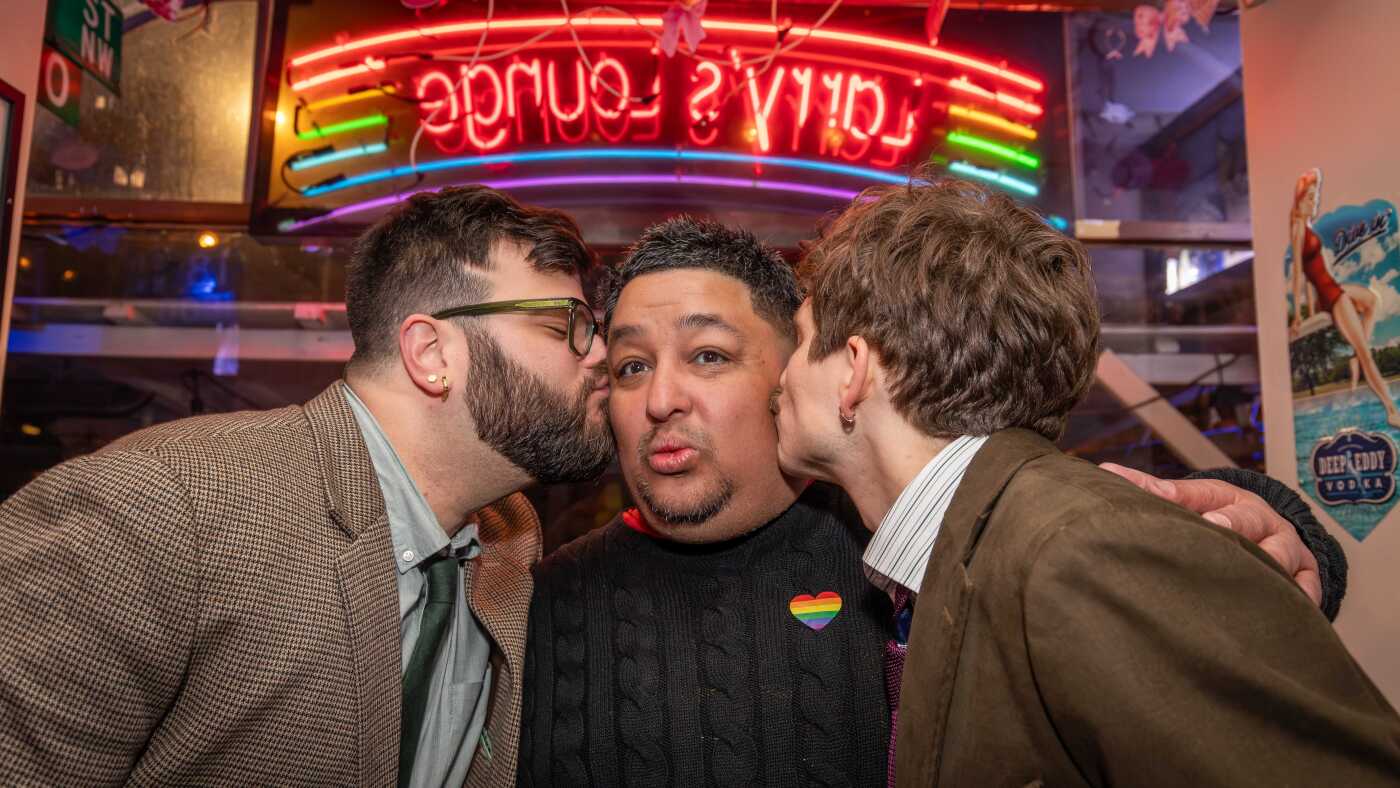
Seattle Mayor to sign executive order supporting immigrants
Seattle Mayor Bruce Harrell will sign an executive order that supports immigrant and refugee families.
KENT, Wash. – Migrant refugees at risk of eviction from a Kent hotel just got a much-needed extension, paid for by the City of Seattle.
Advertisement
Dozens of migrant families have been camping outside Riverton Park United Methodist Church in Tukwila since early 2023, but during the January cold snap, they were temporarily housed in a hotel in Kent. By mid-January, the funds to house them there had run out, with the threat that these families would be forced back outside in record-cold temperatures.
Last week, Seattle Mayor Bruce Harrell and the Office of Immigrant and Refugee Affairs funded a one-week extension, and now that time is up.
On Monday, the City of Seattle announced it would pay to house the migrants for three more weeks, expected to be funded in this year’s budget for migrant issues. This extension expires Feb. 26, at which point the families will likely have to return to the church in Tukwila.
Advertisement
Seattle leaders say they are closely following the Washington State legislative session, where Gov. Inslee has floated $8 million to put toward the state’s migrant issues.
PREVIOUS COVERAGE: Asylum seekers in Tukwila must return to encampment after hotel funds during cold snap run out
Advertisement
“Given this is a regional, state, and national issue – and that City resources for this response will quickly be exhausted – we are looking to our King County, Washington state, and federal partners to develop and support sustainable longer-term solutions,” said City of Seattle spokesperson Jamie Housen.
The Governor’s Office tells FOX 13 News that even if the Legislature approves the $8 million budget increase, the funds would not be available until the summer.
Soccer fans in Seattle have one more chance to catch a World Cup group stage match before the knockout rounds begin next week. And the game is moving forward on the same weekend as Seattle’s Pride festivities despite objections from both teams.
Egypt vs. Iran takes place tonight at 8 p.m. PT. Both teams are trying to advance out of Group G.
Egypt is likely moving on after tying with Belgium in Seattle’s opening World Cup Match and defeating New Zealand 3-1 in their second group stage match. A win could clinch the group for Egypt.
Advertisement
Iran has played two draws against Belgium and New Zealand, and the team needs at least a tie tonight to move on. A win over Egypt would confirm their place in the Round of 32.
How can I watch the Egypt vs. Iran game?
Location: Seattle, WA
Date: June 26, 2026
Kickoff: 8 p.m. PT
TV: FS1
Streaming: FOX One, Peacock
How much are tickets for the Egypt vs. Iran game in Seattle?
Tickets for tonight’s World Cup match start at $521.
When are the remaining World Cup games in Seattle?
Where can I buy FIFA World Cup tickets?
Zachary Fletcher is a trending news reporter with USA TODAY Network’s Washington state team. Keep up with him on X (@zdfletch), BlueSky (@zfletcher.bsky.social) or reach him at zfletcher@usatodayco.com.
When Seattle announced it would host a Pride Match during the 2026 World Cup, it was long before the draw had even been made.
The match at Lumen Field on June 26 (4am on June 27 in the UK) – one of six the city is hosting – falls on the same date as Seattle’s annual Pride weekend, setting the stage for a festival of celebrations outside the stadium.
It is a game that could determine who makes it through to the knockout stage – and it is a game that will feature two countries with some of the strictest anti-gay laws in the world: Egypt and Iran.
In Iran, same-sex relationships are illegal and gay men have been executed on sodomy charges, making their laws some of the most oppressive against the LGBTQ community in the world.
Advertisement
Egypt has previously arrested LGBTQ people on indecency laws and has cracked down in recent years on the outward expression of Pride and the waving of rainbow flags.
Both countries have called on FIFA and Seattle to cancel the Pride celebrations.
Iran Football Federation president Mehdi Taj described the Pride branding for the match as “inappropriate” and “an irrational move”.
A statement from the Egyptian Football Association read: “Egypt categorically rejects holding any activities related to supporting (homosexuality) during the match. Such initiatives conflict with the cultural, religious and social values in the region, especially in Arab and Islamic societies.”
FIFA, which has no official involvement in the plans, has resisted calls from Iran and Egypt to cancel or move the match.
Advertisement
Seattle’s local organising committee says they will go ahead as planned, saying: “Soccer has a unique power to unite people across borders, cultures, and beliefs. We are honoured to host a Pride Match and to celebrate Pride as part of a global football community. This match reflects our ongoing commitment to respect, dignity and unity for all.”
Both sides will be looking to secure qualification to the round of 32, with Egypt top of group G on four points and Iran in second with two points.
Iran will also have to travel to Seattle from their base in Mexico on the day of the match due to restrictions not allowing the team to stay overnight in the United States.
Image: Seattle is ‘honoured to celebrate Pride as part of a global football community,’ says the city’s Pride Match Advisory Committee
‘We want people in Egypt and Iran to know they would be welcome in Seattle’
Eric Wahl, who fell in love with football while living in Seattle, is a member of the Seattle Pride Match Advisory Committee and has been helping to organise the game.
He is also the brother of journalist Grant Wahl, who passed away at the Qatar World Cup in 2022 after suffering an aortic aneurysm. Wahl had a month earlier been briefly detained by security staff for wearing a rainbow football shirt.
Advertisement
Despite some initial apprehension when the draw was made, Eric Wahl believes the Pride Match will be an opportunity for the world to see how welcoming Seattle is.
“We had a sole mission of wanting to highlight LGBTQ organisations and businesses in Seattle and to unite that with the shared love of soccer as a world sport,” he said.
With hundreds of thousands of visitors and millions of viewers tuning into Seattle during Pride Weekend, we are presented with a unique opportunity to make a lasting impact. This moment allows us to educate the world, inspire our LGBTQ+ community, and uplift LGBTQ+ businesses and cultural organisations.
“This is actually a really positive thing.
“We want people from Egypt and Iran to know that, regardless of their personal identities, they would be welcome in Seattle, and we would be happy to have them.
Advertisement
“I really hope that there will be soccer fans in Iran and Egypt who will be able to watch this match for the match itself, but also with the halo of equality around it.”
Footballers in Qatar four years ago were caught up in a controversial U-turn over the ‘OneLove’ rainbow armband but Wahl does not expect the Iran or Egypt players to comment on anything except the football itself.
“I think it is par for the course [there will be questions of them] but also slightly unfair to the players on both of those national teams who have unquestionably been put into a position they didn’t ask for.
“To ask any of them to comment on these situations puts them in an unfair position.
“Whether they are for or against gay rights in general doesn’t matter to me, because they have to think about the oppressive regimes that they come from and that to me is a much greater concern.”
Advertisement
FIFA to treat match the same as any World Cup game
While FIFA is not in charge of organising the Pride Match, it has been liaising with the Seattle local organising committee and the Pride advisory committee.
The match will be treated the same as any game in the World Cup, with a FIFA spokesperson telling Sky Sports News: “The FIFA World Cup 2026 is an inclusive event that welcomes people from all backgrounds. Fans of all sexual orientations and gender identities are welcome at matches and events.”
FIFA’s branding will be limited to its regular ‘No Discrimination’ campaign material but rainbow flags will be allowed inside the stadium.
“General statements of human rights, including rainbow flags and other flags representing sexual orientation and gender identity, are permitted under the FIFA World Cup 2026 Stadium Code of Conduct and may be displayed inside stadiums provided they are used in a manner consistent with the code.”
The governing body remains adamant it will not stand for discrimination of any kind at the World Cup and that anyone can report any abuse they face at FIFA events via its app.
Advertisement
Any discrimination in the stadium would follow the FIFA three-step procedure in place for all matches.
First the match would be stopped when an incident occurs, with an annoucement urging spectators to cease the offensive behaviour. If it continues after the restart, the match could be suspended and even abandoned as a last resort.
Seattle hopes that instead it will be a joyous, inclusive occasion celebrating the LGBTQ community.
Wahl is expecting to see a sea of colour at kick-off in a match that also marks an opportunity to honour his late brother.
“I will be wearing a version of the rainbow soccer ball shirt that Grant was detained for in Qatar,” Wahl said.
Advertisement
“I think it’s going to be amazing. I just can’t wait to share that experience, and I can feel Grant smiling about it too.”