Seattle, WA
Can the Punk Rock flea market save the soul of Seattle?


Strolling the commercial corridor atop Seattle’s Capitol Hill neighborhood on a recent Friday afternoon, I catch a cappella voices booming down the block: Every woman, every man, join the caravan of love …
It’s the unlikely siren song flowing from the open doors of the Punk Rock flea market. This offbeat, itinerant bazaar has been popping up here, inside a former supermarket, four times a year since 2024, filling the 20,000-sq-ft space left vacant when a Kroger-owned QFC suddenly ceased operations and moved out.
The $1 entry fee hasn’t increased since 2006, when the first Punk Rock flea market was held in an abandoned basement bar across town. After occupying 13 other locations around the city, including a former post office, a former drugstore and a former strip club, it’s now settled in its current home in Seattle’s historically queer arts epicenter.
I pay my way in with pocket change and step into a parking lot given over to dozens of booths, tables and a food-truck court. People of every age and shape mill about in the spring sunshine. Inside the building, DJ Port-a-Party slides from the Housemartins to Kermit the Frog singing The Rainbow Connection. Hundreds of shoppers and more vendors – 204 in all – engage in a bustling economy entirely of their own making. According to organizers, more than 8,000 people will pour through this weekend – a modest tally, which during December installments typically reaches into five figures.
Even a limited litany of items for sale would be too long for this article; suffice to say, the Punk Rock flea market is part renegade art gallery, part unfathomable yard sale and part curated vintage mall, overflowing with treasures and trash. Where the QFC’s produce section used to be, a woman shows artwork made from dried seaweed next to an anarchist bookseller next to a guy hawking carved wooden daggers. In the old storeroom, hundreds of Hot Wheels and action figures hang in a display reminiscent of a 1980s Toys R Us. Behind a bar that was once the deli section, volunteers serve beer and hot dogs. Every square inch of every vertical surface – and much of the floor and ceiling – has been painted, wheat-pasted, stickered and graffitied, the evolving contributions of hundreds of local artists, some commissioned, others extemporaneous. The crowd is equally spectacular, a parade of eye-boggling fashion and personal expression.
“I’m an ageing punk. I’m a weirdo,” says Ray Myzelle Bones, a regular Punk Rock flea market vendor selling lavender salts and sprays she makes on her farm outside the city. “This is a place that’s safe for neuro-spicy people. It’s also this current of community that people say we’ve lost, but we haven’t. It just lives somewhere else.”
The last 20 years have not been kind to the punks of Seattle. In that time, the US Pacific north-west’s largest metropolis morphed from low-stakes, overachieving cultural incubator to the US’s hub of neoliberal corporate capitalism. The cost of living has blown up by 78%, according to the Bureau of Labor Statistics. The city’s present status as the 12th most expensive in the world – unimaginable during Seattle’s grunge heyday – doesn’t leave much room for artists and freaks to live in the place they made famous.
The Punk Rock flea market has not only hung on for 20 years, it’s more popular than ever, seemingly galvanized by Seattleites’ acute desire for some kind of alternative economic reality. DJ Port-a-Party, aka Rob Zverina, cites the Punk Rock flea market as an example of Czech philosopher Václav Benda’s “parallel polis”, a self-contained society existing for and by itself as a mirror to the status quo.
What began as an anti-establishment endeavor has itself become the establishment, in the process deepening its community-minded values. The Punk Rock flea market operates as a non-profit that donates proceeds to Seattle’s Low Income Housing Institute and includes as employees former unhoused people. It maintains a low bar to entry to allow for maximum accessibility. Attribute this ethos of community caretaking to Josh Okrent, the Punk Rock flea market’s founding punk.
“Punk stems from a musical style, but there’s an entire worldview that transcends the music,” Okrent, a 57-year-old father of two and longtime professional non-profit fund developer, tells me. “We are punk in that we are defining our own identity. We’re not political in terms of actively resisting anything, but we are organizing to trade among ourselves in a way that refuses to recognize any other order and makes no concession.”
An anti-capitalist marketplace?
“Trading is a natural human thing,” Okrent says. “It’s been going on since way before capitalism and will continue long after capitalism is dead. All the money is being kept in the community, and that’s the objective.”
Okrent’s affable guidance has seen the Punk Rock flea market through challenging times. After the market outgrew its original location, Okrent spent years moving it to a series of spaces left vacant by previous tenants before new development turned them into sprawling condos or expensive commercial real estate, resilient like a cockroach surviving repeated disasters. During the pandemic, it took over an abandoned Bartell Drugs, at 15,000 sq ft its largest footprint at that point, thanks to a boost from the city of Seattle’s Storefronts program, which paid the market’s rent. This location was ground zero for the collision of Seattle’s homelessness and fentanyl crises, in a downtown core hollowed by Covid.
“We had these people not only living on our doorstep, but dying on our doorstep,” Okrent says.
Ruby Tuesday Romero, who attended the inaugural Punk Rock flea market as a teenager and later joined the staff, led community outreach efforts. She responded to an electrical fire started by squatters and administered Narcan to people who had overdosed.
“As someone who’d recently exited homelessness, it was a really big deal for me to be a part of that community and try to help others in that situation,” she says.
Okrent credits lessons learned and credibility gained from the Punk Rock flea market’s 18 months downtown for leading to the market’s Shangri-la on Capitol Hill. Today, the Punk Rock flea market receives funding from 4Culture, an arts granting organization of the county, and is partnered with powerful real estate development firm Hunters Capital on the lease of the old QFC.
“The building was broken into several times and was in really rough shape,” says Jill Cronauer, chief operating officer of Hunters Capital. “So one of our biggest questions was, how is anyone going to take this space and make it work?” Okrent’s business pitch to Hunters included upgrading and securing the property as well as improving public safety by bringing life and culture into the neighborhood. Cronauer and her colleagues at Hunters were persuaded enough to take on the risk of a temporary tenant. “These guys are just so talented and creative and have such an amazing volunteer team behind them that they made the space what it is today,” she says.
In a city suffering from chronic vacancies and exorbitant rents, Okrent sees Hunters as an outlier, a real estate developer genuinely aligned with community needs.
“It’s rare that I have nice things to say about landlords,” he says, “but these guys have been fantastic.”
Okrent owns the Punk Rock flea market name as a business license in Washington state, but beyond that he takes no ownership of the concept; he says a Punk Rock flea market opened in Philadelphia in 2006, concurrent but unrelated. Over the last 20 years, he’s connected with organizers in London and Berlin and hosted exchanges with folks from Reno, all of whom now operate their own versions; more unaffiliated Punk Rock flea markets have opened in Toronto, Winnipeg, New Jersey, Phoenix, Salt Lake City and elsewhere. His paid staff of 11 meets weekly to plan events year-round, such as all-ages concerts, fashion shows and raves. In the Punk Rock flea market’s anarchistic form of governance, consensus happens through argument and compromise, decisions made collectively among staff, volunteers and vendors. They’re leasing from Hunters on a six-month-by-six-month basis, with plans to stay put through next year – or whenever it makes financial sense to begin construction on the six-story mixed-use development taking the place of the old building.
“There’s no amount of money that could replace the culture that we’ve created for ourselves,” Okrent says. “At the end of the day, it’s about the people who make it happen. We like each other and we like working together, and there’s something wonderful about coming together in the challenge of this abandoned building and turning it into something beautiful – beautiful by our standards.”


Here are three more coyote sightings reported to us in the past few days:
SATURDAY MORNING: Dwight emailed us this report:
At 9:53 this morning I saw a coyote walking down Brace Point Drive towards the Josslin building. He saw me and quickly changed direction and headed up California Drive. He looked healthy and happy, not starved and miserable .
THURSDAY EVENING: These next two came in almost simultaneously just after 8:30 pm Thursday via texts – this one, from 38th SW and SW Raymond:
This one, from 37th SW and SW Juneau:

You can browse our past sighting reports here.

The Seattle Seahawks are the defending champions following a fantastic run in 2025 which resulted in the second Lombardi Trophy in franchise history. Despite this, they’re not the favorites to win their division in 2026.
Instead, the Los Angeles Rams are the hot team, thanks in large part to the addition of Myles Garrett. The two-time NFL Defensive Player of the Year does give them a huge boost, but the Seahawks know they can still win their division once again.
Here we dive into three reasons to believe that will be the case for Mike Macdonald and his team.
3. Passing attack will be improved
With Klint Kubiak leaving to take the head coaching job with the Las Vegas Raiders, Brian Fleury is set to take over as the offensive coordinator in Seattle. Fleury spent the past seven years with the San Francisco 49ers and was most recently their run game coordinator and tight ends coach.
He’s expected to feature a run-heavy offense once again, but that doesn’t mean the Seahawks aerial attack won’t be a problem for opposing teams. With Sam Darnold entering his second season with the team, he’s going to have far more comfort with his teammates. As Seahawks On SI’s Russell Baxter wrote, he’s also unsatisfied with his performance in the Super Bowl and wants to improve in 2026.
His motivation, along with the presence of Jaxson Smith-Njigba is enough for the offense to be as dangerous as they were last year. Rashid Shaheed having a full offseason with the team is a reason to believe they can be even better.
2. The run game will be a strength once again
Losing Super Bowl MVP Kenneth Walker III in free agency was a blow, but the Seahawks made sure to enter the new season with just as much firepower in the ground game. Even with Zach Charbonnet still recovering from a torn ACL, the Seahawks have a strong unit.
Led by rookie Jadarian Price, Seattle also has Emanuel Wilson and George Holani. There might not be many proven options, but as Seahawks On SI’s Michael Hanich writes, the coaching staff trusts this unit.
Offensive coordinator Brian Fleury had success leading the rushing attack in San Francisco last year and his defensive background has him favoring a more violent and punishing rushing attack. That will allow the Seahawks to wear teams down with the ground game, even without Walker.
1. Mike Macdonald continues to build the defense to fit his vision
During his first season as head coach, Mike Macdonald led Seattle to the 11th best scoring defense, which was a massive jump from 25th the prior year. They shot up the leaderboard again in 2025, finishing with the No. 1 scoring defense, which is what led the way during their title run.
Macdonald made those improvements by building the defense to his preference. They have trusted veterans on the defensive line and have built a strong nickel defense with defensive back Nick Emmanwori as one of his key pieces.
This offseason, he added another versatile defensive back in Bud Clark, a speedy pass-rusher in Dante Fowler Jr., and a big-bodied cornerback in Julian Neal. Macdonald also allowed Boye Mafe to leave while putting Derick Hall in position to take on a larger load. All these moves have given them a defense that Macdonald can turn into an even better one than we saw last year.
— Enjoy free coverage of the Super Bowl champions from Seattle Seahawks On SI —
Sign Up For the Seahawks Daily Digest – OnSI’s Free Seattle Seahawks Newsletter
Add us as a preferred source on GoogleFollow

SEATTLE — Seattle is preparing for one of its busiest weekends of the year as Pride celebrations and the FIFA World Cup converge across the city.
Hundreds of thousands of people are expected to attend parades, festivals, concerts, and sporting events Friday through Sunday, with city officials encouraging people to plan ahead for street closures and use public transportation.
Pride weekend begins Friday with the FIFA World Cup Group G match between Egypt and Iran at Seattle Stadium.
ALSO SEE | Seattle Pride festivities to kick off with ‘Seattle Pride in the Park’ at Volunteer Park
Local organizers have designated the game as the tournament’s Pride Match Day, with community celebrations planned throughout the day. The designation has drawn objections from the Egyptian Football Association and the Iranian Football Federation, but local organizers say Pride events will move forward as planned.
Saturday’s events include Trans Pride Seattle at Volunteer Park, one of the nation’s largest transgender Pride celebrations, along with PrideFest Capitol Hill, which will transform Broadway and Cal Anderson Park into a daylong street festival featuring live music, food vendors, artists, and community organizations.
The ticketed Queer/Pride Festival will also continue throughout the weekend on Capitol Hill.
RELATED | FIFA to allow rainbow flags at Egypt-Iran World Cup ‘Pride Match’ in Seattle
The weekend culminates on Sunday with the Seattle Pride Parade, which begins at 11 a.m. along Fourth Avenue in downtown Seattle before ending near Seattle Center. Following the parade, PrideFest Seattle Center will feature live entertainment, food vendors, beer gardens, and community exhibitors through the afternoon and evening.
Seattle Pride traces its roots to 1974 and has grown into one of the nation’s largest LGBTQ+ celebrations, drawing hundreds of thousands of people each year.
Officials are urging attendees to expect heavy crowds and traffic throughout downtown and Capitol Hill, particularly on Sunday.
Organizers recommend using the Link light rail, buses, or other forms of public transportation whenever possible.
-

 Health59 seconds ago
Could ‘humanmaxxing’ actually help you live longer? Here’s what experts say
-

 Sports4 minutes ago
WWE NXT The Great American Bash 2026 preview, predictions and more
-

 Technology9 minutes ago
FBI warns Microsoft users about passwordless scam
-
 Business16 minutes ago
Swipeless online dating? How AI is reshaping the search for love
-
 Entertainment19 minutes ago
Review: They’re finally too old for it in the middling clip reel ‘Jackass: Best and Last’
-
 Politics31 minutes ago
Costs of Iran war will linger despite conflict’s end, experts say
-
 Sports39 minutes ago
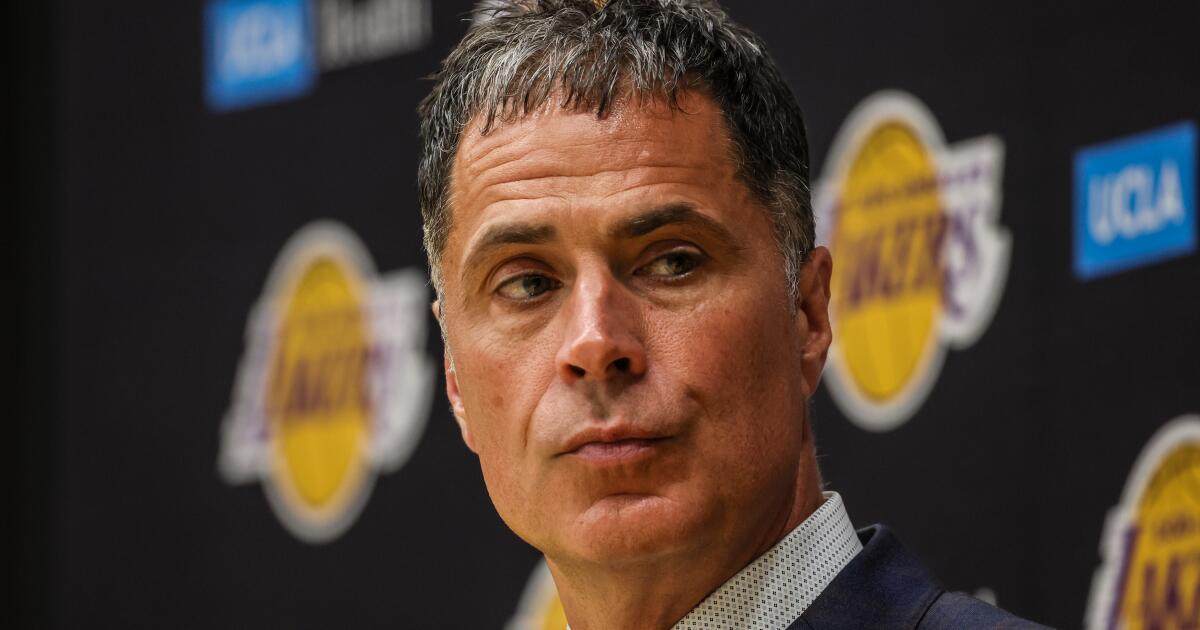
Commentary: You’re up, Rob Pelinka. To avoid Ned Colletti’s fate, the Lakers’ GM has to deliver this offseason
-

 World49 minutes ago
Q&A: Why humanitarian aid is crucial to stopping the Ebola outbreak

