San Francisco, CA
Experts: Muni tax likely to pass; regional transit measure a toss-up


Even as voters cite affordability as their top concern, San Franciscans may still be willing to raise their own taxes.
Political experts say a proposed $183 million parcel tax to fund Muni is likely to pass with ease, highlighting the city’s enduring support for public transit. But a separate regional sales tax measure to fund BART, Muni, and 10 other Bay Area transit agencies faces a far more uncertain path. Both measures, slated for the November ballot, require a simple majority to pass.
Essentially, the pundits say, San Francisco voters are so tax-happy and engaged that even with a measure-heavy ballot, they’ll likely support the two measures regardless of affordability concerns. According to campaign expert Jason Overman, San Francisco has better voter turnout for off-cycle elections than other U.S. cities, meaning tax opponents will be less likely to steer the results.
Combine that with well-founded fears that the demise of public transit would lead to tougher commutes and freeway congestion, and you have the makings of a victory at the ballot box.
“I don’t think a new tax [in San Francisco] has failed directly in years,” said political consultant Jim Ross.
However, few experts feel confident the regional tax measure will pass, as it must have the support of voters in five Bay Area counties. Contra Costa County, which is far less favorable to new taxes, was singled out by analysts.
Contra Costa County has only once passed a sales tax to fund transportation, Measure J in 2004, according to John Whitehurst, a partner at BMWL Public Affairs. Measure J had a much higher two-thirds majority threshold.
What experts are tracking as a signal for the transportation sales tax’s prospects is whether Contra Costa voters pass a sales tax (opens in new tab) of five-eighths of a cent in June.
“I think we’re gonna get some tea leaves here to read in June,” Whitehurst said.
What the Muni tax and regional measure have in common is that the consequences of degraded public transit are easy for voters across the socioeconomic spectrum to comprehend. Even if someone doesn’t use public transportation, worsening traffic on Bay Area freeways affects the people they rely on — like their children’s teachers or their employees.
“I think the transit stuff is much more visceral,” Overman said.
According to SF State political science professor Jason McDaniel, both efforts are bolstered by a widespread feeling among Democratic voters, who dominate the Bay Area, that turnout is key to taking back power from Republicans in Washington.
But McDaniel highlighted a latent risk of tax fatigue as public agencies continue to ask voters for funding. He pointed to a slice of affluent, liberal homeowners who generally back taxes for public services but may feel “cross‑pressured” by perceptions that government agencies and unions waste money.
“If I had to predict, I think these things are going to pass, but some of the support might be softer than what we’ve seen in past years,” McDaniel said.
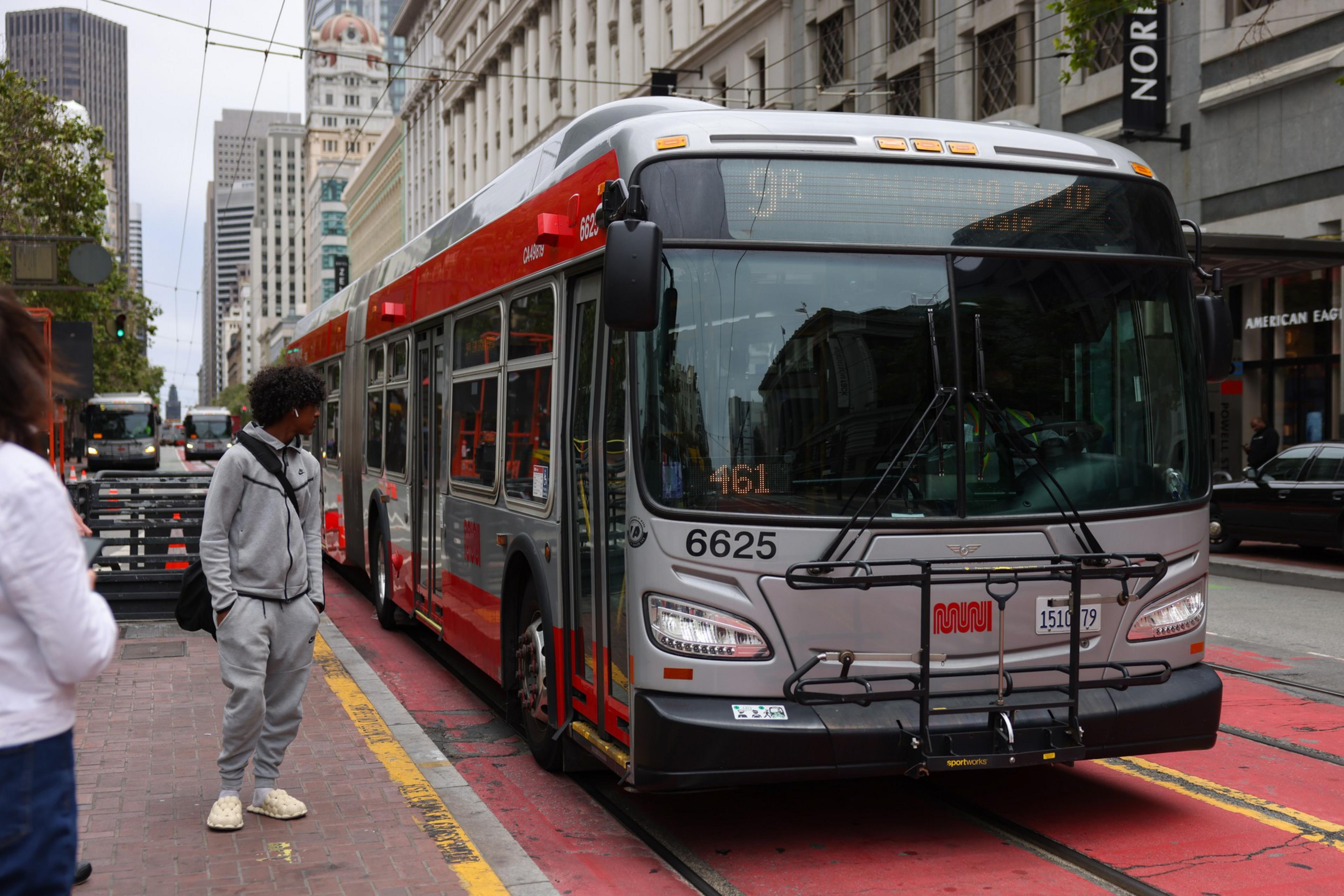
Sonoma State political science professor David McCuan said he’s cautiously optimistic about the passage of both measures but predicts that the margin of success will be narrow. A high turnout in November could be key to the success of the regional measure.
“That puts the Bay Area regional measure in a place that is slightly better than a coin flip on the positive side,” he said. “But barely.”
McCuan noted that an effective campaign can shift voter support by roughly three to six percentage points in either direction.
On the parcel tax, that campaign appears to be in pole position. Mayor Daniel Lurie has made himself the face of the initiative, and it has broad-based support from the Board of Supervisors and a laundry list of labor groups. Early union support is a promising sign, as strong campaigns need funding and endorsements, and unions can help deliver both, McCuan said.
“All signs point to success, but there’s wiggle room within the margin of error,” he said.



The Affordable Groceries Act aimed to increase access to grocery stores and pharmacy chains by taxing empty storefronts and establishing a fund to subsidize groceries.
A view down an aisle at a Safeway supermarket in Walnut Creek, California, on July 22, 2025. Mahmood, who represents the Tenderloin, claims that Lurie stepped in to swat down the grocery store tax proposal because Amazon, which owns Whole Foods Market, had been “lobbying intensely” against the proposal at City Hall for weeks. (Smith Collection/Gado via Getty Images)
“They don’t like taxes on corporations. It’s just philosophical. But the unprecedented part is that yesterday, I got a call that they are going to actively oppose this,” Mahmood said of the Lurie administration. “The only conclusion I can draw is this comes from pressure that Amazon built.”
Mahmood, who represents the Tenderloin, claims that Lurie stepped in to swat down the grocery store tax proposal because Amazon, which owns Whole Foods Market, had been “lobbying intensely” against the proposal at City Hall for weeks.
According to Mahmood, Amazon lobbyists requested an exemption to the legislation for the company’s shuttered Whole Foods storefront on Market Street. Mahmood declined the request.

“They said, if you do this, we will campaign against it,” Mahmood told KQED. “The explicit words from their lobbyists were, we just spent $250,000 against Prop D. We could probably do the same here again.”
Amazon did not immediately respond to a request for comment.
Proposition D, known as the Overpaid CEO Tax, appeared on the June primary ballot and aimed to tax major corporations to fill the city’s budget gaps. Opponents, including moderate political pressure groups and tech leaders, spent millions of dollars to defeat it. Lurie also urged a “no” vote. It ultimately failed to pass.
The closure of grocery stores and pharmacies has factored into affordability challenges in the city.
Nearly a third of San Franciscans living below the poverty line are food insecure, according to a 2024 report by the city’s Food Security Task Force, and nearly 110,000 residents utilize CalFresh, a food benefits program that the Trump administration has made qualifying for more difficult.
But Lurie has said Mahmood’s plan won’t help fill the city’s many empty grocery stores.
“Mayor Lurie is working to bring grocery stories to San Francisco’s communities. More taxes won’t achieve that,” said Charles Lukvak, the mayor’s spokesperson. “We support the Affordable Grocery Fund and will continue working with Supervisor Mahmood and the entire Board to bring more grocery stores to the city.”
Taxes collected on the vacant storefront proposal could have gone toward a new affordable grocery fund, which would also accept private donations if both measures passed. The fund would be intended for a variety of different affordability programs focused on healthy food.
Mahmood said Lurie urged Supervisor Connie Chan to cut the item from the upcoming Budget and Finance Committee agenda, striking its chances of going on the ballot this November.
A spokesperson for Chan said she supports the intent of the legislation but that it required more work and was not ready to go before the board or voters.

“Budget Chair Connie Chan agrees with Supervisor Mahmood’s intent for this measure — we need more neighborhood grocery stores — but she also understands that much work needs to be done to this measure to deliver that intent,” said Robyn Burke, Chan’s spokesperson. “Supervisor Mahmood has amendments he wants to make to his legislation that he is still working on.”
Mahmood said he had support from Supervisors Chyanne Chen, Danny Sauter, Stephen Sherrill and Myrna Melgar for the proposal.
He has a final Hail Mary he is holding out for that could allow the proposal to move forward after a motion next Tuesday, if Board President Rafael Mandelman steps in to initiate a vote. Mandelman did not immediately respond to a request for comment.
“When a proposal to make groceries more affordable gets pulled from the agenda before the public even gets to weigh in, that’s a problem no matter who asked for it,” Mahmood said. “San Franciscans deserve an up-or-down vote, in public, from their elected leaders.”

SAN FRANCISCO (KRON) — San Francisco Supervisor Jackie Fielder hosted her first community listening session Thursday night since returning from a three-month medical leave.
Dozens of District 9 residents packed the Bernal Heights Neighborhood Center to welcome back Fielder and voice concerns about issues affecting their communities.
“We are thankful that you took time for yourself to equip yourself to be sitting here today,” one attendee told Fielder. “So I thank you and commend you for returning.”
Fielder returned to City Hall last month after taking a three-month medical leave.
“I’m just grateful for the outpouring of support that I had and glad to be back on the job,” Fielder said. “Mental health is really prevalent, and I’m not going to shy away from the fact that I had a mental health crisis. This is a challenging job, and I’m very privileged to be here.”
Fielder said she is hosting a series of town hall-style meetings to give residents an opportunity to voice their concerns.
“To me, the biggest issue locally is the homeless issue, and it’s citywide,” San Francisco resident Maggie Weis said.
Fielder was joined by members of the San Francisco Municipal Transportation Agency and San Francisco Police Department to answer questions about pedestrian safety, city budget cuts and other issues.
The supervisor said one of her priorities moving forward is expanding access to clean, well-maintained public restrooms.
“[We’re] still seeing a lot of feces around the district and city,” Fielder said. “Would love to see our city have more public bathrooms and be able to maintain them as well.”
The next listening session is scheduled for July 23 at 6 p.m. at La Fénix in the Mission.
Watch the full report from KRON4’s Sara Stinson in the video player at the top of the story.

(KRON) — A 32-year-old man has been missing in San Francisco for two days, police said. Gabriel Carreon was last seen at noon on July 7, when he left his home in the Castro neighborhood to go see a movie, the San Francisco Police Department said.
The following morning, a 911 caller told dispatchers that Carreon was missing.
Police described the missing man as Asian, 5’8’’ tall, and weighing 170 pounds. He has black hair dyed pink, and brown eyes.
Anyone who locates Carreon should call 911 and report his current location, police said. Anyone with information on his possible whereabouts should call the SFPD Missing Persons Unit Tip Line at 415-734-3070.
-

 Detroit, MI12 minutes ago
Detroit Evening Report: Waymo cars blocking first responders – WDET 101.9 FM
-

 San Francisco, CA20 minutes ago
San Francisco Mayor Daniel Lurie Blocks Vacant Grocery Store Tax Proposal | KQED
-

 Miami, FL25 minutes ago
Oregon Battling Miami, Mario Cristobal for Four-Star EDGE Recruit
-

 Dallas, TX27 minutes ago
FC Dallas Forward Logan Farrington Inks Contract Extension
-

 Boston, MA35 minutes ago
Red Sox face lengthy travel issues ahead of series vs. Mets
-

 Denver, CO42 minutes ago
What’s going on with the Nuggets? Unpacking an NBA offseason on hold
-

 Seattle, WA45 minutes ago
Seattle Kraken Sign Goaltender Victor Östman and Defenseman Ville Ottavainen to One-Year Deals | Seattle Kraken
-

 San Diego, CA50 minutes ago
An executive shuffle at San Diego’s Sempra

