San Diego, CA
Public continue to voice concerns, desires on next year's San Diego City budget


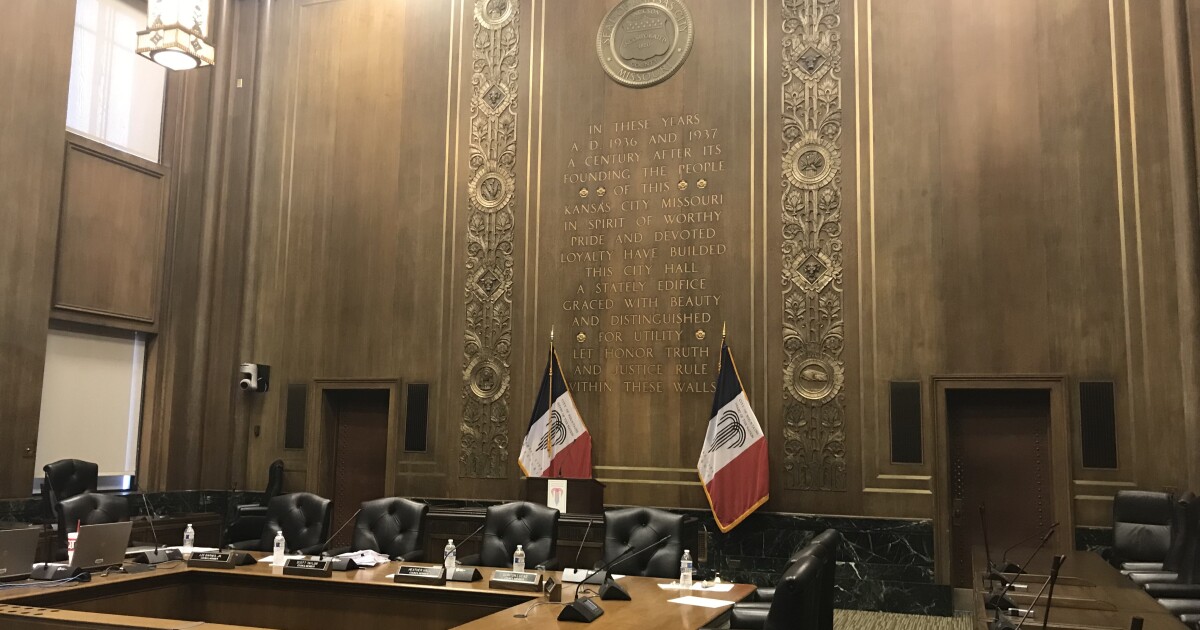
SAN DIEGO (KGTV) — There are 5.6 billion reasons why people walked up to the microphone at San Diego City Hall on Wednesday night: the multi-billion-dollar budget for the City proposed by Mayor Todd Gloria.
Some from the communities hit by the Jan. 22 floods weren’t mincing their words in emotionally charged public comments on where the city should be budgeting its money.
“It’s time for you guys to plan before the next rain comes,” one speaker said.
“I’m drained…of speaking and asking for (expletive) help. I’m tired,” Michael Rios, a flood victim, said.
During its presentation, city staff showed the Council that the key priorities in the budget are stormwater resilience, homelessness, street repair, and public safety, among other things.
“They really give the money to the housing commission to help subsidize payments for us for new rental leases,” Rios said. “The number one priority on this budget should be for the infrastructure and the flood survivors and allocate all of the money towards us, to give us permanent housing and to help us.”
Other impacts include programs, arts, libraries, and many other things that are being brought to the city council.
“So I wanted to come down and make sure that equity should be a top priority,” LaShae Sharp-Collins, who spoke during public comment, said.
Many, like Sharp-Collins, expressed concern about the budget’s lack of equity for underinvested communities.
“The cuts that are happening is going to impact me drastically,” Sharp-Collins said. “Those cuts are not only going to impact me as far as employment; it’s going to impact the education. It’s going to impact the housing opportunities. It’s going to impact us in all types of shapes and forms.”
People plan to continue to express their opinions before the city council makes its final decision on the budget in June.
“I grew up in the 4th District, and the 4th District, we’re always on the chopping block. So for me, it’s important that we come down here and voice our opinion, and my community has a strong voice,” Sharp-Collins said.
“We need to use every minute and chance we have to speak to the city council and to the city to get us the help we need. We have no time to waste,” Rios said.



San Diego, CA
Sir Mohamed Mansour brought a global movement to San Diego, and nearly won MLS Cup in Year 1

As Sir Mohamed Mansour was finalizing a deal with the Sycuan Band of the Kumeyaay Nation to invest in San Diego FC in 2022, he reflected on their combined history. The Sycuan said they’d lived in the San Diego region for 12,000 years. Mansour looked to his own Egyptian culture’s 7,000-year existence.
“If we have 19,000 years of history we can’t lose,” said the 78-year-old.
When San Diego FC finally lost in the 2025 MLS Cup playoffs, it was in the Western Conference finals, capping the best debut season in the league’s history. Mansour spoke about the experience Thursday morning during the Business of Soccer conference at Mercedes-Benz Stadium in Atlanta.
“The first game, to me, meant everything. That night was a sleepless night because I’m very passionate about soccer,” he said.
Mansour would have settled for a respectable loss; they were playing defending MLS Cup champs L.A. Galaxy. But San Diego FC scored twice unanswered, winning the opener. And another sleepless night ensued.
Mansour discussed early life health issues, including being hit by a car when he was 10 years old, which left him bed-ridden for three years. He read American comic books and studied. His family’s wealth was confiscated by the Egyptian government during a 1965 revolution, and he later beat cancer as a 20-year-old while studying in the U.S.
Now the billionaire chairman of Mansour Group, an Egyptian conglomerate owned by his family, Mansour is also chairman of the Right To Dream Academy, which has made San Diego its fifth outpost. San Diego FC’s $150M Sharp HealthCare Performance Center includes residences and a school for Right To Dream participants in the club’s academy system. Mansour mentioned his plans to construct 100 pitches for underprivileged kids in San Diego.
“We are more than a football academy. We’re a global movement, built upon the belief that everyone has the right to dream,” said Mansour. “We’ve been rewriting the rules of talent development for over 20 years, guided by our core belief that excellence can be found anywhere.”
While creating hundreds of opportunities for children in underdeveloped countries, Right to Dream has generated tens of millions of euros in transfer fees for clubs within the network.
Mansour, who graduated from N.C. State in 1968 with an engineering degree and then earned a Masters’ from Auburn, differs from many MLS owners because he is a native soccer fan, he had extensive soccer business experience, and even an idea of how he’d like his team to play (possession-based).
Asked which he’d prefer — for Egypt to win the World Cup or San Diego FC to win MLS Cup — Mansour answered the United States (to win the World Cup) and San Diego FC to win MLS Cup.
“I tell you why. I’m a businessman too,” he said, grinning. “And if the US does well in this World Cup, soccer is going to grow.”
Rapid fire with Sir Mohamed Mansour
Comic book hero: Superman
Kryptonite: Worrying
Favorite athlete: Michael Jordan
Favorite soccer player: Mohamed Salah
Childhood hero: His father

The San Diego State Aztecs are bracing for some possible serious turnover this offseason and it’s not all going to be via the transfer portal.
Leading scorer Reese Dixon-Waters is out of eligibility, as are Jeremiah Oden and Sean Newman Jr. Newman can petition for another season based on his junior college years, but it’s anyone’s guess if he’d get it.
Obviously, San Diego State’s roster movement is far from complete and the transfer portal doesn’t even open until April 7, the day after the national championship game.
The Aztecs’ once-promising season ended when they were left out of the NCAA Tournament following their loss to Utah State in the Mountain West Tournament championship game.
There are some players we know will not be on the squad next season, which will be the Aztecs’ first in the new-look Pac-12:
Guard Reese Dixon-Waters
After missing all of the 2024-25 season with a broken foot, Dixon-Waters returned for his final season of eligibility and led the Aztecs in scoring at 13.1 points per game. He was a second-team All-Mountain West pick. He scored his 1,000th career point at UNLV on Jan. 24 and finished his career with 1,220 points.
Dixon-Waters played his first three seasons at USC before transferring to SDSU, where he started 23 of 37 games in 2023-24. He was a preseason All-Mountain West pick the next season before breaking a foot. He was so highly regarded that, despite missing all of last season, he was named to the preseason All-MW team in October.
One of his notable accomplishments was attempting more free throws (43) without a miss to start the 2023-24 season than any player in the country.
Forward Jeremiah Oden
Oden started 15 games and played in 30 of 33 games in his final season of eligibility after transferring from Charlotte, where he redshirted in 2024-25. He averaged 4.6 points, 2.3 rebounds and 13.8 minutes.
Oden scored his 1,000th career point on Feb. 3 against Wyoming, where he played his first three college seasons. He finished his career with 1,024 points and 495 rebounds.
Oden didn’t play at all in a blowout home win against Utah State on Feb. 25, when Dutcher shortened his rotation from 11 to nine players. He had started the previous nine games.
Oden also played one season at DePaul.
Guard Sean Newman Jr.
The transfer from Louisiana Tech played in all 33 games and made four starts, including Senior Night in the regular-season finale against UNLV and all three games in the MW tournament, when freshman Elzie Harrington was out with an injury.
Newman averaged 3.3 points, 2.4 assists and 15.4 minutes.

Here is what you need to know in the March 25, 2026, Streamline newsletter:
This morning, we’re tracking San Diego Unified School District’s decision to rename Cesar Chavez Elementary School in the wake of serious allegations against the civil rights icon.
We’re also following the City of San Diego’s search for a new operator to reopen Tecolote Canyon Golf Course — and the neighbors pushing to safeguard and restore the surrounding natural space.
Plus, consumer reporter Marie Coronel shows why brand loyalty might be costing you more on your cell phone bill.
THE STREAMLINE
WATCH — ABC 10News brings you The Streamline for Wednesday, March 25 — everything you need to know in under 10 minutes:
The Streamline: Wednesday, March 25
TOP STORY
The San Diego Unified School District board voted Tuesday night to begin renaming Cesar Chavez Elementary School following allegations of sexual abuse against the labor leader.
The process will start with school leaders meeting with parents, teachers, students, and community members to select a new name.
While renaming a school typically takes several months, district officials said the timeline could be expedited in this case.
San Diego Unified usually limits itself to one school name change per year — in February, Clairemont High School’s mascot was changed from the Chieftains to the Captains.
However, board members said they would make an exception for this situation.
San Diego Unified initiates renaming process for Cesar Chavez Elementary over abuse allegations
RELATED COVERAGE:
MICROCLIMATE FORECASTS
Coasts
Inland
Mountains
Deserts
BREAKING OVERNIGHT
(AP) — Iran received a 15-point proposal from the U.S. to reach a ceasefire in the war, two Pakistani officials said Wednesday.
The Pakistani officials described the proposal broadly as touching on sanctions relief, civilian nuclear cooperation, a rollback of Iran’s nuclear program, monitoring by the International Atomic Energy Agency, missile limits and access for shipping through the Strait of Hormuz, the narrow mouth of the Persian Gulf.
The Trump administration reportedly offered the plan to Iran as the U.S. appears to seek an end to the war even while more troops head to the Middle East.
The plan was submitted to Iran by intermediaries from the government of Pakistan, which has offered to host renewed negotiations between Washington and Tehran, a person briefed on the plan’s contours but who was not authorized to speak publicly told The Associated Press on Tuesday.
The U.S. military is preparing to deploy at least 1,000 troops from the 82nd Airborne Division to the Middle East in the coming days, according to three people with knowledge of the move who spoke on condition of anonymity to discuss sensitive military plans.
Any talks between the U.S. and Iran would face monumental challenges. Many of Washington’s shifting objectives, particularly over Iran’s ballistic missile and nuclear programs, remain difficult to achieve, and it is not clear who in Iran’s government has the authority or would be willing to negotiate.
Iranian Foreign Minister Abbas Araghchi’s office said he has been discussing the war this week with several counterparts, but Mohammad Bagher Qalibaf, the speaker of Iran’s Parliament, denied Trump’s claim of direct talks and an Iranian military spokesperson declared that the fighting would go on.
Alluding to progress in talks, U.S. President Donald Trump claimed Iran shared an oil- and gas-related “present,” a day after telling reporters that the Middle Eastern nation is eager for a deal to end the war.
Story by The Associated Press
CONSUMER
While loyalty is usually a good thing, it’s possible it could be costing you money when it comes to your cell phone bill.
WATCH — Consumer reporter Marie Coronel goes over the simple checks you can do right now to make sure you’re not overpaying:
Comparing cell phone plans to save money on your bill
WE FOLLOW THROUGH
The City of San Diego is seeking proposals from companies to lease and reopen the Tecolote Canyon Golf Course. While golfers welcome the move, some nearby residents argue it could harm the environment.
WATCH — Reporter Dani Miskell spoke to some neighbors about their expectations for whoever comes in to run the golf course:
Concerns grow over future of Tecolote Canyon Golf Course
RELATED COVERAGE:
Thanks for waking up with us! If you have a story you want ABC 10News to follow through on, fill out the form below:
We Follow Through
Want us to continue to follow through on a story? Let us know.

Ski Maine, Where Skiing’s Main Street Ends

Showers and falling temperatures across Maryland Friday

Woman struck, fatally injured, while walking on the Lodge Freeway, state police say

Think you’re middle class in Massachusetts? Here’s the income range

Over 840,000 Minnesotans Assist Aging Loved Ones, Shaping Their Daily Lives

Florida High School Football Rankings: Top 25 teams – Oct. 21

How old is Bo Nix? What to know about Oregon quarterback ahead of 2024 NFL Draft

Cleary's 21 help Le Moyne down Central Connecticut State 69-64 in OT

99th annual Pony Swim held in Virginia

Indiana Members Credit Union announced as new anchor tenant at Bottleworks District

Video: Will ICE Change Under Its New Leader?

DHS shutdown breakthrough comes at cost for Republicans as funding fights nears end

Rubio joins crucial G7 talks as Iran war set to dominate second day

A surprise resignation could open the door for an independent to win a Montana Senate seat

Video: Savannah Guthrie Says She Believes Her Mother Was Taken for Ransom
-

 Detroit, MI1 week ago
Drummer Brian Pastoria, longtime Detroit music advocate, dies at 68
-

 Science1 week ago
How a Melting Glacier in Antarctica Could Affect Tens of Millions Around the Globe
-

 Movie Reviews1 week ago
‘Youth’ Twitter review: Ken Karunaas impresses audiences; Suraj Venjaramoodu adds charm; music wins praise | – The Times of India
-
 Science1 week ago
I had to man up and get a mammogram
-

 Sports6 days ago
IOC addresses execution of 19-year-old Iranian wrestler Saleh Mohammadi
-

 New Mexico5 days ago
Clovis shooting leaves one dead, four injured
-
 Business1 week ago
Disney’s new CEO says his focus is on storytelling and creativity
-

 Texas1 week ago
How to buy Houston vs. Texas A&M 2026 March Madness tickets